
Do you have traditions in your family – things that HAVE to happen to make Christmas feel really festive? It might be special foods, silly games or things-you-have-to-do-together-no-excuses.
All around the world, people celebrate in widely different ways. Here are just a few of the strangest, quirky Christmas traditions from across the globe.
Hunt the pickle, Germany/Spain/USA
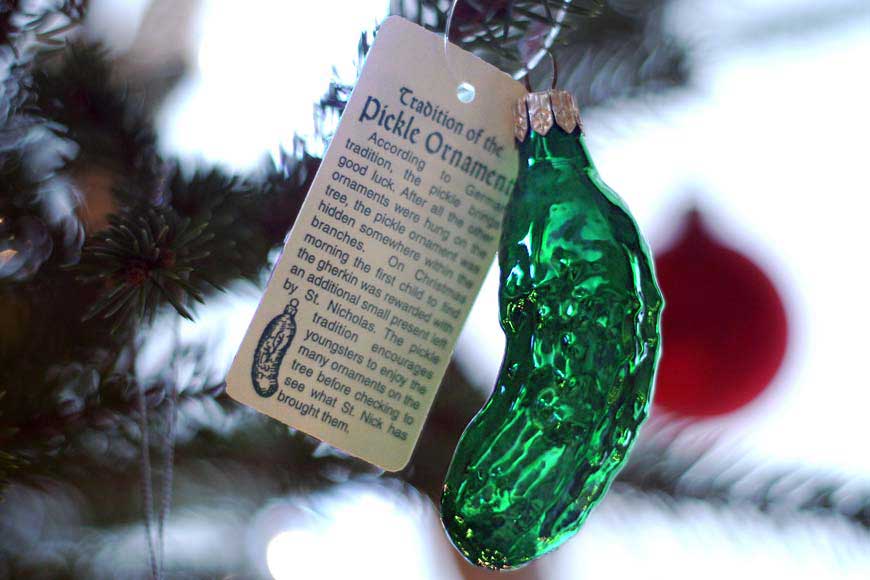
Germany, Spain and USA each lay claim to the original, odd quirk of adding a pickle-shaped bauble to the Christmas Tree. Whichever child finds the pickle gets an extra present.
No-one’s too sure how this got started, although the Spanish story is that two young boys were held as prisoners inside a pickle barrel, but Saint Nicholas rescued them. But it’s more likely to be a German-American tradition created in the late 19th century.
Roller skating to church, Venezuela

Imagine the scene in the city of Caracas as city dwellers make their way to church on Christmas morning – on roller skates!
It’s said children anxious not to miss the fun go to bed with a piece of string tied round their toe and the other end dangling out of the window. As skaters roll past, they give the string a tug and children know that it’s time to rise and shine and literally get their skates on.
The tradition’s become so popular that streets are closed to traffic, so the skaters can arrive safely.
Krampus, Austria/Germany
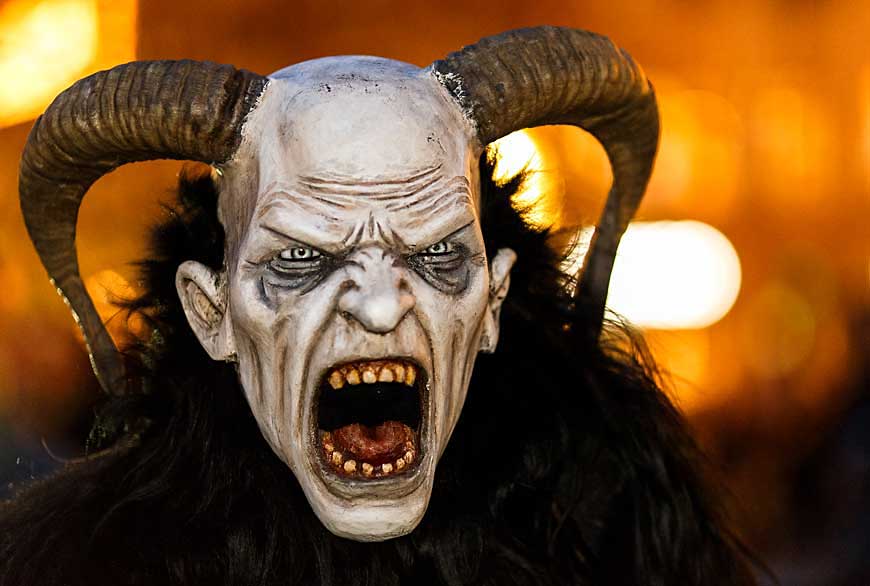
Everyone knows Santa has a naughty and nice list, but in Austria and Germany bad boys and girls can expect a visit from ‘Krampus’, the evil sidekick of St Nicolas.
Krampus is said to wander the streets during the month of December looking for badly-behaved children and scaring everyone with nasty tricks.
Krampus is half-goat, half-demon whose name derives from the old German word for claw, so be careful he doesn’t catch you if you’re watching one of the many Krampus-runs that take place in the run-up to Christmas.
An ogress, 13 mischievous trolls and the evil Yule Cat, Iceland
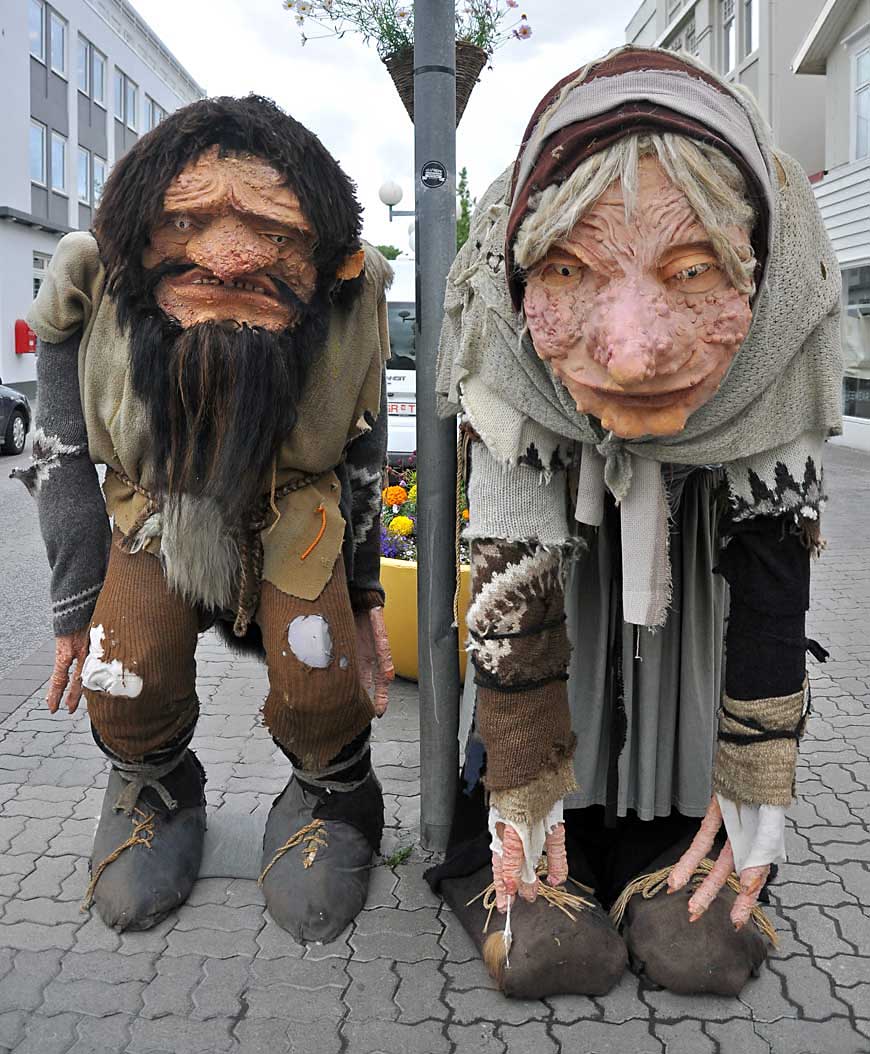
In Iceland, they tell the story of the child-eating ogress Grýla, her husband Leppalúði and their 13 naughty troll sons. Each Yule lad makes an appearance in turn, from 12 to 24 December, causing a very specific type of mayhem wherever they are found.
Stekkjastaur has long, stiff legs, and steals milk from sheep.
Giljagaur hides in gullies and steals milk from cows.
Stúfur nicks pots and pans and eats leftovers.
Þvörusleikir steals unwashed spoons.
Pottaskefill has a thing for unwashed pots.
Askasleikir snatches unattended food bowls
Hurðaskellir keeps people awake at night by slamming doors
Skyrgámur steals skyr (Icelandic yoghurt) from the pantry.
Bjúgnakrækir is the sausage swiper.
Gluggagægir peeks through the windows.
Gáttaþefur sniffs out baked goods then steals them.
Ketkrókur uses a long hook to snag himself some meat.
Kertasníkir steals candles from little children on the night before Christmas.
And if that wasn’t enough pre-Christmas terror, you must watch out for the Yule Cat – a giant feline who roams the snowy wastes. The story goes that farmers used to tell their field workers that if they did well, they’d get a new set of clothes. If not, the Yule Cat would get them. Today, it’s a tradition for Icelanders to give and receive new clothing at Christmas to avoid the killer cat!
Far less sinister is the cosy and comforting Icelandic tradition of Jolabokaflod, or Christmas Book Flood.
The start of the festive season is signalled with a list of newly published books being distributed to every household in the run-up to Christmas. These books are then bought as presents to be gifted on Christmas Eve. The celebration extends into the night with the reading of books and the drinking of hot chocolate.
KFC, Japan
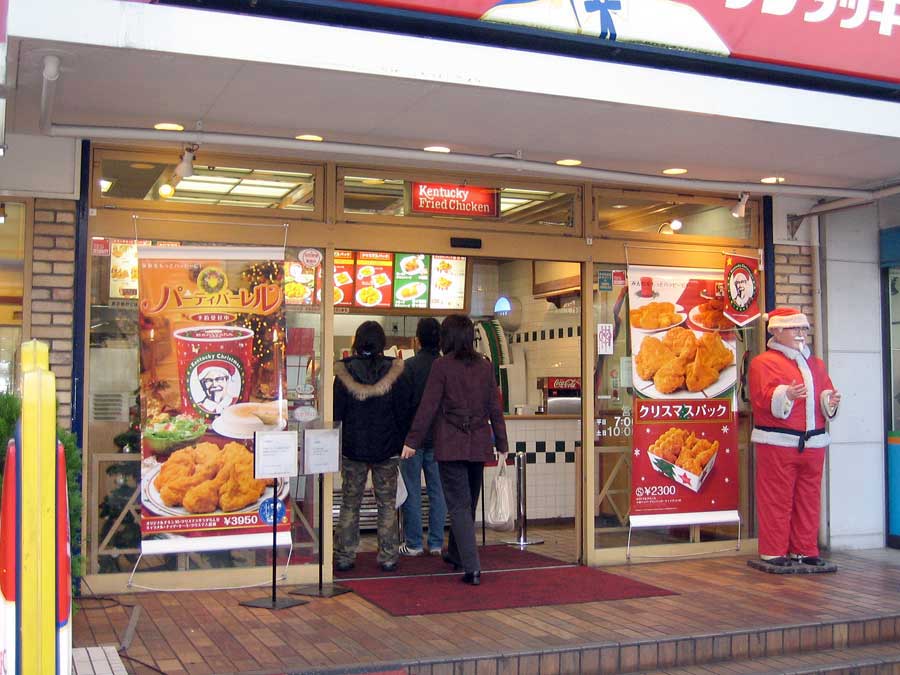
In Japan, eating Kentucky Fried Chicken is a popular Christmas tradition. KFC launched the marketing campaign, called “Kurisumasu ni wa Kentakkii” or “Kentucky for Christmas”, in 1974, based on the idea that KFC was a Christmas favourite with Americans.
It’s so popular that families often reserve their buckets of chicken months in advance.
Fried Caterpillars, South Africa
Some South Africans enjoy fried emperor moth caterpillars during Christmas, considering them a special seasonal delicacy.
They serve them as a starter on Christmas Day, deep-fried and sometimes with a spicy peanut sauce.
Mari Lwyd, Wales
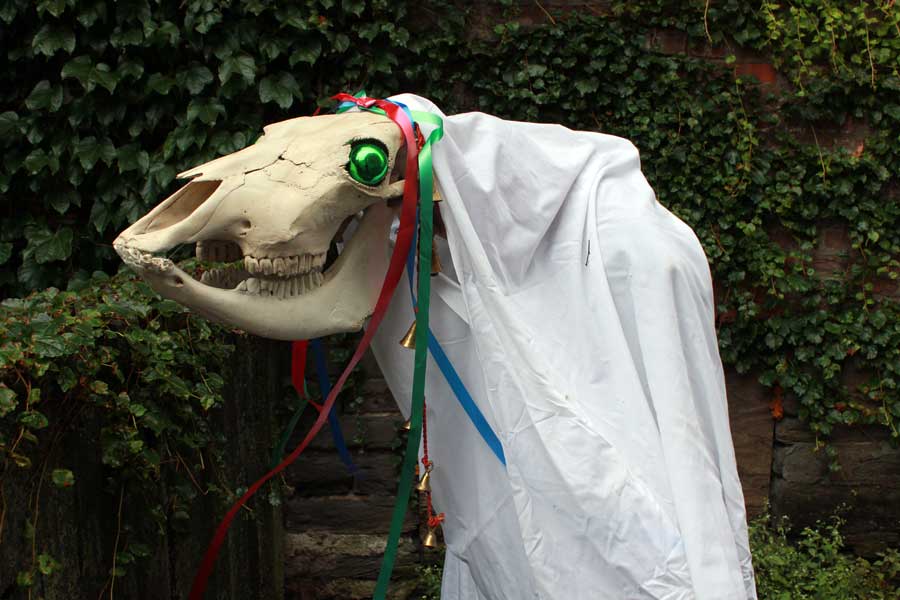
The Mari Lwyd is traditionally a horse’s skull, decorated with ribbons and stuck on top of a pole. A white sheet covers both the pole and the person carrying it, as it makes its rounds through the streets of towns and villages in South Wales.
It’s part of an ancient wassailing ritual, which has been around for centuries and although it fell out of favour in the twentieth century it’s slowly being brought back to life – unlike the poor dead horse!
Controversy surrounds the translation of Mari Lwyd – some say it means ‘Holy Mary’ others say it’s ‘Grey Mare’.
Either way, it’s pretty odd!
The Yule Goat, Sweden
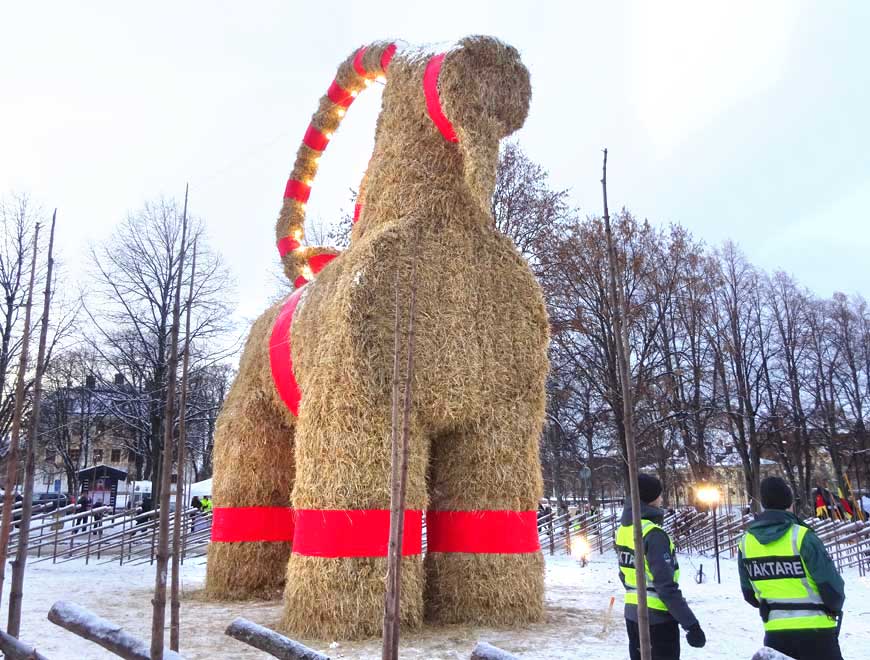
Sweden goes one step further with festive animal antics.
The Gävlebocken or Yule Goat dates back to at least the 11th century when a man-sized goat figure, led by Saint Nicholas, was paraded to ward off the devil.
In the 17th century, it was popular for young men to dress as the goat creature and run around playing tricks and demanding gifts. By the 19th century, the goat was a good guy, giving out the gifts.
Nowadays, he’s just a distant memory and a traditional Christmas ornament on trees throughout Sweden.
Lutefisk, Norway and Sweden
Lutefisk is a longest-standing Scandinavian Christmas tradition, and may be the original Norwegian Christmas dinner.
Families gather annually for a lutefisklag, a lutefisk dinner, in December, to celebrate the festive season.
It’s traditionally served with potatoes, peas, mustard, and often a white sauce.
Sparkling spider webs, Ukraine
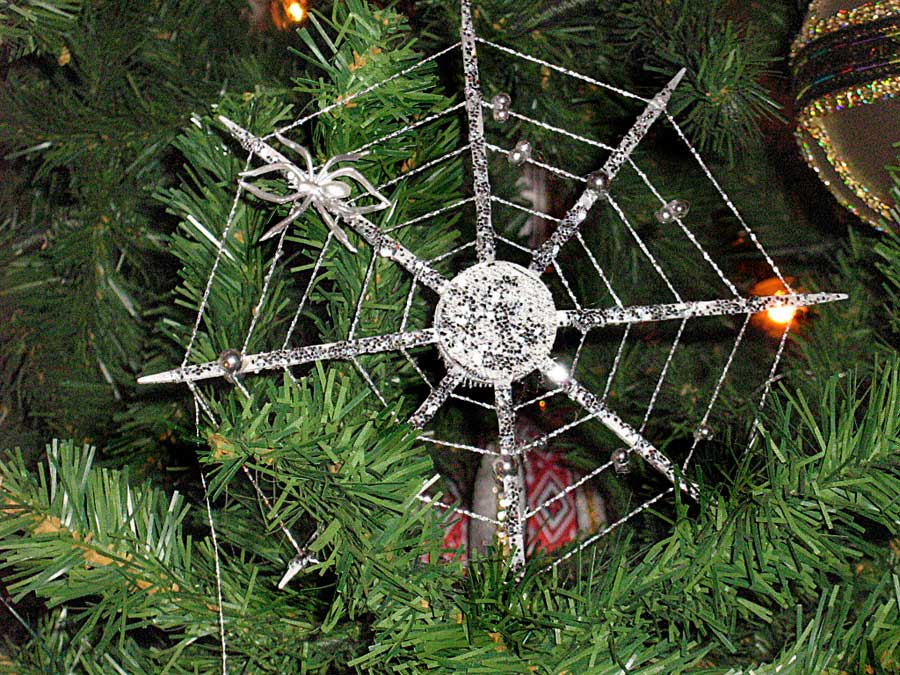
The story goes that a poor widow could not afford to decorate a tree for her children. The spiders in her house took pity on her and spun beautiful webs all over the Christmas tree.
That’s why festive trees in Ukraine don’t have baubles, tinsel or stars but sparkling, and lucky, spider webs.
Nisse, Denmark
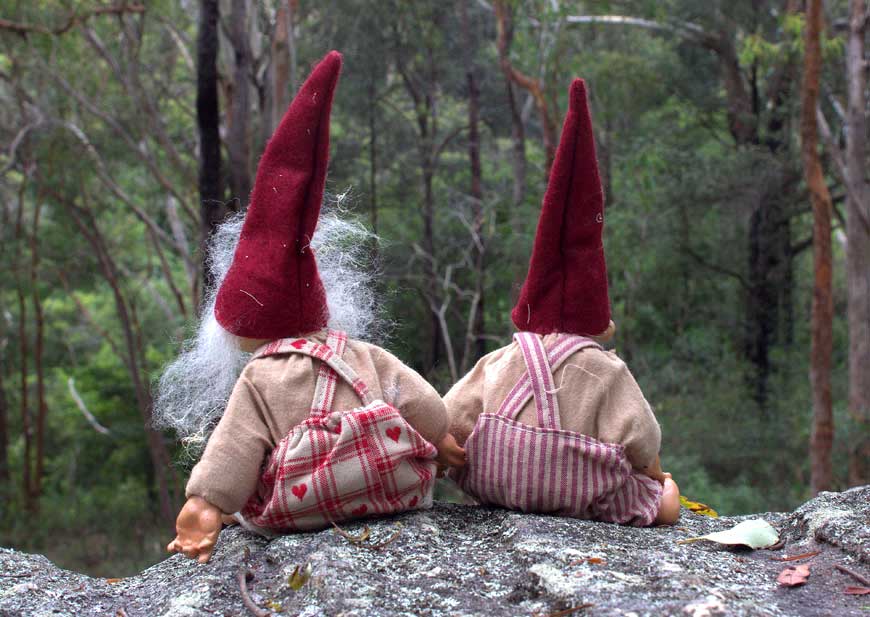
Based on a Nordic folktale, there are many versions of this little gnome across Scandinavia, but the Danish claim the origin of Nisse.
Families must leave out sweet rice porridge (risengrød) on Christmas Eve. If they feed him, he will bring them good fortune in the coming year. If they don’t then be prepared for tricks.
No one ever sees Nisse, but (unlike Santa) he doesn’t cover the whole world. Instead, each family has its own, special Nisse who needs to be catered for.
Crimson Christmas Tree, New Zealand

Instead of the traditional fir-tree of the Northern Hemisphere, New Zealand celebrates with the Pohutukawa.
The beautiful and brightly coloured blossoms have long been revered in Maori tradition and are now synonymous with the holidays. The tree features on greeting cards and in poems and songs, and has become an important symbol for New Zealanders at home and abroad.
Shoe Tossing, Czech Republic
Single Czech women toss a shoe over their shoulder on Christmas Eve. If the shoe lands pointing toward the door, it means they’ll get married in the coming year. However, if the toe points inwards there’ll be no wedding bells for at least a year.
Night of the radishes, Mexico
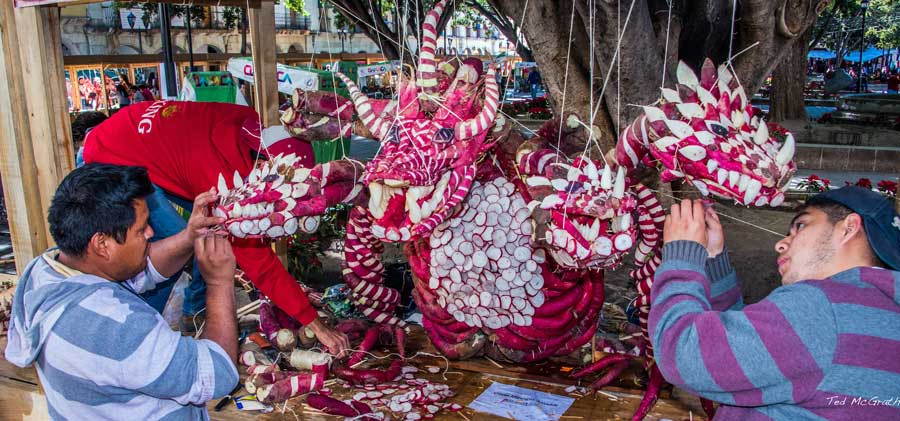
In the city of Oaxaca, on December 23, be prepared for giant radishes of extraordinary size and beauty. Not for eating, these radishes are carved into intricate and sometimes peculiar scenes, with prizes given for the most unusual.
Radish carving has been a local tradition for over one hundred years as a way for farmers to showcase their produce, but the contest was started in 1897 by Mayor Francisco Vasconcelosas as a publicity stunt.
Since the radishes quickly wilt after they’re cut, the whole event only lasts a few hours.
Flying Witches, Norway
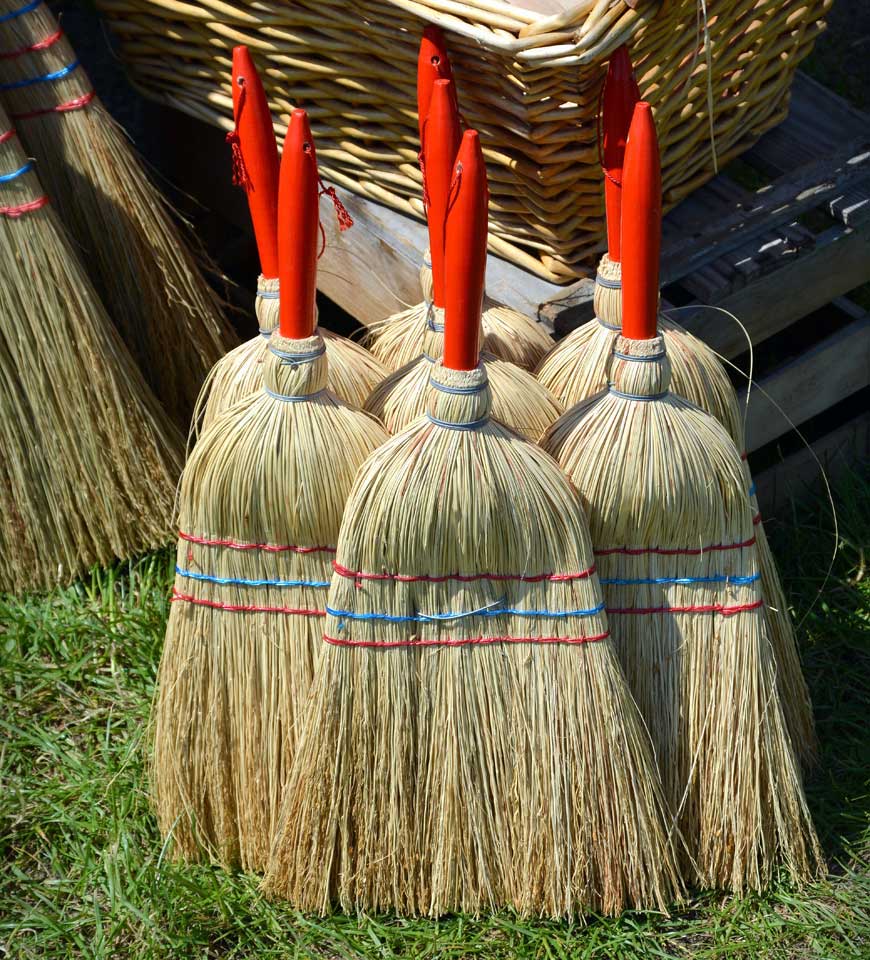
Christmas Eve (Julaften) is the big event for Norwegians. Families gather around the tree, open presents and share the festive feast.
But there’s one thing everyone must remember to do – hide the brooms or any other cleaning instrument that could be snatched by a witch and used to fly around the skies, creating havoc.
Well, that’s what people say – but maybe the Norwegians are playing tricks on us?
Befana the Witch, Italy
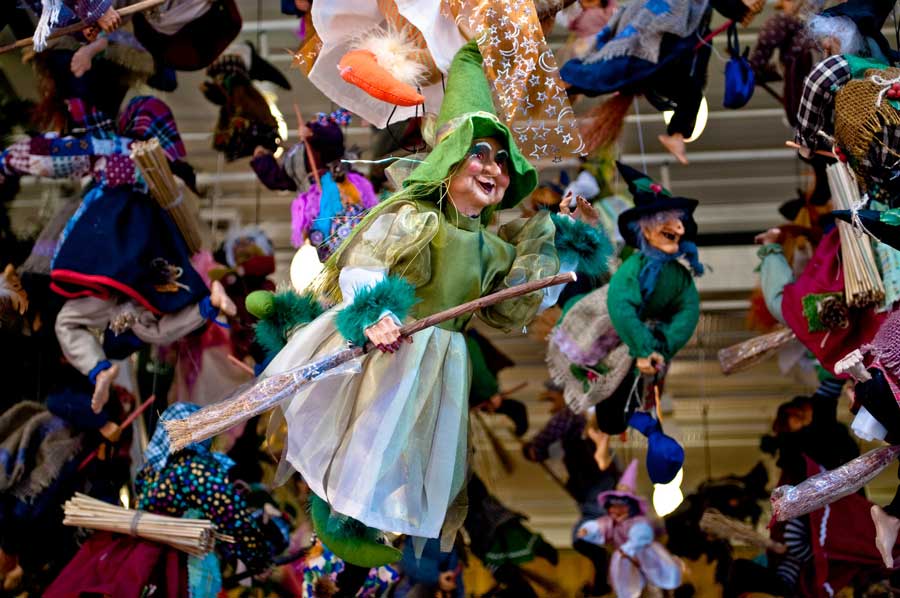
More witchery, but at New Year this time. On the eve of January 5th an old woman named Befana visits all the children of Italy to fill their stockings with candy and leave them presents.
Just like Father Christmas, Befana comes down the chimney and expects wine and local delicacies in return.
The Pooping Log, Catalonia
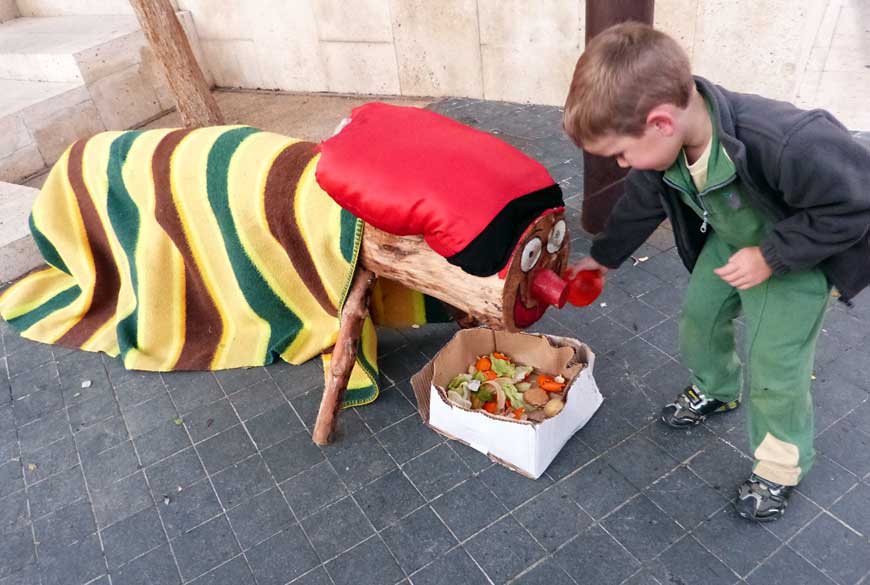
Okay, this is a really weird one. Tió de Nadal is made from a hollow log and has stick legs, a big smile, and wears a red hat.
Every evening from December 8th children feed the log small treats with water, and leave him under a blanket to keep him warm. Then on Christmas Eve they beat him with sticks, singing traditional songs, urging Tió to poop.
Their reward for this festive brutality? The log magically poops out presents and sweets. After which he’s thrown on the fire and burned for warmth.
Poor Tió.
The Pooper at the Nativity, Catalonia, parts of Spain and Portugal
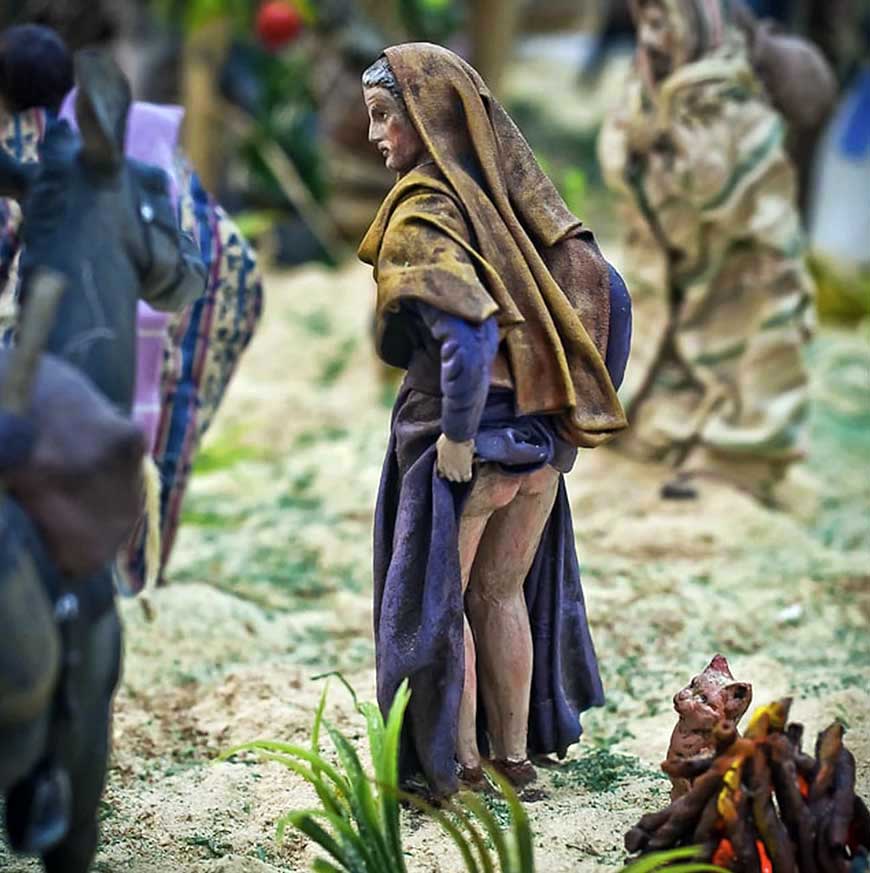
A Caganer is another scatological addition to the build-up to Christmas. It’s possible he (or sometimes she) is there to ensure fertility in the coming year, but why the traditional nativity scene should feature a bare-bottomed figure caught in the act is pretty baffling.
H0H 0H0, Canada

Canada has a clever postal code designated specifically for Santa Claus. It was established by Canada Post as part of its annual Christmas letter-writing program, which began in 1982.
Children can send letters addressed to Santa Claus at the North Pole, using the address:
Santa Claus
North Pole
H0H 0H0
Canada
Letters are answered in over 30 languages, including Braille, ensuring inclusivity for all children.
Other countries have similar schemes and here in the UK children can write to:
Santa/Father Christmas
Santa’s Grotto
Reindeerland
XM4 5HQ
Will you include any of these quirky Christmas traditions this year?
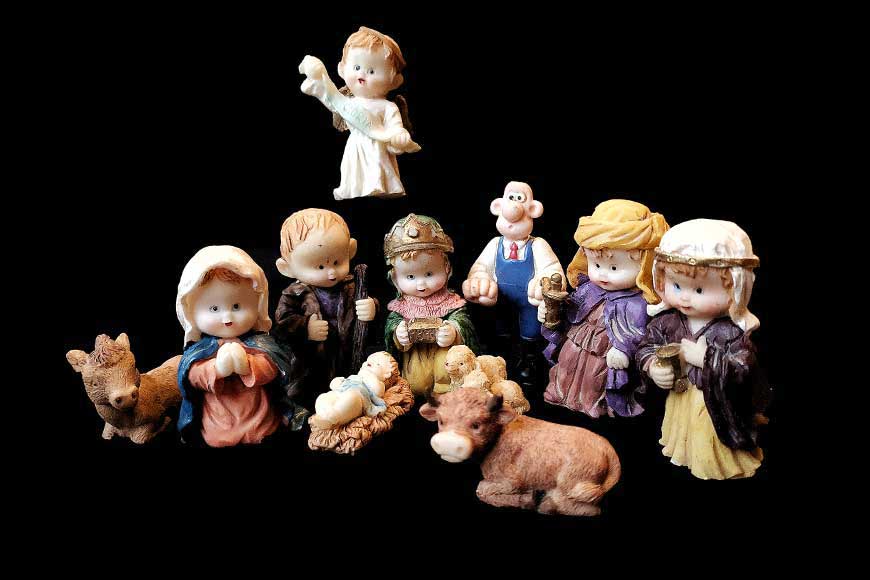
Our Christmases always involve watching Muppet Christmas Carol and our nativity scene, for some reason lost in the mists of time, includes a Wallace figure.
At least he’s not pooping!
Additional photographs are copyright their respective owners and reproduced here under Creative Commons License
If you’ve enjoyed browsing our website, learned something new, or just had a smile because of what we do – we’d love your support to keep the good stuff brewing!
Where to next?
• Christmas sweets
• Best UK Christmas markets
• Best European Christmas markets