
Fossil hunting is fun – whether you’re a serious, head down, hammer ‘n’ chisel searcher or a casual walk-along-the-tide-line spotter, the UK has some of the best beaches for fossil-hunting.
With a little know-how there’s a chance you might just turn up something extremely rare.
Winter and early spring are the best times to go fossil-hunting. Rough seas and wild winds uncover delights that have lain hidden for centuries – even millennia.
And almost every coastal area in the UK has a prehistoric heritage. Just wrap up warm, arm yourself with a bit of local knowledge and open your eyes.
Here’s our list of some of the best beaches in the UK for fossil hunting.
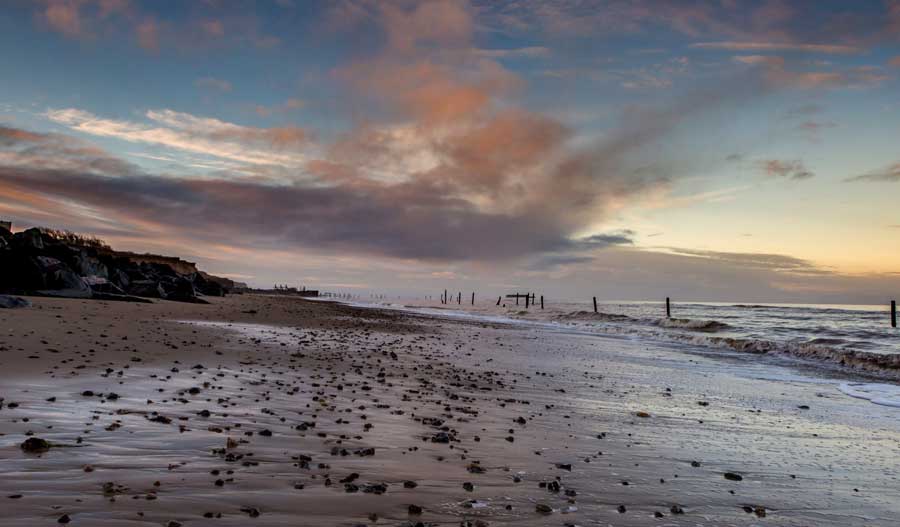
North Norfolk coast
Imagine the scene – it’s a cold December morning in 1990 and a winter storm has just blown itself out.
Down on West Runton beach a local couple find what looks like a huge bone sticking out from the base of the cliffs. They call in the experts who identify it as the pelvis of a large steppe mammoth.
Fast forward a year to another wild and windy day (they have a lot of them in Norfolk!) and a lone fossil-hunter on the beach discovers more bones. The Norfolk Archeological Unit begin a full excavation and over the next few years more mammoth remains are uncovered.
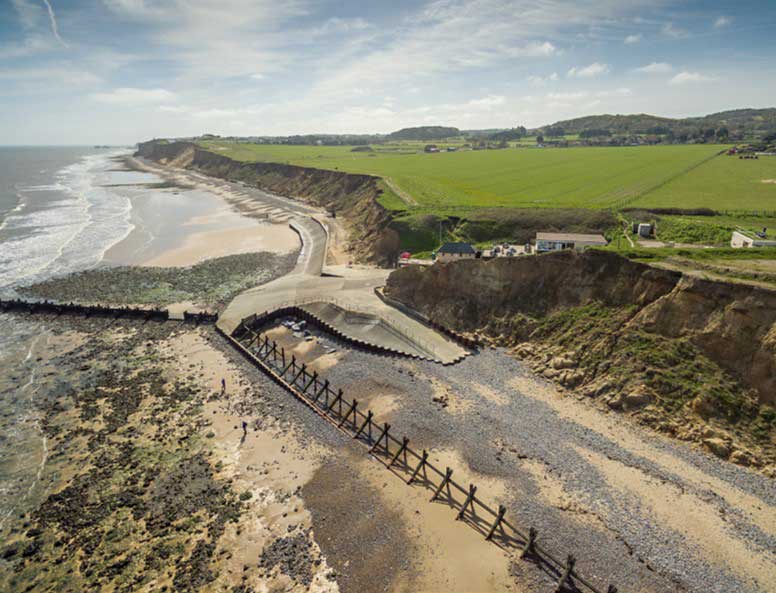
Today we know a lot about this mighty beast – how he suffered a diseased knee and how his body was scavenged by spotted hyenas after his death at a relatively young age.
And all because of some eagle-eyed fossil hunters.
The West Runton Mammuthus trogontherii is the UK’s biggest mammoth skeleton remains but by no means Norfolk’s only claim to fossil fame.
A 500,000 year old flint handaxe was found in nearby Happisburgh (you can see it in Norwich Castle Museum). If you’re very lucky you may spot black-grey or orange-brown glassy flints with sharp, chipped edges, which could be part of ancient tools.
Discover Norfolk’s Deep History Coast
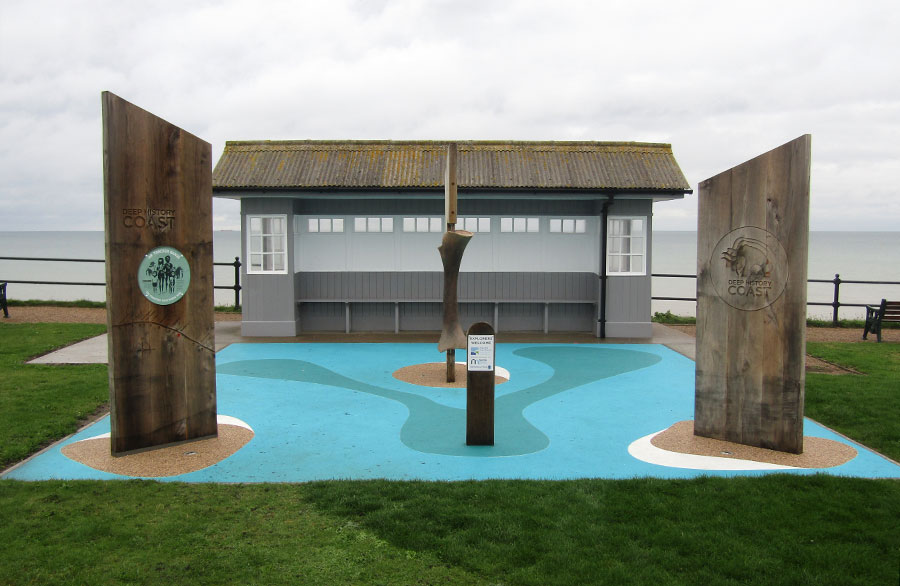
There’s a trail along the clifftops from Weybourne to Cart Gap with information points showing you what the landscape looked like hundreds of thousands of years ago.
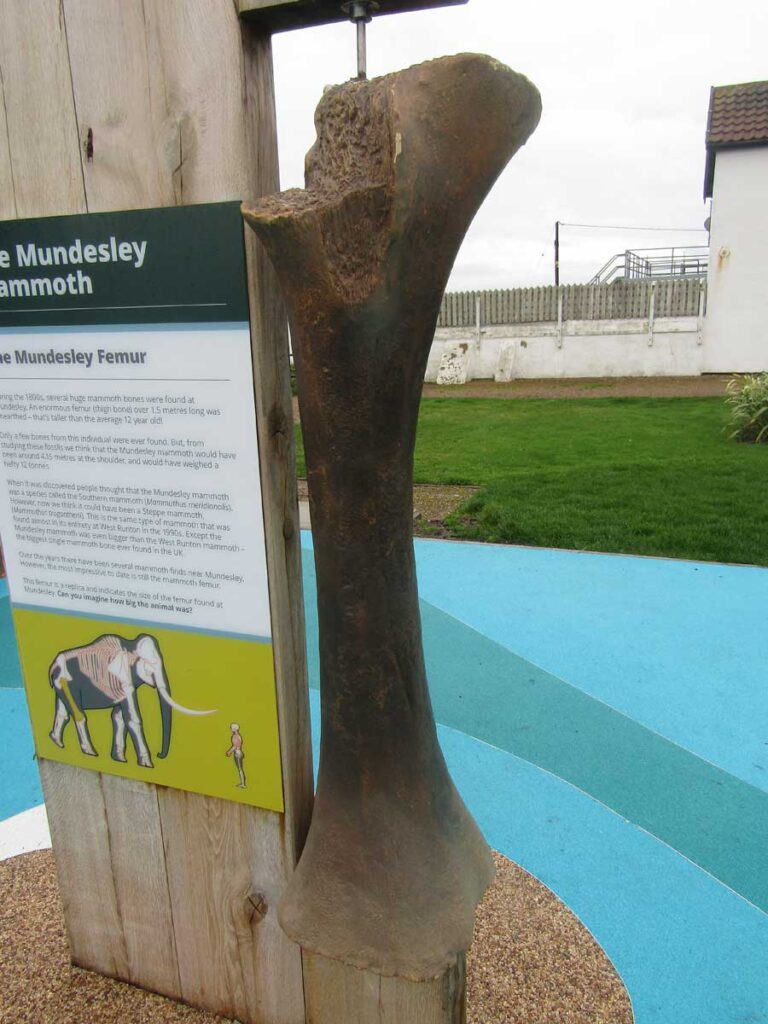
But it’s down on the beaches where you’ll get the best chance to uncover something pre-historic, especially at low tide.
Beware – never dig into or climb the cliffs here, they are notoriously unstable.
Likely finds are little belemnites – the remains of a squidlike creature – fossilised sea urchins and sponges and glowing amber.
You may not be lucky enough to dig up any more mammoth bones but it’s not unheard of to find mammoth teeth which look like stale, sliced loaves of bread!
Cromer and Sheringham are great for fossilised coral, brachiopods and echinoids.
At the base of the cliffs you can discover belemnites and crinoids and there are marine molluscs in the rockpools, a species dating from the last ice age, still around today.
Check out the museums at Sheringham and Cromer to give you an idea of the more unusual discoveries and what to look out for.
Abereiddy Bay, Pembrokeshire, South Wales
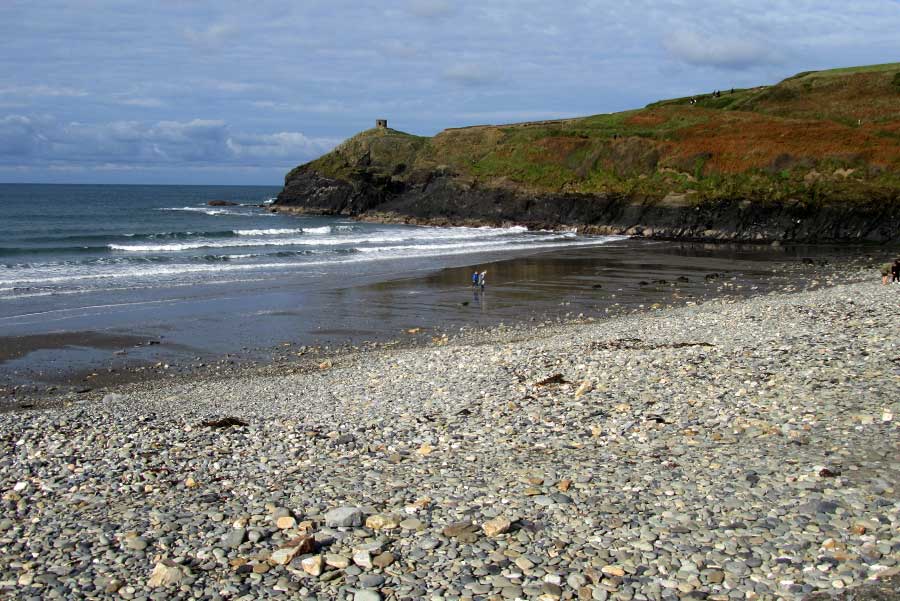
Famous for its black sand, Abereiddy Bay is also home to some strange writing on the rocks.
Graptolites were plankton like creatures that filled these waters half a million years ago – so ancient they predate the dinosaurs.
They had their own ecological niche, drifting through the waters feeding on algae.
Their fossilised bodies look like scribbles embedded in the stones.
Abereiddy is a Site of Special Scientific Interest and it’s forbidden to hammer into the rocks. But there are plenty of fossils to be found in the soft bits that fall off the cliffs.
Herne Bay, Kent
This part of the coast dates from around 56-54 million years ago and was once below a warm, shallow sea on a similar lattide to modern day Spain.
Brave the bracing winds of winter and you could be rewarded with shark’s teeth, especially during the ultra-low spring tides. The beach at Beltinge is the most fruitful hunting ground.
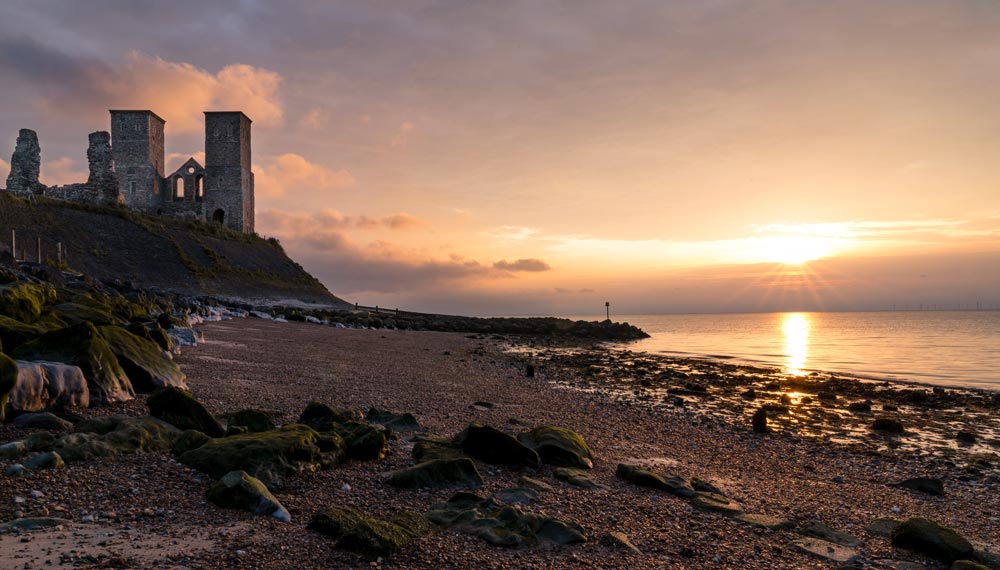
As the tide recedes walk along the beach to the iconic Reculver Towers – all that’s left of a 12th century parish church which was built on the remains of an earlier Roman fort.
Walton-on-the-Naze, Essex
Erosion is an issue along this stretch of the east coast, but that’s great news for fossil-hunters with new finds constantly turning up on the beach.
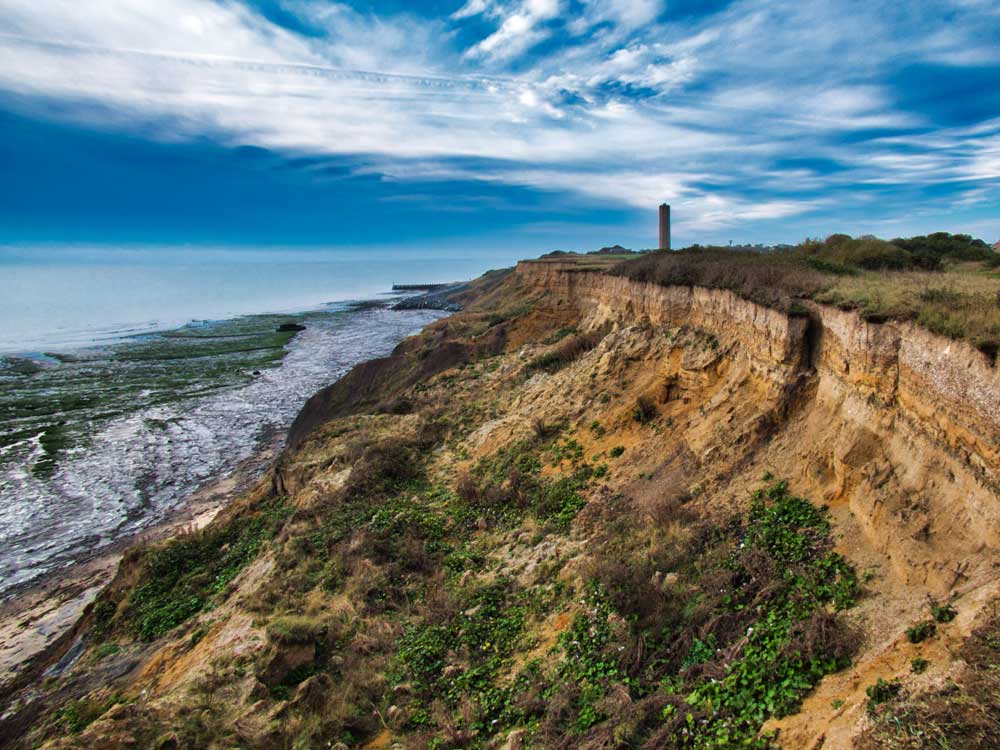
The best spot is near The Naze lighthouse where you’ll find shark’s teeth, twigs that have been pyritized (covered by ‘fools gold’ so they sparkle a little) and shells of ancient molluscs.
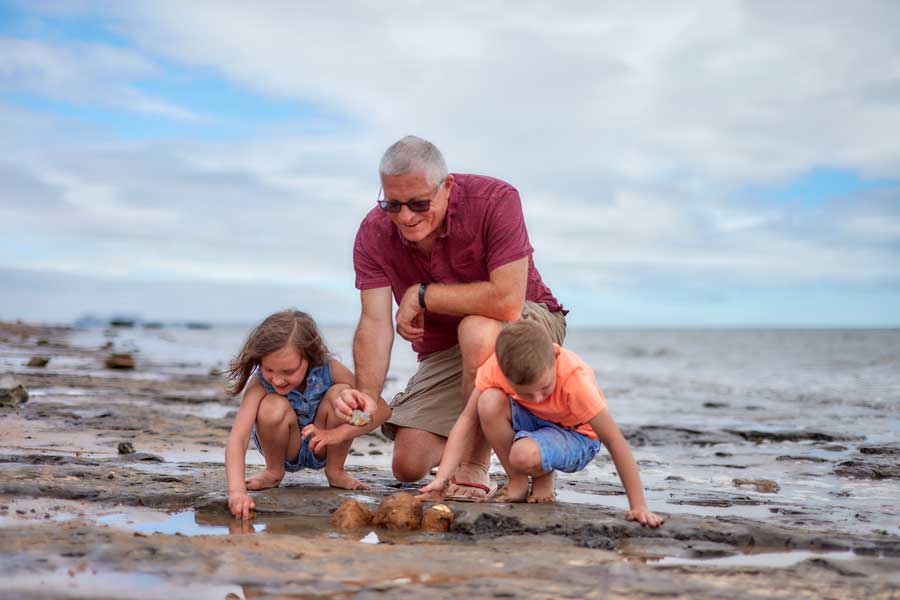
As with the Norfolk beaches, don’t walk below the cliffs as they are very fragile, especially after bad weather.
Yorkshire
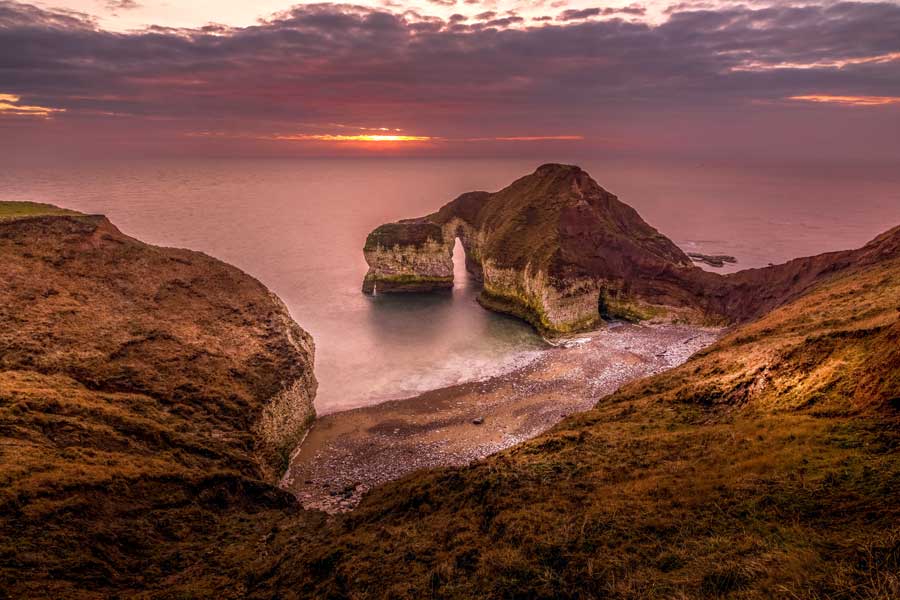
The two best locations are not too far apart – Danes Dyke on Flamborough Head and Mappleton a little further south.
The soft chalk of Danes Dyke is where you’ll find fossilised sponges from 75 million years ago.
And not far away is the delightful rock formation known as the Drinking Dinosaur – a spectacular coastal arch with nesting birds and seals swimming off the headland.
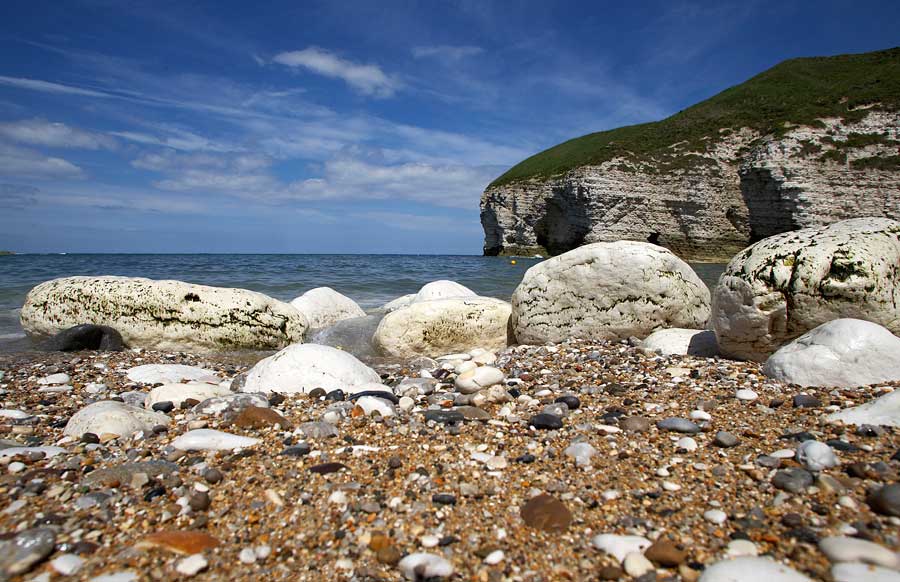
The constant coastal erosion at Mappleton brings down fossils from ancient glaciers. That means stuff turns up here from miles away – anything from tiny belemnites to great chunks of fossilised oak wood.
Redcar, Durham
This is a great fossil beach for beginners and families with little ones. No cliffs and no crashing waves or riptides so you can relax.
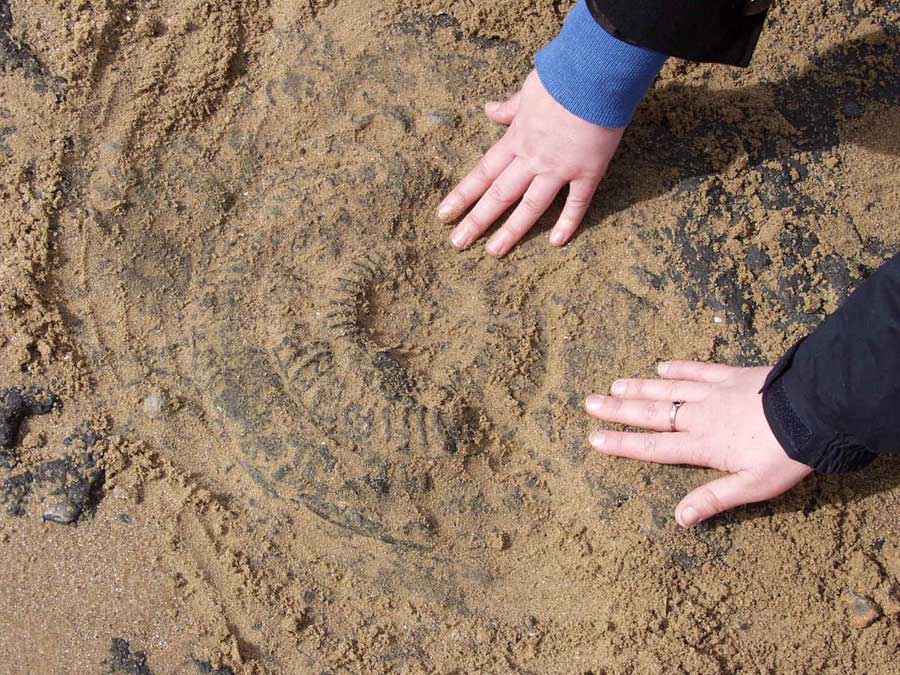
Big finds here are rare but in 2021, a large ammonite was revealed when the soft sand got washed away and the remains of a petrified forest were uncovered by storms in 2018.
So you may not get your name mentioned in a museum, but there’ll be plenty of interesting things to collect and maybe start off a lifetime hobby.
Isle of Wight
Dinosaur bones are what bring fossil-hunters to the island’s south coast. From Compton Bay to Blackgang Chine it’s famous for fossilised remains of these gigantic, prehistoric creatures.
Take a walk at Compton Beach at low tide to see the dino footprints and the fossilised wood from the petrified forest.
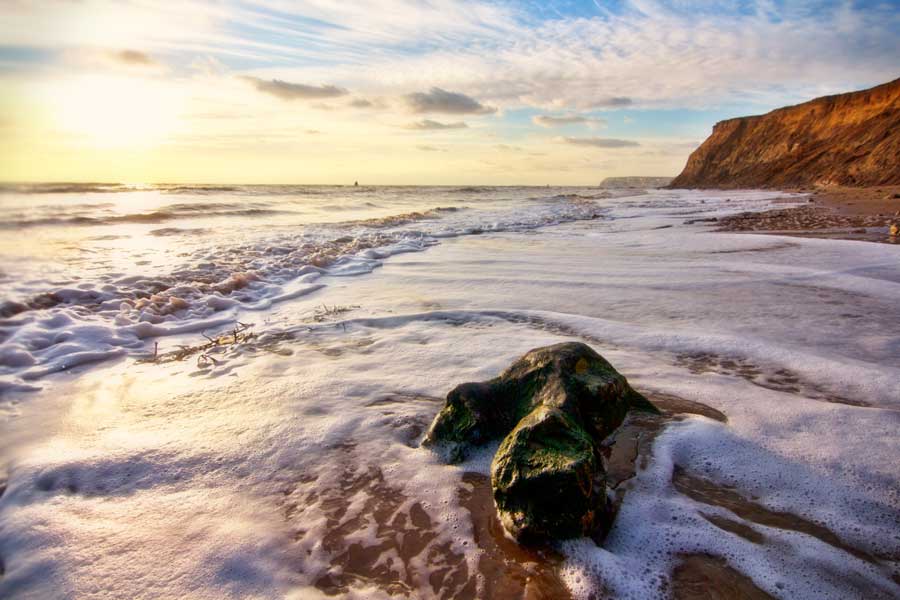
Brighstone Bay is where a partial sauropod skeleton was found and the stones are rich in dino remains.
Ammonites abound in the area between Shepherd’s Chine and Atherfield Bay – although if you find a really big one you have to report it.
A guided walk is often the best way to get started – there are a few that Visit Isle of Wight recommend.
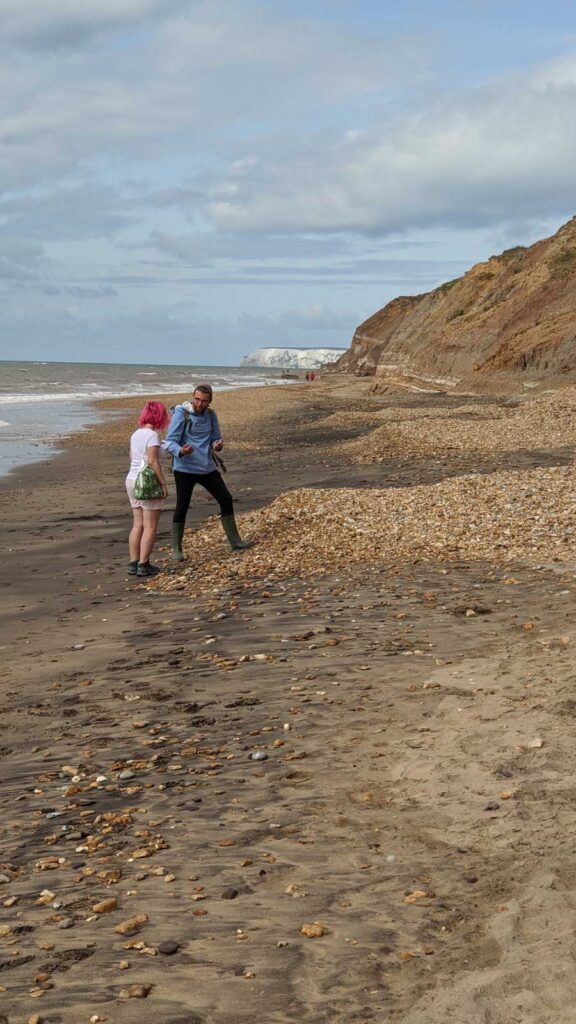
And finally, the most well-known of all the UK’s fossil hunting spots …
The Jurassic Coast
The 95 mile stretch of coastline from Exmouth in Devon to Swanage in Dorset is a UNESCO World Heritage Site because of its outstanding rocks, fossils and landforms.
What makes it so very special is the fact that it covers three distinct geological timelines – the Triassic, Jurassic and Cretaceous – which means it is packed with treasures dating back more than 250 million years.
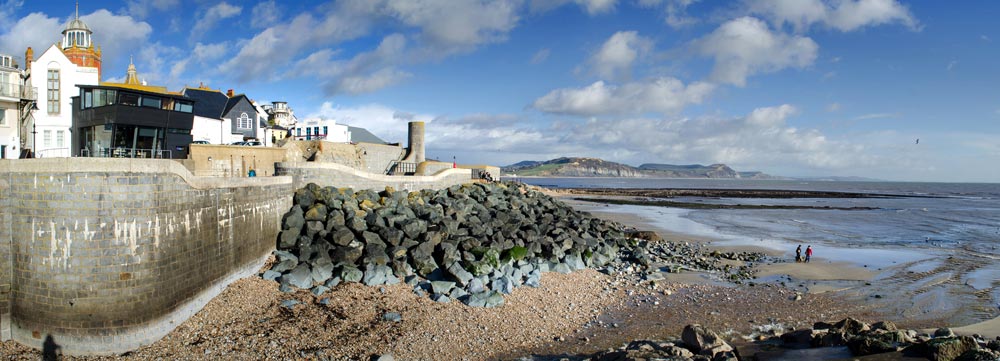
Fossil-wise the best beaches for beginners are Charmouth and Lyme Regis – family friendly locations with lots of things to see and do.
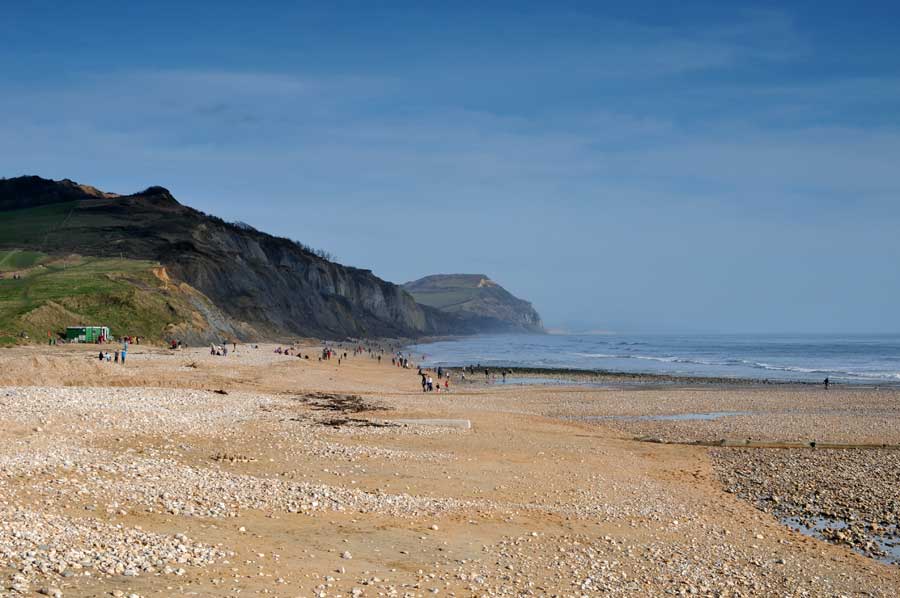
We spent many happy hours at Charmouth when our children were young, and the fossils collected all those years ago still have pride of place in the garden! Nothing rare or unique but fun.
Some fossil-rich areas on the Jurassic Coast are not open to the public so remember to check local permissions before starting your search.
Look out for ‘fool’s gold’ (iron pyrite) ammonites which are easily found after a storm. They are the shells of extinct animals that looked a bit like squid.
Ichthyosaur backbones are also common, but easily overlooked and shell-like imprints found on rocks are ancient relatives of oysters, clams and scallops.
Fossilised sea urchins are very distinctive but not easy to spot, so are a rare find.
For more information about fossil hunting the Jurassic Coast see their helpful hints and a fossil finder guide on their website
Tips for safe fossil hunting
As long as you take a few sensible precaustions, fossil hunting is safe and can be enjoyed by the whole family. But there are a few things to look out for:
Cliffs
Fossils are found where erosion is happening, and that means the potential for falling rocks, slippery surfaces and steep drops. Always take note of any warning signs that might show a cliff is particularly unstable.
Tides
Fossil hunting in the shallows is great fun, and the water can often expose treasures you might miss when they’re dry. But always know the tide times and keep and eye out for areas where the waves come in harder or faster than elsewhere. Don’t risk getting cut off in an enticing little cove.
Don’t dig too deep
Some of the best fossil finds have been a lucky spot of something lying in full view or recently uncovered by waves or wind. If you do delve below the surface, don’t go too far and make sure you fill in any holes later.
Mind the mud
Obvious if it’s recently rained but some deep mud can be covered by a dry surface and you only realise your mistake when you step on it and S Q U E L C H! If in doubt, use a long stick to test any possible muddy patches.
Beware deep water
Rock pools can be deceptive, so check before you plunge in. Even more important is if you are fossil-hinting in quarries where rainwater and run-off creates deep and often dangerous pools.
Using tools
Nothing wrong with carrying a small hammer or chisel, but bruised fingers are no fun if you miss. And chips of rock can fly up and damage you and passersby, so if you’re going at it hammer and tongs, then safety glasses should also be part of your kit. But for beginners it’s best to leave the tools at home and just keep your eyes peeled – many fossils are lying there among the pebbles, just waiting to be discovered.
Ask for help
Most fossil-rich destinations have guided walks and tours which are great fun, and a good way to learn what to look out for. Even if you are in a large group, you can still be the lucky one who spots something, and a guide will help you identify your finds.
Happy fossil hunting!
More information on fossil-hunting
We’ve just scratched the surface of places you can go to have fun fossil-hunting.
For more tips on what to look for, the tools you need, where to go and how to stay safe while fossil-hunting check out Discovering Fossils or the UK Fossils Network
Where to next?
• Best winter beaches
• Island Life, Isle of Wight
• Cyprus in winter