

You know it’s bluebell season when every woodland turns into a stunning sea of blue and the smell is simply heavenly.
Whether they’re growing wild in forests and copses across the country or cultivated for mass effect in parks and gardens, bluebells are a sure sign that spring is here, and better weather is on the way.
Time to discover the best bluebell walks in Sussex.
7 Fascinating facts about bluebells
• Over half the world’s population of bluebells are in the UK
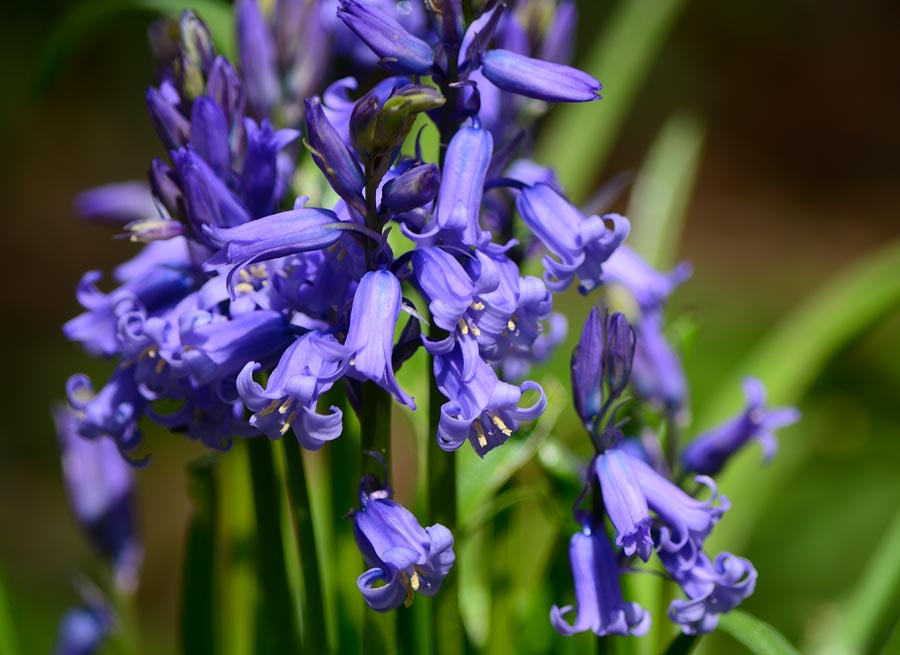
• The native bluebell is different from the Spanish version. It’s a deeper blue, likes the shade and the flowers droop to one side.
• Most importantly for bluebell walk lovers, the Spanish ones have very little scent. You need to find natural woodland for the full bluebell experience.
• Bees love bluebells – often nibbling a hole in the flowers in their eagerness to reach the pollen and nectar.
• Ants spread bluebell seeds, but it takes several years for the bluebell bulb to develop and eventually flower
• Bluebell bulbs contain a starch that was used by the Elizabethans to stiffen their ruffs!
• Bluebells are protected by law – don’t even think of digging ’em up!
7 of the best bluebell walks in Sussex this spring.
Arlington Bluebell Walk and farm trail, East Sussex

Probably the best-known bluebell walk in the area, Arlington raises money each year for a number of charities with its farm trails and open gardens.
The main walk takes you through a 24 acre ancient oak wood with more than just bluebells. It’s an oasis of peace and tranquillity that bustles with bird and insect life.
With an accessible, gravelled path and a number of different length routes to take, it’s family friendly with plenty of seating if you need regular rest stops.
Arlington Bluebell Walk is open 10am to 5pm daily from Wednesday 10 April to Tuesday 14 May 2024, but do check for special events when prior booking may be necessary.
Prices in 2024: Adults £8.00, children (3-16 yrs) £4.00. A family ticket (2 adults and up to 4 children) costs £20. And if you join the Friends of Arlington Bluebell Walk you get unlimited, free access.
Follow the signs off the A22 and A27 near Polegate, and there’s free parking in the field opposite the farm entrance.
More information see their website
Angmering woods, West Sussex
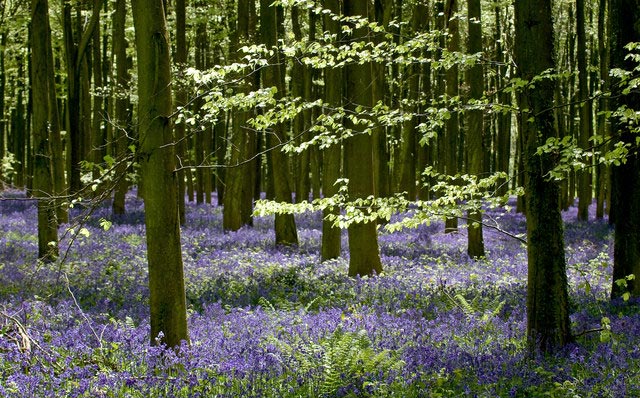
Angmering Park lies within the South Downs National Park and is home to deer-filled woods and sweeping downland views. The estate is privately owned, but there are numerous public footpaths and bridleways and in spring Wepham Wood is a mass of bluebells.
The whole walk covers just over two miles, but you don’t have to go far to see the best blooms. The path is relatively flat and in dry weather is suitable for buggies, but wear stout shoes if there’s been a recent downpour.
The best place to start for Angmering Woods is at Blakehurst Lane car park, just off the A27 at Poling Corner, or there’s a slightly longer walk from Angmering village itself, starting at The Dover car park.
For more details, check out Angmering Walks, a website run by a local couple.
Ashington, West Sussex
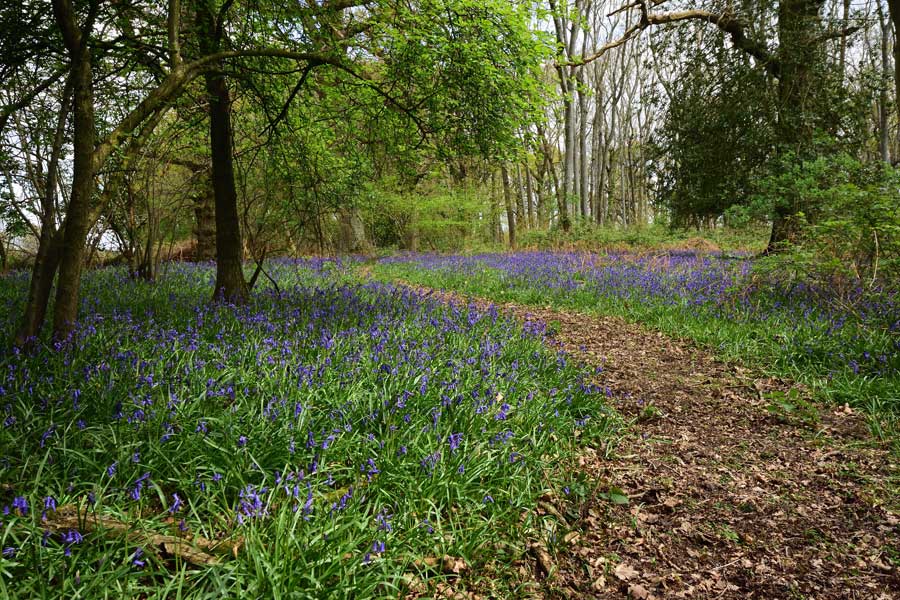
We love this little walk, tucked away just off the A24 north of Worthing, which is full of bluebells, aconites and wood anemones. A favourite of local dog walkers, you do have to get quite a way into the woods to escape the noise of passing traffic, but once there it’s worth the effort.
Typical woodland paths, so not the easiest of trails with lots of stiles, but great for a good stomp!
You can do a full 6-mile circular loop if you are up for it, but once you leave the village behind, there are no facilities.
For Ashington bluebells, park in the village of Ashington and take the footpath over the A24, and you’re in Capite Wood which is full of bluebells in season.
Brede High Woods, East Sussex
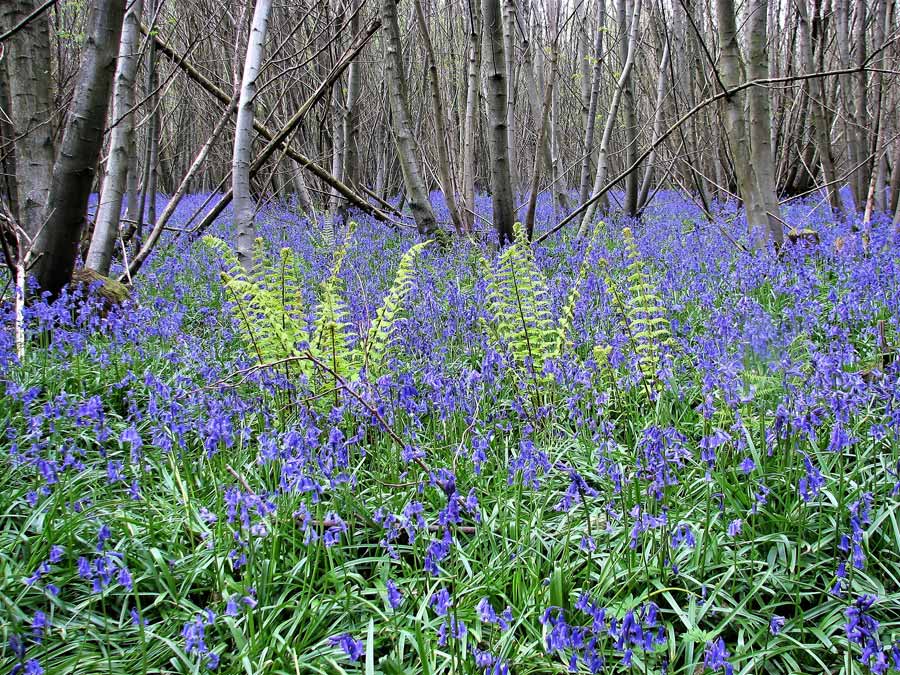
Part of the High Weald Area of natural beauty, these woods abound with rare and beautiful wildlife.
Dense ancient woodland gives way to open grassland and sandy heaths with a mass of walking and riding trails. Thousands of species rely on the site, including rare beetles, beautiful butterflies and badgers.
And in spring the woods are a carpet of blue.
Brede High Woods are located at Cripp’s Corner near Battle. There are two free car parks on the south side of the B2089 Cripp’s Corner/Broad Oak Brede Road, and more than a dozen entrances to the woods themselves. More details on the Woodland Trust’s website
Clapham Wood, West Sussex
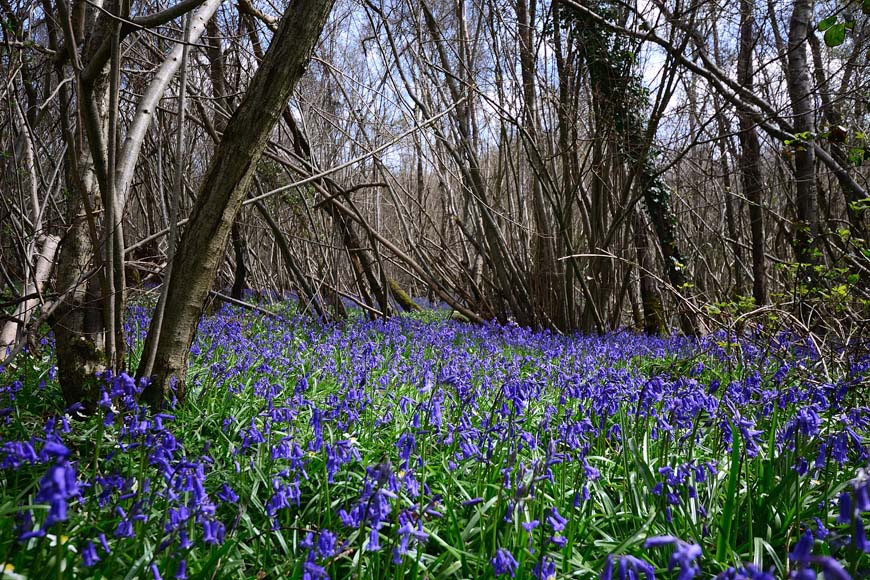
Another one you can see for free, we love the remote and slightly spooky atmosphere of Clapham Wood.
Amateur film-makers relish its haunted feel, but everyone else goes there for the peace and quiet. Rumour has it there are parts where the birds don’t sing, but we have always found it full of life.
For Clapham Wood, park considerately in the village and start your walk at the church. Take any route you like, but do bear in mind you will be crossing farm fields to reach the heart of the woods, so look out for animals.
Woods Mill, Henfield, West Sussex
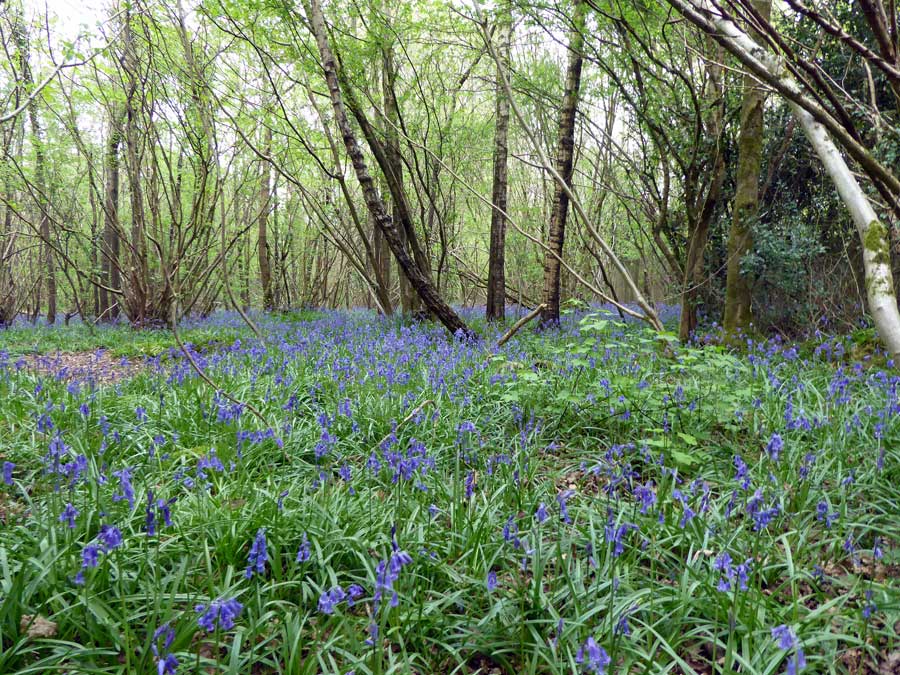
The Sussex Wildlife Trust cares for many wild wooded areas and has some of the best bluebells in spring.
Try Ebernoe Common or The Mens near Petworth, Flatropers Wood near Peasmarsh, Marline Valley near Hastings and Selwyns Wood near Heathfield.
But our favourite is a stroll around Woods Mill, where the charity is based.
A mix of wetland and woods, it covers 47 acres and is a great example of how the countryside used to be, before we humans got too busy!
It’s packed with wildlife and, of course, bluebells cover the ancient woodland floor.
Entry to Sussex Wildlife Trust nature reserves is free, but they ask for donations.
At Woods Mill there is a car park, bike racks and toilets. More information on their bluebell walks here
Wakehurst, Ardingly, West Sussex
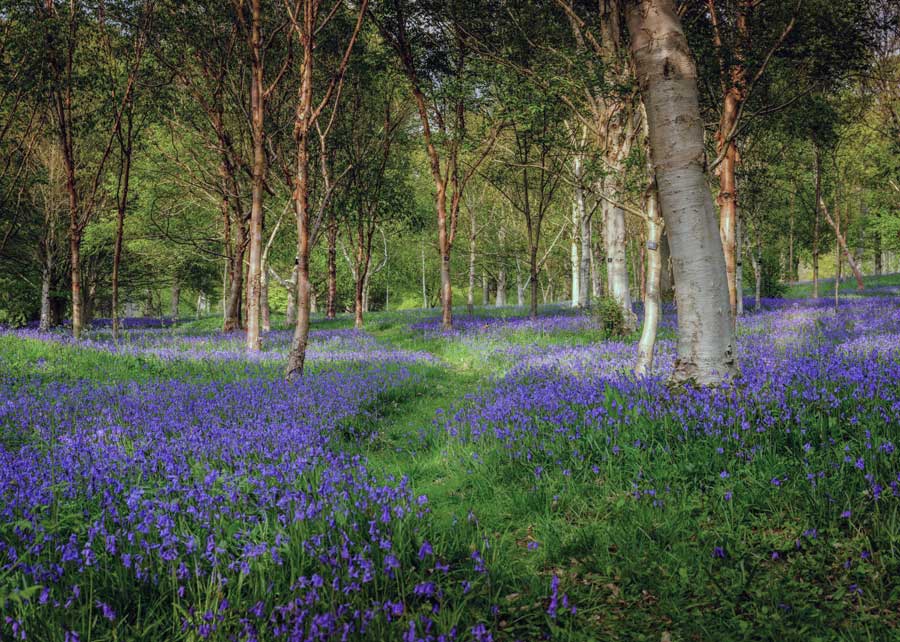
Last on the list alphabetically, but probably the most spectacular.
Wakehurst, the sister garden to Kew, is worth a visit at any time of year, but the bluebells in Bethlehem Wood are simply gorgeous, although you’ll find these delicately drooping blooms throughout the whole of the 500 acre gardens.
The rhododendrons are coming into bloom too in Westwood Valley and the Himalayan Glade, so you definitely get a lot for your money.
Wakehurst puts on a whole series of nature inspired walks, talks and treasure trails for all ages and the café serves delicious snacks.
Wakehurst is open daily from 10am to 6pm
Prices in 2024 are £16.50 adults, young people aged 16-24 £8.25 and under 16s go free.
It’s accessible by car and bus, and is a short drive from Haywards Heath station.
Car parking is free with your entry ticket.
So we’re off to see as many blue blooms as we can this spring.
How about you?
Where to next?
• Bluebells and ghost stories in Clapham Wood
• Best foot forward
• Picking up plastic
You missed out Heaven Farm Furner’s Green, Uckfield TN22 3RG. Fabulous easy woodland walks through masses of bluebells
Oh yes, haven’t been to Heaven for ages:) Good bluebell call!