
Wind or water?
Agricultural or industrial?
Mills are part of the UK’s landscape and heritage. There’s barely a hillside or fast flowing river that doesn’t bear a trace of their history.

Thanks to museums and organisations like the Society for the Protection of Ancient Buildings (SPAB), they survive for future generations.
I love poking about amongst their clanking cogs and sweeping sails. It’s even more fun if there’s an end product. Many mills still grind grain to make flour or provide power for spurting fountains, weaving machines and noisy engines.
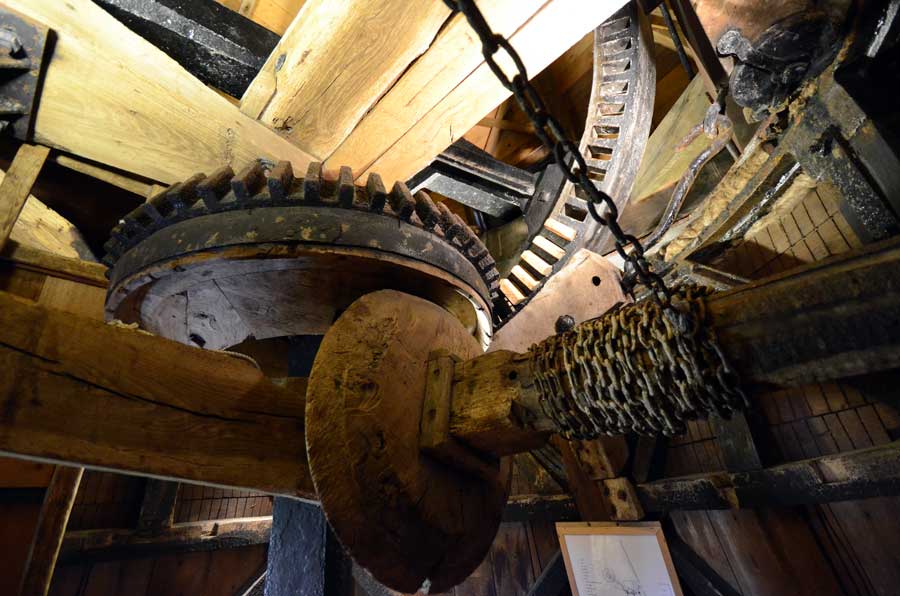
National Mills Weekend (7 & 8 May 2022) is your chance to see many of these iconic powerhouses up and running, exactly as they would have been hundreds of years ago.
The theme this year is ‘New Life for Old Mills’, celebrating wind and watermills and the hundreds of volunteers who make sure they survive.
Mills across the whole of the UK are taking part.
Highlights of National Mills weekend 2022
There’s bound to be one near you. Check out the SPAB website for more details.
New Hall Watermill in Sutton Coldfield in the West Midlands will be milling its own flour. The 18th century brick built watermill once had four waterwheels and four pairs of millstones. One wheel remains, driving two pairs of stones in full working order.
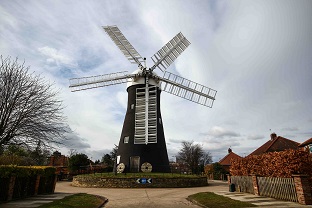
Holgate Windmill, just outside York, is the oldest five-sailed windmill in the country. It’s been restored to full working order and produces traditional stone-ground flour.
Ullesthorpe Windmill in Market Harborough, Leicestershire, is a 6-storey brick-built tower mill, with original wooden machinery and 3 pairs of millstones. And it has its own granary, stable, cart-house, pigsties, bakehouse and miller’s office.
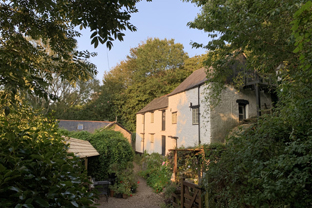
Hele Cornmill in Ilfracombe, Devon dates from the 16th century and produced flour right up until the 1930s. Now fully working again, the watermill grinds a heritage species of organic wheat used in bakes for the adjacent tea room.
A recent restoration is Billingford Windmill, near Diss in Norfolk. A five storey brick tower mill with a boat shaped cap, built in 1860. More Norfolk mills can be found here
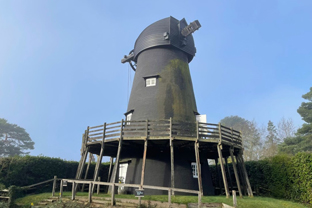
In Hampshire, Bursledon Windmill, near Southampton, is a 19th century windmill in full working order producing its own flour to sell, while Hockley, just outside Winchester is a beautiful old watermill, once used to power a threshing machine.
And in Conwy Valley, you’ll find remnants of Wales’ industrial past at the Trefriw Woollen Mills. Powered by a hydro-electric turbine dating from the 1940s, it uses traditional methods to produce Welsh bedspreads, tweeds and travelling rugs.

Windmills and watermills in Sussex
We are very lucky to have some of the UK’s most iconic mills on our doorstep.
Here are our 7 favourites:
Jill Windmill, Hassocks, West Sussex
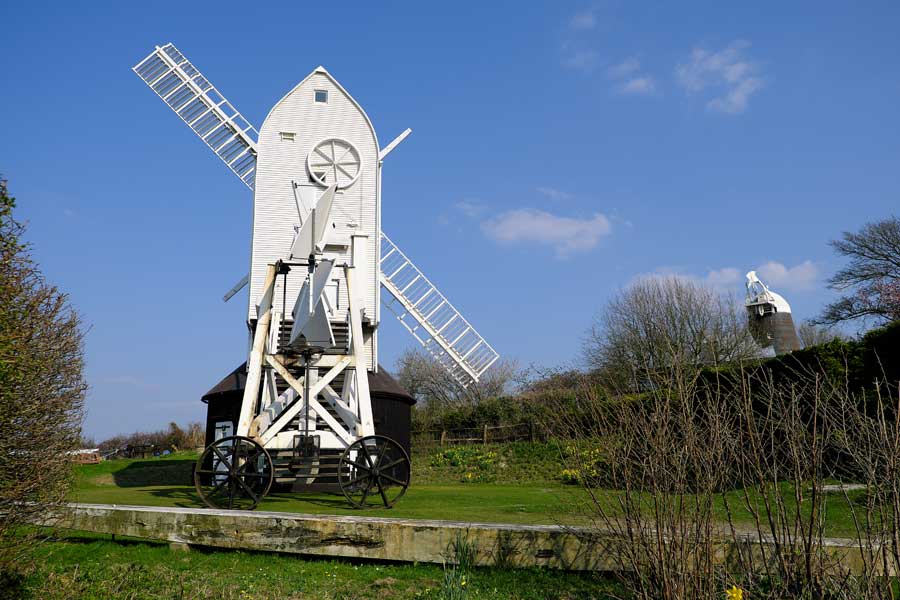
Everyone knows the story of Jack and Jill who went up the hill. But this pair, a matching set of 19th century corn mills, sit atop Clayton Hill just north of Brighton. They did tumble down once, but are now beautifully restored.
Jack is privately owned and not open to the public but volunteers run Jill Windmill which produces stoneground wholegrain flour on an occasional basis.
It’s a perfect picnic location on sunny, summer days.
For more information on Jill’s restoration and open days, see Jack and Jill Windmill Society’s website
Oldland Windmill, Hassocks, West Sussex
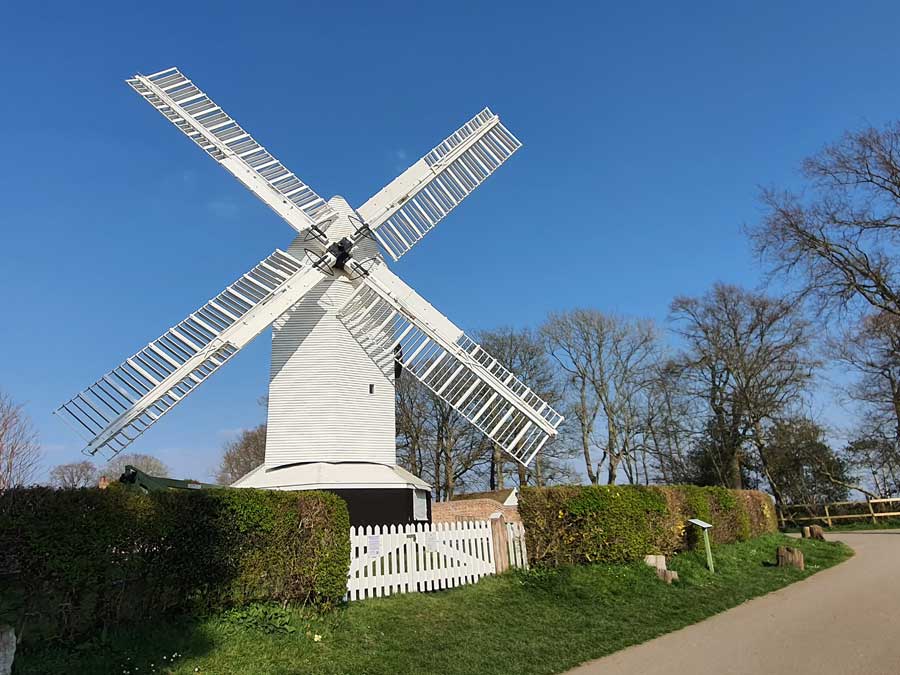
Look north from Jill and you’ll spot the classic lines of Oldland, a beautifully restored post windmill, set within the South Downs National Park.
Built in 1703, it saw service for over two hundred years grinding wheat and grain for local communities. It fell into disrepair when it was abandoned in 1912 and it’s taken years of hard work to restore it to its former glory. You can admire its exterior from the nearby public bridleway, Oldlands Lane, but cars aren’t allowed, so you need to park in the village and take a stroll.
If you want a closer look, go on the first Sunday afternoon of the month from April to October, when volunteers give guided tours or join in one of their Special Events days. For more details, see their website
High Salvington, Worthing, West Sussex
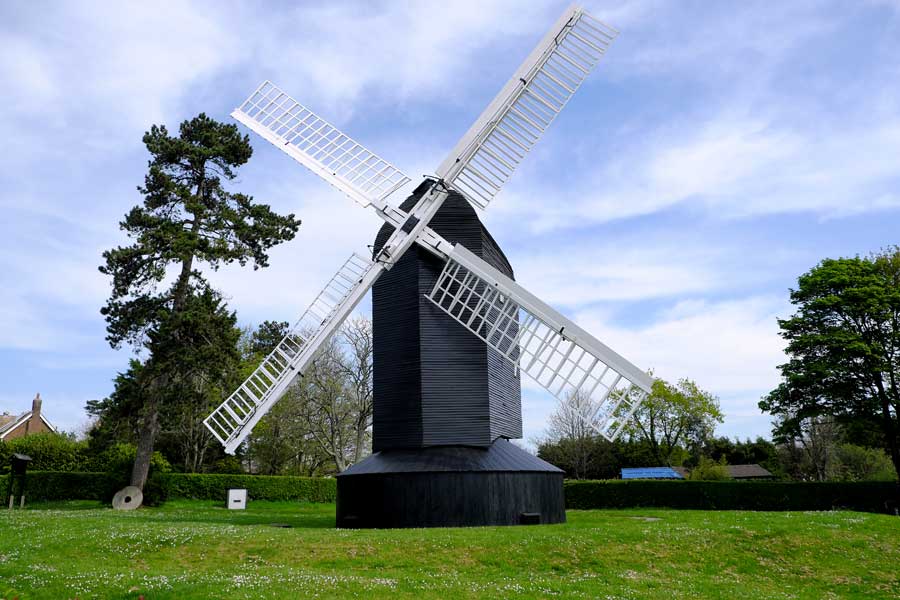
A working post mill dating from approximately 1756, High Salvington supplied the needs of the residents of nearby Worthing for nearly 150 years, until it closed in 1897. A violent gale in 1976 caused serious damage, but that led to the establishment of a Trust to restore it.
The hurricane of 1987 gave the mill its first taste of renewed life – the single pair of sails moved for the first time, even though the brake was on!
The mill has been extensively restored and in 1991 started to grind grain again. It’s open to visitors on the afternoon of the first and third Sunday of every month from April through to September, as well as holding a special event for National Mills Weekend.
For more information on their website
Burton Mill, Petworth, West Sussex
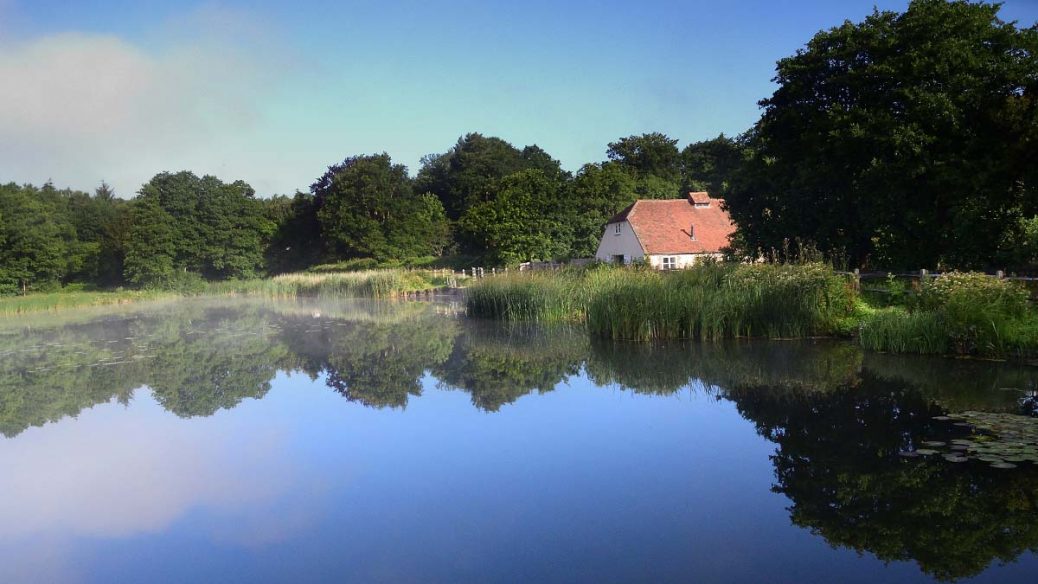
Such a peaceful place, it’s hard to believe it was once a noisy, industrial site. The present building dates from around 1780, although mills and forges have been there for more than 800 years.
Initially used to mill grain, it was later converted to water-powered turbines which generated electricity for nearby Burton Park House. A second turbine was later put in to drive a circular saw and a cattle cake crusher and it was in use until the early 1960s.
The water-powered milling machinery has been restored to working order and they regularly mill wholemeal and white bread flour from locally grown wheat.
Visits to the mill can be arranged privately.
Coultershaw Watermill and pump, Petworth, West Sussex
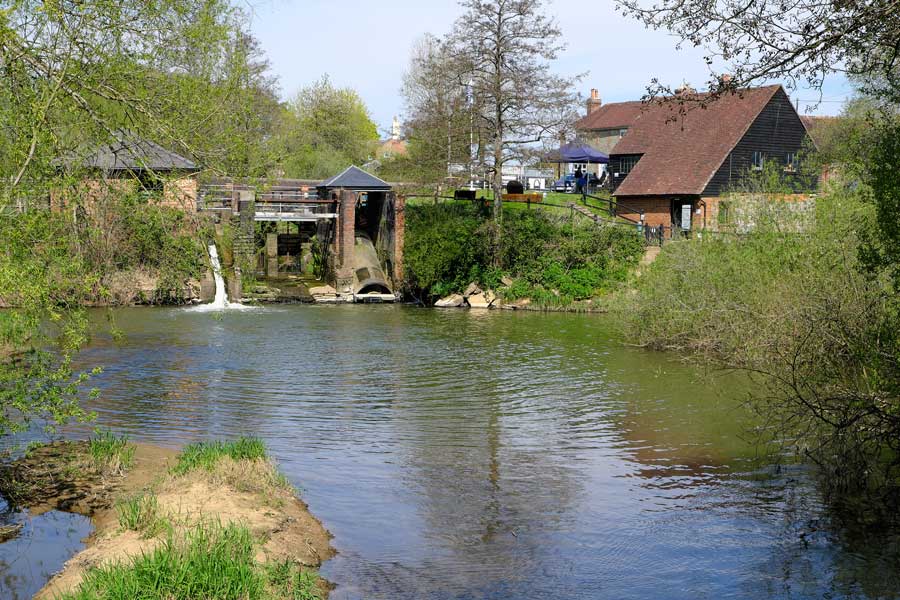
Another relic of the days of heavy industry, Coultershaw was part of the not-so-quiet revolution of the 18th century.
Built to pump water to Petworth House and the nearby town, the noisy machinery was well away from the homes of the well-to-do, sited at the centre of the then navigable River Rother.
Today it’s a gentle backwater where wildlife abounds and the water runs more slowly. But still the huge wheel turns, producing enough energy to power an energetic fountain at the entrance.
They run a series of open days and events throughout the year, so it’s well worth checking out their website
West Blatchington Windmill, Hove
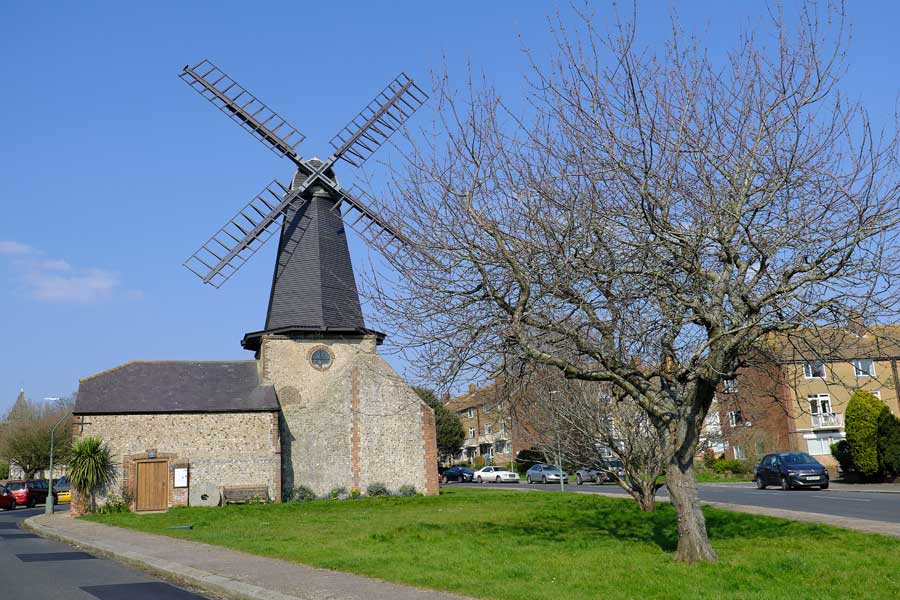
It’s such a surprise when you come across a windmill in the middle of a town – a sudden reminder that what is now houses, schools, shops and offices was once open fields.
West Blatchington is a smock windmill, built in 1820 by a local farmer. In its heyday it was busy enough to employ its own miller and wheelwright, but by the mid 1800s the farm became smaller and the mill stopped operating by the turn of the century.
West Blatchington saw brief service during World War Two as an ARP station but fell into disrepair until a small group of volunteers came along in the late 1970s.
The Mill was opened to the public in July 1979 and since then it’s held events on a regular basis through the summer months.
For 2022 opening times see their website
Halnaker, near Chichester, West Sussex
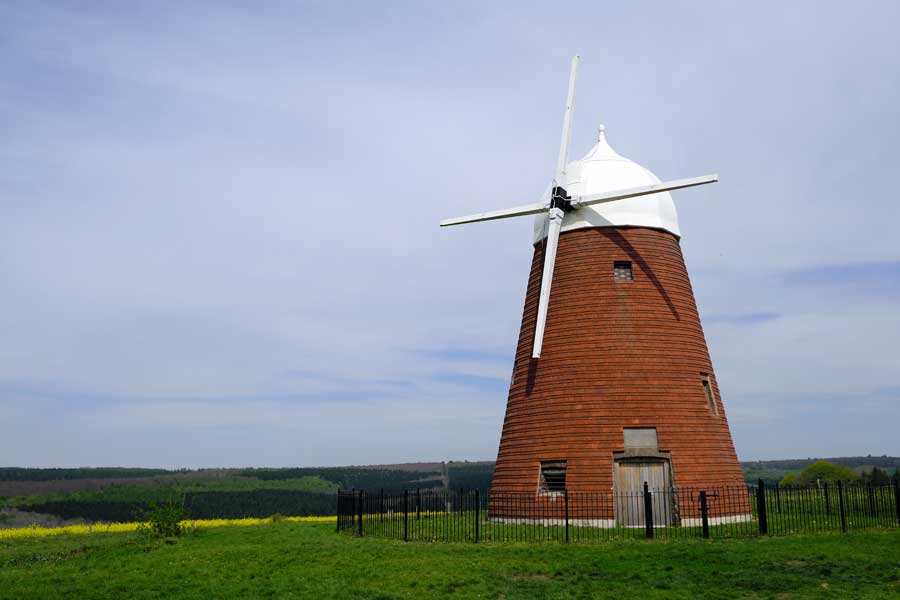
And finally, no longer in working order, the outside of Halnaker Windmill can be viewed all year round, but its interior is empty, and the sails stripped down.
It’s still worth the walk for two very beautiful reasons:
- The glorious 360 degree views across the South Downs and out to sea
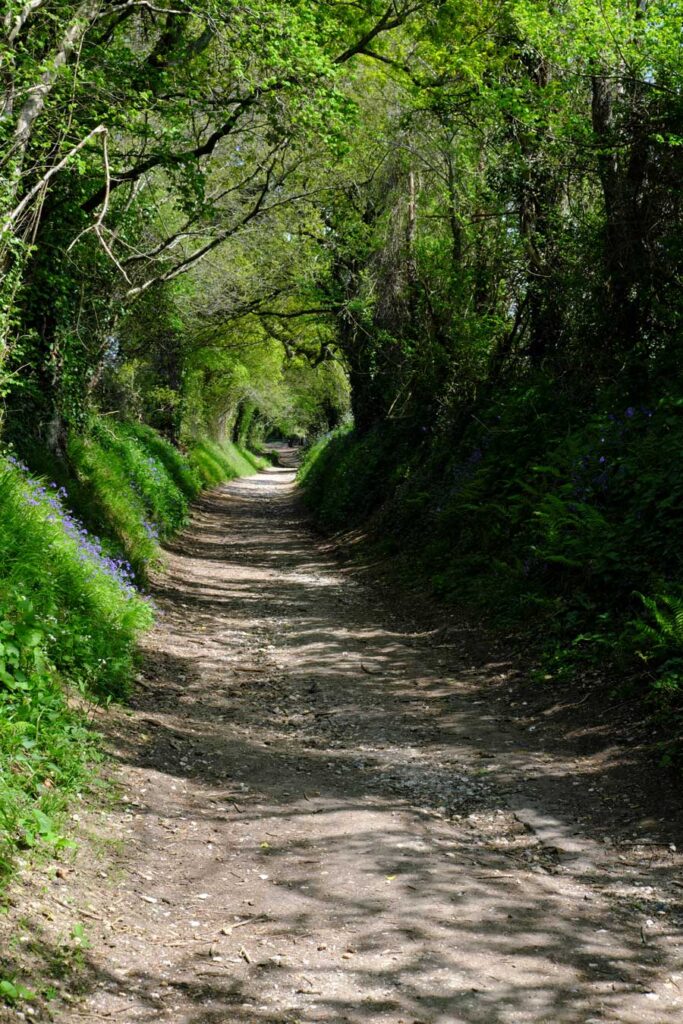
- The approach is via a sunken lane with an ancient tree-tunnel – enchanting in every season
So will you be milling about for National Mills Weekend?
Additional images copyright: Nick Ansell (Holgate Windmill), Kathy Jones (Hele Corn Mill), Hampshire Cultural Trust (Bursledon Windmill).
Where to next?
• Windmills you can stay in
• Burton and Chingford Pond
• Weald and Downland Museum
Watermills seem to be fairly common around here where as wind mills seem to be few and far between. They do make for wonderful photos though!
Hi Nikki
Glad you stopped by. We’re very lucky in Sussex, with a good mix of water and wind! And it’s great when you can bake with locally ground flour.