
It was a monochrome sort of day as we made our way to the Mary Rose.
We wandered past HMS Warrior and in to Portsmouth’s historic dockyard.
A brisk breeze set rigging slapping against masts, and the Gosport ferry disappeared into the mist.

The perfect atmosphere for a visit to a slice of Tudor history and a trip down memory lane.
It’s been nearly 40 years since we last gazed on the Mary Rose.
Like so many in the early 1980s, the discovery of Henry the VIII’s glorious flagship, had captured our imagination.
We’d watched on TV as her skeletal remains were raised from a watery grave in the Solent in 1982.
We winced, along with the then Prince of Wales observing proceedings from a nearby boat, as the cradle gave way and for a moment it looked as though the royal ship would sink again.
We breathed a sigh of relief as the huge hull made its way onto dry land, more than 400 years after it disappeared below the waves, taking the lives of around 500 men – and one dog.
We vowed there and then to go and see it for ourselves.
Which we did.
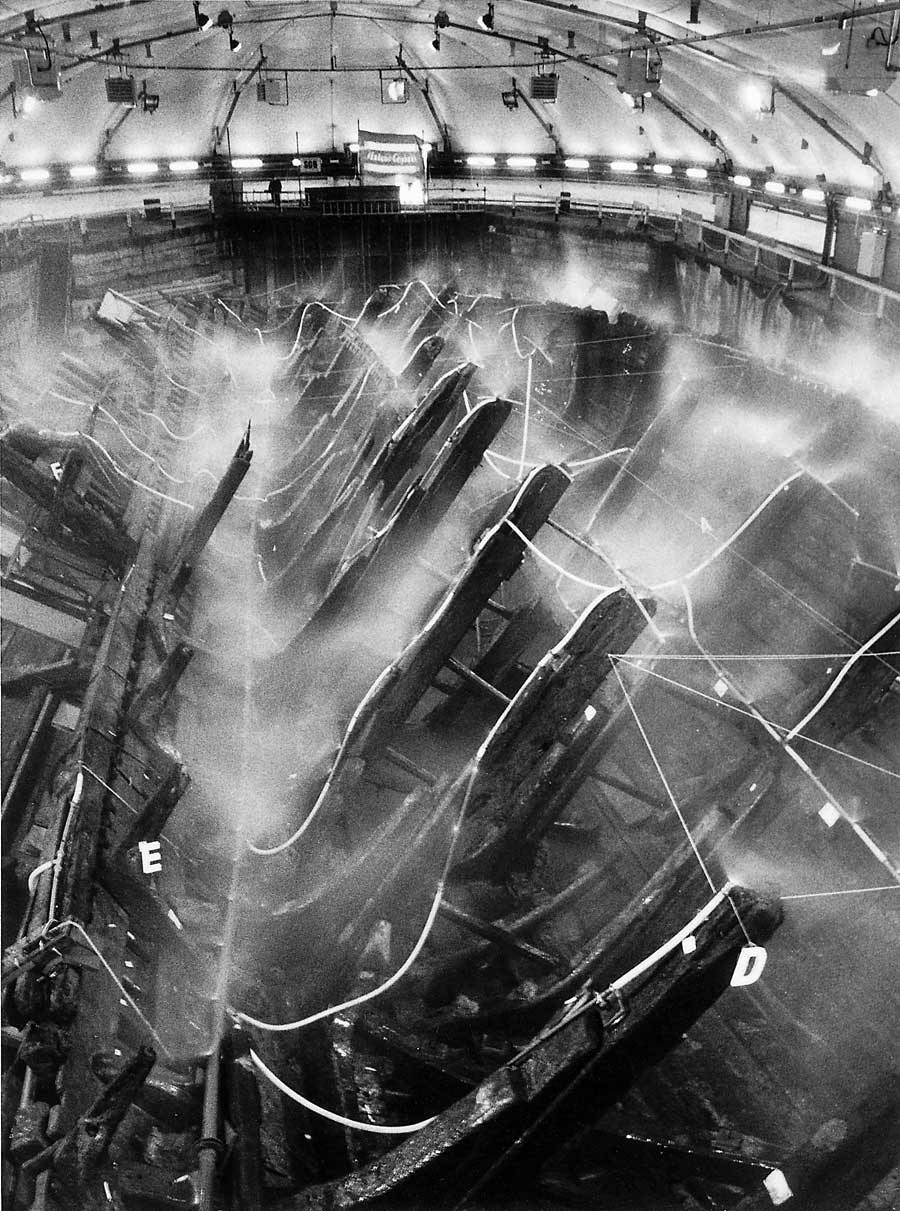
Mary Rose in 1984
Back in the mid 1980s, all that was visible of Henry’s favourite ship was saltwater-sodden timbers in a huge hall, sprayed continuously with water to stop the wood from drying out too fast.
A few of the artefacts salvaged from when the ship went down in July 1545 were on display nearby.
It was fascinating, intriguing and a little disorientating.
In those days the ship’s hull was still on its side, just as it had been lying for centuries in the Solent silt, and a fair amount of imagination had to be used to make out the timbers and decks through the constant fine spray of water and curling mist.
There was little to show at that time for the years of painstaking underwater operations and archaeological study that had led to its salvation.
And it was nothing like the magnificent attraction the Mary Rose Museum is today.
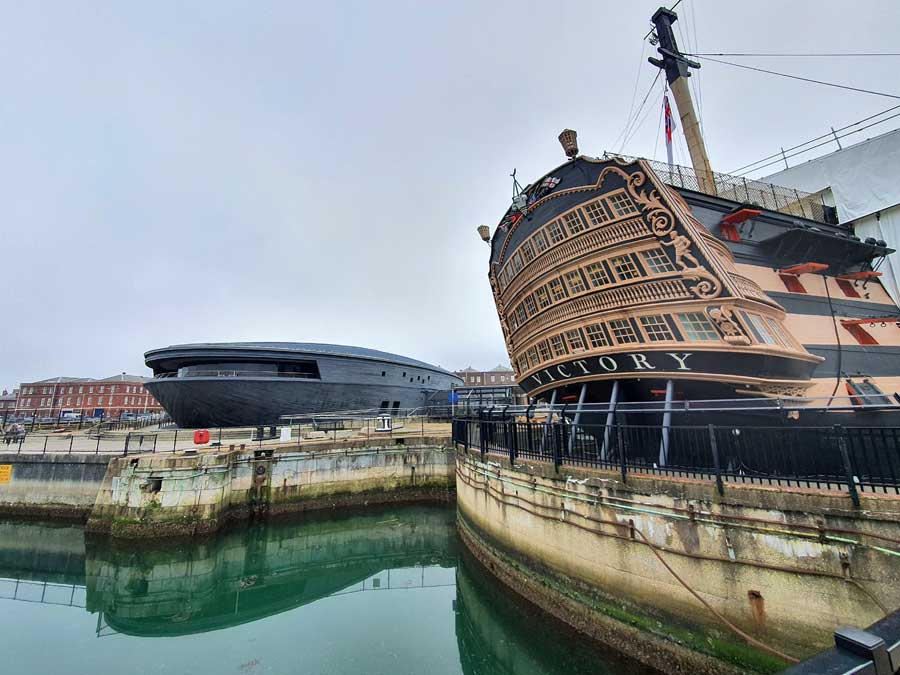
The Mary Rose Museum in the 21st century

The visit starts with a brief audiovisual display, giving a short history of the Mary Rose, introducing Henry as king and warrior then immersing you in the battle, making you feel you are actually on board during the sinking. Exciting, but not terrifying. Just enough to put you a little off balance and bring home the reality of what you are about to see.
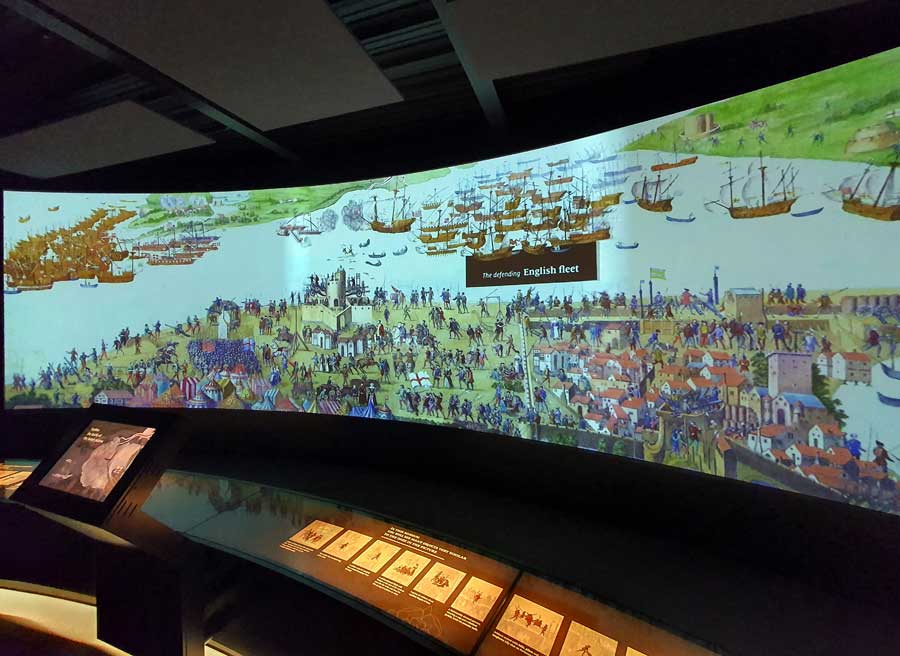
A reproduction of a detailed painting of the Battle of the Solent dominates the next room, along with potted histories of the people on board, their belongings and, in a few cases, even their names and faces. Analysis of skeletons found in the wreck means experts have been able to determine the height, weight, likely nationality and even facial features of a few of the men on board.
Then, behind a transparent floor-to-ceiling wall, you catch your first sight of the ship.

Housed in a purpose built hall, itself a masterly piece of engineering, the Mary Rose is majestic. Now upright and easily recognisable as an ancient warship, she’s displayed in an accessible and enchanting way.
The temperature-and-humidity controlled hall is subtly lit, with backdrops fading in and out and projections of scenes of life on board, in both peacetime activities and during battle.
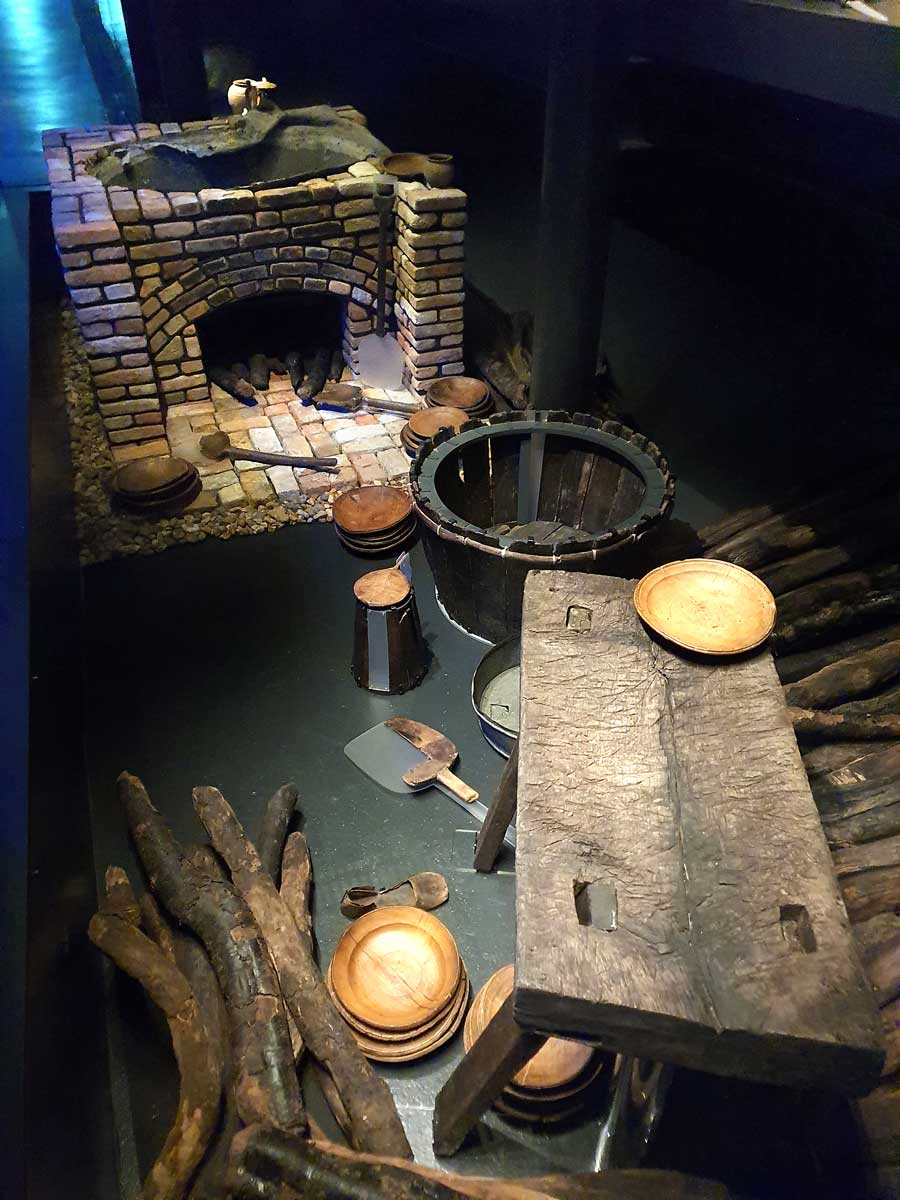
The cook in the galley, stirring his vast cauldron of broth; the carpenter mending tools in his cabin and sending his dog off to catch rats; the surgeon, tending to an injured sailor on deck.
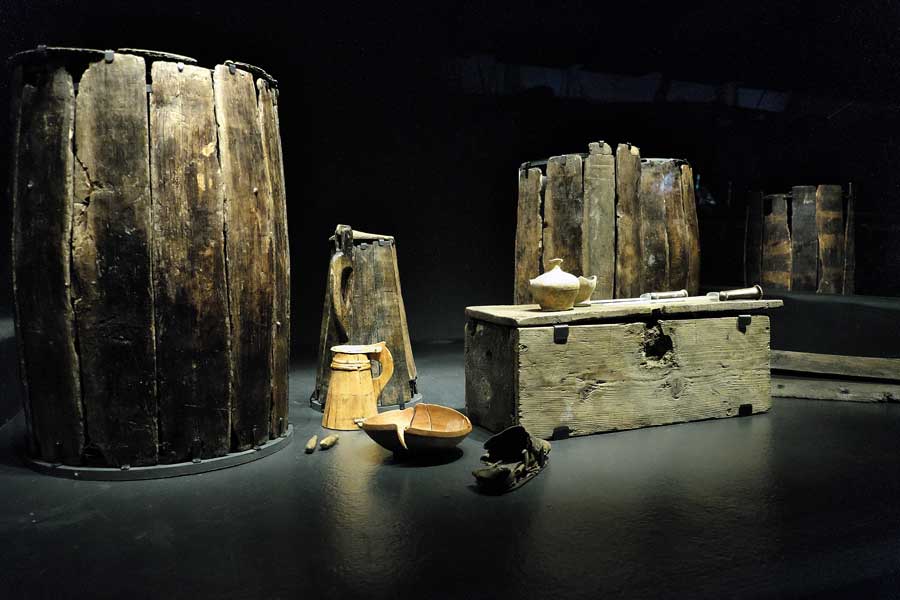
The creak of timbers creates the illusion that you are at sea, and the items salvaged from each deck – all original, not replicas – are lined up opposite, mirroring the decks where they were found.
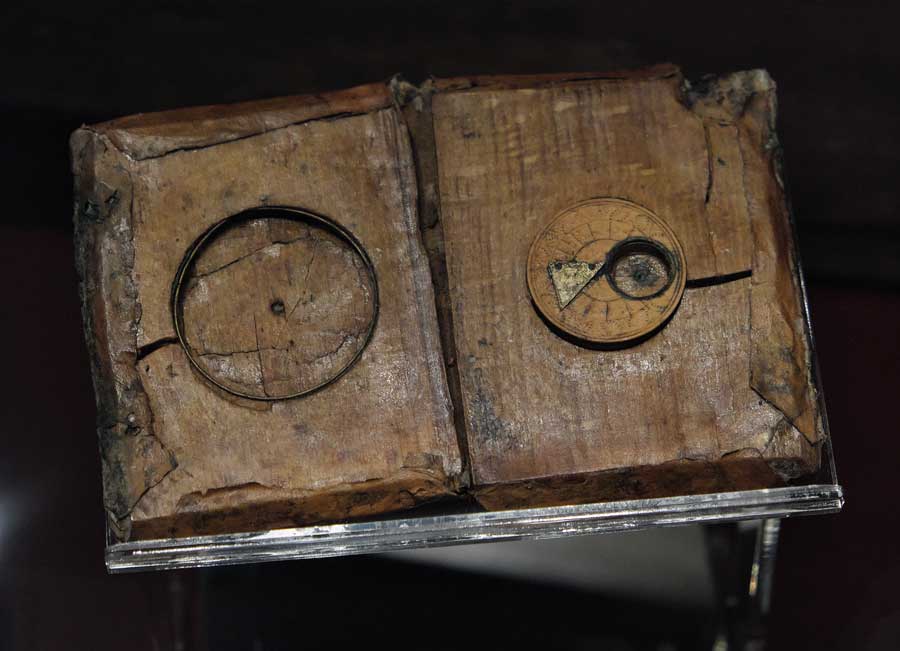
Life on board
At each end of the three levels of the museum, the life of the Mary Rose and her crew, from captain to gunners, is laid out in amazing detail.
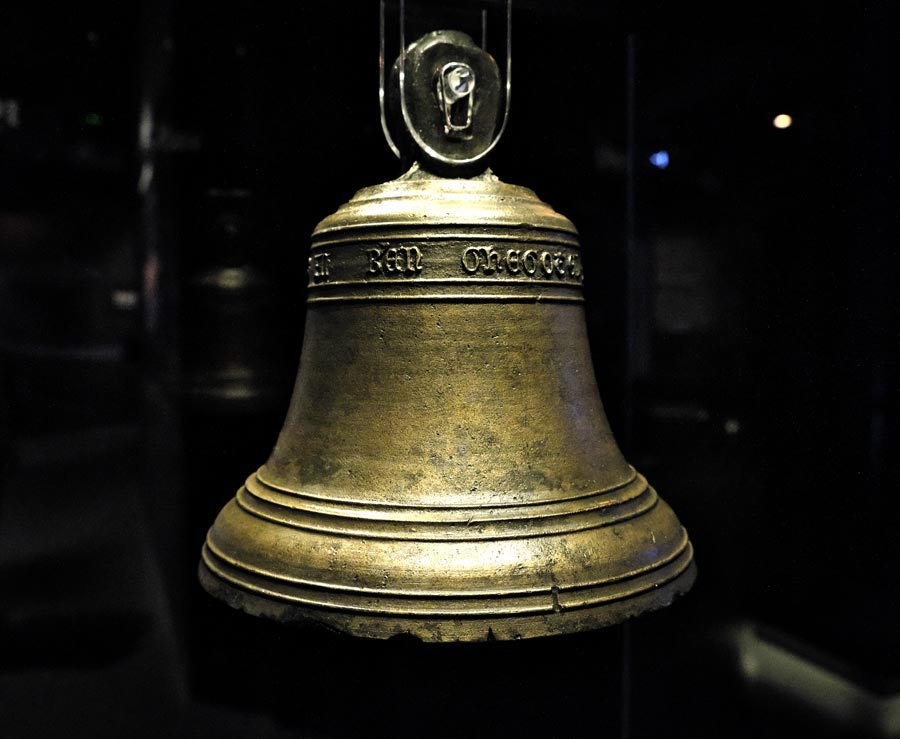
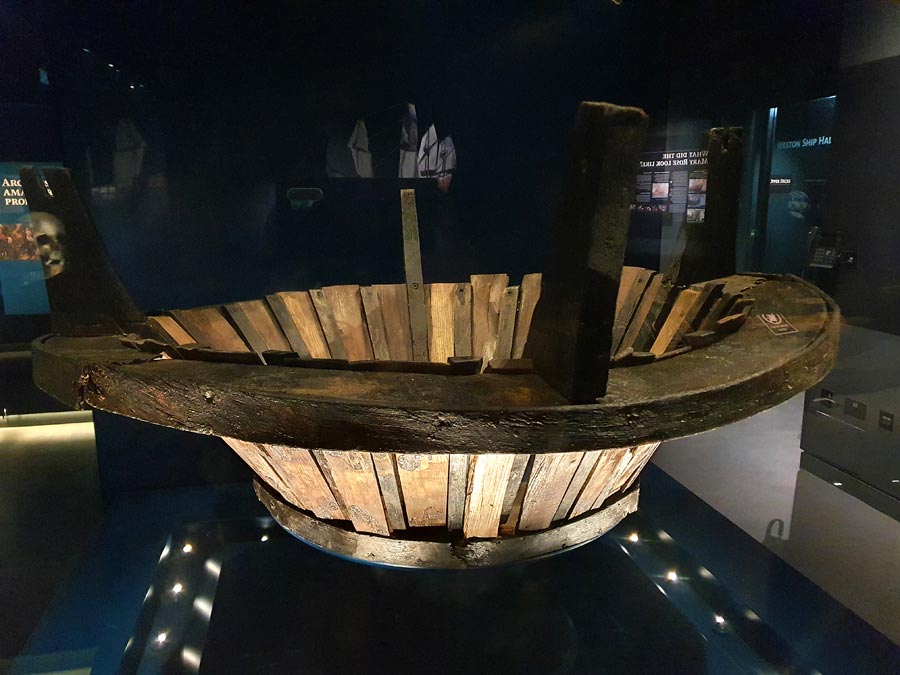
Plates, cups, huge wooden chests, cannons, bows and arrows and all the small details of a Tudor sailor’s life are revealed, from the food they ate to the games they played.
There are hands-on displays too. Take a look at the surgeon’s bone saw and discover why pepper was so valuable, or try your hand at pulling a longbow. I failed completely, and Pork Belly didn’t do much better!
Interactive screens let you feed the ship’s company (hint, the officers get grumpy without their wine and the crew need beer and biscuits!) or firing different sized cannon to capture or sink enemy ships.
There are things to touch, smell and wield to your heart’s content.
And at every stage there are friendly, helpful and incredibly knowledgable volunteers to answer your every question.
Including the Big One ….
What actually happened to the Mary Rose?
She was Henry’s pride and joy. A well-designed, well-equipped and recently updated fighting ship that had led successful sea battles for 33 years.
So how come she sank so fast, and with such tragic loss of life, in the comparatively peaceful waters of the River Solent?
Experts and enthusiasts have their own theories. There is only one contemporaneous account which talks of a sudden gust of wind taking her as she turned and water rushing in through the gun hatches.
Was she holed by a French gun? Unlikely, as they didn’t have the range.
Was the captain at fault? Sir George Carew was an experienced military man, but no sailor. Henry had only just put him in command.

Was the ship overloaded? It was certainly stacked for battle, but more than she could hold? Probably not.
Did the crew mishear or misinterpret the command to turn, or was the order given too soon, before the canon could be withdrawn and the gun hatches closed?
We may never know, though the studies continue on, and a solution may be found in future.
What is certain is that only 35 crew survived and around 500 died.
As did the dog.
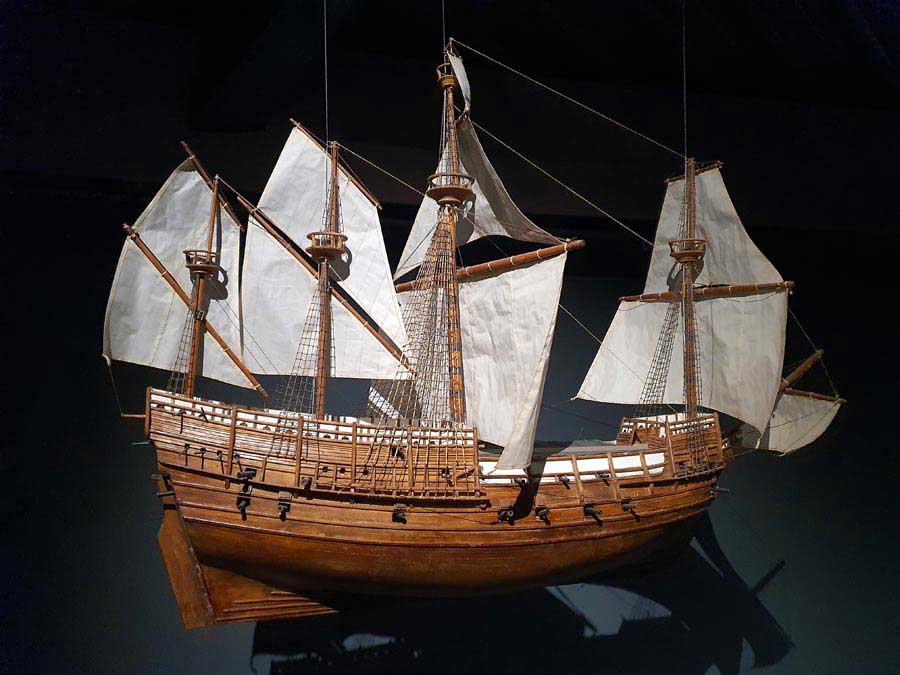
The future
40 years of constant research and restoration are nowhere near enough to reveal all her secrets, and the work continues.
The site is protected, but divers regularly carry out sweeps and new items are still being found.
Early in the 21st century, a large chunk of wood was uncovered where experts expected the bow to be. It turned out to be the figurehead of the ship, and modern scanning technology shows it was originally a beautiful Tudor Rose carving.
And the museum itself is ever-expanding. Later in 2023 they’re unveiling a 4D show where you can get to experience being a diver, exploring the wreck in the muddy, silty water of the Solent.
Will we return?
Yes.
But we won’t wait another 40 years!
Visiting the Mary Rose Museum
The Mary Rose Museum is part of Portsmouth Historic Docklands, and you can buy a combined ticket, giving you access to other historic ships like HMS Victory and HMS Warrior. These tickets are valid for a year, so if you live nearby they work out better value than single tickets.
A visit to the Mary Rose as a single attraction costs £24 for an adult, £19 for a child in 2023 with some concessions. You can pay extra for a guided tour, which reviews on Trip Advisor say are excellent. They give you access to more areas, and start at £15 per person or £30 for a family.
Or do as we did and wander round at your own pace.
Allow a good hour and a half to see everything, much more if you stop and talk to the guides. We were there for nearly 4 hours!
For more information and to book tickets, see the Mary Rose website
There is a café at the museum (and others dotted around the dockyard) which serves a good cup of coffee and hot and cold food.
The selection is limited, and on the day of our visit they’d had difficulties with suppliers and there were no vegan options.
Accessibility at the Mary Rose Museum
The museum is designed to be accessible for all with walkways, ramps and lifts. There are also wheelchairs available.
Information can be provided in large print formats, and they have sensory resources, including tactile plans and painting of the ship.
But be aware, light levels are kept low inside the museum to help preserve the collection.
More information on accessibility on the Mary Rose website
Getting to the Mary Rose Museum
By car, take Junction 12 off the M27 and follow the brown and white signs to ‘Historic Dockyard’. There’s plenty of parking nearby, but a cheaper option is to use the Park and Ride scheme at Tipner Lane, just off the M275. The bus stops at The Hard, just a few paces from the entrance to the Dockyard.
By train, you need services to Portsmouth Harbour, a few minutes walk from the dockyard entrance.
Where to next?
• Shakespeare in the Snow
• Hever castle
• Weald and Downland Museum
An amazing history.
The Mary Rose story seems to capture everyone’s imagination – and the Museum is fantastic at retelling it.