
The last time we visited Charleston near Lewes in East Sussex, the house had only recently opened to the public. It was the late 1980s, and we were, to be honest, unimpressed.
What a difference 40 years makes.
But was the difference in the house or in us? As with most things in life, probably a bit of both.
And our opinion today has changed.
Charleston Farmhouse is intriguing, charming and its gardens are absolutely wonderful and to use an old cliché, a riot of spring colour.
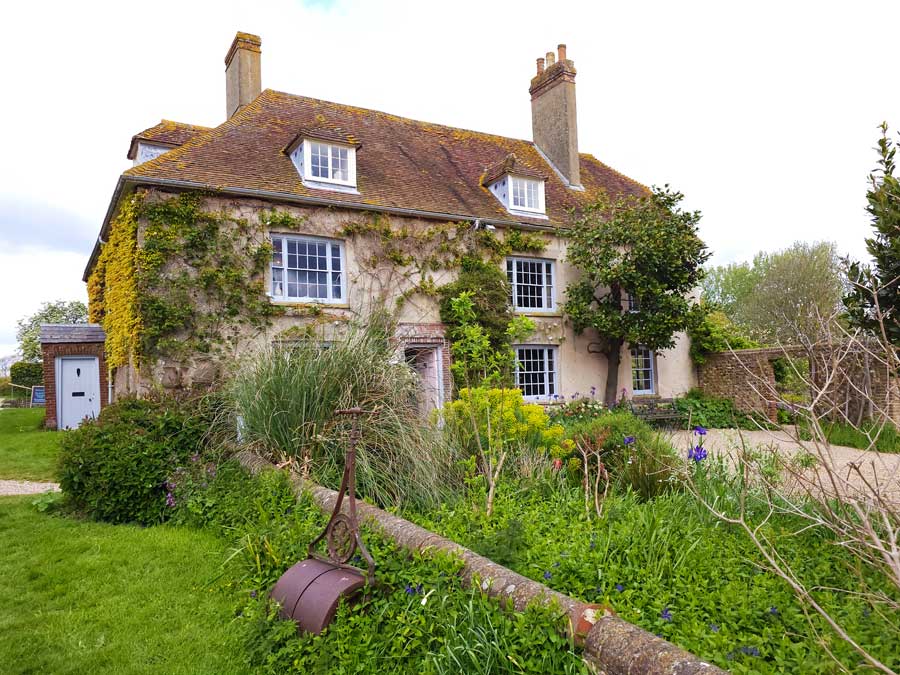
Why is Charleston Farmhouse famous?
It’s not so much the house, but its occupants that are the draw.
In 1916 artist Vanessa Bell, sister of novelist Virginia Woolf, fell in love with the rundown, rambling old farm building and moved in with her unconventional household.
Cold, without even any running water, Vanessa saw its potential and began, with the help of friends and family, to convert it into a cosy, eclectic and presumably very happy home.
Who lived at Charleston Farmhouse?
Over the years Vanessa lived there with her art critic husband Clive Bell, fellow artist, occasional lover and long-standing friend Duncan Grant, his lover David Garrett, and economist John Maynard Keynes, also a lover of Duncan.
Regular visitors included Virginia Woolf and her husband Leonard, writers E M Foster and Lytton Strachey, and painter-and-lover-of-Vanessa, Roger Fry.
In short, pretty much the whole Bloomsbury Group drifted in and out of Charleston, and it’s packed with over 60 years of artistic endeavour.
The art of Charleston
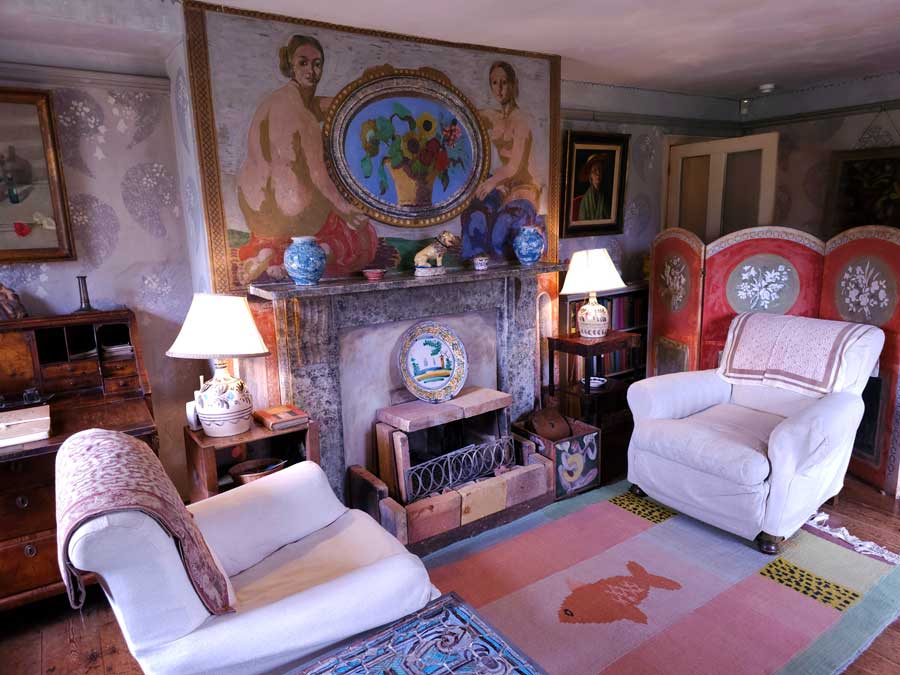
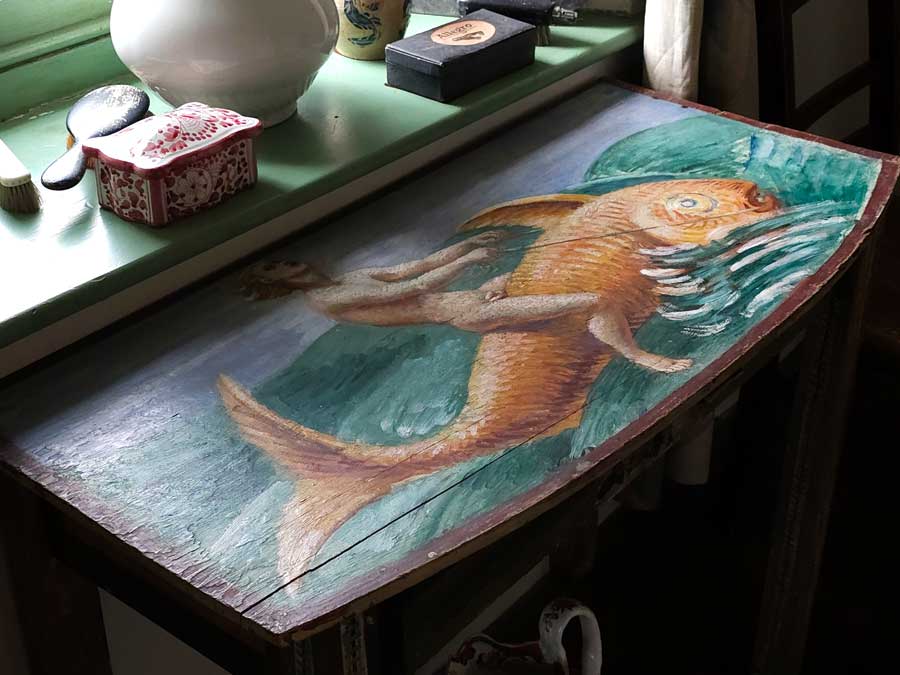
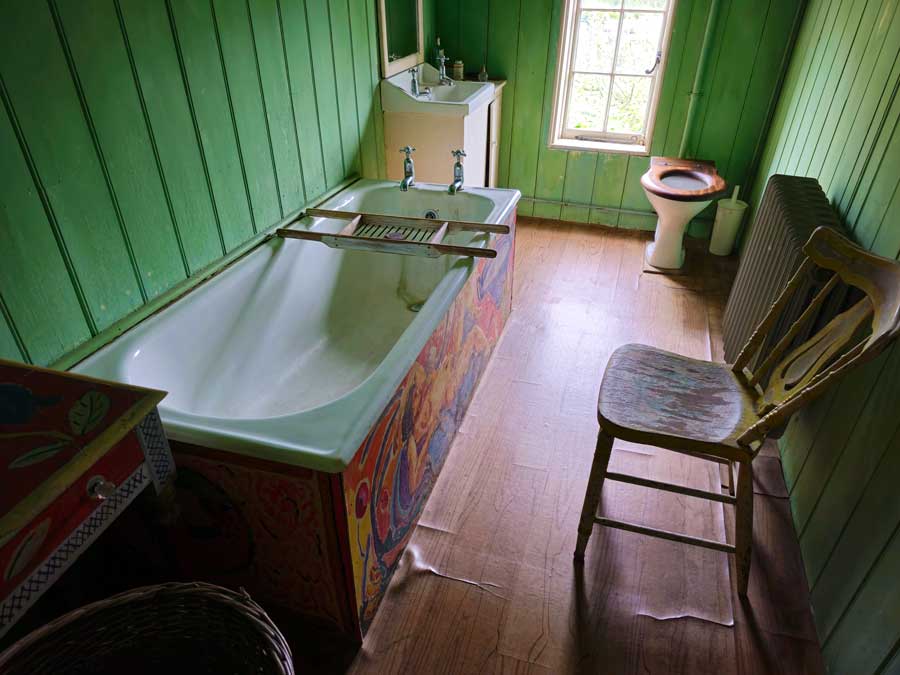
Whether it’s to your taste or not, the Bloomsbury artists were a prolific lot and at Charleston their creativity was given free rein. Anything that could be decorated was, to within an inch of its life.
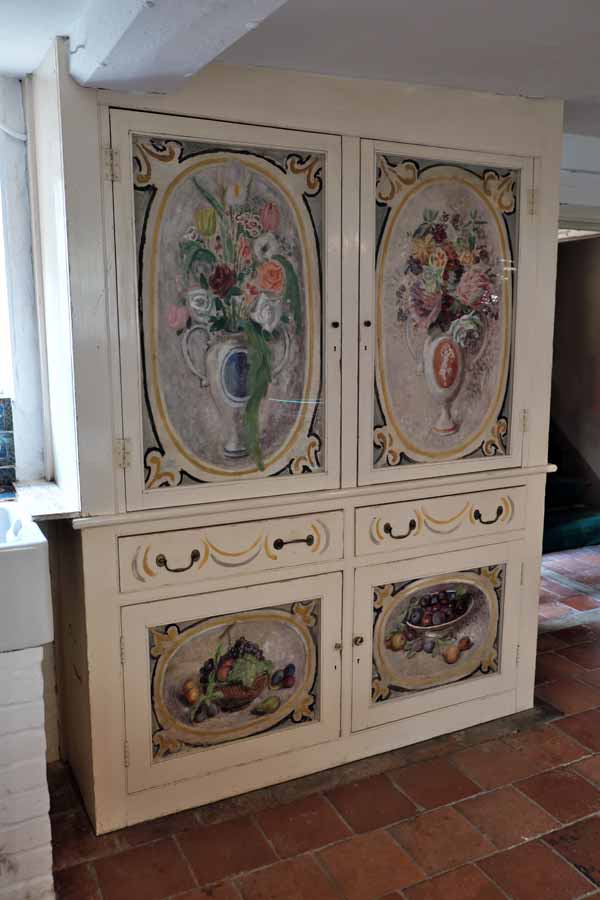
Your journey through Charleston starts in the kitchen, where even the most mundane items are given a Bloomsbury set twist.
If it didn’t move, it was painted or stencilled.
Doors, walls, bedheads, shutters, shelves and boxes.
Vanessa painted patterns onto fireplaces, along with figures and flowers.
Guests made lampshades out of colanders, and the walls were filled with portraits by Vanessa and Duncan.
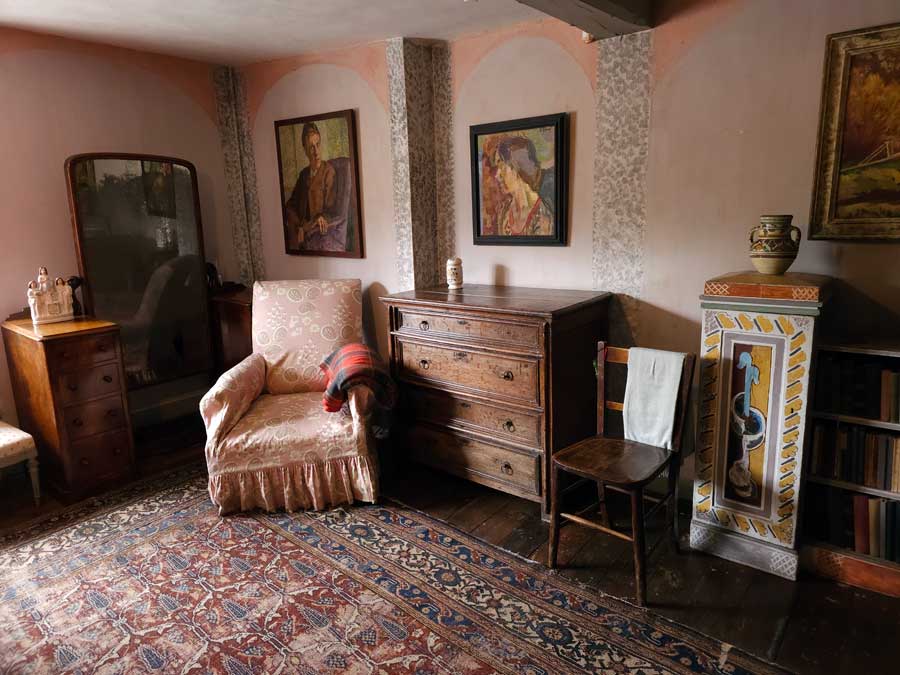
If it did move? Well, somehow it would be captured and turned into something arty.
It was deliberately cheap, cheerful and chaotic.
The epitome of shabby chic!
The Studio at Charleston Farmhouse
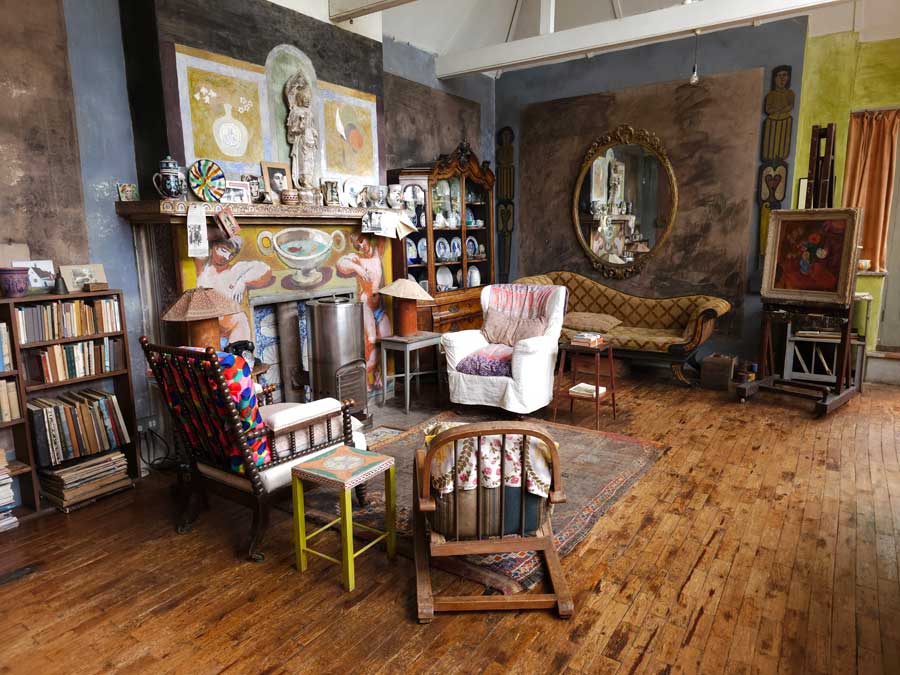
After drifting through the bedrooms, living rooms and kitchen, where friendly and knowledgeable guides are ready to help you discover the secrets of the house and untangle the complex relationships of the occupants, you come to the still-beating heart of the house.
Here, Vanessa and Duncan worked alongside each other for many years, critiquing and supporting each other in this unusual family set-up.
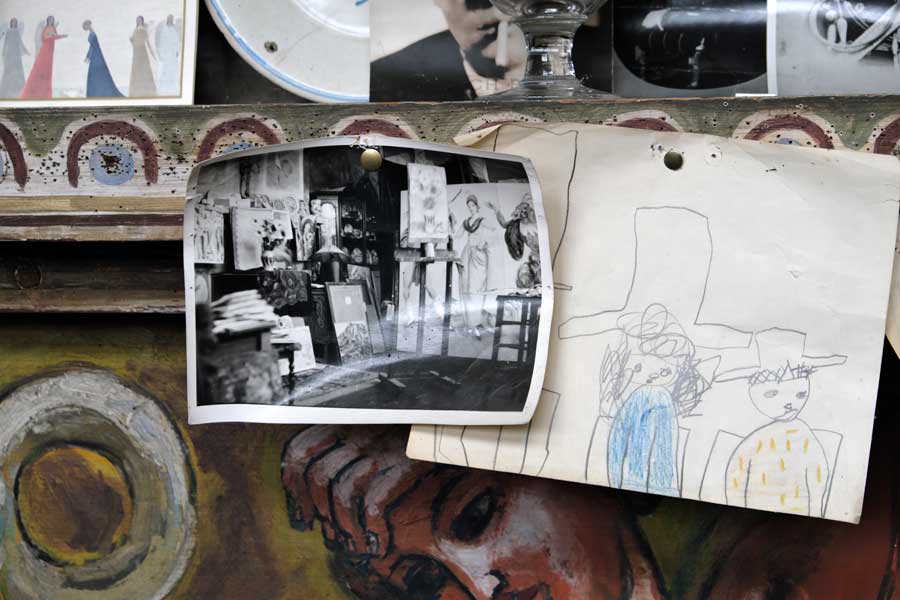
The easels remain in place, half-squeezed paint tubes lie around, and the room feels just like it would have done when the Bloomsbury Group were there.
The Garden at Charleston Farmhouse
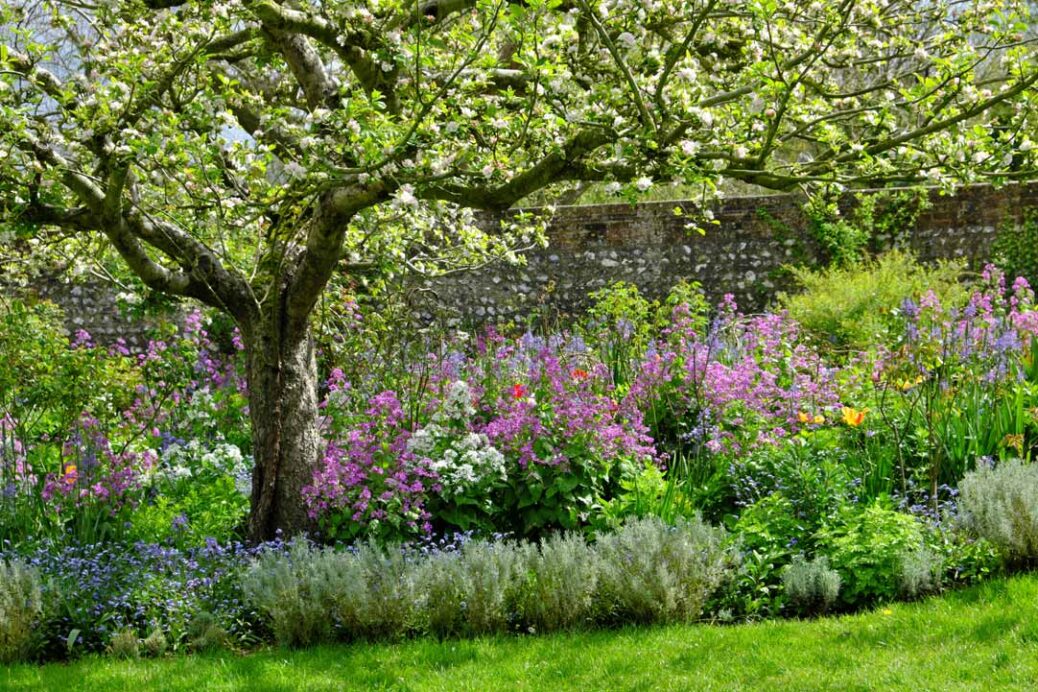
And here’s where Charleston gets even more glorious.
Vanessa and Duncan worked endlessly on the garden at Charleston.
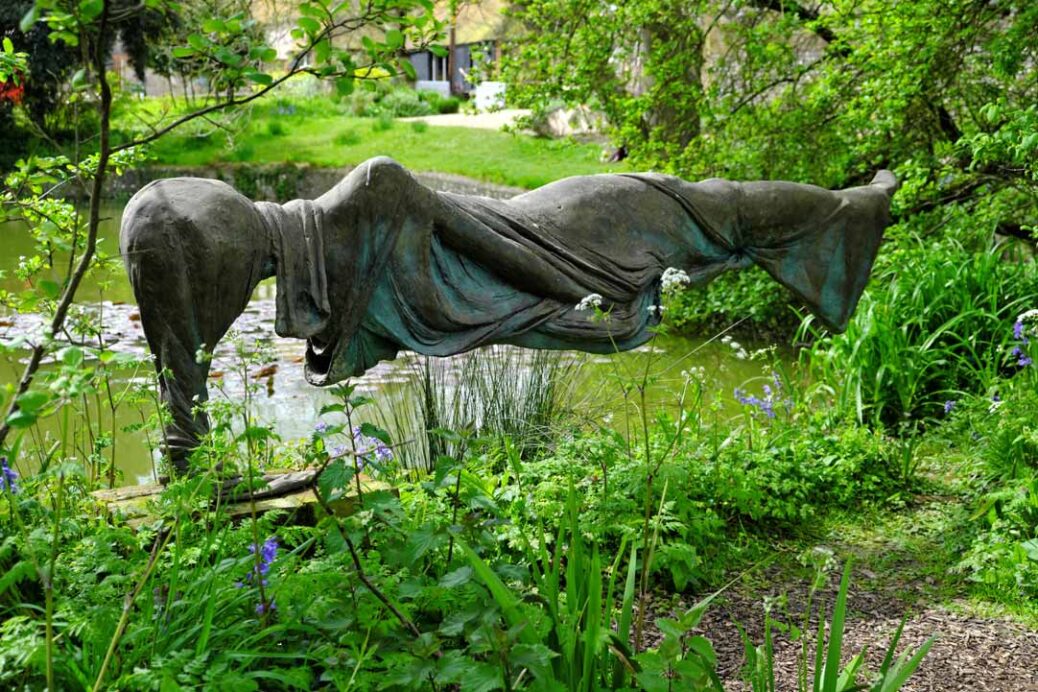
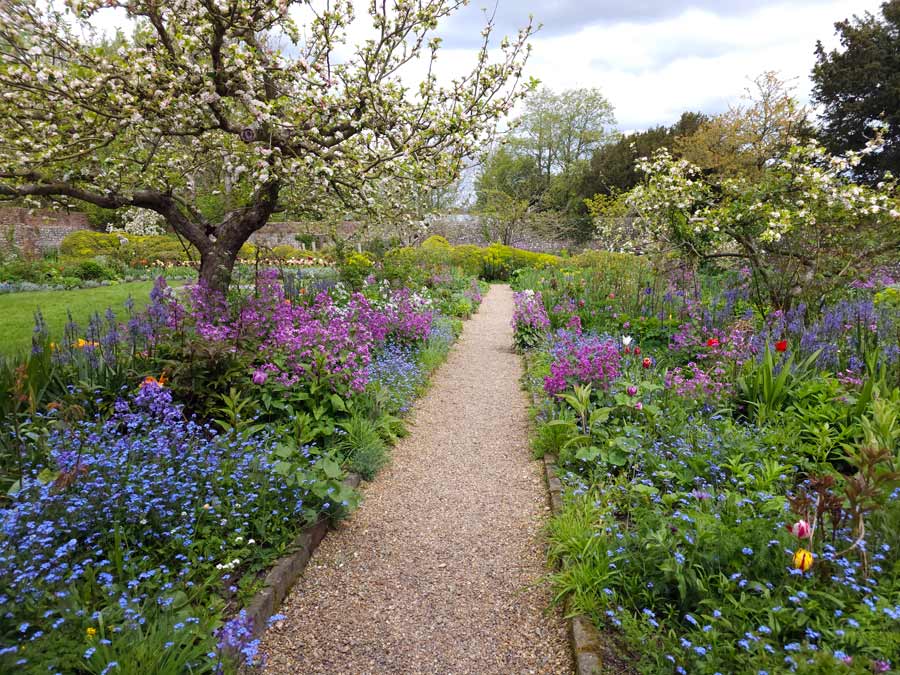
Using a design by Roger Fry, they turned what was a utilitarian patch of land with vegetable plots and hen runs into an outdoor art space with glorious, tumbling borders, winding paths, and strategically placed statuary.
The borders are packed, cottage garden style, with year round colour. If the art inside doesn’t float your boat, the artistry outside will.
Best of all, entrance to the garden is free.
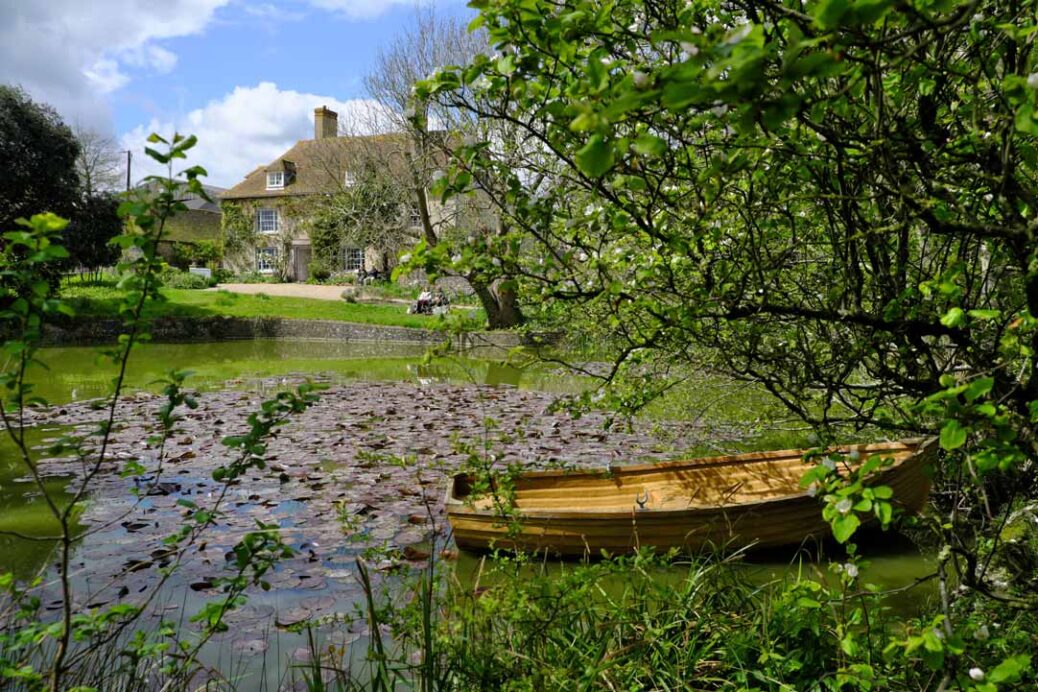
There’s a pond, complete with a small, wooden rowing boat (an artist’s and photographer’s dream!) an orchard and a wealth of flowers.
Like the house, it’s well-tended but relaxed, a place to enjoy as well as admire.
All the Bell children spent their summers here, and it has an air of a well-loved and happy space for fun and spontaneous creativity.
It’s clear Vanessa loved Charleston. She spent her last days there, moving in to the peaceful Garden Room, before she died in 1961. She’s buried in St Peter’s church in nearby Firle, along with Duncan Grant, who died in 1978.
There’s inspiration at Charleston, both inside and out, and return trips are now high on our list.
Apologies Charleston for not being more enthusiastic back in the 1980s!
Visiting Charleston Farmhouse
Charleston is situated off the A27 between Brighton and Eastbourne near the village of Firle. It’s well signed, but access is down a narrow country lane. Parking is free.
Trains run to nearby Lewes, but you will need a taxi to get you from the station.
The house and gardens are open Wednesday–Sunday (and Bank Holiday Mondays) from 10am to 5pm, with timed house entry tickets and last admission at 4pm.
Prices in 2024:
£22.50 for adults, but under 18s go free and there are other concessions.
The guides add real value to the tour, willing and able to answer all your questions, and their enthusiasm is infectious.
You can also download a special app for a room by room virtual tour.
And best of all, access to the garden is free, and there’s a lovely café, serving great coffee and tasty food.
For more details, see their website
Where to next?
• Unveiling Belmont Mansion, Philadelphia
• Fuller’s Follies
• Grounds for Sculpture – art to inspire and amuse