
What have the Romans ever done for us? A lot, it turns out: Our Day at Vindolanda.
It’s a well known fact, Rosemary has a small obsession with the Romans.
The merest hint of an ancient road where legions once marched and she’s off. A Roman villa with mosaic floors? You can’t drag her away. A historical novel set in ancient Rome? Don’t expect to hear from her until the last page.
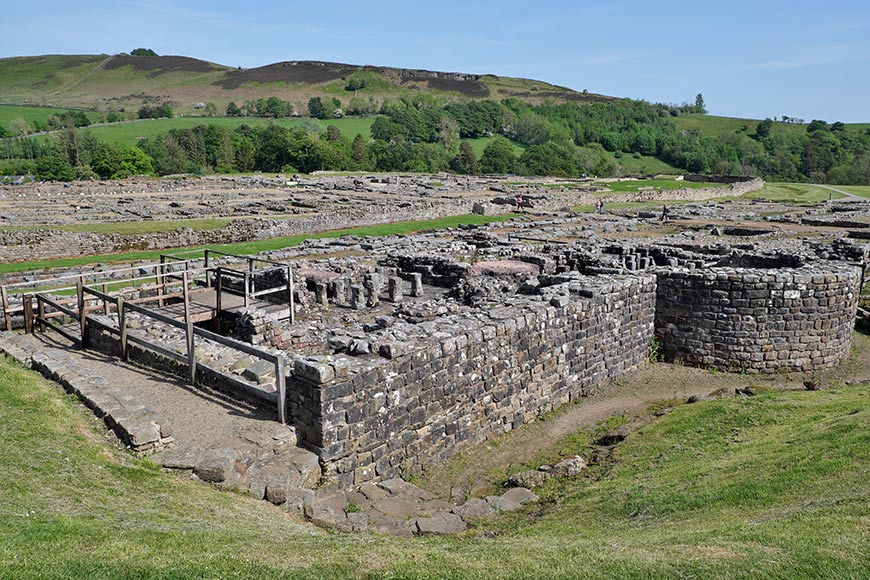
Which makes it all the more surprising that it took us this long to finally make it to Hadrian’s Wall, and to discover the extraordinary site that is Vindolanda.
Not one, not two, but the remains of nine Roman settlements lie here, spanning nearly 800 years of Roman occupation and Anglo-Saxon reclamation. Built before Hadrian’s famous wall, Vindolanda marked a key point on the Stanegate Road, the first Roman frontier built to keep the northern tribes at bay, before being incorporated into the wall’s wider defences. For more than 300 years, successive Roman troops demolished and completely rebuilt the fort, each community leaving its own distinctive mark on the landscape and the archaeology beneath it.
Windswept and wild, it must have felt like a lonely posting at first. But before long Vindolanda grew into a thriving garrison town, complete with bathhouses, shops, stables, and an elegant villa for the man in charge.
And that’s where Vindolanda becomes something truly special.
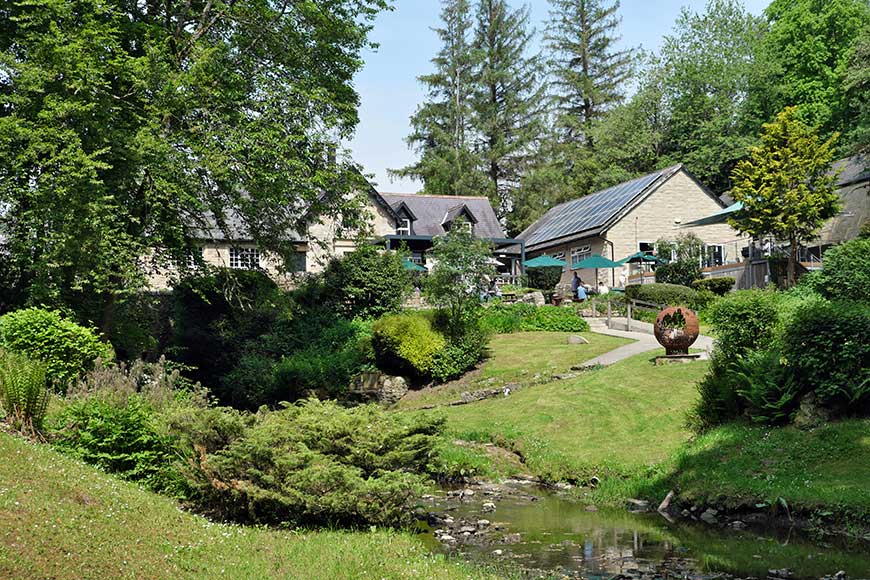
We arrived early on a sunny but blustery May morning and were brilliantly orientated by a wonderfully knowledgeable member of staff, who also happened to mention that the café was a ten-minute walk away. Challenge accepted. We made it in seven minutes flat, in time for my favourite breakfast: coffee and cake. The café sits in a lovely wooded area, and we lingered long enough to be serenaded by a chorus of woodland birds, including a siskin, before timing our return perfectly for the first free guided tour of the day.
Digging up the past
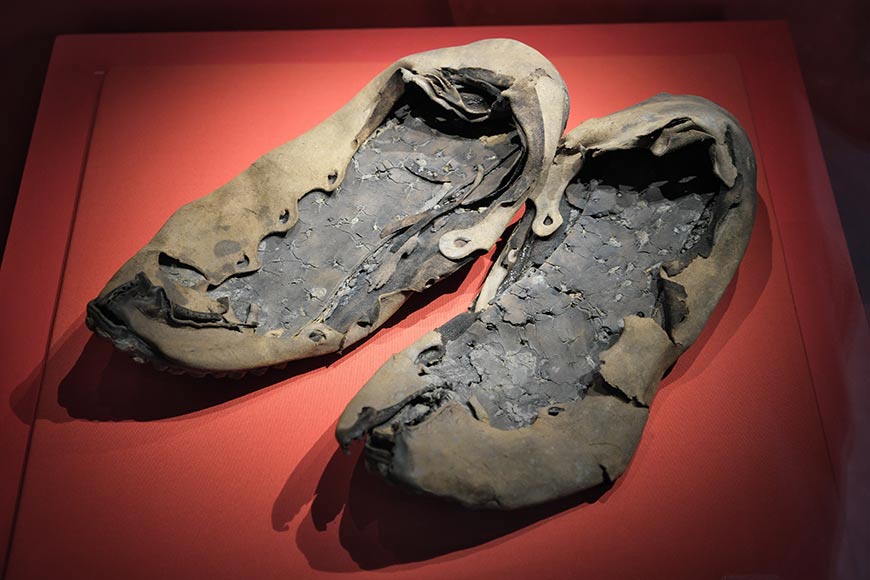
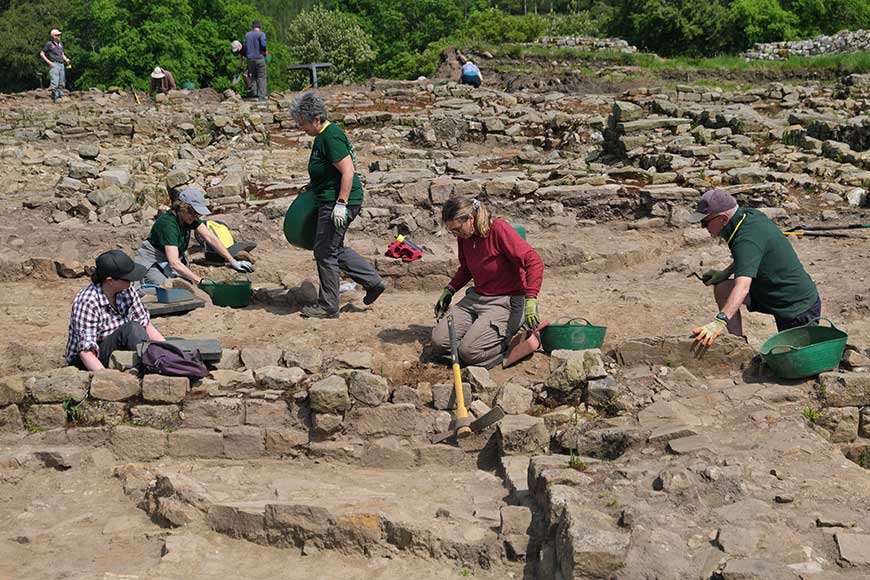
The Vindolanda Trust has been painstakingly excavating the site since 1970, building on the work begun by archaeologist Eric Birley in the 1930s. What makes it even more remarkable is that the same family is still leading the charge. Three generations of the Birley family have dedicated their lives to Vindolanda: grandfather Eric, who first fell in love with the site, son Robin, who directed excavations for almost 50 years and oversaw the discovery of the writing tablets in 1973, and now Andrew, who jokes that his first visit to Vindolanda was as an embryo. There’s apparently a photograph of his pregnant mother standing at the dig. Andrew found his first Roman artefact as a teenager, and as he puts it: “You never forget your first Roman shoe.”
Experts and an army of volunteers from across the world arrive every year, happy to get their hands, knees and feet dirty in the hope of uncovering yet another treasure. And there are treasures aplenty, enough to fill its excellent on-site museum and the Roman Army Museum at its sister site, Magna Fort, a few miles west along the wall.
Famous finds
The most celebrated discoveries are the Writing Tablets, voted Britain’s Top Treasure, and it’s easy to understand why. These remarkably thin, handwritten wooden notes were found discarded in a ditch, preserved for centuries by the anaerobic soil, and have since been scanned and translated to reveal the day-to-day workings of a Roman fort at the height of its power.
Not just troop movements and military orders, but tantalising snippets of disputes, debts, and one particularly touching birthday party invitation, complete with a handwritten postscript from Claudia Severa, wife of the Commanding Officer, practically begging her friend Sulpicia Lepidina to come and celebrate with her. It feels extraordinarily human across two thousand years.
More than 1,700 tablets now sit in the British Museum collection, and more are still being discovered: around a dozen turned up during the 2023 excavations alone. The last major cache was unearthed as recently as 2017, the same remarkable season that also produced two exceptionally well-preserved iron swords, along with cavalry lances, arrowheads and ballista bolts, all sealed in anaerobic soil and emerging in near-perfect condition.
For the first time, some of the writing tablets have now returned to Vindolanda itself, on long-term loan from the British Museum and displayed in a specially built hermetically sealed case, protected from oxygen, moisture and humidity. After nearly two millennia underground and decades in London, they’re finally home.
It was almost impossible to drag Rosemary away!
Then there are the shoes. More than 5,000 of them: army boots, ladies’ slippers, children’s shoes, and even a tiny baby bootee. There are leather boxing gloves and evidence of games and sports the soldiers played in their off-duty hours. Jewellery, coins, and combs sit alongside more mundane but equally fascinating finds.

A wooden toilet seat that somehow manages to stop you in your tracks. And then there’s the tile bearing the clear imprint of a human foot, left by someone who stepped on the freshly made object 2,000 years ago, whether by accident or, as the archaeologists rather enjoy suggesting, pure mischief.
Rosemary was back and forth between the museum and the site all day, excitedly spotting where things had been discovered, then heading back inside to read up on the history.
Most visitors expect to spend a couple of hours here. We braved the chilly wind from morning to closing time, fuelled entirely by regular retreats to the café.
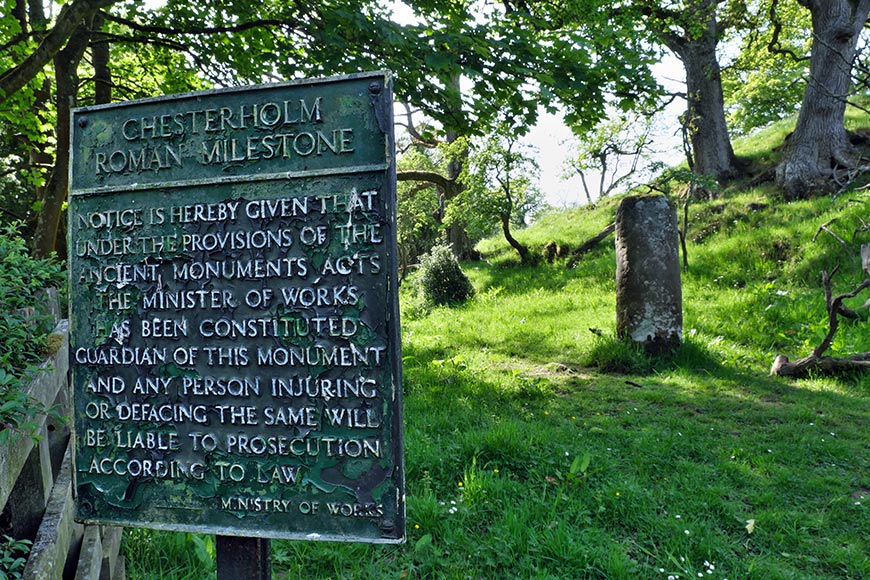
A few yards outside the site, the old Stanegate Road is still visible, and standing beside it is an intact Roman milestone: the only one in Britain still standing in its original location.
We’d strongly recommend taking the free guided tour first to get your bearings, then simply wander at will.
Magna Fort
The following morning we headed to Magna Fort and the Roman Army Museum, making the most of their two-site ticket.
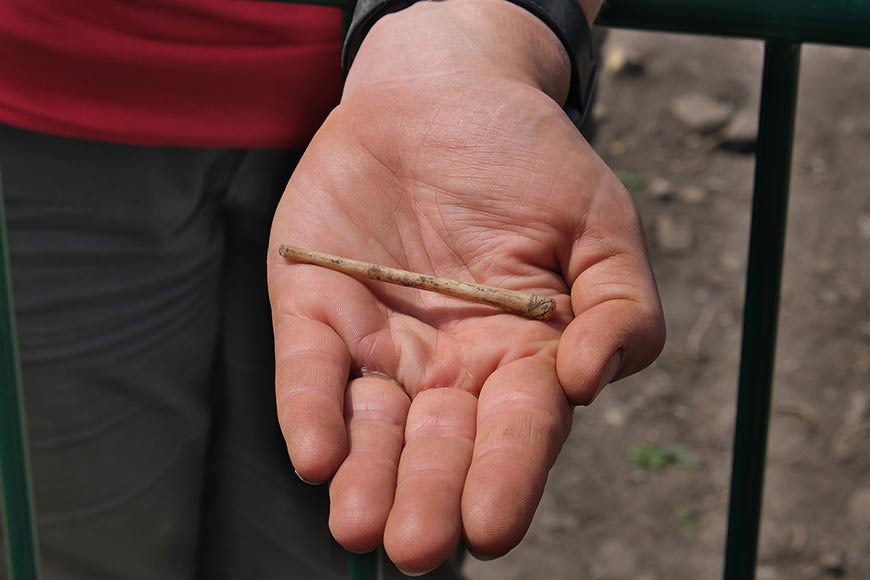
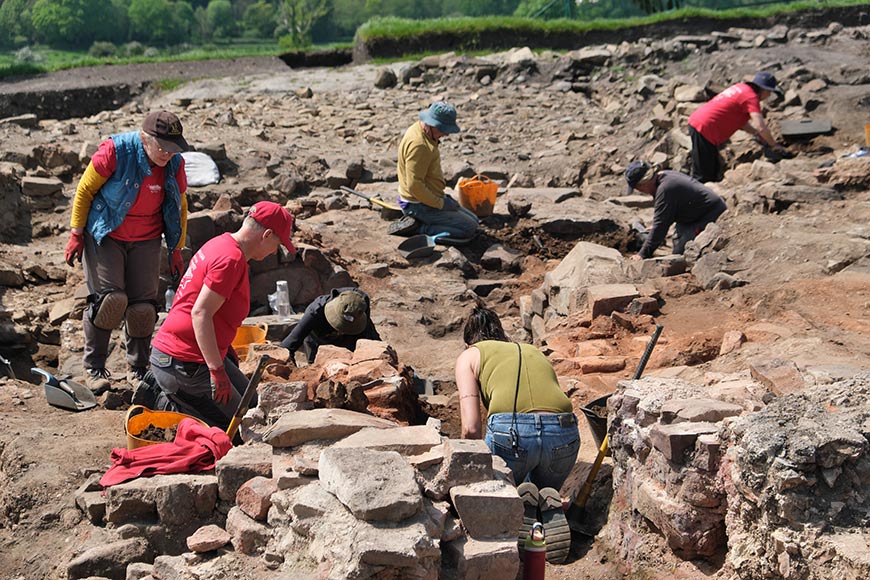
There’s less to see at Magna, though they’re currently finishing a five-year excavation of the fort. We were lucky enough to be there just as one of the volunteers dug up a woman’s hairpin carved from deer antler, which felt like a genuine privilege to witness.
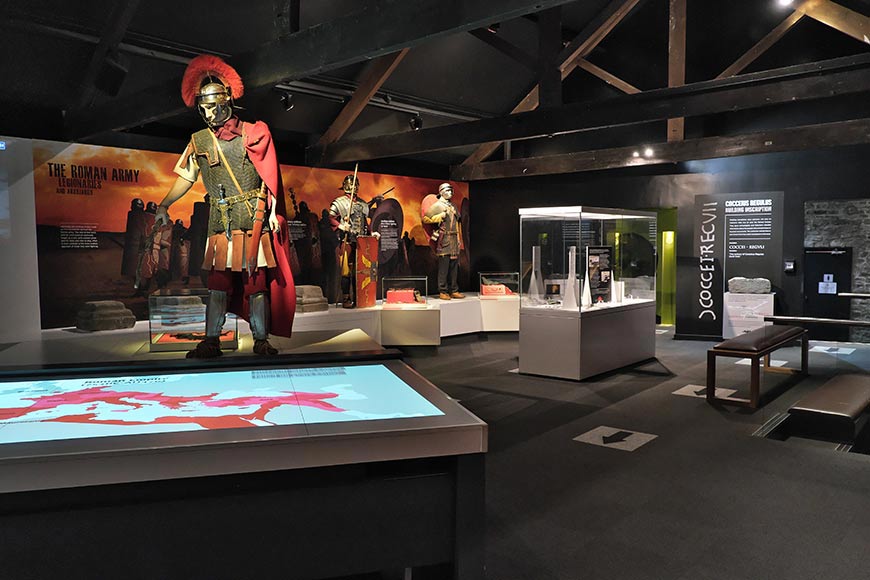
The museum here is pitched more towards families, with plenty of audio-visual displays explaining the workings of the Roman Army and a wonderful aerial film of Hadrian’s Wall, giving a real sense of what life might have been like as a soldier on Rome’s most northerly frontier.
Rosemary was in seventh heaven.
And if that’s not enough, you can actually sign up to volunteer on the Vindolanda excavations yourself. Places for the 2026 season are still available. I haven’t mentioned it to her yet.
Everything you need to know is on their website
If you’ve enjoyed browsing our website, learned something new, or just had a smile because of what we do – we’d love your support to keep the good stuff brewing!
Travelling soon? Things to do and attractions not to miss with Get Your Guide …
Where to next?
• Britain’s hidden ghost towns you can still visit today
• Little Woodham, living history in Hampshire
• Langues de Chat biscuits