
There is a particular breed of National Trust visit that begins with a lane so narrow you start negotiating with hedgerows, and Smallhythe Place is very much that sort of visit. Tucked away near Tenterden in Kent, the approach does nothing to prepare you for what is waiting at the end of it: a crooked, timber-framed farmhouse that looks as though it has been drawn rather than built, a place full of charm and history sitting quietly by the roadside.
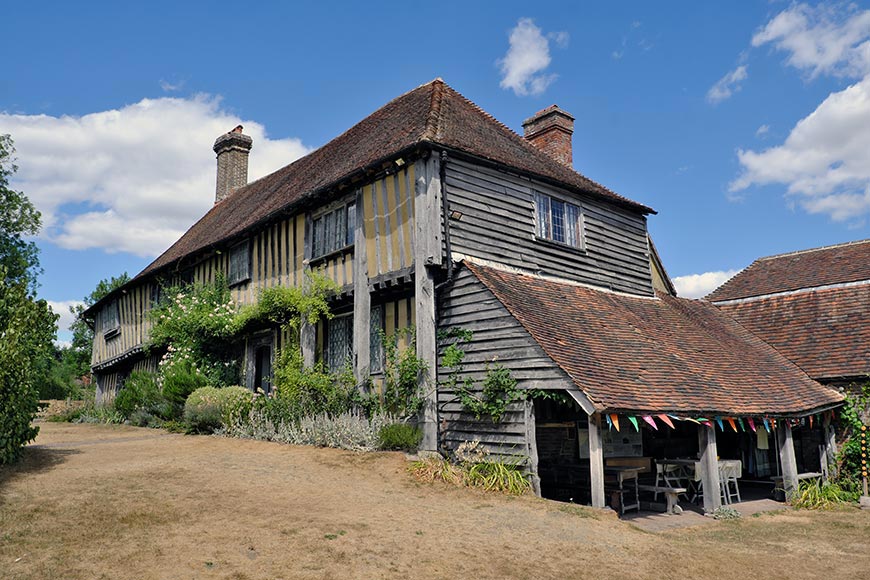
We did what we always do the moment we arrive anywhere run by the National Trust. We ignored the house completely and went straight for the tea room. Some might call this a lack of discipline. We prefer to think of it as knowing our priorities. Tea and cake first, history second, that is the Rosemary and Pork Belly way, and Smallhythe’s Theatre Tea Room, sitting beside the old barn with views out over the Kent countryside, did not disappoint.
Suitably fortified, we turned our attention to the house itself.
The Actress Who Bought a Postcard’s Worth of Kent
Smallhythe Place began life in the early sixteenth century, most likely built not long after a fire tore through the old shipbuilding village of Small Hythe in 1514. Back then this stretch of Kent was busy and important, a working port on the River Rother where royal ships for the likes of Henry V and Henry VIII were built. Look at the place now, quietly minding its own business among the fields, and it takes a genuine leap of imagination to picture it as a bustling port.
The house owes its survival, and its story, to one particularly remarkable woman. Dame Ellen Terry, the great Victorian Shakespearean actress, first spotted Smallhythe while riding through from Rye to Tenterden with her ‘friend’ and fellow actor Henry Irving. She fell for it on sight and asked to be told if it ever came up for sale. Years passed, and then in 1899 a postcard arrived at her London home bearing nothing more than the words “House for Sale”. That was all it took. She bought it that same year and lived there, on and off, for the best part of thirty years, tending her garden and, by all accounts, treating the place as an escape from the glare of the London stage.
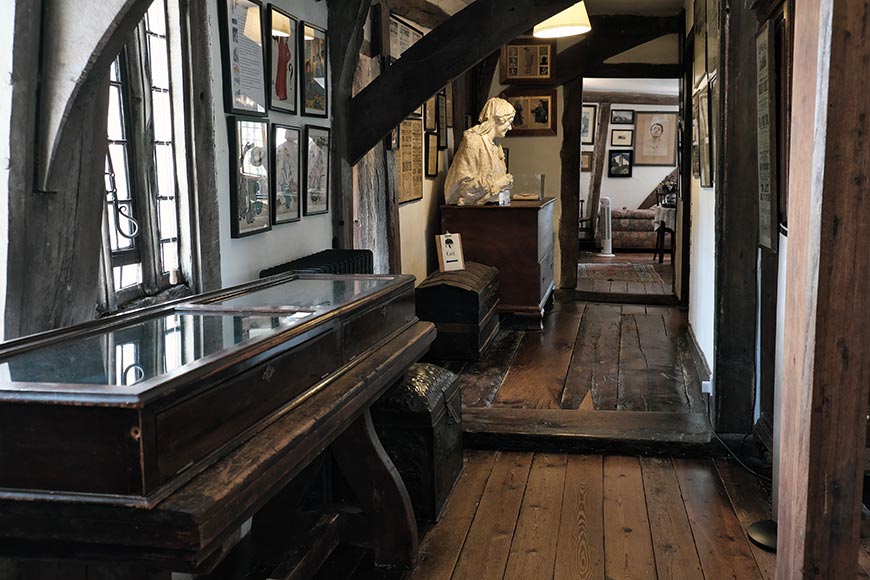
Walk through the rooms today and that sense of retreat remains intact. Low oak beams, a brick floor, a fireplace in what was once the farmhouse kitchen, it all feels lived in rather than preserved behind glass. That is largely thanks to Ellen’s daughter, Edy Craig, who turned the house into a memorial to her mother after Ellen’s death in 1928, leaving the bedroom much as it had always been and using the sitting room and dining room to display a lifetime’s worth of theatrical treasures.
Costumes, Death Masks, and a Letter from Oscar Wilde
This is where Smallhythe stops being a pretty cottage and starts being genuinely fascinating. Inside is one of the finest collections of theatrical memorabilia you will find anywhere in the Trust’s care: an extensive run of Ellen’s own stage costumes, many of which she had a hand in designing herself, alongside photographs, scripts, and paintings tracing a career that spanned an astonishing sixty five years.
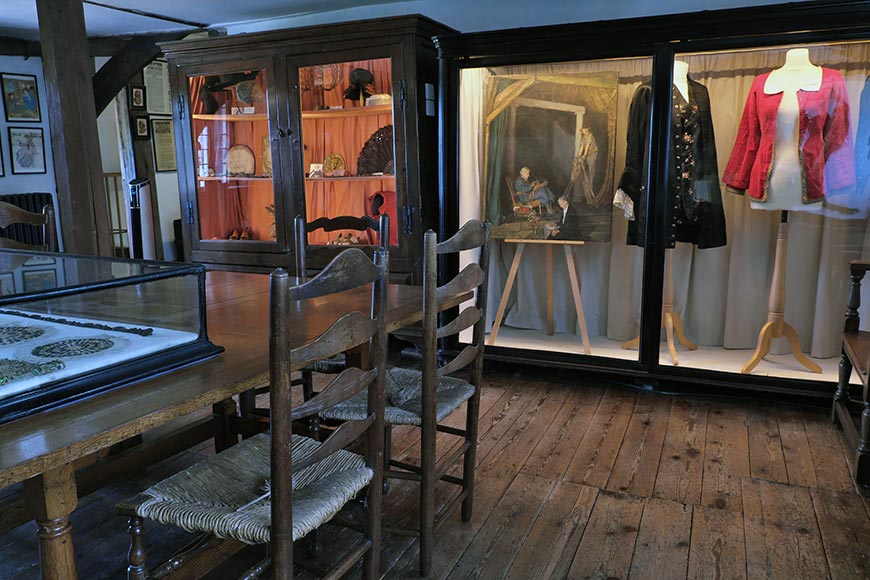
Sadly, her famous Beetlewing Dress is not currently on display as it has been put away for essential conservation, but the glorious green headdress remains on show.
Then there are the smaller, stranger details that stick with you. Henry Irving’s death mask sits in what is now called the Lyceum Room. There is even Arthur Sullivan’s monocle, which feels like exactly the sort of object a Victorian theatrical circle would casually leave lying about. It is a house built entirely on friendship, ambition, and a fairly enviable address book.
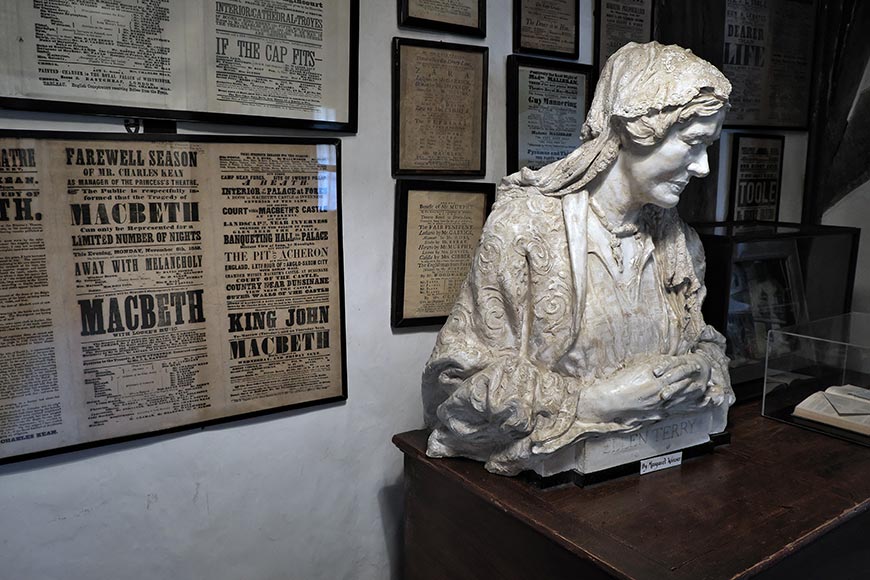
One famous correspondent is Oscar Wilde, one of her greatest fans, who sent her his book for her library.
Edy did not stop at the house. In 1929, she converted the late seventeenth century thatched barn in the garden into a working theatre, and remarkably it still hosts live performances, making it the National Trust’s only working theatre. Standing inside it, knowing that Ellen Terry’s daughter built it specifically to keep her mother’s world alive, gives the whole visit a lovely sense of coming full circle.
The house remembers her. The theatre keeps performing for her. Edy gifted the entire property to the National Trust in 1939, and you sense she would be quietly satisfied to see it still drawing curious visitors down that same narrow lane nearly a century later.
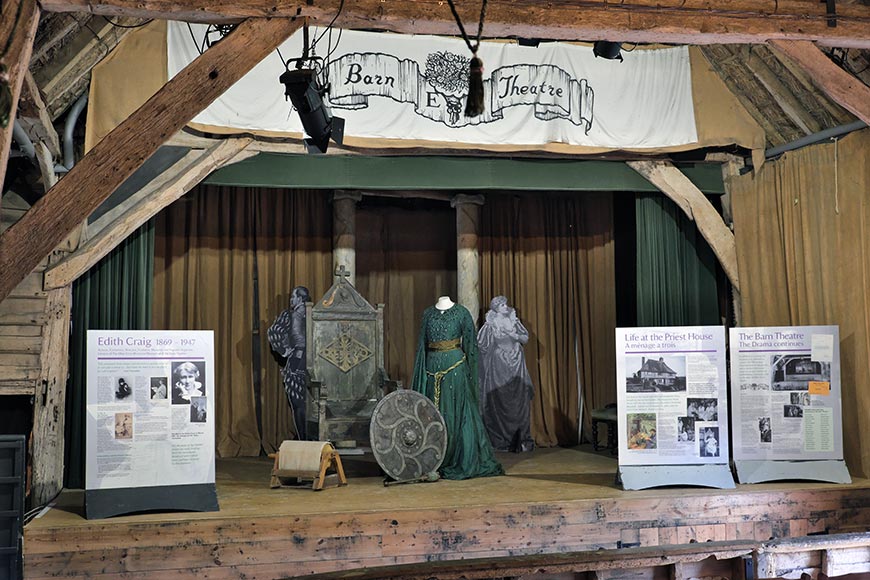
If Smallhythe Has Whetted Your Appetite
Part of what makes Smallhythe so charming is its scale. This is not a stately pile with a hundred rooms and a gift shop the size of a small supermarket. It is intimate, slightly eccentric, and all the better for it. If you want to follow Ellen’s own footsteps a little further, Ightham Mote, also in National Trust hands, is well worth the detour. A genuinely stunning moated manor house near Sevenoaks, with the added novelty of picturing a Victorian actress gossiping with novelists and painters on its lawn a decade before she ever laid eyes on Smallhythe.
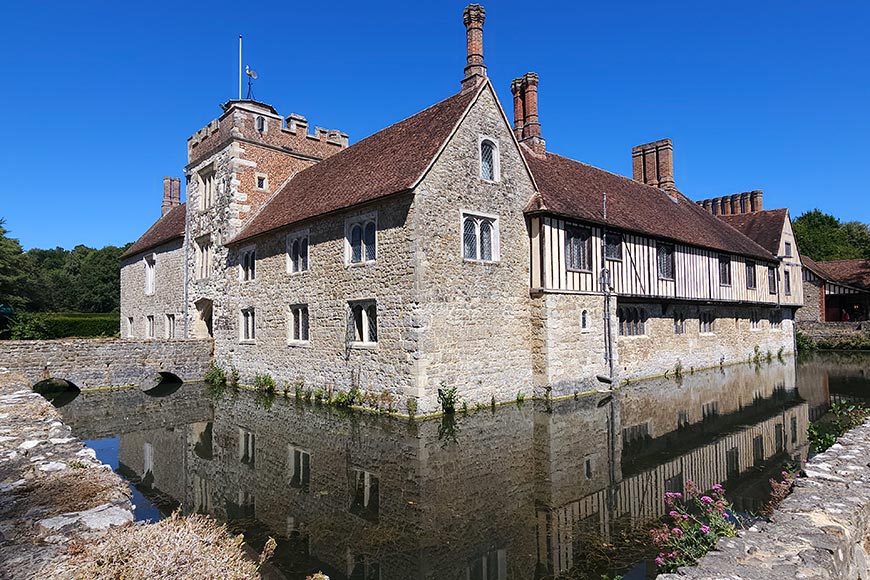
And if you fancy going properly off the beaten track, it is worth remembering the sheer range of places the Trust has under its wing. One week it’s an actress’s cluttered cottage full of stage costumes, the next it could be a working lighthouse perched on a clifftop or a centuries-old coaching inn that still pulls pints. Smallhythe might be small, but it is a fine reminder that the Trust’s best properties are very often the least grand.
Getting there: Smallhythe Place, Tenterden, Kent, TN30 7NG. Check the National Trust website for prices, current opening days and tea room hours before you set off, and do budget extra time for the tea room. We’ll vouch for the cake!
Travelling soon? Things to do and attractions not to miss with Get Your Guide …
If you’ve enjoyed browsing our website, learned something new, or just had a smile because of what we do – we’d love your support to keep the good stuff brewing!
Where to next?
- 7 Weird and Wonderful Things to See Across the UK
- Haunted Bristol: 8 spooky places to visit
- Food Festivals UK 2026