
‘Come, come! Walk with me! Put your feet exactly where I say.’
Our guide instantly twigs that I am the slowest in the group and Pork Belly the most likely to wander off and accidentally step in a puddle right up to his middle.
No, we’re not re-enacting a nursery rhyme. We’re under Antwerp’s city streets, discovering hidden canals, and exploring the past through ancient tunnels and slightly smelly waste water.
It’s absolutely fascinating.

Under the streets of Antwerp
While up above Antwerp is all sparkle and shine – diamonds, pale stone architecture, and golden statues – down below it’s a different story.
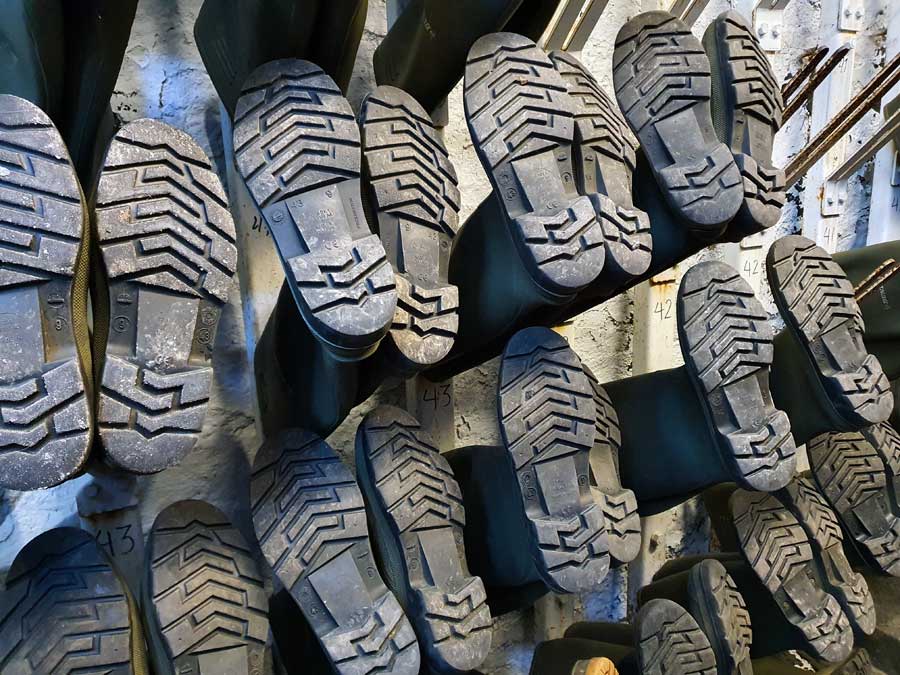
It’s easy to miss the entrance to De Ruien on Suikerrui, squashed in between a chip shop and the DIVA diamond museum (closed for the winter of 2023), but venture through the doors, down rough stone steps, past racks of upturned wellies and a secret world opens up.
Of course there’s the obligatory health and safety chat before you start, flawlessly delivered in Flemish and again in English, plus warnings of watching where you walk and keeping an eye out for wildlife – just don’t believe tales of crocodiles!
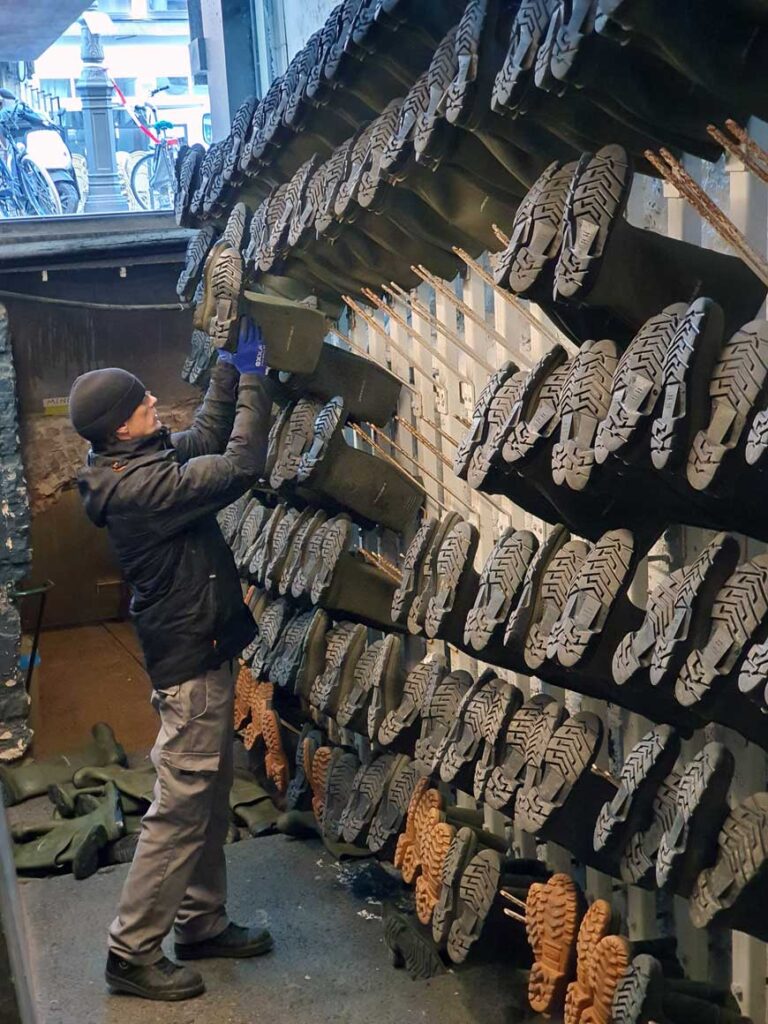
Struggling into disposable coveralls to protect our clothes, stuffing our belongings into a backpack (cos you’ll never want to use your phone again if you accidentally drop it into the fetid waters!) and donning those welly boots for when we have to wade, we’re fully equipped.
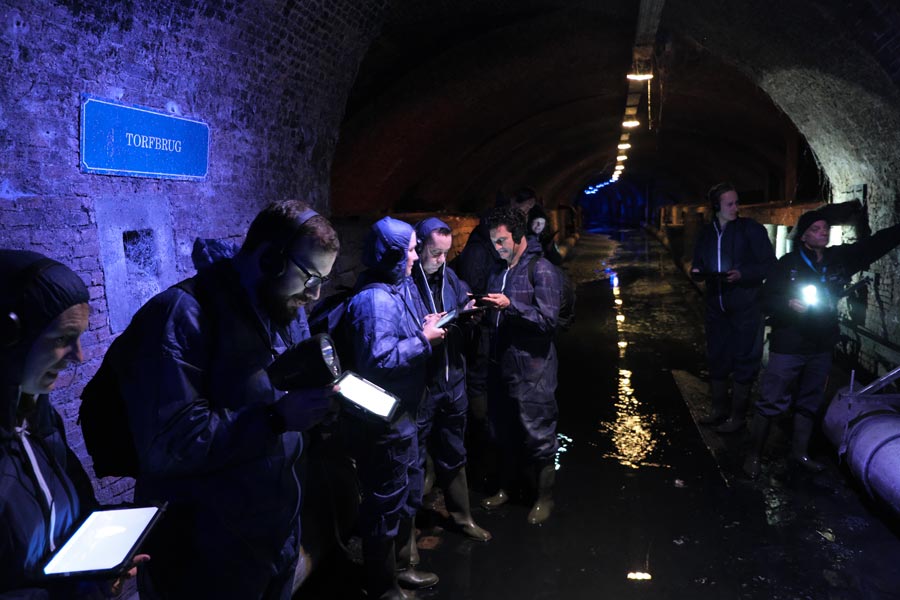
There’s an iPad, with a video in several different languages, to hang round our necks and play at key spots during the adventure. And a chatty, multilingual guide who’s there to inform, entertain and make sure we all get back safely.
We descend, crocodile fashion, down yet more steps to a metal gantry, our eyes adjusting to the gloom, our noses to the smell. Stepping out onto the slippery cobblestones feels like a leap of faith.
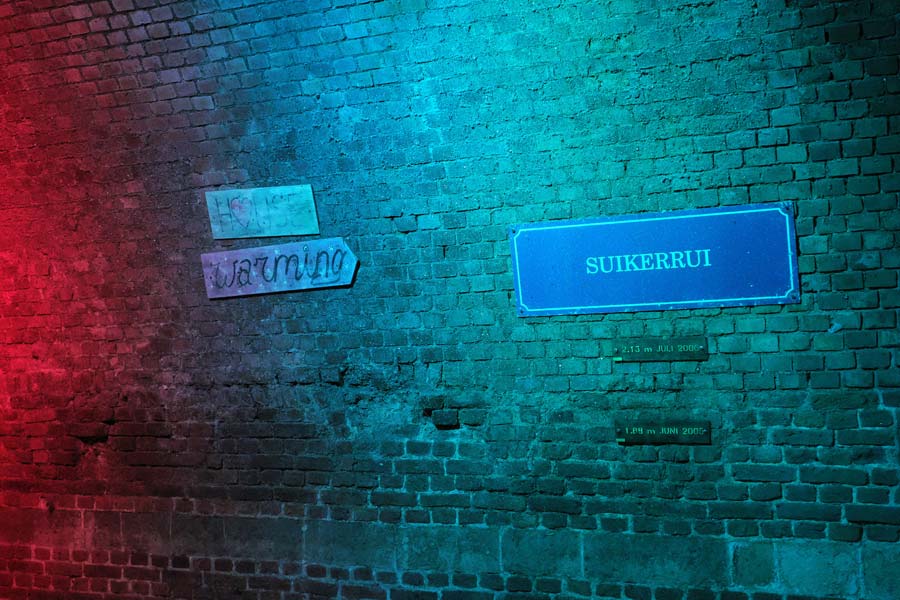
In theory, you shouldn’t get lost in De Ruien. Signs indicating the streets above your head are placed at key points, along with flood markers showing how high the waters can rise. But the echoing, branching tunnels are disorientating, and I’m grateful for the powerful torch and encouraging words of our guide.
In fact, he’s the highlight of the tour – funny, knowledgeable and willing to let us go at our own pace, as long as we don’t stray too far off the path and accidentally hit the deeps.
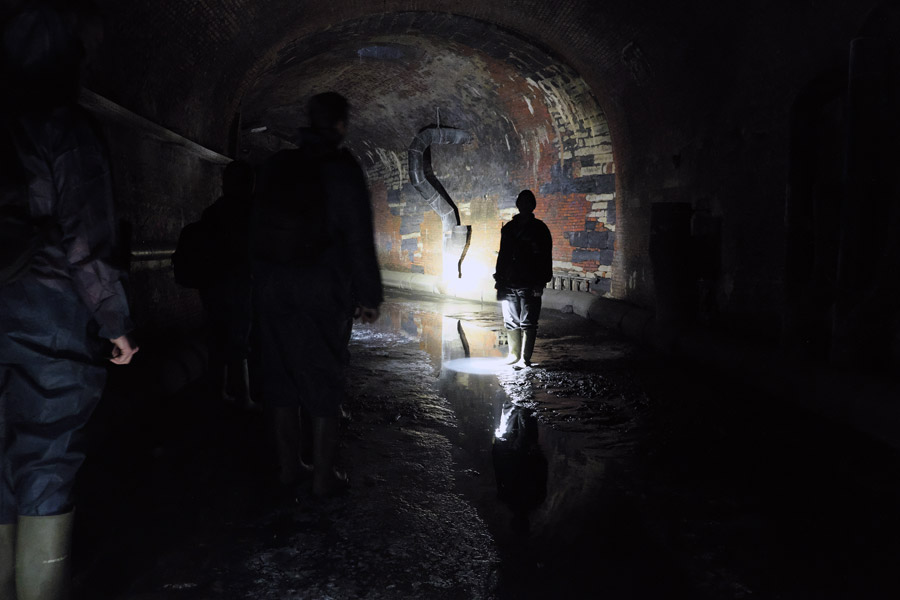

De Ruien, Antwerp’s hidden canals
Cities and towns all across Belgium and the Netherlands are famous for their beautiful, tranquil canals, criss-crossed by picturesque bridges. Perfect for a spot of boat-based sightseeing.
Antwerp has its canals too, but through a strange twist of fate and the money-saving ideas of a famous general, they’re completely underground.
In the Middle Ages Antwerp was just like Bruges and Amsterdam, a small but ever-growing community surrounded by waterways that acted as defence, transport, commerce and… waste disposal.
By the time Napoleon Bonaparte came to the city, Antwerp’s canals were disgusting – smelly, clogged with rubbish and harbouring disease. The emperor took control and had a large part of the open waterways covered over as part of his improvements to the port area.
The local government took it one step further and, to save the public purse, anyone whose property bordered the canal could claim ownership of the frontage if they paid for the building work. The sections that ran through poorer neighbourhoods were covered in cheap brick, while those running in wealthy areas used more expensive materials and a precision design.
There’s even a section so ornate, with vaulted ceilings and sweeping arches, that it’s known as The Chapel.
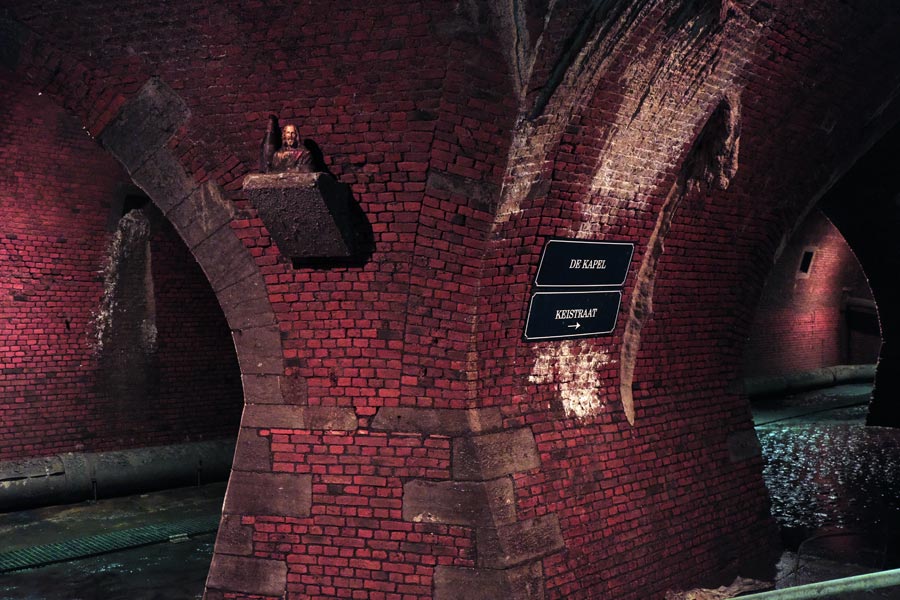
But despite the architecture, there was a problem. Noxious gases began to build up, workers died, and the smell was still awful. Eventually, a series of gigantic vents were constructed between the houses to take the stench away, and people could breathe freely again.
By the early 19th century, the job was done, and Antwerp’s sewage system went underground.
Out of sight and out of mind.
Visiting Antwerp’s hidden canals
Okay, it’s not an obvious tourist attraction and definitely not for the faint-hearted or sensitive-nosed. The canals are only washed with rainwater these days, but the smell still lingers.
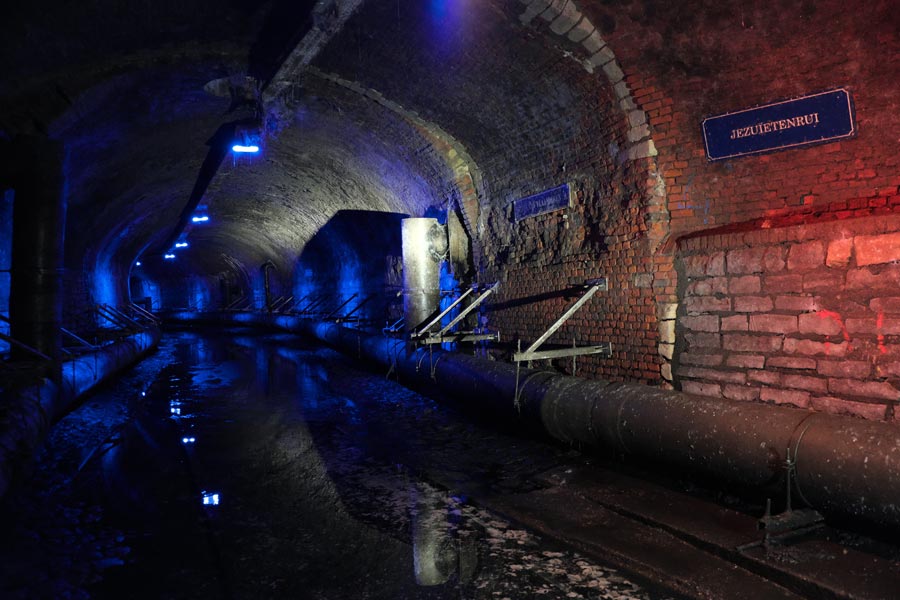
Napoleon’s edict left behind an anomaly – a series of ancient cobbled waterways, covered and protected from the elements. Over the years the system continued to be updated and improved with enclosed pipes for waste-water and sewage, but the old, underground courses still exist.
A visit to this hidden system of corridors, with its vaults, canals, sewers and sluices, takes you on a journey through time.
The tunnels are colourfully but subtly lit. You have to watch your step as the cobbles are uneven and slippery.
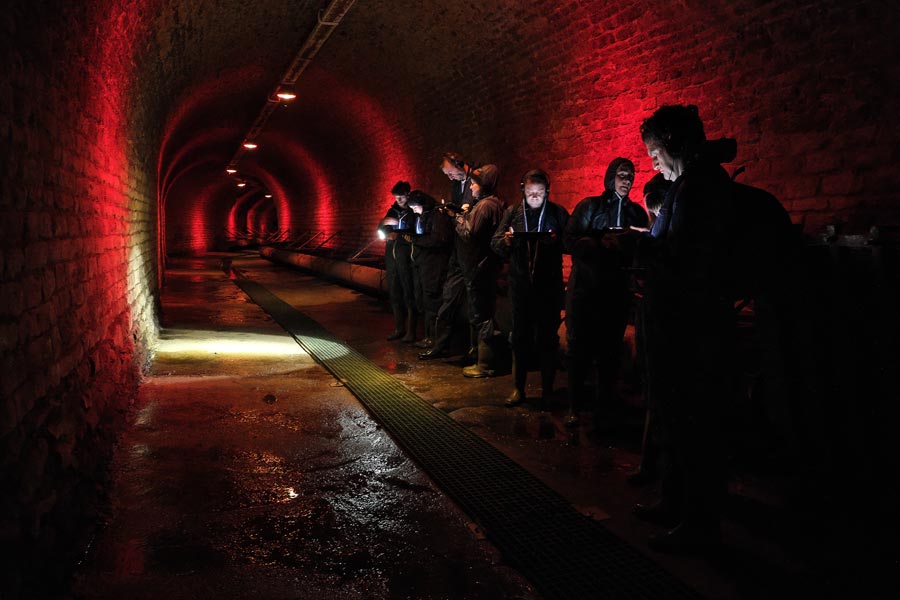
At times, you are ankle deep in rainwater, and you don’t want to brush up against the brick walls for fear of disturbing something nasty.
But it is beautiful, in its own rather ghostly way.
Rats can be heard and occasionally seen skittering away from the light. Their poo attracts a fungus that grows upwards, like a cloud of angel hair.
The walls are festooned with spider webs from an unusual visitor. The environment is perfect for a tropical species, usually found in the jungles of Borneo or the Amazon, but living it large in the dark, humid city sewers. If you are quiet, you may catch sight of them in the torchlight, disappearing into cracks in the walls.
At every key point our guide stops, explains where we are in relation to the amazing architecture above, and discreetly checks that all his charges are okay and haven’t wandered off.
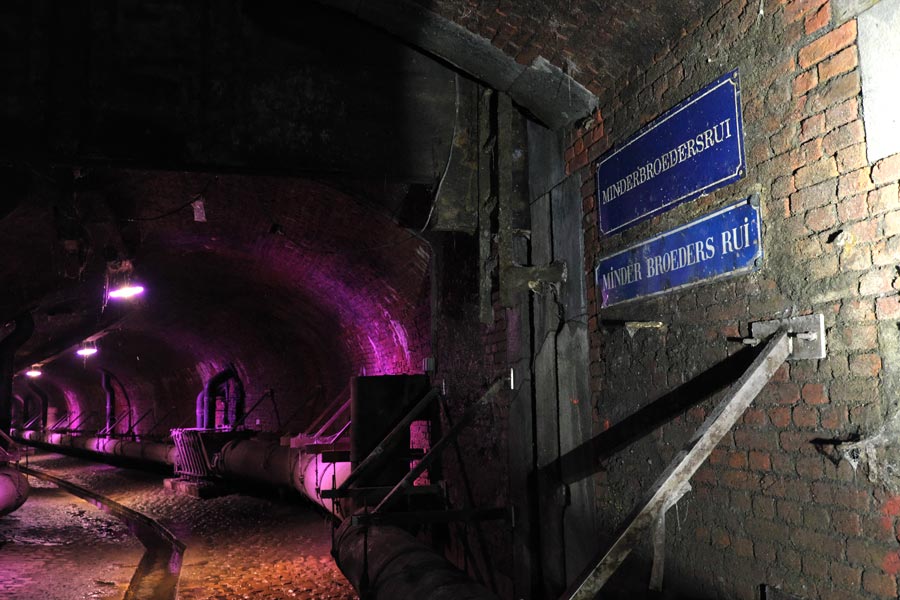
And the smell? Well, after an initial ‘yuck’ reaction, you honestly get used to it. And the fascination of your surroundings takes over.
After about an hour and half we emerge, blinking slightly in the light of a winter afternoon, into the courtyard of a café in the north of the city.
A community Christmas party is in full swing, complete with wood fire braziers and a jazz group. Stripping off overalls, removing smelly wellies, and unpacking our bags, we sit on a bench warming ourselves by the fire.
At this point the organiser approaches, discovers we’re visitors and invites us to join in, pressing cups of warm glühwein into our hands.
Now that smells a lot better than Antwerp’s hidden canals!
Visiting De Ruien
A guided tour with iPad in 2023 takes between 90 and 120 minutes, costs 19 euros for an adult, 12 euros for children aged 10 to 16.
Protective clothing is supplied, and the canals are a constant 15 degrees Celsius all year round, so perfect for escaping baking hot summers or icy winter days. But don’t bring too much with you. Everything, including coats and shoes, has to be put into the backpack and taken with you on the walk, so travel light.
Full details on the De Ruien website
Accessibility at De Ruien
The canals are reached via steep steps, and it is a long walk on wet and uneven surfaces, so not ideal for anyone with limited mobility.
It’s not suitable for children under 10.
Where to next?
• 7 hidden destinations in Europe
• 7 unmissable things in Bath
• A guide to the Prosecco Road