
Can there be anything more relaxing than taking a stroll in the Sussex countryside on a warm, sunny day, enjoying the views?
Well, yes! Add alpacas to the mix and the relaxation factor goes off the scale.
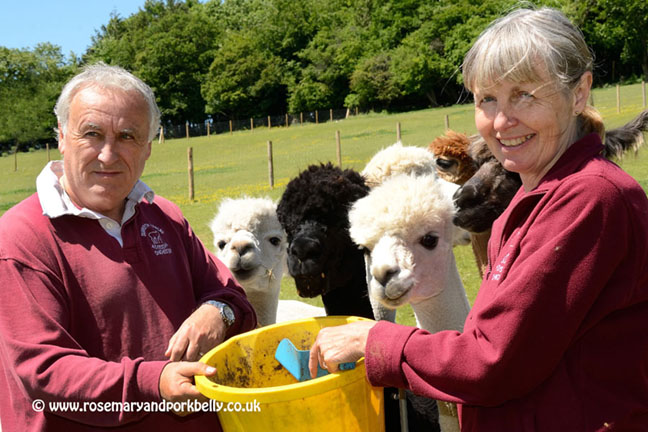
They’re delightful creatures. Smaller and more delicate than their llama cousins and far less likely to spit!
Huge, dark eyes seem to draw you in, and their hooves are almost soundless on the soft earth.
Their gentle humming is an invitation to meditate, and their pace is slow and steady.
Until you reach a tempting holly bush!
We went to meet Baron and the rest of the Dunreyth Alpacas near Chichester to meet Bruce and Peta Ives and their gentle walking companions.
Every morning an alpaca wakes up and thinks ‘Today I am going to die’ so not surprisingly they have a reputation for being a bit skittish.
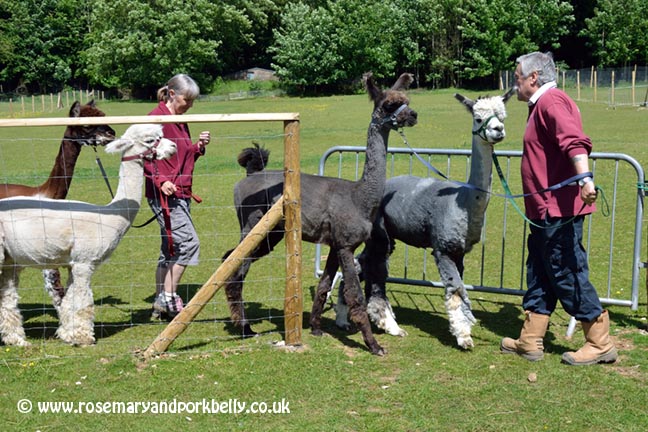
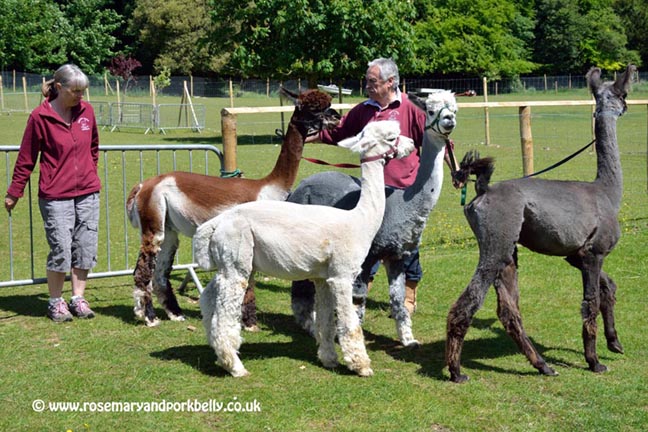
Alpaca walking companions
Bruce gives us a health and safety talk before we head off for a gentle stroll through the Sussex countryside with our alpaca walking companions.
Along with the sensible advice to wash our hands thoroughly afterwards, he gives an insight into the minds of these enchanting creatures.
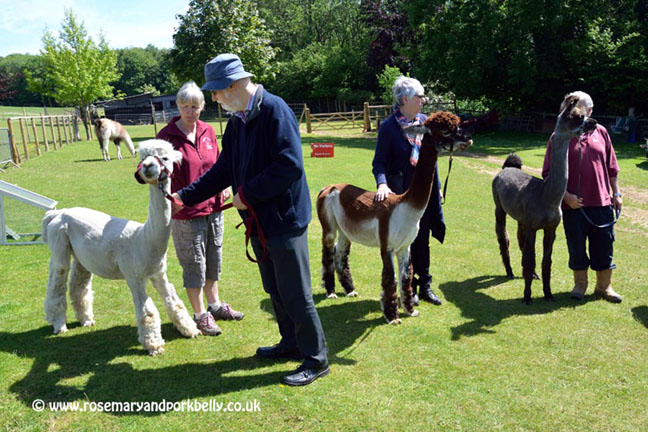
“They are prey animals, so are always on the lookout for something that’s going to kill them. Humans are okay, as long as we don’t make any sudden moves and as long as we are firm and reassuring when we handle them.”
What about dogs?
“Dogs? They hate them! If we meet a dog not on a lead, draw your alpaca in close. If a dog, fox or badger gets too close to the rear end of an alpaca, they will kick. You don’t want to be in the line of fire when that happens.”
“They may be small and fragile-looking, but they pack quite a punch! Horses are frankly terrified of them – so if we meet any riders on the path, I’ll ask you to lead your alpaca into the trees and stand still.”

I’ve been matched with Baron, the herd’s alpha male, and as I gaze into his liquid brown eyes and stroke his soft head and neck, I don’t see even a hint of skittishness.
But our journey had just begun.

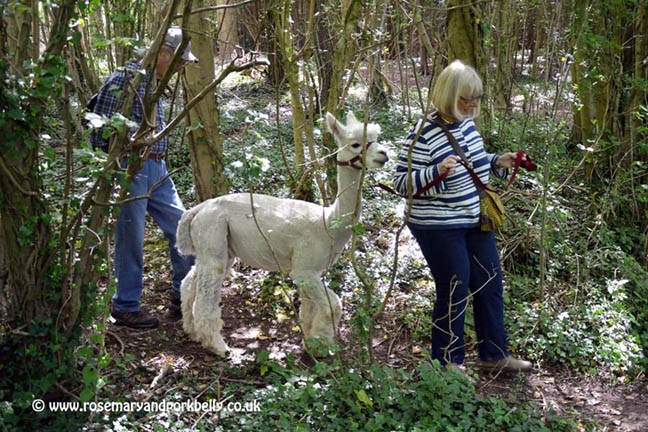
Dunreyth alpacas
Bruce and Peta have been running Dunreyth Alpacas for about ten years.
“It’s a dream come true for us. Peta and I met when we were nursing but we’ve both always wanted to raise animals and live in the countryside.”
“When our jobs were made redundant, we took the chance to make it happen. Originally our plan was just to raise a few alpacas for their fibre so that Peta could hand-knit jumpers and hats and sell a few at craft fairs.”
“At that time llama walking was beginning to start up but no-one was using alpacas as everyone said they were too unpredictable. We began walking ours for our own pleasure. Friends and family joined in, and it has just grown from there.”
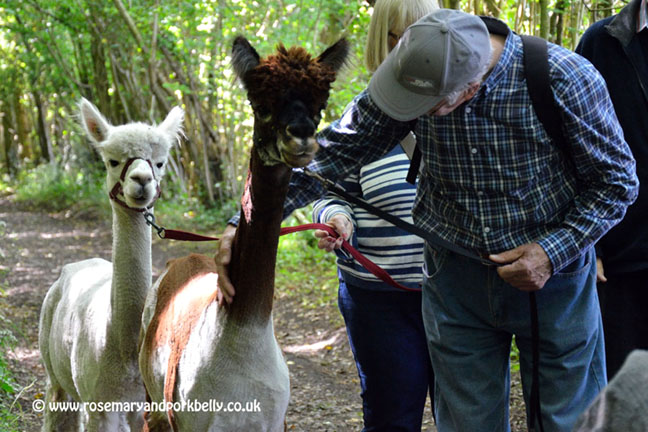
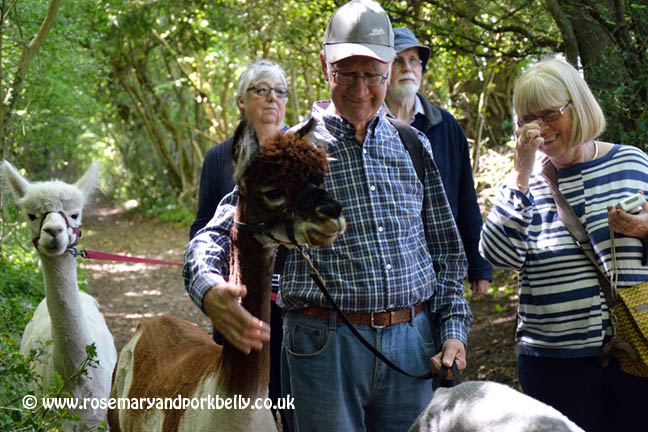
Bruce is very clear that the alpacas’ welfare is the most important thing.
“I wouldn’t do it if they didn’t enjoy it. We don’t walk the females as they are either breeding, feeding or resting between pregnancies.”
“It’s just our “boys” we take out and if they don’t fancy going, we don’t make them. If they lie down when they see me coming, I know they’re not in the mood.”
There’s plenty of excitement in the pen when we arrive for our walk, with alpacas crowding over the fence to say hello, have their heads rubbed and generally making us feel very welcome.
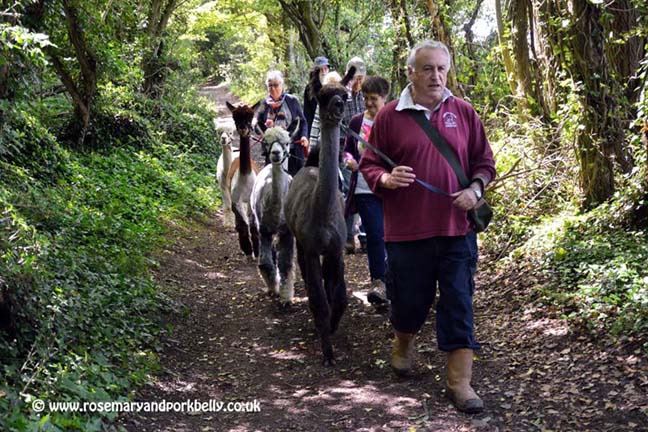
Walking with alpacas
Bruce is careful to match the humans to the alpacas.
“As long as you are firm and not tentative, most people can handle an alpaca. Children can do it, although we have two leads with an adult holding one as the animals can pull quite strongly.
‘Sometimes an alpaca will just take against someone – perhaps they don’t smell right – but we can usually find another one who’s happy to be paired up.’
“You can’t make an alpaca do anything, so if they want to stop and eat or roll in the bushes, they will.”
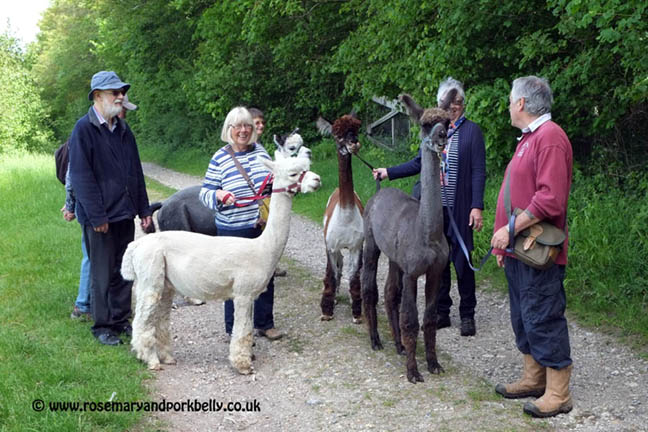
Off we go, at a steady walking pace.
Baron, his ears twitching back and forth, is a restful companion, although he hums a little and turns his head to watch the females in the field as we pass. ‘I think he’s counting his harem,’ Bruce chuckles.
The walk along the country path is uneventful. Baron likes to snack a few times and insists on brushing through the bushes, but we seem to be getting along just fine.
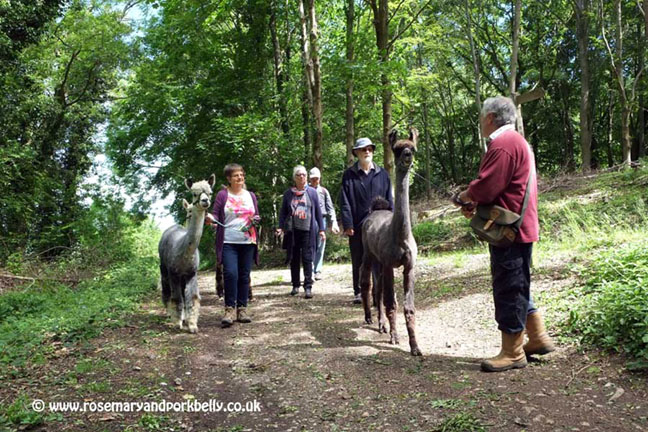
We have to take a short detour through the trees because the recent rain has left the path waterlogged and alpacas can’t bear the feeling of mud between their toes.
After 20 minutes we reach a beautiful viewpoint where the South Downs stretch before us and you can see down the hill and across the water to the Isle of Wight.
Here we feed our companions with grass pellets and stand and chat a while.

About Alpacas
Alpacas are originally from South America, where they are bred for their wool and for meat. Part of the camelid family, they share many of the characteristics of their larger cousin, the llama as well as camels, vicuñas and guanacos.
In the UK they are classed as pets not farm animals, although they have to be protected from TB.
Bruce and Peta’s animals are all microchipped and carefully monitored. “We do buy in other alpacas to freshen up the bloodline, but mostly we breed our own.”
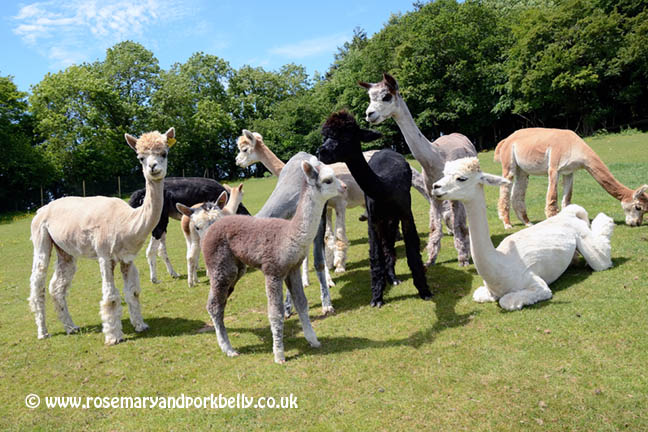
‘Some breeders like to keep the colours pure, but we love our spotty, mottled and patchy ones. It gives them character and makes their fibre more interesting.’
Working with alpaca fibre
That’s one of Dunreyth’s real selling points.
Once the animals are given their annual trim, they send the alpaca coats off to a mill in Scotland, which processes each animal’s fibre separately.
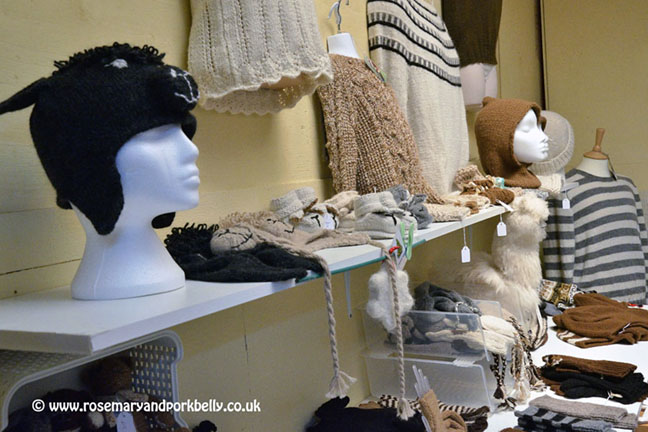
The yarn is then returned, clearly marked with the name of the animal, and Peta makes up a garment.
Each is then sold with a picture and a few details of the alpaca it came from.
‘We don’t want to get too big or impersonal here, so we do things in a small way, taking our time.’
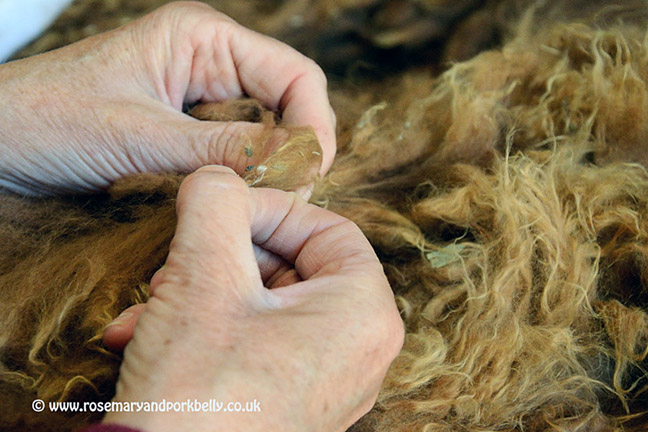
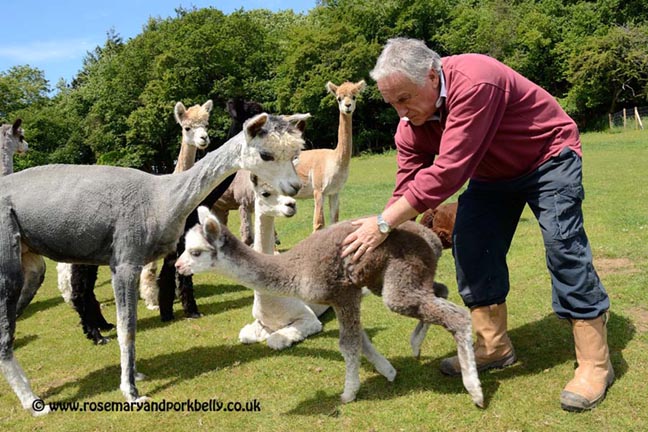
Peta is painstakingly preparing the fibre from a young alpaca called Harry. Every blade of grass, leaf, burr and thorn has to be removed by hand before it can be sent to the mill.
“An adult one isn’t so bad – I can probably do it in a couple of hours, but the babies? Well, their hair is so soft, and they are always rolling and rubbing themselves in something, so it can take weeks to get one ready for the milling process.”
Spending time with alpacas
Neither Peta nor Bruce are in a hurry about anything.
‘The real point of the alpaca walks is relaxation. We take our time, there’s no rush, so everyone can unwind. Spending time with an alpaca is very therapeutic.’
‘Baron often visits residential homes for the elderly, he’s so friendly and gentle he can safely go inside to be petted and stroked. We also have visits from children with special needs, especially youngsters with autism, and they and their families really love it.’
I can certainly see why, although the return walk with Baron was a little less leisurely.
He was clearly missing his ladies and set off down the path at a fair lick, trying to break into a trot in between throwing himself excitedly into almost every holly bush for a good scratch.
But we reached the farm without incident and said our goodbyes.
Once released from his harness, Baron headed straight over to the fence to gaze longingly at the females.
‘There you are,’ says Bruce, ‘he’s counting them again!’
For more information about Dunreyth Alpacas
Visit the Dunreyth Alpacas website
Disclaimer: Bruce and Peta invited us to go on an alpaca walk free of charge, the opinions above are our own.
Where next?
• East Ruston Old Vicarage Gardens
• Shakespeare in the snow
• Calais Dragon