
Last July, we wrote about the places where cruise ships are banned, alongside the fact that the number of people taking a cruise holiday is increasing. So we thought, as more countries are placing further restrictions on cruises, we would take another look to see what has changed.

For decades, the lure of a cruise holiday has been simple: board a giant floating hotel, unpack once, and wake up each day in a new and exotic location. It’s a romanticised version of travel, without the hassle of dragging luggage through airports, haggling with taxi drivers, or navigating the complexities of foreign train timetables. Instead, you’re promised a luxury experience, fine dining, and the thrill of discovering new lands, albeit for a few hours at a time, before sailing off into the sunset.
But what if that dream is starting to crack like the hull of an ageing liner? With more and more countries banning or heavily restricting cruise ships, the reality is that your carefully curated itinerary could start looking more like a game of travel bingo, with cancellations and detours becoming the new norm.
Are cruises still worth it, or is it time to abandon ship?
The Great Cruise Crackdown
If you were planning to hop on a cruise to tick off the world’s most iconic destinations, you might need to manage your expectations. A growing number of locations are waving goodbye to these giant floating cities, citing concerns over over-tourism, environmental damage, and the minimal financial benefit cruise passengers actually bring to local economies.
Venice, once a favourite stop for cruise liners, made headlines when it banned large ships from sailing into its delicate lagoon. Instead of gliding past St. Mark’s Square, ships now have to dock at the industrial port of Marghera, hardly the magical Venetian experience passengers are looking for.
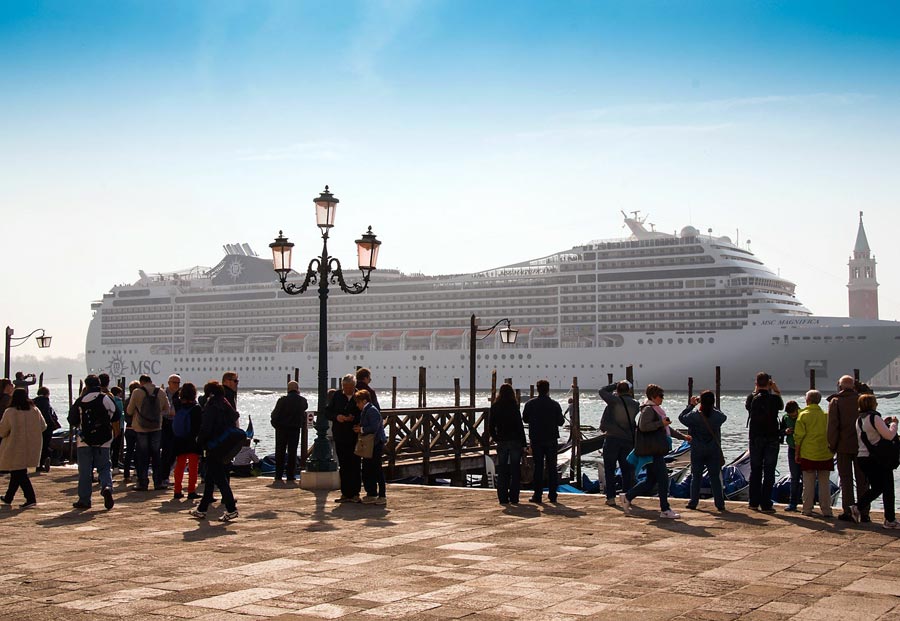
Nice in France, has taken a firm stance, from July they are refusing entry to ships over 190 metres long with more than 900 passengers. Why? Because, according to its mayor, these tourists contribute little to the economy while causing massive environmental harm. It turns out that when thousands of people pile into a historic city for a few hours and buy nothing but a fridge magnet and an overpriced gelato, locals don’t feel particularly enriched.
Santorini, a long-time favourite for cruise passengers, is not outright banning cruise ships but has implemented a cap on daily visitor numbers, limiting the number of cruise passengers that can disembark each day. The restrictions aim to curb the overcrowding that has plagued the island, particularly in the peak summer months, when thousands of visitors overwhelm its narrow streets and infrastructure.
Croatia, particularly Dubrovnik, has taken significant steps to regulate cruise tourism. The city has limited the number of cruise ships allowed to dock per day, capping the total number of passengers, to reduce the strain on its historic Old Town. This move is part of a broader effort to protect its UNESCO World Heritage status while improving the experience for both tourists and locals alike.
Ibiza, too, has set limits, restricting the number of ships that can dock at any given time, and Belfast in Maine USA, has outright banned cruise ships carrying more than 50 passengers. Mexico is introducing a hefty $42 tax per passenger, possibly as a way to make up for years of cheap margaritas and free salsa. Although it has to be said some cruise lines have chosen to avoid certain ports in Mexico anyway, due to safety concerns related to crime.
Even Iceland, long considered an up-and-coming cruise destination, has thrown a spanner in the works by significantly increasing docking fees, causing some cruise lines to rethink their visits.
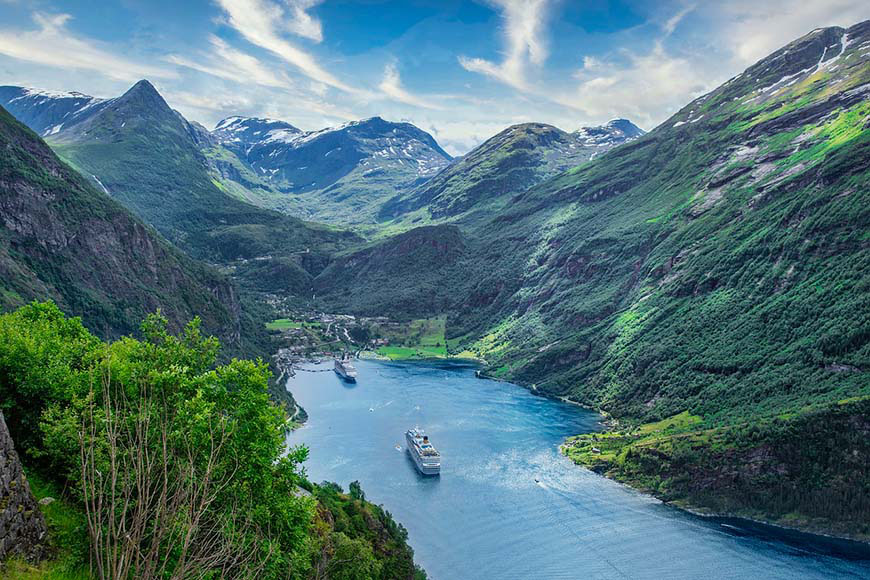
Environmental Concerns: Not Exactly ‘Green’ Travel
Let’s not pretend that cruise ships are the most eco-friendly way to travel. While they offer an efficient way to move large groups of people, their carbon footprint is enormous. One large cruise ship emits as much pollution as a million cars, and the industry has a long history of environmental controversies, including dumping waste into the ocean and harming fragile ecosystems.
Ports in Norway have implemented emissions restrictions to curb pollution from cruise ships. The Norwegian Parliament has decided that ferries and tourist ships must be zero emissions from January 2026 and zero emissions for all ships by 2032.
The Galápagos Islands, a UNESCO World Heritage Site, have strictly limited cruise tourism to prevent damage to their unique biodiversity.
It turns out that mass tourism and delicate natural environments don’t mix particularly well.
Cruise ships also contribute to ‘over-tourism’, where cities become overrun with visitors to the point that locals can barely function. Ask anyone who lives in Dubrovnik, Barcelona, or Santorini how they feel about the daily flood of cruise passengers, and you’ll probably get an earful about congestion, rising rents, and the sheer impossibility of getting a decent coffee without a 30-minute wait.
The Passenger’s Perspective: A Holiday Gone Overboard?
So, what does this mean for passengers? In the past, you might have booked a cruise expecting to visit Venice, Santorini, and Dubrovnik, only to discover that your ship is now docking in less glamorous, more industrial ports, miles away from the actual destinations.
And then there’s the issue of itineraries changing mid-trip. Cruise passengers are no strangers to last-minute diversions due to bad weather, but now they might also be rerouted because their originally planned port simply doesn’t want them. There’s something uniquely frustrating about paying for a Mediterranean dream trip only to end up spending an extra day at sea because local authorities have had enough of your ship’s exhaust fumes.
Has the Cruise Industry Peaked?
The cruise industry has been booming for decades, with ever-larger ships packed with more amenities, like zip lines, ice rinks, and robot bartenders. But with growing restrictions, are we seeing the beginning of the end for the golden age of cruising?
The reality is, cruise companies are going to have to adapt. More eco-friendly ships are in development, and some lines are focusing on smaller, more sustainable vessels that are less intrusive and more welcome in sensitive destinations. There’s also a growing market for expedition-style cruises that focus on responsible tourism, rather than simply shuttling thousands of passengers to the same oversaturated hotspots.
Yet, for those who dream of a traditional cruise holiday, stepping off the ship straight into the heart of Venice or wandering through the cobbled streets of Dubrovnik without the stress of extra travel arrangements, those days might be numbered.
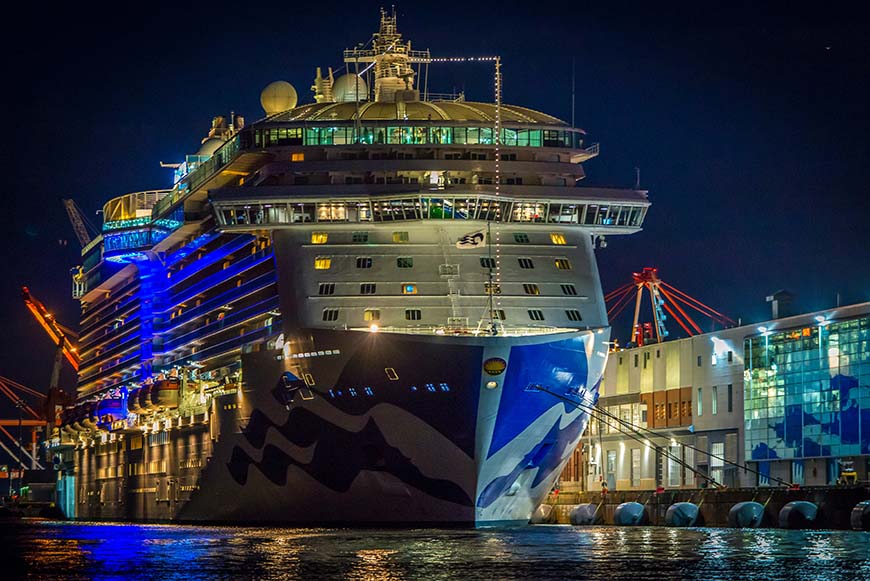
Should You Still Book a Cruise?
If you’re set on a cruise holiday, there are still plenty of options. Many destinations continue to welcome ships with open arms (and open wallets). The Caribbean, Alaska, and parts of Asia remain cruise-friendly, and river cruises, which tend to be smaller and less environmentally harmful, are gaining popularity.
However, if your idea of a perfect cruise involves visiting the world’s most iconic cities with ease, you might want to read the fine print carefully. Port restrictions, environmental concerns, and local opposition mean that your ‘once-in-a-lifetime’ itinerary might look very different in reality.
The Rise of River Cruises: A New Way to Explore
As ocean cruises face increasing restrictions, river cruises are gaining popularity as a more sustainable and immersive way to travel. Unlike their ocean-going counterparts, river cruises offer a slower pace, smaller crowds, and the opportunity to dock right in the heart of historic cities and stunning landscapes.
In Europe, the Danube River remains a top choice, flowing through multiple countries like Germany, Austria, Hungary, and Romania, with stops in Vienna and Budapest.
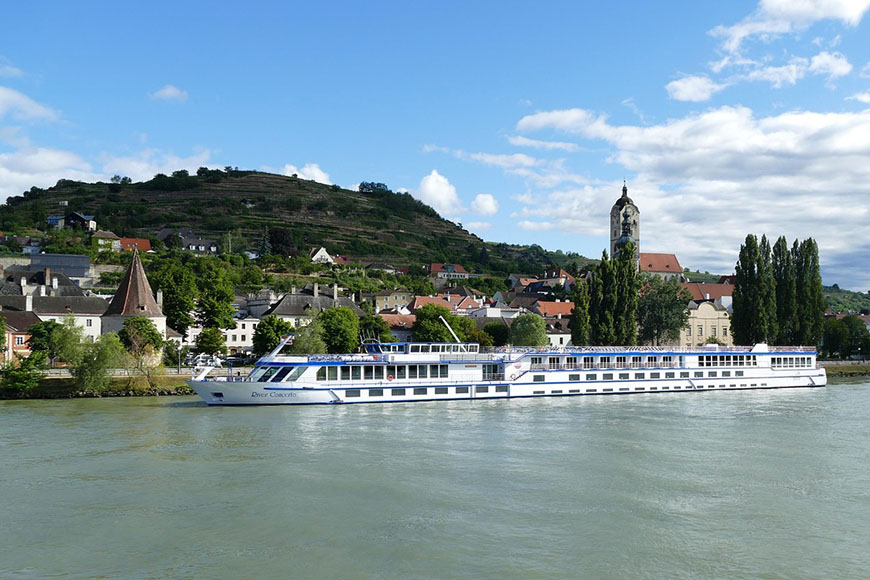
The Rhine River meanders through Switzerland, Germany, and the Netherlands, taking passengers past fairy-tale castles and picturesque vineyards.
For those looking for a French experience, the Seine River provides a perfect blend of history and romance, often starting in Paris and traveling towards Normandy.
Meanwhile, Portugal’s Douro River offers an intimate journey through the country’s famed port wine region.
In Asia, the Mekong River provides an unforgettable adventure through Vietnam and Cambodia, showcasing floating markets and ancient temples.
China’s Yangtze River remains a popular route, famous for its breath-taking Three Gorges scenery.
For those wanting a cultural deep dive, India’s Ganges River offers a journey steeped in history and spirituality.
Across the Americas, the Mississippi River delivers a uniquely American experience, from New Orleans jazz to Mark Twain-inspired landscapes. The Columbia and Snake Rivers in the Pacific Northwest showcase stunning scenery and history. Further north, the St. Lawrence River allows travellers to explore the beauty of French-Canadian culture and natural landscapes.
For adventurers, South America’s Amazon River offers an unparalleled cruise through dense rainforests teeming with wildlife, while in Africa, the Nile River continues to be one of the most iconic cruise routes, offering a journey through ancient Egyptian wonders.
Meanwhile, Botswana’s Chobe River provides a unique water-based safari, with up-close views of elephants, hippos, and crocodiles.
With river cruises offering an eco-friendly and culturally rich alternative to traditional cruising, they might just be the future of stress-free travel, providing access to stunning locations without the drawbacks of mass tourism.
The cruise industry isn’t going to disappear overnight, but it’s certainly hitting some rough waters. If you’re willing to embrace change, adapt to new itineraries, and perhaps consider smaller, more sustainable ships, then bon voyage!
If not, maybe it’s time to rediscover the joys of a good old-fashioned land-based holiday.
Where to next?
• Step into the past at Weald and Downland Museum
• Terra Botanica – a fantasy world for plant lovers
• Fallingwater – Frank Lloyd Wright’s rural masterpiece