
We stepped out of a brisk spring breeze into the hushed calm of Leicester cathedral.
Not the most spectacular of religious buildings, but one with a long and complex history and a place which now houses the mortal remains of Richard III, the last English king to die in battle.
I’ve always been a Richard III supporter, ever since I read Rosemary Hawley Jarman’s book We Speak No Treason as a teenager.
Pork Belly’s knowledge was limited to that one episode of Blackadder. So it was with a crusading spirit that I took him to the city.
Last of the Plantagenet kings
Richard III, the last of the Plantagenets, fought to the death at the battle of Bosworth Field in 1485, hoping to hang on to his crown during one of the most turbulent periods in British history.

What happened to his body after the fighting was over isn’t clear. It seems he was brought to Leicester, his body displayed, so everyone could acknowledge his defeat, then buried with little ceremony in the church of the Grey Friars, within the city walls.
Tis better, sir, to be brief than tedious
William Shakespeare, Richard III
Henry Tudor began his reign determined to bring the warring houses of York and Lancaster together and stamp out the royal bloodline that preceded him, and so a veil was drawn over Richard’s short reign.

Murder, mystery and mayhem
Few kings have captured the public’s imagination, dividing popular opinion so deeply.
Was he the hunchbacked murderer of the boys in the tower or a strong and just king, vilely slandered by the incoming Tudors?
The discovery of his body a few years ago in a car park near the cathedral has gone some way to answering that question. Yet still mystery surrounds this most controversial of English kings.
And therefore, since I cannot prove a lover,
To entertain these fair, well-spoken days,
I am determined to prove a villainWilliam Shakespeare, Richard III
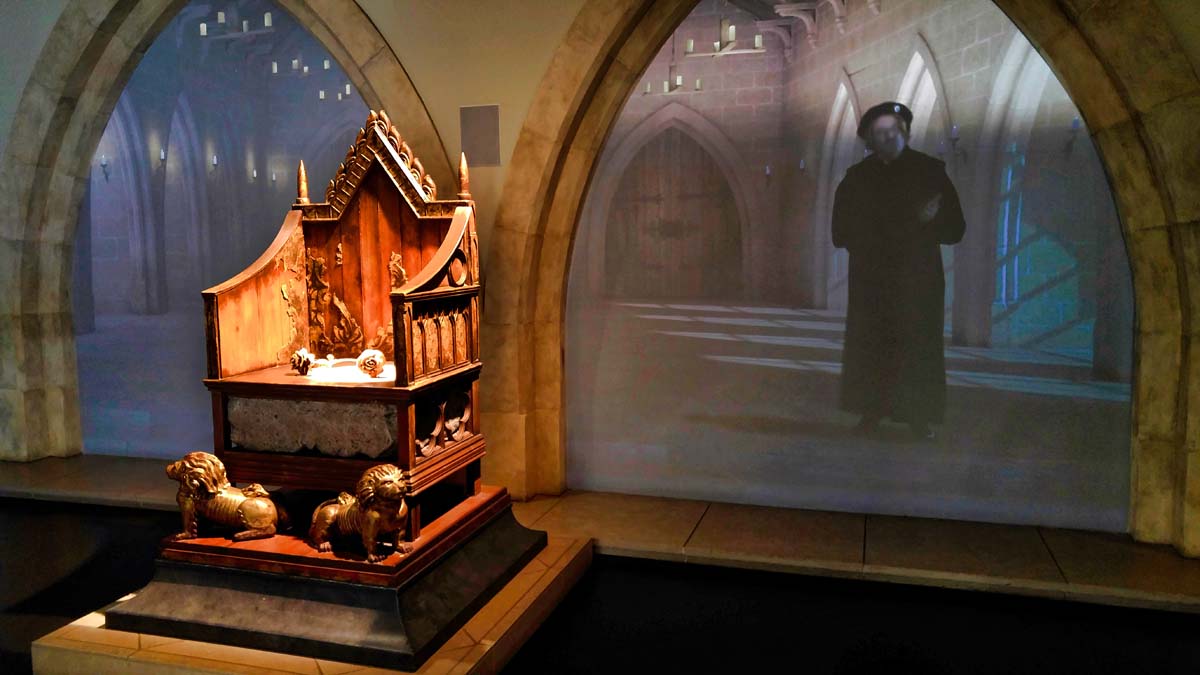
At the Richard III Visitor Centre, just opposite the cathedral, you can discover the fascinating story of how amateur enthusiasm and painstaking science worked together to recreate the final hours of the Car Park King.

The search for Richard’s bones
For years the rumour persisted that Richard’s bones were thrown into the river by a mob at the time of the Reformation, but a number of researchers began to build a case that he was still buried in the Greyfriars area of Leicester.

In Spring 2011 Philippa Langley, of the Richard III Society, asked the council for permission to work with the University’s archaeological team to dig up the Greyfriars Social Services car park site.
Very few people believed they’d actually find Richard, but in August 2012 the dig began and within days they’d uncovered not only the old Greyfriars church, but a skeleton with battle wounds and a curved spine.
Woah, wait a minute, was Shakespeare right? Richard was a hunchback?

Well, yes and no.
DNA testing
After extensive testing including DNA matching with Richard’s known descendants, the body was finally confirmed as that of the King and that he had scoliosis of the spine – a condition that would have made him look uneven but would mostly have been hidden by his clothing and armour.
The whole exhibition, from neat video reconstructions of his life, through the painstaking research and excavation to the final reveal of what Richard III actually looked like, is well worth a visit.

Richard III’s grave
And the place where his body was found, complete with holographic representation of the skeleton, is a magnet for Richard fans from all over the world.
I found the hushed atmosphere in the little annexe strangely moving.

In March 2015 Richard’s remains were respectfully re-interred in a peaceful chapel in the cathedral where light and shadow decorate his tomb. It’s a moving memorial, although I can’t help thinking he’d have preferred to have been buried in his beloved York.
March on, join bravely, let us to’t pell-mell;
If not to heaven, then hand in hand to hell.”William Shakespeare, Richard III
More information about the Richard III Visitor Centre in Leicester
Opening times and directions:
The Richard III Centre is in the heart of the city at 4A St. Martin’s, adjacent to Leicester Cathedral and Leicester’s Guildhall and just a 15-minute walk from the railway station.
The centre is open daily except Christmas Day, Boxing Day and New Year’s Day.
There’s a range of discounted ticket prices for groups and concessions and individual tickets last for a year so are great if you live nearby and plan to visit regularly.
For ticket prices and booking:
• King Richard III Visitor Centre
Richard III Centre, Leicester accessibility information

For more attractions and ideas of things to do, see the Visit Leicester website
• Visit Leicester
Getting around was good value using the park and ride bus system, and everything is in walking distance once you’re in the heart of the city.

Where to next?
• Beautiful places in Britain
• Island Life – Isle of Wight
• Shakespeare in the snow
Richard III’s body was found on the very first day of the dig, making it all even more amazing.
Yes, almost unbelievable. Even the researchers were amazed at the find. And all down to the passion and driving force of one woman!