
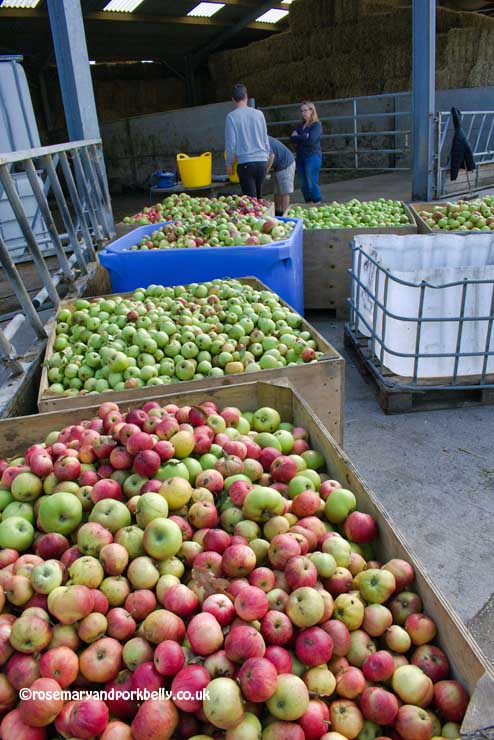
The apples tumble and bumble into the bins and a few wasps lazily circle the fruit looking for a way in to their hidden sweetness. Bright white clouds scud across the sky and there’s an autumn crispness in the air.
We’re at Trenchmore Farm in Cowfold, West Sussex for apple swap day and by the time their trees bloom again all the fruit before us will have been changed by an entirely natural alchemy into a clean, clear, bright cider.
We discovered Silly Moo Cider at Brighton’s Foodies Festival.
Neither Pork Belly nor I are great cider drinkers but this was something different, leaving a clean taste on the tongue with none of the bland sweetness of the mass produced or the roughness of the stronger traditional West Country brews.
And we both loved it.
So here we are, watching how it’s made and breathing in the heady perfume of fruity yeastiness that pervades the air at apple pressing time.
A family tradition
The Knowles family – Andrew and Joanne, their daughter Rachel and son Oscar – have farmed at Trenchmore for more than 20 years.
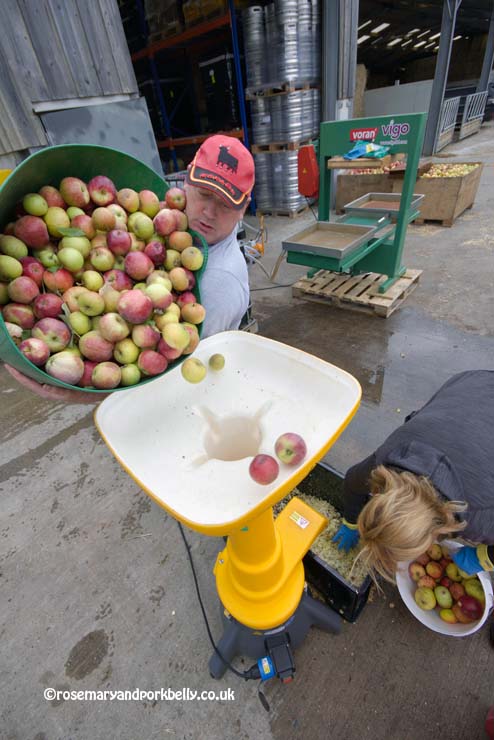
Their herd of Sussex cows watch impassively as the cars, vans and trailers arrive to disgorge a wide variety of locally grown apples from neighbours’ fields, farms and gardens.
Sustainable farming
It’s this local mix of varieties that gives Silly Moo its distinctive flavour.
“A few years ago we bought some more fields and were discussing what to do with them.” Andrew explained. “Sustainable farming is what we aim for – financially, environmentally and ethically. Our cows, which are used for wagyu beef, are fed on waste products from the human food industry and we want to keep everything as local as possible. It was on a walking tour of Devon that we made the decision to grow apples for cider.”
They wanted something that combined the heartiness of West Country ciders with something lighter and fruitier but with more character than the commercially produced brands.
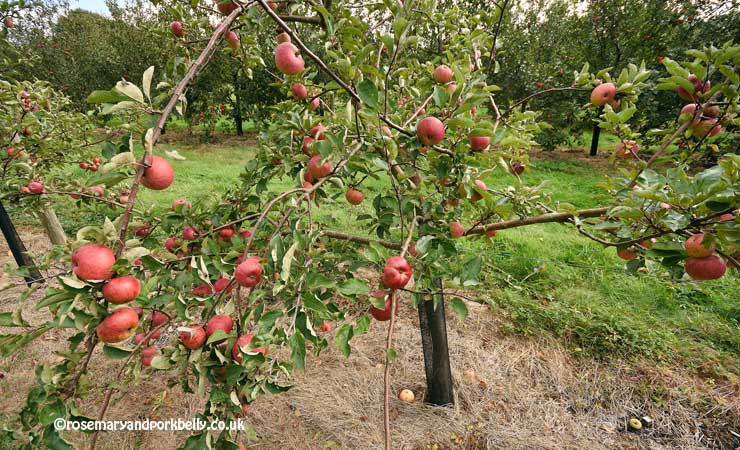
“We planted nearly 20 different varieties of cider apples to provide the strong tannins and natural yeasts which cider needs to ferment. But they don’t give up much sweetness. Rather than add extra sugar we asked our neighbours who had old established apple trees and never seemed to know what to do with all the fruit if they’d consider swapping their apples for cider. They were very enthusiastic, after all there’s only so many apple pies you can make!”
Apple swap days
And so the apple swap days began.
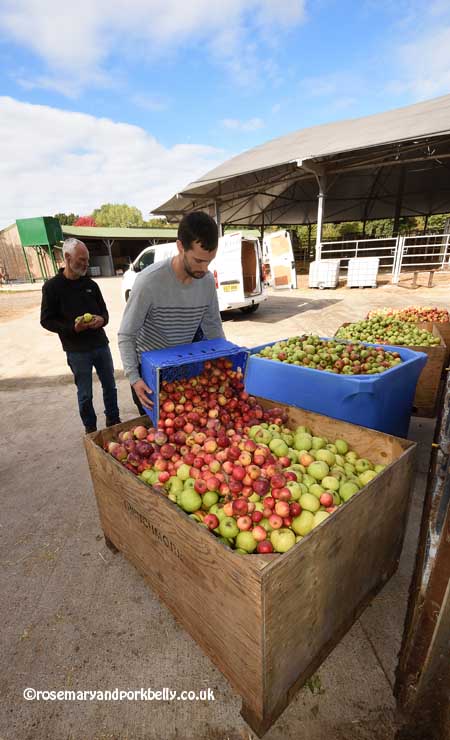
Over four weekends in late September and early October, the exact dates varying depending on the harvest, they open up the farm to receive any eating apples that are ripe, clean, unbruised, not sprayed with any chemicals and grown in Sussex. It’s these apples that provide Silly Moo’s natural sweetness.
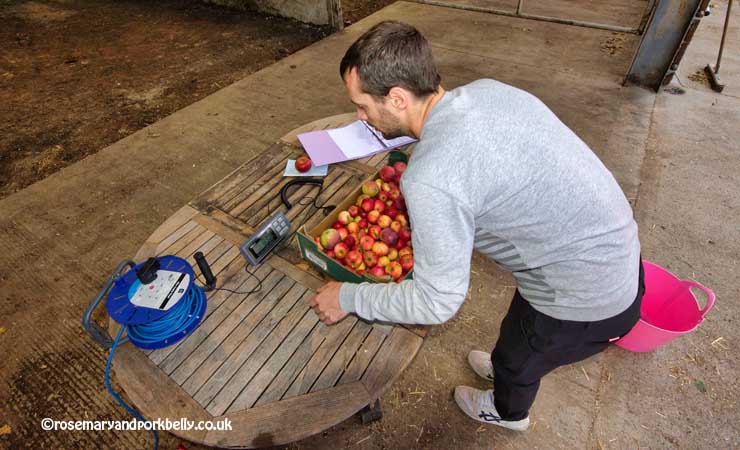
The reward? 5 kilos of apples gets you 1 bottle of cider.
They arrive in everything from sleek sports cars through comfortable family estates to big vans. Some bring a few bags others come in with crate loads.
Details of the apple-swap are on Trenchmore Farm’s website
A family event
Andrew is clearly enjoying himself. “I love the swap days. So many people say they come not for the reward of our cider but because they can’t bear to see all those good apples going to waste. We have regulars who look forward to the swap every year as well those new to the area who’ve only just discovered us.”
One family comes all together. The young boys have spent the last two days helping to pick the apples from their own trees and now it’s a chance to practice their maths as they take part in the weighing and calculations of how much cider they’re owed.
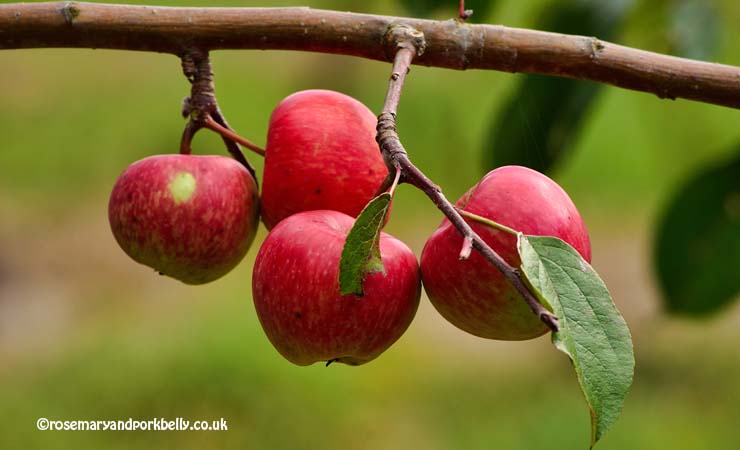
It takes a long time to make Silly Moo. “Commercial concerns can go from pressing to bottle in a matter of weeks but we prefer the long, slow process to allow the juice to ferment naturally. So this autumn’s pressing won’t be ready until spring next year.”
The apples from people’s gardens continue to roll in.
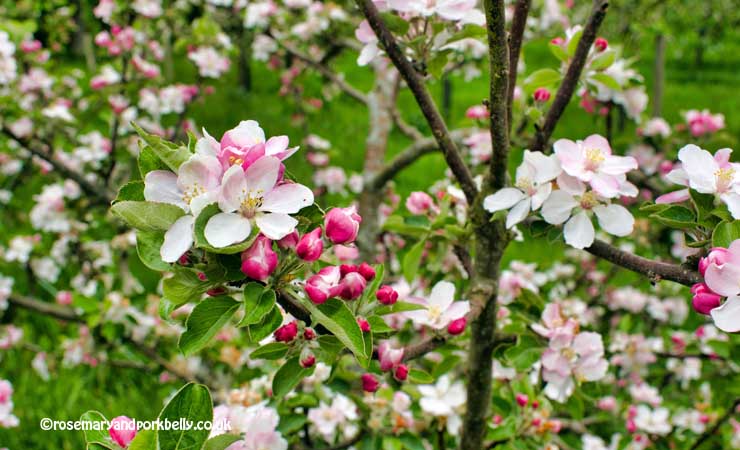
“It’s been a strange year. The early spring gave us beautiful blossoms but then it got cool and damp and not every variety fruited well. The spring also kept the pollinators like bees and insects away at the crucial time for some varieties. And we have micro-climates here. Some people are coming in saying they’ve had more fruit than ever before, others are telling us their their branches are almost empty.
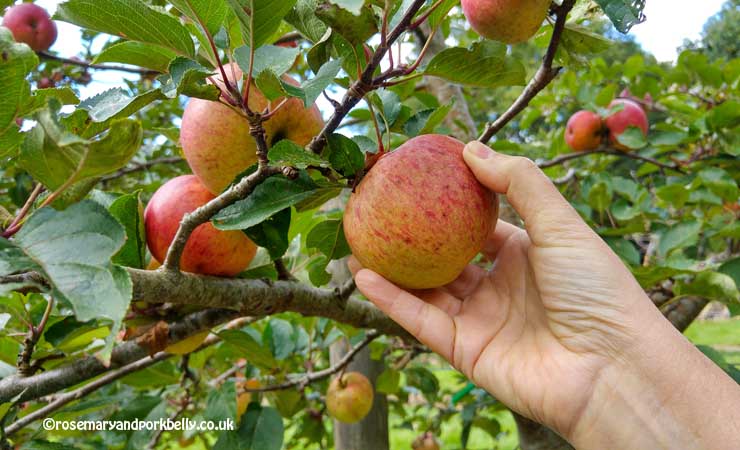
And everyone wants to give away quinces, which sadly Andrew can’t take. “If I press quinces or any other fruit than apples I have to tell the Inland Revenue as it makes a difference to the licensing.”
Instead people stand around in the farmyard chatting and swapping recipes.
Apple pressing
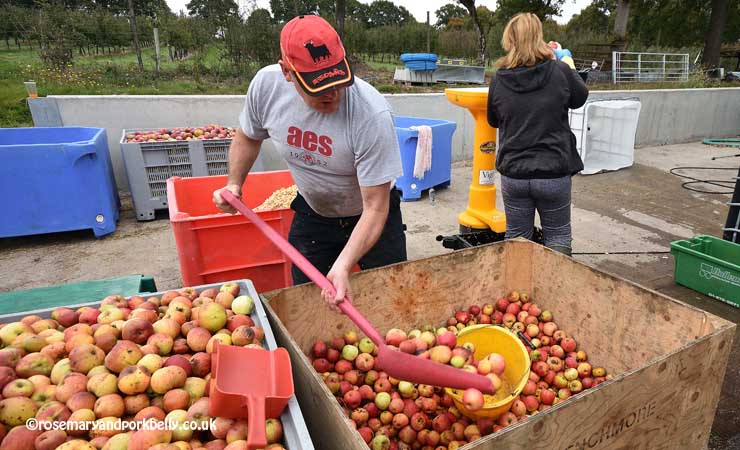
After the apple swap ends at midday everyone takes a well earned break then we’re back in the afternoon for the pressing.
This is all done by hand with help of neighbours who volunteer every year.
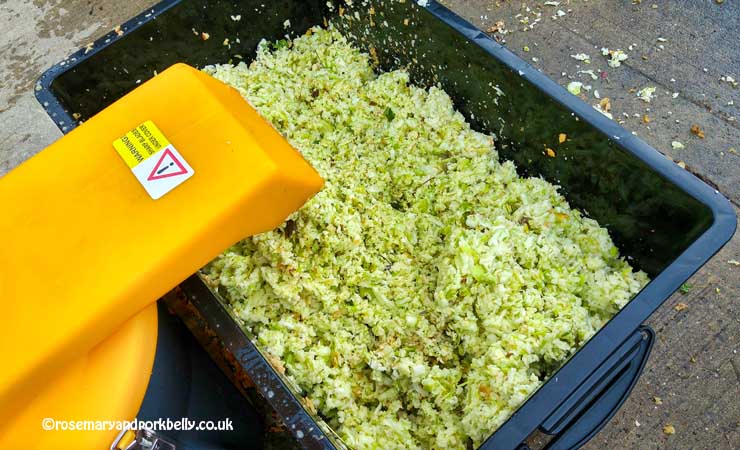
The apples from this morning’s swap will be left for a few days to start the natural breakdown process that will help them give up their juicy sweetness willingly while the tougher cider apples may need a little bit of help, with added pectinase. But there are plenty of apples around.
“It depends on the year just how juicy they are. The long hot summer of 2018 meant we’ve had plenty of fruit but there wasn’t enough rain to bring them to full bursting juiciness so we macerate them and leave them for a few hours before being pressed.”
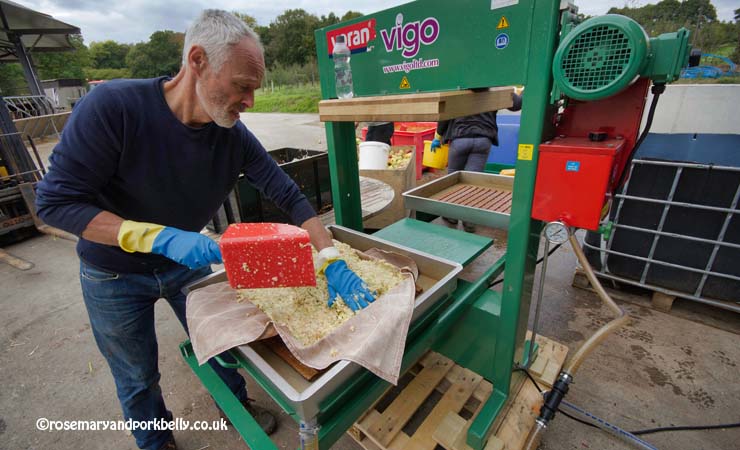
It’s very labour intensive.
Andrew is rueful. “Sometimes I envy the big concerns and their huge presses that can push out a container load in a matter of minutes. We’re a lot slower.”
A matter of time
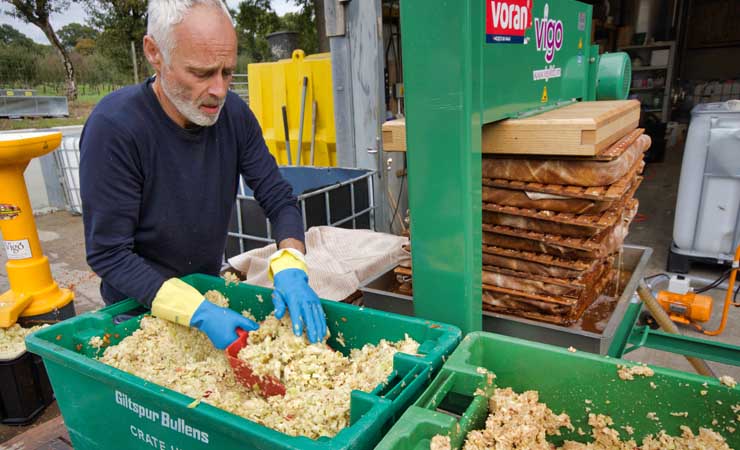
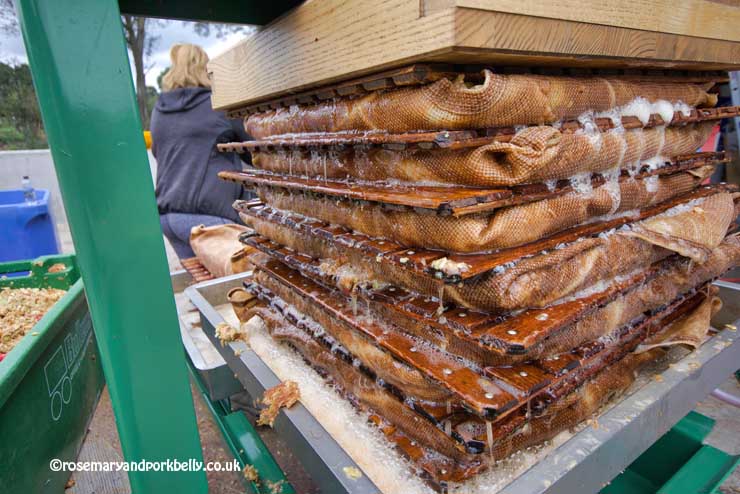
It takes about 5 and half of the giant bins to make 1,000 litres of juice. The chopped apples are wrapped in clean cheese-cloths and stacked high on small square wooden pallets before being moved under the hydraulic-powered press.
In just a few seconds the precious reddish brown juice begins to trickle down the stack and is drawn off into sterile containers nearby. It’s hard physical work but the trio soon get a rhythm going.
Once all the apples are pressed, which will take several weeks, it’s all a matter of time. Andrew draws off a cup from a bin of apples pressed a few days before. It already has a strong yeasty smell and a rich sweetness. “That’s what it’s all about. Just letting nature take its course. The juice ferments, settles and then we check that it’s sterile and clear. After that it’s on to the bottling, labelling and transporting.”
No waste
Nothing is wasted.
All the juice is extracted and the left over dried apple cake, called pomace, will soon make its way to the cattle who’ve been brought in temporarily from the fields and now stand watching the work.
It’s like they know what’s coming next.
Andrew laughs. “They go crazy for it. If they know we have some to dish out they’ll pretty much chase you across the fields to get to the troughs before you can fill them up. It’s their daft behaviour that gave us the name for the cider – Silly Moo.”
More about Silly Moo Cider
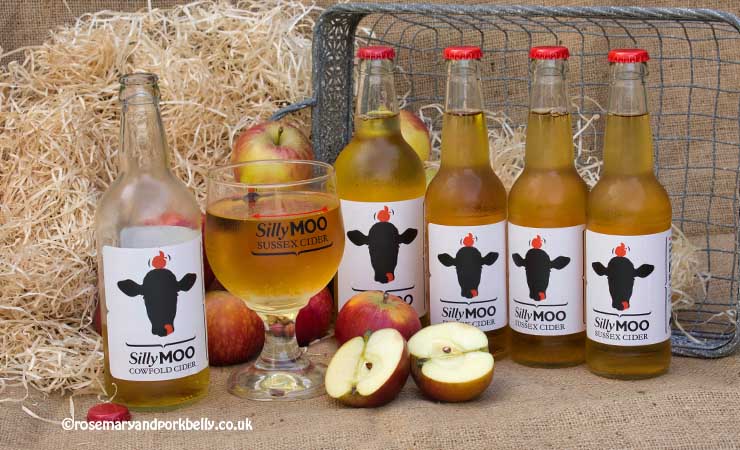
Silly Moo is a medium dry 4.8% ABV lightly sparkling cider. It can be found in local stores in Sussex, pubs and restaurants and can be ordered directly via their website.
Disclaimer: No money changed hands but a few bottles of Silly Moo might have been drunk during the making of this article.
Where to next?
• Apple and brandy cake
• Harvest time for English wine
• Longman Brewery