
As I walked out one April morning….
I love a good circular walk.
Pork Belly’s more a ‘I wonder what’s round the next bend’ type.
But then I have to go and pick him up from wherever his wanderings have led.
So paths like the Cuckoo Trail in East Sussex offer us the best of both worlds.
What is The Cuckoo Trail?
It’s 14 miles of mainly flat, smooth path through some of the most peaceful countryside in East Sussex.
It follows the route of the old Cuckoo railway line – decommissioned in the 1960s – from Polegate in the south to Heathfield in the north.
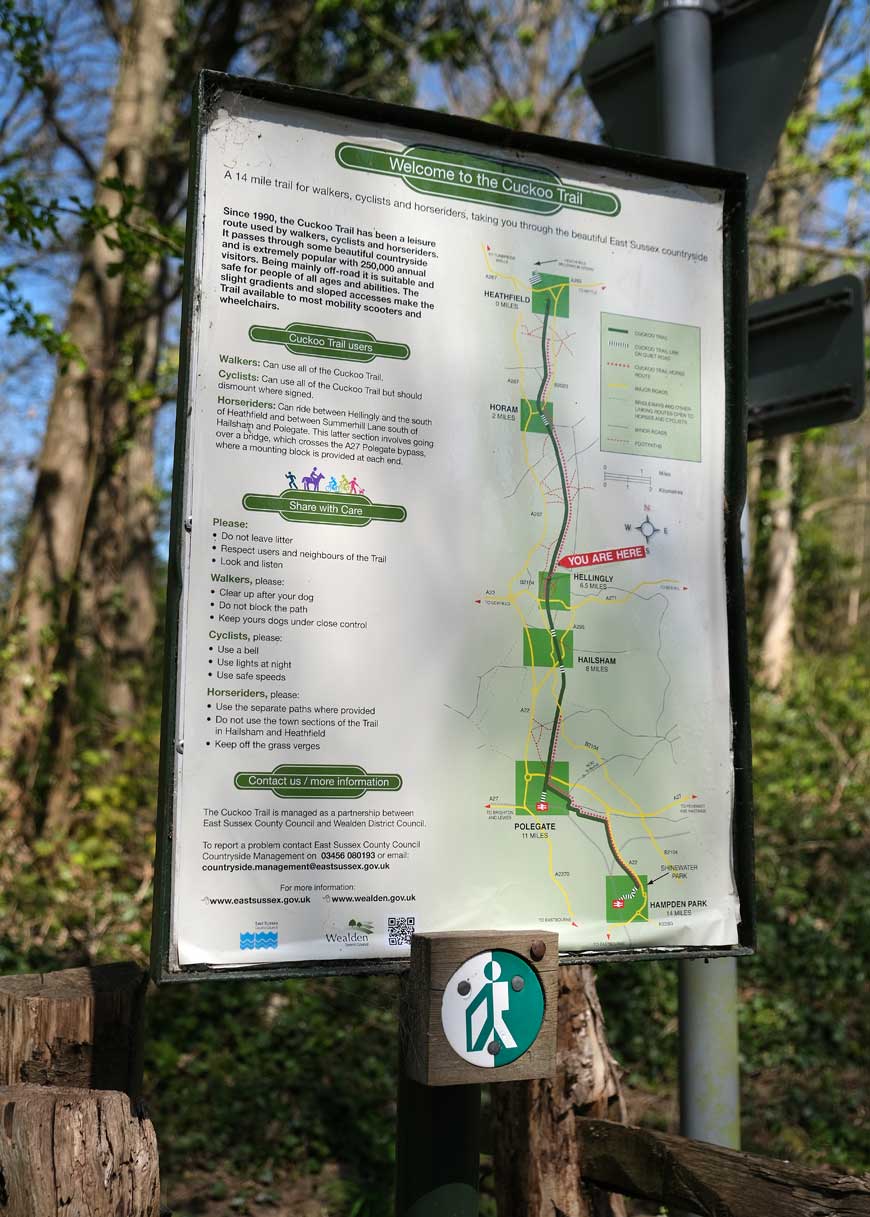
All of the route is suitable for walking, 11 miles of it are part of the Sustrans cycle route and three sections are dedicated bridleways, complete with mounting blocks at each end.
History of the Cuckoo Trail
The Cuckoo Line was opened in 1880 as part of the Polegate to Eridge railway service.
The London Brighton and South Coast Railway built it to prevent its rival, South Eastern Railway, from getting a grip on the through route to Eastbourne.
It got its name from folklore – the first cuckoo in Sussex was said to be heard at the Heathfield Fair.
It soon became a popular but distinctly rural route, carrying milk, coal, livestock and timber as well as people.
The rise of the road took most of the railway’s trade and the Cuckoo Line was closed in the sixties, the tracks torn up.
In the 1980s the local council bought what was left and worked with Sustrans to develop the route for leisure.
Today around 200,000 people use the trail, as a traffic-free route for local people and walkers, cyclists and horse-riders from further afield.
Hellingly Circular Route
Making the most of a sunny but sharp spring day, we headed to the mid-section of the Cuckoo Trail.
I managed to persuade Pork Belly not to do the whole length.
Instead, we found a circular route around the village of Hellingly, taking in some of the historic sites nearby.
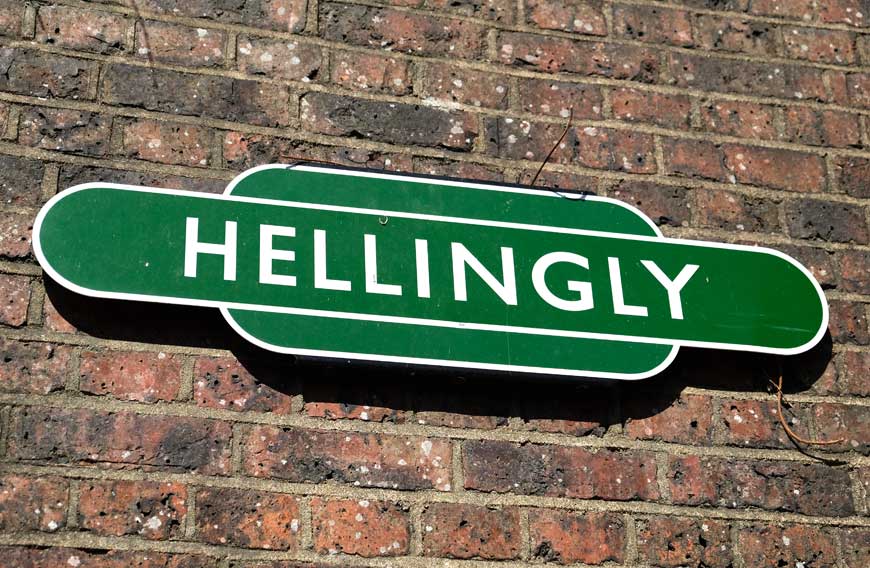
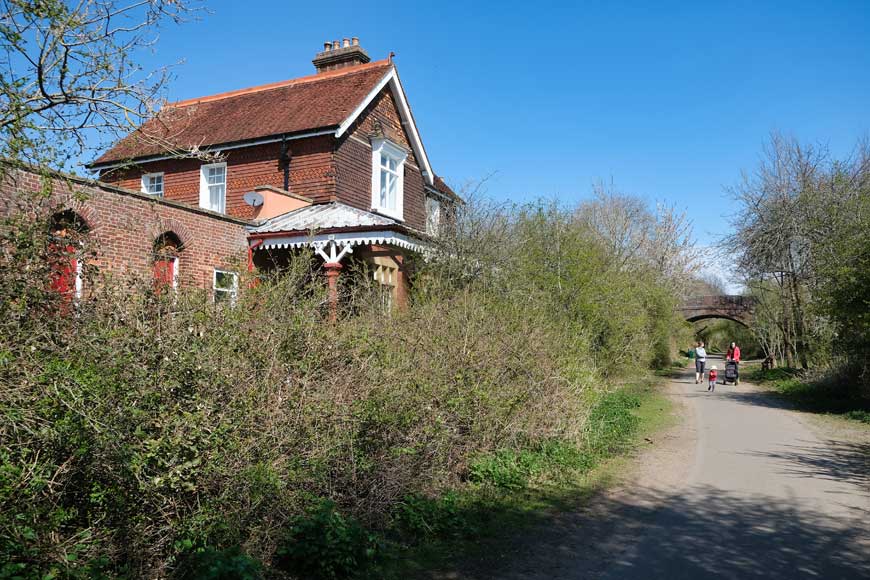
We started at the small car park next to the old railway station. There’s room for about 8 cars, plus a designated space for horse boxes.
The station is now a private home but still has the platform layout and white overhanging roof which can be seen from the public trail.
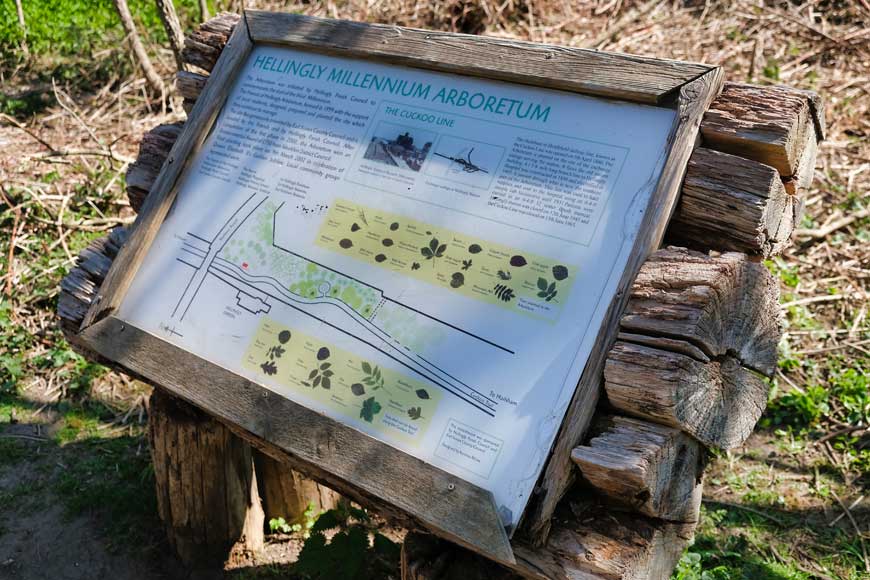
Opposite is the Millennium Arboretum, planted on the site of the old goods sidings.
Turning left, we passed under the old railway bridge and went at a leisurely pace through the trees.
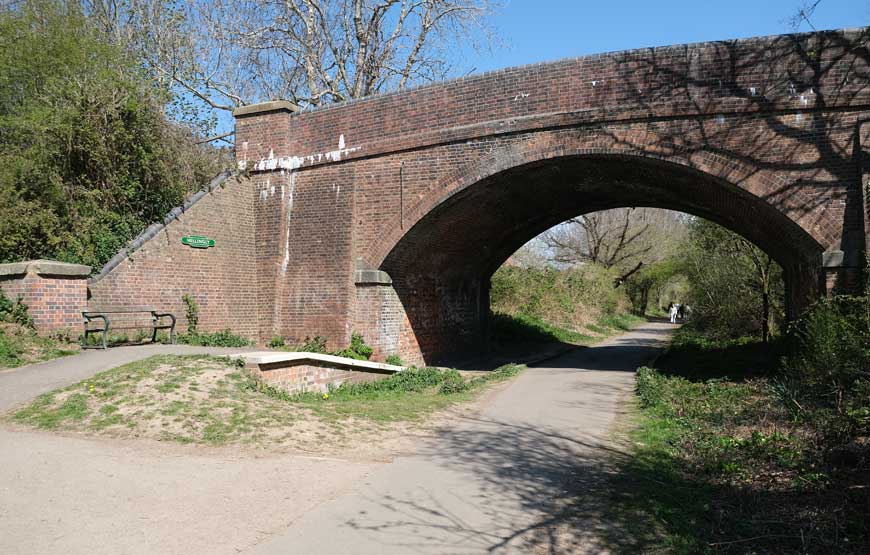
Bursting with spring flowers, birdsong and very little human noise it was busy, but not crowded. Dog-walkers, family bike rides and not-too-serious ramblers were out in force.
There’s no need for Nordic Poles on the Cuckoo Trail.
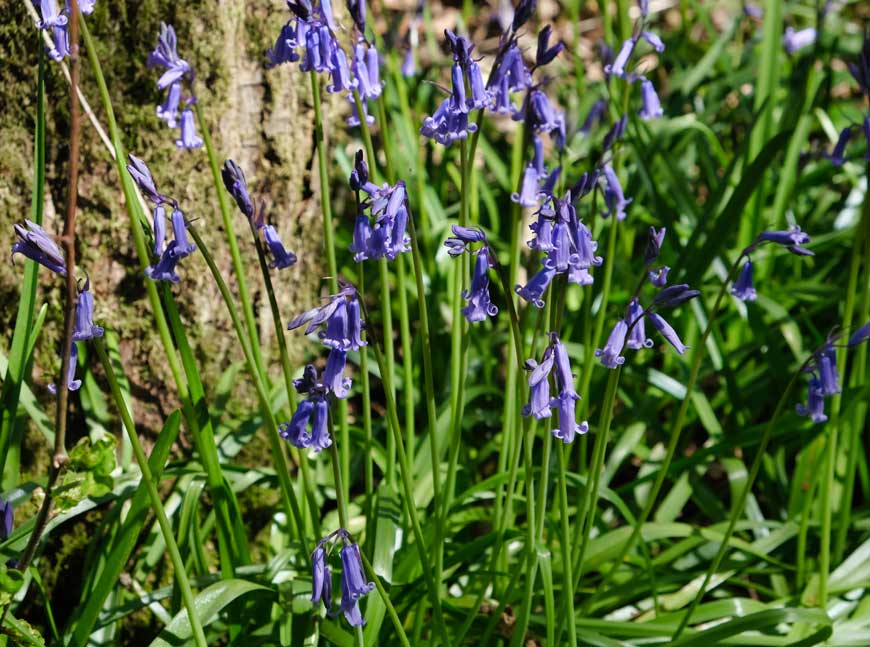
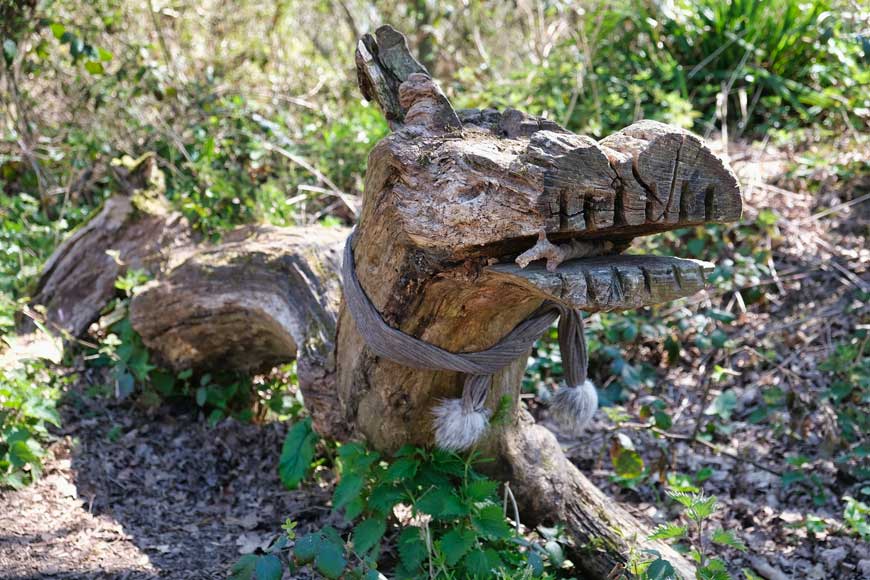
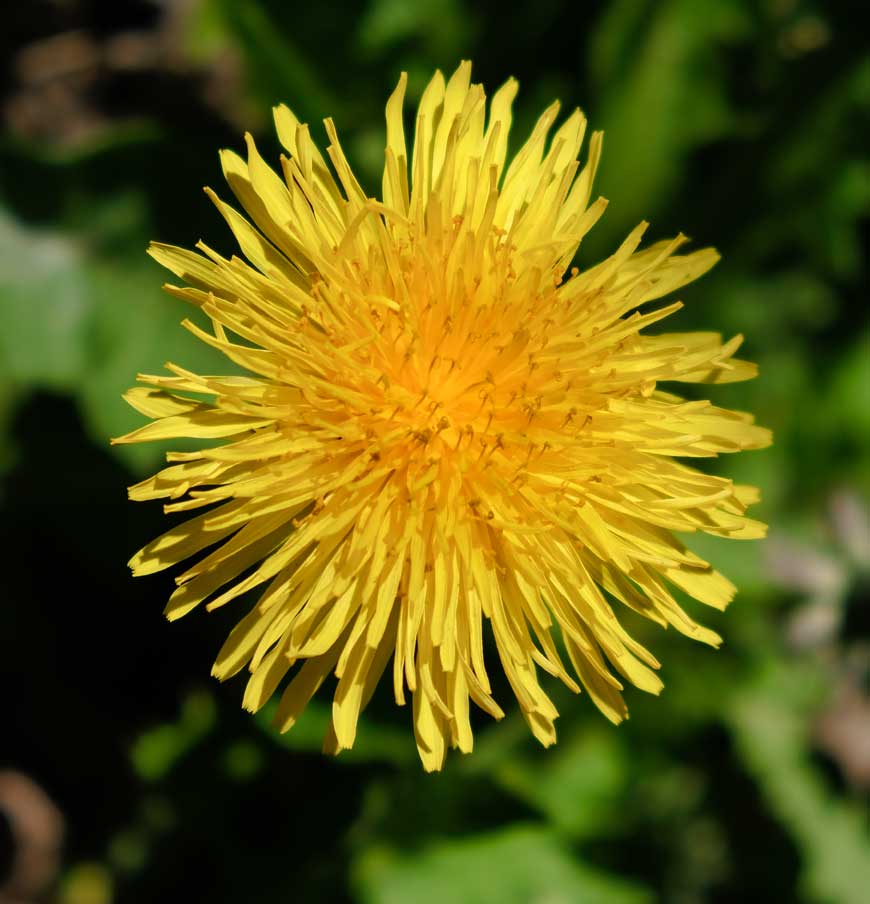
If you’re following the path, keep an eye and ear out for woodpeckers, orchids, wildflowers and the occasional carved sculpture.
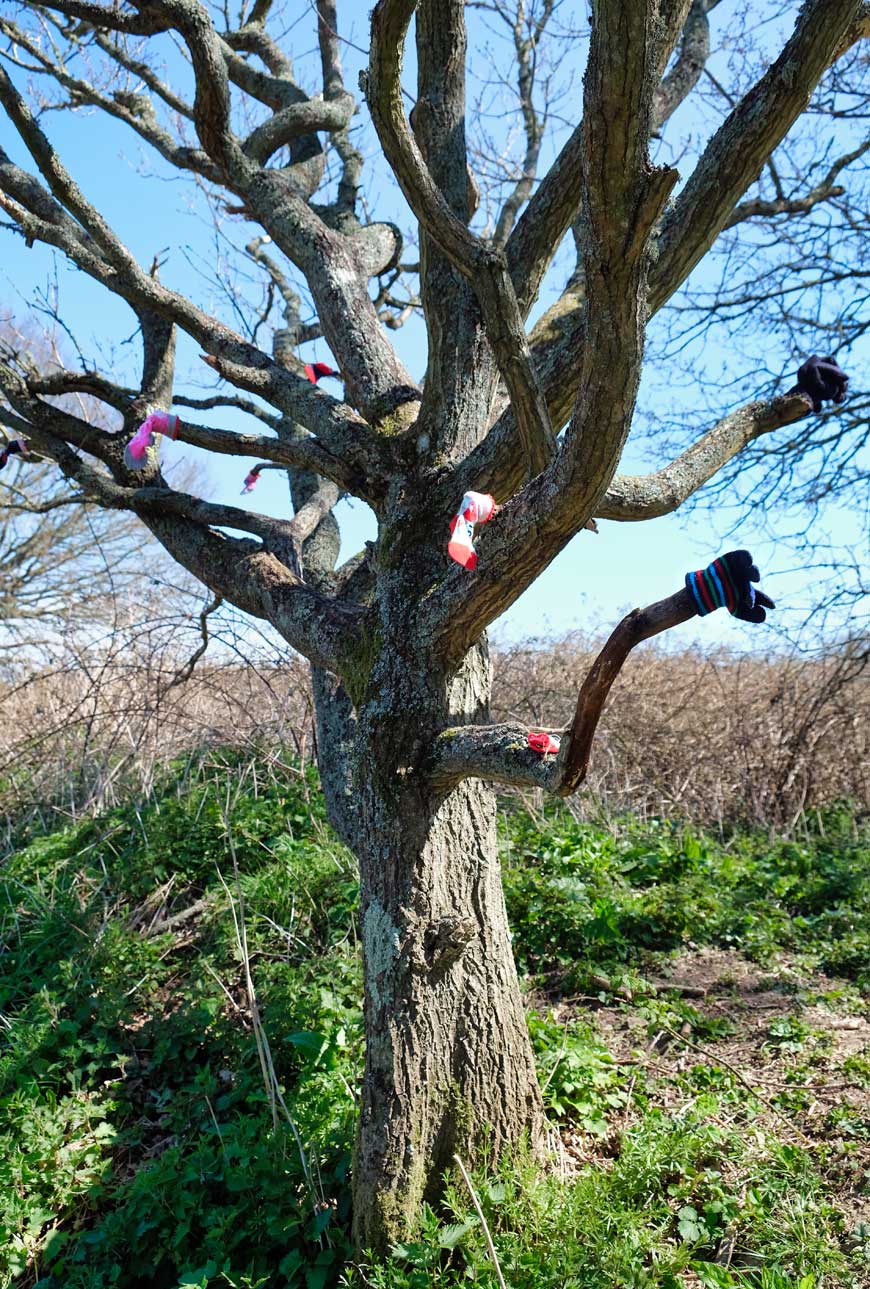
Oh, and you’re sure to see the amazing sock and mitten tree, where stray garments are hung, hoping to be reunited one day with their owners!
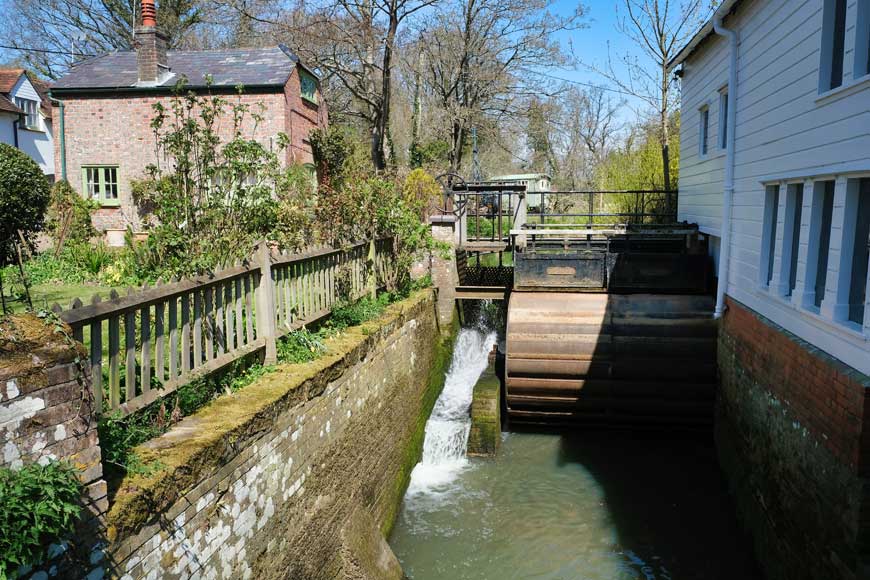
Hellingly Water Mill
Soon the Trail dips down and crosses Mill Lane. Here it’s worth a short detour, just a few paces, to see the old water mill.
The current mill dates from the 17th century. It’s privately owned but visible from the public road.
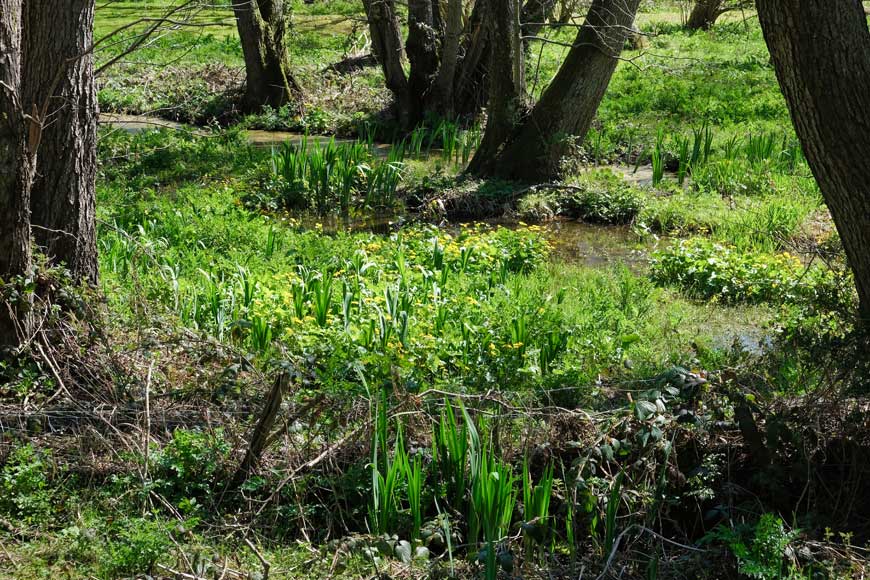
Back on the path, the woodland gives way to wetlands, bringing an even wider variety of plants and wildlife.
A short way past a second disused railway bridge, and you have a choice; stay on the trail and head towards Heathfield, or take one of the footpaths that criss-cross the fields.
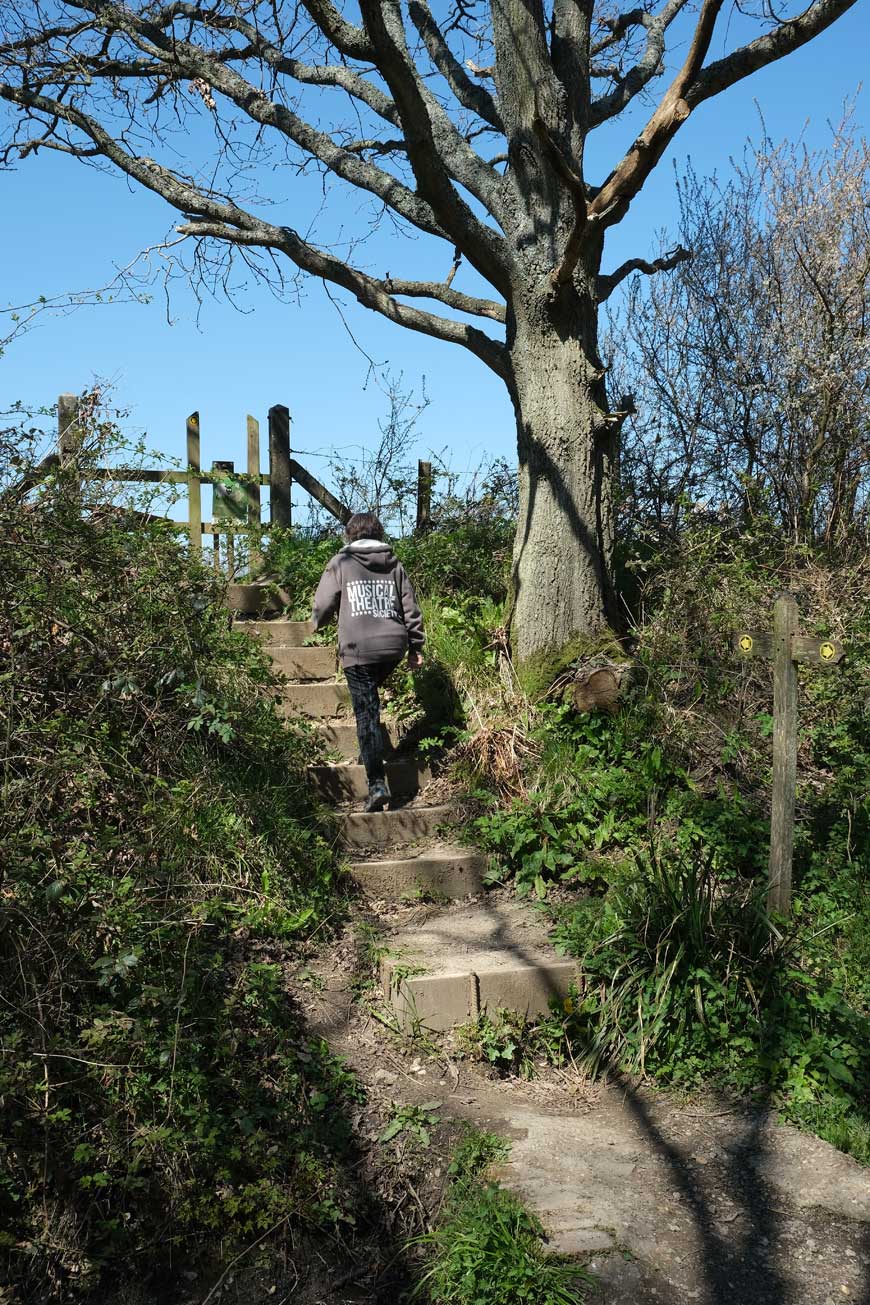
Turn right and there’s a longer route through Shawpits Farm and back down to Mill Lane.
But we chose the short, two-mile trip, up the steps to the the left and over a stile.
This route takes you across the fields, back to Mill Lane and down past Hellingly church.
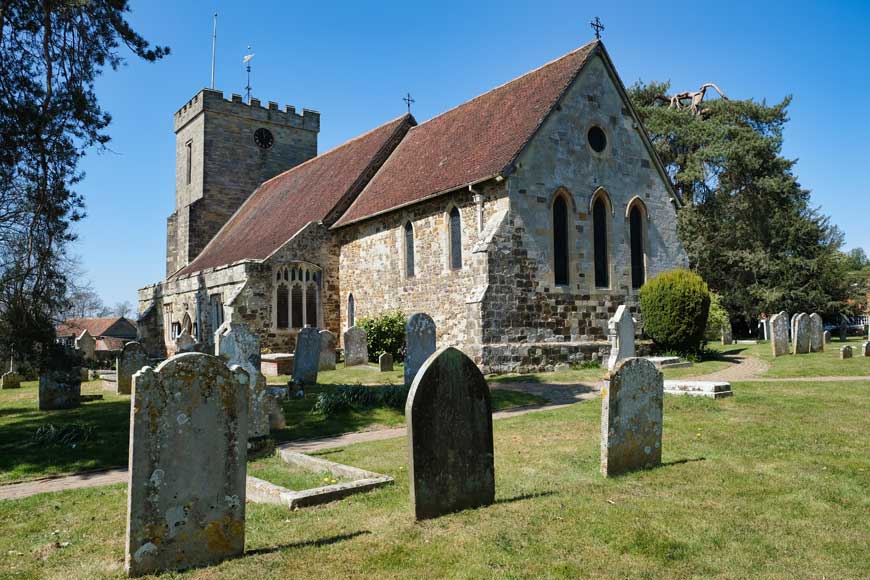
Peaceful and typically English, the church is a rarity in that it is built upon an old Celtic burial mound, known as a ciric.
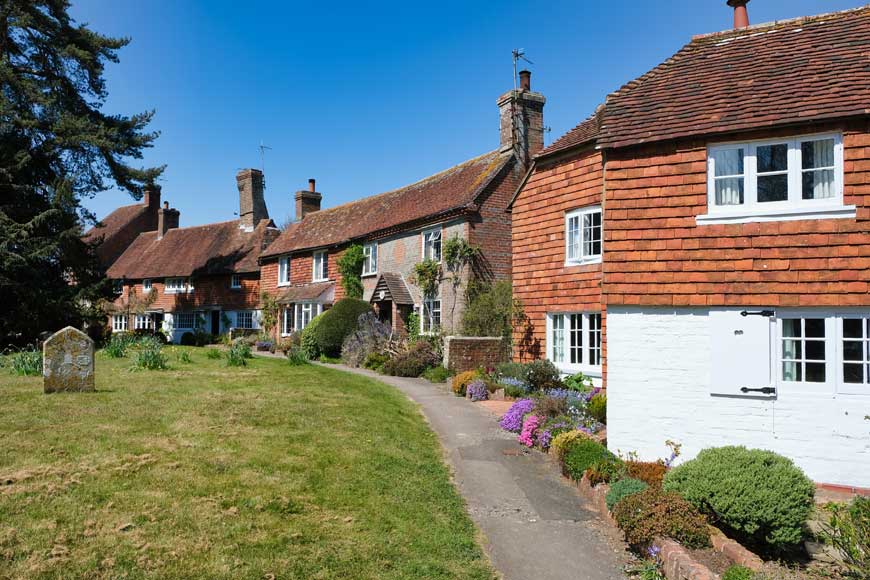
Which means Hellingly is a village with a long history. A quiet and out-of-the-way place, with beautiful old houses flanking the church, and friendly locals.
A short walk back along Station Road brought us back to the car park.
So no need for me to play chauffeur on this occasion.
And the cuckoo?
We were just a couple of weeks too early to hear her call.
More about the Cuckoo Trail
For news of any closures (which do happen occasionally for essential safety work) and updates on the Cuckoo Trail see East Sussex County Council site
Everything cyclists and horse-riders need to know is on the Sustrans website
Here’s the walk we did
Where to next?
• Windmills you can actually stay in
• Quirky seaside towns – Bognor Regis
• Island Life – Orkney