
When you hear “Brighton”, you probably think candy floss, sticky rock, pebble beaches, the Royal Pavilion, the Palace Pier, Brighton i360 and, maybe the odd, “dirty weekend” escape.
But tucked behind the bustle of Lewes Road lies a tranquil, leafy escape from the crowds and the chip stealing seagulls. A hidden gem known as the Brighton Extra Mural Cemetery. So come with us as we walk the Tomb Trail.
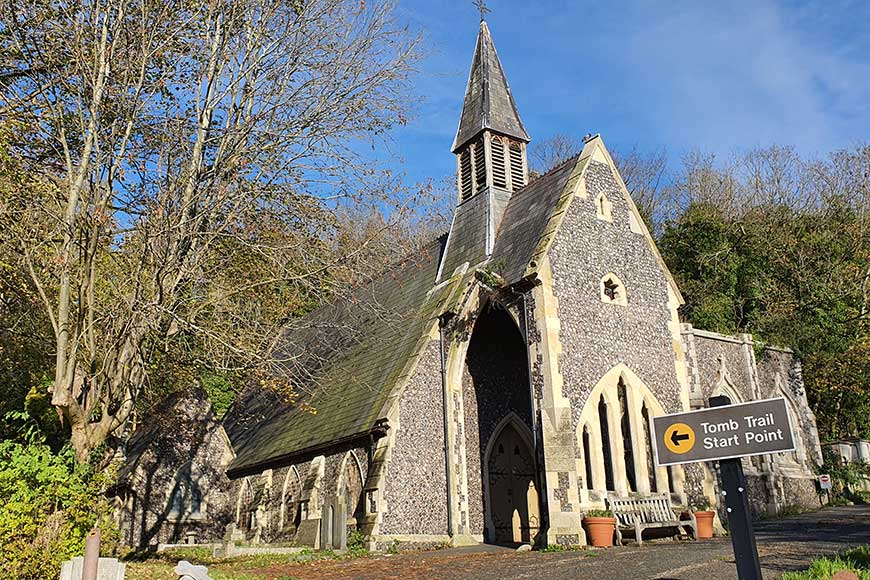
At first glance, a walk among the dead might sound a bit morbid, but this 19th-century sanctuary is one of the city’s most peaceful spots. On a crisp autumn day you’ll hear bees lazily foraging in the ivy, squirrels chattering as they stash nuts for winter, and the occasional cat slinking through the grass while crows conduct their gloomy chorus overhead. It’s surprisingly life-affirming.
A brief history of Brighton’s garden of rest
The Extra Mural Cemetery opened in 1851, designed by Amon Henry Wilds, one of the architects responsible for Brighton’s Regency splendour, including parts of Kemp Town and Brunswick. His distinctive taste for the Egyptian Revival style influenced the grand gateways and chapels still visible at the neighbouring Woodvale site.
It was founded by the Brighton Extra Mural Company, part of a Victorian craze for “garden cemeteries” landscaped, park-like resting places that offered the middle classes somewhere tasteful to spend eternity. Churchyards were overflowing, and the Victorians loved a bit of pomp, so these new cemeteries gave them a grand stage to bow out on.
Covering just over 16 acres, this peaceful patch of history has now become part of the wider Woodvale Cemetery and Crematorium complex. It’s long closed to new burials, which means you can wander without the worry of intruding on private grief.

Death, Victorian-style
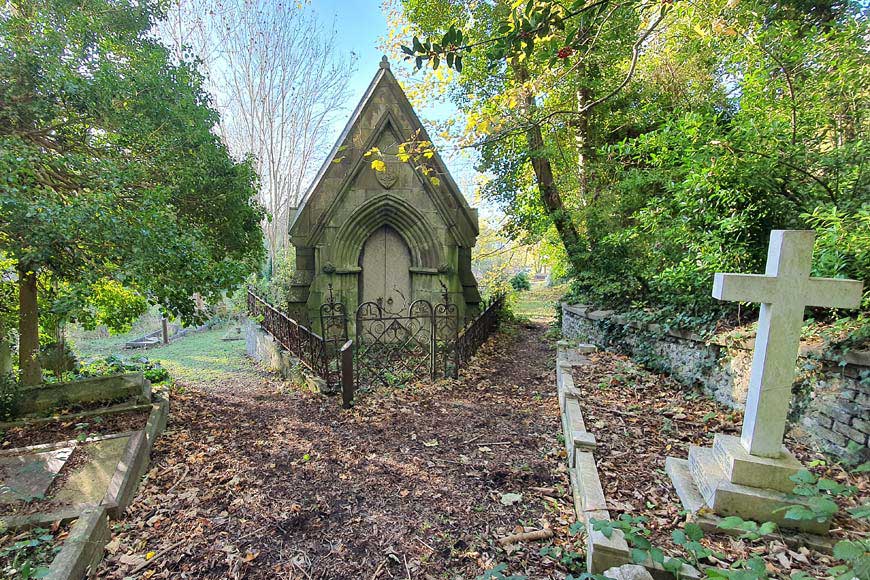
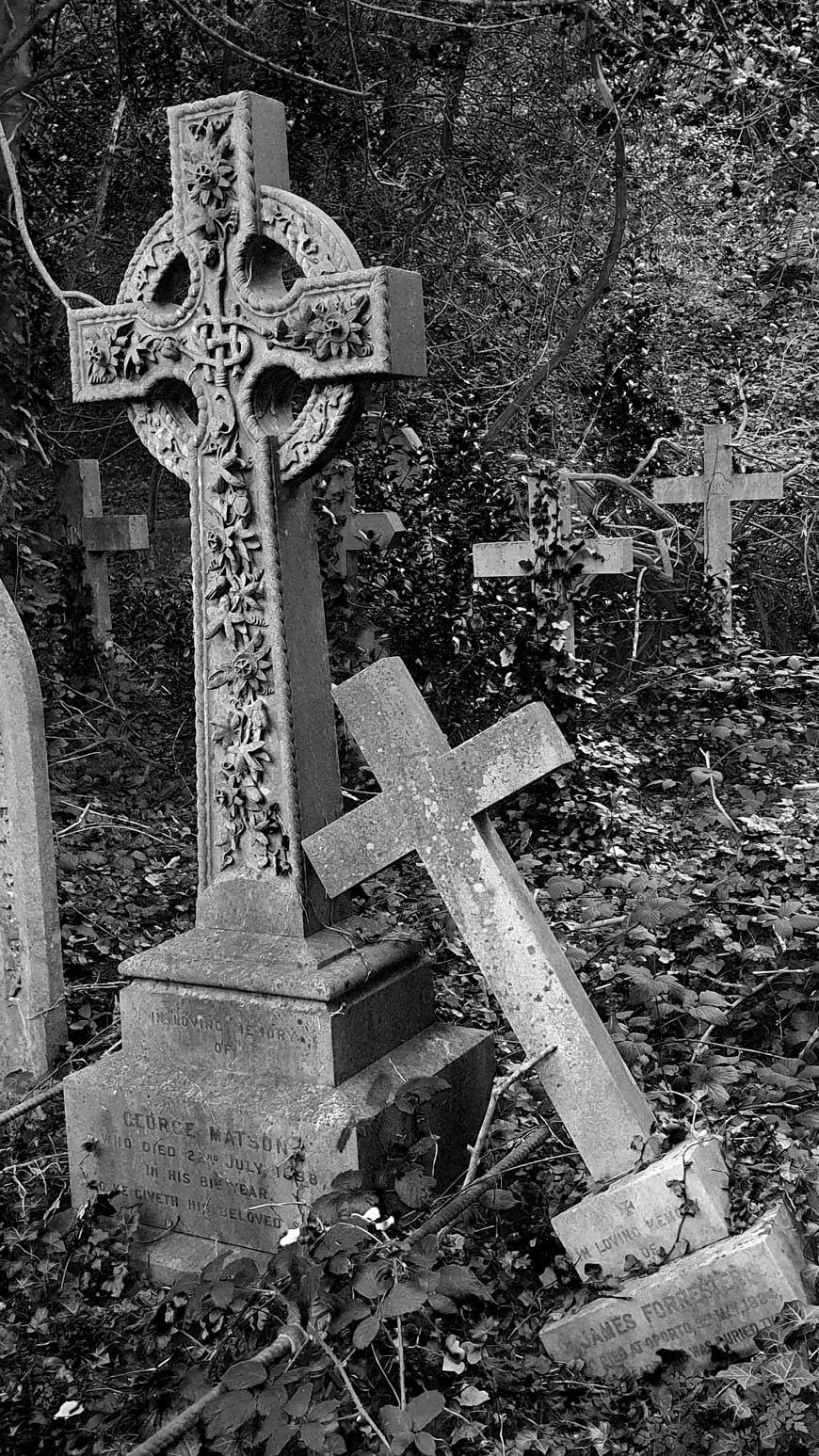
Modern cemeteries might favour neat rows of identical stones and tidy lawns, but the Victorians were positively theatrical about death. Think towering obelisks, angels frozen in mid-weep, and inscriptions that wouldn’t look out of place on a Dickensian stage set.
Even the smallest children’s graves were elaborate, their families sparing no expense to ensure their loss was beautifully mourned in marble. Walking here feels like stepping into an open-air museum of Victorian art and sentimentality.
The Tomb & Nature Trail
The Tomb & Nature Trail, established by Brighton & Hove City Council, loops through the Extra Mural grounds in a circular route of winding alleys and broad, tree-lined paths. Yellow markers guide the way, though it’s perfectly fine to wander off course and make your own discoveries.
You can download or order the official leaflet from the council’s website, but you’ll still find plenty to enjoy without it. From the storytelling inscriptions to the wildlife that has made the old stones its home.

Ghosts of Brighton past
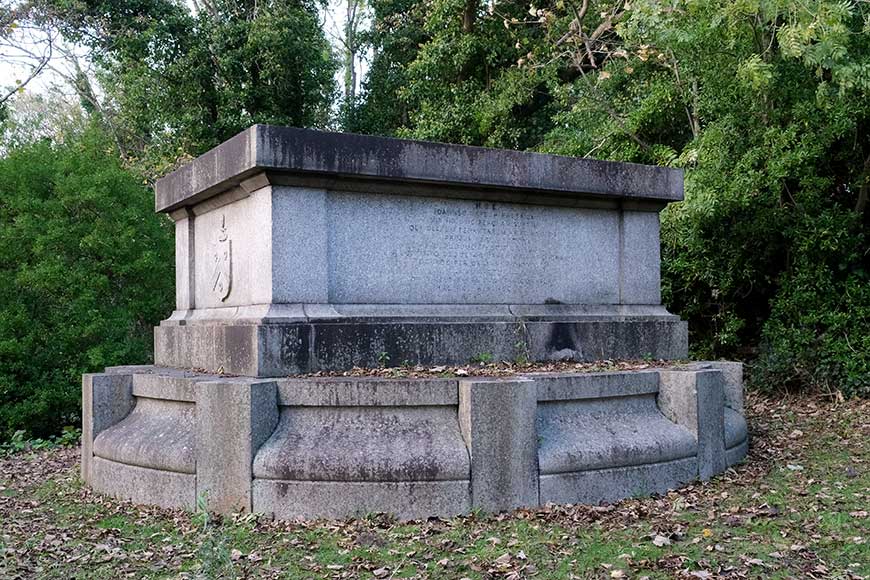
One memorial that’s impossible to miss belongs to John Urpeth Rastrick, the civil engineer who oversaw construction of the London to Brighton Railway. His giant tomb resembles a railway turntable, a fitting tribute to the man who literally brought the Victorians to the seaside.
But Rastrick isn’t the only local notable resting here. Among the cemetery’s distinguished inhabitants are:
• George Augustus Sala, journalist and friend of Charles Dickens, known for his flamboyant prose.
• Sir George Brooke-Pechell, MP for Brighton between 1835 and 1860, and a distinguished naval officer.
• Charles Kemble, member of the famous acting family and a star of the Regency stage.
• James Knowles, architect behind the London Brighton Railway terminus, linking neatly back to Rastrick’s grand design.
• John Ginnett, a circus master who built his first permanent circus in Park Crescent Place and later built the Hippodrome Circus which opened in North Road in 1891.
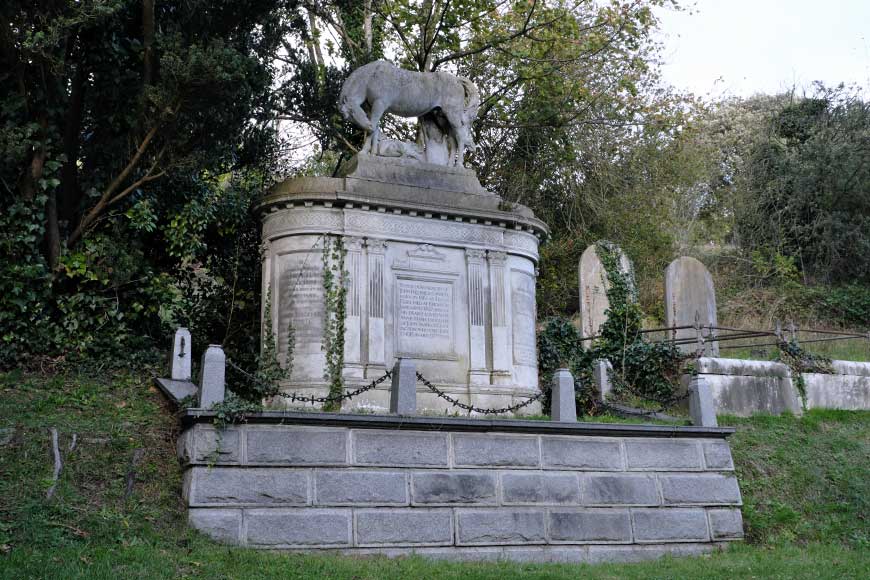
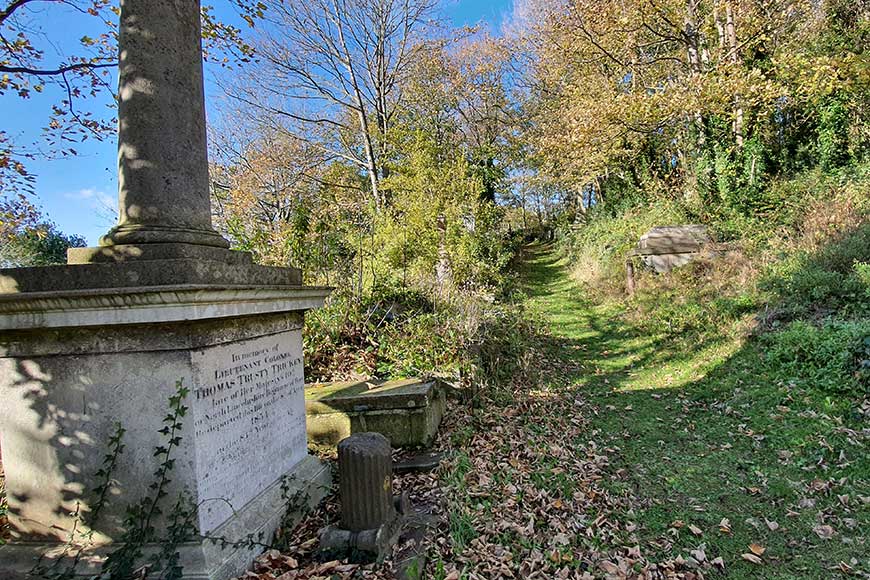
There are also 39 Commonwealth War Graves, each quietly marking the sacrifice of local men and women during both World Wars.
Some memorials are lovingly maintained, others romantically overgrown, but each tells a story. Even under a century and a half of lichen and ivy, you can still read the grief, love and pride carved into stone.

Monuments, angels and melancholy
For Dr Who fans, the resemblance of many memorials to the infamous Weeping Angels is unmistakable. Don’t worry though, as here they seem more wistful than threatening, forever gazing down with gentle dignity.
Dr Who fans aren’t the only ones inspired here, as the atmosphere has reportedly sparked scenes in local indie films and student projects.
The Extra Mural isn’t a gloomy place. The play of sunlight through autumn leaves, the rustle of birds in the ivy, and the way the city hum fades away all lend a sense of calm that feels positively restorative.
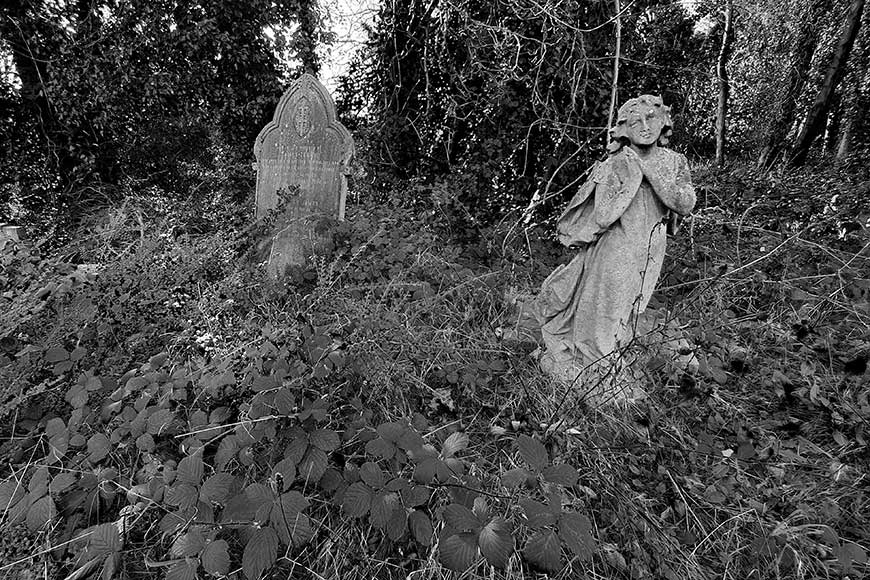
In recent years, volunteers and the Friends of Brighton & Hove Cemeteries have helped conserve the monuments and record their histories, while local ecologists have noted the grounds’ growing importance as a wildlife habitat. Bats, bees and butterflies all thrive among the stones.


How to get to Brighton Extra Mural cemetery
• Location: Entrance off Lewes Road, north of the city centre. For visitors using sat nav, the postcode for the cemetery is BN2 4DA.
• Public transport: Buses 2, 5 and others stop nearby.
• Parking: Limited free spaces near the chapels.
• Dogs: Not permitted, as it is both a burial ground and a designated wildlife site.
Opening hours:
• October to March: Monday–Saturday 9am–4pm; Sunday and public holidays 11am–4pm
• April to September: Monday–Saturday 9am–5.30pm; Sunday and public holidays 11am – 5.30pm
• Accessibility: Some paths are uneven or steep, so sturdy shoes are strongly advised.
Entry is free and the site is open every day of the year. Bring curiosity, comfortable shoes maybe a flask of tea and a sandwich, but remember to tread respectfully.
You can download a PDF map here.
A stroll to remember
The Brighton Extra Mural Cemetery is one of those places that rewards the unhurried wanderer. It’s part history lesson, part wildlife walk, and part gentle reminder that the Victorians really did know how to make an exit.
So next time you’re in Brighton and fancy a break from the pier and the arcades, swap the candy floss for ivy-covered marble and take a walk among the dearly departed.
It’s a journey through time and proof that, in Brighton at least, death still has a touch of seaside flair. You could leave feeling oddly refreshed.
Suggested route and highlights
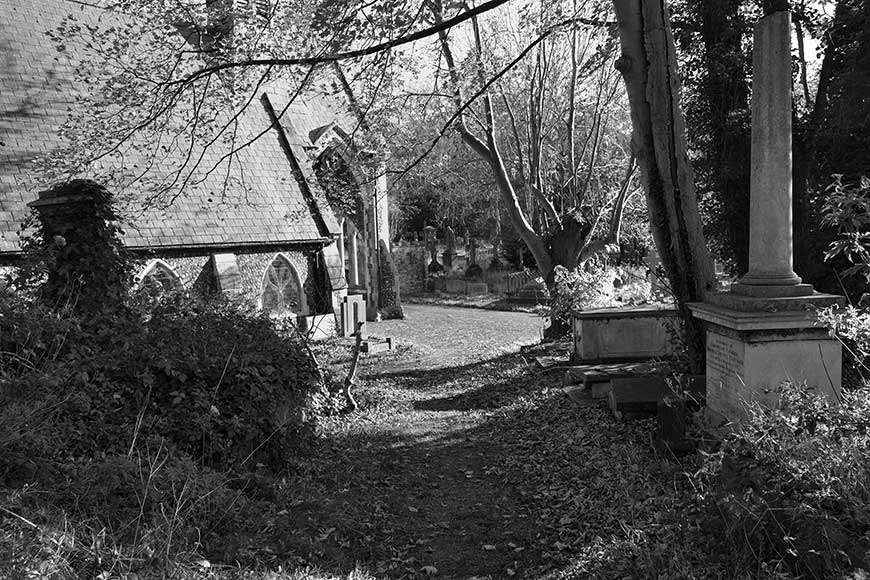
Start at the entrance off Lewes Road. Locate the chapel or the trail sign. Follow the yellow arrows/markers around the circular route: narrow alleys, tree-lined paths, sweeping views down the hillside.
Look out for the big memorials of John Urpeth Rastrick (civil engineer) and John Ginnett (circus master) they are very large and distinctive. Also look out for smaller, quieter plots and inscriptions, part of the charm is noticing the less grand but evocative memorials.
Along the way enjoy the nature: squirrels, bees, birds, ivy-covered stones. Return via a more open path, maybe through the meadow/nature zone, towards the chapels or picnic area.
Who’s buried where?
Do you have a favourite cemetery walk or tomb trail?
Are you interested in finding out who’s buried near you?
Find a Grave UK is a useful resource. It’s free to register, and you can search by location, a person’s name or other specific features.
If you’ve enjoyed browsing our website, learned something new, or just had a smile because of what we do – we’d love your support to keep the good stuff brewing!
Where to next?
• Old North Bridge to Concord
• Fuller’s Follies
• Isle of Wight: The little island that refuses to be boring