
Whitstable. A typically English seaside town on the Kent coast, just a few miles north of Canterbury. Not the most popular of tourist destinations.
Holidaymakers flock to Margate, Sheerness or nearby Herne Bay and nature-lovers head further south to Dungeness.
But they’re missing out on a little gem.
So if you’re taking a road trip to Kent, here are 8 things to do in Whitstable.

Boats and bountiful seafood
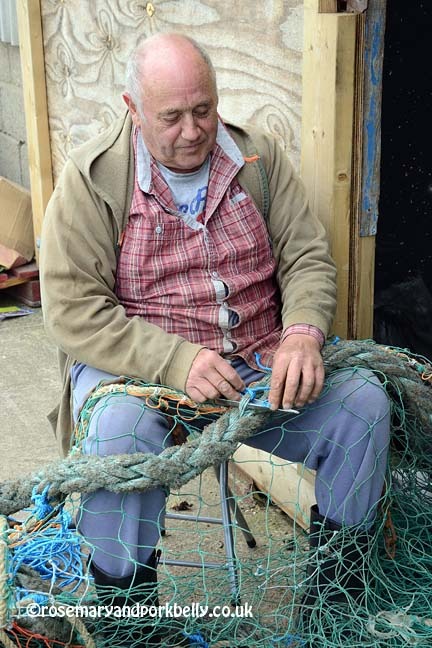
Whitstable has a thriving maritime industry and the quayside is dominated by a fleet of sturdy fishing boats.
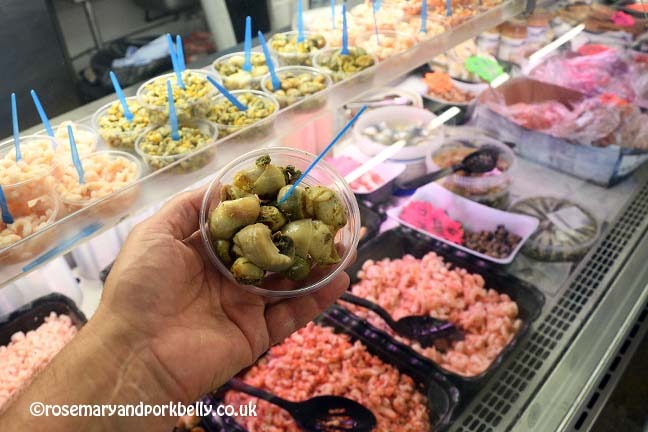
The local fish market is packed with the day’s catch and on our last trip Pork Belly happily tucked into a pot of fresh whelks.
I’ve never been a fan of seafood myself, but it’s clearly as fresh as can be when eaten on the harbour wall.
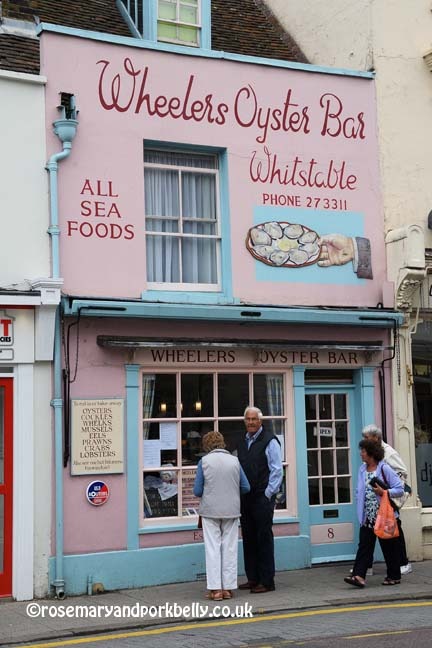
Whitstable is famous for its oysters, the native Ostrea Edulis being a flavourful and plump variety harvested since Roman times.
You can get them at many places in the town (ignore the old myth about only eating them when there’s an R in the month) but the two most famous are The Whitstable Oyster Company and Wheeler’s Oyster Bar.
Discover the birthplace of scuba diving
One of the town’s claims to fame is that the first ever diving helmet was developed in Whitstable, although more as a way of salvaging shipwrecks than for any sporting reasons.
Charles and John Deane designed the first air-pumped diving helmet in 1829.
Legend says the brothers were trying to rescue horses from a stable fire and rigged up a knight’s helmet to a fireman’s hose through which they pumped air.

History remains silent on the fate of the horses, but the idea took shape and the helmet attached to a diving suit was used to successfully salvage a cannon from a sunken warship in the 1830s.
The first steps on the way to today’s diving technology.
Shop local in the thriving High Street
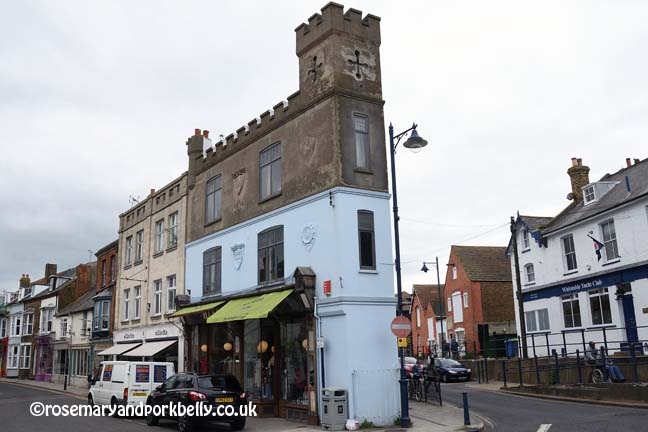
It’s getting rare these days to find a High Street where independent traders sit alongside the multi-nationals.
Both superstores and small shops in the town are proud of the “Garden of England” label and prominently feature Kent produce.

Fruits like apples, pears and cherries top the list, but you’ll also find delicious jams, chutneys, juices and of course excellent beers, ciders and English wine.
Explore beaches and battlements
Not much sand around, but the coastline is beautiful, especially as the sun sets over the sea.
Wooden-clad houses edge the shore and on a calm evening, with the tang of salt in the air, it is typically English.
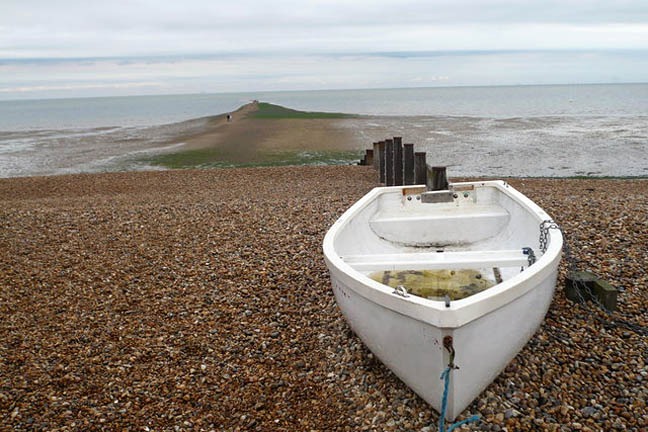
Special mention for Tankerton Beach, a shingle stretch beloved of windsurfers and rockpoolers. At low tide, The Street is revealed, a natural path that takes you right out to sea.
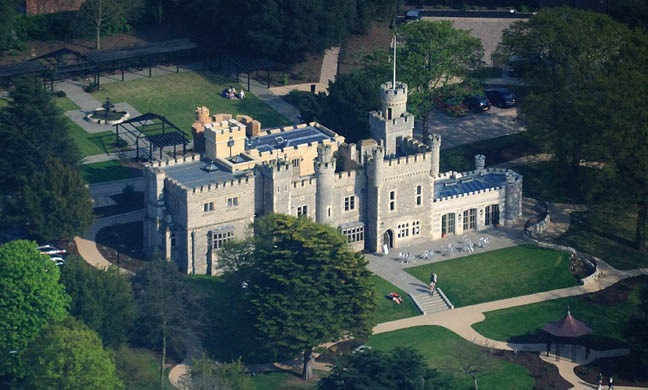
The town boasts a castle of sorts, although it’s really a manor house dating from the 1790s with towers and grand gatehouses.
It was the country home of a series of wealthy businessmen before being bought by the council and its grounds opened up as a public park.
The ‘castle’ itself is now a community centre.
Relive famous lives
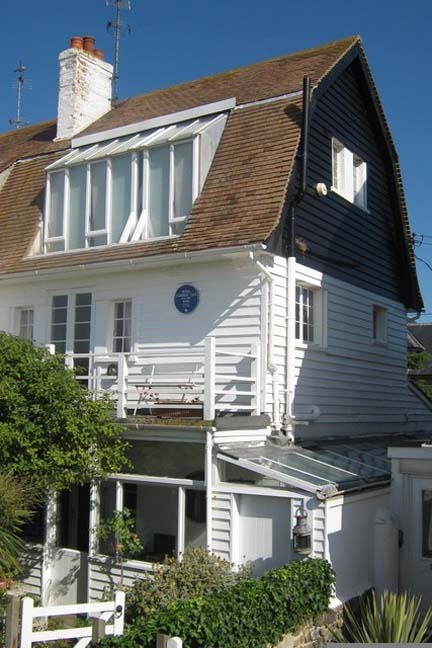
The town’s most famous inhabitant was actor Peter Cushing, star of 91 films including the Hammer Horror series, Sherlock Holmes and the original Star Wars movie.
He owned a house in Whitstable for more than 50 years and was often to be seen on his bike or relaxing in the Tudor Tearooms.
His connection with the town is celebrated in the local museum and in the Wetherspoons Pub that bears his name.
Comedians Alan Davies and Harry Hill are other notable Whitstable folk.
Duck down the alley
Whitstable is riddled with little alleys, built to give the residents quick access to the sea.
Dive around any corner, and you’ll find yourself in Granny Bell’s, Collar’s or Coastguard’s Alley.
And there’s our own personal favourite, Squeezegut Alley.
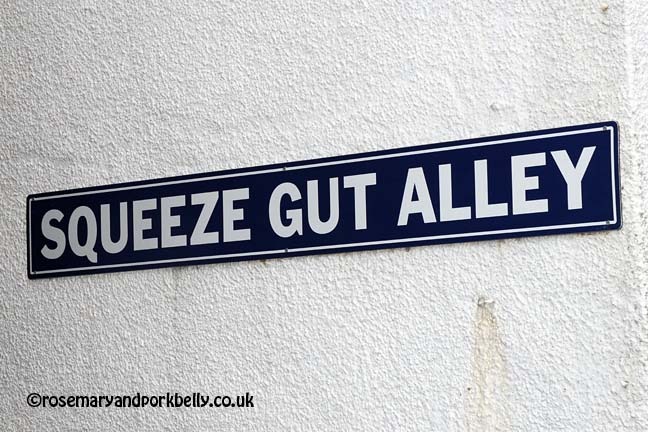
It’s likely these little runs provided escape routes for smugglers too. Most Kentish towns were awash with tobacco and spirits run secretly ashore to avoid taxes.
The Coastguards tried their best to stamp out the trade but ‘The Gentlemen’ found sympathy amongst the locals so the practice continued for years.
Pirates of the airwaves
This one’s for Pork Belly.
The extraordinary Maunsell Sea Forts can be seen on a clear day from the Kent coast around Whitstable. The rusting metal quadrupeds were part of Britain’s defences during World War Two, and most are still there today,
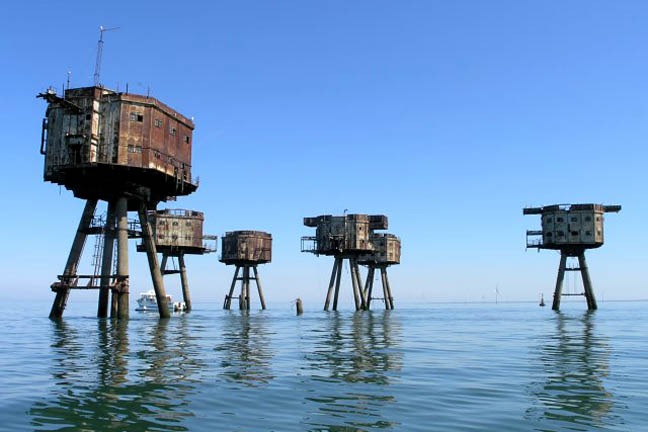
There’ve been many plans to revitalise them as luxury hotels or homes, and you can get boat trips out to see them, but the weirdly otherworldly structures are now in a dangerous state of disrepair.
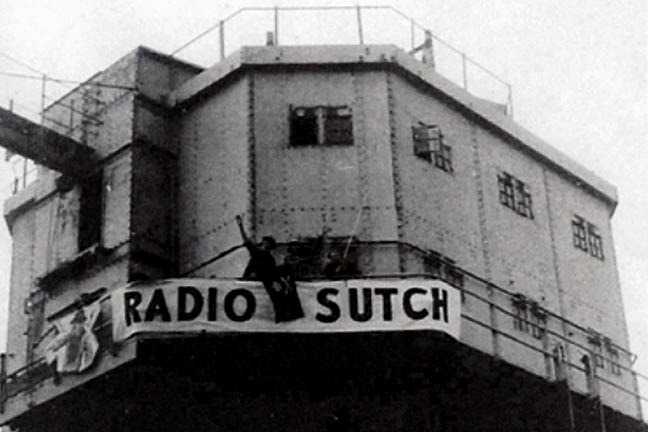
And Pork Belly’s enthusiasm for these megaliths? Because in the heyday of pirate radio in the sixties, Screaming Lord Sutch began broadcasting from a fort on Shivering Sands, getting his supplies from nearby Whitstable.
It later became the home of Radio City before the Marine Offences Act in 1967 put an end to the pirate’s rule of the air waves.
Use the most convenient conveniences
Whitstable has plenty of parking and at reasonable prices.
We also discovered it had more public toilets per square mile than we have seen anywhere else in the UK. All well-kept, conveniently placed (no pun intended) and free.
If you know of a better town for loos, do tell!


More information about Whitstable
Getting there is easy with good road and rail links. It’s just over an hour’s journey from London by train, and Canterbury is less than 10 miles away.
If you want a more leisurely journey, you can cycle between Whitstable and Canterbury on the traffic-free Crab and Winkle Way.
For more information, see Whitstable Museum and the Visit Canterbury website
Car parking information updates available here
Additional photographs are copyright their respective owners and reproduced here under Creative Commons License.
Where next?
• Shakespeare in the snow
• The Eden Project
• Grounds for Sculpture