
The Accidental Smuggler’s Guide to Going on Holiday
There is a very specific moment in every British airport departure lounge.
You are holding a meal deal, a carry on suitcase that weighs more than a bag of bricks, and a tote bag containing what can only be described as your emotional support condiments.
And it is at this moment that you are unknowingly committing agricultural, pharmaceutical or vaping offences in at least three jurisdictions.
Welcome to the golden age of the Accidental Smuggler.
Let us begin …
The Bovril Border Patrol
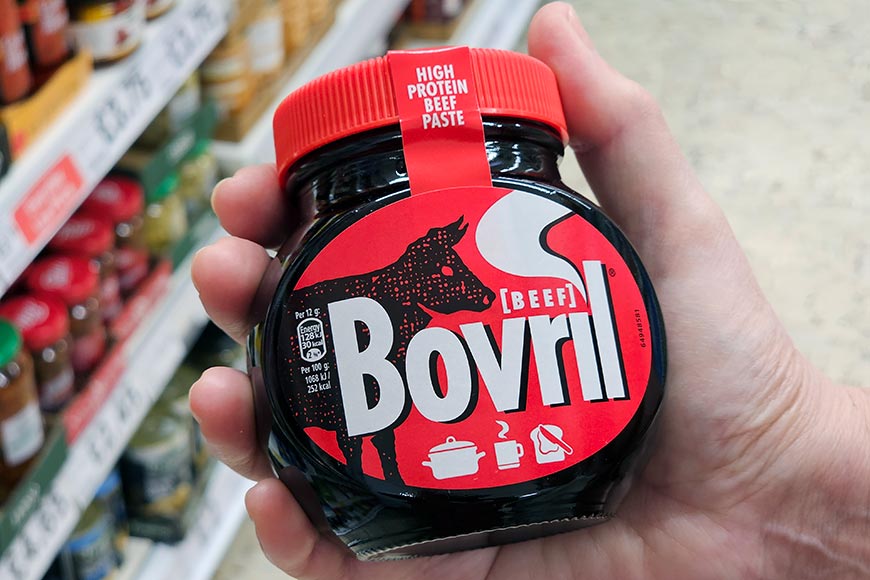
In Britain, Bovril is not a product. It’s a hug in a mug.
But in the United States, Canada and Australia, it’s technically meat.
Bovril contains beef extract. Which means that while it is not banned by name, it absolutely falls under meat import controls. If you declare it, the worst that usually happens is confiscation. If you do not declare it, and it is found, fines are possible.
That matters because border controls take a very dim view of undeclared animal derived foods. All food must be declared on arrival. Meat and meat products can be restricted or prohibited depending on disease risk and origin. Even though Bovril is a highly processed, shelf-stable paste, it is still classified as a high-risk animal product because of its ingredients.
Try explaining to a border officer that it is “basically beef tea” and watch their expression harden.
Meanwhile, in Australia, biosecurity is practically a national sport. Their border rules are famously strict, and penalties for failing to declare meat products and fruit can run into hundreds or even thousands of Australian dollars. They are not joking. Their sniffer dogs are not decorative.
If you declare it, a biosecurity officer will inspect it. If they determine it meets the requirements, you keep it, but if they decide it doesn’t, they will simply take it away and destroy it. You will not be fined.
However, if you marked “No,” on your Incoming Passenger Card, and it’s found, fines start at over $3,000 AUD and can be significantly higher for serious breaches.
Fresh fruit, vegetables, seeds, and nuts are most frequently confiscated.
Back to the USA …
The Chocolate Egg That America Fears
There is the small matter of Kinder Surprise.
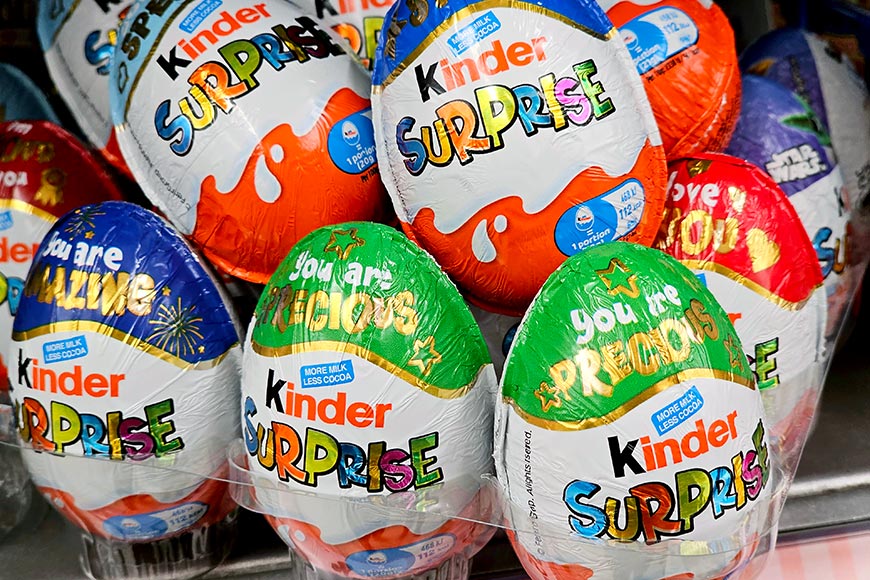
Perfectly normal here. A hollow chocolate egg with a tiny plastic toy inside. A staple of childhood bribery.
In the United States, however, confectionery containing non-edible objects embedded inside is prohibited under federal food regulations.
Try bringing a handful of those little chocolate eggs through customs, and you may find them seized. Not because they are dangerous in the dramatic sense, but because US law does not approve of hidden surprises inside chocolate.
In the US, you can legally buy a flamethrower in many states, but a chocolate egg with a plastic hippo inside is where the government draws the line.
Kinder Joy is legal (separate toy compartment) just don’t muddle them up!
The Pork Border Protocol
Since Brexit, travelling from Great Britain (not Northern Ireland) into the EU with a picnic has become unexpectedly thrilling.

Under current EU rules, travellers cannot bring meat or dairy products from Great Britain into EU countries for personal use. That includes your lovingly prepared ham sandwich, your cheddar roll, and yes, that pack of sausage rolls and pork pies you thought would see you through to Málaga.
Arrive in France, Spain or Portugal with a ham and cheese toastie in your backpack, and technically you are importing prohibited animal products.
No one is marching you to a medieval dungeon over some Stilton, but it will be seized and disposed of. You will watch it go into a bin marked with something that suggests mild biological peril.
Plain biscuits are fine. Meat and dairy are not. It really is the least glamorous smuggling operation in history.
Vaping and the International Incident
In Britain, vapes are, at the moment, as common as umbrellas and just as colourful.
Abroad, they can be a legal minefield.
In Thailand, e-cigarettes are illegal to import and technically illegal to possess. There have been cases of fines and arrests. It is not theoretical.
In Singapore, the law is even clearer. Importing, selling or possessing vaping devices is prohibited. Possession alone can attract significant fines.
And in Mexico, as of January 2026, the import and commercial sale of vapes and e-cigarettes are banned nationwide. Devices brought into the country can be confiscated and fines are possible.
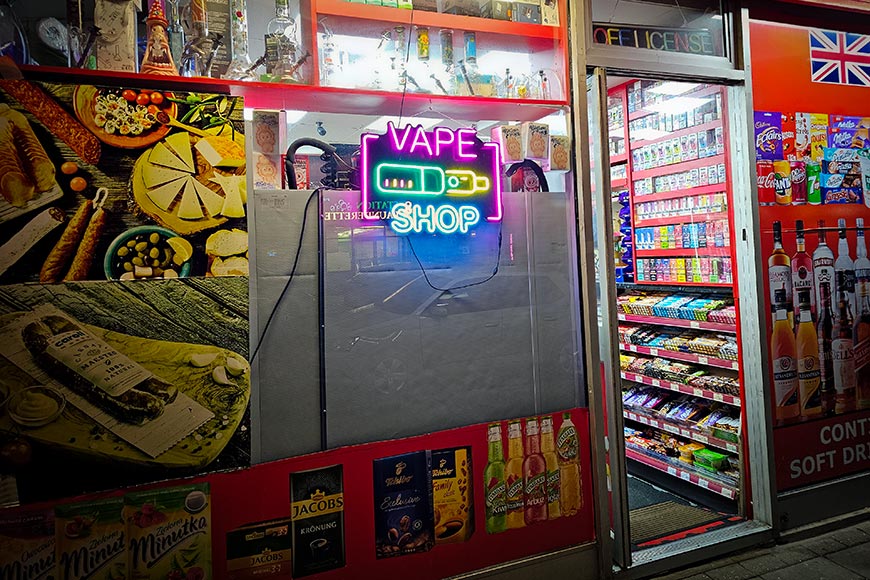
This means your cheerful little Blueberry Ice, while acceptable at home, may become contraband somewhere between baggage reclaim and passport control.
Travelling with Prescription Medication: What You Need to Know in 2026
This is where things become genuinely serious.
In the UK, Co-codamol can be bought over the counter in low doses. It feels harmless. It lives next to plasters and antiseptic cream. Right?
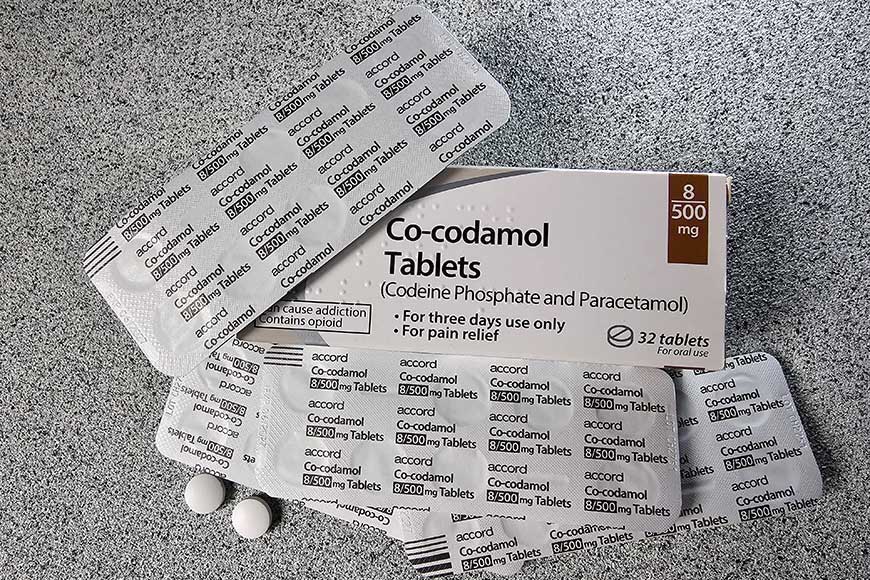
Abroad, the same box can fall into a very different legal category.
In the United Arab Emirates, codeine is a controlled substance. Travellers bringing medicines containing codeine, even low-dose combinations, must comply with strict rules. Some controlled medicines require prior approval through the UAE Ministry of Health system before travel, and quantities are limited. Arriving without the correct documentation can lead to confiscation, questioning, and in serious cases, legal penalties.
Greece is different, but still worth checking carefully. Codeine is also a controlled medicine there, but travellers carrying reasonable quantities for personal use are generally permitted to bring it in, provided it is for legitimate medical use. It is strongly advisable to carry it in original packaging and have a copy of your prescription or a doctor’s letter. Turning up with large quantities or loose blister strips in an unlabelled sandwich bag is unlikely to go well.
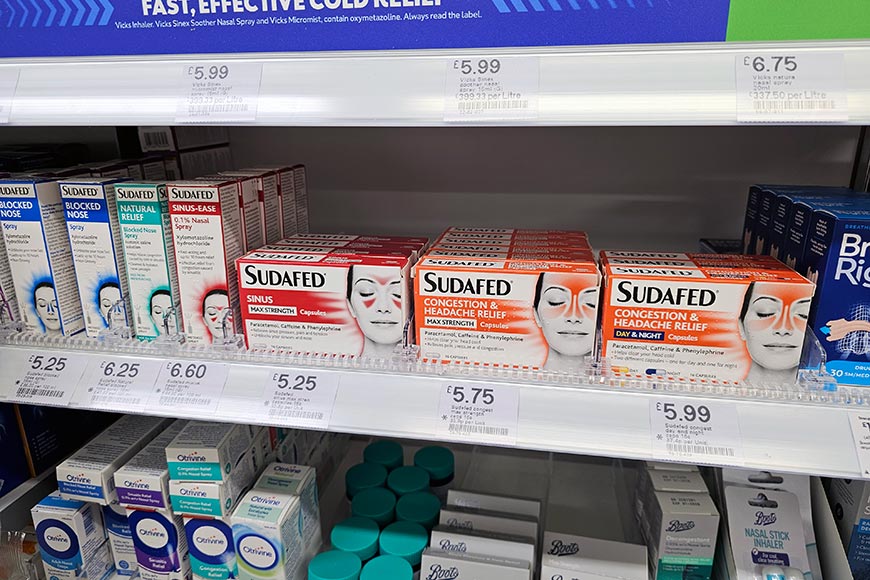
Then there is Japan, which has strict controls on medicines containing pseudoephedrine, certain stimulant ingredients and some ADHD medications. Some versions of Sudafed and even specific Vicks inhalers are prohibited. Japan does allow many medicines for personal use within quantity limits, but prohibited ingredients require advance approval.
Visitors must obtain a Yunyu Kakunin-sho (import confirmation certificate) for over a 30-day supply of certain prescription medicines and for specific controlled drugs.
Walking confidently through arrivals at Tokyo Haneda with a decongestant that contains a restricted stimulant is not the harmless act it feels like in Boots.
Other destinations to watch
Several popular holiday spots have tighter medicine rules than many travellers expect. Qatar and Saudi Arabia operate systems similar to the UAE for controlled drugs. Indonesia (including Bali) enforces very strict drug laws, including for some prescription medicines. Thailand tightly regulates certain painkillers and psychotropic medication. Even the United States applies federal rules that do not recognise UK medical cannabis prescriptions.
The common triggers worldwide are codeine, tramadol, benzodiazepines, ADHD stimulants and anything cannabis-related. Even if purchased legally at home.
The golden rule is brutally simple: check the ingredient list, check the destination’s official guidance, and carry documentation.
Because here is the universal truth of international travel:
If it affects your brain, relieves serious pain, or contains anything stronger than paracetamol assume someone somewhere has written a very stern law about it.
CBD: Just a Drop of Trouble
Did we just say ‘cannabis-related?’
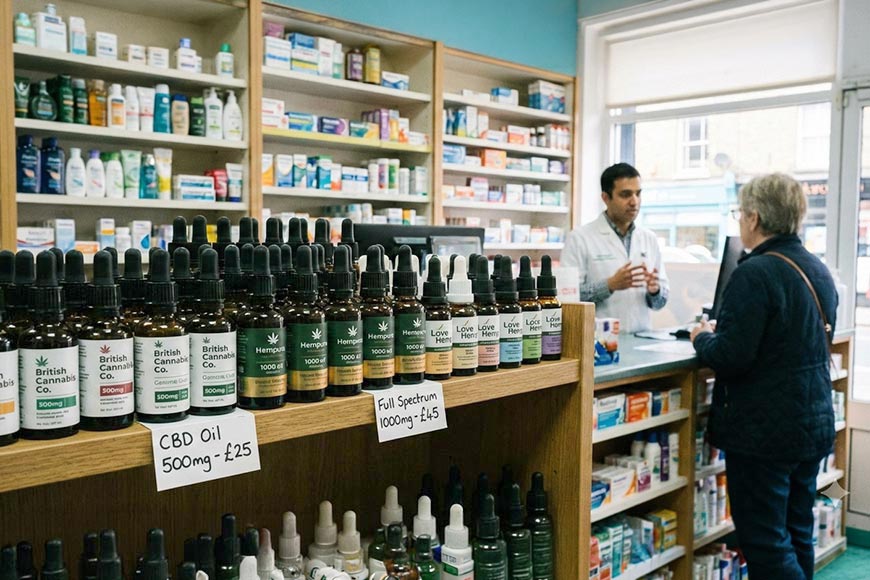
CBD oil sits innocently on British shelves next to vitamins and collagen gummies purchased legally from reputable high-street retailers like Holland & Barrett, and Boots.
Abroad, the picture changes dramatically.
In the United Arab Emirates, cannabis-related substances are illegal, and even trace amounts of THC can cause serious legal consequences.
Singapore cannabis laws are extremely strict.
And in Japan, CBD is only legal if it contains no THC at all and meets very specific regulatory standards. Many foreign products do not.
Your calming wellness oil may be viewed rather differently at passport control.
The Singapore Gum Situation
In Singapore, the import and sale of chewing gum are prohibited except for certain therapeutic dental gums such as nicotine gum for smoking cessation. The law is real. It is still in force.
Enforcement tends to focus on importation and sale rather than tourists with a stray stick in a pocket, but technically bringing in packs of gum is not allowed.
Which means that bulk buying a value pack at Heathrow for your mates is, in the driest legal sense, smuggling.
It is hard to argue about entry while branishing a stick of Wrigley’s Doublemint.
The Irn-Bru Ingredient Drama
Spare a thought for travellers clutching cans of Irn-Bru.
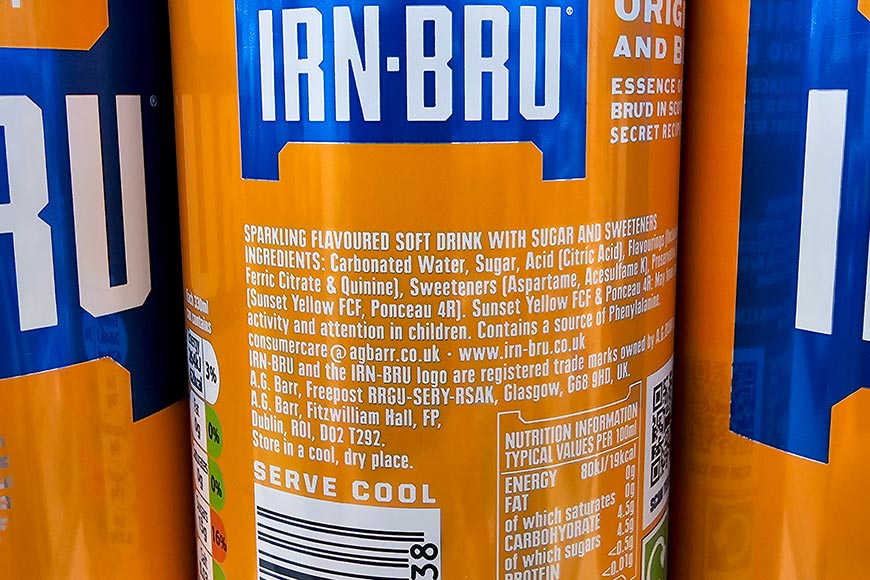
The original recipe historically contained a colouring called Ponceau 4R, which is not permitted under US food regulations and restricted in Canada. Reformulated versions that comply with both countries’ food regulations can be sold there, but non-compliant imports may be refused entry.
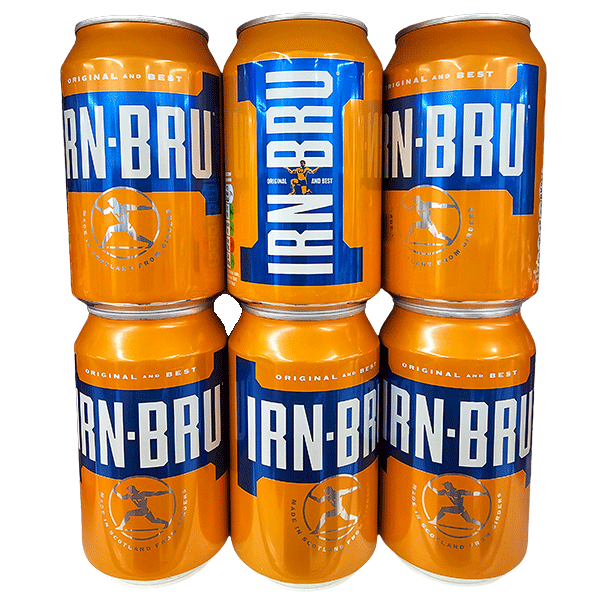
It’s not a blanket ban on Scottish fizzy drinks. It is an ingredient compliance issue.
The Laser Pointer
In the UK, a laser pointer is something you bought for a cat that does not respect you.
In parts of Australia, high-powered laser pointers are classified as prohibited weapons and require permits. Border officials can and do seize them. High-powered is generally defined as over 1mW, which surprises people.
Similarly, in Canada, certain high-powered handheld lasers are restricted.
It turns out that what feels like a novelty gadget can legally resemble precision equipment.
A Final Word for the Accidental Smuggler
Here is what usually happens if you get it wrong.
If you declare the item, and it is not allowed, it is normally confiscated. Mild embarrassment follows. You continue to the beach, slightly less well supplied.
If you fail to declare a prohibited item, and it is discovered, fines become much more likely. In some countries, particularly with controlled medicines or vaping bans, consequences can be far more serious.
The trick is not paranoia. It is preparation.
Check official government advice for your destination. Declare food. Check medicine ingredients.
Why?
Because no one wants their holiday to begin by hearing the snap of latex gloves and the words, “Step this way, please”.
Disclaimer: Travel rules can change and may be enforced differently depending on the country. Always consult official government guidance before travelling with food, medication or restricted items.
Useful Links:
Australia, Canada, European Union, Japan, Mexico, Singapore, UAE, Thailand, USA, Qatar, Saudi Arabia, Indonesia
For your return to the UK:
Great Britain
Photographs copyright © John Heinrich
Travelling soon? Things to do and attractions not to miss with Get Your Guide …
If you’ve enjoyed browsing our website, learned something new, or just had a smile because of what we do – we’d love your support to keep the good stuff brewing!
Where to next?
• The Best UK Cottage and Hotel Breaks for 2026
• Morecambe – Sunshine, Statues and a Seaside Revival
• Isle of Wight: The little island that refuses to be boring
Thanks for info – any idea about getting Bovril (a hug in a mug! 😂) Into Canada?
Carolyn
Hi Carolyn, It’s a shame, but Canada is the same as the USA. Declared Bovril will be confiscated and getting caught with undeclared Bovril risks ruining your future travel experiences. If caught, the Canada Border Services Agency (CBSA) will take your jar away and link a “food violation” to your passport profile. You could be pulled into secondary baggage screening nearly every time you fly back into Canada for several years. We’ve amended the article to clarify.