
The email arrived ten days after we’d returned home.
Official looking, it claimed that we had damaged the car we’d rented and owed them $480 for the repair work. A small image of a white car – no distinguishing marks or number plate – was attached.
Of course, we knew it was a scam, but we could’ve kicked ourselves. For once, chilled at the end of a relaxing break, we’d forgotten one of the most important rules of holiday car rental – always take photos, or better still a video, of the vehicle both as you pick it up (which we had) and as you return it (which we hadn’t).
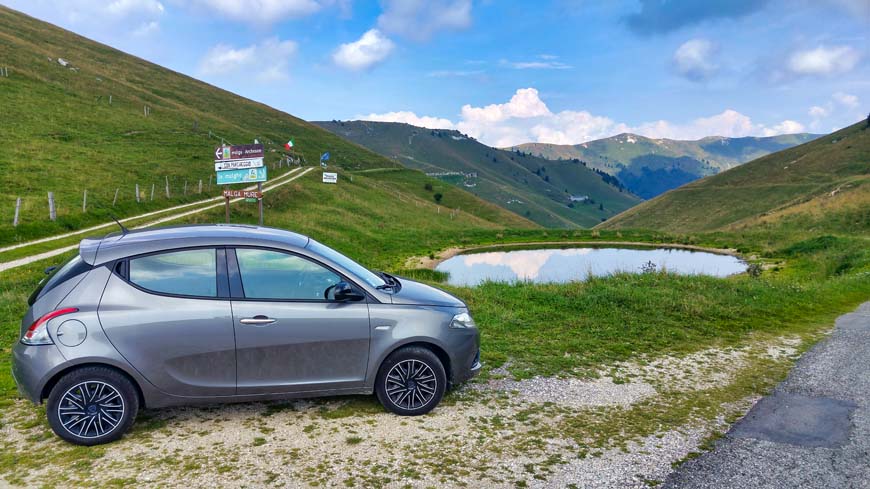
So you can learn from our mistakes, here are our 15 top tips for holiday car rental.
1 Book before you go
Even at peak holiday times you’ll get a better deal booking in advance rather than leaving it until you arrive.
Comparison websites make it easy – just make sure you’re comparing like-for-like, and you’ve entered all the details correctly.
2 Don’t pay over the odds for extra drivers
Again, do this before you go. If you want to share the driving with someone else, get it sorted in advance. Leave it until you pick up the vehicle, and you could be hit with an eye-watering surcharge.
3 Pay with a credit card
A hire car is likely to be a big chunk of your holiday expenditure. Using a credit card not only gives you the added security of insurance under Section 75 of the UK’s Consumer Credit Act, it also means any claims on the account can be challenged before the bill is actually paid.
On a debit card transaction, your money has already been taken and getting it back might be harder if you subsequently dispute the amount.
If you’ve booked in advance, just make sure to carry that card with you when collecting the vehicle in case you need to leave a security deposit.
Whatever card you use, it’s nearly always best to make the transaction in the local currency. When paying in pounds, the rental firm can use its own exchange rate, which could be uncompetitive.

4 Check what paperwork you need
Some countries require an International Driving Permit, others make you pay for a local licence when you collect the car. Either way, know-before-you-go is the golden rule, so you’re not over-charged.
UK drivers should apply via the government site for their personal DVLA code. This is so the hire car company can check your status, e.g. any points you may have which aren’t visible on your plastic driving licence.
The code lasts for 21 days, so don’t get it too far in advance. We’ve never yet been asked for it, but in theory you do need it.
• UK government site for driving licence information
A printed paper copy of your driving licence, downloadable from the same site, is also a good idea. Pork Belly always takes his, although again he’s never actually been asked to show it.
5 Get good insurance cover
Most car firms offer insurance as part of the deal but watch the small print and make sure you understand what is included.
If you damage the car, you usually have to pay a small amount – called excess – towards any repairs. This is usually a few hundred pounds, but some unscrupulous firms hide away enormous excess amounts, and you could wind up paying more for damage than you did for your holiday!
Most firms offer a collision damage waiver top-up, but this can be pricey, and you may be better off taking out a separate policy for the extra cover.
If you’re only using the hire car for a short time, a daily excess insurance policy will be cheapest, but if you hire a car for longer, or more than once a year, an annual policy will be a better bet.
And check that any policy covers everything, including tyres and windscreen. Don’t let the car hire firm pressure you into taking their deal. You do need insurance, but it doesn’t have to be theirs.
6 Beware costly age restrictions
Some companies won’t rent to anyone under 21 or even 25. When they do, they usually charge a premium and/or restrict the type of vehicles they can hire.
Watch out at the other end of the age range too, as some firms won’t rent to, or charge more for, the over 70s.
7 Know the local rules of the road
Before you travel, get familiar with the local driving conditions. Some countries have age restrictions for front seat passengers, others are strict about what you must do in case of a collision, no matter how minor.
Always obey local speed limits and parking restrictions – who wants to add a fine to their holiday spending?
And be sure you know what the drink-and-drug-driving legislation is where you’re travelling. Some destinations have a zero-tolerance policy.
8 How far can you go
Another common trip-up is the limited mileage deal. It can look cheap, but the penalties for going over your allowance are high.
Unlimited mileage takes the fear out of navigation and means you’re not always stuck on the shortest route. Plus, if you’re planning a one-way trip rather than dropping it back at the same location, you may be charged extra.
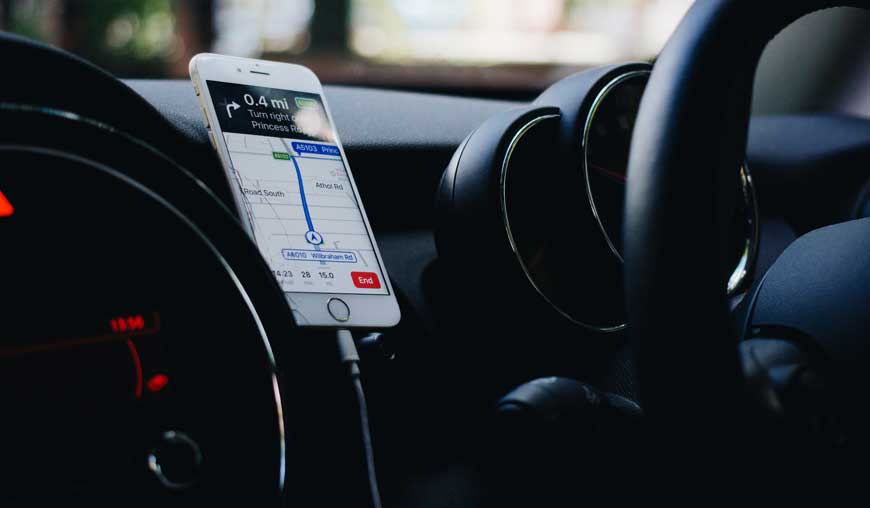
9 Bring your own satnav etc
Hiring one from the rental company usually works out expensive, so take your own device or rely on Google Maps. Just remember that internet connection and GPS may be patchy while you’re on the road.
We download a whole raft of Google Maps onto our phones before we go so when the signal is flaky, we have back-up.
Side note: We kinda miss the old paper maps and still have a whole stash of ’em from our travels through Europe in the eighties and nineties, but we have to admit electronic is so much better, especially when you throw roadworks, congestion and weather into the mix!
Travelling with children?
Might be cheaper to take your own car seat than hire one for an additional daily rate.
Always check the small print for any other items you consider essential and the car firm calls ‘extras’.
10 Check where you can go
The terms of any agreement should be very clear but watch out for any local variations. Some rental firms won’t allow you to take their cars on very narrow routes or into certain mountainous areas.
Look for the term ‘off-roading’ and be aware if you’re driving over rough ground or on a non-metalled road you may not be covered for any damage.
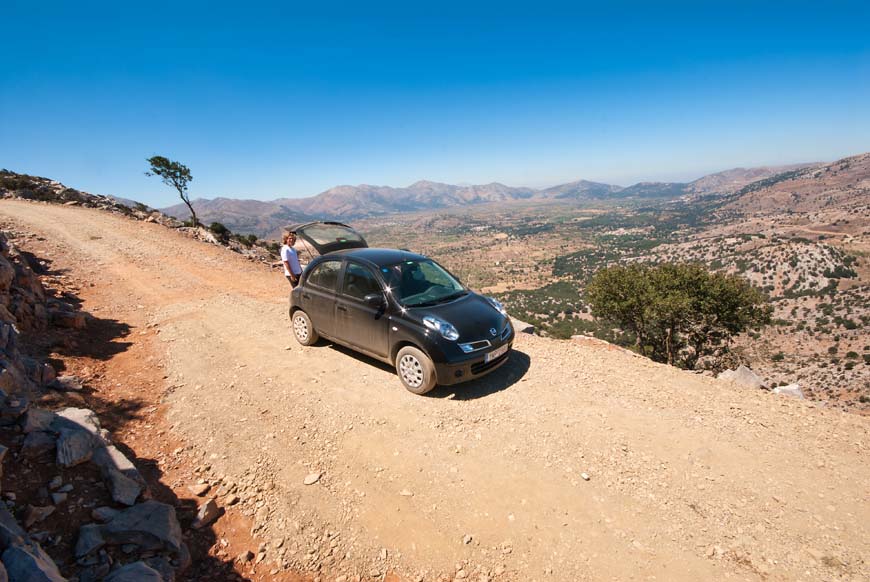
We once took a Nissan Micra over some of the roughest roads in Crete. The only other vehicles were 4-wheel drives. She performed brilliantly!
On the other hand, our experience in Antigua showed even the main roads have killer-diller speed bumps, so don’t take any road for granted while you’re driving a hire car.
• More about our Antigua Road Trip
Planning to cross borders?
Make sure of any border crossing restrictions. In Cyprus, you can walk across the north/south border in Nicosia, but not drive.
In Europe, there’s usually free travel across EU member states, but you might be caught out, for example if you try to drive into Switzerland from France or Austria to Italy. You should inform the rental company if you plan to cross borders, as there may be some restrictions, additional paperwork and a cross border fee.
In the States, most companies allow their vehicles to be taken between US and Canada for free, but you will need a permit to do so. As for crossing the border into Mexico, that can be difficult and costly!
11 Check the fuel rules
Make sure you know if you are renting full-to-full or some other variation. If you bring a car back with less fuel in it than you have agreed, it will cost you.
A lot.
And there won’t be anything you can do about it.
Top tip, as you leave the car rental firm, make a note of any nearby filling stations that have reasonable prices and make sure you stop off there to top up on your way to drop the car back.
Don’t leave it to chance.
12 Challenge mystery charges
By law, car hire firms in the UK must write to you in advance before they charge you for any additional costs like repairs. But the same rules may not apply where you’re travelling.
Watch out for any sneaky pre-ticked items on the booking form or on the checklist when you return the car.
There are sometimes hidden extras like admin costs if you are later found to have been speeding, or you picked up a penalty parking charge.
And always, ALWAYS keep an eye on your account after you return home, so you can challenge any unexpected items in the paying area.
13 Get photo evidence at pick up and drop off
Today’s smartphones make this so easy, as the time and date will automatically be recorded. Make sure you have photos or video of any existing damage before you drive away, as well as ensuring staff make a note on any paperwork.
Then do the same when you return it. Any disputes arise later? You have timed evidence of your case.
14 Return the car in office hours
It’s not always possible but if you use an out-of-hours drop off system you remain responsible for the condition of the vehicle until the staff can perform a full inspection, so any damage that occurs while it’s unattended is not covered.
15 Check if there’s an upgrade
It’s a bit cheeky but worth a try, We always ask – after all the worst thing that can happen is they say, ‘Sorry no.’ Firms have a legal obligation to give you what you paid for, so if they give you a bigger car, it has to be at the same price.
If you get a smaller car than the one you paid for, you should get a refund for the difference.
Don’t ask for an upgrade at the desk – they’ll expect you to pay for it. Just bide your time until you’re in the parking lot.
In the USA we were shown a nice little compact car, exactly what we had ordered. The attendant asked if it was okay.
Pork Belly joked he wanted one in red.
She said she didn’t have one but would we like to take this instead, gesturing to a huge, gleaming silver monster of a car.
We thought she was joking, but she was serious. It wasn’t booked by anyone and as we’d got chatting and had told her we were heading on a one-way road trip from Boston to Philadelphia, she reckoned we could do with a bit of comfort.
For the same price.
Deal!
Love road trips? So do we!

• Read about our out of season Cyprus Road trip
And as for our little complication? It was okay, we disputed it and they backed off, even without photographic evidence.
But it was a sharp reminder not to forget any of our 15 top tips for holiday car rental.
Here are a couple of good comparison sites we’ve used for holiday car rental:
Travel Supermarket Car Hire
Carrentals.co.uk
Note: Just to be clear, we receive a commission if you buy from Travel Supermarket but not from Carrentals.co.uk.
Where to next?
• Holiday and Travel Competitions
• Shakespeare in the snow
• Dog-friendly holiday cottages UK