
It’s the 1970s, in a suburban English dining room. A white Formica topped table stands on a purple rug, extended to accommodate the evening’s guests.
They’ve just enjoyed a prawn cocktail followed by Chicken Kiev.
The hostess, elegant in her turquoise bri-nylon shirt dress, offers a little top up of Mateus Rosé. On the serving trolley stands her pièce de resistance; a huge trifle in a deep glass bowl. Layers of soft alcohol-soaked sponge, set in jelly, covered in thick custard and whipped cream with 10 ruby-red glacé cherries glistening on the creamy-white surface.
‘Who’s for dessert?’
The guests turn expectantly and see….
…the family dog, with lolling tongue, face covered in cream.
And the trifle on the bottom shelf, with 10 glacé cherries each marooned on a sea of smooth, slightly damp, custard.
Trifle anyone?!
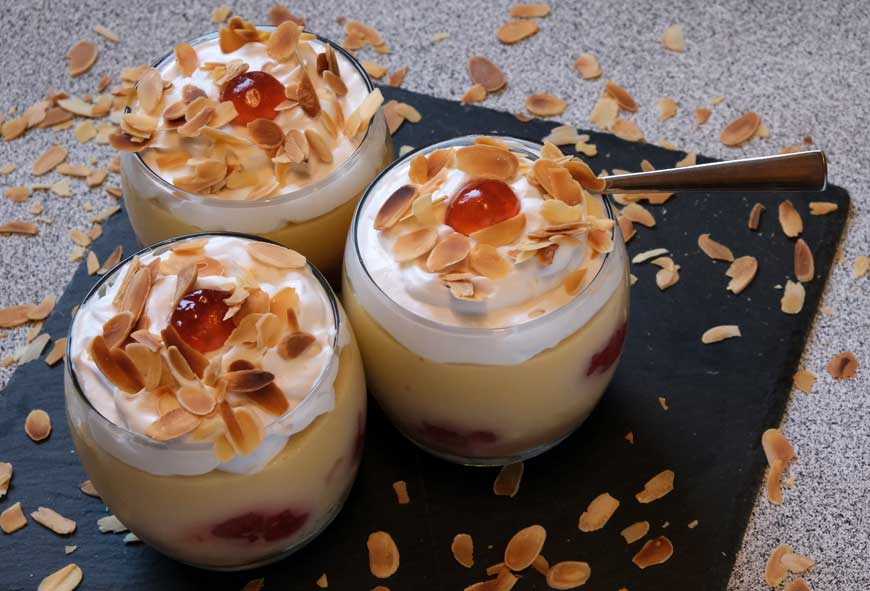
Trifle was a staple dessert when I was growing up – as much at home at a family high tea as on a dinner party menu.
Home made custard was the order of the day if grandma made it, but good old Bird’s was the busy housewife’s friend.
There are dozens of books on how to make the perfect trifle – and everyone from Mary Berry through Delia Smith to Nigella Lawson has their own take.
Sponge cake or fingers?
To jelly or not to jelly?
Fresh, frozen or tinned fruit?
Sherry or madeira?
And what about chocolate trifle, Black Forest trifle or tipsy cake?
But did you know the original British trifle contained not a single trace of sponge, jelly or custard?
Trifle – a brief history
The word trifle comes from the old French word ‘trufle’ which means something foolish, of little consequence, a bagatelle.
And the first trifles had more in common with a fruit fool than the cakey-pudding we Brits know and love today.
The earliest use of the name ‘trifle’ was Thomas Dawson’s recipe published in The Good Huswifes Jewell in 1585.
Dawson talks of a thick cream flavoured with sugar, ginger and rosewater and for many years the words ‘trifle’ and ‘fool’ were used interchangeably.
Want to make a 16th century trifle?
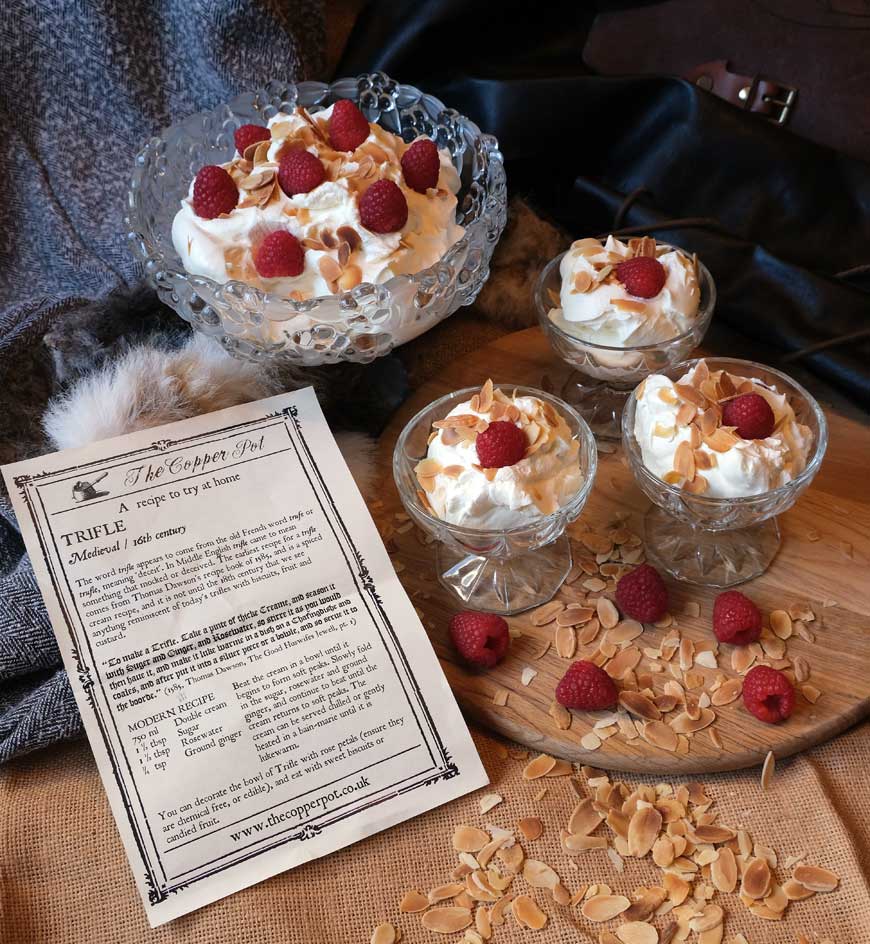
750 mls double cream
1 1/2 tablespoons sugar
1 1/2 tablespoons rosewater
3/4 teaspoon ground ginger
Beat the cream until it forms soft peaks.
Fold in the sugar, rosewater and ground ginger and beat again until it thickens once more.
Chill and serve or warm it through gently in a bain-marie.
With thanks to The Copper Pot for the recipe
Trifle in the 18th century
Sometime in the 1700s cake or biscuits were added to trifle recipes along with alcohol – a fortified wine like sack or ratafia (an almond flavoured liqueur) – plus custard.
And the custom of serving it in a fancy glass dish to show off the layers became popular.
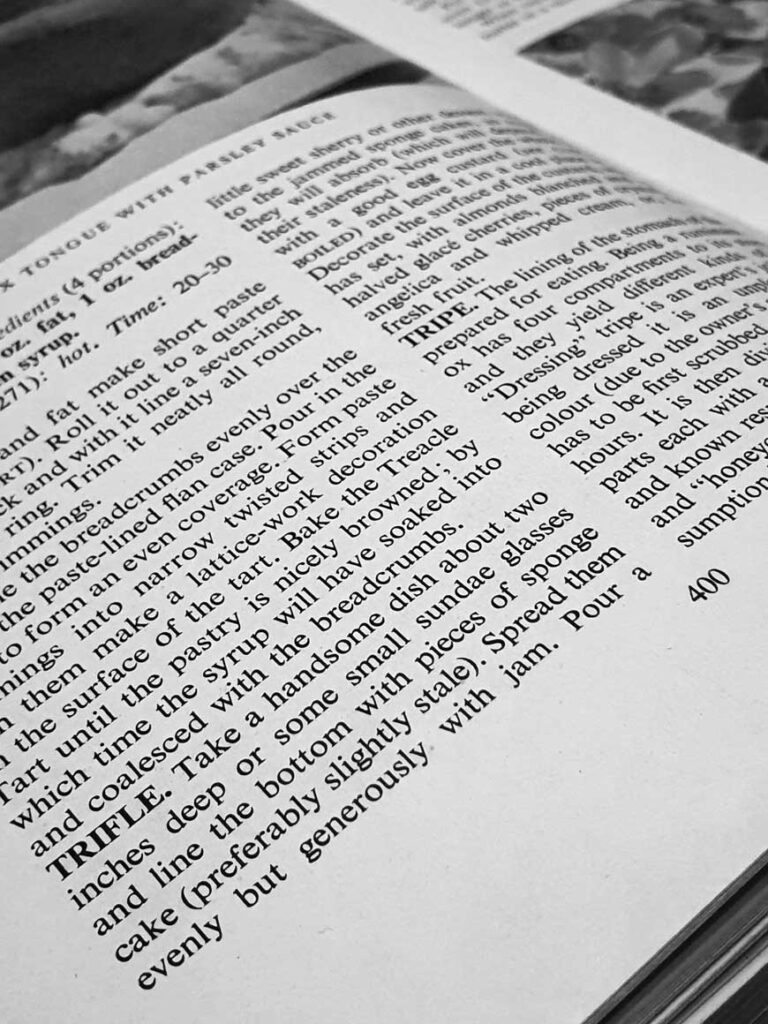
By the time Hannah Glasse got to it in ‘The Art of Cookery Made Plain’ in the 1750s it was recognisably the dish we know today as trifle, although no fruit was involved.
‘Cover the bottom of your dish or bowl with Naples biscuits broke in pieces, mackeroons (sic) broke in halves, and ratafia cakes; just wet them all through with sack*, then make a good boiled custard, not too thick, and when cold pour it over it, then put a syllabub over that.’
*fortified wine
The use of jelly to set the dish was also mentioned but in the traditional, rather less than appetising way, using calves feet to create the gelatine.
Still trifle, though.
Wartime Trifle
During the dark days of rationing, trifle continued to make it onto the table, albeit a slightly less attractive version.
3 oz stale cake
3 teaspoonfuls jam
¾ pint sweetened custard
Spread cake with jam. Cut into cubes. Put into an individual dish. Pour custard over it.
Still trifle.
Nowadays you can have trifle any which way you like. It all boils down to personal taste.
Trifle today
With so many variations everyone will have their favourite trifle. Pork Belly went for an inclusive version that is both vegan and gluten-free.
With more than a nod to Philip Harben’s pared down, post-war recipe, he baked his own gluten-free dairy-free sponge, soaked it with a generous glug of ginger wine, and used almond milk for the custard and coconut cream for the topping.
Using almond milk seems ultra-modern, yet its roots go way back to the Middle Ages. It was labour-intensive to produce but was all the rage amongst the Medieval Upper Classes when Lent came along with its ban on all dairy products.
• Almond Milk and the upper class
Gluten-free, dairy-free, vegan or full on dairy overload, however you make it, it’s still trifle.
There must be 50 ways to make a trifle!
Gluten free, vegan trifle
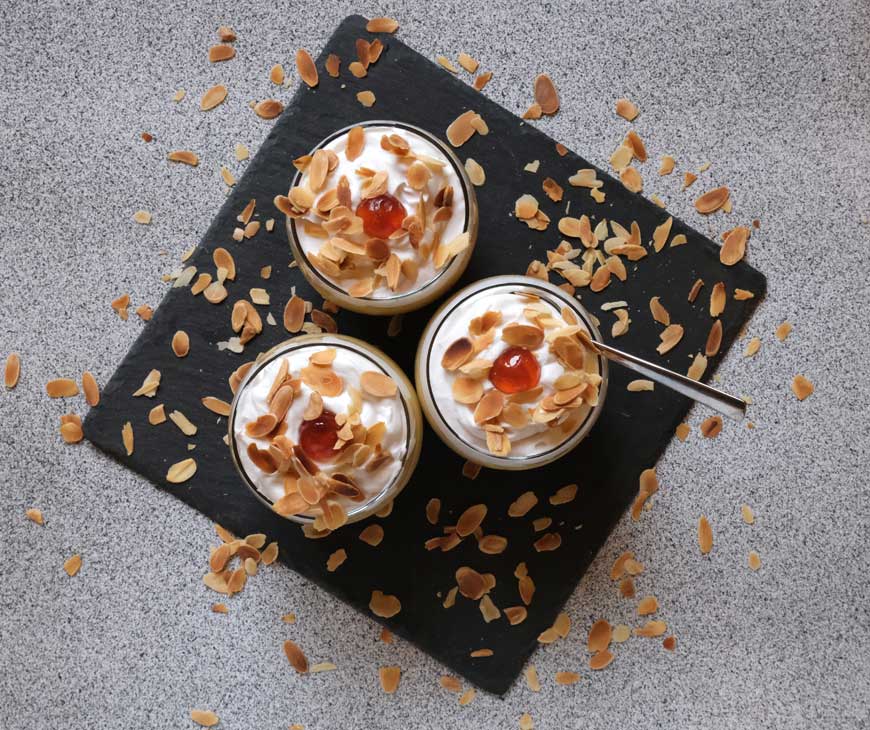
Based on Philip Harben’s recipe it’s an easy-to-make adaptation. Harben doesn’t give quantities and nor does Pork Belly – just choose your dish and layer it up.
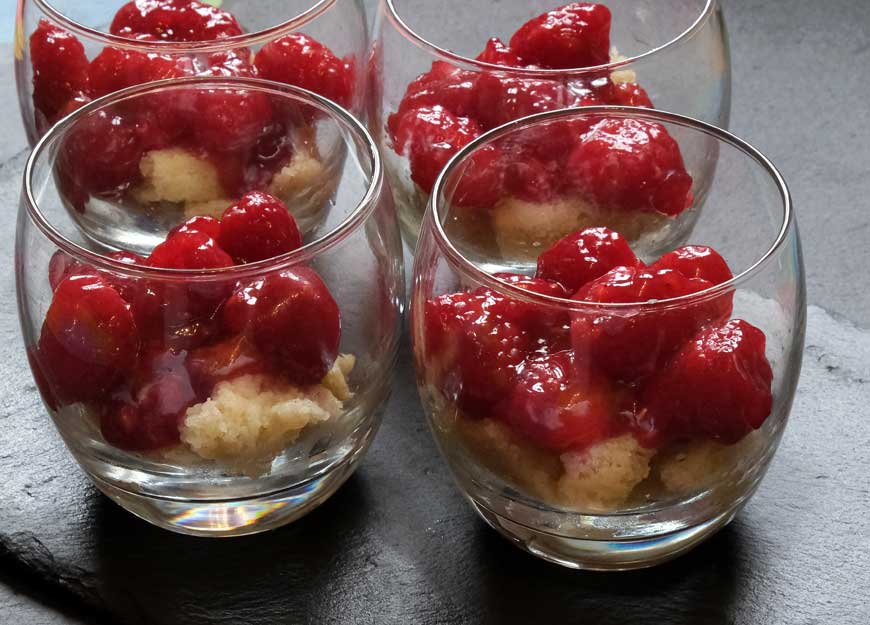
Place cut up pieces of gluten-free sponge in the bottom of the dish and soak with alcohol (Pork Belly used ginger wine).
Warm a generous dollop of your favourite seedless raspberry jam in a saucepan, remove from the heat and throw in a handful or more of fresh raspberries gently folding them into the jam until they are coated, but not cooked. Spoon this mixture on top of the sponge.
Make up a custard (Bird’s is traditional!) with the non-dairy milk of your choice (almond milk for us) allow it to cool then pour into the dish almost to the top. Place the nearly-assembled trifle in the fridge until the custard is set.
Chill the coconut cream (we used Sainsbury’s) before whisking it together with 25g of icing sugar for 250mls coconut cream. Careful not to over-whisk. Spoon liberally on top of the custard and decorate with some ruby-red glacé cherries.
Where to next?
• Afternoon tea – a visitors’ guide
• Tudors, manners, mead and stew
• A taste of Christmas past at the Regency Town House
Wonderful! I love trifle in all it’s forms.
A friend of mine was famous for her Caribbean trifle – Jamaica ginger cake, chopped bananas, tinned pineapple, dark rum and whipped cream. Quick and delicious.
Sounds heavenly – that’s Pork Belly’s sort of trifle!