
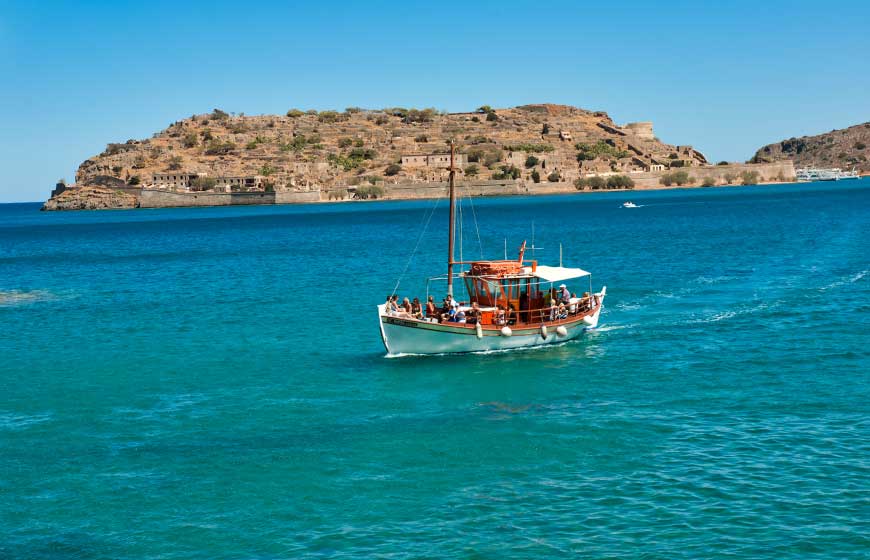
The early morning sun is warm on my shoulders, the air fresh and the sea calm.
We board the small ferry, the only tourists crossing from Plaka. The boat is full of local people, heading for the island for a day’s work selling tickets and refreshments to visitors like us.
Stepping off the pier we leave them setting up their stalls and head slowly up the steep path to the stone gateway.
Spinalonga – the abandoned island
Minutes later we’re standing in the deserted streets of Spinalonga, a former leper colony with a sad, sometimes uplifting story of human suffering, resilience and kindness.
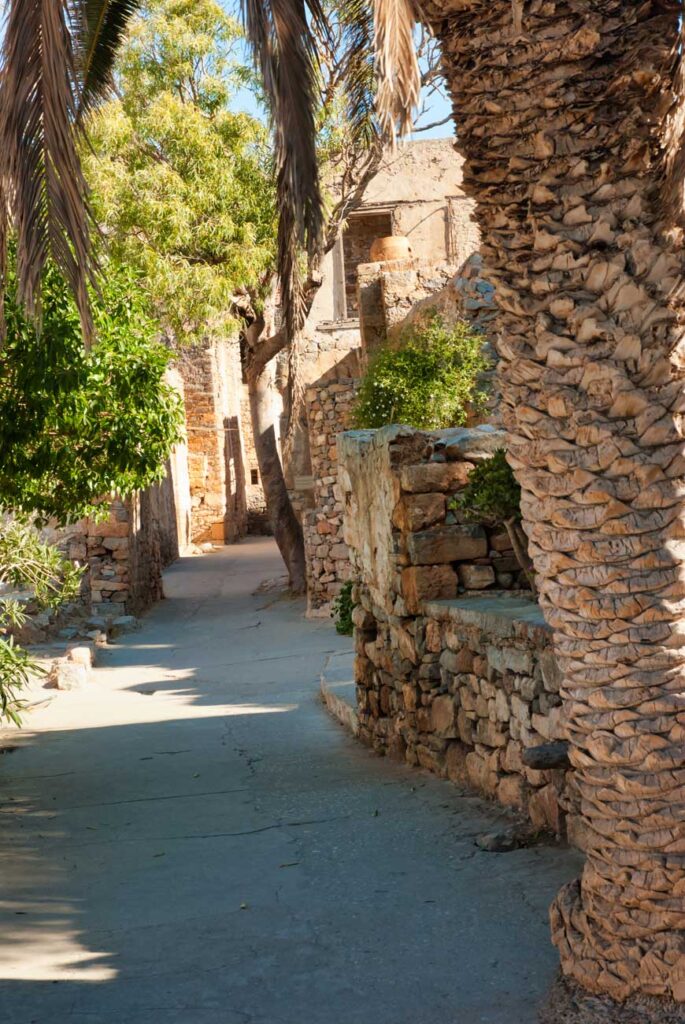
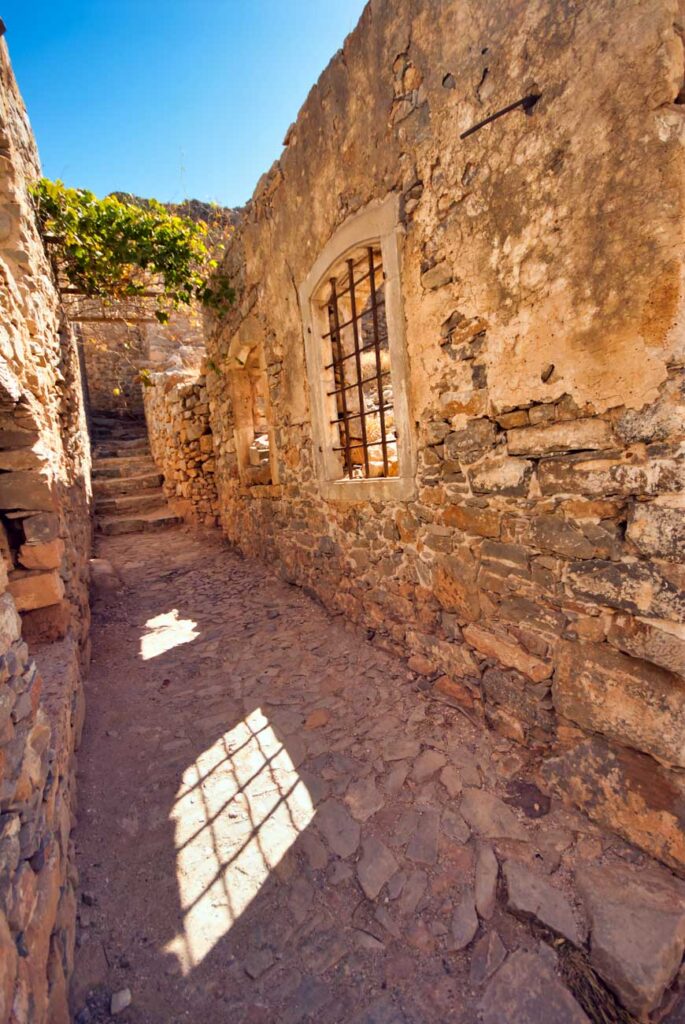
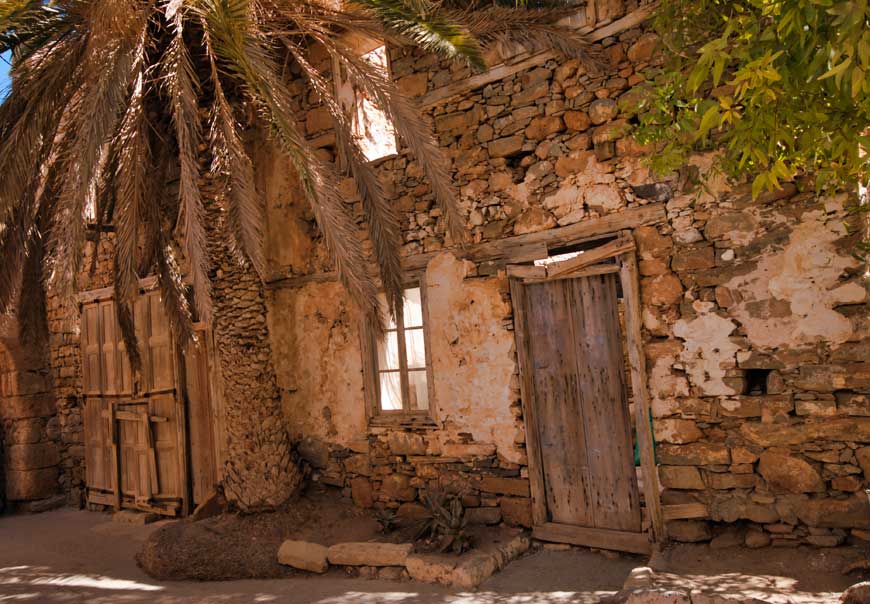
All around lie the remains of homes, tumbledown roofs, ragged curtains still hanging from rotting window-frames, abandoned chairs and tree roots reclaiming the sturdy walls.
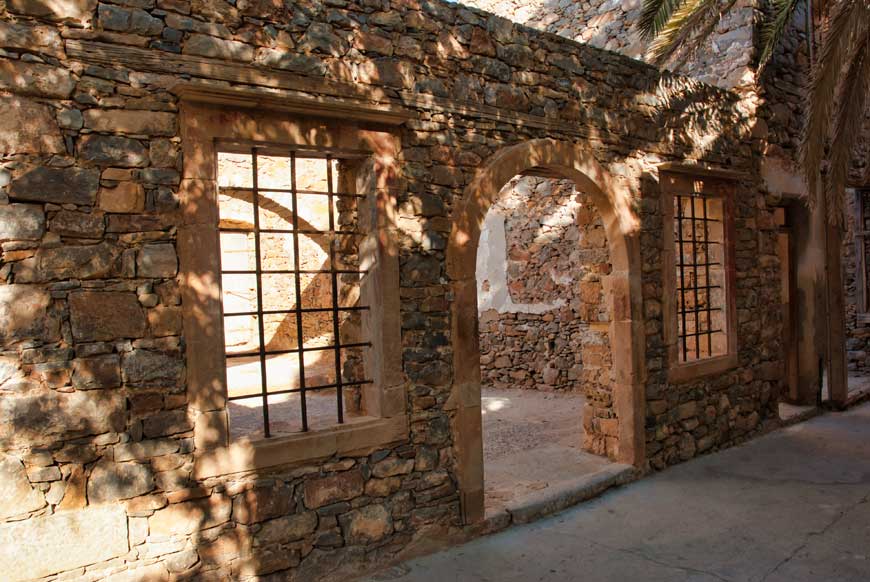
Our footsteps echo on the cracked paving slabs, and we speak low, lest we disturb the ghosts of Spinalonga.
Those who lived and died here.
In isolation.
But not alone.
The sad history of Spinalonga
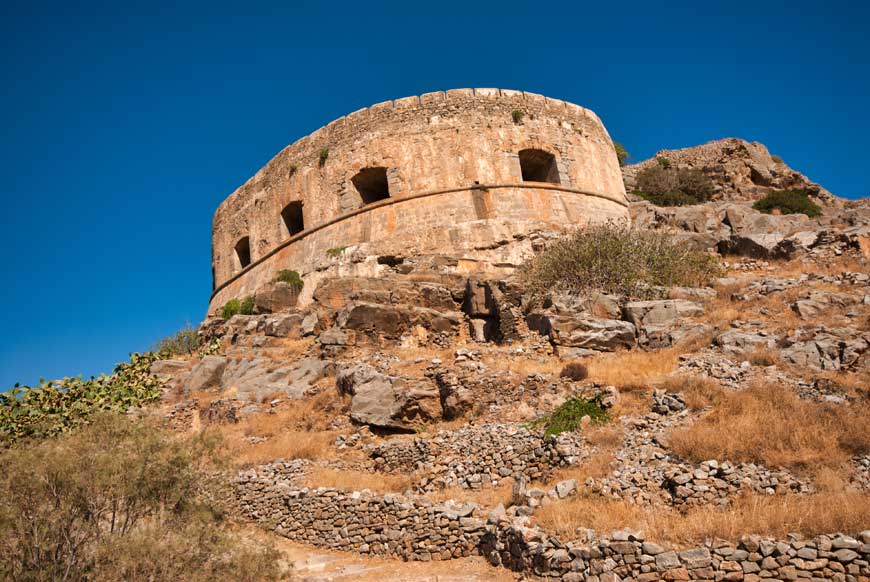
Attracting thousands of visitors each year, Spinalonga generates a strange and eerie feeling inside its crumbling walls.
Located in the Gulf of Elounda in north-eastern Crete, the island has a long and chequered history. And generations of invaders and defenders have given Spinalonga a somewhat embattled air.
There’s evidence it was once a Minoan stronghold, guarding entry to the placid Cretan waters.
The Venetians fortified the island to protect their trade routes. The remains of their huge fortress still dominate the shore, and their defences stand firm against the power of the sea.
But it’s the saddest period of Spinalonga’s history – as a leper colony from 1903 to 1957 – which leaves its mark on even the most casual visitor.
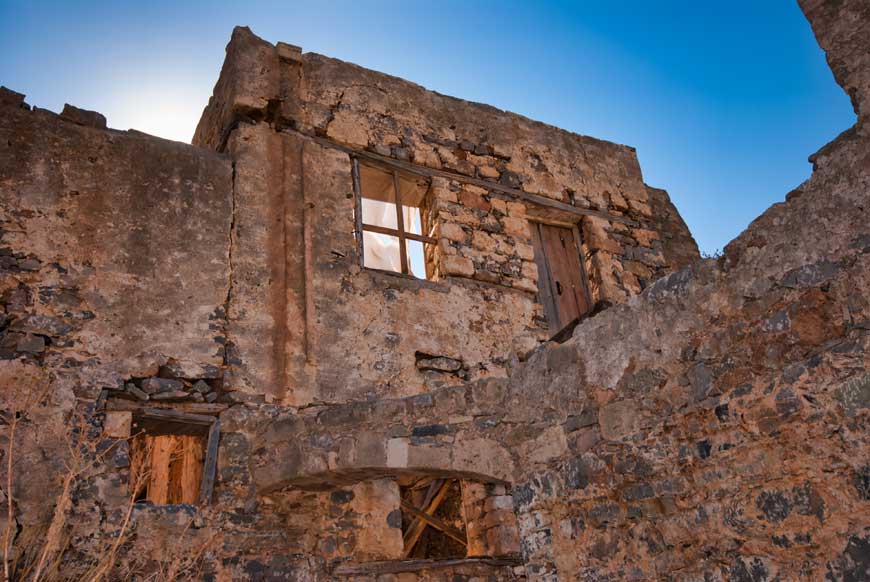
The lepers of Spinaloga
At the beginning of the twentieth century, the island was transformed into a leper colony.
People were terrified of leprosy, as little was known about the disease. It’s a distressing condition, but the risk of contagion is low and most people are naturally resistant to the illness.
But fear is contagious, and isolation became the approved option. A small island like Spinalonga, close to shore, providing an easy crossing for patients, food and supplies, was the perfect solution.
The stigma of leprosy was very real. Sufferers had their property and money seized, their citizenship rights taken away and their identity erased.
Until the Spinalonga colony was established, anyone on Crete who developed leprosy was forced to live away from others, mainly in caves.
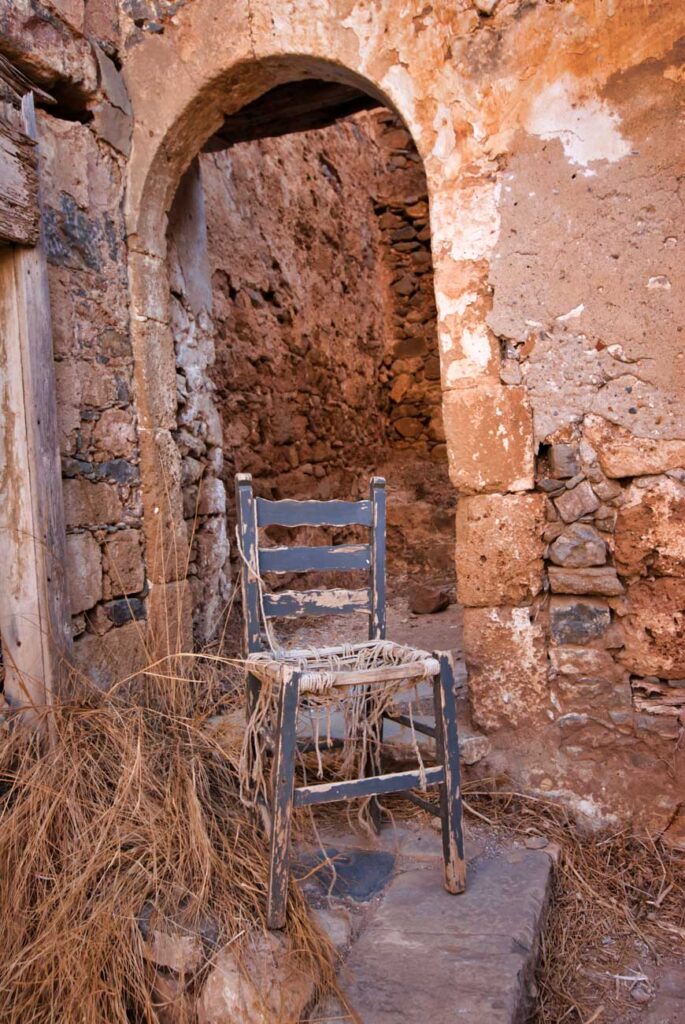
Conditions on Spinalonga were better, but far from ideal. Arrivals came through a separate entrance known as ‘Dante’s Gate’ – because they felt they were entering into hell.
This infernal doorway led to a harsh life of simply surviving, with the islanders eking out their days drinking and gambling.
A doctor would attend if they fell ill with another complaint, but the leprosy itself was never treated.
The last inhabitants of Spinalonga
Eventually, a society called the Brotherhood of the Sick of Spinalonga was formed in the 1930s, dedicated to improving conditions on the island. They lobbied the Greek government for the right of the leper colonists to marry and to operate businesses.
Slowly, the people of Spinalonga banded together to support each other. They established shops, schools and rudimentary healthcare.
A smooth path was created around the island to give even those severely affected a chance to leave the crowded houses and breathe the fresh sea air.
As the disease became more understood and treatments were developed, the need for colonies like Spinalonga reduced, and the last leper left in 1957.
The last person to leave was a priest, who stayed on to keep the tradition of commemorating a buried person until 5 years after their death.
Duty done, he finally left the island in 1962.
The lonely streets of Spinalonga
Wandering in and out of the houses, we took our time, stopping to read the personal stories of those who lived and died there.
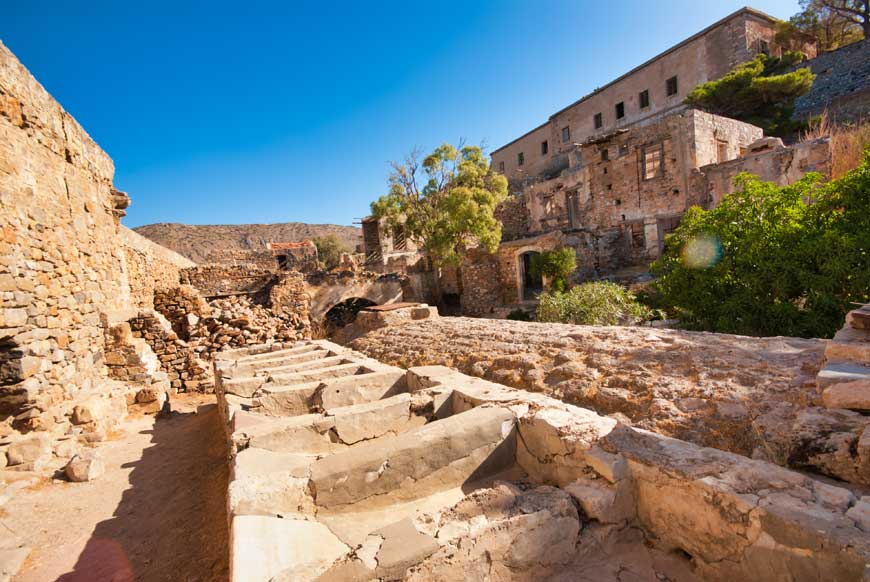
The stone troughs and channels of the communal washing area brought home just how hard it was for anyone to keep clean. And the steep stone staircases must have seemed unsurmountable for those in the later stages of the disease.
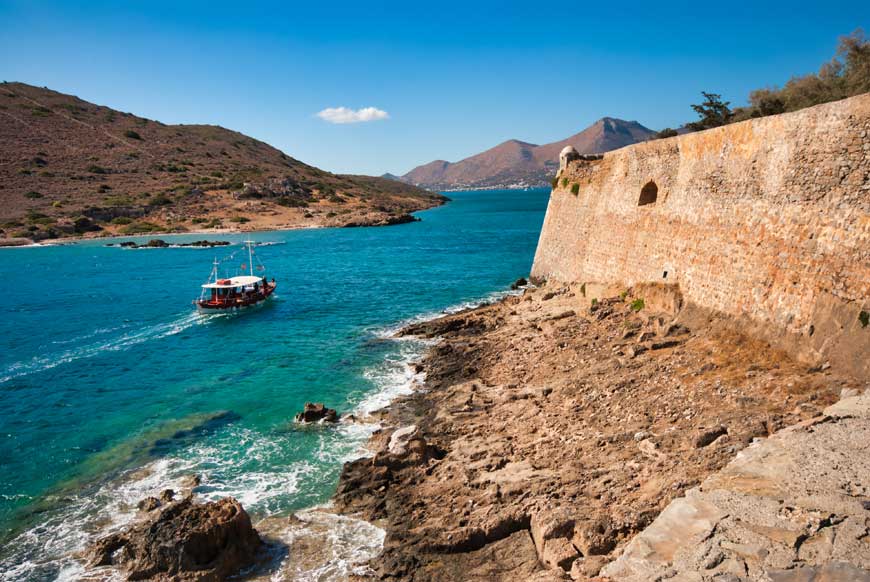
It was with a feeling of relief we struck out on the lepers’ path around the island.
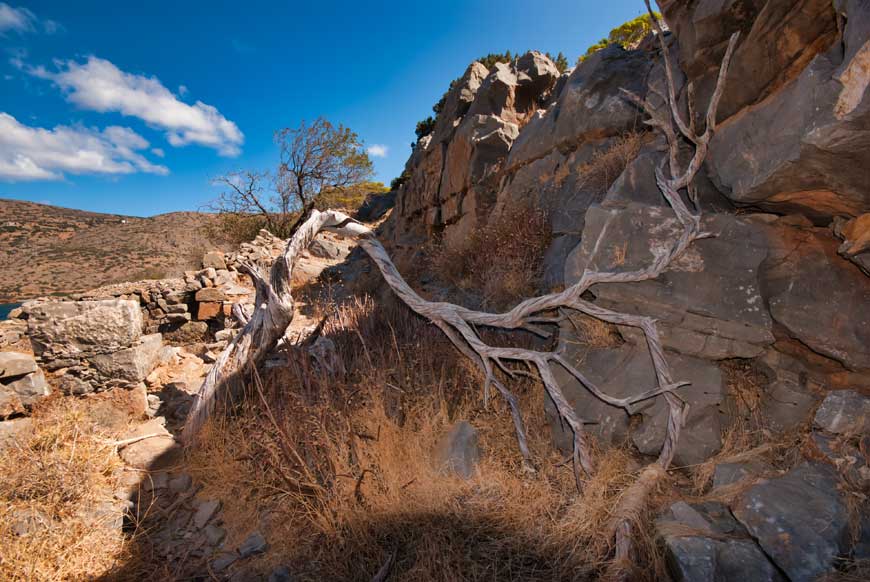
A full circuit takes less than an hour, and we were rewarded with views of breathtakingly beautiful blue seas, wide open skies and the lonely cry of birds.
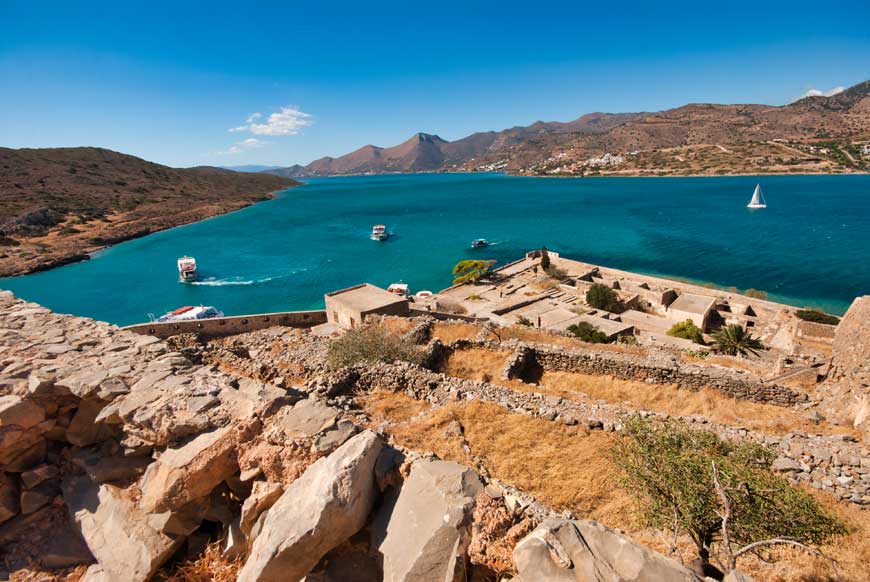
Visiting Spinalonga
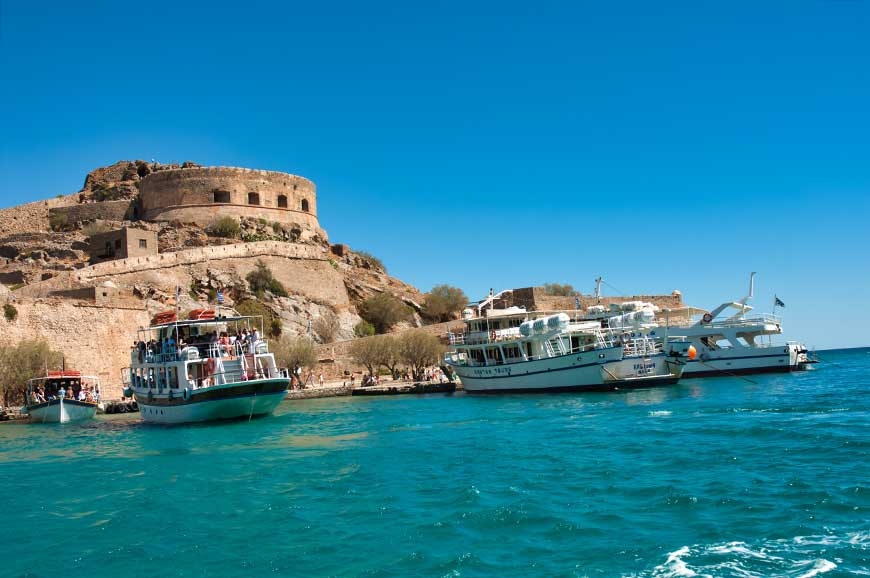
Most people take one of the cruise boats from Elounda and visit the island for only a brief time, adding sun, sea and beach barbecues to their day.
Nothing wrong with that.
But if you like to really sink into a place, absorb its atmosphere and walk alongside its ghosts, then take the local ferry ride from Plaka, as we did.
Then take your time to explore Spinalonga – a hauntingly beautiful island.
More information about Spinalonga
Visit Incredible Crete – the official tourism website.
All images copyright © John Heinrich/rosemaryandporkbelly
Where to next?
• 7 reasons to visit Crete
• Island Life – Malta
• Walk like a Venetian