
With Christmas and New Year just around the corner, many of us will soon be reaching for a bottle of something sparkling to celebrate. More often than not, that something is Prosecco: festive, friendly, and wonderfully drinkable. And as you hear the cork pop and watch the bubbles rise, it’s hard not to wonder about the landscape that produced them. Perhaps, between sips, your mind drifts to thoughts of a getaway: hills embroidered with vineyards, quiet villages, and the winding roads of northern Italy where this beloved fizz begins its life.
A holiday to the Prosecco region suddenly feels a rather delicious idea. A few years ago, we followed the locals’ advice, drove the Prosecco Road, and found Italy’s bubbliest hidden gem.
When travelling, we always listen to the locals. ‘Drive the Prosecco Road,’ they said.
So we did.
We parked in a shady side street and strolled towards the centre of town.
As we walked, I muttered its name several times under my breath, like a mantra.
Val-dob-YAH-dinnay, val-dob-YAH-dinnay …
I’d only ever seen the word written before on the side of a bottle and, my Italian is, how shall we put this, enthusiastically limited. I’d had to ask the owner of the villa we’d rented exactly how to pronounce it.
Because Valdobbiadene (val-dob-YAH-dinnay) is a small but very important little place.
The start (or end, depending on your viewpoint) of the short and very sweet Prosecco Road in Italy.
Why Prosecco?
Because bubbles!
Champagne is grand and English sparkling wine delicious, but Prosecco is cheaper and often just as good. And when you’re sipping it outside a tiny café or at a picnic table among the vines where the grapes are grown, it has an extra special appeal.
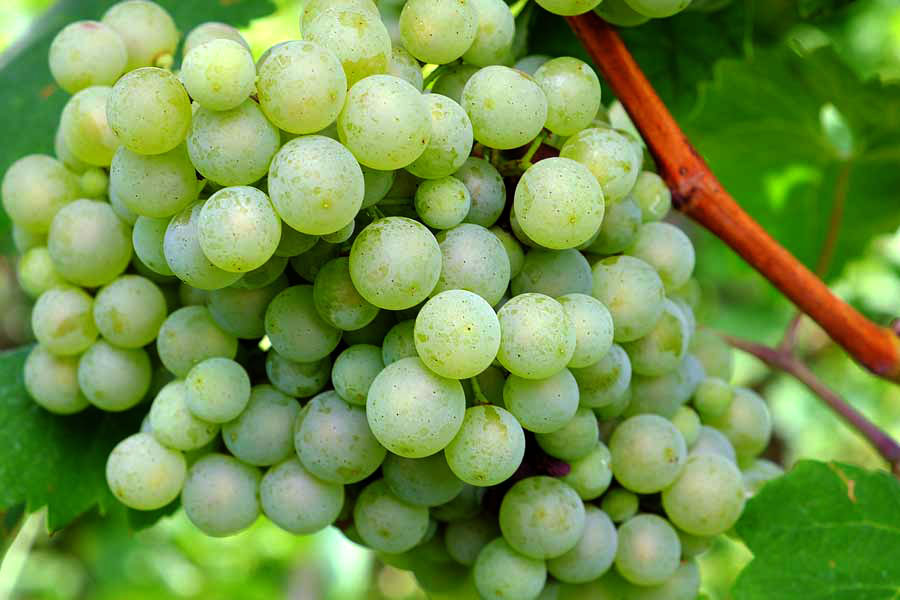
Prosecco is made from the Glera grape and, by law, can only be produced in specific protected areas of north-east Italy. On the Prosecco Road in the quiet hills of the Veneto region, there are more than 30 vineyards, mostly small and family-run, and this is the area that produces the very best.
All that bubbles can be still
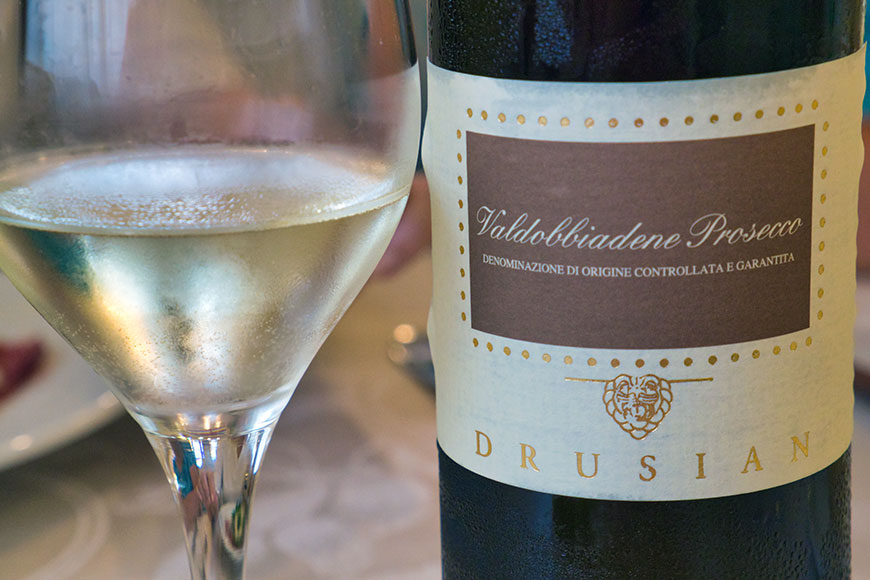
Here you’ll find the unusual and wildly delicious Prosecco liscio – a still version of the wine.
We found this treat on the menu of a local restaurant. It’s rare even across Italy, let alone anywhere else.
Prosecco without the bubbles?
A well-kept secret within a secret, and yet another reason for visiting Veneto.
Sadly it’s not widely available in the UK, however we have spotted it in our local Aldi where a bottle of Costellore Still Prosecco DOC, made from the same Glera grape, costs from £4.49.
Driving the Prosecco Road
We were staying in a lovely villa just outside the ancient village of Asolo in Veneto north of Venice, so we were already surrounded by Prosecco country. Asolo itself sits within the Asolo Prosecco Superiore DOCG, making it an excellent base for exploring.
But the Prosecco Hills, added to the UNESCO World Heritage List in 2019, are famous for producing the very best. They were recognised for their steep “hogback” hills and the ancient vine terraces – ciglioni – that shape the landscape.
The Prosecco Road itself still feels a little off the mainstream tourist trail, though visitor numbers have risen steadily in recent years. Early 2024 recorded over 15% more overnight stays than the previous year. Even so, compared to the tourist magnets of Venice or Verona, the area remains blissfully peaceful.
Plus, the villa owners had told us about an intriguing self-service restaurant, tucked away among the vineyards on the Prosecco Road. At Osteria Senz’Oste – which translates as ‘inn without a host’ – you can buy chilled Prosecco from a vending machine.
We just had to try that for ourselves, so we fuelled up our little rental car and headed for the Prosecco hills.
The long and winding Prosecco Road
There is a designated Prosecco Road which runs through those hills, but depending on who you ask it’s either the classic 30 mile (47-km) stretch or the extended 55 mile (90-km) loop. So no wonder nobody can quite agree on how long it is.
This official circular route runs between Valdobbiadene in the west and Conegliano in the east, then back along the valley floor. But there are several, branching alternatives.
So the Prosecco Road is definitely fluid!
And the problem with sticking to any official route is that while it may take you to the main viewpoints, it misses out the chance of finding something unexpected.
So we used the map as a guide, but pinged off like a bagatelle ball in different directions as the mood took us.
Whichever way you go, take it slow.
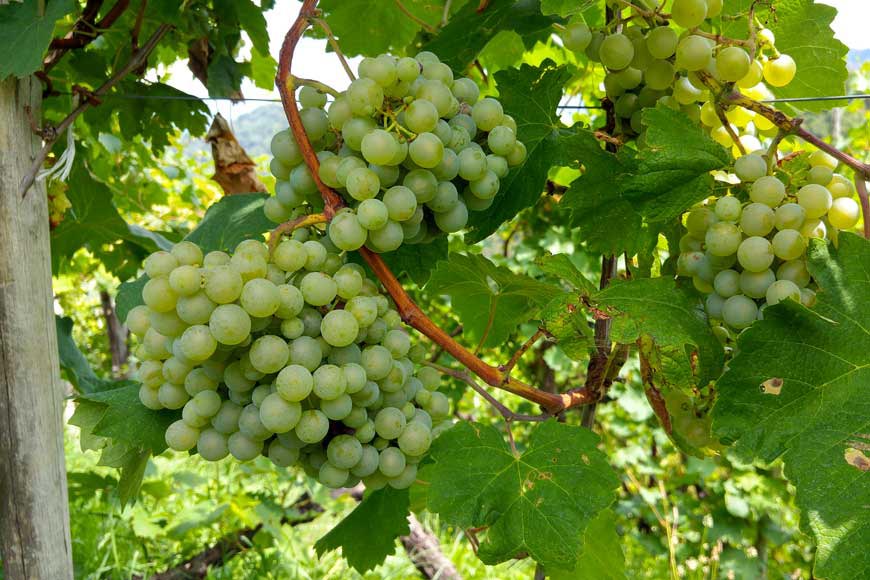
The road is narrow and winding, the hills steep, the edges craggy and unprotected and the vines crowd right up to the side of the road. In high summer, when we were there, the traffic was blissfully light, but cyclists and pedestrians lurked around the pavement-free bends. Driving slowly and cautiously is essential on the Prosecco Road.
And the views are wonderful. A string of tiny, picturesque villages, churches and even a monastery dominating the skyline.
Valdobbiadene
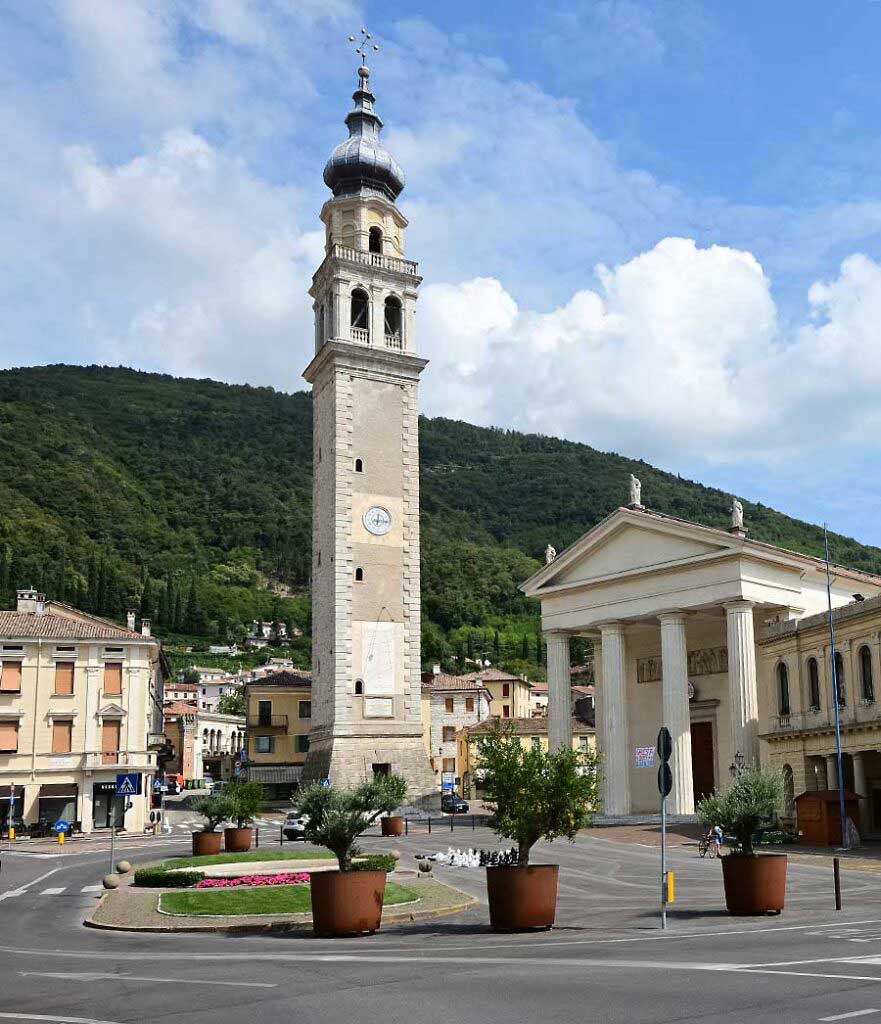
We chose to start here as it was nearest to our base. The drive took us through Pedderobba, a less than inspiring industrial area, but once across the River Piave we found Valdobbiadene – the capital of Prosecco.
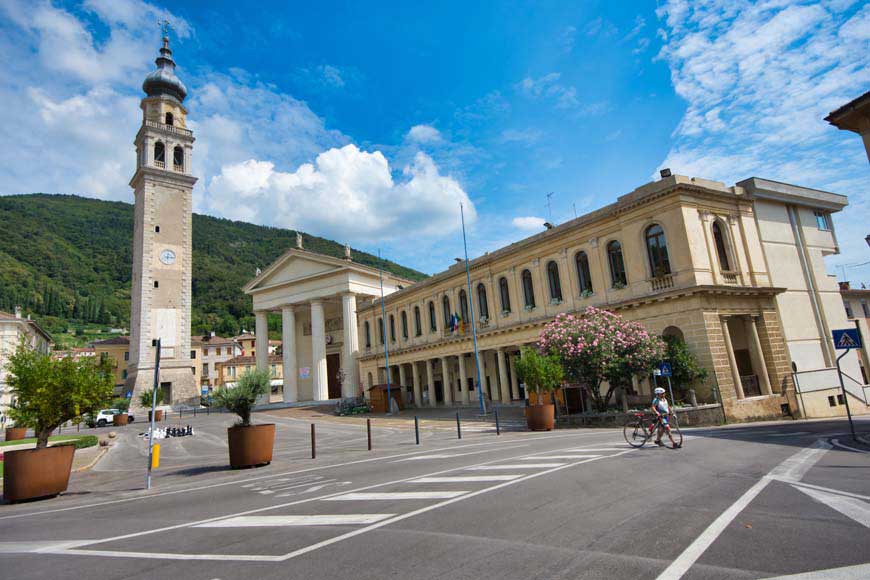
At the heart of the town is the large Piazza Marconi with its huge bell tower, which dates back to 1743. For centuries this bell would ring out the hours, marking time for the workers in the fields. It still dominates the centre of town, showing its importance.
Yet the place is quiet, sleepy and very low-key.
All its energy and enthusiasm is based around its famous wine and the vineyards that stretch for miles around.
Col San Martino
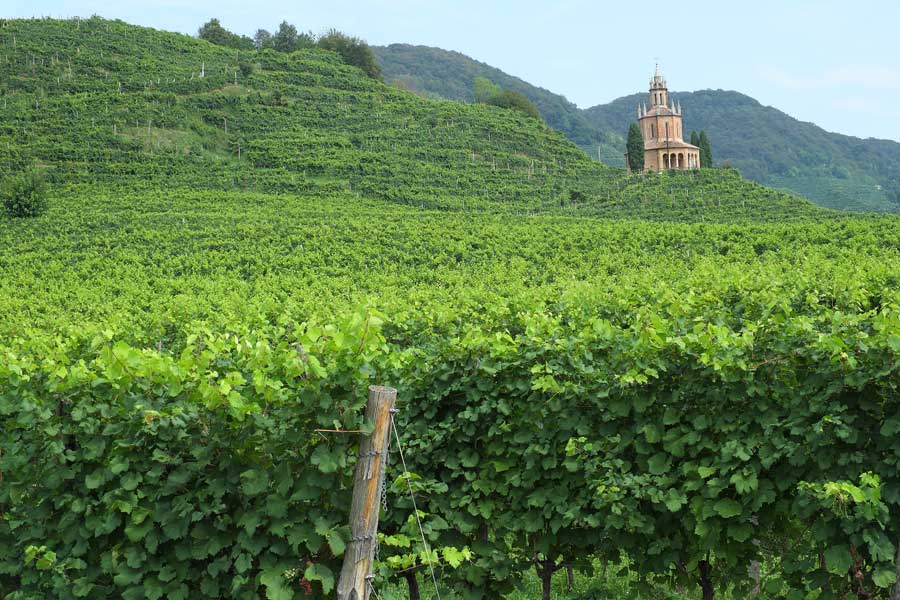
Towers, domes, spires and pinnacles rear up, seemingly from nowhere, along the route, while other villages sprawl across both sides of the road.
The little town of Col San Martino has a huge parish church with a soaring bell tower, which seems incongruous in such a tiny country town
But it is a place of pilgrimage. Locals told us that couples hoping to start a family come here to seek divine help. Tradition has it they choose a name at random from a sealed box and, if their wish is granted, they promise to baptise the child with that name. The chapel is filled with votive offerings saying “thank you”, so presumably it works!
Follina
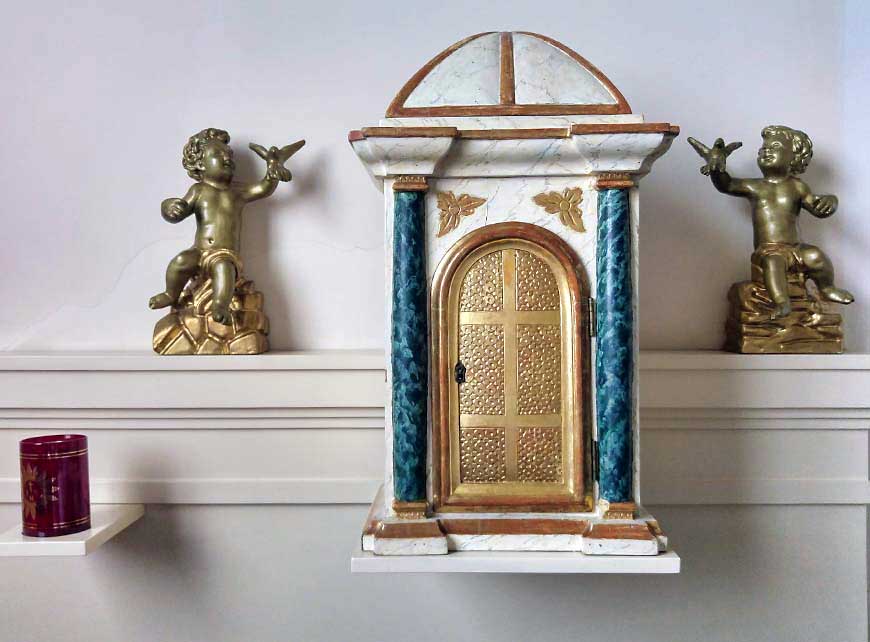
This hillside village has a beautiful Cistercian abbey, Santa Maria di Follina.
The monastery dates back to the 12th century, and you can walk through its picturesque covered cloister and marvel at its preserved medieval paintings.
To be honest we probably should have stopped to see it close up, but it was time for a little apperitif, so we admired from afar and swept on by.
Vittorio Veneto
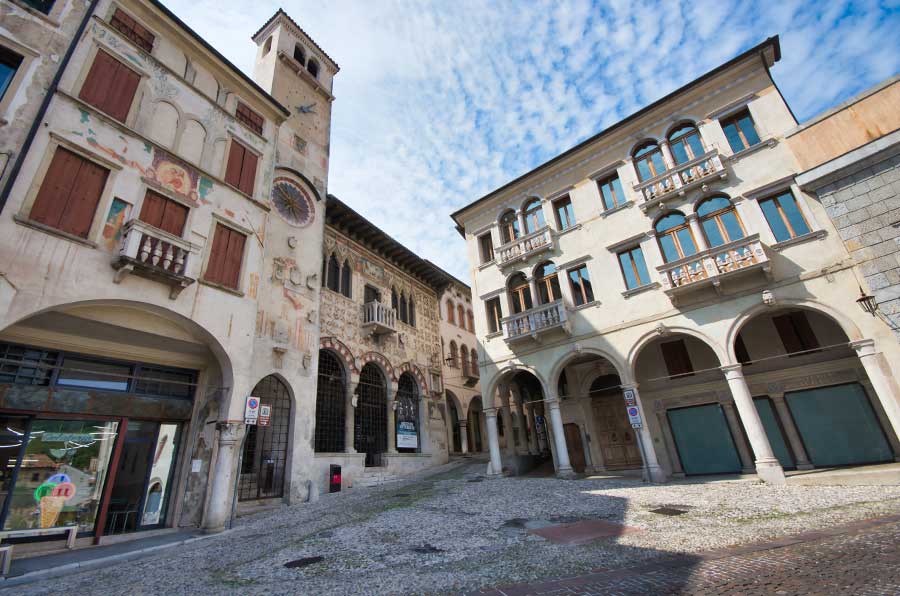
Here’s where we chose to stop.
In fact the official Prosecco Road route skips Vittorio, but hey, we’re rebels, and we really liked it.
First we refreshed ourselves (with a glass of Prosecco, of course) at a café in the main square, the Piazza Flaminio.
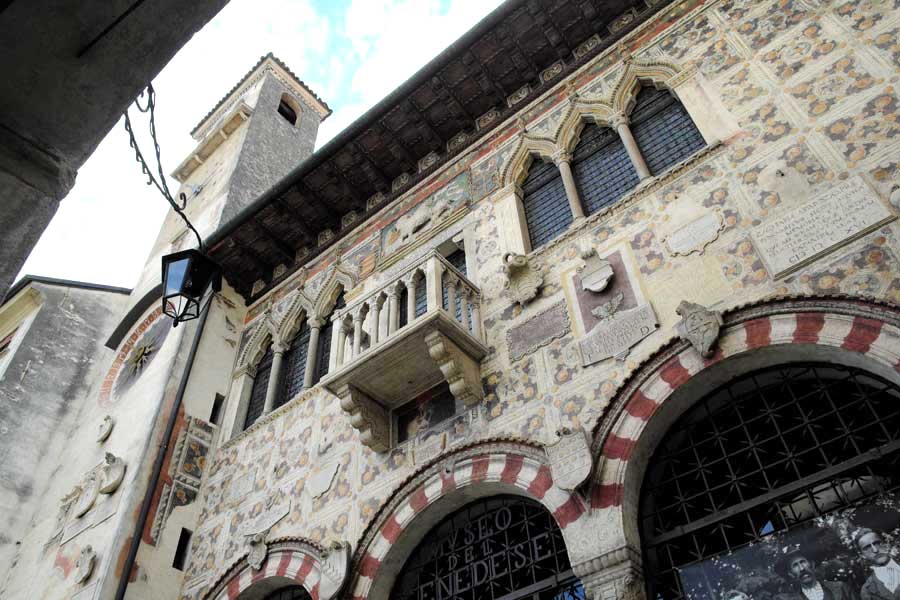
Then we took the time to wander around, marvelling at the 15th and 16th century buildings, frescoes and crests.
It’s amazing so many remain intact as the city was on the frontline during World War 1. It was the site of a major battle in 1918 which turned the tide of the war in the Italians’ favour.
The town has a slightly faded air, one that encourages you to stop and consider man’s inhumanity to man. And hope, as the Prosecco bubbles rise in your glass, for better times in the future.
Conegliano
Officially the end (or beginning if you prefer to go east-west) of the Prosecco Road, Conegliano has a small town feel, although its outskirts have begun to sprawl through the valley.
Art lovers will know it as the birthplace of Renaissance painter Giovanni Battista Cima, and it’s home to a 13th century castle.
This was the turning point of the Prosecco Road for us, and we began to feel the call of a late lunch.
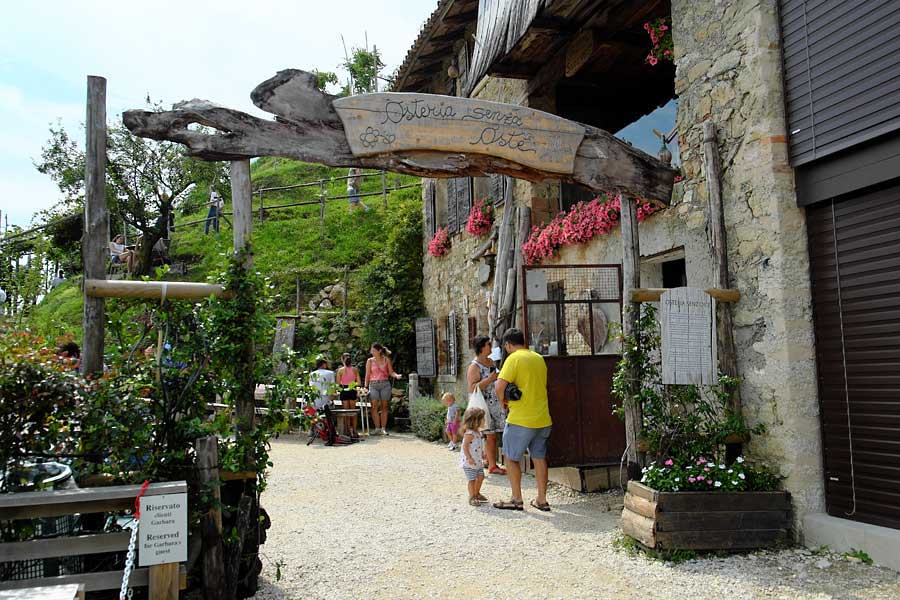
Picnic on the Prosecco Road
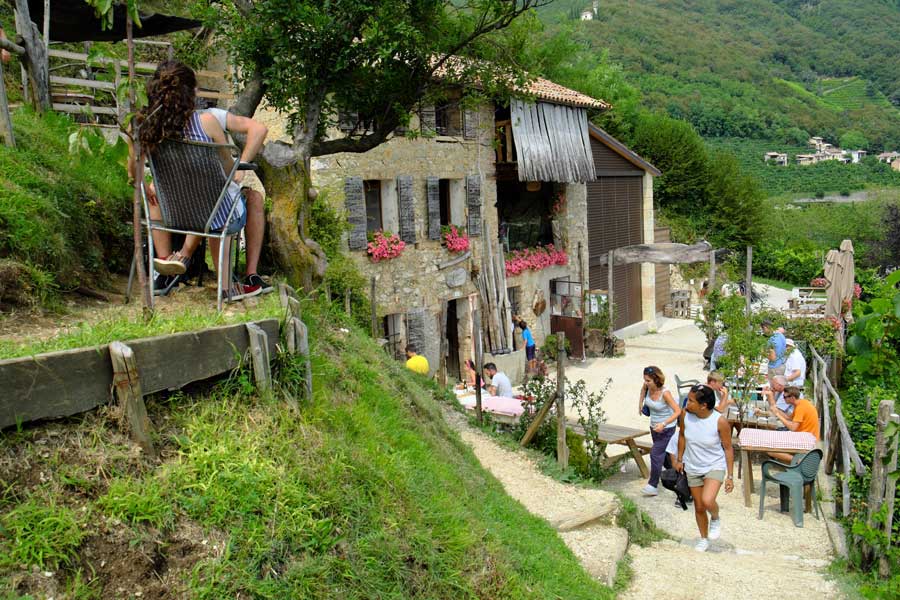
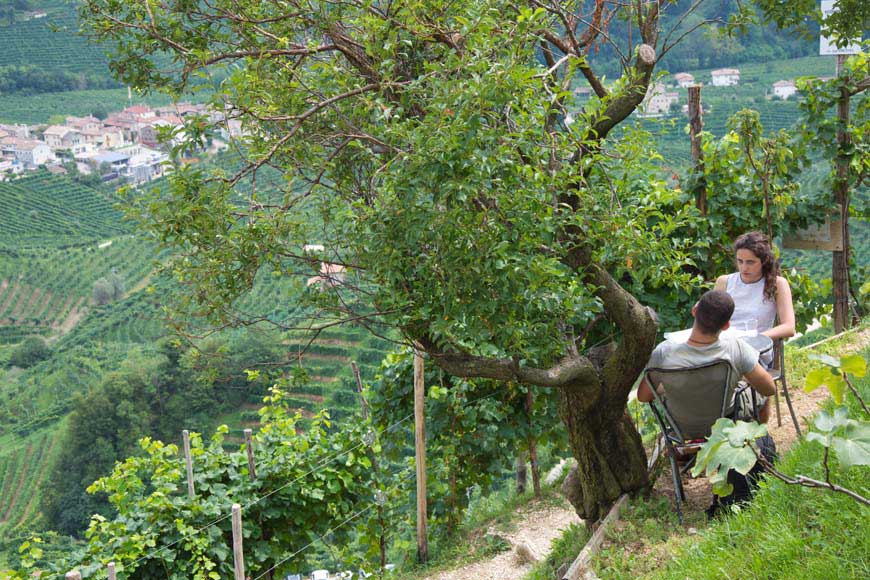
Because the roads are so narrow and winding, there are no easy places to stop. This explains the popularity of Osteria Senz’Oste, where picnic tables are set out among the vines.
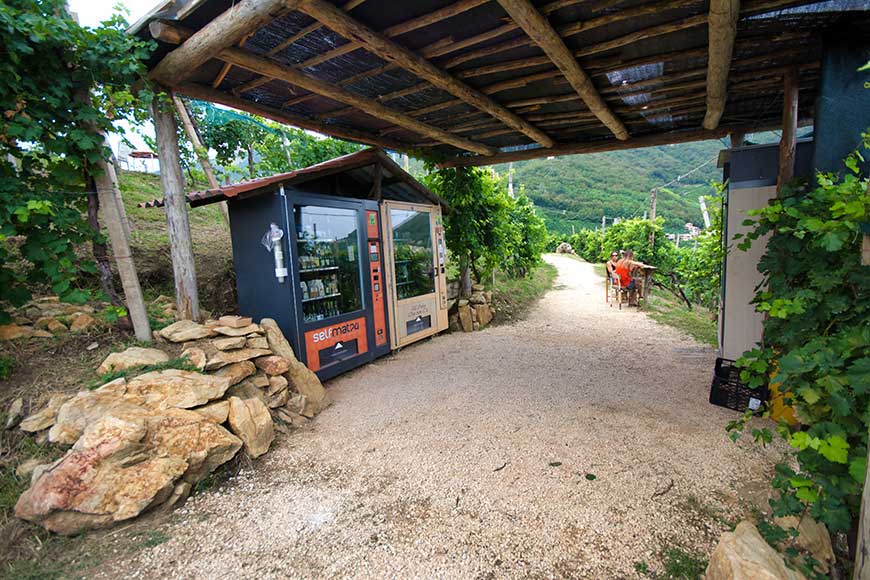
You can pick up a few items from the vending machines or, as we did, come prepared with your own array of local bread, cheeses, cooked meats and fruit.
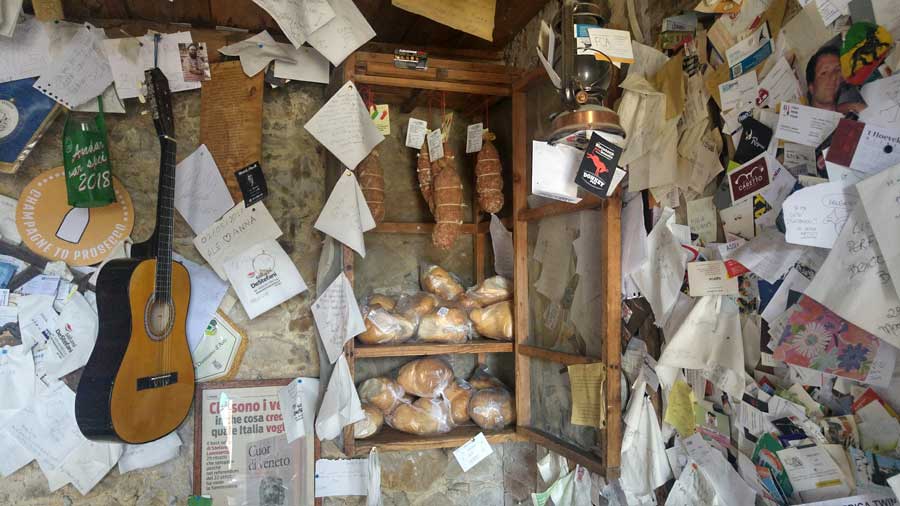
But you must, just for the experience, use the vending machines to deliver a bottle of fresh, chilled sparkling Prosecco.
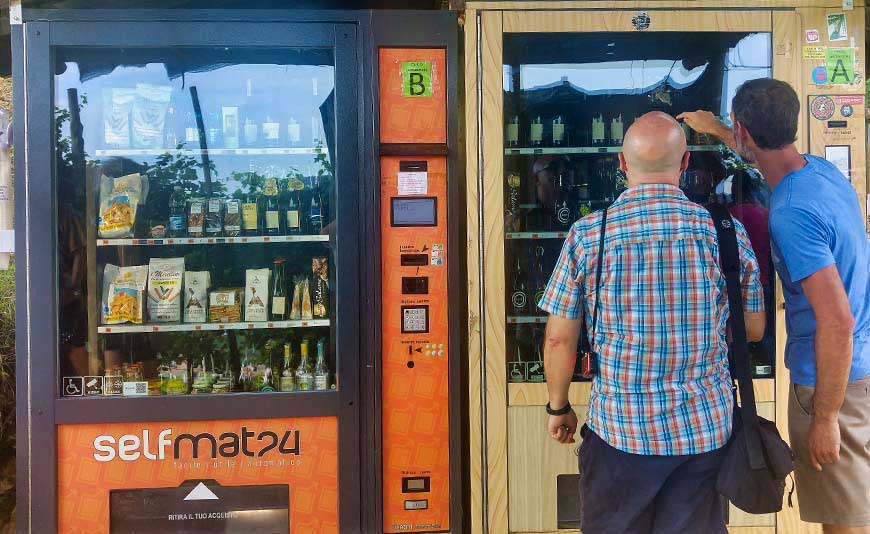
We’d been warned that it got very busy in the summer and parking, down a tiny side road, is tight. But our mid-afternoon stop was rewarded with lovely views and a peaceful spot to while away an hour or two.
Wine tasting on the Prosecco Road
Okay, full disclosure. Apart from our café stop in Vittorio Veneto and the vending machine bottle experience, we didn’t actually taste much Prosecco while on the route.
Well, Pork Belly was designated driver, and it seemed a little unfair to guzzle away on my own!
Most of the ‘cantine’ along the road are family owned and tasting sessions are ad hoc, with the owner coming from the fields to serve you. These days, with visitor numbers rising, many encourage you to book ahead, especially on weekends or during the September – October harvest.
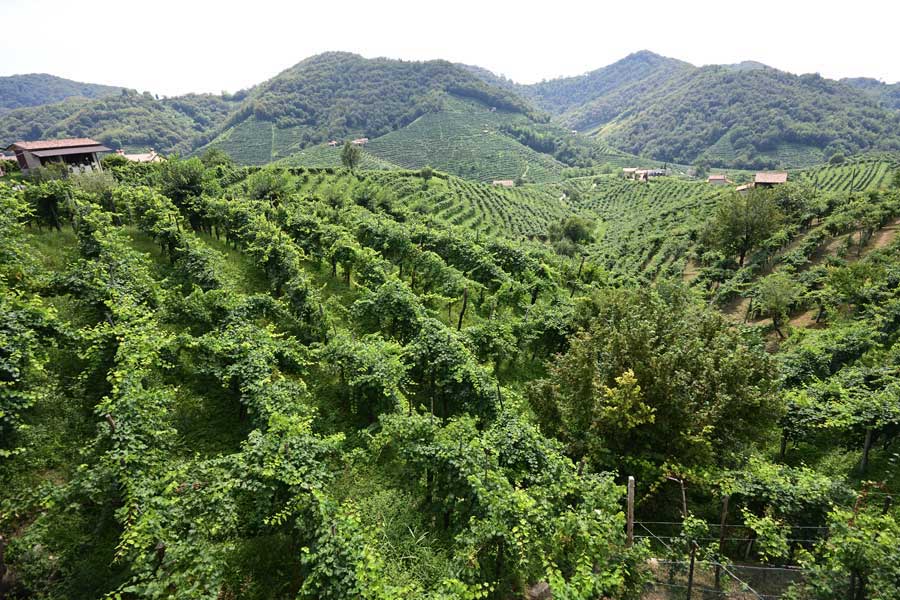
We watched locals arriving at seemingly deserted vineyards. The great wooden doors would magically open and boxloads of wine were loaded up and driven away.
So, as with winetasting in France, you have to either contact the cantine of your choice in advance or just rap on the door, be patient and take pot luck.
Alternatively, you can drop in to the many wine shops and enotecas that sell good, locally produced Prosecco and do the simple “point and buy” transaction. I fall back on that whenever the words elude me!
And at least I know how to pronounce Valdobbiadene.
Places to stay on the Prosecco Road
We stayed in a self-catering villa near Asolo and drove to the Prosecco Hills, but there are plenty of accommodation options nearer to the Prosecco Road.
Valdobbiadene and Conegliano each have dozens of hotels, and there are AirBnB and self-catering villas right across the region.
Agroturismo is popular here, so you can stay on a rural farm and enjoy the traditional Italian country life.
All photographs copyright © John Heinrich
Where to next?
• Queen Bee Vineyard, Massachusetts
• Wine-tasting in France
• History walks