
Floreat Hove – and yes it still flourishes, despite being overshadowed by its big city sister, Brighton.
It’s a long-standing joke that people who live here will, when asked if they come from Brighton, say politely but firmly, ‘Hove, actually.’
All good-humoured enough, but what lies beneath is a warning to authorities who wish to change boundaries and names, not to mess with its history!
So let’s take a stroll around big, brash and blowsy Brighton’s quieter twin and discover the secrets of Hidden Hove.
The grave of Everest – the man, not the mountain
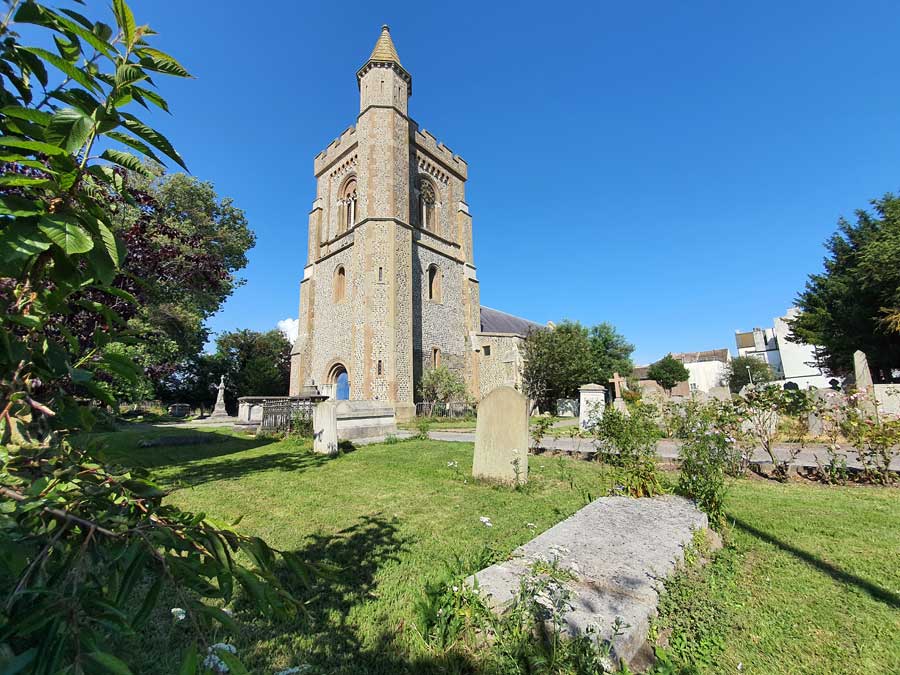
How did a pioneering surveyor, with no known connection to Sussex, wind up being buried in St Andrew’s churchyard in Hove?
Nobody knows!
George Everest, the man who gave his name to a mountain, joined the East India Company and took part in the Great Trigonomic Survey. The scheme began in 1802 and was a vast undertaking, mapping every part of the Indian subcontinent.
George spent 36 years surveying 1,500 miles of land from the southernmost tip to northerly Nepal before he retired home to England in 1843.
In 1865 the Royal Geographic Society re-named the Himalayan mountain known as Peak XV in his honour.
Everest actually objected, as he’d nothing to do with the mountain’s discovery – it’s possible he’d never even seen it!
But the Society went ahead, undeterred.
Everest’s gravestone is worn, but the words can still be read.
In memory of my dearly loved husband George Everest. Died Dec. 1st. 1866, aged 76 years.
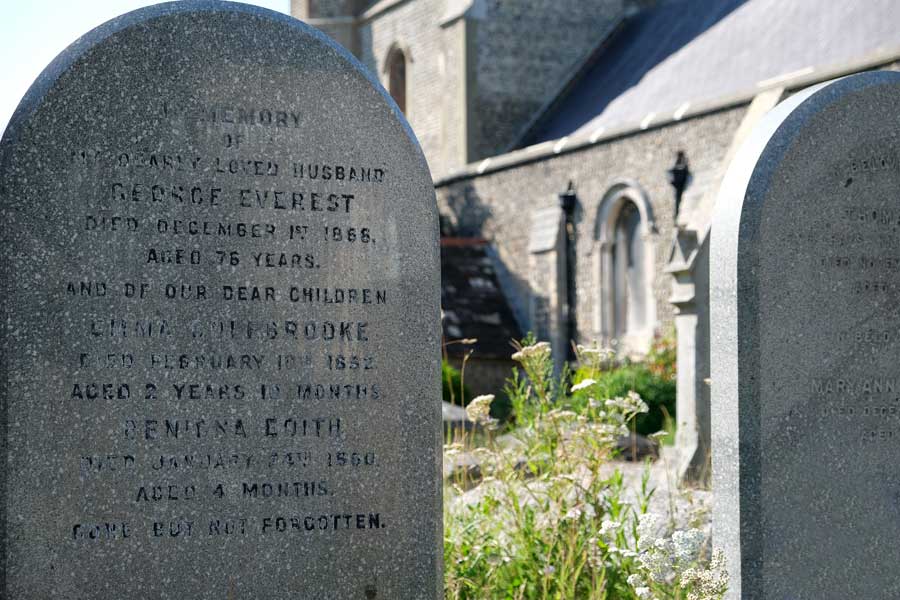
In a final twist of irony, it’s thought George pronounced his surname Eve-rest – so seems we’re getting it all wrong!
St Anne’s Well Gardens
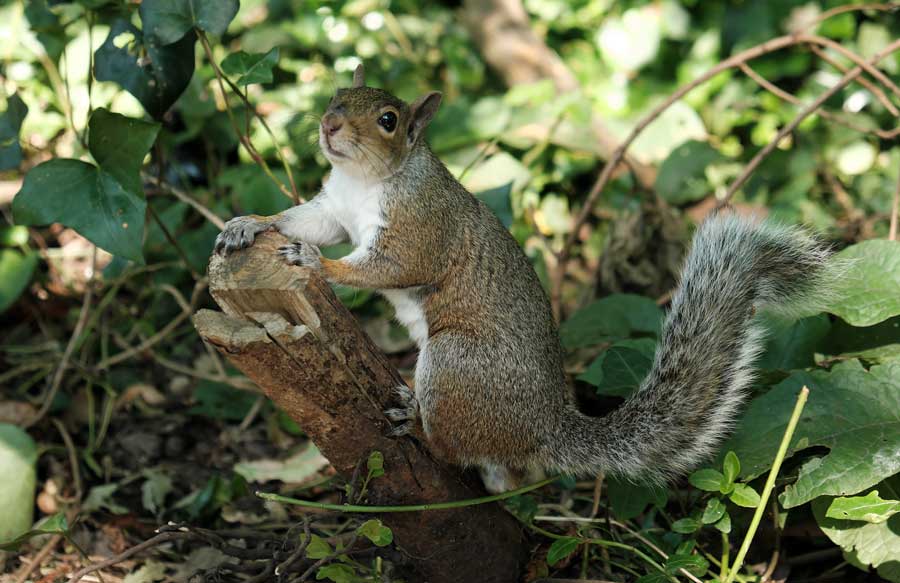
Locals call it Squirrel Park because of its large population of grey squirrels, and you’ll certainly be pestered by pigeons under its leafy trees.
But most visitors don’t notice the historic spring – or chalybeate – which dates back to Saxon times.
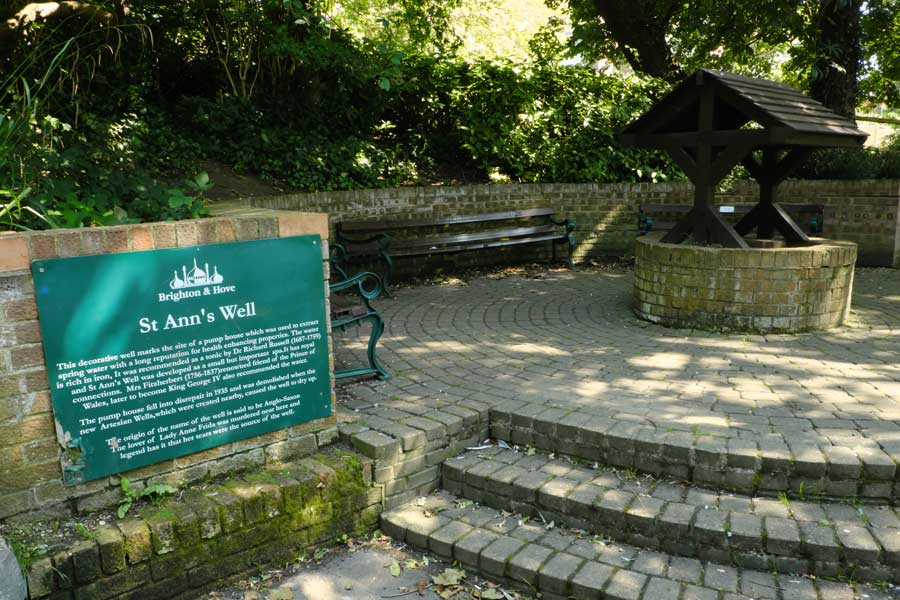
The name ‘St. Ann’ doesn’t refer to any saint, but comes from the story of Annafrieda, a Saxon lady whose lover was murdered. Her tears miraculously became the spring.
The waters used to flow freely and in the 1800s there was a pump room and spa. People would come and drink the iron-rich water for their health.
Today the spring is just a trickle, and in hot summers it runs dry. But it’s said to be the starting point of a ley line that continues over the South Downs and beyond, so perhaps you’ll feel a connection to Mother Earth when you visit.
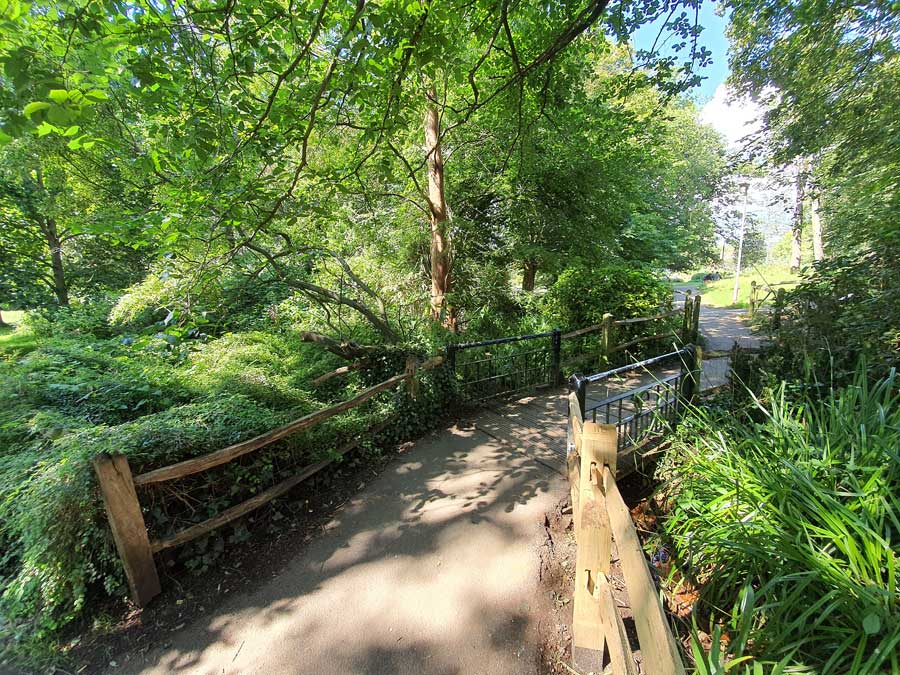
It’s also famous as the location for one of the earliest film studios in the UK.
Hypnotist-turned-movie-pioneer George Albert Smith set up a pleasure garden in the early 1890s, to stage exhibitions and magic lantern shows. He went on to build a glasshouse film studio and shot several silent movies there.
Smith moved to Roman Crescent in Southwick around 1904 to work on a new project, the trailblazing Kinemacolor, and the St Ann’s Well studio fell into disuse, and squirrels play where the stars used to perform.
Hove Park miniature railway
Hove Park is another wide open space much used by locals. But there’s a little piece of Hidden Hove here – the miniature steam railway.
It’s been there for more than 70 years, and the route’s been updated and extended several times.
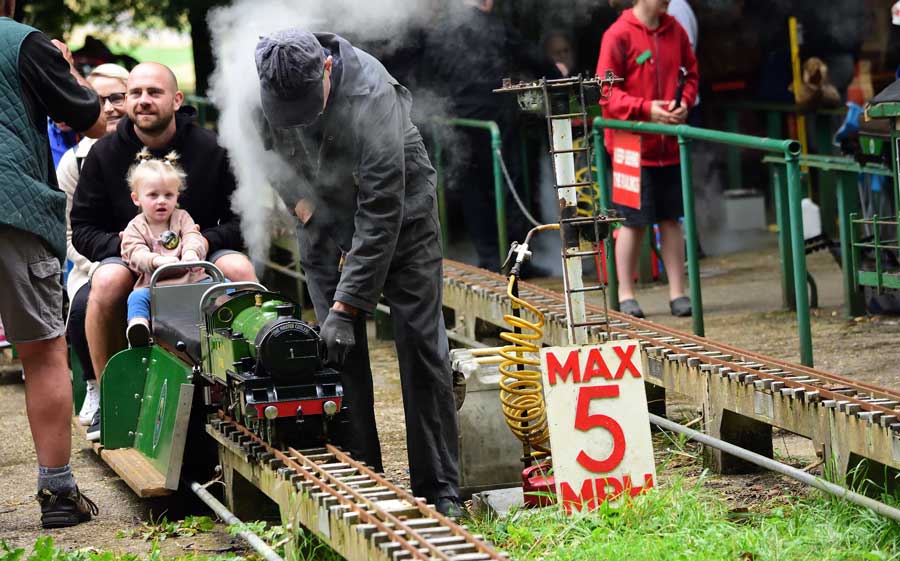
Today it’s run by a group of volunteers who are members of the Brighton & Hove Society of Miniature Locomotive Engineers.
They use their skills and enthusiasm to run a family-friendly ride for just £1 each, and under 3s are free.
Services run on Saturdays between 2 and 5pm, but check for updates on their website, Hove Park Railway
Fingermaze
Also in Hove Park is this piece of public art based on the design of a Cretan labyrinth – minus the Minotaur.
A giant fingerprint is carved into the grass and lined with stone and lime mortar.
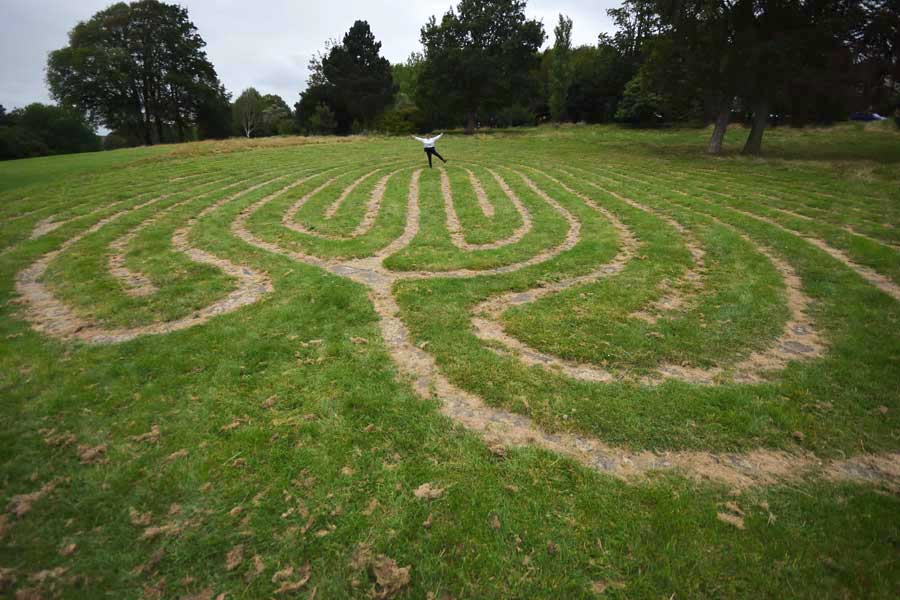
Artist Chris Drury was commissioned to create the semi-permanent work, which encourages you to follow its winding paths and be drawn into its heart.
Goldstone Boulder
And there’s another mysterious and mythical object at the southern end of the park, The Goldstone Boulder.
Legend says when the Devil was busy digging Devil’s Dyke on the nearby South Downs to flood the local churches, he stubbed his toe on the rock and kicked it over the hills.
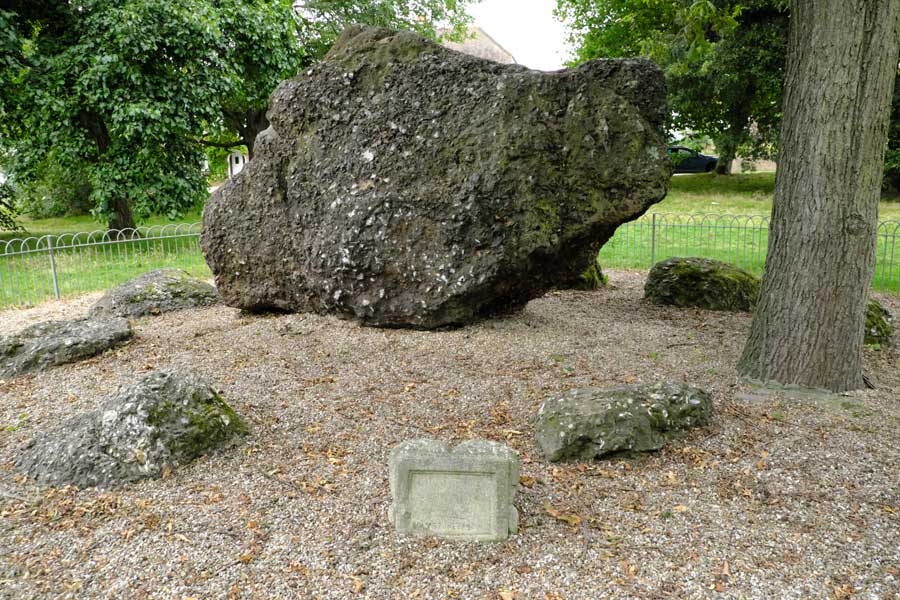
The rock landed in what is now known as Goldstone Valley, half-buried in a farmer’s field. It was dug up and relocated to Hove Park in 1906.
And why is it called the Goldstone? Because at certain angles, if the light is just right, you can see tiny flecks of gold in it.
Not real gold, though.
Sorry.
The Dubarry Perfumery
If you arrive by train, chances are you’ve already noticed this one.
Mosaics advertising ‘Shalimar Complexion Cream for Loveliness that Lasts’ have been restored and can clearly be seen by passengers as trains slide into the station.
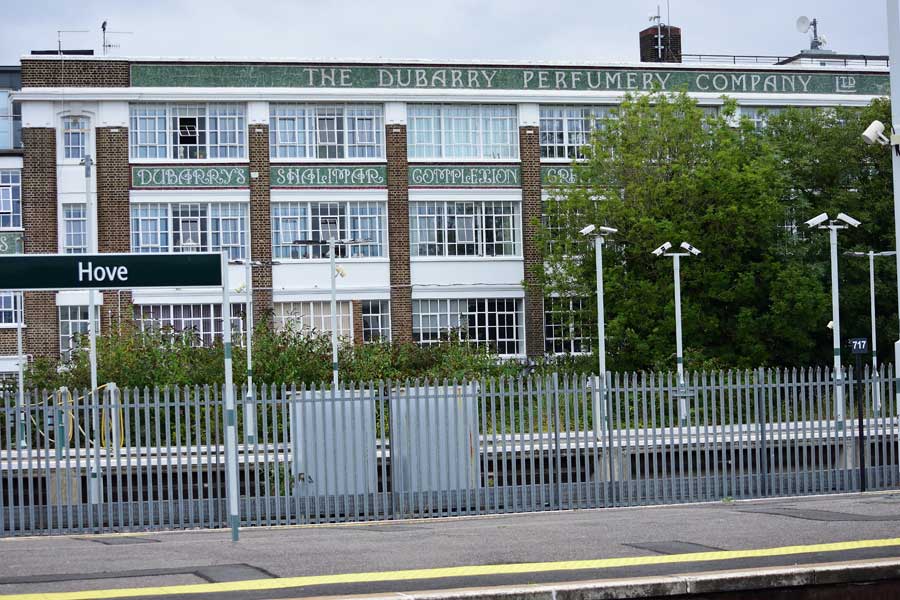
The exotic naming of the products was an advertising ploy, of course. The soaps, lotions and potions were the work of the very English Mr Kilby Pears and soon became the beauty products of choice for the women of the British Raj.
Dubarry’s was known for its elegant packaging, and today their Art Deco-style bottles are highly collectable objects.
Flight of the Langoustine
This is the second piece of public art to adorn the Hove Plinth on the seafront, and it’s quite weird.
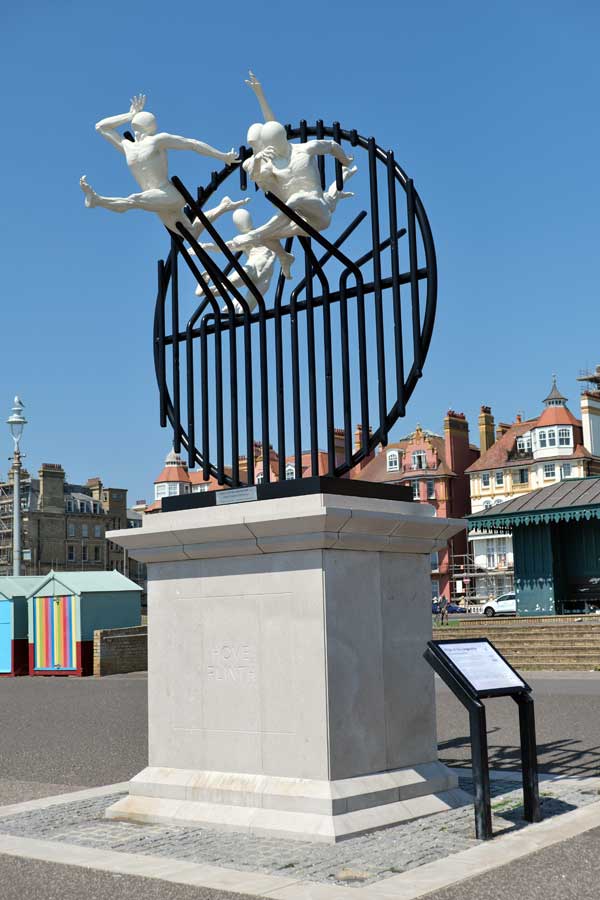
Amongst the prettily painted beach huts, painful pebbles and the occasional lunch-stealing seagull, is this sculpture inspired by a discarded lobster pot found on the beach by artist Pierre Diamantopoulo.
Imagining a mass escape of lobsters, Diamantopoulo turned the idea into human figures dancing their way to freedom.
Hove Plinth was set up in 2018 and is designed to display new works on a temporary basis, until they find a permanent home elsewhere.
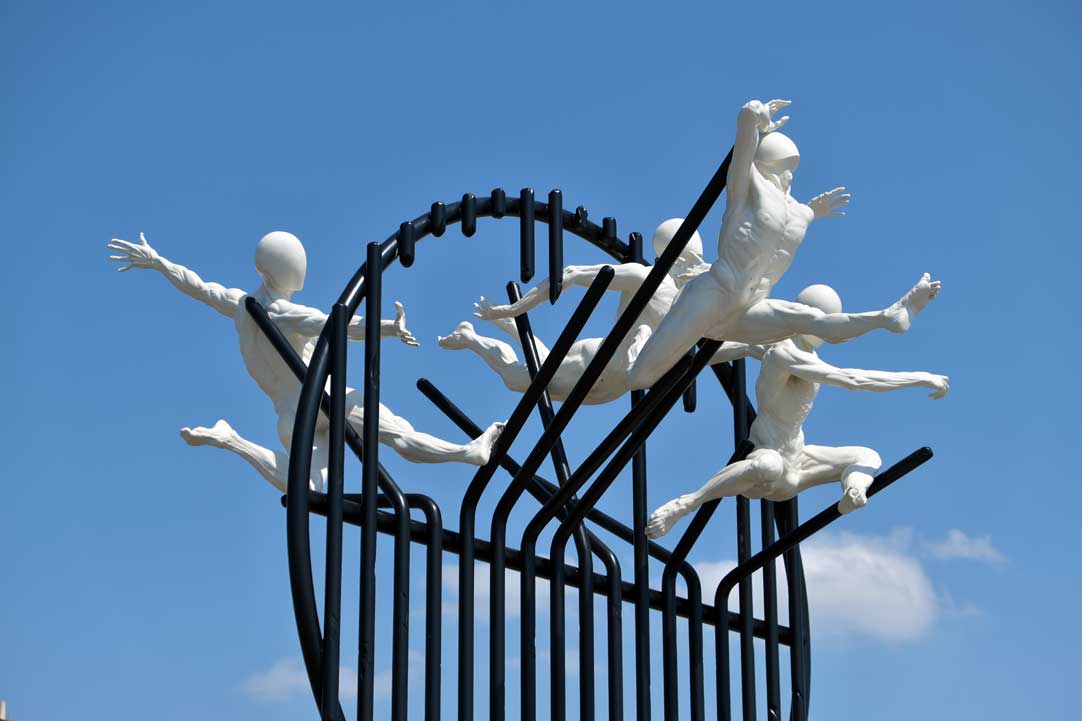
Flight of the Langoustine was unveiled in September 2023, and another wind-and-wave inspired artwork is planned for the plinth in the coming years.
The Jaipur gate
Not so much hidden as ignored.
The Jaipur Gate sits in the grounds of the delightful Hove Museum of Creativity, which is in itself well worth a visit for lovers of local history, silent films, antique toys and children’s games.
The Jaipur Gate was commissioned for an exhibition in London in 1886, celebrating Queen Victoria’s Empire and the colonisation of India. The Maharaja of Jaipur paid for its construction, and it was assembled by Indian craftsmen, although the design was by two Englishmen.
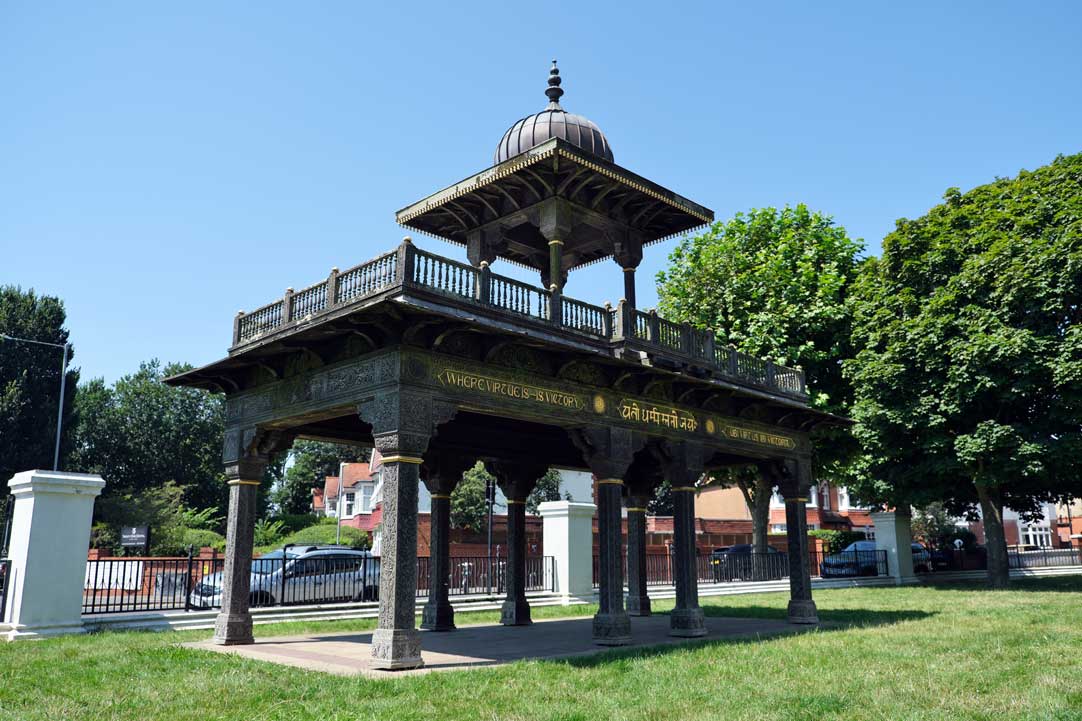
The inscription in English, Sanskrit and Latin, is the motto of the Maharajas of Jaipur, ‘Where virtue is, there is victory’.
The gate was given to Hove Museum in 1926 and now stands just beside the entrance.
The Orrery
And opposite the Jaipur Gate, in front of the now renamed Hove Museum of Creativity, you’ll discover an extraordinary sculpture – a modern day orrery.
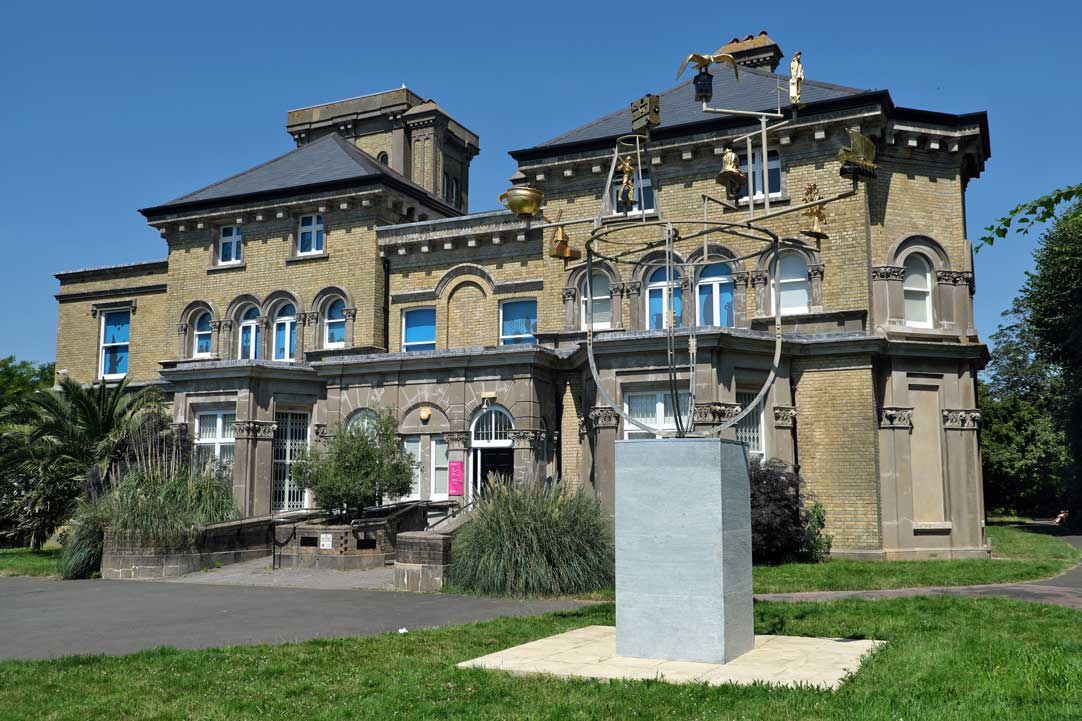
An orrery is traditionally a mechanical model of the Solar System that shows the predicted paths of planets and moons.
But Constellation by Jonathan Wright features iconic elements of Hove past and present, including a cine camera, elm tree, beach hut, a cricketer, a skateboarder and West Blatchington windmill.
The gilded icons were created with 3D scanning and printing technology.
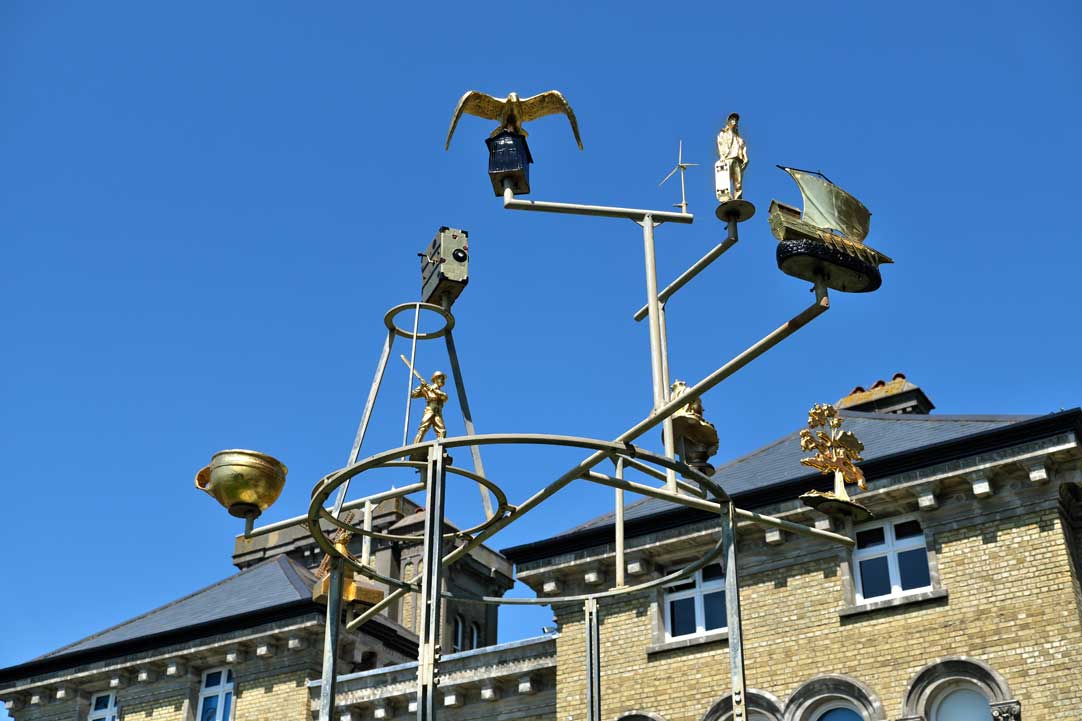
The sculpture used to stand on the Hove Plinth, where the langoustines now fly, but this is its new, permanent home.
Booth Museum, in Hidden Hove
Another fascinating museum, often overlooked by visitors. The Booth Museum is dedicated to the world of natural history and grew out of a Victorian collector’s private passion.
Edward Thomas Booth was fascinated by birds, bees, butterflies, fossils and bones. He presented his bird collection in dioramas, trying to recreate how they would have looked in their natural habitat.
It seems a little odd now, but his method became all the rage and his museum was the first in Britain to present its collection this way.
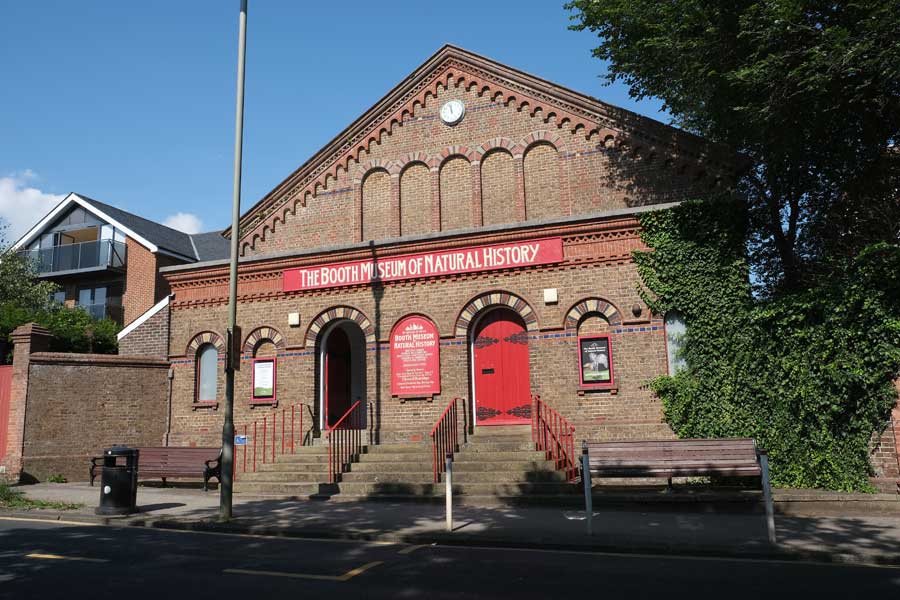
Several of the exhibits were used as reference points for the CGI animations for some of the daemons in the TV adaptation of His Dark Materials, including Hester the arctic hare, the animal spirit of the character played by Lin-Manuel Miranda.
When Booth donated the museum to the city in 1830 he stipulated that his 300 dioramas should be kept unaltered.
And so they stay, exactly the same as when Booth first created them.
West Blatchington windmill
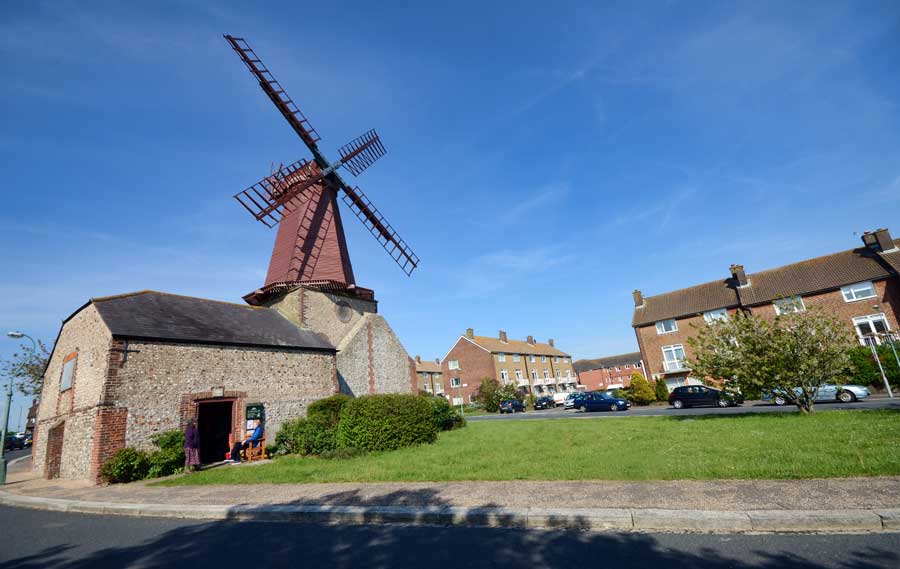
A windmill in the middle of a housing estate seems a little odd.
But of course when it was first built in the 1820s, the mill was part of a thriving farm, which needed somewhere to grind its own grain.
It remained working until the 1890s, when it fell into disrepair. A rescue mission was launched by volunteers in the late 1970s, and it’s held regular open days since then.
Although it no longer grinds wheat to make flour, it still has all its working parts, and you can climb almost to the very top to stand on the dust floor, peering upwards to see the cap and the huge wheels and gears that sit at the heart of every mill.
For windmill enthusiasts, it is a quirky affair – a wooden ‘smock’ mill perched on top of an old flint and brick barn. It’s also a rusty brown colour instead of the more traditional white board.
On the ground floor there’s a small museum packed with examples of agricultural machinery and country life.
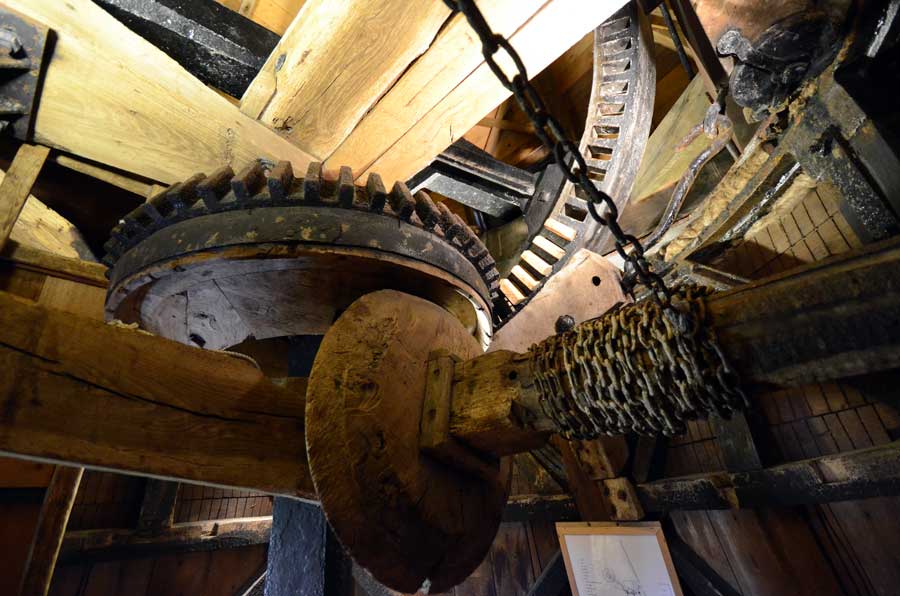
Climb up to the higher galleries, and you can inspect the old milling and bagging areas and be rewarded with views of the nearby South Downs. For details of opening times, see their website
Hidden Hove has many treasures.
Do you know of any we may have missed?
If your town, village or city has hidden treasures that are often overlooked, do let us know so we can visit.
All photographs copyright © John Heinrich/rosemaryandporkbelly
Where to next?
• Old North Bridge to Concord
• Following in the footsteps of Grace
• Shifting sands – exploring Reigate caves