
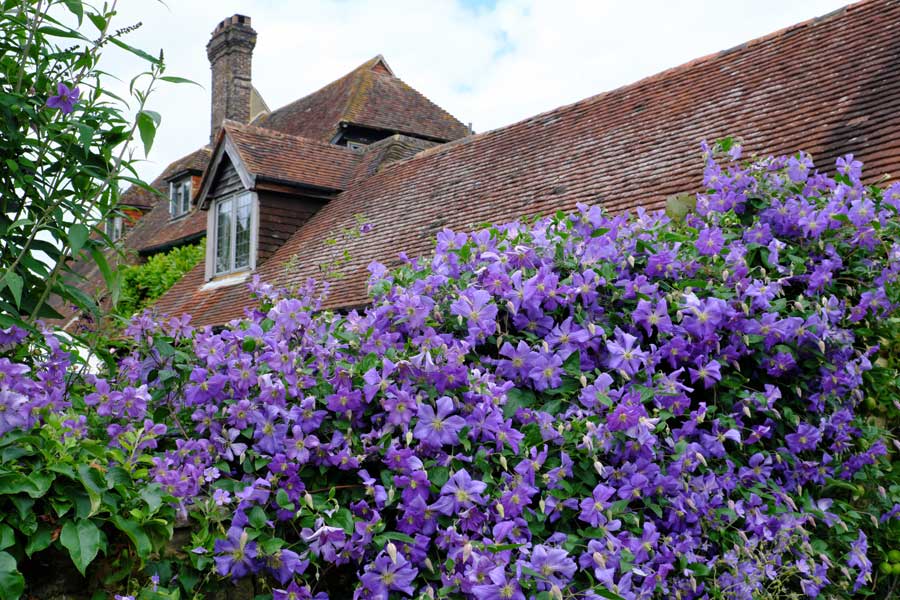
It’s the National Garden Scheme summer season, which gives you the chance to nose around other people’s gardens while giving money to charity.
On any spare day during the summer we can be found poring over their garden-finder website widget, looking at pictures of rolling lawns, colourful borders and intriguing nooks until we find one open nearby.
And if it has coffee and cake too, well that’s just an extra incentive!

One such place is Town Place Garden near Haywards Heath in West Sussex – no cake, but a 3 and a half acre garden surrounding a beautiful 17th century Sussex farmhouse.
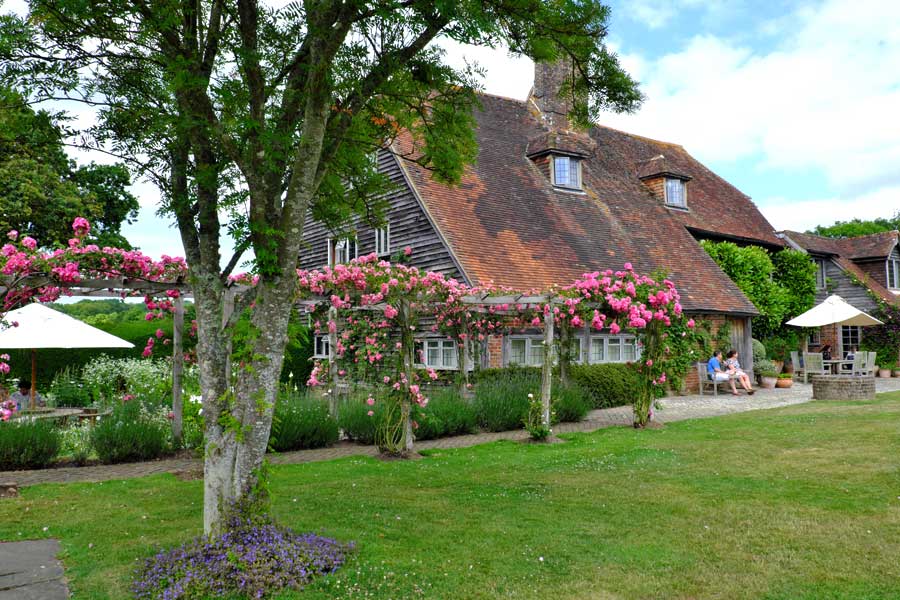
Plus it has a priory church and cloister created in hornbeam hedges.
Absolutely fascinating.
Grow your own ruin
When history suggests your garden was once the site of a monastery, what do you do?
Well, you grow your own, obviously.
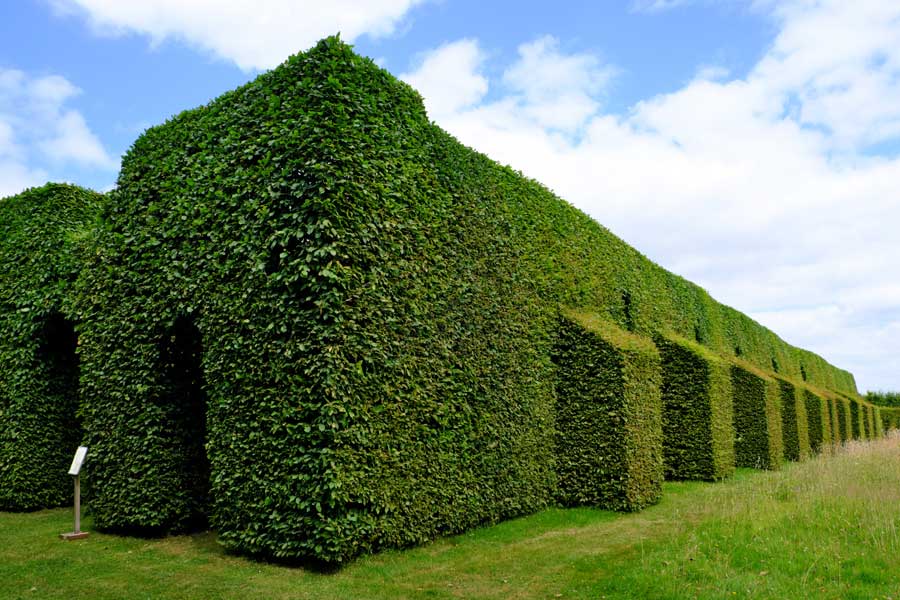
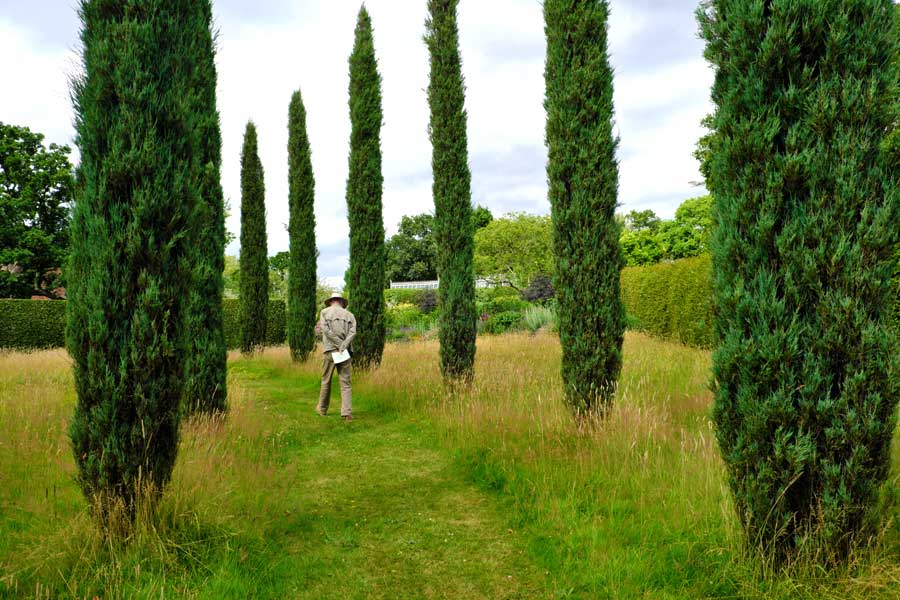
In 2001 the owners of Town Place incorporated the site of what may have once been Toune Priory into their garden, planting a hornbeam allée in the shape of a ruined church in the Romanesque style, complete with doorways and windows.
A cloister was added in 2004, and now you can walk through the trees, imagining the church as it could have been when the monks walked and worshipped there.
Whilst Town Place is a farmhouse from the early 17th century, there’s evidence of a settlement being there for hundreds of years. The earliest written reference is in a Court Roll from 1531, but there are notes of an earlier farm or village called Toune dating back to 1288.
It’s possible that Toune had a church and monastery run by a Benedictine order of monks, and that’s what’s inspired this delightful arboreal folly.
I love it!
A blaze of summer colour
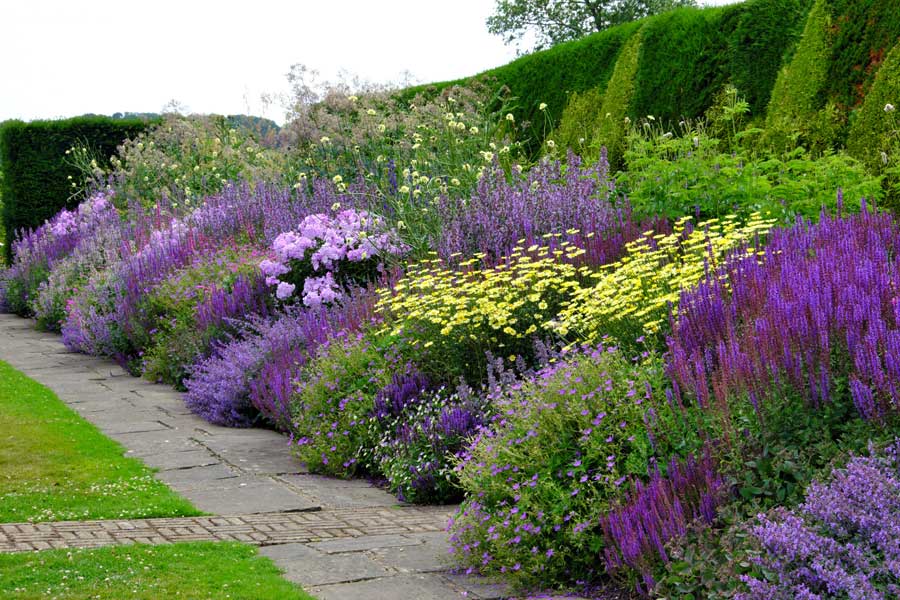
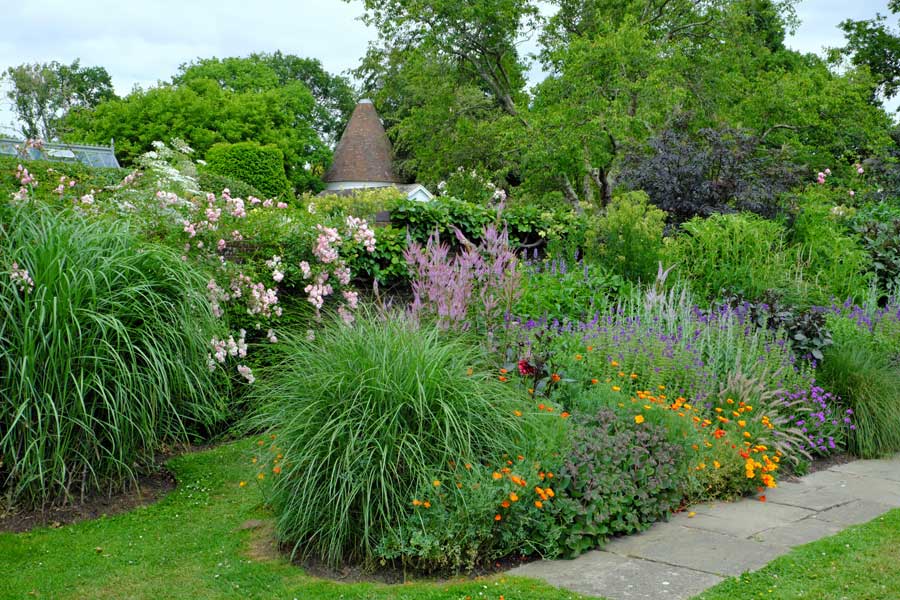
Despite a cold and pretty grotty spring, the recent warm spell has given everything a boost and the borders at Town Place are stunning.
The Long Border is shades of purple and blue and runs for around 45 metres.
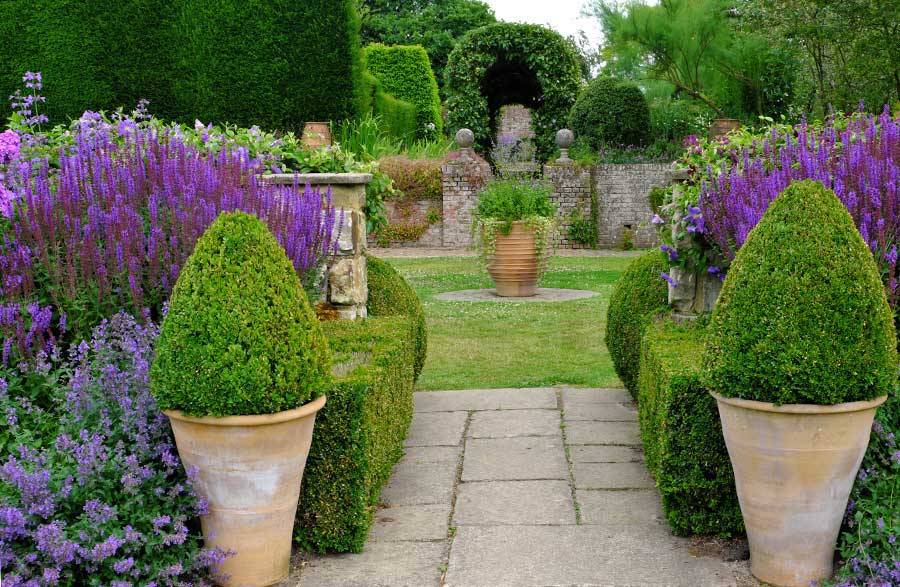
The Short Borders on the East Lawn have a delightful blue-yellow colour scheme.
The Shrub Rose Garden is packed with more than 400 modern varieties and a few heritage species.
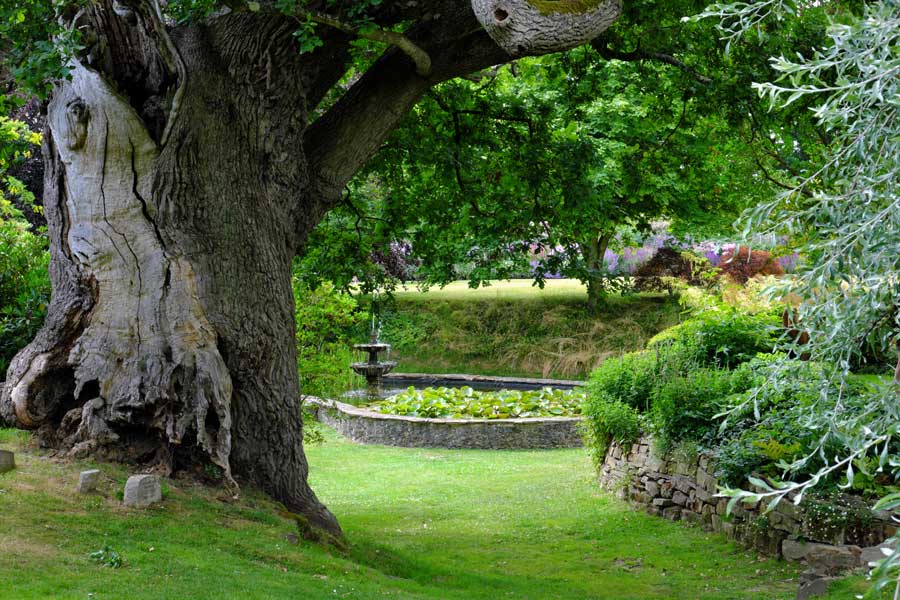
Goldfish and koi carp swim placidly through the water feature, and you can even play a leisurely game of chess in Chequers, an area dotted with shrubs and sculptures.

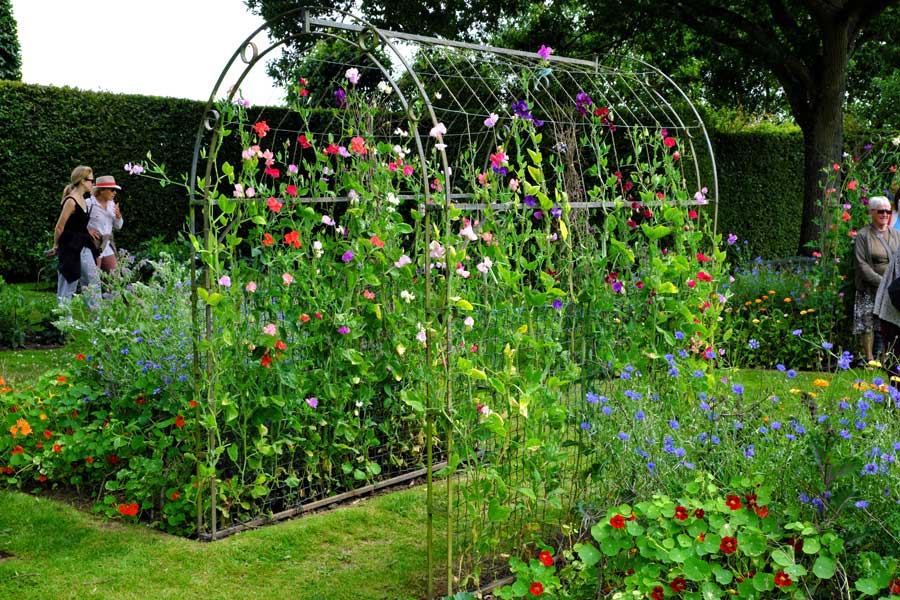
There’s a well stocked potager with traditional vegetables interspersed with trellises of luminous sweet peas.
My favourite part – I do love a colourful cabbage or two!
Why we use the National Garden Scheme
Two words – variety and charity.
Oh, and the chance to snoop. So that’s 3 words I suppose!
The gardens that open each year cover almost every imaginable type of landscape – from tiny, urban patios to broad, sweeping grasslands. And almost all of them are the work of private individuals, who put their own stamp on their surroundings.
Yes they are show-pieces, but they’re also mostly someone’s home, tended with care over the hard winter months and shared with those of us who lack the space, skills, patience and resources to do it ourselves.
The entry price varies from garden to garden, but the profits go to the National Garden Scheme who distribute them to a range of charities for health, carers, gardeners and veterans.
You can see a full list of their beneficiaries here.
Where refreshments are available, they also fund this charitable work, and you can often buy plants direct from the gardens, if you feel inspired.
Visiting a National Garden Scheme open garden this summer
Fancy a bit of garden snooping? The best way is to use their garden finder page on their website.
You can search by name, location or opening times.
You can book online in advance, although most gardens let you pay at the gate if you’re doing a spur-of-the-moment thing.
And if you’re near Sussex, Town Place Garden is open on a few days throughout the summer. See their website for details.
Where to next?
• Sleeping Beauty: The lost gardens of Heligan
• Best English gardens to visit
• Secret gardens of London