
Hidden gem is a phrase so well-used in travel reviews that it’s become a bit of a cliché. But the Masonic Hall in Bath is just that – a hidden gem.
Intriguing, absorbing and just a little bit strange.

We’ve been to Bath before but failed to see any publicity for the Masonic Hall.
But scooping up a few brochures from our hotel lobby we found, amongst the Spa Baths, Jane Austen experiences, and Regency Tea Rooms, an invitation to tour a unique building in the backstreets with a holy trinity of different lives.
First a theatre, then a Roman Catholic Church and finally a Masons’ meeting place.
It’s an unassuming address in Orchard Street. You could walk past and not realise it was there. Yet, after more than two hundred years, traces of all three of its incarnations still exist.
If buildings could talk, perhaps putting your ear to the wall would bring back the sounds of yesteryear – cheering crowds, chanted prayers and fiery sermons.
Failing that, take the guided tour which combines history, mystery and food for thought.
Touring the Masonic Hall in Bath
We arrived, cold and damp on a wet winter’s day, to be warmly welcomed by the Worshipful Master himself.
The tours are run by volunteers, all very knowledgable, and there’s no saying who will be your guide when you visit. But having a Lodge Master on hand added a depth of information that is rare.
And, against expectation, he was open to all sorts of questions.
Which was just as well, because I had a lot to ask!
The tour is supposed to run for around an hour. Ours lasted more than two.
There were just three of us in our group, and fortunately, the other traveller seemed just as curious, as our guide demonstrated his pride in the Masons’ role as custodians of the past.
It was fascinating.
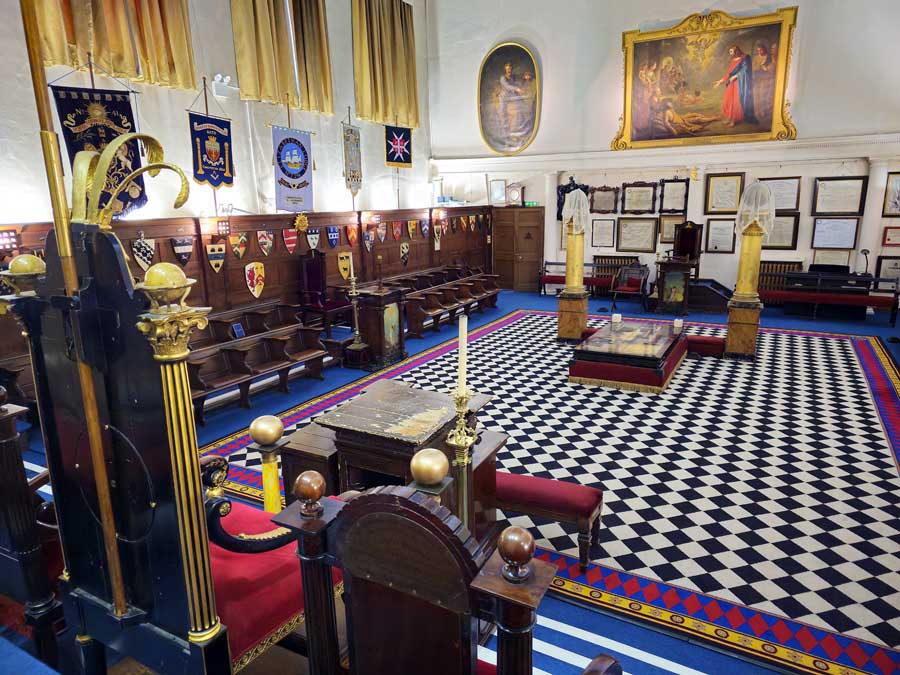
From the decorated ceiling and chequered floor of the main hall, we followed the Master through narrow, backstage passages to secret rooms and down steep wooden stairs to the vaults, each step taking us deeper into history.

Bath’s first Theatre Royal
We have Queen Anne to thank for this, the first royally approved theatre outside London.
She was a shy, sickly and inexperienced monarch who wanted to be like Elizabeth I, but instead relied on her female companions for counsel.
Her majesty visited Bath twice to drink the waters, which she hoped would cure her gout.
Sadly it did not, and although she loved promenading through the Pump Room, she was appalled by the low standard of entertainment offered to her entourage.
Or maybe it was her warring, jealous counsellors who hated the place!
Either way, in 1703, she shook the dust of Bath off her heels, grumpily vowing never to return unless they could be better amused.
True to her word, she died in 1714 without ever going back, but the worthy burghers of Bath realised that without royal patronage they’d be sunk.
So they set about raising money for a permanent theatre.
Fast-forward to 1750 and the St James Theatre, as it was initially called, opened its doors in Orchard Street with a performance of Shakespeare’s Henry IV Part 1.
A fancy affair for its time, with towering columns, a stage made of the local Bath stone, large pit for the audience, a rowdy ‘crush’ bar and an amazing contraption backstage for quick changes of scenery.
Over the years the theatre was improved and extended and, in 1757 was awarded a Royal Patent by George II, creating the first provincial Theatre Royal in England.
Only the third, after Covent Garden and Drury Lane.
Its star rose.
Great actors like Sarah Siddons and John Kemble trod its stone stage, attracting hundreds of theatre-goers.
But just as quickly, its popularity waned.
Advances in theatre tricks like trapdoors were bringing special effects to productions, and the stone stage of Bath’s Theatre Royal just couldn’t compete.
A new Theatre Royal was built in Beauford Square, and the Orchard Street site closed in 1805.
Today there’s still a theatrical feel to the space, perfect for shows of another kind.
Catholic Chapel
In 1809 the Benedictine Mission to Bath bought the old building and converted it to a chapel.
The Benedictines had been around since the Abbey was dissolved in 1539. Many fled the country then, but a few remained, running a small lodging house for Catholics who refused to accept the new, Protestant way of life.
Their fortunes ebbed and flowed, depending on the mood of the local people, until they were finally allowed to worship openly.
Once they were free to come out of the shadows, the old theatre made a great chapel.
The stone stage was solid and imposing enough for the altar.
From here Bishop Baines preached his fiery sermons, drawing big crowds, just as the plays did years before.
The boxes and side galleries were removed and used to make pews across the whole width of the floor, which was put in over the old audience pit.
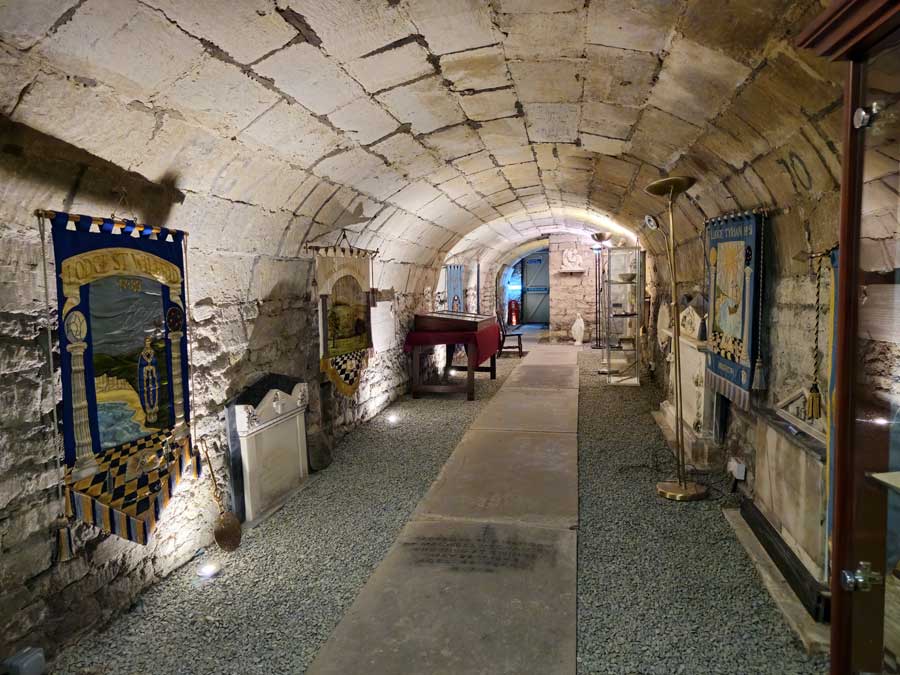
That created barrel vaults below, which were used for Catholic burials, as they weren’t allowed plots in public cemeteries.
Taking the stairs, we descended into the vaults and for me, the most moving part of the visit.
Although many of the bodies have been removed, a few remain at the request of their families and the Masonic Lodges ensure they are maintained, and open to anyone wishing to pay their respects.
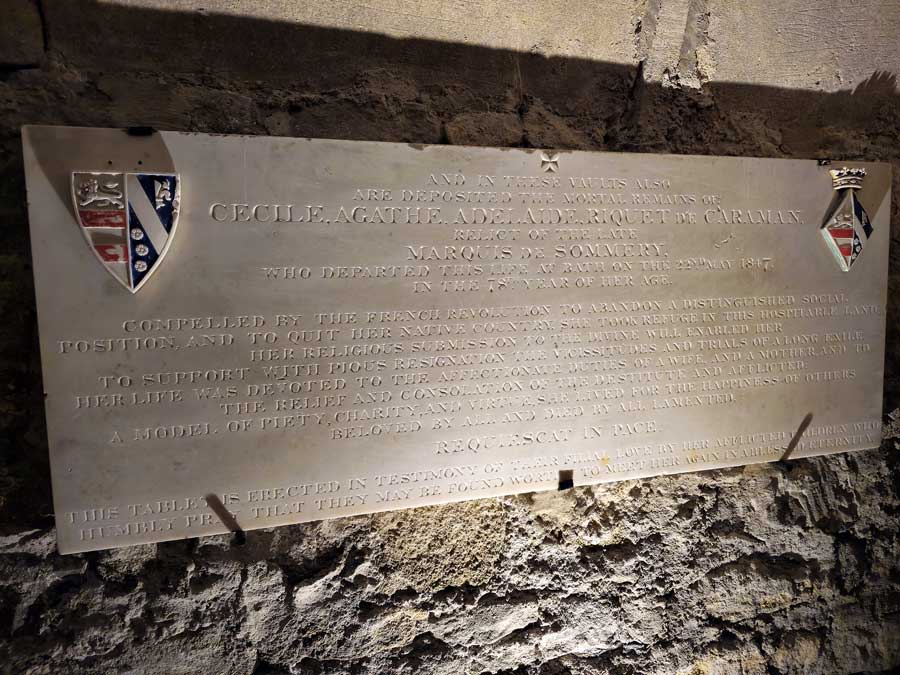
Some, like the graves of French émigré families who fled the revolution to make a new life in England, are visited regularly.
These vaults also contain the most glittering part of the tour – The Edward Gayner Museum.
As our guide said, ‘We Masons do love our bling!’
Masonic Museum in Bath
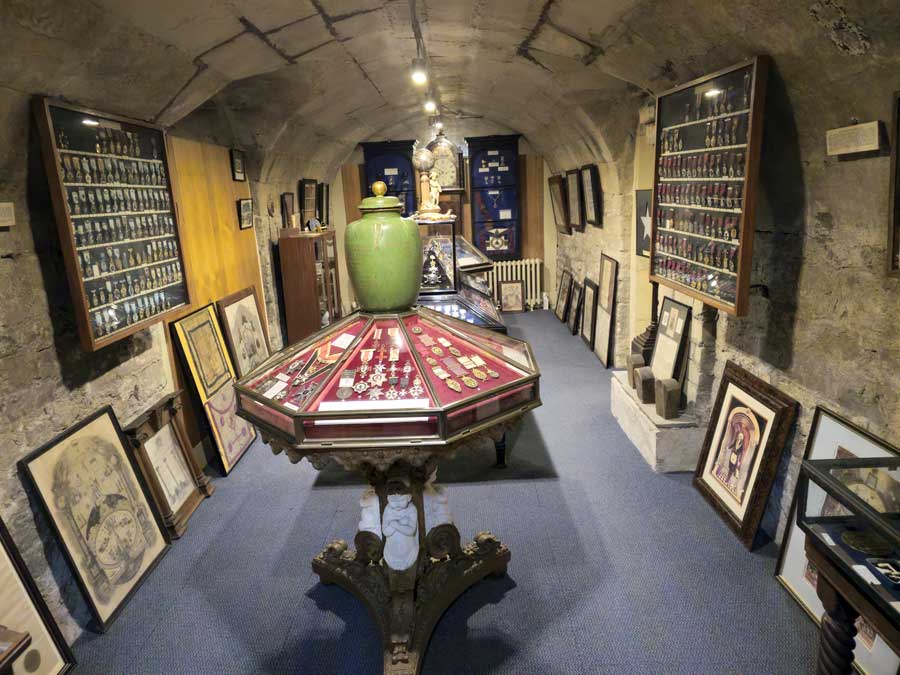
And bling there is a plenty – from tiny pins called ‘breast jewels’ to golden trowels and huge, illuminated bibles.
Valuable?
Undoubtedly.
Priceless?
Probably.
Beautiful?
Well, that rather depends on your viewpoint.
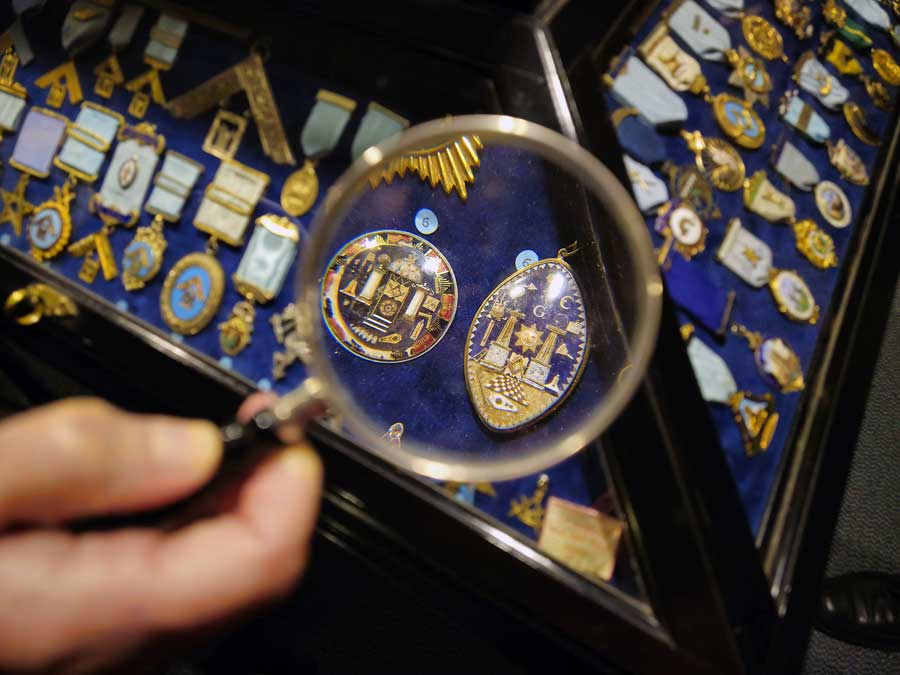
But a truly amazing collection, all the same. Despite many treasures being lost during wartime bombings, there are hundreds of curious and arcane items on show.
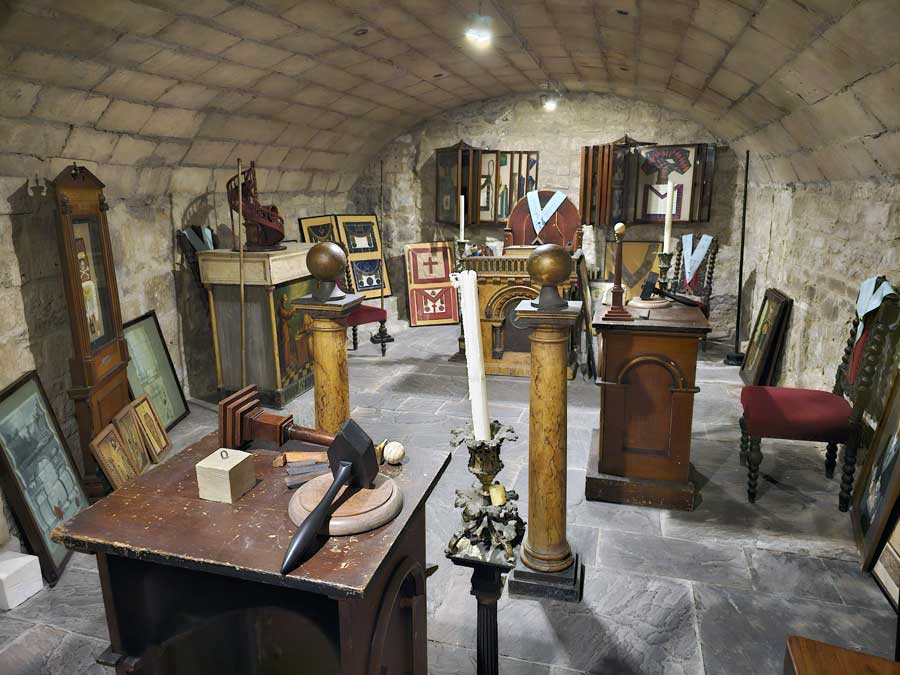
Templar crosses, engraved insignia, robes, intricately embroidered aprons, stars, suns, moons and of course the iconic square-and-compass design on almost everything.
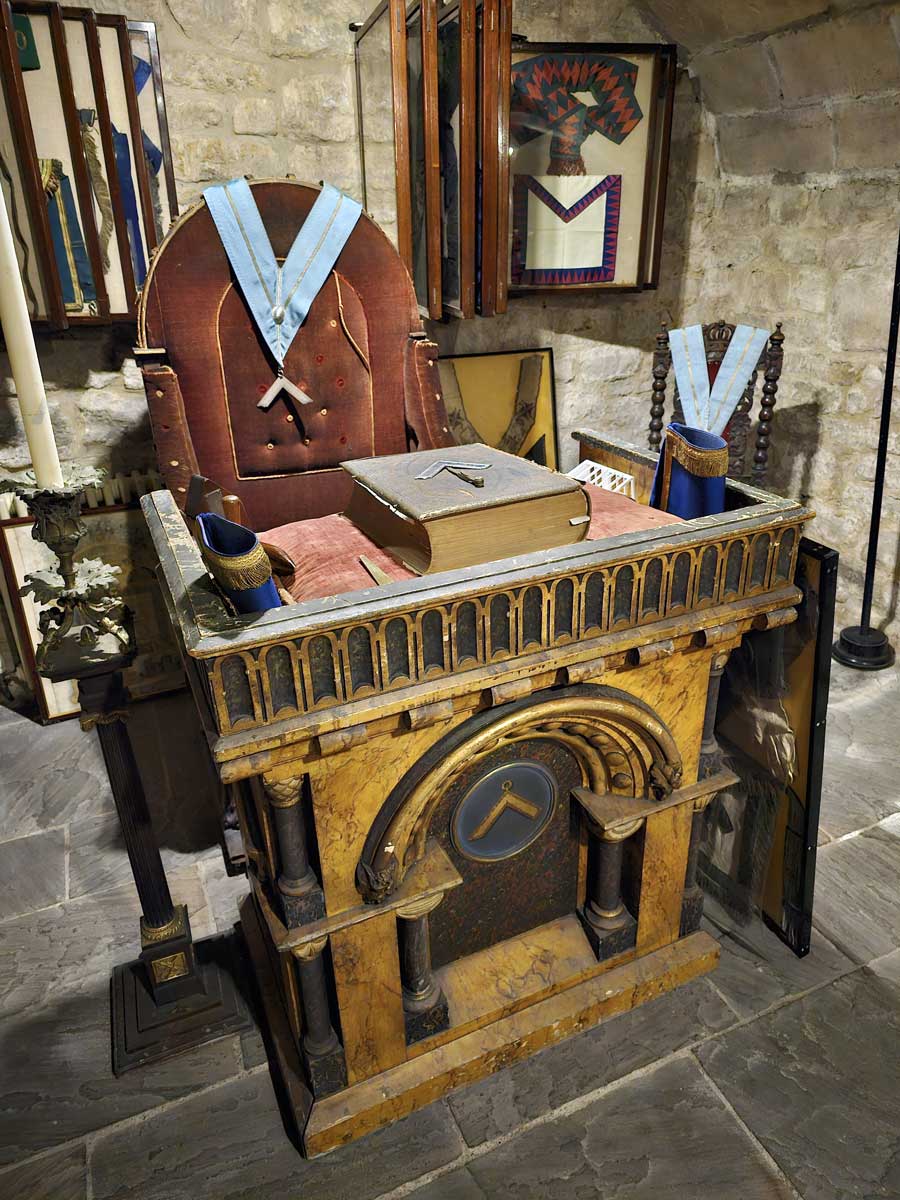
Bath’s Masonic Hall
Yet another first.
Bath was home to the first Masonic Lodge outside London, with the formation in 1724 of the Queens Head Lodge.
Though it didn’t last long, other lodges quickly sprung up, and in 1865 three of them combined to find a joint home.
Converting a Catholic chapel to a Masonic meeting hall took time and money, but the place is the perfect setting for the drama and mystery of Masonic lore.
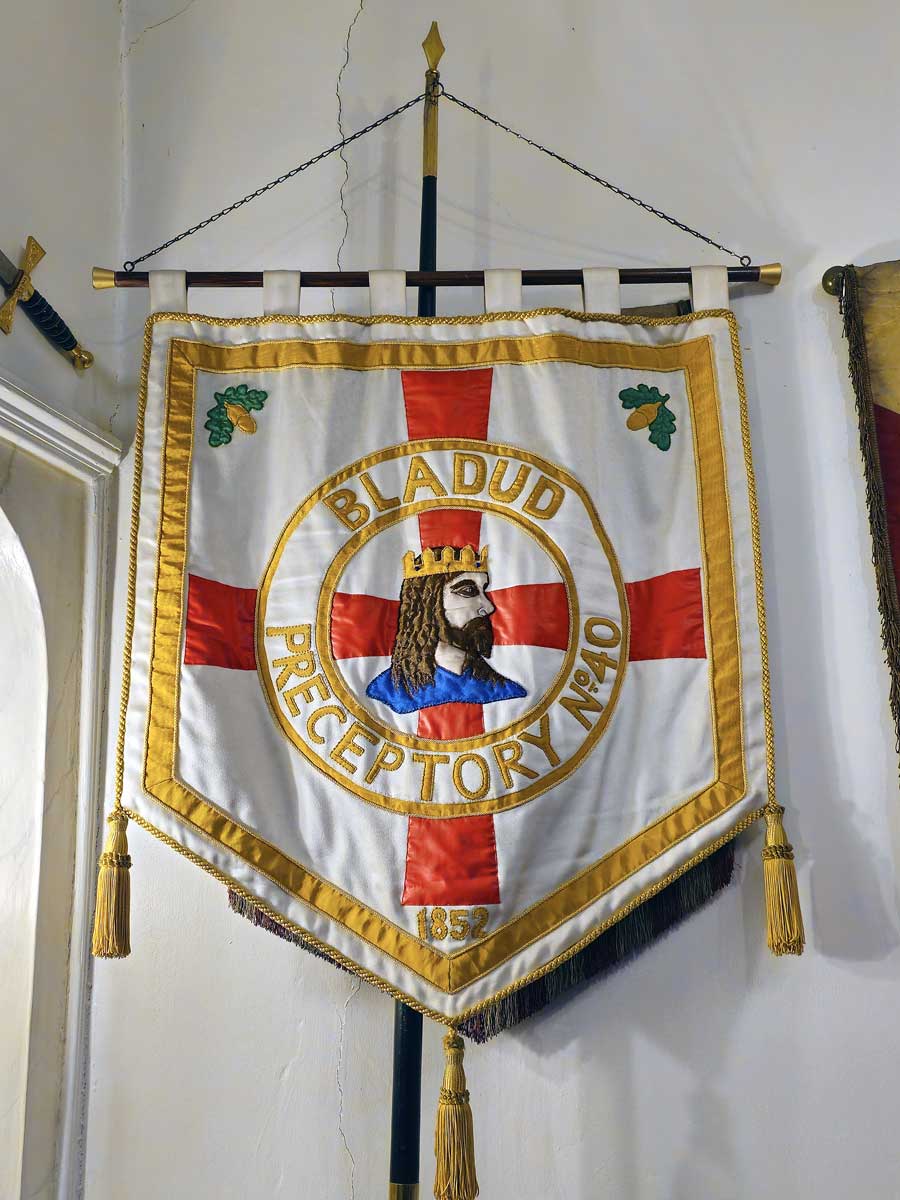
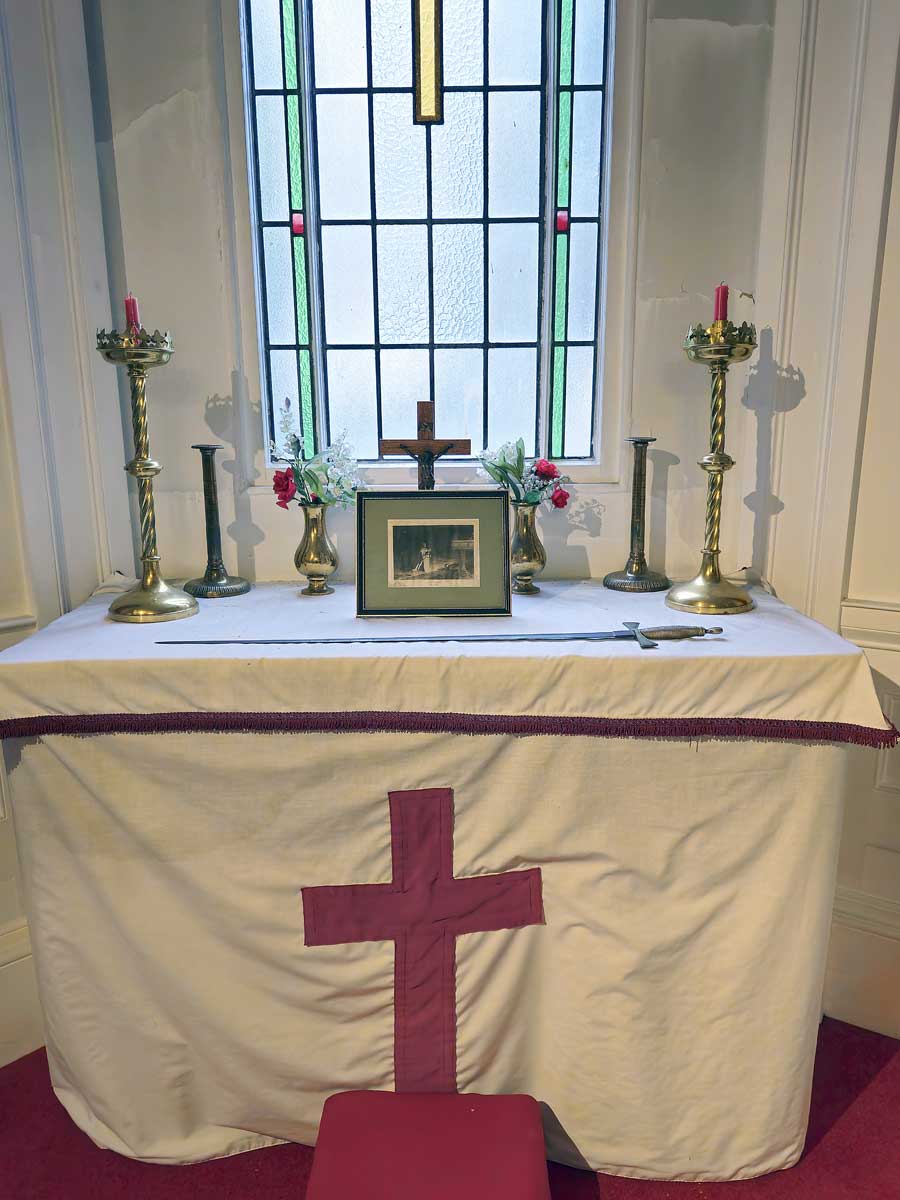
Flags from lodges ancient and modern adorn the hall, the vault below and the tiny side chapel where the ultra-exclusive Knights Templar meet.
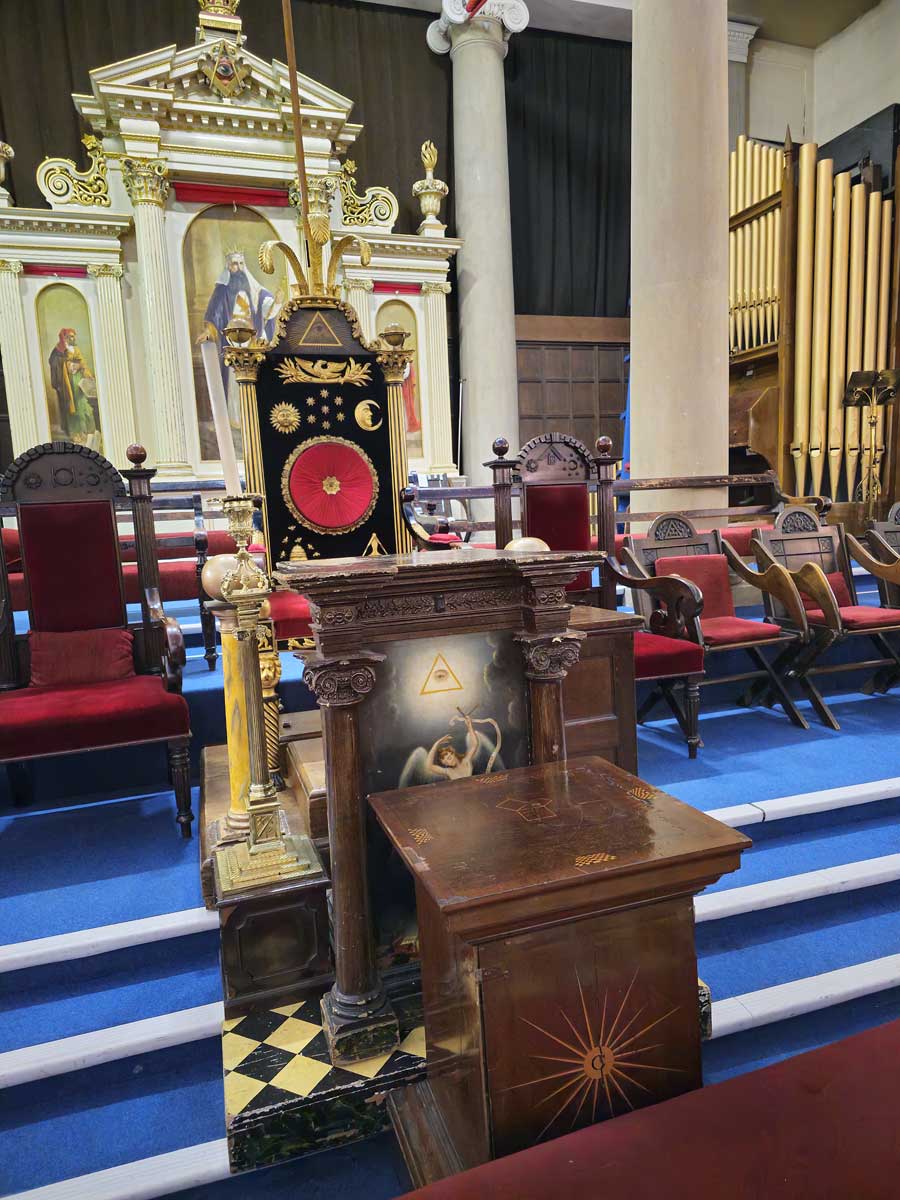
There are religious paintings, artefacts and an extraordinary amount of symbolic stuff, including the ubiquitous all-seeing Eye of Providence.

The Worshipful Master was more than happy to explain their meanings and show us the tracing boards that guide every Mason’s journey, although he naturally refused to share all the secrets.
After two hours of this surprisingly open show-and-tell conversation, it was still raining.
So we went in search of food, and the time to digest all that we’d seen and heard.
Tours of the Masonic Hall, Bath
Guided tours of the Old Theatre Royal and Masonic Hall at 12 Old Orchard Street, Bath are available throughout the year. Tuesday, Wednesday and Thursday at 11am and 2.30pm. Saturday at 2.30pm only.
Tickets: These can be bought in advance or at the door, groups of 10 or more can be accommodated by prior arrangement.
Prices in 2024: £8 for adults, £6 for children aged 6-16.
The hall is also a venue for concerts, weddings and private parties.
All photographs are copyright © rosemaryandporkbelly
Where to next?
• Green Rocket Café
• Unmissable things in Bath
• Hidden canals of Antwerp