
‘If you can’t be bothered to prepare garlic properly, you don’t deserve to eat it!’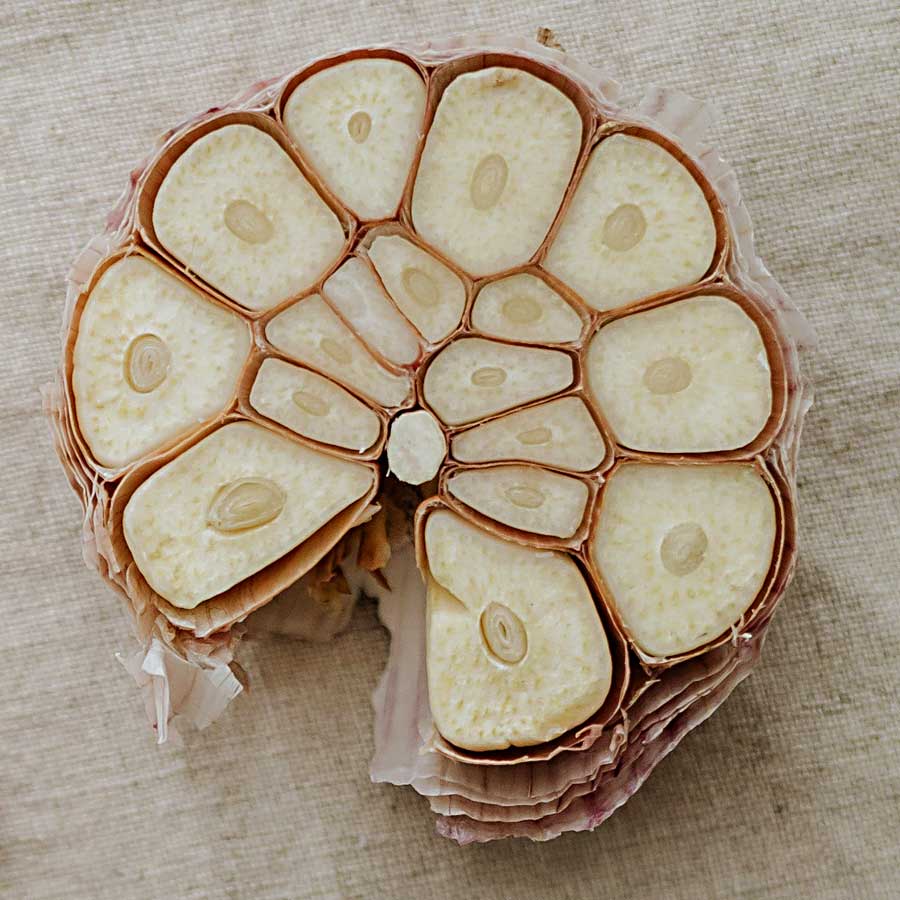
The wonderful thing about running a travel and food blog is you never quite know where it’s going to take you.
Today, we’re in the spacious kitchen of The Cooking Academy in Rickmansworth, near London, listening to The Garlic Story as told by Kumud Gandhi, the Spice Queen.
Her message is clear – misuse of garlic is a crime! It should be treated with respect for its culinary and health-giving properties.
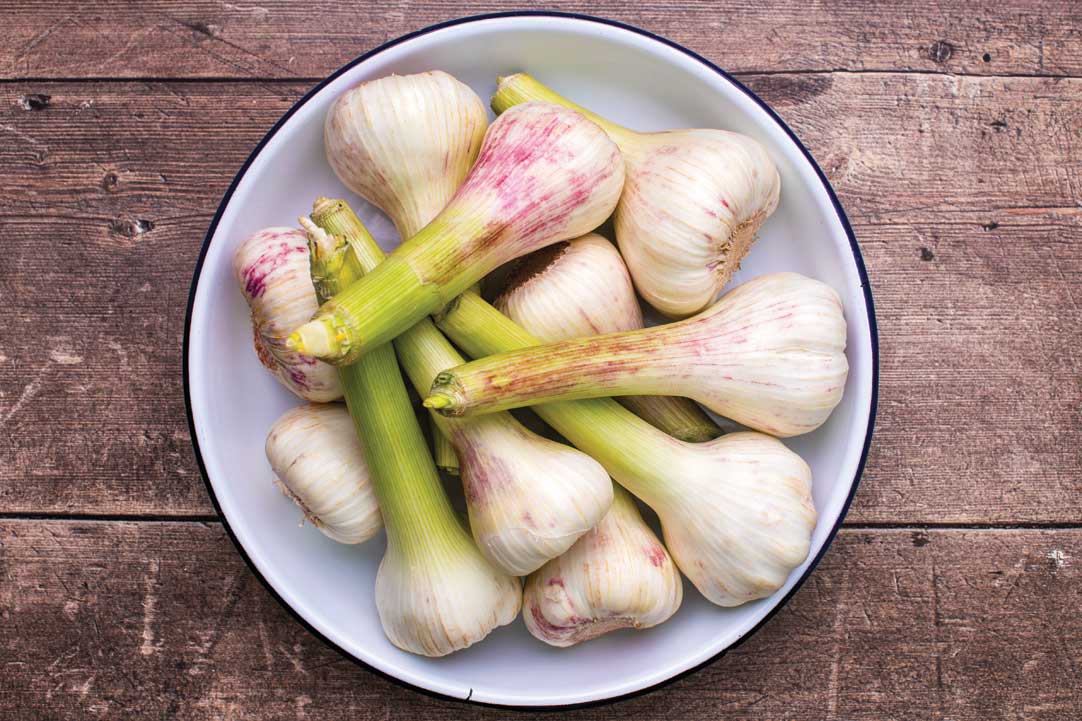
Kumud doesn’t mince her words on the evils of garlic presses and instant garlic in a jar.
We don’t have a garlic press, but I had to confess, rather shamefacedly, to occasionally reaching for the jar.
Kumud is definitely not a fan. ‘I understand the convenience, but it’s prepared with vinegar, which spoils the flavour. Plus, they use a garlic press to crush it, so you get granular bits which have been preserved in the vinegar. It doesn’t break down so well in the cooking process, and you get a grainy texture.’
Instead, she talks us through all the different ways to prepare and cook garlic, in batches, in advance. It can even be frozen. Then it’s just as easy to use, but all its wonderful flavour and medicinal properties are preserved.
We’re hanging on her every word, with good reason.
Kumud Gandhi, Spice Queen
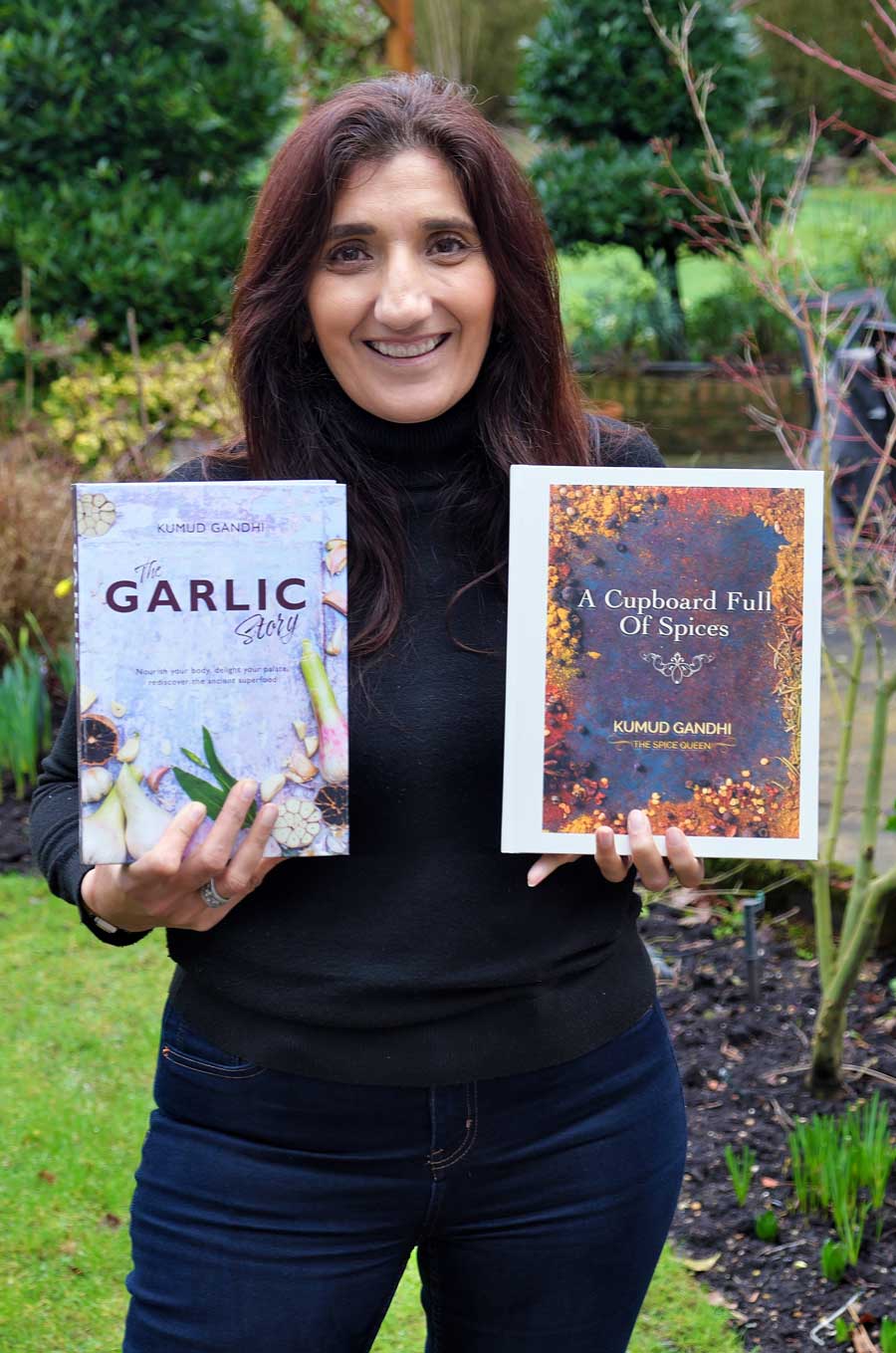
Kumud was born and raised in England, the daughter of Indian parents, and as a child she travelled throughout Southeast Asia, learning about herbs, spices and vegetables from her extended family.
‘Garlic is front and centre of most Asian food, you dollop it in. We grew most of our own herbs and spices and I used to love gardening with my father, and of course we grew garlic. I was always asking, ‘is it ready to pick yet?’ I share his joy for food, and even his palate – which is sometimes a joy and sometimes a demon because he could taste like a Jedi and tell immediately if something was missing! So I grew up with an understanding and love of garlic.’
And with three generations of chemists and spice merchants in the family, it’s no surprise to learn that she takes a scientific approach to food and nutrition.
‘Everyone’s body chemistry is different, and things do change with the different stages of our lives, so you need to take that into account. And of course, people have different tastes. But the brain works in a very clever way. If you understand that something is good for you, the brain will remind you of that fact. Of course, like any habit, you have to do something a number of times, but you can train yourself to like different things.’
After graduating from the London School of Economics, Kumud moved into corporate finance, bringing with it more opportunities to travel and learn about foods from different cultures.
When she took a break from the world of banking, she decided to put this knowledge and passion to good use, retraining in food and nutrition, before setting up her own catering business.
Kumud’s reputation for tasty, healthy, Asian influenced food led to her feeding the stars, and she found herself cooking curries and stir fries for Guy Ritchie and Madonna, Gwyneth Paltrow, and even Nelson Mandela!
Fun though that was, Kumud soon realised her heart lay elsewhere.
‘I love cooking for others, but what I really wanted to do was pass on my knowledge, to help people cook for themselves.’
That’s why she set up the Cooking Academy in 2010, offering bespoke sessions on a range of cuisines, plus spreading the word further with a series of cookbooks.
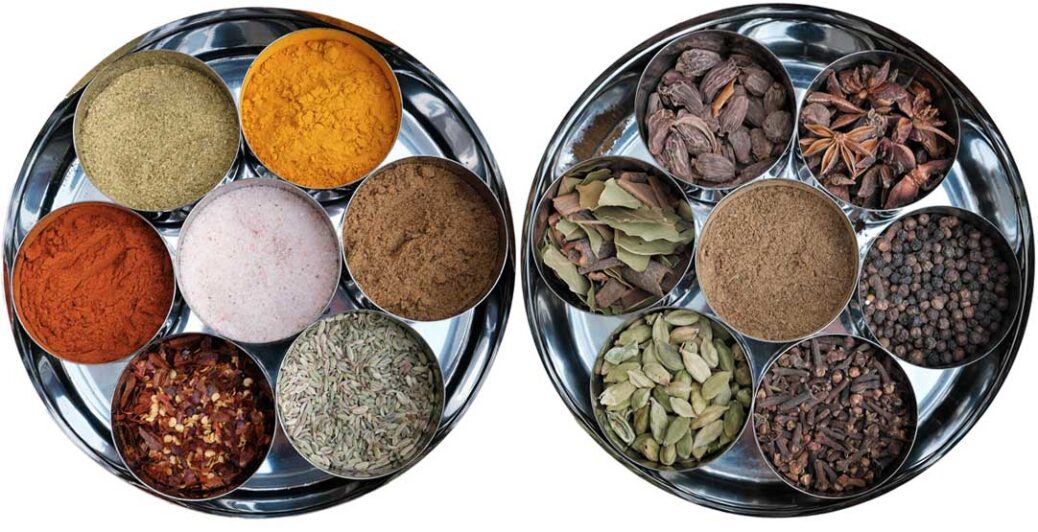
Her first book, The Spice Cupboard, is packed with information and recipes to draw out both the flavours and healthy properties of every spice imaginable. There’s even a chart at the back outlining which are best for certain ailments.
And it’s full of mouthwatering recipes from around the world.
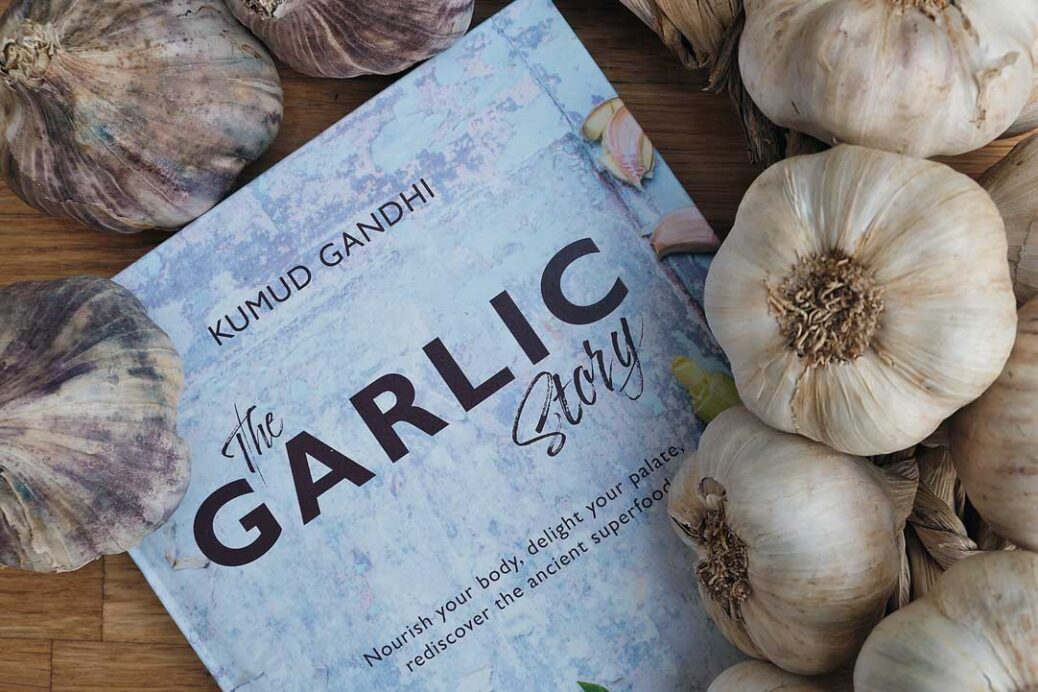
Her second focuses on just one ingredient – garlic.
‘Over the years, as I have cooked and experimented more, garlic has become my superhero, an ingredient that lifts my spirits and brightens my day. It’s the one ingredient I would never be without.’
History of garlic
Humans have been using garlic for over 5,000 years in cooking, medicine, currency and even magic potions.
Preserved garlic has been found in the tomb of Tutankhamen and in ancient Greek temples.
The belief that it could ward off disease and ailments was a part of many ancient civilisations, and even made its way into folklore and myth across the world.
Garlic crops up in almost every cuisine, and ways of using it vary from country to country.
Growing originally in Asia, it spread with the Romans and Egyptians throughout Europe and Africa and beyond.
Now it can be found growing anywhere with a warm enough climate, even in the UK. The Isle of Wight is famous for its Garlic Festival every summer.
Types of garlic
There are three main types of garlic, with variations of each.
The hard neck variety is the hardiest, overwintering in the ground. Their skins slip off smoothly, but they don’t keep as long as other varieties, losing their flavour in around six months.
Soft neck garlic is the one most cooks are familiar with. It’s densely wrapped in dry, papery skins and keeps fresh for around 12 months.
Elephant garlic is actually a type of leek. It has three to six enormous cloves in each bulb. It looks like garlic but has a much milder flavour.
Then there’s wild garlic, which grows well in shady woodlands, even in parts of the chilly UK. The leaves in early spring have a soft garlicky flavour, but when cooked they develop more of an oniony taste.
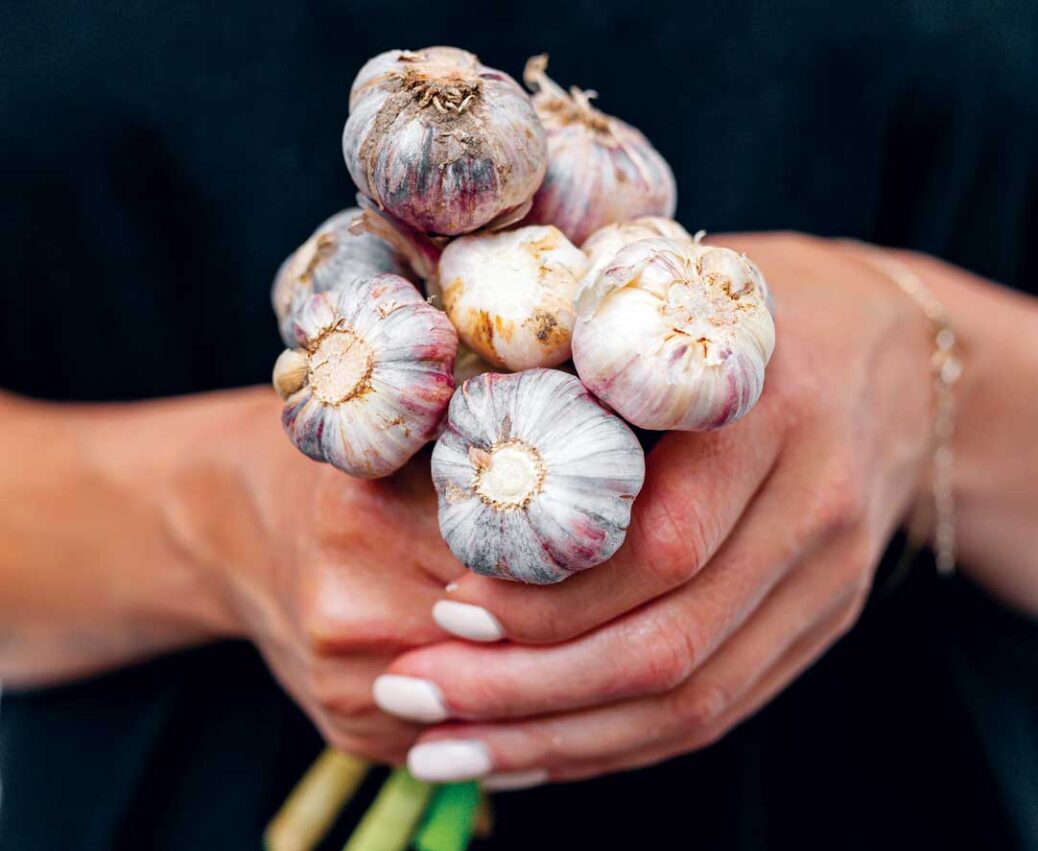
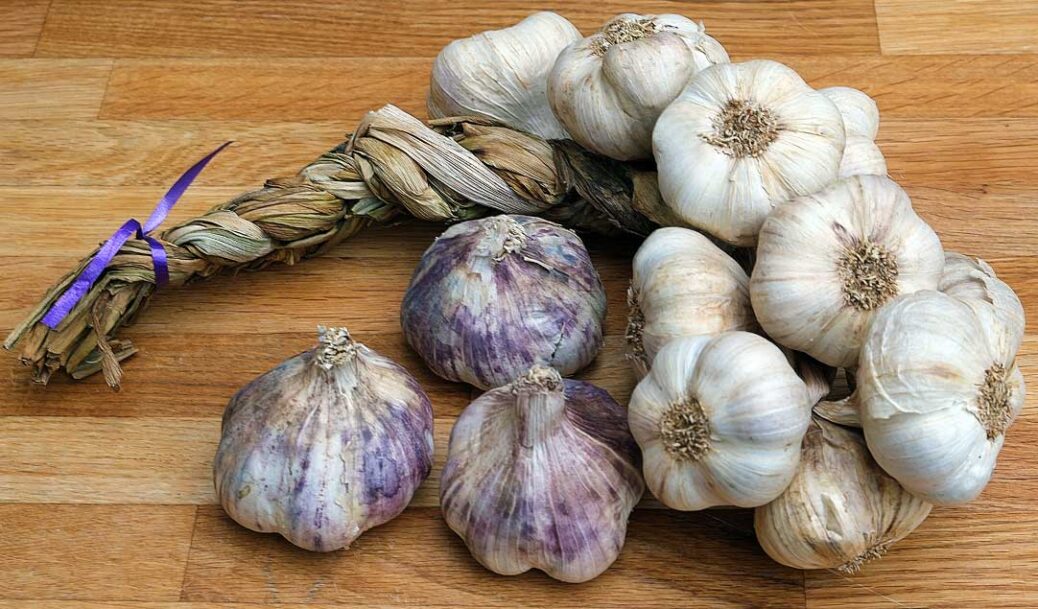
Kumud herself has a few favourites. ‘I like using purple garlic, great big fat bulbs that are sweeter and not as intense as the smaller garlic bulbs. I also like black garlic because it’s so mellow. You can even put it in ice-cream, but you need to gently roast it and use it in a very subtle way. A good grocer or delicatessen should be able to get it for you.’
Garlic for health
Modern science is beginning to confirm many ancient beliefs about garlic, and tests show it has definite antibacterial, antiviral and antifungal properties.
‘Garlic has heat properties which inhibit the growth of fatty deposits in your arteries. It’s a natural antibiotic, and many people swear by eating garlic at the first sign of a cold because it has such potency in killing germs. And it’s great for gut health.’
Kumud ranks garlic alongside ginger and chillies – what she calls the holy trinity – for their antibacterial and immune-boosting effects.
‘What we eat and how we feel are absolutely connected through the gut and the brain, and it’s so important for people to make that connection to help them live well.’
‘Often people look at an Indian recipe, for example, and they see about 20 different ingredients, and they have no idea why. But when you understand the why, you can use that knowledge across the board, in many different ways and types of cooking, and extend it to your own health and wellness.’
Kumud and The Garlic Story cookbook
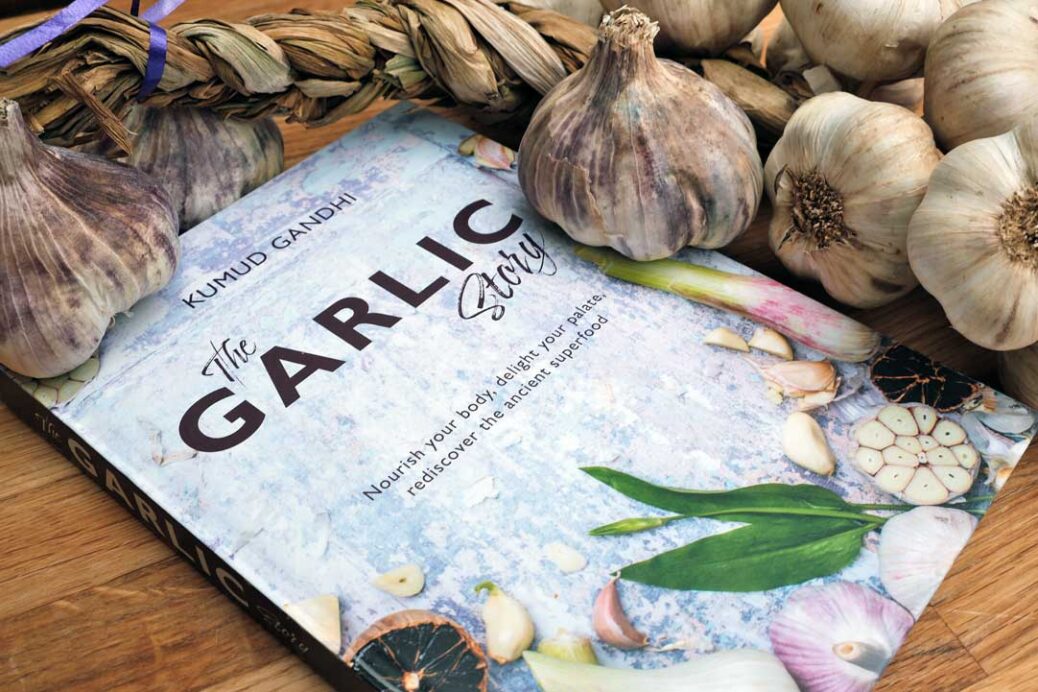
So much more than a recipe book, The Garlic Story is packed with advice on growing, foraging, choosing and preparing garlic in dozens of different ways.
Kumud goes into great detail on its history, medicinal properties and how to get the best out of garlic, as well as a hints and tips section for reference.
For example, mincing garlic brings out the flavour, home-made garlic paste can easily be stored in the fridge for regular use, roasting makes it sweeter and fermented garlic has a very subtle flavour.
Kumud even has advice for people who say they don’t like garlic. ‘Start by peeling it, slicing it thinly, sautéing it in a bit of oil and then removing it. Then you won’t get that ‘in your face’ garlic, and you’ll be able to enjoy the essence of it.’
And with Kumud’s wonderful recipes, we reckon you’ll soon be adding it left right and centre! Some are quick and easy garlicky twists on classic European, Asian and Middle-Eastern dishes. Others are more complex and great for special occasions.
All in all, it was a fascinating morning talking garlic and spice and left us feeling very hungry!
Pork Belly’s intrigued by the savoury butternut squash and chickpea baklava, and the tiger prawns in tequila, both of which we have added to our recipe section for you to try.
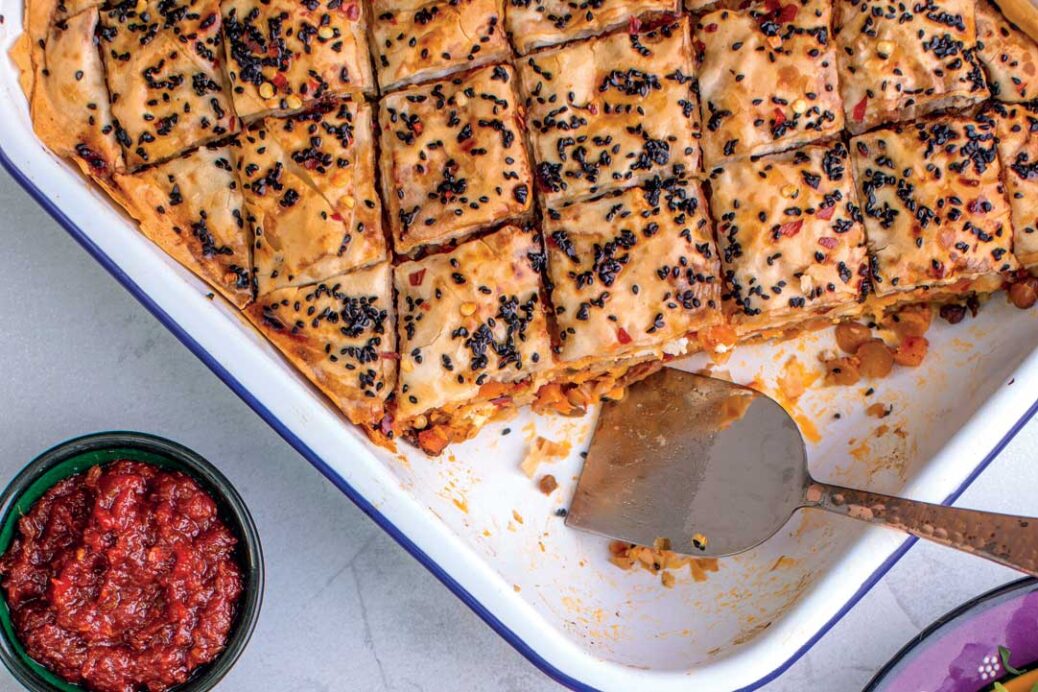
As for me, I’m putting Kumud’s tips into practice in my daily soups and veggie, vegan bakes.
And I won’t buy another jar of garlic ever again – promise!
Where to buy The Garlic Story
You can buy the book, priced £25, from Meze Publishing.
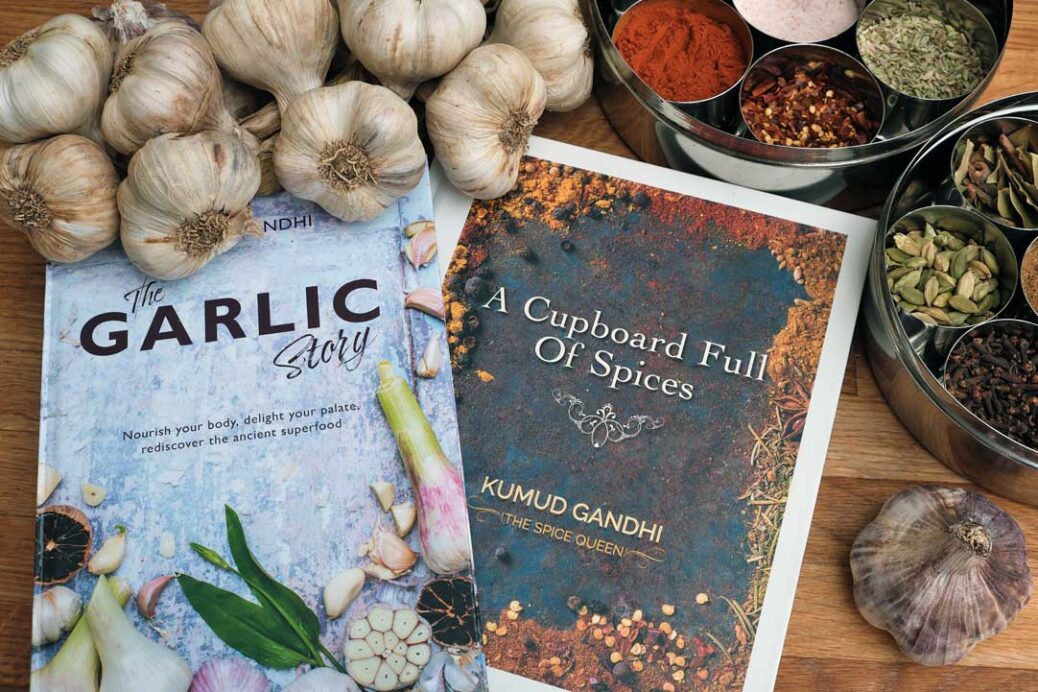
Kumud’s previous book, A Cupboard Full of Spices, is available from The Cooking Academy, priced £20.
Photographs copyright © rosemaryandporkbelly, Paul Gregory, and Karolina Grabowska/Pexels
Where to next?
• Beyond Veganuary – 10 tips to become ‘vegan-ish’
• Explore the hidden canals of Antwerp
• A guide to the Prosecco Road – Italy’s bubbliest secret
Really interesting articles on Garlic and Veganism. As the daughter of a wonderful Maltese cook, have had garlic in my diet since I was a baby. Will definitely try a few vegan recipes after reading your articles.
Hi Pauline, glad to know you’re a garlic fan! Kumud was an inspiration, and we’re already trying out several of her recipes from her rather excellent book.