
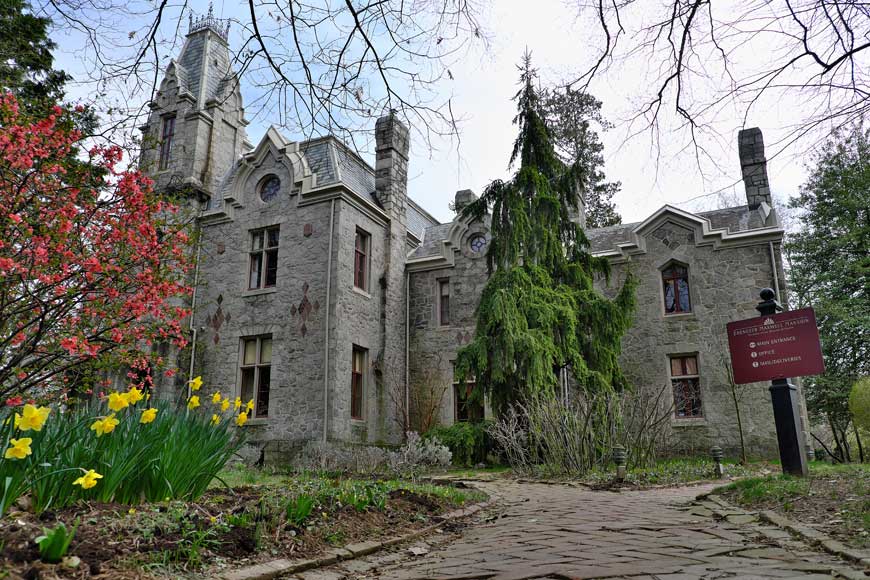
On a quiet backstreet in Philadelphia’s historic Germantown district, stands an old and somewhat spooky place.
Seeing its strange turrets, large doors, odd shaped windows, and dark tiles, it comes as no surprise to learn it’s among the many old houses of America that lay claim to being the inspiration for the Addams Family house in the original TV series.
But the Ebenezer Maxwell Mansion is much more than a gothic fantasy or a piece of pop culture trivia.
Spend an hour or two on a guided tour, and you’ll be served a slice of authentic Victorian life, rarely seen in modern day America.
And it’s quite extraordinary.
Much more than a museum
On our travels we like to discover the less well-known attractions – the unusual, the quirky and those off-the-beaten-track destinations. The historic Germantown area of Philadelphia is just such a place.
Stepping through the door of Ebenezer Maxwell Mansion, we were welcomed by a guide, dressed authentically for the period, and led through a series of rooms recreated as they were in the late 1800s, and still with many of the original features.
The parlour, all dark green curtains and golden upholstered chairs, is decorated in the style of the Civil War period, about 1860. Think Little Women with a touch of gothic elegance – after all, author Louisa May Alcott was born only a stone’s throw away from here!
The Maxwell family used their wealth to show off their newly-built home, blending Rococo and Renaissance with the modern conveniences of gas lighting and a revolutionary gravity hot air system to provide warmth all year round.
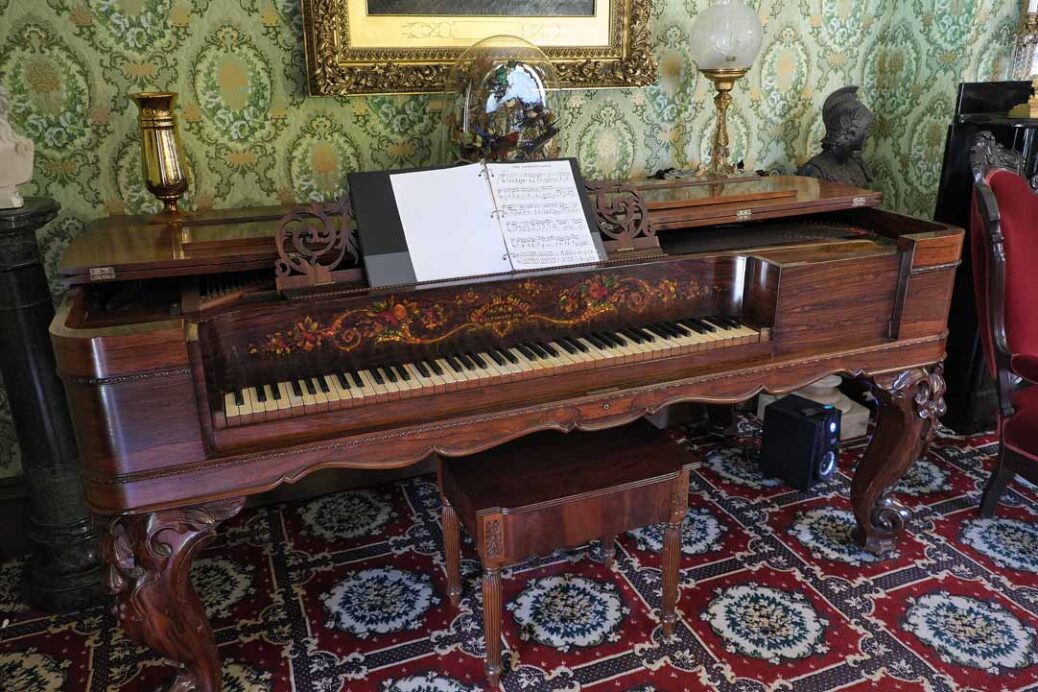
Here the Maxwells would entertain, or gather in family groups for conversation and music, in the dim light of gas lamps, reflective gold trimmings and many mirrors.
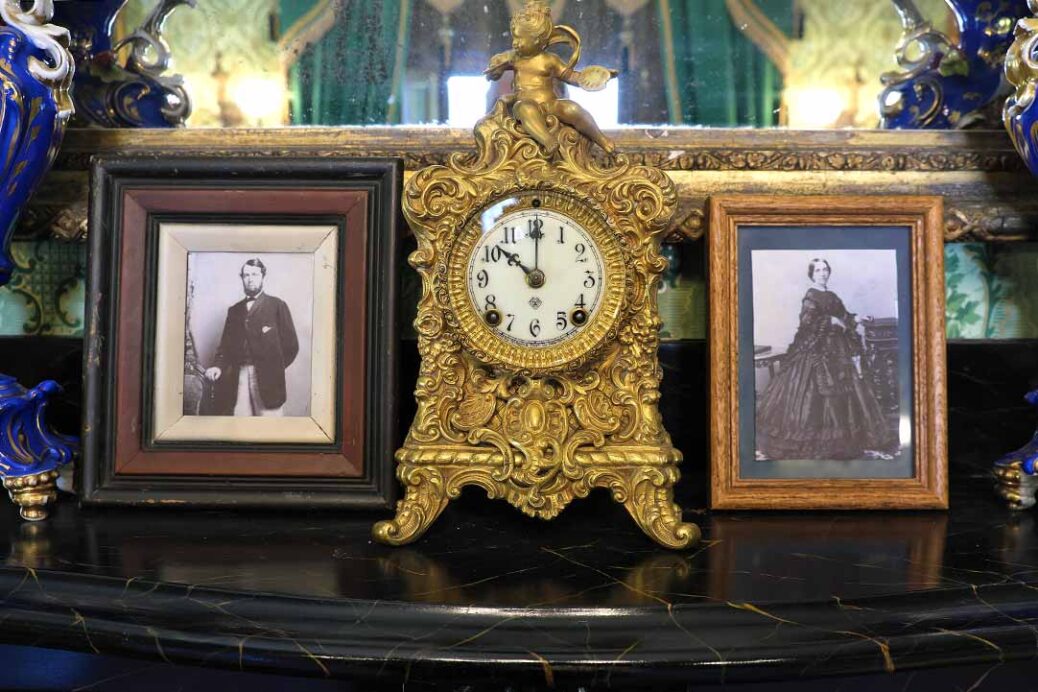
On the mantelpiece, either side of an ornate gold clock, are the formal portrait photographs of Ebenezer and Anna, presiding over their new home.
I can’t help but imagine Morticia sweeping in, in an elegant black gown, to take her place at the party!
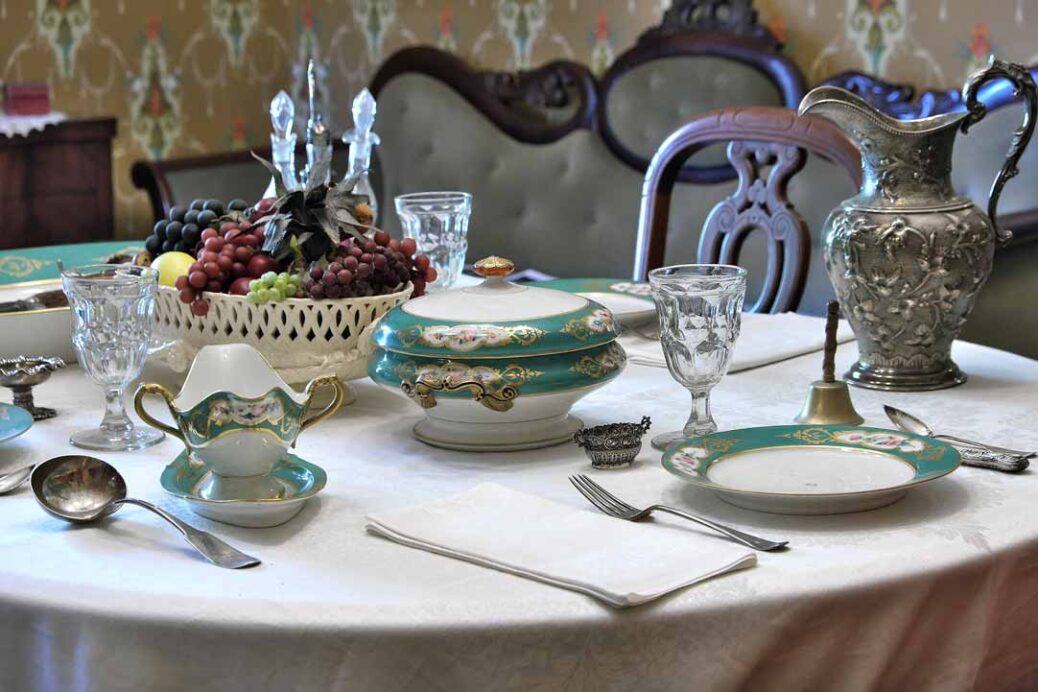
Across the hall lies the dining room, laid out for a special feast, with gold-and-green dinner service and sparkling silver cutlery.
Then it was time to banish all thoughts of The Addamses and take the narrow corridor to the heart of every home.
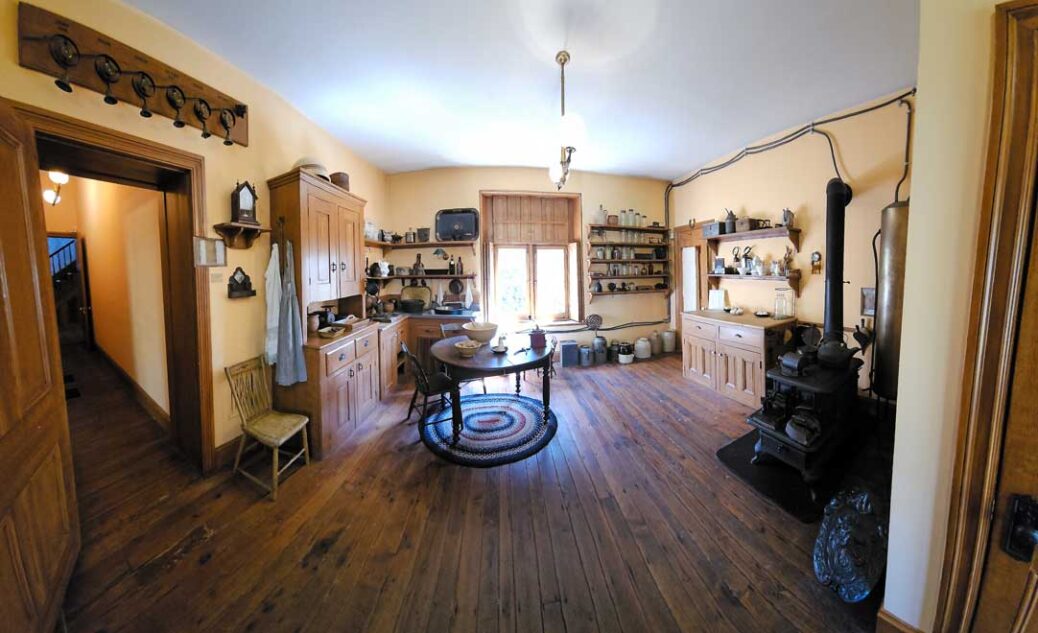
The kitchen at Ebenezer Maxwell Mansion
We could have stayed here for hours, trading information and insight with the lively and very well-informed guide.
She in turn was fascinated by what we had to say of our own families’ Victorian kitchens in England.
There were many labour-saving devices in common, ones both Pork Belly and I remember from our respective grandparents houses, like hand-cranked meat mincers, huge copper pans, flat irons and Mason Jars for preserving and storing food.
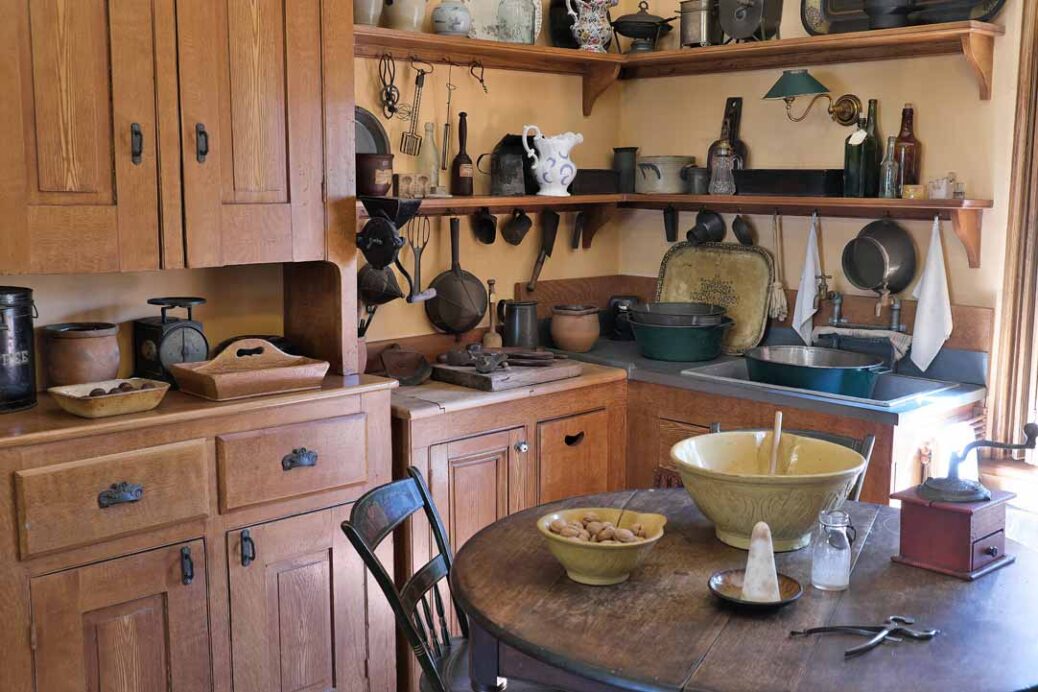
But the kitchen at Ebenezer Maxwell Mansion showed an extra, entrepreneurial spirit with gadgets and gizmos that were unheard of back in the home country.
Mechanical coffee grinders, waffle makers, hot and cold running water (something only the wealthy could afford in the 1800s) and a large copper water heater dominating the room.
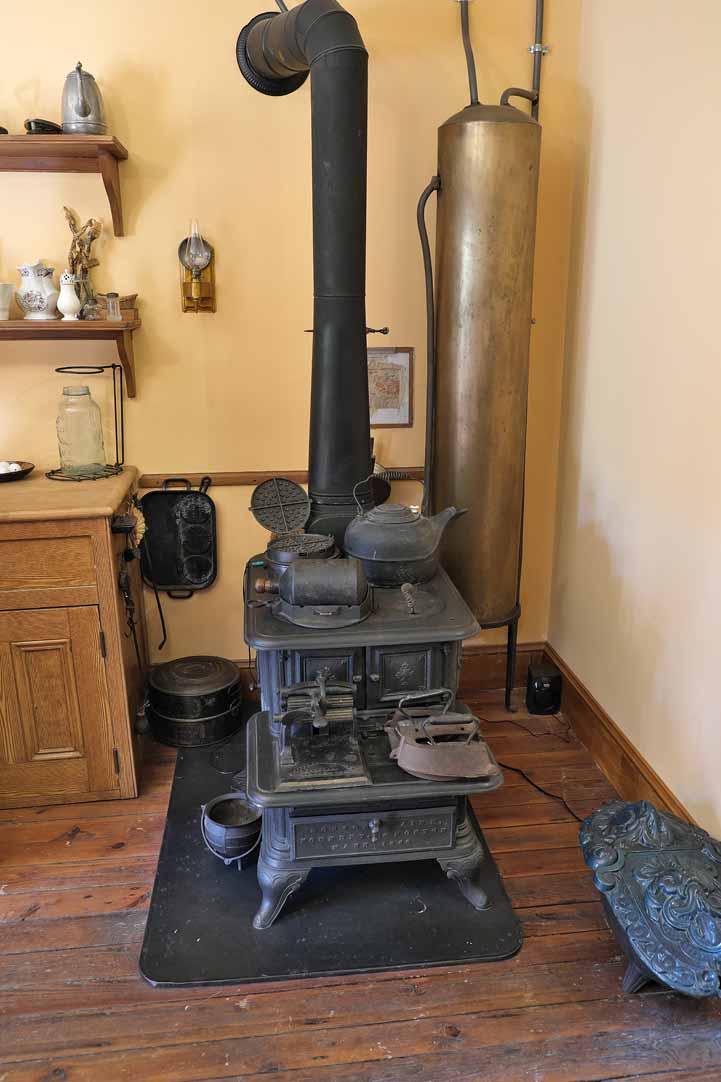
Here, the staff, and the children who were expected to be seen and not heard in these times, would spend most of their time. There’s even a tiny replica of the cast iron stove, perfect for playtime.
So, who was Ebenezer Maxwell?
Born on a farm in up state New York in 1827, Ebenezer was clearly a go-getter from the start.
In his early twenties, he moved to Philadelphia as a salesman for a wholesale drug importer. Two years later he was running a dry goods business, buying in textiles and selling them to clothing manufacturers, quietly amassing his personal wealth.
He married his second cousin Anna Smith, from the same well-to-do Quaker family, and her inheritance helped him expand his business empire.
Before long, the Maxwell’s had a family of six children, and they joined the many people who could afford to leave the rapidly growing city for the quieter suburbs.
Here he built this, his first house, part family home, part business asset. He sold it three years later, presumably for a good profit, to fellow businessman William Hunter and his wife Rosalie.
The house was then lived in by the Hunter family for the following 96 years.
It’s the Hunters who are the inspiration for the second floor of the Mansion, with most of the rooms restored to what it would have been like in the late 1880s.
Modern life at Ebenezer Maxwell Mansion
In 1876, Philadelphia celebrated the 100th anniversary of the founding of America, and the city hosted a grand Centennial Celebration. At the event, visitors were given a chance to experience exotic cultures from Egypt and the Far East, and this led to the fashion for painted and stencilled designs and highly decorated ceilings.
The Hunters clearly embraced this new fad, and the Mansion is one of the few museums in America that retains Egyptian Revival painted and stencilled wall decoration.
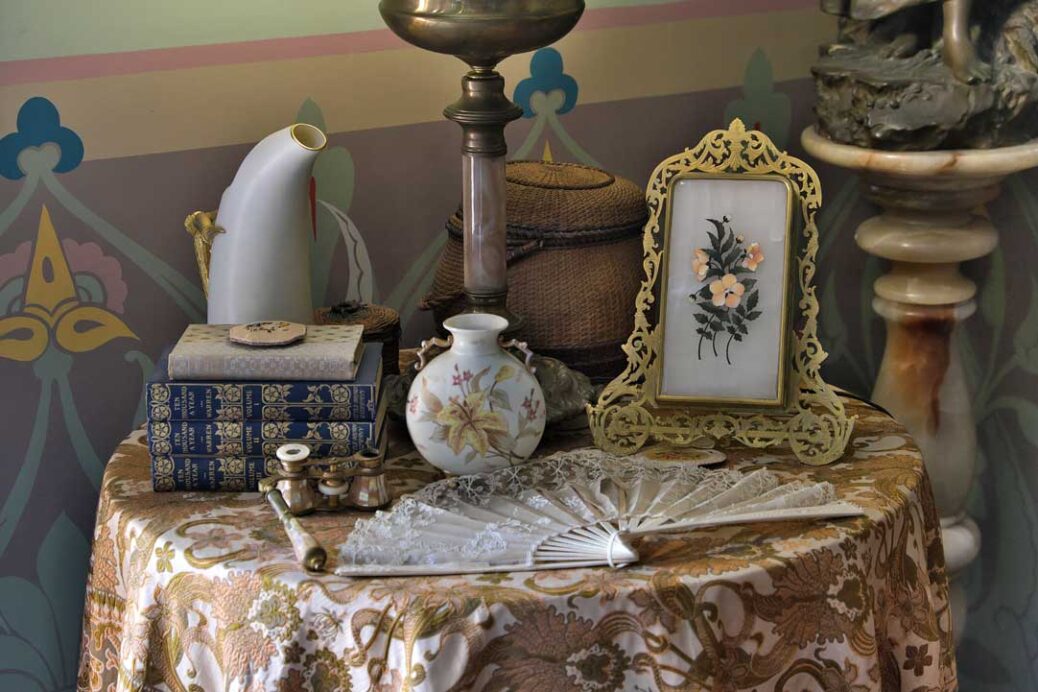
In the hallways and stairwell, the design has been recreated, although parts of the original can still be seen.
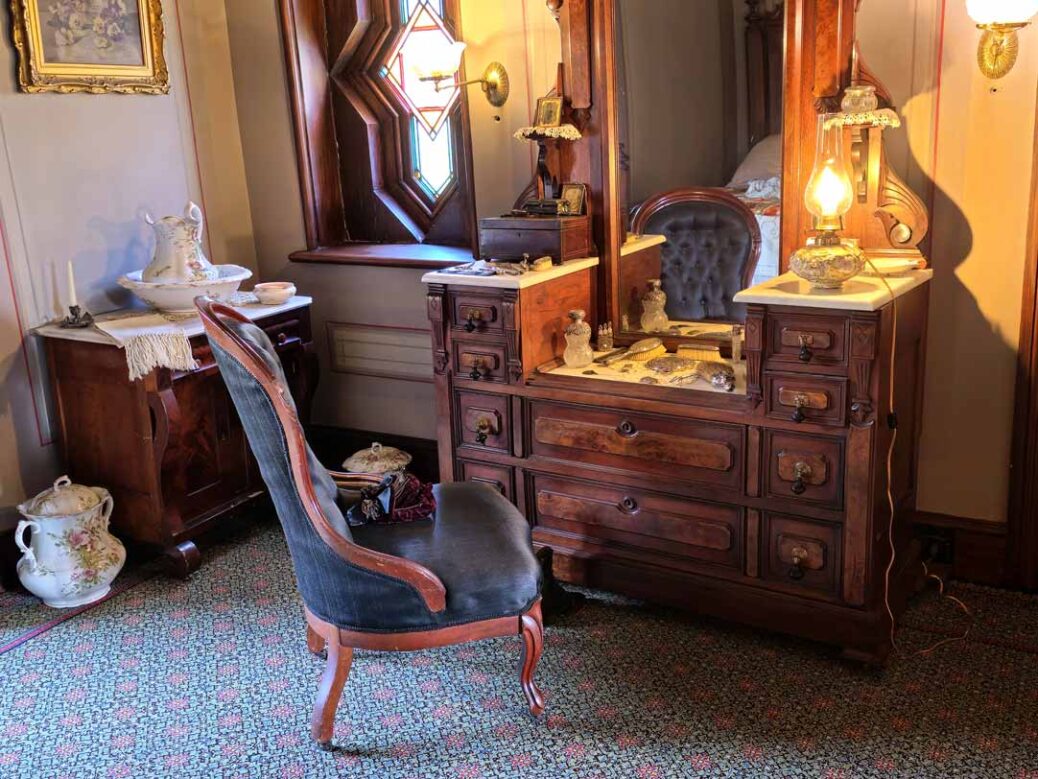
The bedrooms are gorgeous, with softly painted ceilings, light pouring in through windows and every item necessary for a gentleman and lady’s comfort and cleanliness laid out on dressing tables and wash-stands.
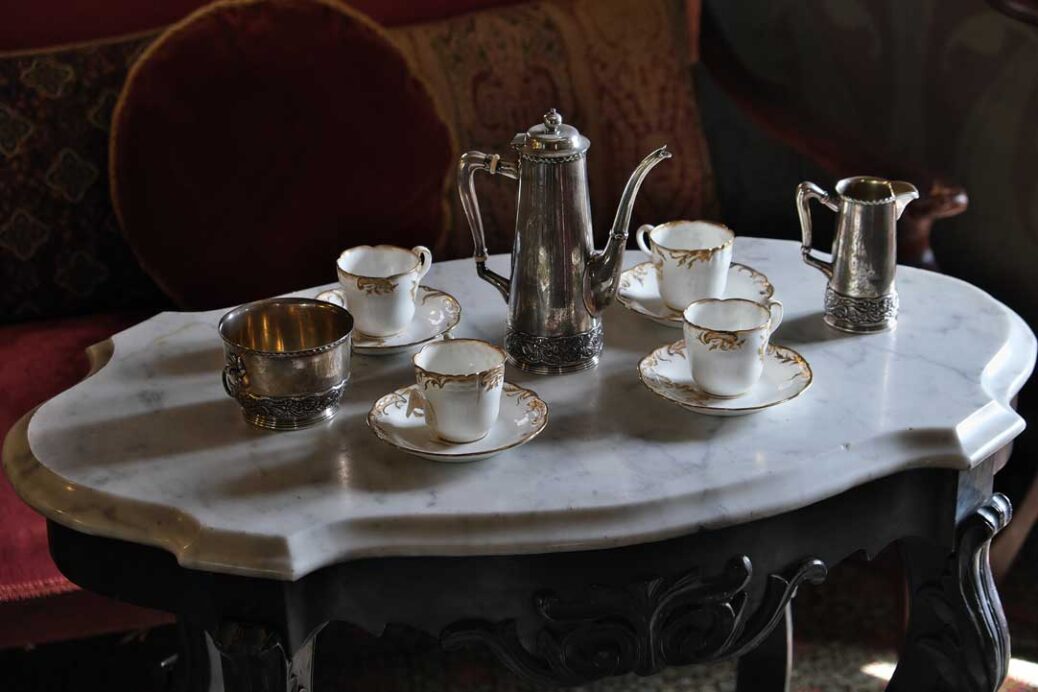
Here, Mrs Hunter would entertain her closest lady friends, in a room looking out over the beautifully tended gardens.
Next door, Mr Hunter had his bedroom and separate dressing room, with every comfort necessary for the modern man.
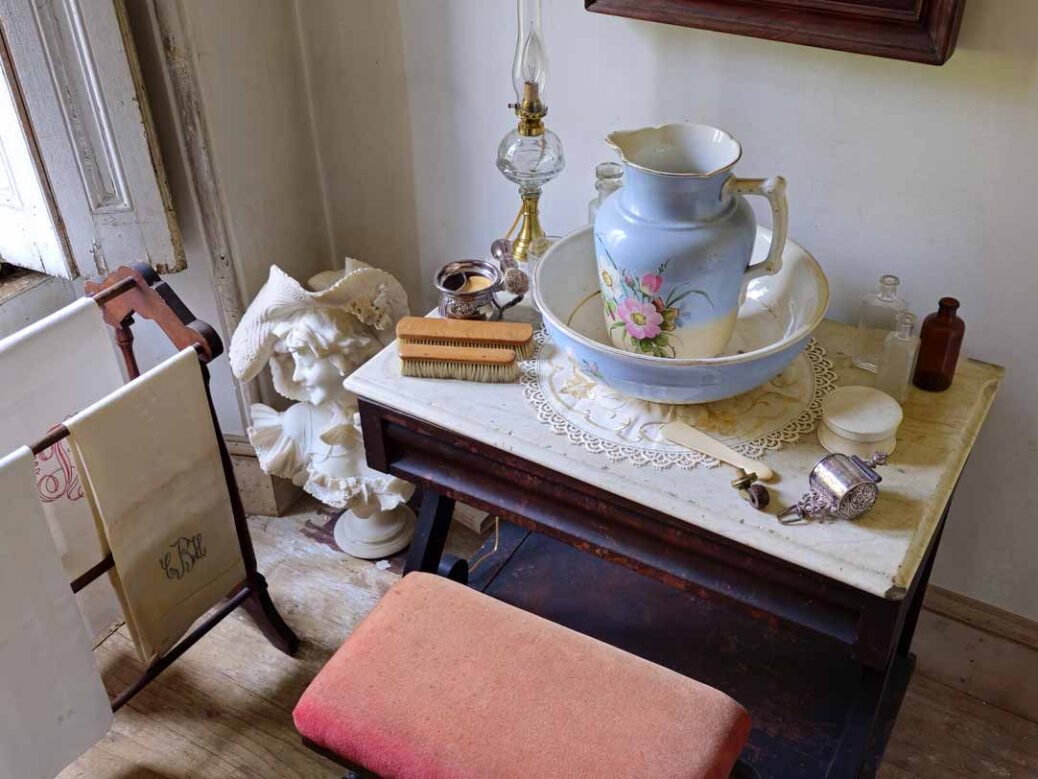
Never doubt the hard work the staff ‘below stairs’ had to put in to keep Messrs Maxwell and Hunter looking presentable!
A family home
But despite all this finery and fashion, the house remains at its heart a family home. And nowhere is this more evident than the children’s bedroom.
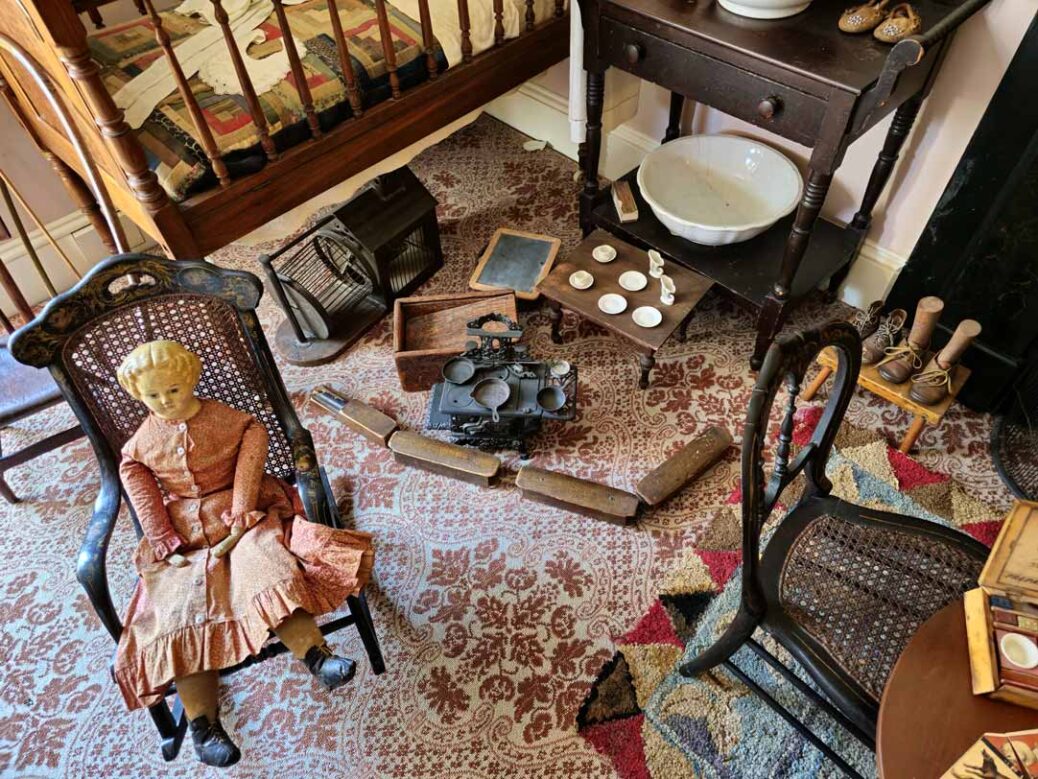
The furnishings are those of the mid-nineteenth century, and it’s full of reminders that children have slept and played here for more than a hundred years.
The peachy-pink walls are colour-matched to the original paintwork, and the room is full of the toys and books the Maxwell and Hunter children would have enjoyed.
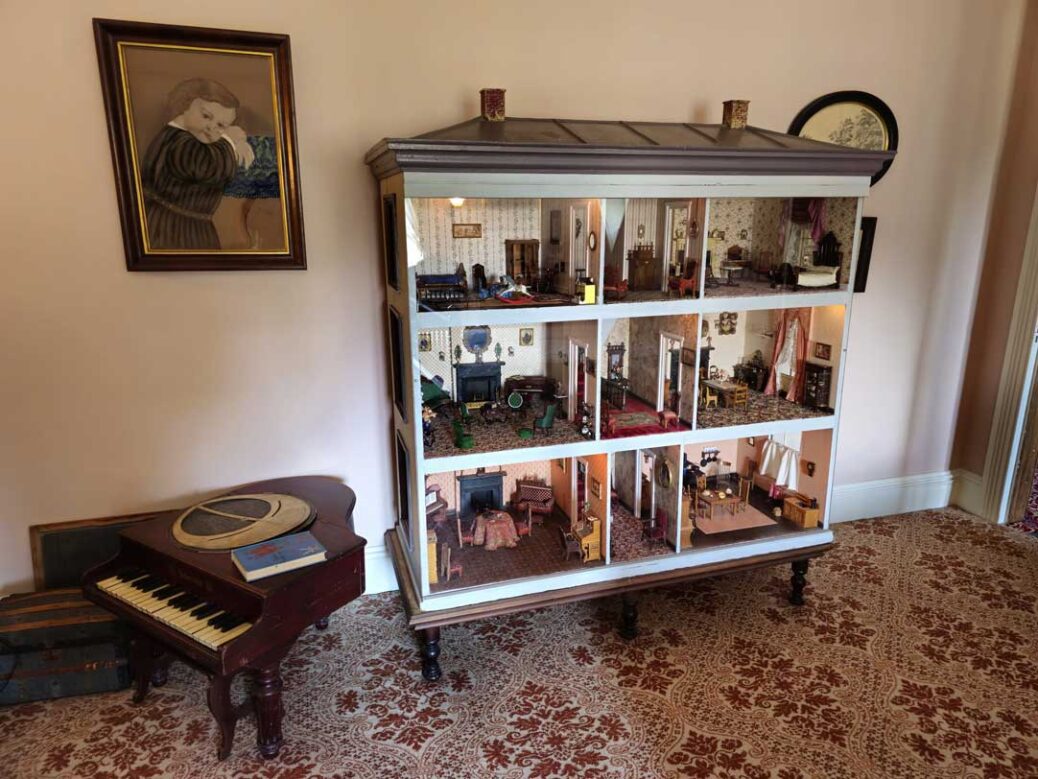
The dolls house was made around 1850 and has been restored by Ebenezer Maxwell’s great-granddaughter to mimic the rooms and furnishings of the original house.
The gardens
Our visit was out of season, so we didn’t see it at its best, but the garden of a well-to-do nineteenth century family said as much about them as the house.
At the time, the fashion was for gardens to be either The Beautiful or The Picturesque, and with a gothic style house The Picturesque was the preferred choice.
Beds were planted with a single colour in each, a well trimmed lawn was essential, and fruit trees were encouraged to grow on walls near the house.
The Philadelphia Committee of the Garden Club of America partly funds the gardening team at the Mansion so they can continue their work of restoration and conservation.
We thoroughly enjoyed our visit. You won’t find Ebenezer Maxwell Mansion popping up on the usual ’10 things to see in Philadelphia’ list, but it’s well worth seeking out.
How to find Ebenezer Maxwell Mansion
The house is at 200 W Tulpehocken Street, on the corner of Greene Street in Germantown, Philadelphia.
It’s a little way out of the city, but the Chestnut Hill West train service will take you to within walking distance of the house, or there’s on street parking nearby, if you’re coming by car.
Opening times
The mansion is open for tours Thursday, Friday, Saturday, and Sunday at noon, one, and two p.m, and it’s best to reserve in advance here.
Tickets in 2024 cost $10 per person.
It’s never crowded and as no-one was booked on the later tour, our guide was more than willing to stay longer and answer all our questions.
They also run specialised tours with live events and host a Victorian book club for lovers of Dickens and other Victorian authors.
Other places to visit in Germantown
While you’re there, take time to explore other famous parts of Germantown. It was once the summer capital of America, with George Washington creating an unofficial White House on Germantown Avenue during the yellow fever epidemic of 1793.
And Cliveden, scene of the famous Battle of Germantown, is also nearby.
For info on other historic Philadelphia houses, visit The Philadelphia Society for the Preservation of Landmarks
All photographs copyright © John Heinrich/rosemaryandporkbelly
Where to next?
• Belmont Mansion, Philadelphia
• Great photography spots in Philadelphia
• Explore green Philadelphia