
Getting anywhere this year has felt like hard work. Head across the Channel and it doesn’t get any easier. The EU’s new Entry/Exit System, which became fully operational at Schengen borders in April, now takes fingerprints and a facial scan from British travellers on top of the usual passport check, and airports across Europe have been warning of longer queues while everyone gets used to it. Add in the ongoing wait for ETIAS, the pre-travel authorisation scheme still due to follow later this year, and a foreign holiday now comes with more red tape than it has in decades.
Which makes now a rather good time to remember that some of the strangest, most memorable sights are far closer to home; no biometric scan or Delay Repay claim required.
Back in August 2025, we wrote about seven weird and wonderful things to see in England, from a singing tree in Lancashire to a vampire rabbit guarding a Newcastle doorway. Turns out that barely scratched the surface. Once you start looking for Britain’s oddities, they multiply like rabbits, and not just the vampire kind. This time we’ve gone further afield, out of England and into Scotland, Wales and Northern Ireland, because weirdness doesn’t stop at the border.
Arthur’s Seat Miniature Coffins, Edinburgh
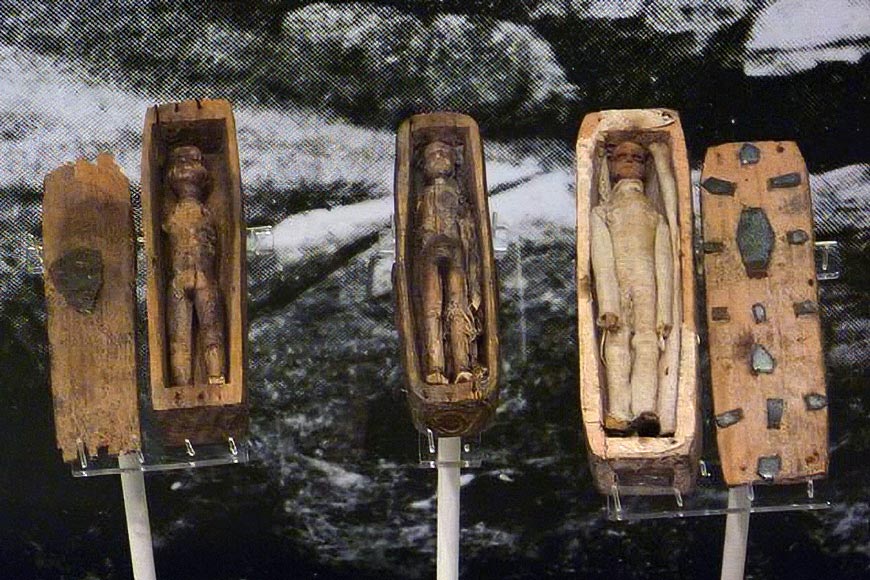
In 1836, a group of boys hunting rabbits on Arthur’s Seat found a small cave containing seventeen tiny wooden coffins, each holding a carved wooden figure dressed in handmade clothes. Nobody has ever worked out who made them or why. The most popular theory links them to Burke and Hare, the pair who murdered sixteen of Edinburgh’s poor and vulnerable in 1828 and sold the bodies on to an anatomy lecturer, with the coffins possibly a symbolic burial for the victims, who were denied a proper one. Eight of the original seventeen survive and are on display at the National Museum of Scotland, still doing their best impression of a genuinely creepy unsolved mystery.
The Scarrington Horseshoe Pile, Nottinghamshire
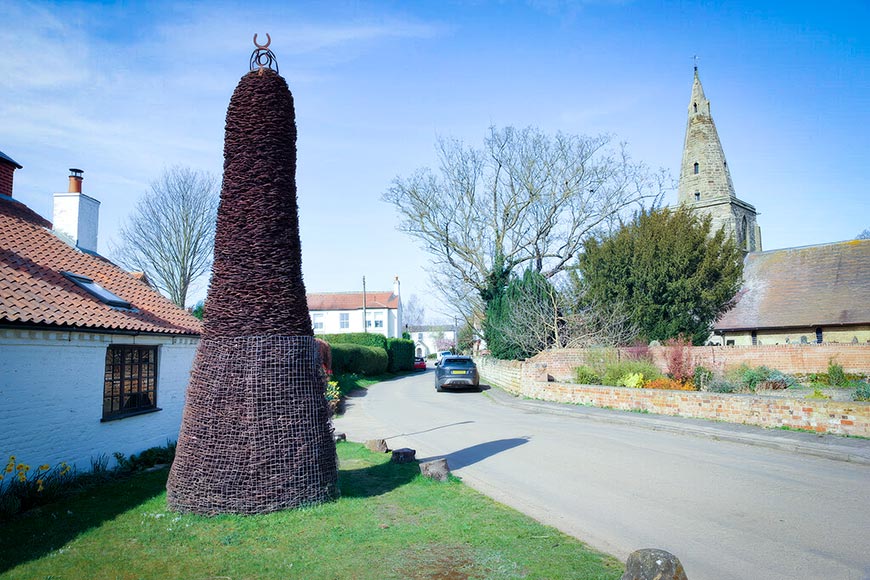
Somewhere in the quiet farmland of the Vale of Belvoir stands a five-metre tower made entirely of horseshoes. Weighing in at around 10 tons the Scarrington Horseshoes is the life’s work of George Flinders, the village blacksmith, who spent twenty years welding together thousands of cast off shoes outside his forge between June 1945 and April 1965.
By the 1970s it had grown so famous that an American collector tried to buy it and ship it home. Nottinghamshire County Council stepped in and bought it first, which feels like exactly the sort of quietly stubborn thing a county council would do. It’s still there today, outside the old smithy on Main Street, leaning slightly and looking like nothing else in England.
The Screaming Skull of Burton Agnes Hall, East Riding of Yorkshire
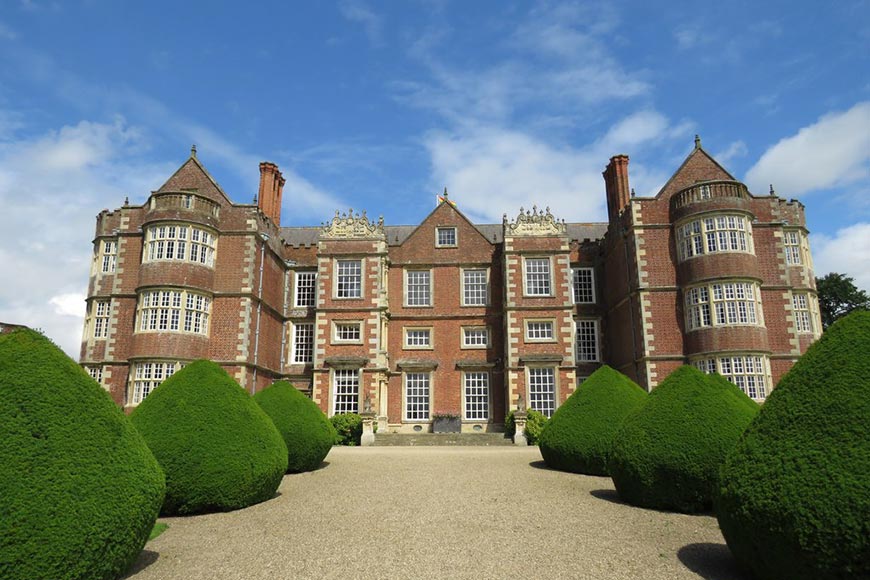
There are actually two houses on this site, and it’s the older one that gives the whole place its name. Roger de Stuteville built a Norman manor house here around 1170, naming it after his daughter Agnes, and its stumpy stone undercroft still stands next door to its grander neighbour.
That neighbour is the Elizabethan hall the estate is really known for, put up between 1601 and 1610 by Sir Henry Griffith, and it’s here the ghost story lives. Legend has it that Sir Henry’s youngest daughter, Katherine “Anne” Griffith, was fatally wounded by robbers and on her deathbed made her sisters promise to keep her head in the new house forever.
Her sisters broke the promise, buried Anne whole instead, and the hall was promptly plagued by moans, bangs and screaming until the family dug her back up. Eventually the skull was bricked up somewhere inside the walls, but nobody today can say exactly where.
Both houses and the gardens are open to visitors, and as you walk around the house listen out for Anne!
Bobby’s Bus Shelter, Unst, Shetland
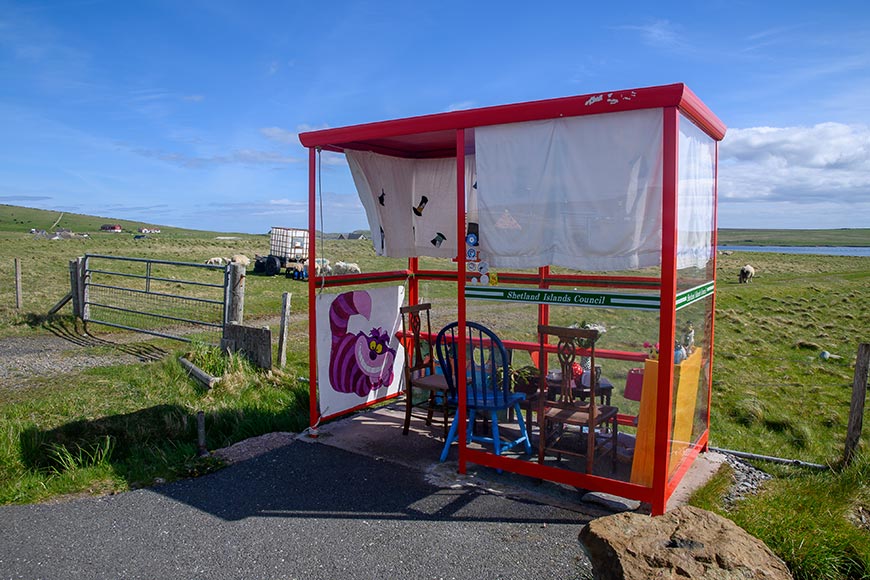
Britain’s most northerly bus stop shouldn’t really be a tourist attraction, and yet it is. Back in 1995, a 7-year-old boy called Bobby wrote to the council begging them not to remove the tatty old shelter he used to store his bike. They didn’t just leave it, they installed a proper one and someone, nobody’s has ever claimed responsibility, started furnishing it with a sofa, curtains and a microwave. Three decades on, and after being damaged in a car accident in 2024, it’s still redecorated every year with a new theme, from royal jubilees to the World Cup. For 2026, the theme is Alice in Wonderland. Visitors leave notes in a guestbook from as far away as Australia.
Dr. Bobby, as he is now, went on to study for a PhD in Glasgow and has moved away. However, the shelter is still going strong.
The Smallest House in Great Britain, Conwy
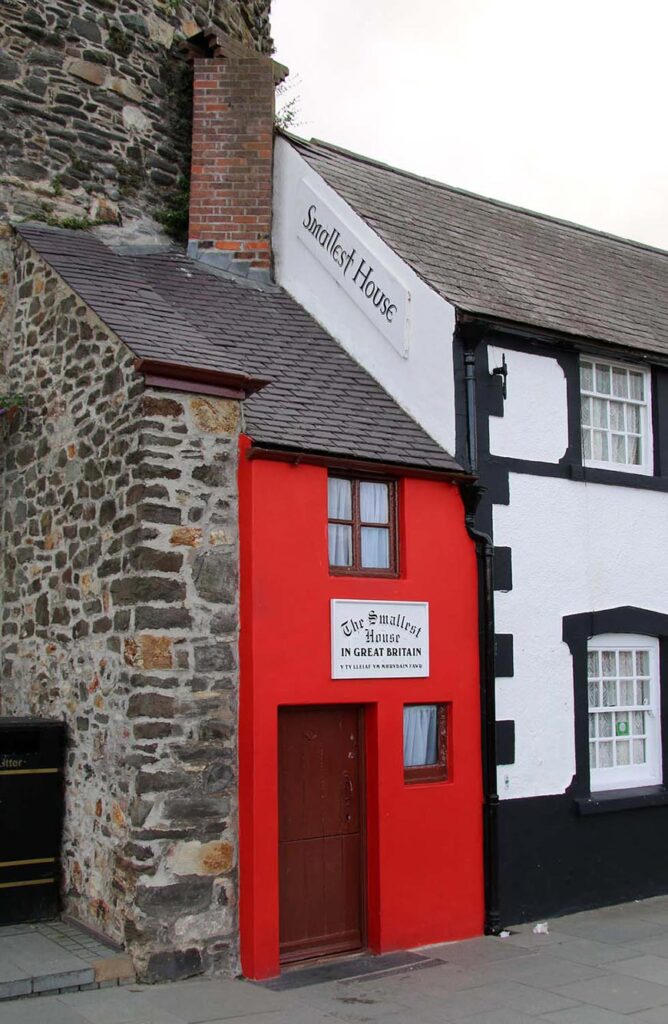
Wedged into the gap between two rows of medieval cottages on Conwy’s quayside sits a bright red house measuring just 1.8 metres wide. Fondly known as the Quay House it was a working home from the 1500s right up until 1900, when its final tenant, a six-foot-three fisherman named Robert Jones, was finally told by the council he had to move out on safety grounds.
Guinness World Records has since confirmed it as Britain’s smallest house, and between 10am and 4pm Monday to Sunday you can still pop your head in for a look at the downstairs fireplace and the impossibly cramped bedroom upstairs, provided you don’t mind stooping.
Sharmanka Kinetic Theatre, Glasgow
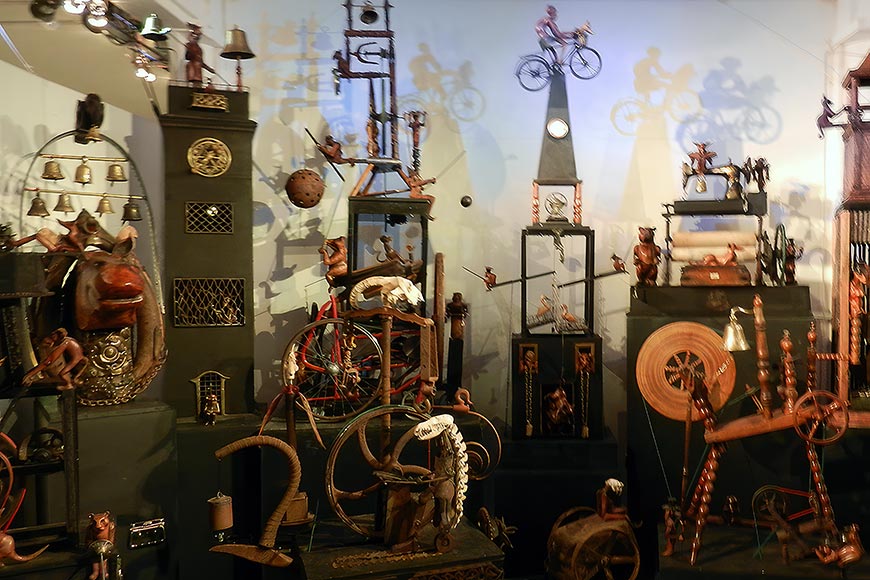
Tucked into Glasgow’s Trongate, this is a theatre filled with intricate, hand-crafted “kinemats”, scrap metal sculptures, gears and carved wooden figures that whir, clank and dance in choreographed performances set to music and lighting. It was built by Russian sculptor Eduard Bersudsky, who spent decades scavenging junkyards and rubbish tips for old machine parts and turning them into brooding, satirical mechanical creatures.
Described as being one of the country’s strangest working theatres nothing else in Britain looks or sounds quite like it, and it remains one of the country’s oddest, in the loosest possible sense of the word working.
The name ‘Sharmanka‘ is the Russian word for a barrel-organ or hurdy-gurdy, a nod to the street-music nature of the mechanical sculptures.
Rathlin West Light, Rathlin Island, County Antrim
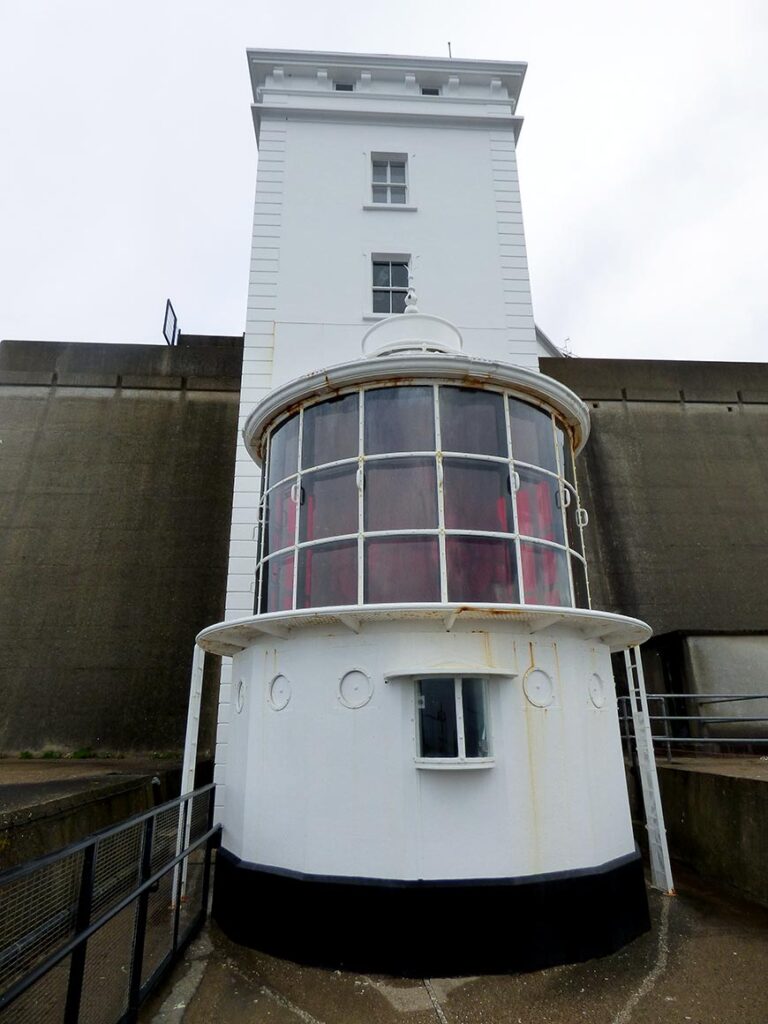
A lighthouse, built upside down. When engineers arrived at Rathlin’s western cliffs in 1912, they realised the clifftop, a hundred metres up, was usually swathed in fog, which rather defeats the point of a light meant to warn ships. So they flipped the whole design, sinking the tower into the cliff face itself with the lamp at the bottom and the keeper’s quarters at the top.
Visitors now walk down a long flight of steps to reach the light rather than climbing up to it, which still feels backwards even once you know why. Rathlin West Lighthouse is the only lighthouse of its kind in Ireland, it’s been guiding ships since 1919 before transitioning to automatic electric power in the 1980s. The cliffs around it host one of the UK’s largest seabird colonies, so you get puffins with your engineering oddity as the site doubles as the RSPB Rathlin West Light Seabird Centre.
Right then, that’s seven more logged. Between this list and the last one you’ve got a proper tour of Britain’s strangest corners, coffins, skulls, horseshoes and all. And honestly, we’re still barely scratching the surface.
This is a country that keeps a stack of horseshoes as a war memorial of sorts, redecorates a bus shelter for fun, and can’t quite agree on where a screaming skull is hidden inside a stately home. Every county seems to be sitting on at least one strange story, tucked down a back lane or bricked into a wall somewhere. We’ll keep digging them out, so don’t be surprised if a third instalment turns up before too long.
All images are produced under Creative Commons (CC) licence
Travelling soon? Things to do and attractions not to miss with Get Your Guide …
If you’ve enjoyed browsing our website, learned something new, or just had a smile because of what we do – we’d love your support to keep the good stuff brewing!
Where to next?
• Vindolanda: Britain’s Most Extraordinary Roman Site
• Best Dog-Friendly Holiday Cottages in the UK (2026 Guide)
• Fleetwood: A Historic Seaside Gem