
Do your holidays lean more toward chasing curiosities than claiming the last sun lounger? Prefer a road trip with a generous dash of the surreal?
Get a thrill from the odd, the obscure, the weird, and the downright inexplicable?
You’re in the right place.
We’ve wandered the streets of Lewes in East Sussex, with its sad and surprising avalanche (yes, really), uncovered the murky mystery between Sussex and the failed American state of Vandalia and explored Hidden Hove, which is quite the paradox when you think about it.
And that’s just the local stuff.
From bizarre historical footnotes to downright peculiar pit stops, here are 7 gloriously random oddities, curiosities, and wonderfully weird places to visit in England – perfect for travellers with a taste for the unexpected.
The Singing Ringing Tree, Lancashire

High on a windswept hill above Burnley stands what appears to be a dystopian xylophone that’s lost its sheet music. The Singing Ringing Tree is a 3-metre tall wind-powered sound sculpture shaped like a windswept tree, made entirely of galvanised steel pipes.
Created by architects Mike Tonkin and Anna Liu, the Tree howls and hums with the breeze, emitting ghostly, melodic tones that’ll either soothe your soul or make you want to run for cover.
Best experienced on a blustery day. Bring your best windproof jacket and let nature do the composing, while you take in the spectacular views of the surrounding countryside.
Where to find the Singing Ringing Tree
Just off the M65, navigate to Crown Point Road, which connects the A682 and A671 roads. From Burnley, follow the A682 and look for the signpost for Crown Point Road. There’s a small car park and the sculpture is about 10 minutes walk away.
The Tree is near the Dunnockshaw Millennium Wood, and has links to the Pennine Bridleway and local walking routes – perfect if you’re after a longer wander.
See Visit Lancashire website for more.
The Seven Noses of Soho
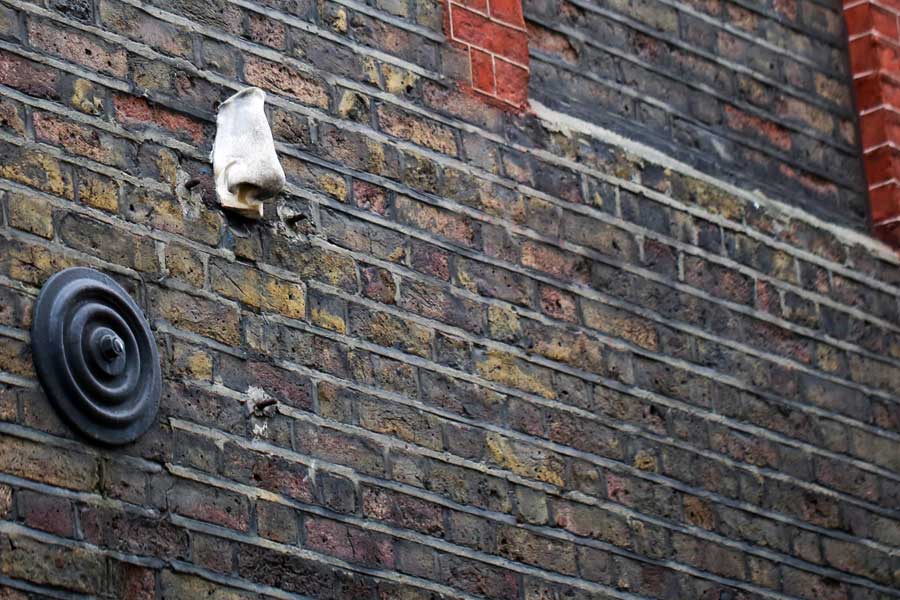
Take a stroll through Soho and you might just bump into one of London’s most nose-worthy art installations. Literally.
The Seven Noses of Soho were secretly installed by artist Rick Buckley in 1997 as a rebellion against the rising tide of CCTV. There were originally around 35 schnozzes dotted about, but only seven confirmed nasal survivors remain.
Myth says if you find all seven, you’ll be bestowed with great wealth. No guarantees, mind – especially if you spend it all at the pub after your sniffari.
So now you (k)no(w)se!
Oh, and do look out for other stray body parts attached to buildings.
Where to find the Noses of Soho
Around Soho and Covent Garden. The most famous one’s under Admiralty Arch, but this Grade I listed building, which spans the entrance to The Mall from Trafalgar Square, is being transformed into a new Waldorf Astoria hotel. It’s due to open in 2026, hopefully the schnozz will survive the restoration.
London is best visited by public transport, and it has excellent train, bus and tube connections.
The Traffic Light Tree, Billingsgate Market, London
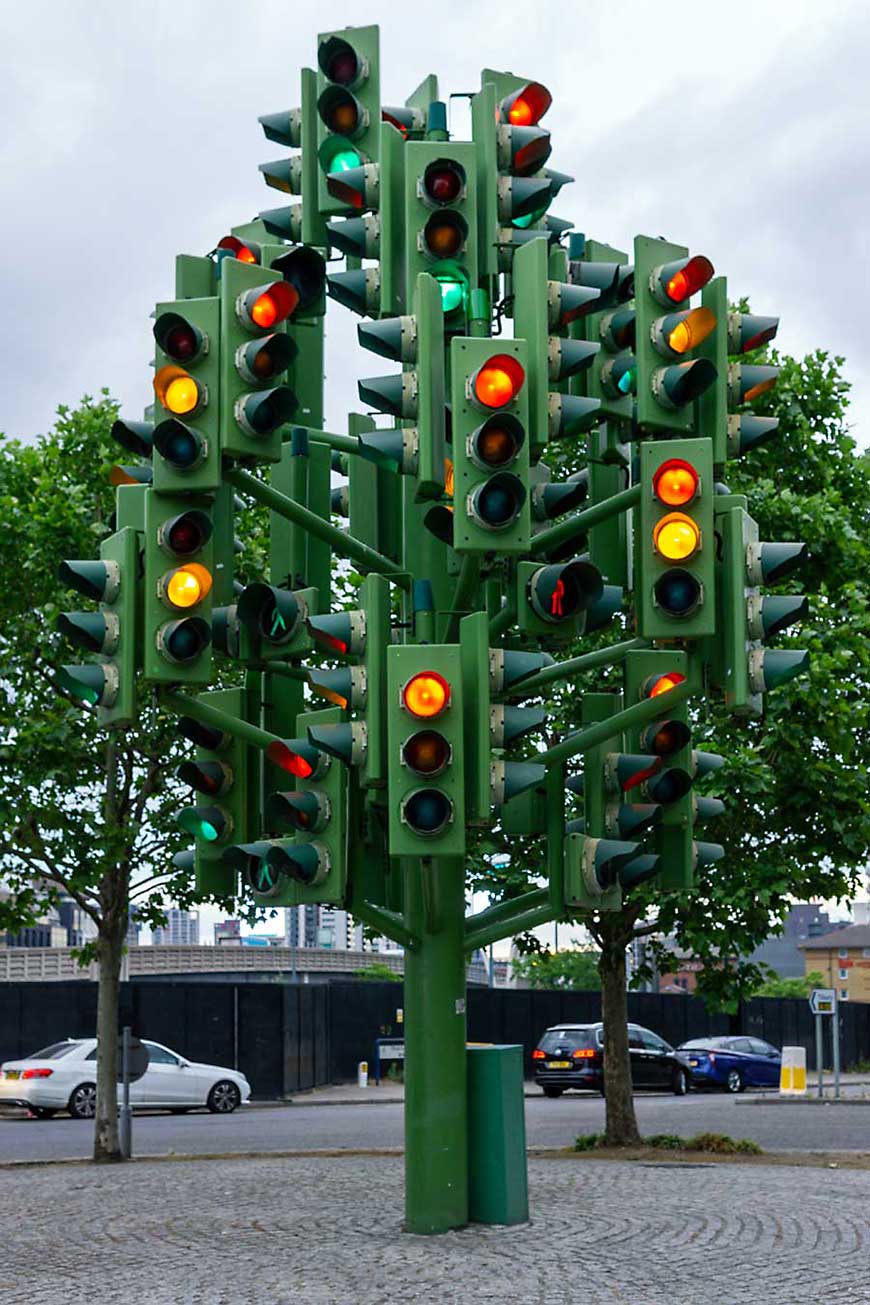
Think traffic lights are stressful? You’ve seen nothing yet.
The Traffic Light Tree, designed by French artist Pierre Vivant, is an installation with 75 constantly changing lights. It once baffled drivers on Westferry Road near Canary Wharf before being moved to a less distracting home on a roundabout near Billingsgate Market.
The idea was to reflect the “pulsing activity” of Canary Wharf, though many suspect it’s just trying to give us all an existential crisis.
The giant structure has 75 ever-changing red, green and amber lights. It was designed by Pierre Vivant, who won a competition to bring public art to the London Docklands.
Where to find the Traffic Light Tree
Walk from Canary Wharf station (Jubilee line) to Trafalgar Way. Just don’t drive to it as you’ll never know whether to stop, go, or start philosophising.
The Jubilee Line takes you to Canary Wharf and the Tree is a 10-minute walk, on Trafalgar Way near Billingsgate Market.
The Round Table, Winchester
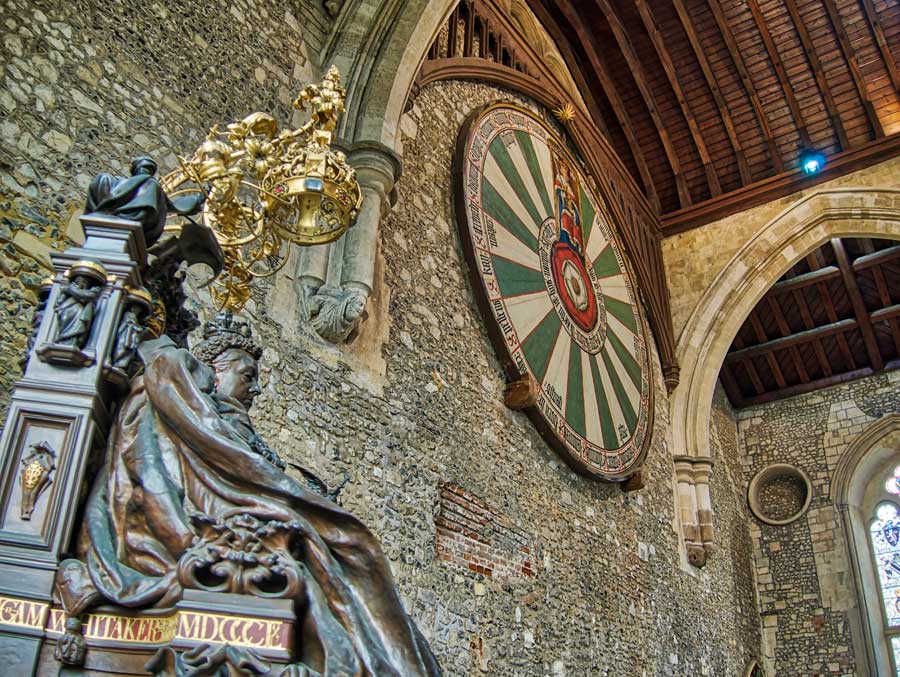
Think Arthurian legend is the stuff of dusty old myths? Well, here’s something you can actually see.
Winchester’s Great Hall proudly displays a large wooden disc painted with the names of Arthur’s knights and a very Tudor-looking King Arthur. It’s not from Arthur’s time (assuming he existed at all), but this magnificent piece of carved oak was probably created in the late 13th century during Edward I’s reign for a tournament to celebrate a festival or wedding, then repainted by order of Henry VIII.
Still, it’s rather magnificent, and frankly, who doesn’t love a giant prop?
Where to find the Round Table of Winchester
Somewhere along the line the table lost its legs, so today it hangs in the Great Hall of Winchester Castle. While the castle’s mostly long gone, the Hall remains, as does Queen Eleanor’s Garden, which you can visit, and some ancient stone corridors that are worth nosing around.
The Great Hall is 10 minutes walk from Winchester train station and Tower Street car park is 5 minutes away.
Find out more at Visit Winchester
Lands of Exiles, Wardington, Oxfordshire
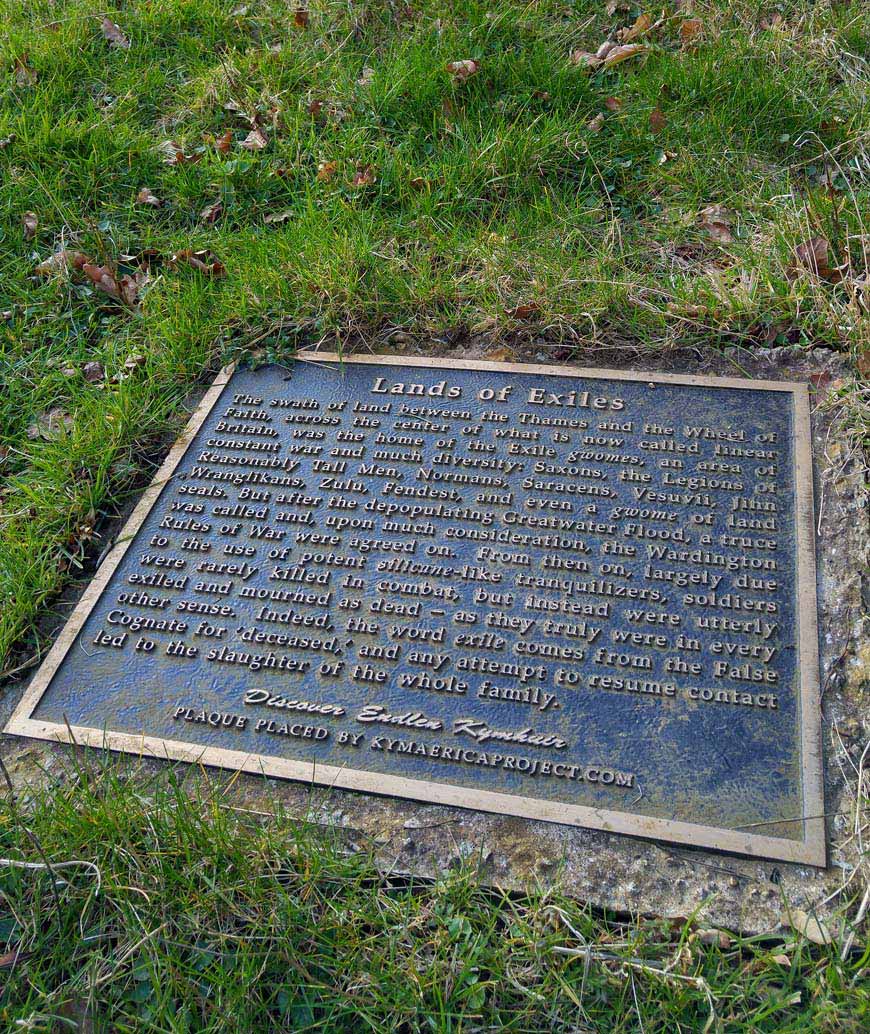
Strap in, this one’s odd even by our standards.
We’ve read the explanation over and over again, and it still makes no sense.
Just off the M40, near the village of Wardington lies a plaque in a field – just a plaque, mind – bearing cryptic prose that seems to make less sense the more you read it. It’s part of Kcymaerxthaere, a global art project by Eames Demetrios marking ‘parallel world’ crossover points.
There are over 140 installations across the globe – each one a link to an alternate universe. Or possibly just very creative storytelling. Either way, it’s a great excuse to wander into a random field and stare thoughtfully.
Nope, we still have no clue!
Where to find the Lands of Exiles plaque
Take Junction 11 off the M40 and head for the village of Wardington then walk the rest. It’s on a narrow country lane, with no parking nearby, so best approached on foot. There is a path from the village.
Mother Shipton’s Cave, Knaresborough, North Yorkshire
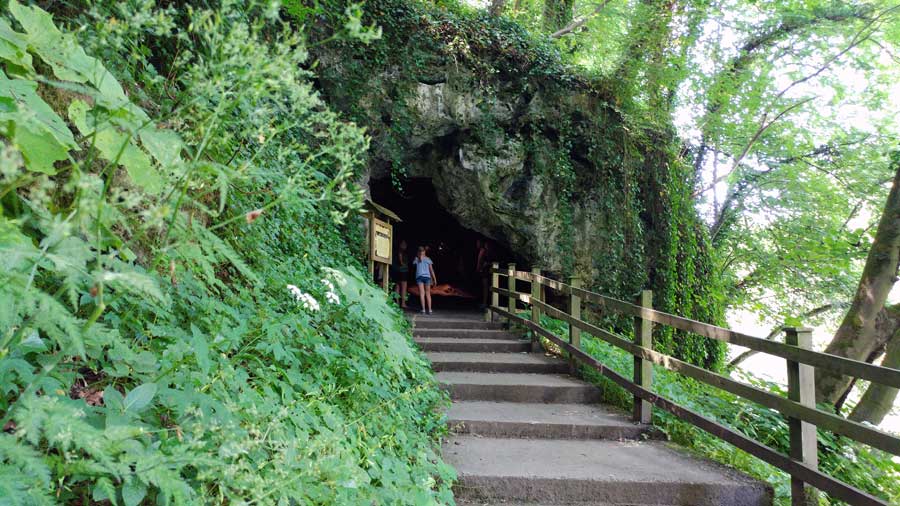
Witches and their works are always good for a tall tale or two, and Mother Shipton has a lasting reputation.
She’s been terrifying and fascinating visitors since the 1600s, making predictions like the Great Fire of London, the invention of iron ships, and that the world would end in 1881 (slightly off on that one).
The cave, supposed home to Yorkshire’s most famous prophetess, contains her “petrifying well” that still turns objects to stone – thanks to mineral-rich water that hardens teddy bears, hats and gnomes alike. Today, we know all about the petrifying effects of water with a high mineral content.
But never let science get in the way of a good story!
Where to find Mother Shipton’s Cave
The cave, England’s oldest tourist attraction, is in the market town of Knaresborough, not far from Harrogate.
Trains run from Leeds and Mother Shipton’s home is a 5-minute walk from the station, or grab the local bus.
The cave closes for winter, but re-opens in March.
The Vampire Rabbit, Newcastle upon Tyne
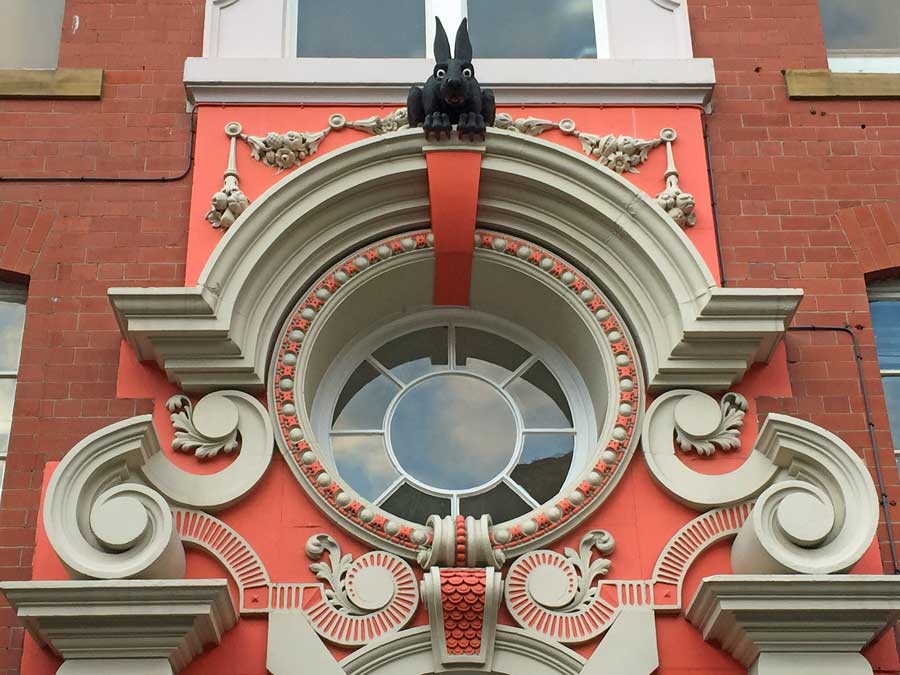
Gargoyle? Rabbit? Demonic hare? Or blood sucking vampire? Who’s to say?
Above the back door of the Cathedral Buildings near Newcastle’s St Nicholas’ Cathedral sits the Vampire Rabbit, a black, bug-eyed creature with blood-red teeth and claws. No one really knows what it is, why it’s there, or what it’s thinking – and that’s exactly why it’s perfect.
Originally the same sandy colour as the surrounding brickwork, the 100-year-old statue was later painted black and little red droplets added to its teeth and claws.
Some say it was a prank to scare off grave robbers from the nearby cathedral grounds. Others reckon it’s an Easter Bunny gone rogue. Whatever the truth, it’s been delighting and mildly traumatising visitors for over a century.
Where to find The Vampire Rabbit
This unique rabbit-shaped gargoyle can be found above the door at the rear entrance to Cathedral Buildings, facing St Nicholas Cathedral, in the centre of Newcastle.
Dean Street car park is nearby, or it’s less than 10 minutes from the train station.
Got your own favourite oddball attraction or delightfully bizarre landmark in England? Send it our way – we’re always on the lookout for the next gloriously weird day out.
Whether you’re into mysterious art projects, whispering winds, or vampiric wildlife, there’s always something strange just around the corner in England.
Where to next?
• Fuller’s Follies
• The Vandalian Tower
• Weird and wonderful museums