
A Rainy Day Adventure in the Delightfully Bizarre
It’s the UK. It’s raining. The sort of weather that makes ducks question their life choices. You’ve tried to shelter in a tearoom, but every scone-scoffing table is taken, and the queue for Earl Grey snakes out the door. What now? You do what every self-respecting Brit does: you find a museum.
But not just any museum. No, no. You don your damp anorak and head for one of Britain’s gloriously off-kilter, eyebrow-raising, daft museums. These aren’t your average halls of Roman remains or Tudor teaspoons. These are temples to the peculiar, the passionate, and the positively potty.
Here’s our pick of the UK’s most eccentric museums that will make your rainy-day outing utterly unforgettable.
The Viktor Wynd Museum of Curiosities, Hackney, London
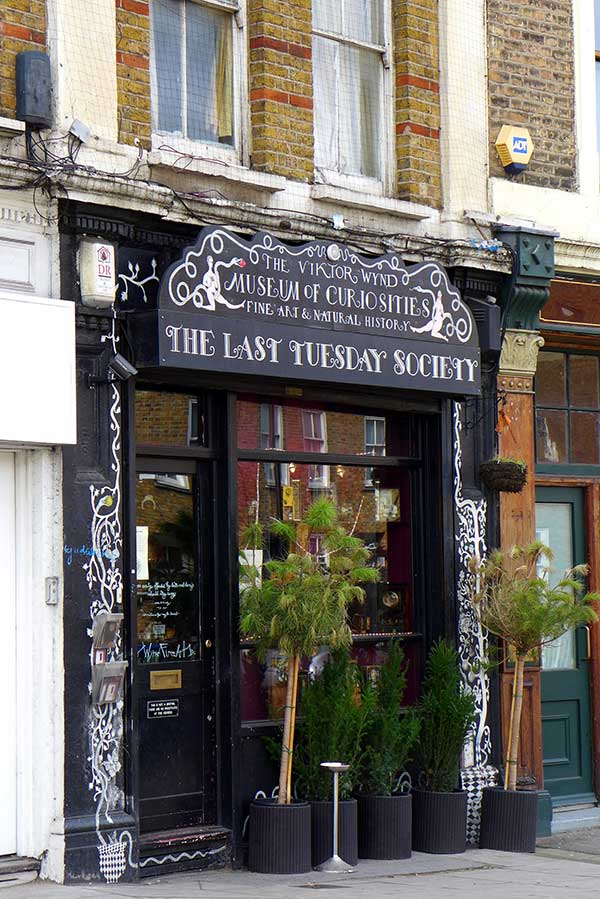
A treasure trove of the surreal, the spooky, and the slightly suspect. Tucked behind a red velvet curtain in East London, Viktor Wynd’s Museum is stuffed to the gills with shrunken heads, two-headed kittens, dodo bones, occult artefacts, and celebrity hair.
Founded by dandy, raconteur, and professional collector of the downright bizarre, Viktor Wynd, this is a place that scoffs at categorisation. It’s part Victorian curiosity cabinet, part occult shrine, part taxidermy fever dream and 100% unforgettable.
There’s even a cocktail bar. Come for the Victorian-style cabinets of mystery, stay for the absinthe.
The Viktor Wynd Museum of Curiosities
Open:
Tuesday-Friday 3pm – 11pm
Saturday midday – 11pm
Sunday midday – 10pm
Best to check ahead unless you enjoy awkward disappointment.
Crab Museum, Margate, Kent
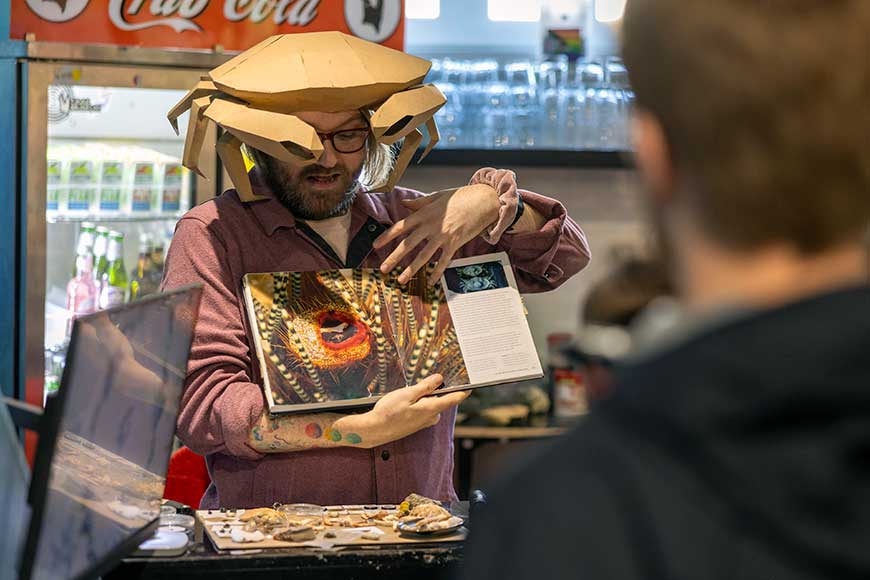
Europe’s only museum dedicated to the world of the decapod. Yes, an entire museum all about the sideways-walking, pincer-clad wonders of the deep.
Located just a short scuttle from Margate’s Old Town, the Crab Museum is what happens when science, satire, and shellfish collide. Not just crustaceans, but clawed crusaders against climate change, evolution, and existential dread.
Equal parts science and seaside silliness, this crustaceous curiosity opened its claws to the public in 2021. Inside, expect a heady mix of proper science (like evolutionary biology, ocean acidification, and how crabs can help us understand climate change), alongside utterly bonkers displays, interactive exhibits, and delightfully bizarre signage.
You’ll meet the Crabfather (a giant crustacean model that would be terrifying if he weren’t wearing a little suit), and learn that crabs aren’t a single species, but a “body plan”, a shape that nature just keeps reinventing. You’ll find yourself laughing, learning, and possibly questioning your species’ dominance.
The interactive displays are cheeky and clever, much like crabs themselves.
Crab Museum
Open:
Friday, Saturday, Sunday 11am – 5pm
Free entry. Sideways walking encouraged but not mandatory.
Accessibility:
Access to Crab Museum is via a flight of stairs with a handrail. Unfortunately, they cannot currently offer wheelchair access, though they hope to soon.
British Lawnmower Museum, Southport, Merseyside

At the British Lawnmower Museum in Southport, they don’t just honour the noble art of turf-trimming, they celebrate it with the reverence usually reserved for monarchs and mildly popular TV chefs.
Tucked between a motor spares shop and the seafront, this hidden horticultural gem boasts over 300 vintage lawnmowers, many lovingly restored, all proudly bonkers. From Victorian contraptions that look like medieval siege engines to sleek, gleaming models once owned by the likes of Brian May, Paul O’Grady and, yes, Hilda Ogden from Coronation Street, it’s a festival of grass-cutting glory.
The museum was founded by former racing champion and engineer Brian Radam, whose childhood obsession with mowers got just a little out of hand. His motto? “A cut above the rest”. Naturally.
You’ll learn how Edwin Beard Budding, the inventor of the lawnmower, toiled in secret for fear of being laughed at, an anxiety many mower obsessives still feel to this day.
And if you think this is just about blades and bolts, think again. There’s also rare documentation, ads, and patents that tell the whole story of Britain’s manicured lawn obsession, from the stately garden to the suburban patch.
British Lawnmower Museum
Open:
Monday – Friday 9.00 a.m. to 5.00 p.m.
Saturday 9.00 a.m. to 1.00 p.m.
Dog Collar Museum – Leeds Castle, Maidstone
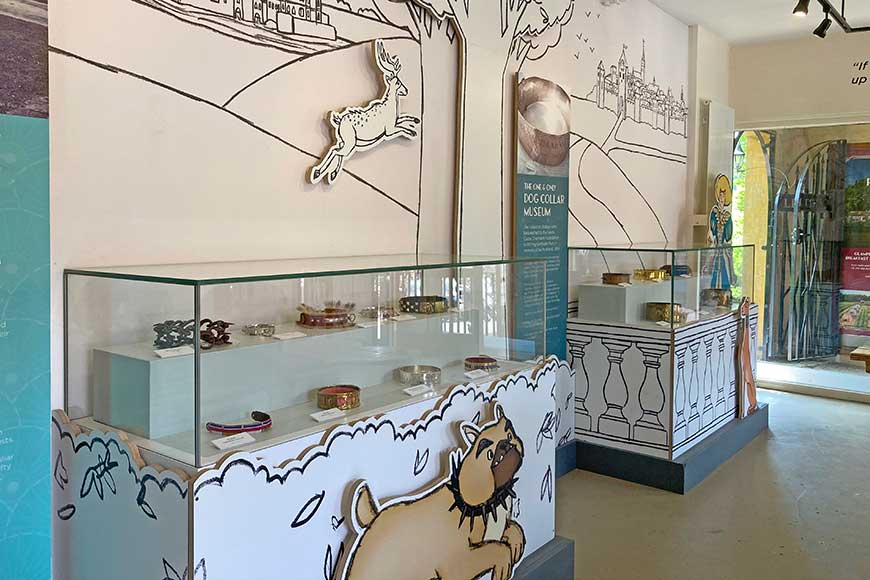
Ever pondered canine neckwear through the ages? Course you have. The museum was founded in 1977 after historian Gertrude Hunt presented her late husband’s eccentric collection of collars.
What started as a curious little donation has since grown into a tail-waggingly brilliant collection of over 130 collars, dating from the late 15th century right through to the 20th – which, in dog years, is basically forever. There’s even an inscribed collar from the 1600s, because nothing says “good boy” like a bit of ancient classical engraving.
From medieval mastiff armour to gilded poodle chokers, this collection spans five centuries of four-legged fashion. Set in the picturesque Leeds Castle, it’s small, but the only museum where dogs might have the better wardrobe.
Leeds Castle
Open:
Leeds Castle is open daily from 10am and the museum is included in the admission price.
Check for early closures and special days – or prepare to be collared by disappointment.
Jack the Ripper Museum, Cable Street, London
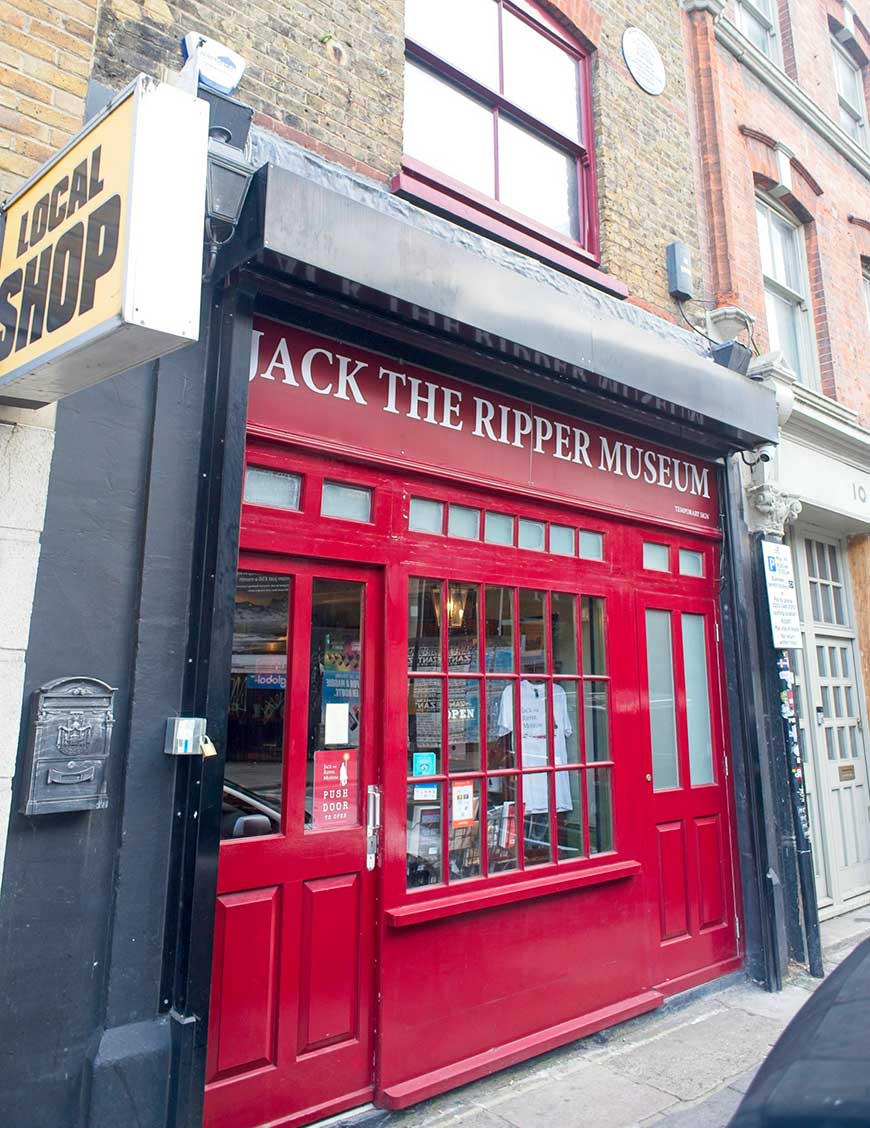
For those who prefer their history dark, foggy, and mildly terrifying, this one’s a spine-chiller. A stone’s throw from the alleys of Whitechapel, the Jack the Ripper Museum plunges you headlong into the gaslit gloom of 1888, a time when fear stalked the cobbled streets and one of the most infamous killers in history was making headlines and nightmares.
Step inside a Victorian town house and descend into the depths of 1888 Whitechapel. Explore crime scenes, inspect police files, and delve into the lives of the victims, offering a more balanced (and respectful) approach than the usual gory theatrics.
Equal parts grim and gripping, it’s an immersive slice of macabre London lore. Bonus points for making it out without looking over your shoulder.
Jack the Ripper Museum
Open daily, 9:30am – 6pm. Best enjoyed with a sturdy constitution and a strong cuppa after. No fainting in the gift shop, please.
Accessibility:
The museum has a lift available to all floors.
Derwent Pencil Museum, Keswick, Cumbria

In the scenic market town of Keswick this gloriously niche institution is a shrine to graphite, shavings, and the humble writing stick that’s launched a thousand shopping lists and sketched empires.
Opened in 1981 by the Cumberland Pencil Company (now Derwent), the museum stands on the site of Britain’s first pencil factory, founded in 1832. And to think, it all started because locals discovered graphite in the nearby Borrowdale valley and thought, “You know what this would be great for? Drawing sheep.”
Inside, you’ll find everything from the world’s longest colouring pencil, measuring almost 8 metres, to the wartime “spy pencils” issued to RAF pilots, complete with hidden silk maps and miniature compasses for when you needed to write and escape occupied France.
There’s also a fascinating display of historic pencil-making machinery, original packaging designs, and an entire wall devoted to the many shades and subtleties of graphite. It’s unexpectedly riveting, like a good pub quiz round on stationery with a dash of espionage thrown in.
Derwent Pencil Museum
Open daily, 9.30am to 5pm. Last entry at 4pm. BYOB (Bring Your Own Biro).
Café, open 9:30am – 4:30pm.
Brighton Toy and Model Museum, Brighton

Toys, glorious toys! Tucked away in the Victorian arches beneath Brighton railway station this hidden gem has been delighting visitors since 1991 with its immaculately curated world of childhood dreams and collector’s joy. If you’ve ever wondered what heaven might look like for a vintage toy enthusiast, this is it.
Step inside this treasure chest and prepare for a glorious onslaught of nostalgia. Over 12,000 toys and models are packed into this Aladdin’s cave, from 1930s tinplate trains and Meccano marvels to antique teddy bears, hand-painted dolls’ houses, and model planes suspended in mid-flight. There are Hornby locomotives, Dinky cars, Steiff animals, and more things that go whirr than in your average modern gadget shop.
It’s not just for kids – in fact, many grown-ups are spotted staring longingly at the cabinets, misty-eyed and mumbling something about “Christmas, 1974.” The museum also prides itself on its detailed dioramas, lovingly recreated railway layouts, and even a section on puppets and construction kits.
Brighton Toy and Model Museum
Open Tuesday to Friday: 10:00am – 5:00pm
Saturdays: 11:00am – 5:00pm.
Just a hop, skip, and a soft-shoe shuffle from Brighton Station. Mind your head, your childhood might hit you unexpectedly.
Hat Works Museum, Stockport, Greater Manchester

Ever stood in front of a mirror and thought, “What I really need in life is a bonnet with authority”? Then welcome to Hat Works, the UK’s only museum dedicated entirely to the noble art of sticking something fancy on your head.
Perched proudly in a restored Victorian cotton mill in Stockport (a town once so hat-happy it turned out millions a year), this museum is a two-floor celebration of millinery madness, fashion history, and good old-fashioned northern ingenuity. Once the beating heart of Britain’s hatting industry, Stockport supplied the world with toppers, bowlers, boaters, and berets
This homage to headwear houses 20 working Victorian hat machines and over 400 hats. Discover how Stockport once led the world in turning beavers and felt into fashion statements. It’s a millinery masterpiece, minus the tea party.
Hat Works Museum
Admission is free.
Open: Thursday, Friday and Saturday: 10am to 4pm. Last admission at 3:15pm.
Closed: Monday, Tuesday, Wednesday and Sunday.
Hat Works Café is open from 10am to 4pm on Thursdays and Fridays and 11am to 3pm on Saturdays.
The Fan Museum, Greenwich, London

Fans of fans, rejoice. This elegant spot fans the flames of obsession with over 3,000 years of fan design, from ancient hand-flappers to modern advertising curiosities. It’s genteel, it’s breezy, and it’s the most niche thing you’ll see this side of a doily convention.
Wafting gently in the heart of historic Greenwich, just a short stroll from the Cutty Sark and all things maritime, sits the only museum in the UK (and indeed the world) dedicated entirely to the delicate, dazzling, and occasionally deadly fan. Housed in a pair of elegant Grade II* listed Georgian townhouses, The Fan Museum has been flapping its way into visitors’ hearts since it first opened in 1991.
Inside, you’ll find over 5,000 fans spanning the globe and several centuries, from dainty hand-painted silk fans carried by 18th-century French aristocrats, to intricately carved sandalwood fans from China, to lavish feathered creations fit for Edwardian soirées and theatrical flouncing. There’s even a fan made entirely of ivory (back when that was, regrettably, a thing), and another with concealed blades – proving fans weren’t just for flirtation but could be weaponised with style.
Fans weren’t merely cooling devices; they were status symbols, fashion statements, and occasionally tools of espionage. In the 18th century, so-called “fan language” allowed society ladies to send coded messages across crowded ballrooms with a mere flick of the wrist. Who needs WhatsApp when you’ve got lace, lacquer, and subtext?
The Fan Museum
Open: Tuesday to Saturday, 11am to 5pm. Last admissions 4:30pm.
It’s so fans-cinating.
High Wycombe Chair Making Museum, Buckinghamshire
Chairs! But make it heritage. This non-profit-making museum, now known as Wycombe Museum, is run by enthusiasts and is a heartfelt ode to the Windsor chair and the bodgers, benchmen, and framers who crafted them.
Follow the brown tourist signs to Kraft Village on Grafton Street in High Wycombe, where amid art studios and a wood‑turning workshop lies this living celebration of the town’s crown‑jewel craft.
In 1875 up to 4,700 Windsor chairs were made every day in the town; the Bodgers made the round chair parts in the local beech woods, the other parts were made by the Benchmen, and the Framer assembled all the parts to make the chairs.
See a treadle lathe in action and gain a new appreciation for your IKEA flat-pack.
High Wycombe Chair Making Museum
Free Admission
Open: Tuesday, Friday, and Sunday 10am – 4pm.
Closed: Monday and Saturday.
Windsor Chair Café:
Open: Tuesday, Friday, and Sunday 10am – 3pm.
Museum of Brands, Packaging and Advertising, Notting Hill, London
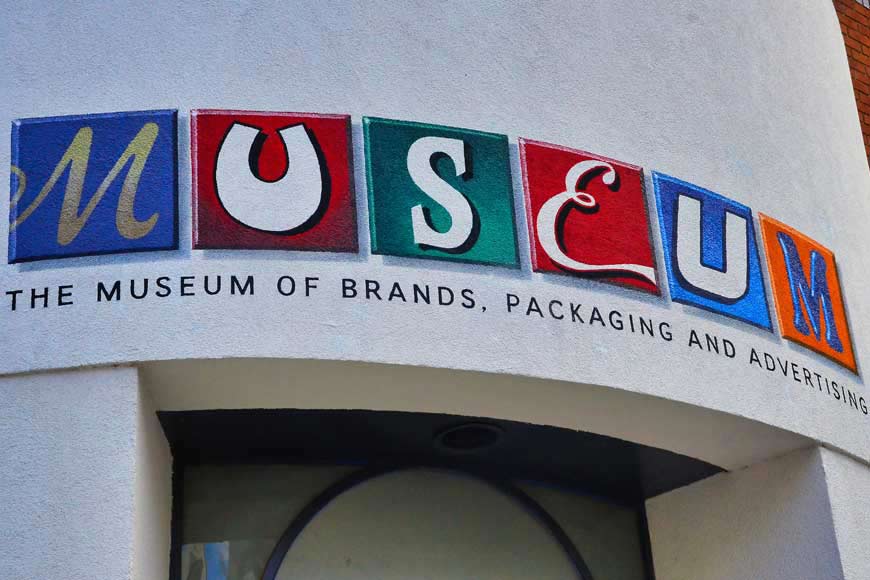
If you’ve ever found yourself getting oddly emotional over an old tin of Ovaltine or felt a rush of joy upon spotting a packet of Spangles, then congratulations you’re exactly the sort of gloriously sentimental creature this museum was made for.
Hidden behind a rather unassuming entrance in Notting Hill (don’t expect a giant can of Heinz Beans above the door as they’ve gone for tasteful), the Museum of Brands is a lovingly curated explosion of packaging, pop culture, and pure capitalist nostalgia.
Founded by consumer historian Robert Opie, a man who began collecting wrappers and sweet packets when most children were trying to collect conkers, this museum houses over 12,000 items.
But it’s not just about fluttery feelings for Marathon bars. There are fascinating insights into how branding reflects social change, how women were depicted in post-war ads, how cigarette packaging evolved from glamorous to grim, and how slogans have gone from “Beanz Meanz Heinz” to baffling hashtagged campaigns no one really understands.
Whether you’re an ad geek, a graphic design buff, or just someone who really misses Texan bars, the Museum of Brands will tickle your memory glands and send you skipping home with a head full of jingles and the urge to start hoarding old shampoo bottles.
Museum of Brands
Open: Monday to Saturday: 10am – 5pm.
Closed: Sunday
Café serves hot and cold drinks, homemade cake and sandwiches.
There’s also a free to enter, award-winning Memorial Garden to see.
Lavatory Museum, Stoke-on-Trent

Flushed with curiosity? You should be. Part of the wider and very brilliant Gladstone Pottery Museum, this lavatorial delight dives headfirst into the glorious history of the Great British loo. From ornately painted Victorian cisterns to thunderboxes and terrifying outside privies, it charts the rise of sanitation – and how civilisation was, quite literally, built on the bog.
There’s even a replica of a Victorian slum bathroom, plus interactive toilet seats (don’t worry, no actual flushing involved). You’ll also learn why Thomas Crapper wasn’t quite the inventor you think he was. It’s surprisingly educational, mildly ridiculous, and more than a little liberating.
And don’t miss the infamous “saggar pile” in the cobbled yard — a mountain of ceramic kiln furniture that’s far more dignified than its name suggests.
Lavatory Museum
Open Wednesday – Saturday 10am – 5pm and Sunday 11am – 4pm.
Ideal for those who think toilet humour is both educational and essential.
Tearoom available for post-loo snacks – wash your hands first, obviously.
National Gas Museum, Leicester

Leicester is not exactly a hub of tourist attractions, although the Richard III centre is awesome, but a museum dedicated to the history of the gas industry? Really?
Beneath the old clock tower gatehouse of the Victorian Aylestone Road gasworks (built in 1878), the National Gas Museum is more than just an echo of flames past – it’s the world’s most extensive collection of gas-powered oddities and industrial nostalgia.
Discover the story of gas. See vintage working gaslights, and discover some weird and wonderful gas gadgets like the gas radio and the gas hair-dryer.
There’s plenty of drama here from dangerous Victorian gasworks via the ultra-modern gas-powered kitchen of the 1920s, to today’s mega-buck industry. It’s a sweeping, gas-filled saga.
National Gas Museum
Entry is free.
Tuesday, Wednesday – 9:30am to 3pm. Last entry at 2:30pm.
Thursday, Friday, Saturday, Sunday, Monday – Closed – pre-arranged group bookings only.
Whether you’re dodging the rain or actively seeking the strange, these weird and wonderful museums are proof that Britain does eccentricity better than anyone. It’s heritage, but with a twist.
So, what have you found on your travels that whiled away an hour or so, and where, against all expectation, you learned something new?
Some images reproduced under Creative Commons licence
Where to next?
• Inside Preston Manor: Ghosts, Gossip, and Edwardian Grandeur
• Ghosts and Gravestones tour of Boston
• 31 Great British place names