

Britain’s Forgotten Folly with a side order of American Dreams.
There’s something deliciously British about a folly; those grand, gloriously useless architectural statements that dot the countryside like stone confetti. Designed to impress, confuse or simply give the local sheep something interesting to ponder, follies serve no real purpose … except, perhaps, to tell a story.
And what a story the Vandalian Tower has to tell of ambition, wealth, power and decay.
Perched on Tower Hill, just above the charming West Sussex village of South Harting, the Vandalian Tower is a crumbling reminder of one man’s bold (and ultimately bungled) transatlantic ambition.
A Tower Built on Dreams – and Disappointment
At first glance, you might think the tower is just another scenic ruin – and it is. But dig a little deeper, and you’ll find its roots reach all the way across the Atlantic, into the wilds of 18th-century America.

The tower was built by Sir Matthew Fetherstonhaugh (a name best spoken with a full teacup and raised eyebrow). A wealthy landowner and keen improver, he purchased the Uppark estate in 1747 and poured his fortune into transforming the house and its grounds. Perched high on the South Downs, Uppark House became a fine example of 18th-century grandeur, boasting exquisite interiors and sweeping views.
Despite suffering a devastating fire in 1989, the Grade I listed house has been meticulously restored and is now in the care of the National Trust. It recently re-opened to the public following an extensive 18-month conservation project.

But we digress …
Sir Matthew didn’t restrict his aspirations to the green and pleasant land of England. His ambition vaulted across the Atlantic and in the 1770s, he joined a scheme to create a brand-new British colony in the Ohio Valley – a venture named Vandalia.
Sounds grand, doesn’t it? Sadly, the whole thing was doomed from the start.
What was Vandalia?

Vandalia was intended to be the 14th British colony in North America, carved out of land in what is now West Virginia and Kentucky. Fetherstonhaugh and his partners – with the backing of the Grand Ohio Company – secured rights to a vast tract of land from the Iroquois Confederacy and even courted political support from none other than Benjamin Franklin.
The name ‘Vandalia’ was a bit of royal brown-nosing – meant to flatter Queen Charlotte, wife of George III, who was (rather questionably) believed to be descended from the Vandals, those famously destructive Germanic tribes of old.
Alas, while the flattery was grand, the timing was dreadful. The American War of Independence broke out in 1775, and the dream of Vandalia was swiftly and thoroughly torched – along with Sir Matthew’s hopes of colonial prestige.

The Tower That Time Forgot
Sir Matthew, ever the optimist, had commissioned the Vandalian Tower in the early 1770s to celebrate his impending American success. Unfortunately, he died in 1774 – before the colony had a chance to fail, which is one way to preserve one’s dignity.
The tower itself, meanwhile, endured as Sir Matthew’s son Henry took possession of the Uppark estate, and proceeded to spend most of the money his father had amassed before marrying Mary from the dairy, at the ripe old age of 70.
An associate of the Prince Regent, Sir Henry (Harry to his friends) used Uppark for outrageous house parties and probably hosted al fresco fun in the Vandalian Tower which still stood proud on its hill.
One guest-in-residence in the early years of Harry’s ownership was his mistress, Emma Hart – maid, model, dancer and scandalous actor – who later became Lady Hamilton and lover of Nelson, the nation’s seafaring hero. Some say she used to climb the Vandalian Tower to search the horizon for Nelson’s ships, giving rise to the tower’s local nickname of ‘Lady Hamilton’s Folly’. But history suggests Sir Harry grew bored with Emma and sent her packing long before she became enamoured of Horatio.

During this riotous time, the tower was reportedly used as a hideaway by the notorious Hellfire Club – a secret society of high-society rogues best known for their debauchery and dislike of daylight.
Then in 1842, disaster struck: a fire gutted the tower, leaving behind the elegant brick shell that still stands today. It’s now Grade II listed, sheep-surveyed, and very much fenced off – a historic relic with a view, if no actual purpose.
Vandalia: The State That Never Was
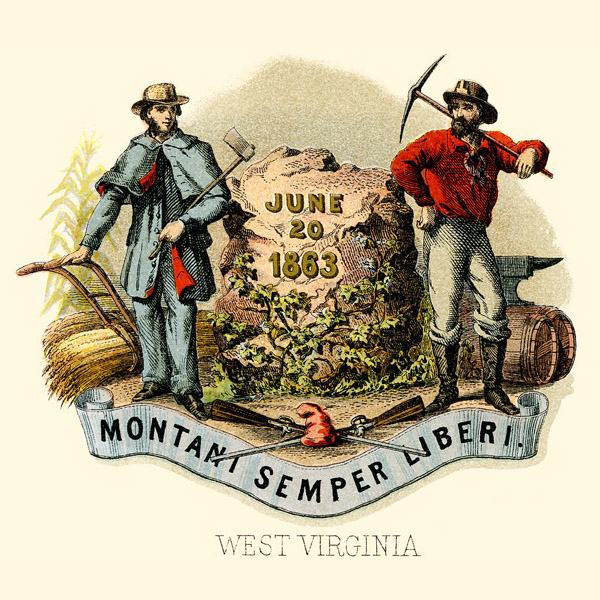
As for Vandalia itself? The proposed colony was quickly quashed by fierce opposition from Pennsylvania and Virginia, and eventually the land became part of modern-day West Virginia and Kentucky.
Several small towns in the U.S. now bear the name ‘Vandalia’ – but none have any direct connection to the original plan (or to Queen Charlotte, for that matter).
All that remains of the dream are a few old maps, some long-forgotten political papers – and, of course, this charming, slightly ridiculous tower on a hill miles away in Sussex.
A Monument to Ambition (and Possibly Mild Delusion)
The Vandalian Tower is one of those oddities that make British countryside walks unexpectedly fascinating. It’s a monument to imperial ambition, 18th-century ego, and the sheer optimism of building a celebratory structure before seeing any actual success.
Today, it’s a peaceful ruin surrounded by indifferent sheep and sweeping views – a fitting epitaph for a dream that never quite made it across the Atlantic.

The Vandalian Tower Today
You’ll find the tower on the National Trust’s Uppark Estate, but the trees have grown up, so there’s no clear view of it from the house and gardens, and only the Fetherstonhaugh family, who still live in Uppark House, have access. Even if you could reach it, you can’t go inside as it is fenced off, but you can still get views of it from certain vantage points.
Best location is from the top of Harting Down, a National Trust run patch of wild land just off the B2141 (use postcode GU31 5PN for your SatNav.) Parking there is free for NT members; otherwise, it’s pay-by-phone or online. Take a short stroll from the car park to the top field and look back, and the Tower makes a rather striking appearance above the treetops. On a clear day, you might even spy the Hampshire coast in the distance.
In theory, you could see the Vandalian Tower from the South Downs Way that runs alongside the Uppark estate near the village of South Harting, but in practice the trees have grown up so thickly it’s unlikely you’ll catch more than a glimpse in the dead of a leafless winter and there is no official footpath up the steep bank to the field where the tower stands.
More information for the history-hungry
National Trust: Uppark House and Garden
Vandalia and the Grand Ohio Company
Vandalia (colony) Wikipedia
The Hellfire Club
All images are copyright © John Heinrich or public domain
Where to next?
• Fallingwater
• Fuller’s Follies
• Eastern State Penitentiary