
Everyone is allowed to have likes and dislikes when it comes to food – even Pork Belly has a few idiosyncrasies. For some reason, he can’t abide figs or dates.
But it must be very frustrating for a specialist chef to hear people make blanket statements like “I don’t like Chinese” or Mexican, French or English. There are far too many different styles and regional variations in any one country to lump them all together.
And when it comes to the vast continent of India – well, there are almost as many cooking styles as there are people.
That’s where Deccan Tiffin comes in.
Priya Deshingkar of Deccan Tiffin
“I want to bring the taste of real Indian food to people.”

Priya Deshingkar is a busy professional academic but in her spare time she loves to share her family tradition of enjoying home-cooked, rich and varied Indian cuisine.
We were introduced to her culinary skills at her first supper club, a sumptuous five-course menu of tantalisingly different taste sensations.
Lamb shorba from the Mughlai kitchens of new Delhi and stuffed puris from Old Delhi.
Shahi chikken tikka and Dum Ka Teetar – partridge cooked in the style of the Awadhi rulers of Lucknow.
The royal dishes of India
“With my supper clubs, I want to show the richness and variety of the royal dishes of India.”
“All Shahi (royal) dishes are complex and highly perfumed with exotic ingredients.”
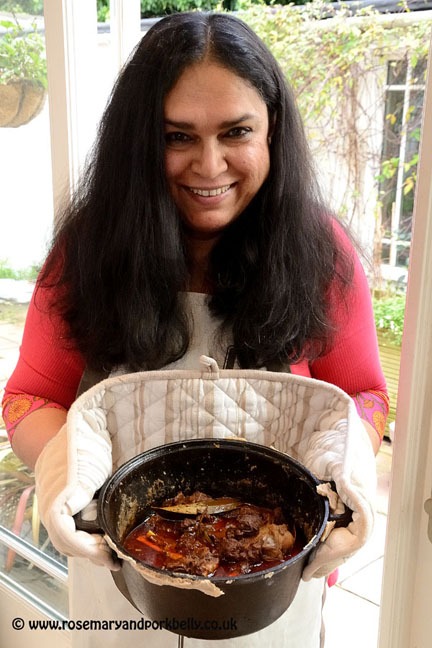
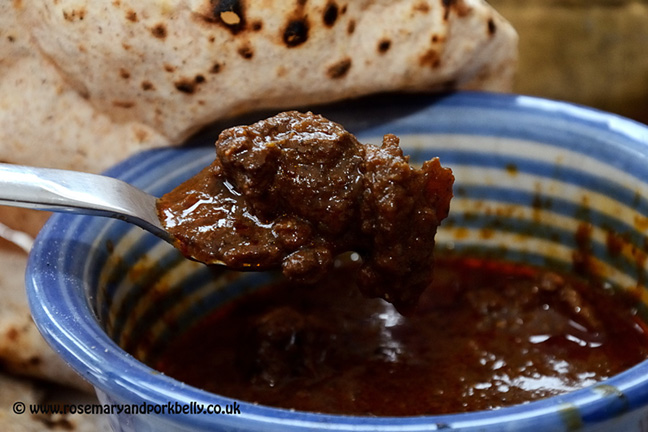
After a wonderful evening tucking in to these royal delights, we were thrilled when Priya invited us behind the scenes to watch her prepare another of her special dishes – Mughlai Royal Venison Qorma.
“I can guarantee it won’t be anything like a qorma from a high street Indian restaurant in the UK.”
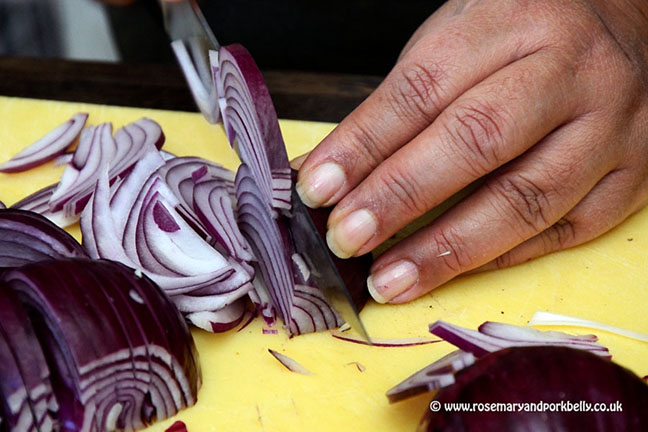
As she cooks, Priya keeps breaking off to show us ingredients and techniques, encouraging us to taste, smell and feel the different textures.
And all the while she’s chatting – sharing the history of the recipes and her own life-long involvement in cooking.
“I come from a long line of foodies. My parents were both very good cooks who travelled a lot and became open to influences from other countries – my dad particularly loved cooking Chinese food.”
“Like most girls from an Indian background, I grew up in and around the kitchen, picking up cooking tips and recipes from friends and family.”
“From about the age of 15, I began to take pride in my cooking skills and have always made sure my own family eat good, home-cooked meals.”
Deccan Tiffin
“About 2 years ago I found I had become almost obsessed with sharing my passion for food with others, so I launched Deccan Tiffin.”
The name reflects the days of the British Raj in India.
“Deccan is the English word for a large plateau in southern India, and is often used when referring to the whole area around Hydrabad.”
“Tiffin is another Anglo-English word for a light meal packed in tin cases – the tiffin box.”
“My aim with Deccan Tiffin is to encourage people to try different foods with the authentic flavours of India, and to introduce people to home-cooking instead of the commercially produced dishes they may be used to.”
“I get frustrated when people say they don’t like Indian food – India is a vast country with many different cooking styles.”
“Food in the south tends to be very hot and heavy on the chillies, while in the north the spicy blends are milder.”
“Northern Indian dishes are usually served with chapati, naan or roti while in the south they eat more rice. And it’s not just regional differences; communities and castes play a huge part too”.
“I come from a Maharashtrian family, and the majority of my relatives are strict vegetarians. My parents were the first to break away from that tradition, and I was born in the UK while they were travelling, so I do cook and eat a lot of meat.”
Mughlai cuisine
“Most of the dishes I make are Mughlai cuisine, from the royal families in Northern India. Originally, these rulers came from Persia, so there are a lot of Middle Eastern influences in this style of cooking.”
“In the royal households, the meals would usually be cooked by the Muslim servants – I learned how to cook this venison qorma from the mothers of two of my Muslim friends.”
Here Priya breaks off again to show us how things are shaping up.
“I always cook fresh – it simply tastes better. I know people have to save time these days, but if you want a meal to be sensational, you have to put in the time and effort. “
“A sharp knife is essential, and I prefer cooking in the old cast-iron pans.”
Priya thinks the secret of any good recipe lies in sourcing exactly the right ingredients.
Ginger and garlic
“You have to learn about spices before you can use them well.”
“For example, Kashmiri chilli powder, which I use a lot, imparts a rich red colour to dishes without the searing heat of most chilli powders. Ghee – clarified butter – is essential for richness.”
“I make my own ginger and garlic paste – it’s much quicker and easier than people think; you just shave the ginger, peel the garlic, slice them both up and pop them in a mixer to blitz for a few seconds. Try it, and I’m sure you’ll notice the difference.”
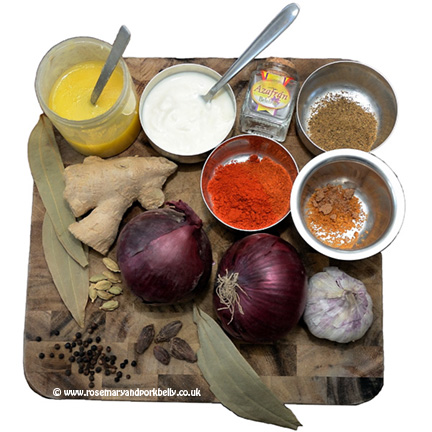
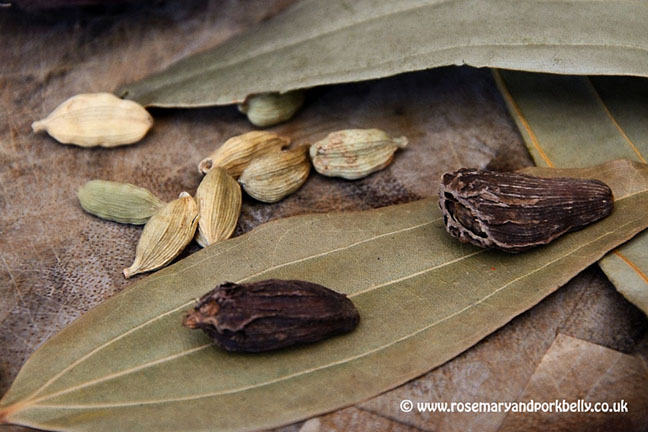
Priya also makes her own yoghurt and garam masala. She pounds up any fresh spice blends she needs in a pestle and mortar and the aroma is sensational – especially if she is using the black cardamoms which typify these royal dishes, imparting an unusual smoky flavour.
“I like to use Iranian saffron if I can get it – it’s expensive but absolutely the best quality. Indian bay leaves are also different to European ones – much larger with a subtly different taste.”
Know your onions
“Red onions are best for this dish – they are milder and sweeter than white ones. I also prefer to use unrefined sea salt, as I think it has a better flavour.”
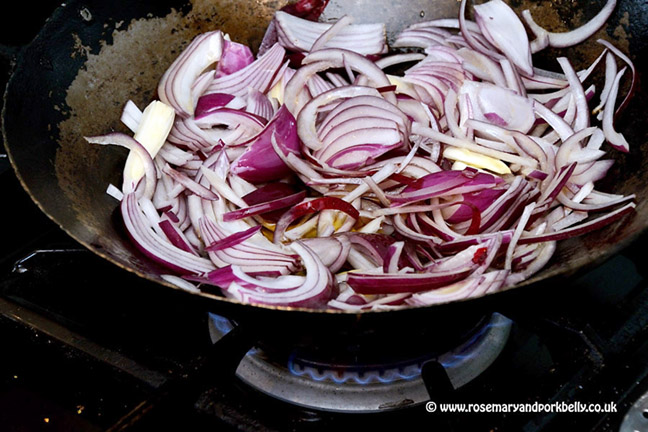
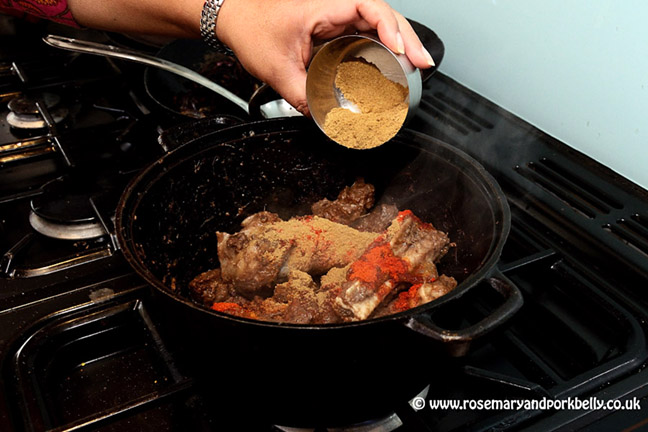
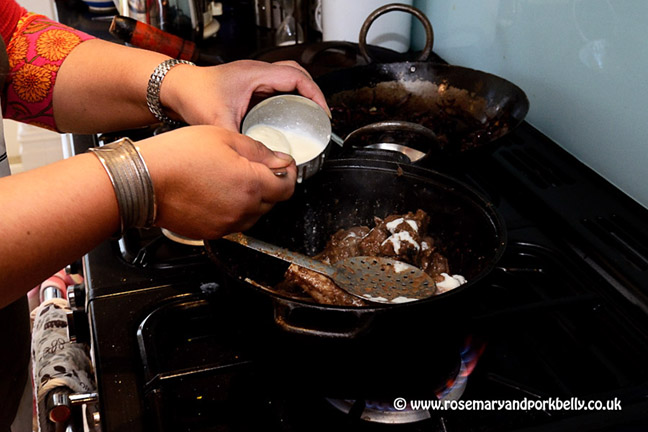
Once the onions have been gently fried and moved to one side, the meat is added. The key to this dish is keeping the meat searingly hot, and there’s a deep and throaty sizzle from the pan as the hot fat bubbles, mixing with the meaty juices.
The pastes and yoghurt are added bit by bit to keep the meat on a high heat, allowing the flavours to be released slowly.
You may have eaten a “bhuna” dish in a high street restaurant. Bhuna is a description of this cooking method – dry roasting the meat at a high heat before adding any liquid.
The more delicate spices and flavours, such as garam masala and essence of screwpine, are added only at the very end, to make sure their unique flavours are not destroyed.
Seal the pan
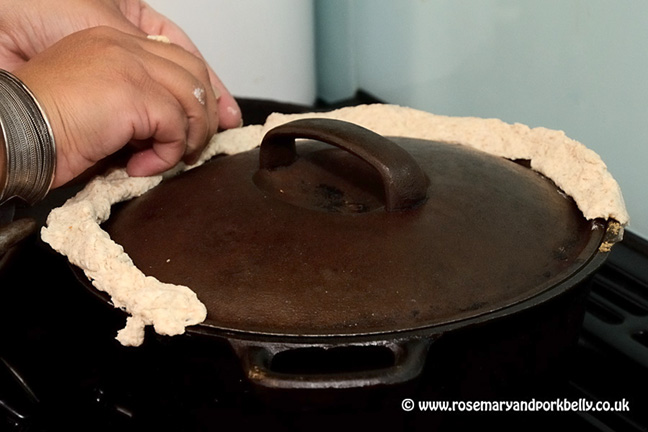
Swiftly knocking up a bit of chapati flour and water, Priya makes a dough to seal the pan while the meat and spices simmer. This is known as “dum” method, and it traps in the steam.
And boy did Pork Belly enjoy it!
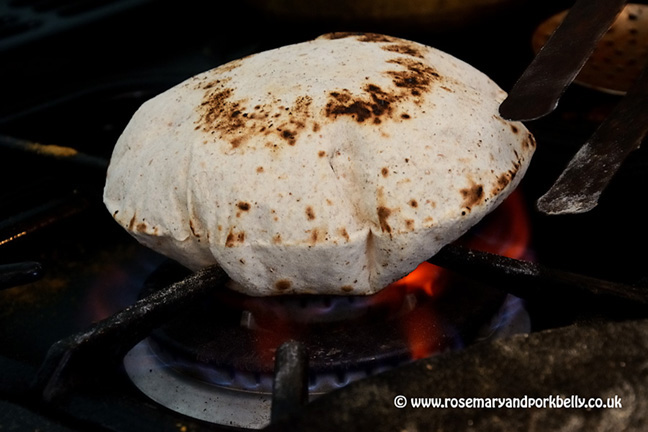
Served with a freshly made Punjabi version of chapati called “phulka” (a light, puffed up unleavened bread) and fresh salad, the dish was superb – spicy without being overpowering, rich with tender chunks of meat – definitely a feast fit for a king.
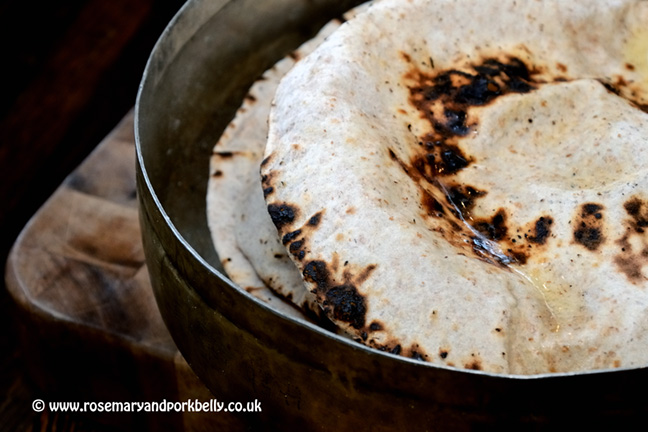
With all that butter involved it was never going to be a dish I could eat, but Priya couldn’t have me going hungry, so she whipped up a family favourite – egg paratha, served with some of her home-made pickle. Simple but delicious.
Disclaimer: We were paying guests at the Maharani supper club. Having enjoyed the food we wanted to find out more.
More about Deccan Tiffin
Find out more about Priya’s supper clubs, cookery classes, recipes, and catering here
Where to next?
• Agnes B Marshall, ice-cream pioneer
• Tell it to the bees
• UK’s best food festivals