
The cold walls of Eastern State Penitentiary loom over the baking Philadelphia sidewalk. Huge thunderclouds boil up in the August sky, threatening a change in the weather.
Standing in the darkened gateway, I shiver, not just from the chilly shadows but from the human stories that lie within its dilapidated corridors.
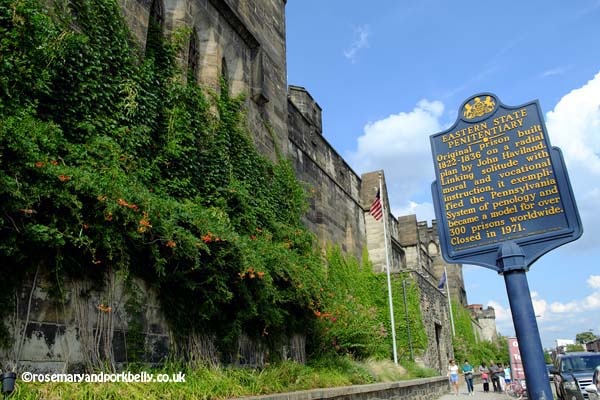
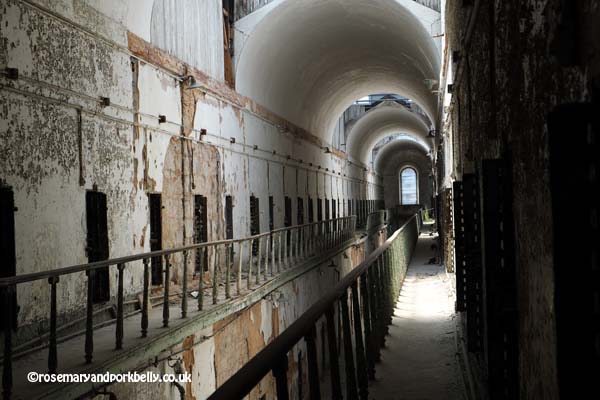
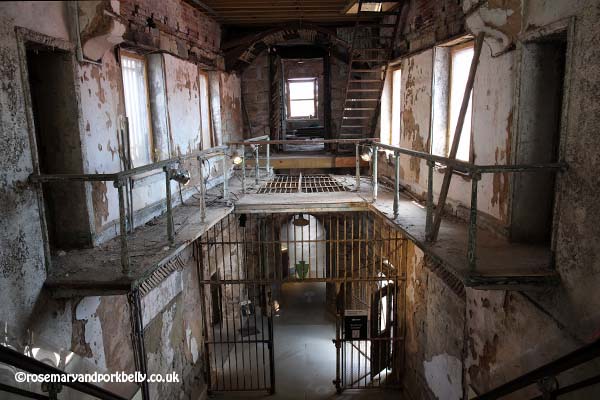
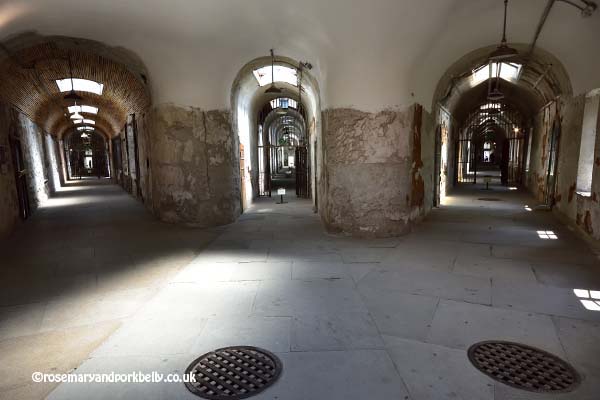
Once inside, the slanting sunlight catching dust, the peeling paintwork, the dank and mouldy smell and echoing footsteps cement the eerie atmosphere.
Even the conversations of fellow visitors seem muted.
Progressive prison
Eastern State Penitentiary is equal parts horrible and fascinating. And yet it was designed as an enlightened way to treat prisoners.
It seems barbaric now, with its emphasis on solitary confinement, sensory deprivation and lack of human contact but when it opened in 1829 Eastern State Pen was hailed as one of the most progressive prisons in America.
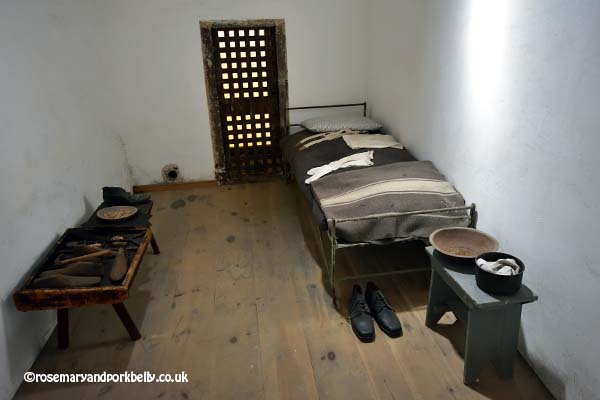
The belief was that placing convicts in a private cell, allowing no contact with other prisoners and only a Bible for reading material, they would become truly penitent and break the cycle of a life of crime.
That’s why it was called a Penitentiary.
With our modern sensibilities, that feels like a recipe for psychological trauma and mental breakdown.
That wasn’t the founders’ intention, but the realisation of the human anguish the system caused adds a chill to its already creepy atmosphere
Revolutionary design
The hub and spoke model, with cell blocks extending from a circular central point, was innovative. Many modern prisons have the same layout, allowing guards a clear line of sight to almost everywhere in the jail.
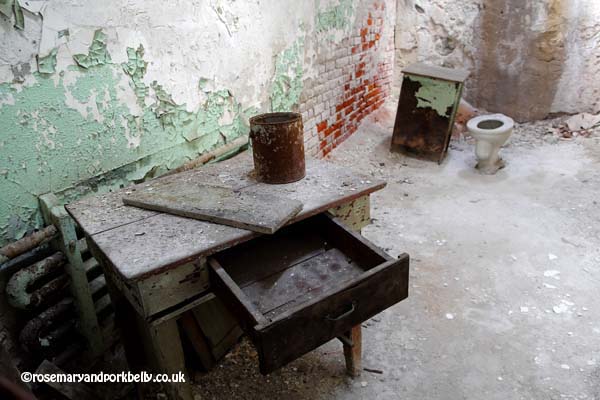
There were some creature comforts for the incarcerated. Each cell had a toilet and tap. In fact, Eastern State Pen had running water before the White House did.
There was access to a small courtyard for every inmate. High walls and still no human contact, but at least they got to feel the sun on their skin and breath in some fresh air.
The cells were baking hot in the summer, but hot water was run through a system of pipes to provide some relief from the biting cold of a Philly winter.
Eastern State Pen – tourist attraction
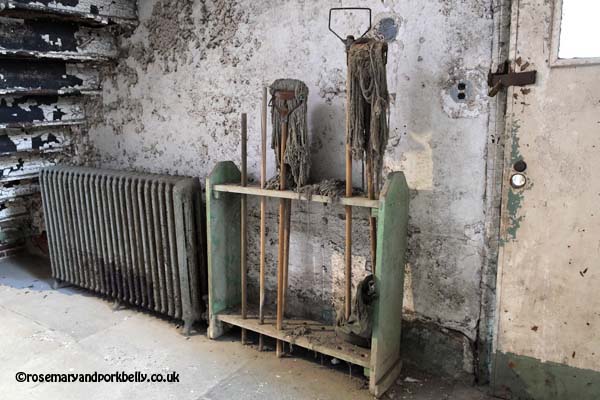
Even in its earliest days, the Pen became a tourist attraction. While inmates and guards went about their daily routine, groups of fascinated onlookers were shown around the stark buildings with its unscaleable walls.
One such visitor though, Charles Dickens, was less than impressed writing in 1842:
“Looking down these dreary passages, the dull repose and quiet that prevails, is awful. Over the head and face of every prisoner who comes into this melancholy house, a black hood is drawn, and he is led to the cell from which he never again comes forth, until his whole term of imprisonment has expired….He is a man buried alive; to be dug out in the slow round of years….”
Describing it as “immense torture and agony” didn’t make Dickens popular Stateside, nor did it stop the system being copied in prisons around the world.
Eastern State Pen’s final years
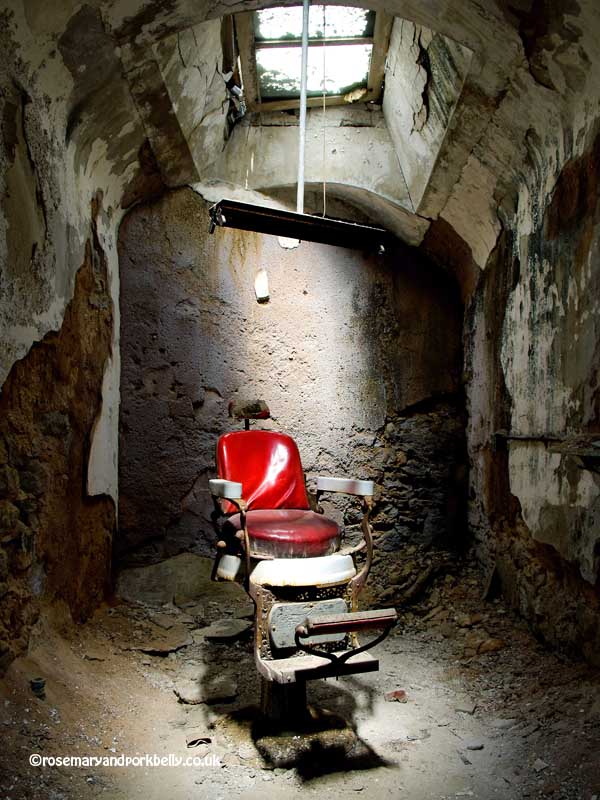
Eastern State Penitentiary ran for 142 years, finally closing its doors in 1971.
By 1913 overcrowding led them to abandon the solitary confinement aspect and changes were made to the routines.
Inmates were encouraged to take up a trade to equip them for life once their term was served, and the tools they were given access to led to some inventive, usually failed, escape attempts.
Prison breaks
One of the most daring escapes came in 1945 when 12 inmates, led by William “Slick Willy” Sutton and masterminded by Clarence “Kliney” Klinedinst, dug a tunnel that went almost 100 feet underground.
In a story that seems more Great Escape and Shawshank Redemption than real life, the tunnellers got rid of the debris by scattering it in the exercise yard and linked their hole up to the prison’s sewer system.
A team of archaeologists has managed to locate the original tunnel and excavate it. The story of how, what and when the tunnellers made their break for freedom makes a fascinating display.
Unlike in the movies, all the inmates were recaptured.
Even more famously, Al Capone served 8 months in the Pen in 1929 for carrying a concealed weapon.
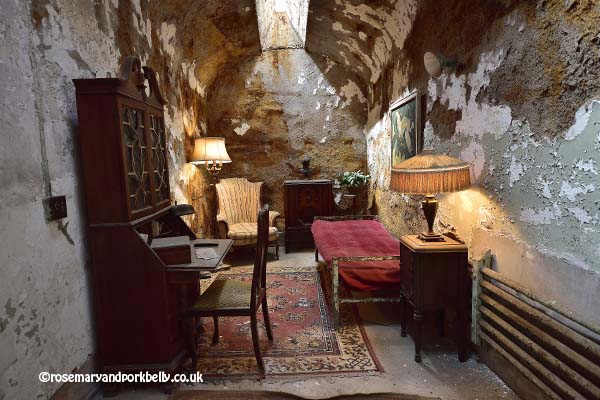
Legend says he had an almost luxurious cell, with soft lighting, fine rugs, cosy bedding and a radio. Historians now believe this was heightened for local press coverage at the time and Capone probably had to share his cell, as others did, but there’s no doubt things were less bleak by the time he was imprisoned there.
Hospitals and health
The hospital wing was surprisingly up-to-date, making great strides in medicine and surgery.
On the whole inmates were kept healthy, or as healthy as the rest of the population was at that time, but disease was still rife.
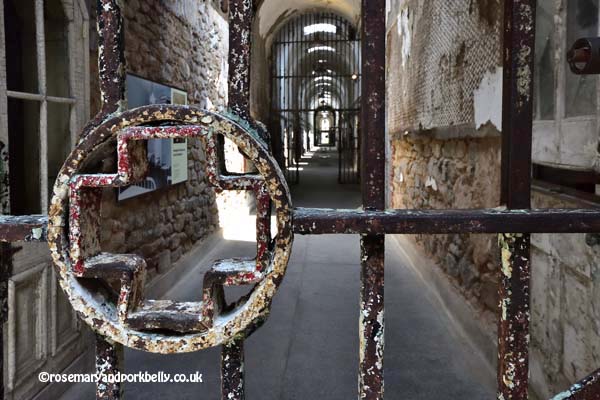
There was no Death Row; punishments for capital crimes were meted out elsewhere, but the block where they housed the most dangerous prisoners is shockingly bleak.
And despite immense restoration work, the whole place is the very definition of misery.
Rescued from demolition in the 1970s, much of the prison still remains in total disrepair, accessible only to those studying or working on the building, but there’s enough open to the public to justify the admission price.
If you want jump scares and drama, go for their Terror Behind the Walls Tours held every year in the run-up to Halloween when the whole building becomes a haunted house.
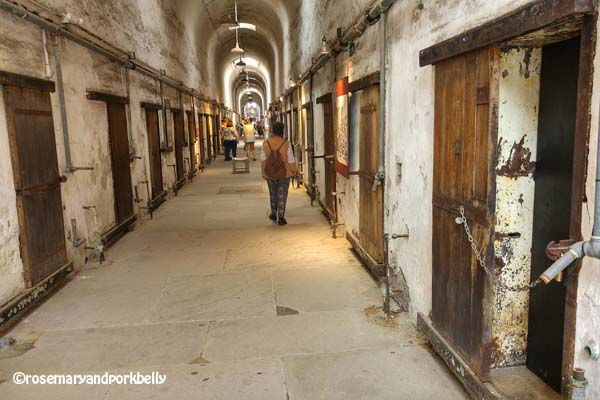
But if you want a more reflective approach, pick up the audio headset, narrated concisely and a little eerily by actor Steve Buscemi, and take your time.
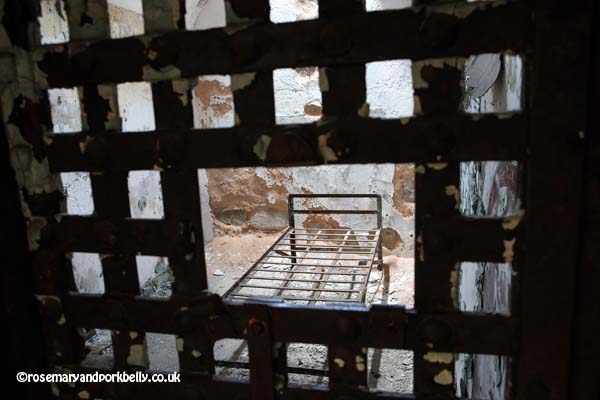
Time to pace the long, echoing corridors.
Time to pause at abandoned cells and reflect on crime and punishment past and present.
Time to read the fascinating insights into the lives of both prisoners and guards, closely intertwined for 142 years.
Time to learn about its famous and infamous inmates.
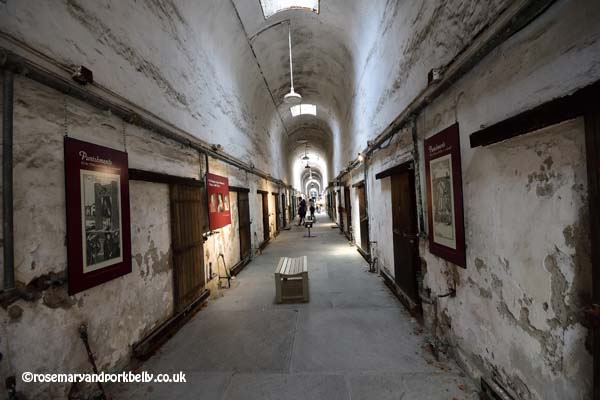
You could tour the site in about an hour; most people take two.
We were there for four hours, but still didn’t see everything or hear every tale it had to tell.
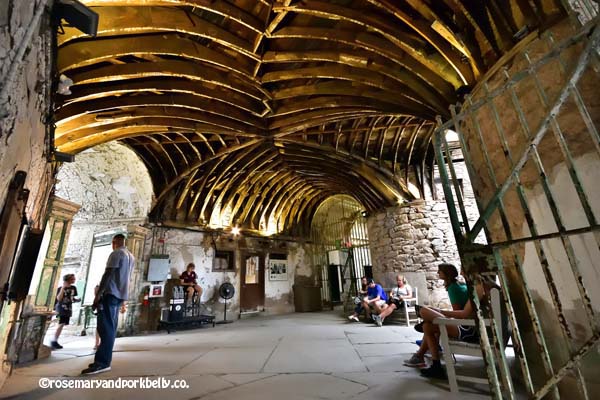
Is Eastern State Penitentiary haunted?
Well, that depends on what you believe. There are certainly tales told of strange feelings, sudden chills and mysterious noises.
In the early 1940s, both officers and inmates began to report visions and eerie experiences.
Eastern State Pen is one of the most carefully studied buildings in the United States. Nearly 60 paranormal investigation teams explore the site each year, capturing extensive evidence of ghosts within its walls.
I’m not convinced, but the place definitely has an atmosphere that extracts a visceral response.
If these walls could talk, I’m not sure I’d want to hear what they’re saying.
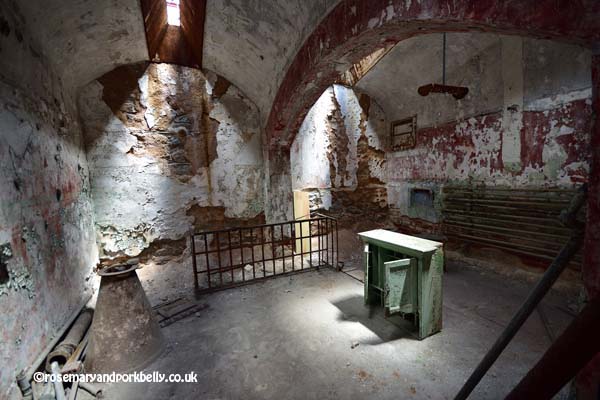
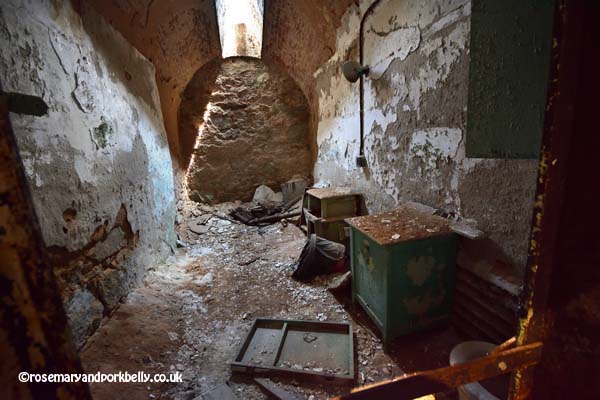
More information about visiting Eastern State Penitentiary
Eastern State Pen is located at 22nd Street and Fairmount Avenue in the historic Parkway Museums District, just five blocks away from the Philadelphia Museum of Art. It’s easily accessible by local bus services and is on the tourist trolley, bus and bike tours.
The Pen is open seven days a week all year round, and you can buy tickets online or at the door.
For more information on opening hours, special exhibitions and ticket prices, visit their website
If you’ve enjoyed browsing our website, learned something new, or just had a smile because of what we do – we’d love your support to keep the good stuff brewing!
Travelling soon? Things to do and attractions not to miss with Get Your Guide …
Where to next?
• Island Life – Malta
• Witch City, Salem Massachusetts
• Carnglaze Caverns, Cornwall
I did NOT know that you could go here!! I’d have loved to see this when I was in Philly. I’ll definitely be adding it to the list for next time I go back (every once and awhile for work get to go). Great read.
Kristen | kristenabroad.com
We only knew about it from our Philly friends. Do go – would love to know how you feel about it.