
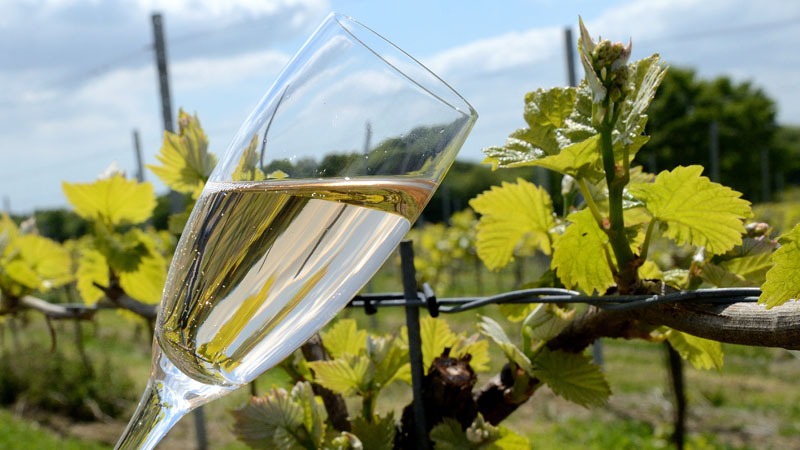
Wine – an alcoholic drink produced by the fermenting of grapes
That’s a definition of wine but it’s a pretty dry way of talking about something rather wonderful.
Wherever vines can flourish you’ll find people willing to take on the meticulous, back-breaking, year-round work which leads to the most delicious of results.

Living in Sussex we’re lucky to have on our doorstep some fantastic vineyards whose wines rival those produced by our European neighbours.
Why buy English wine?
As a nation we are unlikely to ‘drink local’ when it comes to the fruit of the vine – although 2021 saw an increase in sales of around 30%.
Perhaps it’s the perception that it’s expensive, perhaps it’s not as widely available as wines from other countries, or perhaps we simply don’t think about it.
Here are 5 reasons why we think you should try English wine.

English wine has history
Vines flourish in the UK, even though we don’t have anywhere near as many hours of sunshine as our European, American or Australian counterparts.
There are vineyards north, south, east and west in England and Wales.
Vines aren’t native to England. The legend says they came over with Julius Caesar, although if the invading Romans did bring them along and plant them it was probably more for decoration and a reminder of home than for any mass production reasons.
We Brits stuck to beer and mead when the Roman troops came a-calling, but there’s no doubt that by the time we reached that most famous of English dates, 1066 when the Normans took us over, monasteries were producing significant quantities of wine from their own grapes.
In the Domesday survey there were 46 vineyards from East Anglia through to modern-day Somerset.

By the time Henry the Eighth got his rump on the throne, there were 139 vineyards in England and Wales, most owned by the King and his nobles and the rest by the church.
Nobody’s really sure what happened next but vineyards and wine production went into a rapid decline. Maybe the weather worsened or perhaps when Henry dissolved the monasteries all that wine-making expertise got lost.
Whatever the reason we had to wait until the 18th and 19th centuries before wealthy families began to dabble in wineries again and it took some pioneering work after the second world war to begin to establish what is now a small, but thriving wine producing industry.
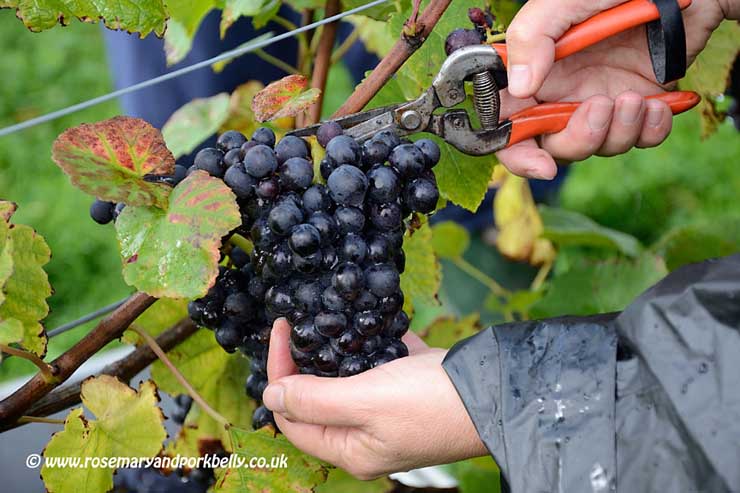
There’s a lot of English wine to choose from
There are now over 800 vineyards in England and Wales producing around 6 million bottles a year, depending on the growing conditions.
Sales in 2020 rose by 30% to reach 7.1m bottles and 50% of wine is now sold through winery websites and via the cellar door.
About 64% of English wine is sparkling, with 36% still wine- either white, red or rosé.

English wine wins awards
Of course having a gold, silver or bronze award sticker on a bottle isn’t the whole story, but English wines are regularly among the finalists for the two most prestigious competitions – the International Wine Challenge (IWC) and Decanter World Wine Awards.
Price-wise they sit somewhere between the top champagne houses and the cheaper cavas and proseccos, so they’re a special occasion wine rather than a “drinking at the BBQ” choice.
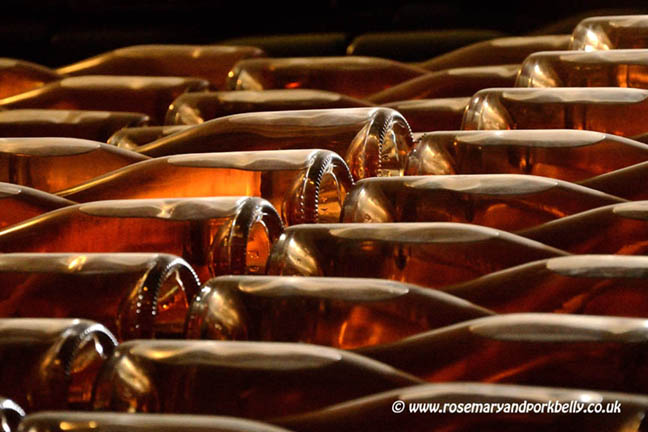
The English invented the wine bottle
The dark green wine bottle was invented by the Englishman, Sir Kenelm Digby, in the 1630s, though it took an act of Parliament to prove it.
Digby owned a glass-works and his technique produced a bottle which was stronger and more stable than others of the time.
They were also translucent green or brown which protected the contents from the light. Before glass, wines were kept in bags made of animal skin, usually goat and you have to wonder how that affected the taste!
English wine-makers are mavericks
The quickest way to amass a small fortune is to have a large fortune and invest in a vineyard
So why do they do it?

The word ‘passionate’ is a bit overused these days but it’s certainly apt for all the English wine people we’ve ever met.
Master winemaker Kevin Sutherland at Bluebell Estate, Chris and David at Hidden Spring who’re restoring an old vineyard, and the family affair that is Woodchurch Wine.
They all have one thing in common – a love of English wine.
So why not give English wine a try this year.

More information about English Wine Week
Wines of Great Britain is the organisation responsible for promoting the industry including English Wine Week every year.
Fancy touring a vineyard? Check out Wine Cellar Door
And if you want to get more hands-on why not help with the harvest as we did in Sussex and Kent.

Where to next?
• Kevin Sutherland, award-winning winemaker
• Puy du Fou – a very French theme park
• Antigua road trip