
Deep in the rolling Sussex countryside amongst fields of rapeseed, wheat, barley, cows and sheep it’s delightful to see beautiful vineyards nestling in the valleys and sweeping up the slopes.
Evidence of a thriving trade in English wine.
English wine is a small part of the UK market but is steadily growing. To mark English Wine Week in May 2014 we paid a visit to award winning Bluebell Vineyard whose fields overlook the historic Bluebell Railway Line.
Vines were first planted here in 2005 on what was once a pig farm, so they’re a relative newcomer to the English wine market.
As with the majority of English wine they specialise in sparkling wines, growing mainly Chardonnay, Pinot Noir and Pinot Meunier grape varieties which go to make their Hindleap range of classic, rosé and blanc de blancs.
Bluebell Vineyard estate
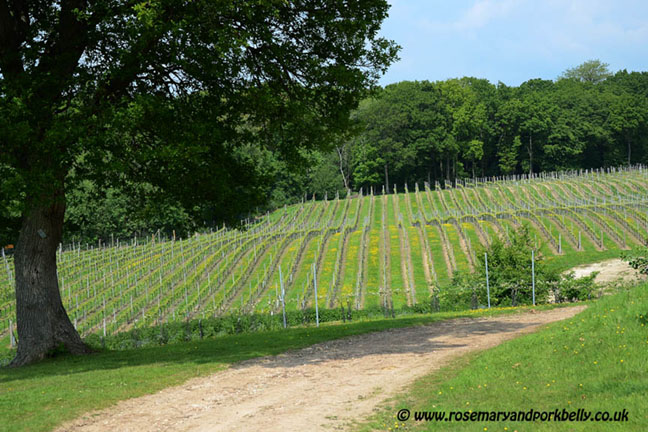
There are 3 main fields on the estate with 4 satellite fields, with 6 hectares already in production and a further 19 in development.
Ultimately they’re aiming for more than 75 hectares in cultivation.

Kevin Sutherland is the wine-maker who presides over all these plans. Originally from New Zealand with a background in fruit-picking he pitched up in the UK in 1988 and hasn’t looked back.
“I started over here picking soft fruit, plums as I had back home, but then I began picking grapes and things just went on from there.”
“I turned up at St George’s Vineyard in Waldron, East Sussex for the harvest and stayed for nine years.”
Kevin then moved on to Plumpton College as vineyard manager and instructor before becoming a consultant for Bluebell Vineyard when they started up and then going full-time with them.
If you ever thought that a wine-maker’s job was easy – simply planting a few vines, waiting for the grapes to grow, squeezing them and then waiting to see what happens – then think again.
Caring for the vines
“Grapes need a lot of care and attention, and the vineyard year is constant hard work. We have begun cultivating our own root stock, but mostly the vines are bought in. Once planted they need protecting from the wildlife, the deer have plenty of grass to eat around here, yet they still like to nibble a fresh vine!”
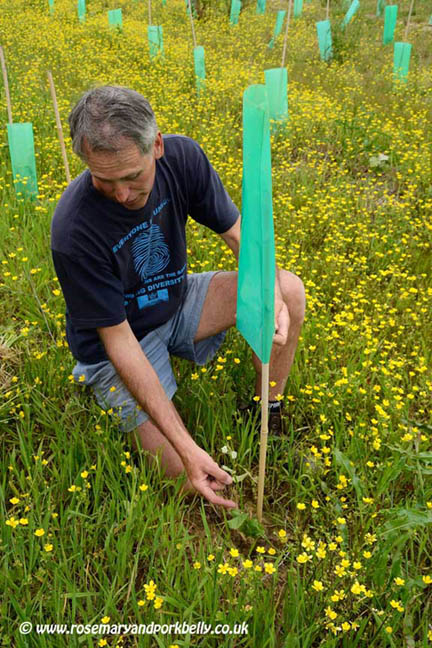
“Each plant will be gently pruned to encourage a strong, woody stem to develop. The first year is one of massive growth, but obviously we don’t see the results for many years. It takes 5 and a half to six years from planting to the first wine.”
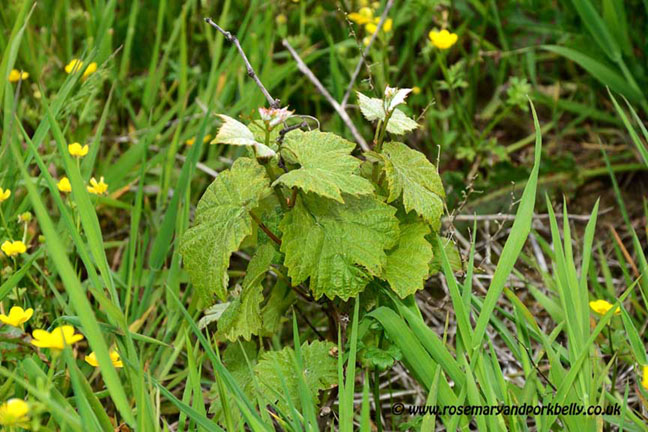
The established vines also need regular pruning to select the strongest canes to encourage an even growth. As the vines develop, the wires that support them have to be moved up and down accordingly and stray “spurs” of unwanted growth nipped off.
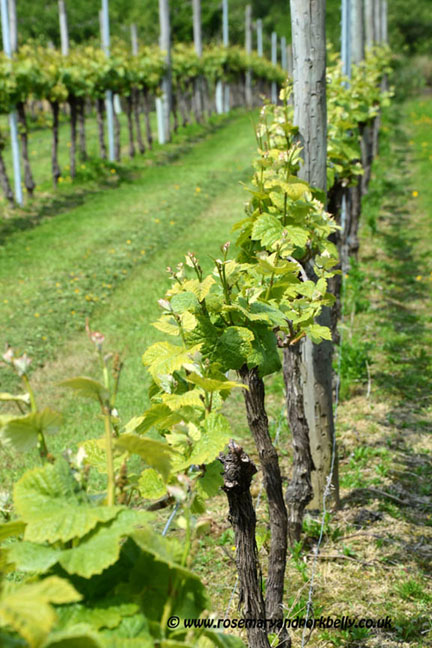
“We are looking for a vine with 4 or 5 leaves to produce 2 or 3 flowerings which will lead to 2 or 3 bunches of grapes.”
Pest control in the vineyard
Then there are pests other than the deer to contend with.
“An insect bite on a ripening fruit can mean disaster as once the skin of the grape is broken it can allow disease to enter, so we do have to spray regularly”.
“I would love to leave the fields free for wild-flowers, and we do our best to let the daisies, buttercups, and clover thrive in between the lines to allow as much natural cover as possible, but we aren’t producing organic wines here so yes, we do use pesticide sprays.”
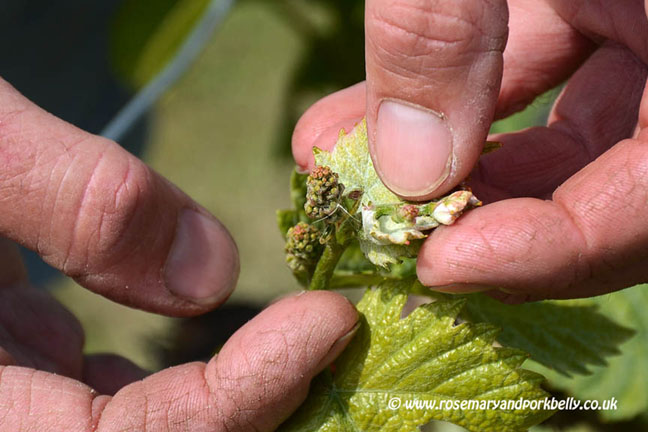
More pruning has to happen once the vines have flowered and the grapes begin to form. The canopy of leaves must be sufficient for shelter but not enough to block out too much sun.
This again has to be done by hand, and with great care, because an unwary nip of the shears to the fruit and again infection can enter and spread throughout the whole bunch. At harvest time, guess what? It’s all done by hand again, not machinery.
Apart from the harvest, all this work is done by Kevin himself and his crew of just 3.
British weather vs the grapes
“Grapes are precious things. They don’t like frost, damp conditions, not just rain but humidity, because that can lead to mildew. You have to keep air circulating around them so that means almost constant mowing in the summer.”
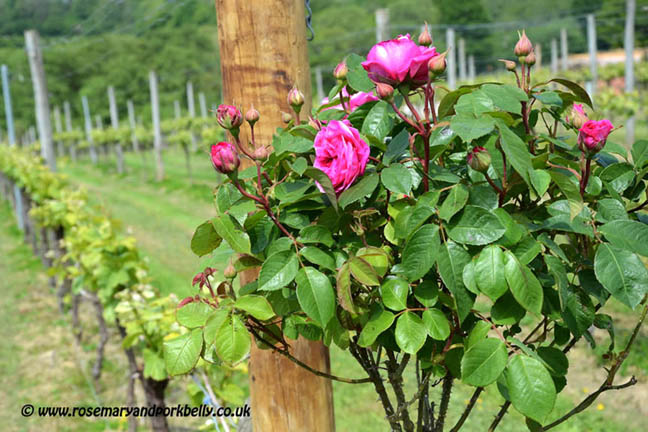
One traditional method they do use at Bluebell is the planting of rose trees at the end of a row.
“They act as an early warning system for mildew, as the rose will show signs of it before the vines are affected. It’s a nice bit of history, that actually works. They get in the way a bit when we are mowing, but they do look very pretty.”
It’s a myth that grapes can only grow on south-facing slopes, many of the fields at Bluebell face north-west.
“What you need is as much sunshine as possible on the grapes as they ripen. Our south and south-east facing slopes do get the sun at a 45-degree angle, which is the traditional and accepted way of planting vines for maximum sunshine.”
“But we’ve found here that the north-east facing slopes actually get more hours of sunshine each day as they catch the evening rays, which the south and south-easterly ones don’t. More sun gets under the canopy and the grapes are just as good quality.”
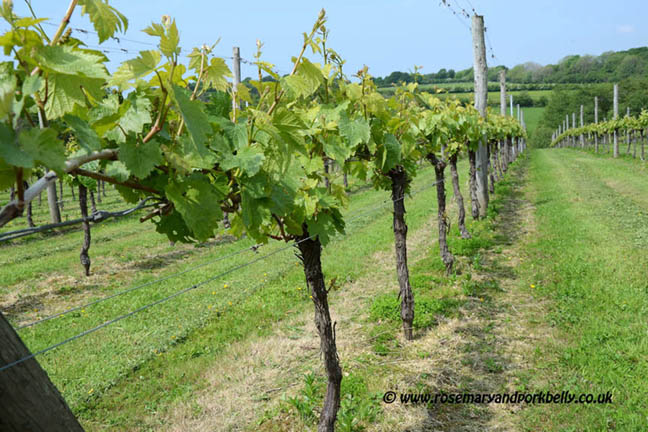
Another aspect of the land which might explain the vineyard’s rapid growth is its past.
“I’m pretty sure all that pig manure on the soil is doing our vines the world of good, and we use the old pig bays for storing the full bottles of wine. The shed remains a pretty constant temperature all year round and each pen is insulated so it works perfectly for the wine.”
Who’d have thought that the needs of pigs and wine were so similar?
Wine-making process
The final part of our visit took in the winery, where alchemy meets science. When we visited, the press was standing covered and empty, waiting for the next harvest, but the strong smell of fermenting fruit permeated the air.
Gleaming metal tanks with an array of dials, switches and tubes met the eye and there was the occasional “gloop” as air bubbling up from the maturing wines escaped.
Although Kevin doesn’t have a background in chemistry, as many top wine-makers do, he does have a “feel” for what’s going on.
“To be a wine-maker you need a good knowledge of all sorts of wines, different grape varieties and what they can do. You never get the same wine two years in a row, even from the same grapes, same soil and similar conditions. During the fermentation process, you have to be pretty quick to spot if anything is going wrong and have a good idea of how to fix it.”
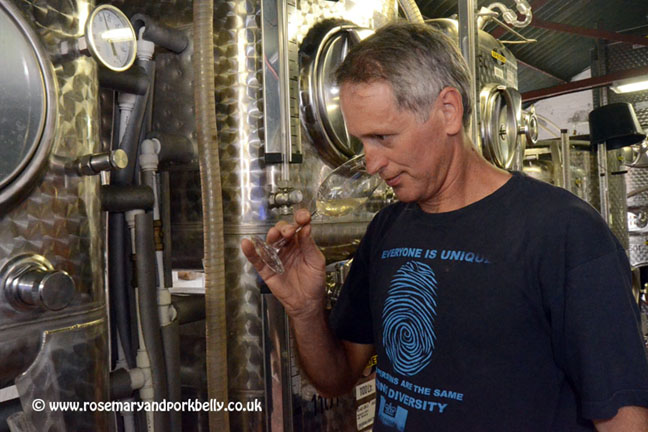
Wine tasting
Kevin tastes every vat of wine at least once a fortnight, analyses it and takes corrective action if he feels it’s needed.
“Unlike the work on the vines, once the wine is in here I go for the minimal intervention approach. If we put top quality fruit in, handle it gently and add either a cultivated or natural yeast, all I should have to do is leave it alone and monitor it as it ferments”.
Between November and March, Kevin doesn’t move it at all and lets the dead yeast cells settle, what’s called ‘fermenting on the lees’.
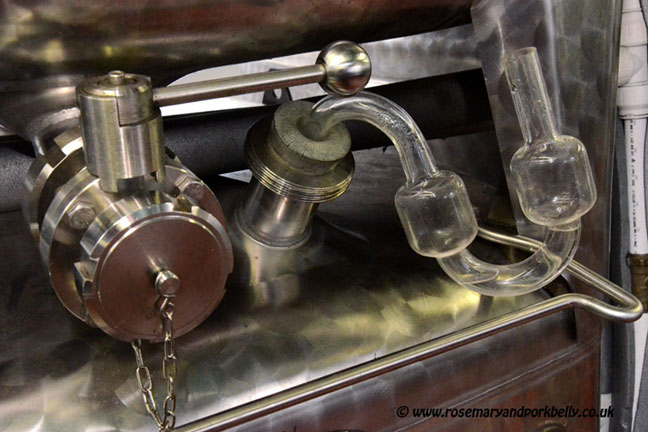
Making notes
“I’ll then start to taste them more frequently, making notes and monitoring progress. Then I’ll then start working up different blends – adding different percentages from different vats”.
“Then it’s on to the final stages, “racking” the wines (taking off the liquid and leaving the dead yeast behind) taking sugar and acidity readings, making final adjustments and keeping it all at a constant 12 degrees centigrade, which helps bring out the fruit flavours”.
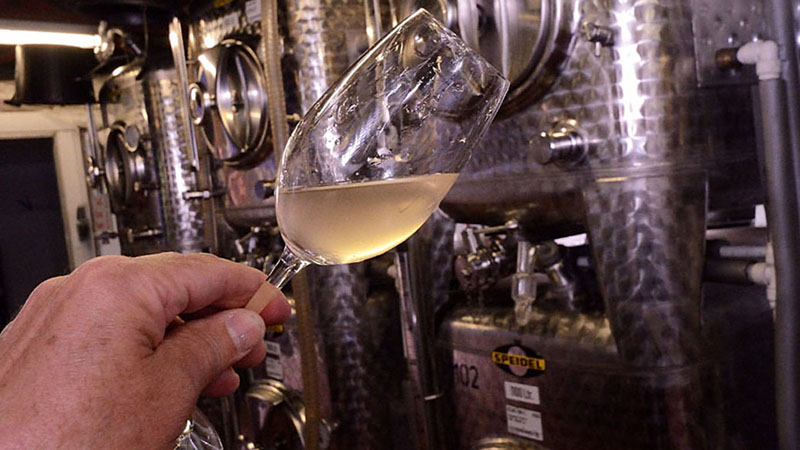
“We then come to the first big tasting day of the year, around about March time, when anyone who is on the estate at the time – crew, family, visitors, friends, are invited in to a mass tasting, and put all their thoughts and preferences down on paper.
“I take everyone’s ideas and go back to the blending process again and again until I’m sure I have it right. One of the most fun tasting sessions is the rosé wine, where the white wine has to be blended with small amounts of the red we produce here just for this purpose, until we get a perfect soft pink colour.”
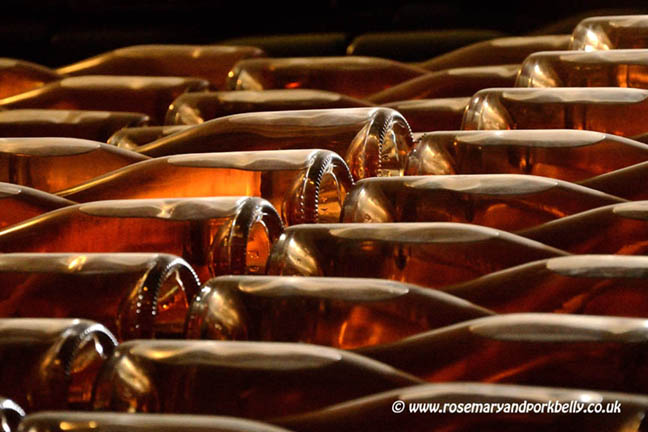
There’s still more technical stuff to come, more racking, filtering, tweaking and balancing.
“Once I’m sure I’ve got it just right, I’ll make up the final sugar and yeast mixture and add that to the wine 24 hours before bottling begins.”
Award winning wines
There’s so much that can go wrong throughout the whole process, but Kevin undoubtedly gets it right as the vineyard has a number of awards.
“Every time we get an award my colleagues here say my head gets a bit bigger! Seriously, it’s a nice accolade to have but because I know the effort that has gone into it, I can’t take all the credit”.
“Thanks are due in the main to the crew here. No matter how good the wine-maker you can’t make good quality wine out of poor quality fruit.”
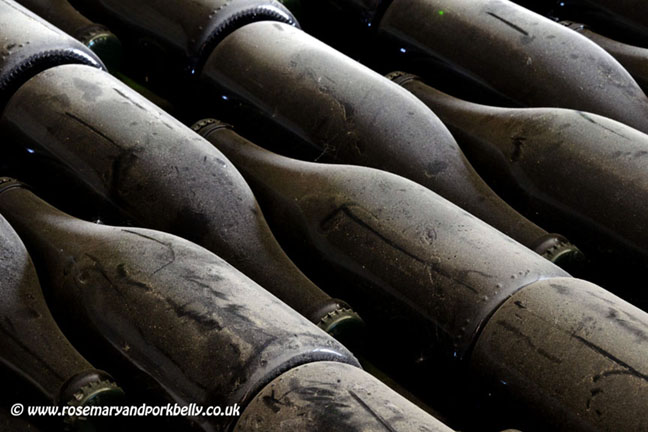
The vineyard isn’t looking to compete with the traditional French champagnes, although its method (fermentation in the bottle) is the same.
Fruity sparkling wines
“We are looking to make fruit-driven sparkling wines, not the more yeasty taste of a champagne. People will have different preferences, but personally I choose the fruitier ones. Price-wise we are a little less than the champagne but cost a bit more than the cheaper cavas and proseccos, so we know English wine remains a niche market and a luxury item.”
As we drove away Pork Belly and I reflected that raising grapes for wine was a little bit like raising children; they were precious, needed shelter, love, care, years of nurturing – pampering even – and endless attention and even then you just can’t tell how they’re going to turn out.

More information about Bluebell Vineyard
To find out more and buy online, visit Bluebell’s website and learn more about the English wine scene.
Where to next?
• Woodchurch Wine, Kent
• Let it brew
• Oast Farm Café, Buxted, East Sussex