
Welcome to the Brave New World of Travel in 2025/26
The smell of jet fuel, the tactical manoeuvring through duty-free shops, and the quiet triumph of stuffing a slightly-too-large carry-on into the overhead bin.
For many Brits, crossing borders has always been straightforward. A quick flash of the passport and off you go, ready to browse museums, sunbathe on beautiful beaches, or scream wildly at a Florida theme park.
But in 2025, the world is going full-on digital, and bureaucratic, in ways that just might make you need an extra cup of tea …
We wrote those words back in 2024 and since then there’s been a suitcase-load of new legislation and requirements for UK citizens travelling to Europe, the USA, and beyond, so here’s our freshly updated guide to travel in 2025 (and a little peek into 2026).
The golden rule? Always check the latest travel advice before you go, starting with the UK Foreign Office.
Check the latest using reputable websites, starting with the UK Foreign Office.
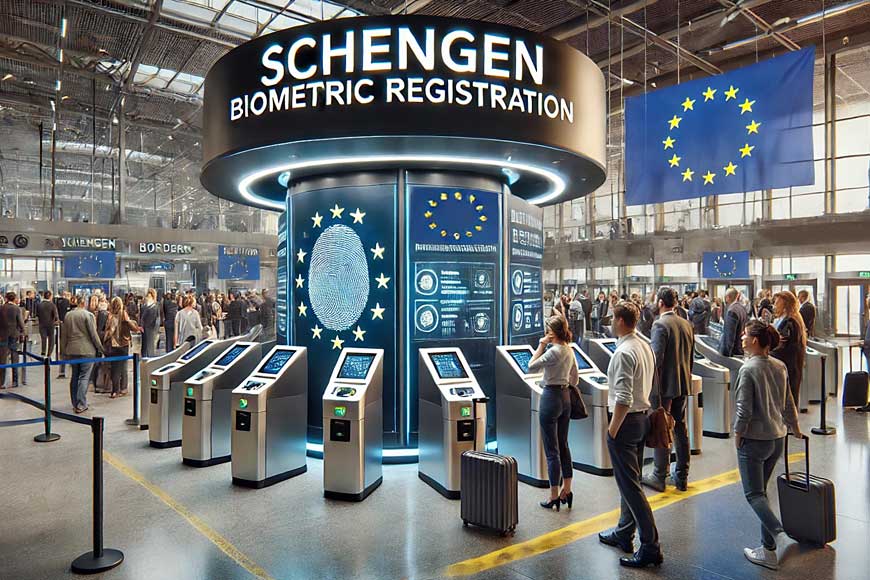
Europe: Now Featuring Biometric Theatre
Let’s start with our favourite weekend destination of croissants, castles, and slightly confusing plug sockets.
Starting on 12 October 2025, the EU is rolling out two new systems to make border crossing more efficient.
Efficient for whom? Now that’s debatable.
EES: The ‘Hello, Let Me Scan Your Face’ System
The European Entry/Exit System (EES) will require all UK travellers to register their biometric details (a fancy way of saying fingerprints and a facial scan) at their first entry into the Schengen Area (children under 12 will not have to provide fingerprints).
Think of it as a high-tech guestbook, except instead of signing your name, you’ll be offering up your fingers and face like a particularly cooperative suspect in a stylish European crime drama.
The good news? Your digital file is valid for three years (or 3 years + 1 day if you’re not recorded entering again). However, overstayers (who exit late), your data may be retained for up to 5 years.
The bad news? It’ll likely mean longer queues at ports, airports, Eurostar, and Eurotunnel. The Port of Dover is installing 24 kiosks to manage the process for coach passengers – just enough to ensure everyone gets the authentic British experience of waiting in line.
Car travellers, meanwhile, won’t use kiosks, instead, they’ll be processed by French border officials using handheld tablets, probably while still in their vehicles, to keep things moving (in theory, at least).
The launch date is 12 October 2025, with full roll-out by April 2026. For the latest info, see this official webpage.
Even while you have your passport scanned and biometrics taken at EES checkpoints, expect your passport to still be stamped until the system fully comes online, hopefully by April 2026. This dual system ensures both digital recording and legacy proof until EES is mature enough to stand alone.
ETIAS: Visa Lite, With a Side of Red Tape
Next up is the European Travel Information and Authorisation System (ETIAS).
ETIAS is the EU’s answer to America’s ESTA – a pre-authorisation system you’ll need to apply for online before travelling.
Originally due to start this year, ETIAS is now delayed until late 2026 – likely not launching until after EES has settled in.
Once approved, your ETIAS will let you flit between Schengen countries for three years or until your passport expires – perfect for that summer of hopping between Paris, Rome, and Budapest.
The application will cost €20, though some travellers are spared the fee. Applicants under 18 or over 70, and family members of EU citizens (or of non-EU nationals who have the right to move freely within the EU) don’t need to pay. But they still need to apply for authorisation.
Once it’s live, you’ll need ETIAS for holidays in France, Italy, Spain, and the rest of the Schengen Area. And yes, always use the official ETIAS site.
ETIAS is likely to come online at least six months after the EES is up and running, and according to the latest update ‘ETIAS will start operations in the last quarter of 2026’.
Always use the official ETIAS website for updates and applications.
Gibraltar: Schengen Rules With a Twist
Gibraltar is also getting a border upgrade. Thanks to a new post-Brexit deal, UK visitors will now face Schengen-style passport checks – but only if arriving by air or sea. Expect two stops: one with Gibraltar officials, then another with Spanish border agents. The land border with Spain, though? Completely open, no checks.
Just a heads-up, time spent in Gibraltar now counts toward your Schengen 90-day limit, and once EES and ETIAS go live, UK tourists will need to comply. Gibraltar residents, lucky them, are exempt.

The USA: ESTA and MPC
The ESTA (Electronic System for Travel Authorization) is still going strong – and still required for Brits under the Visa Waiver Program. The fee, at present, is $21 and it lasts for two years or until your passport expires.
Beware: If you’ve travelled to certain countries (like Cuba) after specific dates, you may no longer qualify for ESTA and must apply for a full visa.
Also worth noting: ESTA approval does NOT guarantee entry to the U.S. It’s more of a VIP pass to the line for border questioning.
Mobile Passport Control (MPC)
Still free, still available, still a bit underwhelming. The MPC app can speed up your arrival – if you’re lucky.
Eligible users are U.S. Citizens, U.S. Lawful Permanent Residents, Canadian B1/B2 visitors, and returning ESTA holders (allegedly).
Pro Tips:
Make sure your passport has plenty of validity left (some airlines and transit countries still demand 6 months).
Solo travelling with kids? Bring a notarised parental consent letter, or be prepared for possible conversations with border officers.
Don’t bring food. The list of prohibited items is longer than a duty-free receipt.
To apply for an ESTA only use the official U.S. Customs and Border Protection website.
The Mobile Passport Control (MPC) a free, secure mobile application developed by U.S. Customs and Border Protection (CBP) allows eligible travellers to speed up their entry into the United States.
Check what you can take with you into America, prohibited and declarable items.
Uncle Sam Wants Your Data (and Your Cash)
While ESTA remains the golden ticket for UK travellers, the U.S. is quietly raising the bar, and the bill, for everyone else. As of late 2025, anyone needing a non-immigrant visa (think tourist, student, or work) will face a non-refundable $250 “Visa Integrity Fee”. It’s part of a push to fund visa overstay enforcement, and while UK citizens using ESTA are exempt, the fee applies to travellers from countries outside the Visa Waiver Program. It’s only charged if your visa is approved, but good luck getting that money back, even if you play by the rules.
And the extras don’t stop there. Entry is set to get more expensive across the board. The ESTA fee is rising from $21 to around $33, and the humble I‑94 arrival form (required for some travellers) is jumping from $6 to $24. Meanwhile, visa applicants, especially students, face enhanced social media screening, with some required to make their accounts public. Border officials may also request access to your phone or laptop, and saying no could lead to a very short trip indeed.
The takeaway? If you’re travelling on ESTA, you’ll avoid most of the new charges, but expect a little more scrutiny at the border. And if you’re applying for a visa, the U.S. is now charging a premium for the privilege of being judged.

The Rest of the World: Passports, Visas, and Digital Everything
Planning a trip to somewhere more exotic than Marbella? Here’s the latest:
- Australia is upgrading its eVisitor system.
- India’s e-Visa system is complicated. Double-check their requirements well in advance to avoid frantic Googling at the airport.
- China and other nations are also increasingly requiring fingerprints and biometric data at the border. Make sure your hands are clean – literally.
- Canada has an electronic travel authorisation (eTA) for tourists. Cost in 2025 is $7 CAD.
And always check transit visa rules. A layover in Dubai might mean a different visa than your final destination requires.
Don’t Forget: The UK Has Its Own ETA Now
While we’re busy complying with European systems, the UK has launched its own digital authorisation for international visitors. It costs £16 and applies to visitors from countries like the EU, USA, and more.
The UK ETA is not required for British passport holders or those who have permission to live, work or study in the UK.
But if you’re hosting international friends or travelling with non-UK nationals, they’ll need one and that includes babies and children.
Practical Advice: Survive and Thrive
So, how can you navigate this whole new world of biometric bureaucracy without losing your sense of adventure (or your mind)? Here are some tips:
- Plan Ahead: Allow extra time for processing ETIAS, ESTAs, and visas. The last thing you want is to be stuck at home, watching Instagram Reels of the trip you were meant to be on.
- Keep Your Passport Handy: Whether it’s at the fingerprint kiosk or scanning it for an online application, your passport will be your constant companion. Treat it well.
- Travel Insurance Is A Must: The EHIC/GHIC will still cover basic medical needs in the EU, but for everything else, you’ll need proper insurance. Don’t skimp; you’re not invincible, even if you survived an all-inclusive buffet.
- Pack Your Patience: Whether it’s a queue at the Eurotunnel kiosks or a delay at immigration, patience will be your most important travel accessory in 2025.
- Stay Informed: Bookmark official travel advice pages, like those on GOV.UK. They’re about as thrilling as a tax return, but they’ll save you from last-minute surprises.
Visit the NHS website to get healthcare cover for travelling abroad. There is no deadline to apply for a UK Global Health Insurance Card or a UK European Health Insurance Card. If you have an existing European Health Insurance Card, you can continue to use it until it expires. Just remember, Travel insurance is your friend!
The Silver Lining
Yes, it’s all a bit faffy. But think of it this way: these changes are designed to improve security, reduce illegal migration, and speed up border crossings – once the kinks are ironed out. And if nothing else, they’ll give you something to bond over with fellow travellers in the queue. After all, nothing unites Brits abroad quite like a shared moan about bureaucracy.
So dust off your passport, brush up on your digital form-filling skills, and prepare to embrace the brave new world of 2025 travel.
Just remember no smiling for the biometric photo – it messes with the algorithms.
Where to next?
• Taking your dog abroad on holiday
• Grab the Passport: Your Ultimate Travel Checklist
• Travel Shop
The issue we have with the changes is my partner has no fingerprints! Just came back from Poland and had issues both getting in and coming back. We were unaware of this issue and she’s sure it not a medical problem, just no fingerprints (or legible for the system, who knows). On returning at the Polish airport, they just let her through as they’d exhausted all attempts and options they had. We’re concerned many other border forces will not be so forgiving. Any suggestions?
Hi Neil, How frustrating! Rosemary had a similar problem on our last trip. She had to press on the reader so hard she thought she would break it! Our understanding is that border officers should try to scan your fingers several times, sometimes using different scanners or applying moisturising lotion or hand sanitiser to improve the read. Scanners in the US and the new EU Entry/Exit System (EES), use facial recognition as a primary or secondary check. If the automated system fails, you may be taken to a secondary screening area for manual verification of your passport, visa, and travel intentions. It all adds to the delays. Good luck on your next trip. One more thing to try is to make sure fingers are warm as cold weather reduces blood flow and skin moisture, which lowers the skin’s electrical conductance, a requirement for these sensors to work.