
Mulberries!
Now, there’s a word I don’t shout very often.
The bent and bowed branches above our heads were heavy with fruit, a sure sign that the trees had been here for many years. A few weeks away from being ripe enough to pick, it held the promise of a bumper crop, one which the local community will share.
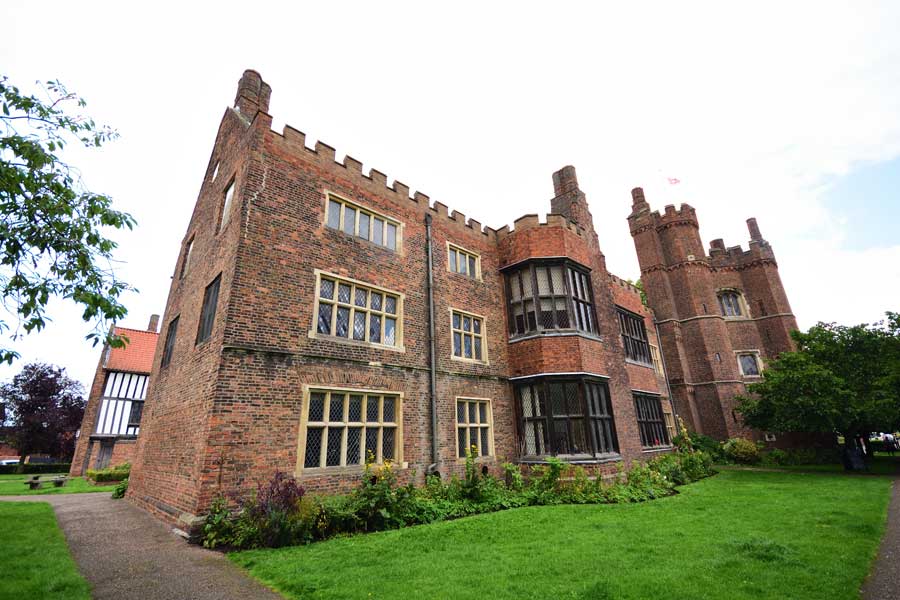
That’s one of the many wonderful things about Gainsborough Old Hall, a historic house slap bang in the middle of an industrial, Lincolnshire town.
Past and present rub shoulders, not just with the usual school trips, history talks and heritage workshops, but in its lively café and ‘pick your own’ days, where locals are invited to gather what they need from the trees.
There are even a few walnuts to harvest.

With over 500 years of history within its walls, Gainsborough Old Hall is one of the best preserved medieval manor houses in England. It owes its survival to a series of wealthy families who lived there and The Friends of the Old Hall, who saved the building in 1949 and opened it to the public.
Now run by English Heritage, Friends still volunteer, adding to its friendly feel.

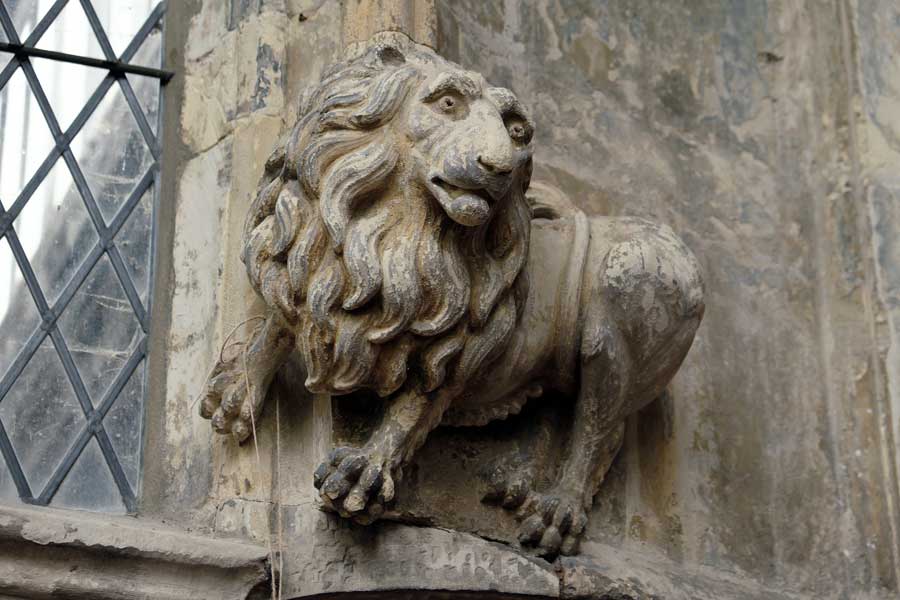
A potted history of Gainsborough Old Hall
We love old houses.
Pork Belly’s interest is caught by the way it’s constructed, the old stone, wood and sunlight through windows.
Mine is piqued by the people who lived, loved, worked and died there. Which is why I read all the signs, stare at all the paintings and listen to any passing guide.
What I learned at Gainsborough Old Hall was that the man responsible for its creation, Thomas Burgh, was a wily character.
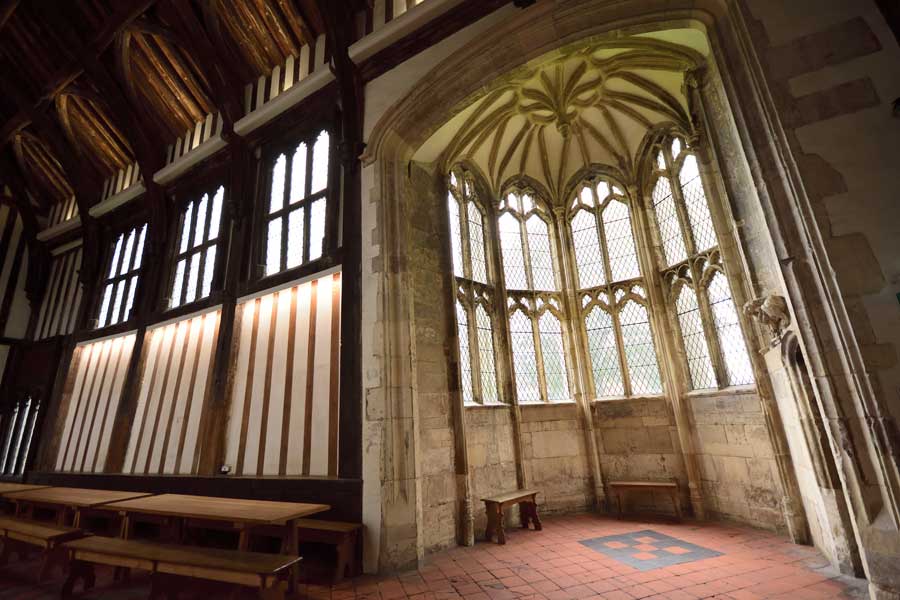
Starting off as a soldier in Yorkist Edward’s army, Thomas was knighted when Edward was crowned king, and rewarded for his loyalty with land throughout Lincolnshire, including Gainsborough. There, in 1460, he began to build a magnificent family home, a sign of his growing wealth and status.
From that point on, Sir Thomas stayed close to the Yorkist cause, rescuing Edward when he was held hostage by the Earl of Warwick, transferring allegiance to Richard III on the death of Edward, attending Richard’s coronation and even fighting for him at Bosworth.
But when Henry VII took the throne in 1485, there was Sir Thomas, very much in favour and ready to become a Tudor through and through.
Clever man!
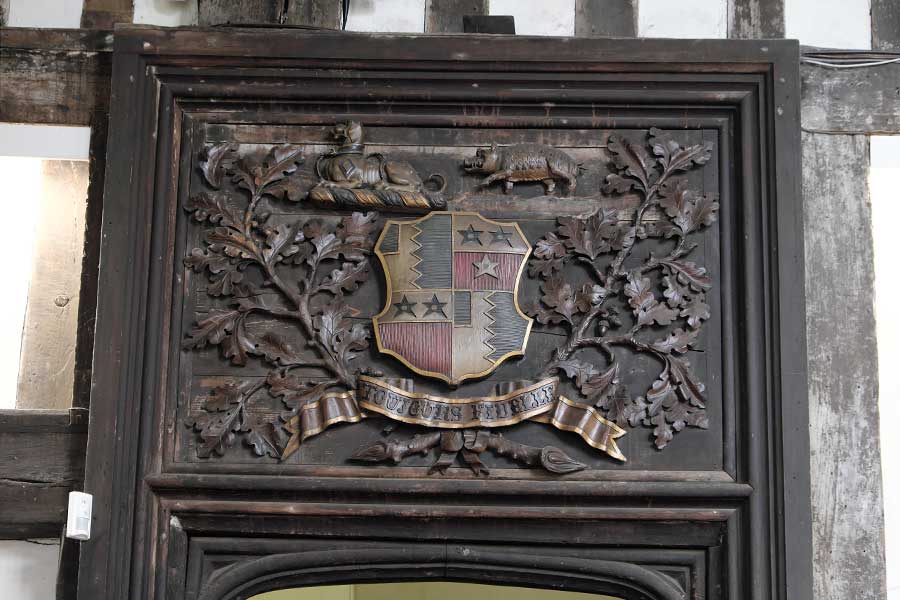
And so Sir Thomas held the hall and his lands. He was named 1st Lord Burgh of Gainsborough in 1487 and kept connections to the Royal Family for the rest of his life, even hosting Henry VIII on several occasions.
Then things got even closer. Thomas’ son and heir, Edward, was married to Catherine Parr – recognise the name?
On one of Henry’s visits to Gainsborough, he brought his fifth wife, Catherine Howard, with him. Later she was accused of being ‘indiscreet’ while she was there (and again in nearby Lincoln, apparently) and then it was a case of ‘off with her head!’
So here was Henry, on the lookout for another queen, and Catherine Parr came to mind (or was discreetly promoted.) By then a widow twice over, Catherine was perfectly positioned to become Henry VIII’s sixth and last consort.
Traces of this history, dynasty and magnificence can still be seen in the Great Hall, with its elaborate timber roof and ornamental stone work.
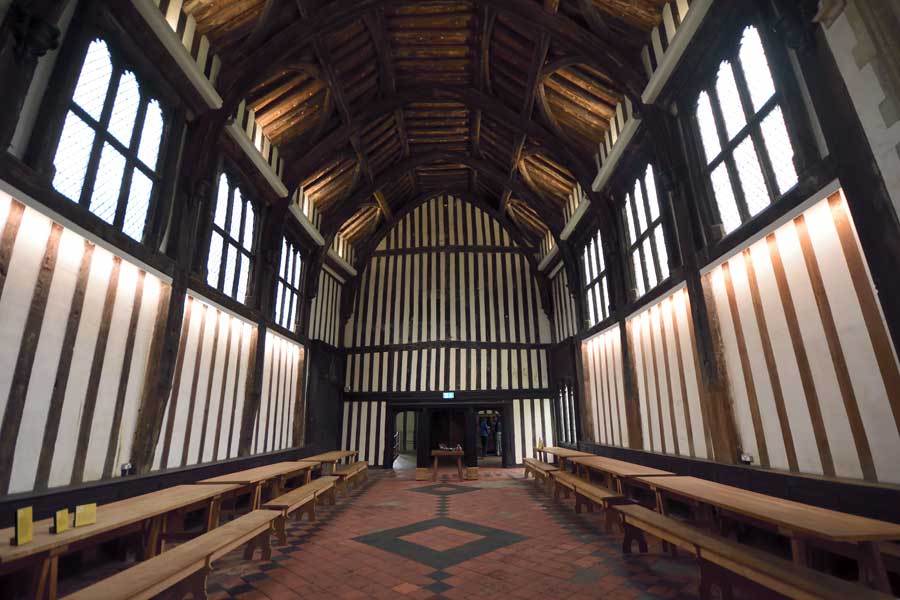
In the years that followed the hall changed hands, opened its doors to the Methodist preacher John Wesley in the 1800s, and then became a centre of entertainment in the 19th century, packing in audiences for recitals, plays and shows.
The Medieval Kitchen at Gainsborough Old Hall
Even more fascinating than the parts the rich and famous used, is the kitchen where the common folk worked, ate and even slept.
It’s one of the most complete and best surviving medieval kitchens in the country, with many original features, including two open fireplaces, big enough to roast oxen, and two huge bread ovens.
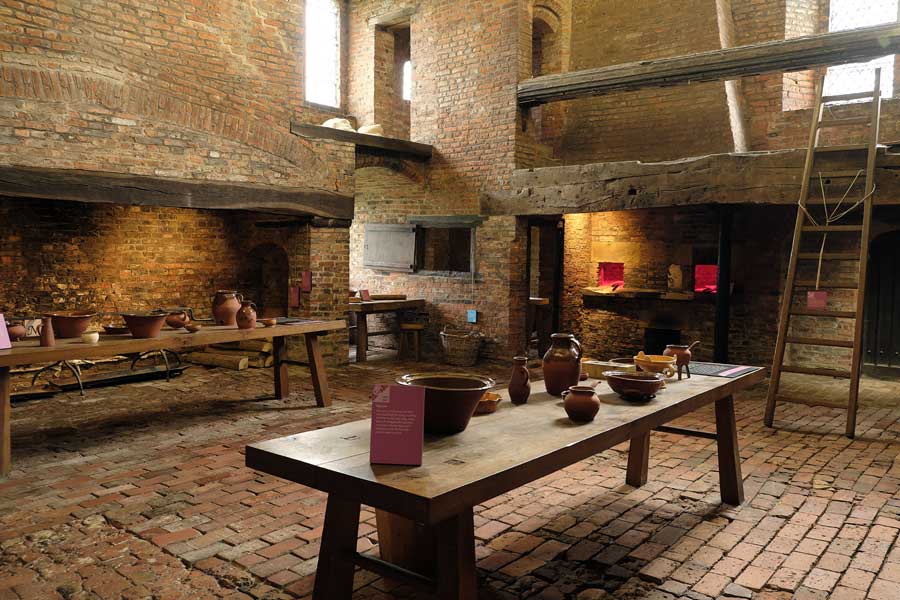
When we visited, a volunteer was on hand to explain all the nooks, crannies and equipment and the hierarchy of those who kept the elite fed and watered.
And here I learned, for the first time, the origin of the word ‘curfew’.
On the hearth was a small, covered pot that was left overnight to keep a few flames alight. Called a couvre-feu in French, meaning literally ‘cover the fire’, it stopped the flames breaking out overnight, while keeping the embers hot.
Couvre-feu became curfew.
Now you know.
That was the oldest, and for me the most memorable, part of the Hall, but there was much more to explore.
Gainsborough Old Hall Tower
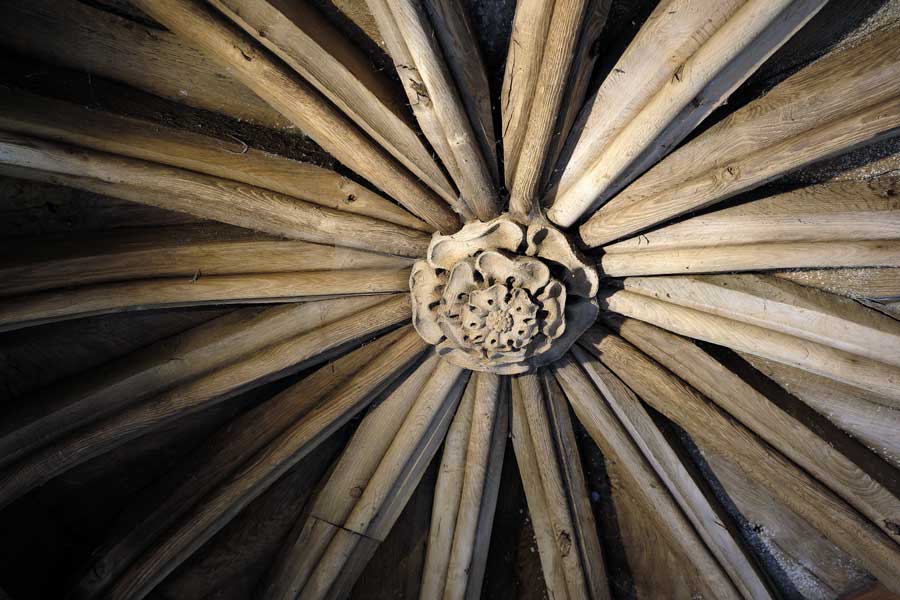
59 steps wind their way up to the roof. Look up as you climb, and you’ll see a magnificent ceiling rose set in the timbers.
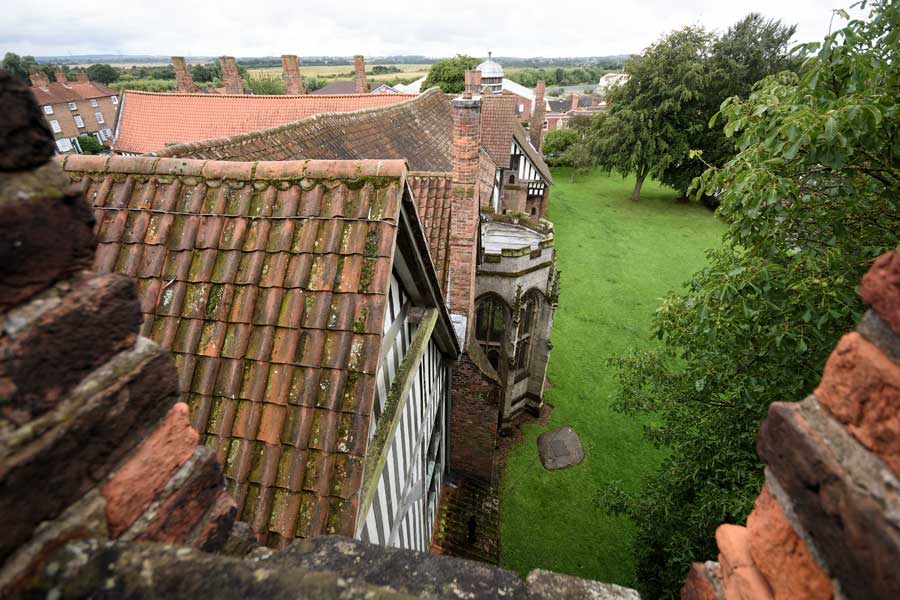
Press on, and you’ll be rewarded with views out over the town to the countryside beyond. The open skies and flat landscape mean you can see all the way to the River Trent and the border with Nottinghamshire.
Oh, and do watch out for the Grey Lady who is said to haunt the Tower.
No, not Catherine Howard bemoaning her downfall, but some unspecified daughter of the house who was allegedly locked in the tower to stop her eloping with a poor soldier.
The Lodging
While the family lived in one wing of the manor house, the other was for visitors, servants and eventually a lodging house.
In the 19th century, shops opened up on the ground floor while families lived above. Census returns from that era gives a flavour of what life was like.
Fans of Who Do You Think You Are may expect royal or celebrity links, but Gainsborough folk seemed to be more down-to-earth.
And that’s what I found most intriguing.
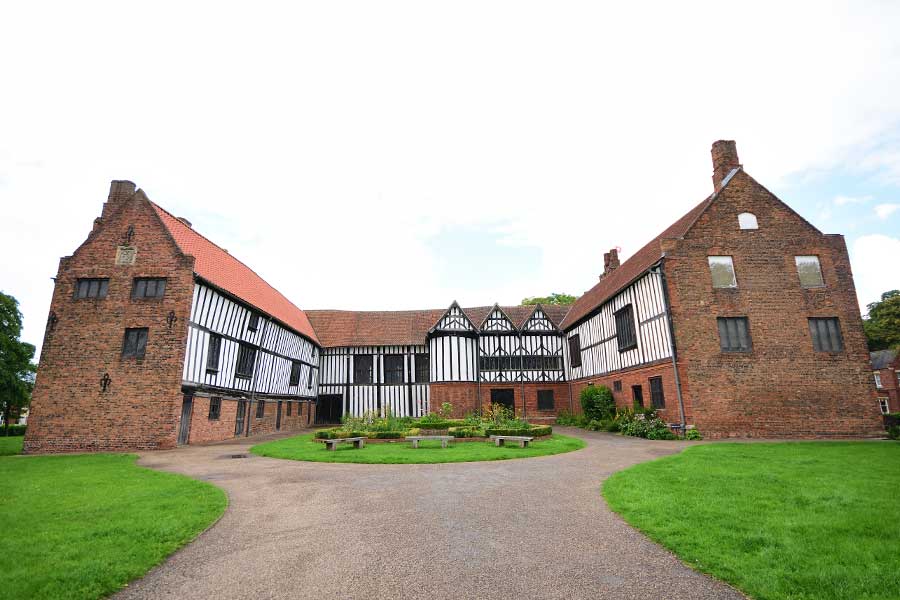
No famous playwrights, poets or turbulent priests lived here. Instead, it was home to hard-working families, and the Hall offers up little pen portraits of them.
One of note is the Rose family, whose son William developed the first packaging machine, patented in 1881, which became very successful. Used for a range of products including tobacco, tea, biscuits and even chocolate, it’s said that Cadbury’s named their Roses chocolates in his honour.
True or not, you can see one of William’s marvellous mechanical wrapping machines at the Museum of Lincolnshire Life in nearby Lincoln.
A visit to Gainsborough Old Hall might take most people an hour or so, but we were there waaay longer! There are plenty of information cards to read and absorb, paper trails for youngsters to follow, and knowledgeable staff to guide your explorations.
We kept stopping for coffee and cake, then going back round one more time to make sure we hadn’t missed anything.
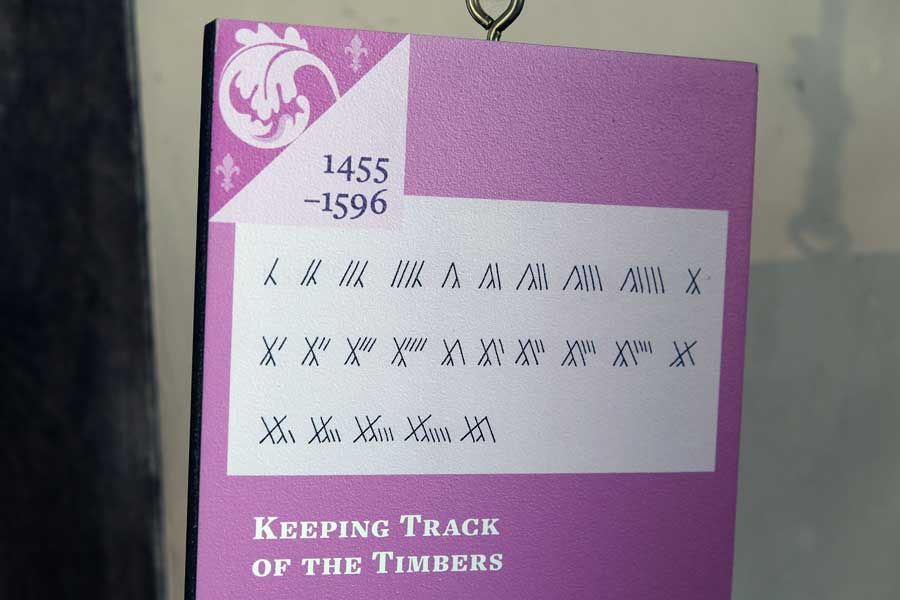
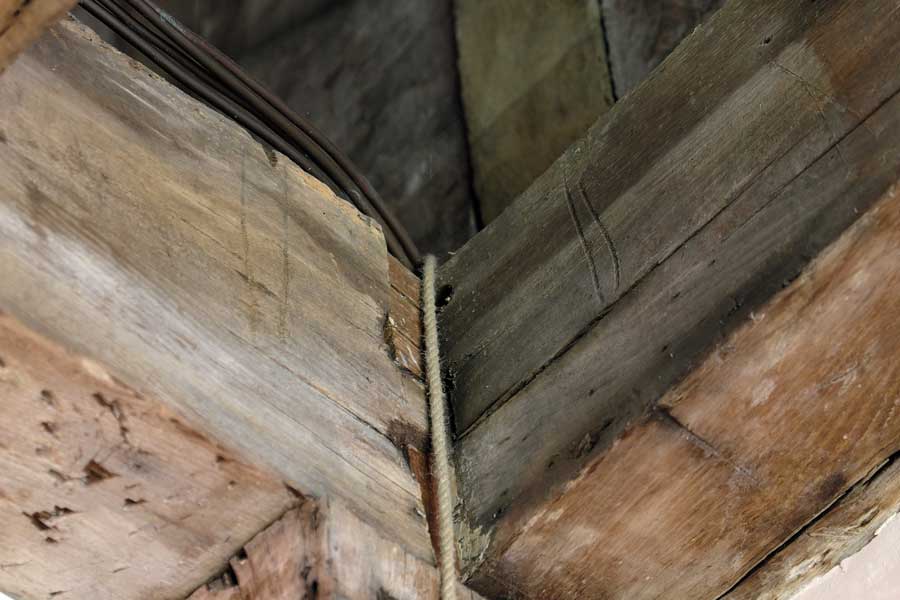
And it pays to ask questions. If we hadn’t got chatting to the reception team, we would have missed the little carpenters marks, still visible today, which they used to assemble the massive beams. A sort of medieval ‘insert tab A into slot B’ system that has stood the test of time!
There’s a nice blend of original features and replicas at the Hall, so younger visitors can get hands-on.
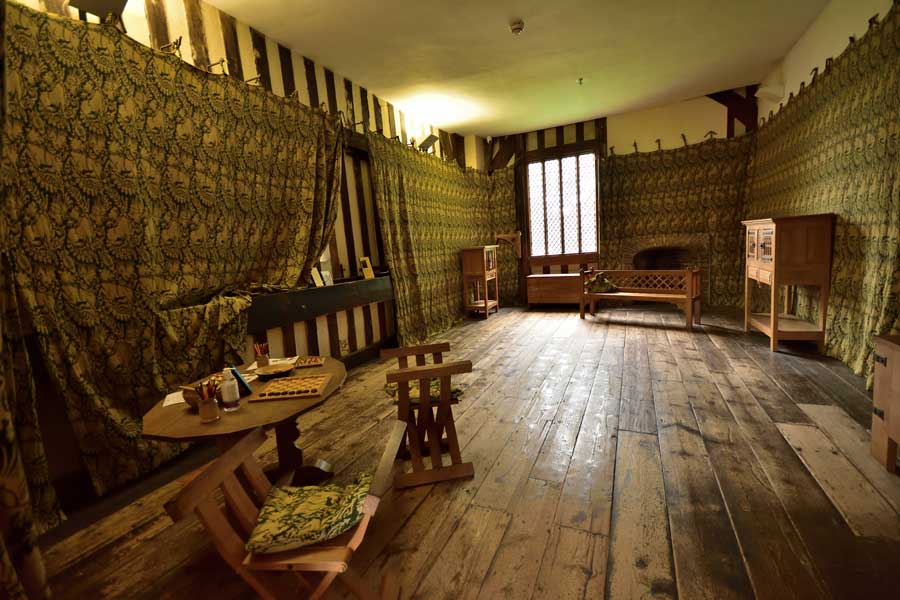
The best place for this is the games room, with recreations of medieval board games, including one that’s fascinated me for years, Nine Mens Morris. The rules were written out so clearly at Gainsborough Old Hall I thought I might actually master it.
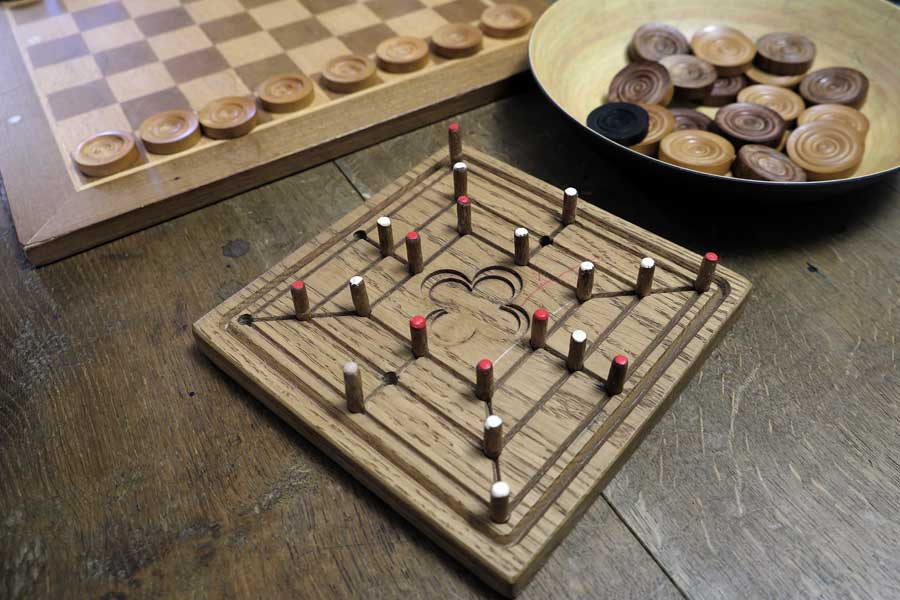
Turns out I’m no strategist!
Maybe next time …
Snackattack
Gainsborough Old Hall’s café is lovely, one of the friendliest we’ve been to, set in the 15th-century parlour, with a long history of conversation and socialising. We stopped for coffee and cake, but stayed for lunch as they had tasty vegan options too.
Getting to Gainsborough Old Hall
Gainsborough train station is only half a mile away and the bus station even closer.
Travelling by car, it’s about half an hour’s drive from Lincoln.
Parking on nearby streets is free for a limited time, but there are pay and display car parks too.
The Hall is open daily, 10am to 5pm.
Tickets from £9.50 (free for English Heritage members).
We were the guests of English Heritage, and are very grateful for their kindness, but the review above has not been influenced in any way by this.
We really loved our rummage through 500 years of history.
Not near Lincolnshire?
Don’t forget to check out English Heritage’s range of fantastic places to visit – from Victorian gardens to Roman forts, mighty castles to ruined abbeys.
Where to next?
• Secrets of Lincoln
• 10 haunted pubs to visit
• 5 English Heritage sites in Sussex