
Originally Published August 2023. Updated for 2026 with current prices and opening times.
Mention to anyone that you’re off on holiday to Lincoln, and their reaction is usually a blank stare. Then, ‘Oh yes, nice cathedral. And an old castle.’
So it’s no surprise to find Lincoln’s tourist hotspots, even in the height of summer, are uncrowded, quiet and relaxing.
Attractions and shops open late and close early, and there’s a calm, unhurried feel to everything.
Laid-back Lincoln, we called it.
So we took our time and dug deeper to find more than just Lincoln’s Big 3 – Castle, Cathedral and Steep Hill.
Here are the secrets of Lincoln we uncovered – with a little help from Visit Lincoln and English Heritage.
Lincoln Cathedral and the Lincoln Imp

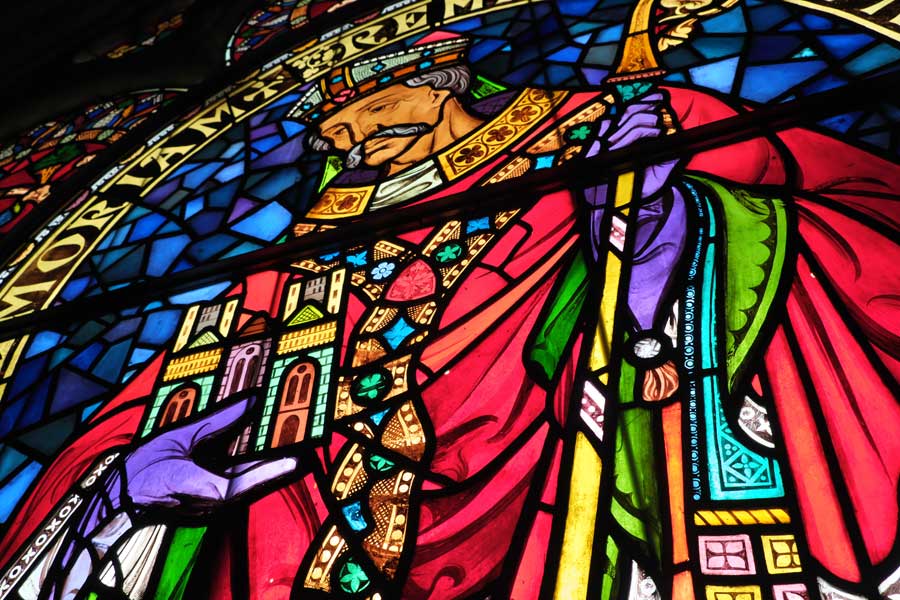
Okay, so the cathedral’s not exactly a secret – it’s huge and sits atop an ancient hill and can be seen for miles around. Norman carvings, gorgeous interior and medieval stained-glass windows, all beautifully restored, are the main attraction.
Even the famous Lincoln Imp – hard to spot high up in the angel choir unless you pay to illuminate him (or ask a friendly volunteer to point him out) is well known.
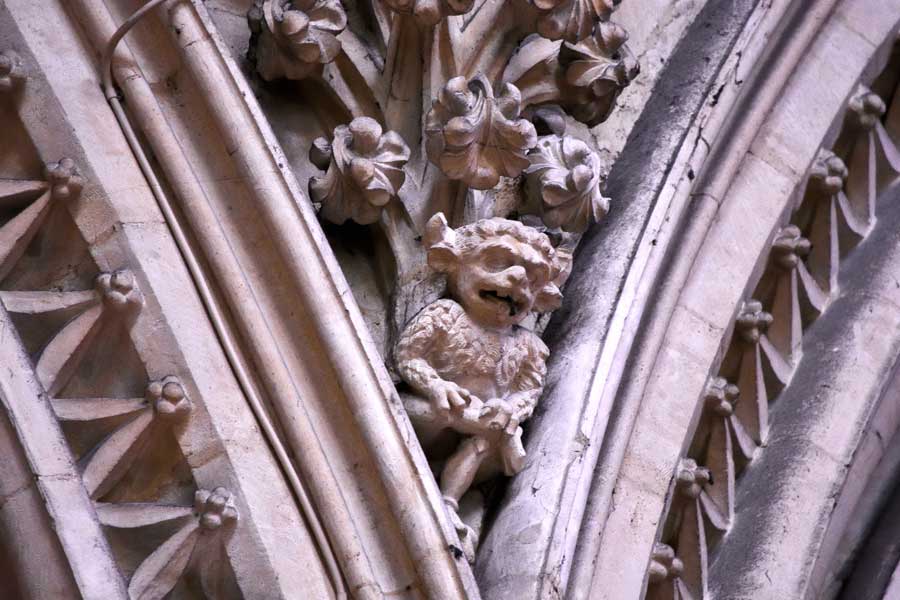
But there’s so much more to discover if you have the time.
The cost of admission includes a free floor tour, led by a volunteer, and is great for orientating yourself and finding the main points of interest.
The intricately carved rood screen with its saints, bishops and mythical beasts.
The Dean’s Eye and Bishop’s Eye twin rose windows.
The shrine of St Hugh and the tomb of Kathryn Swynford.
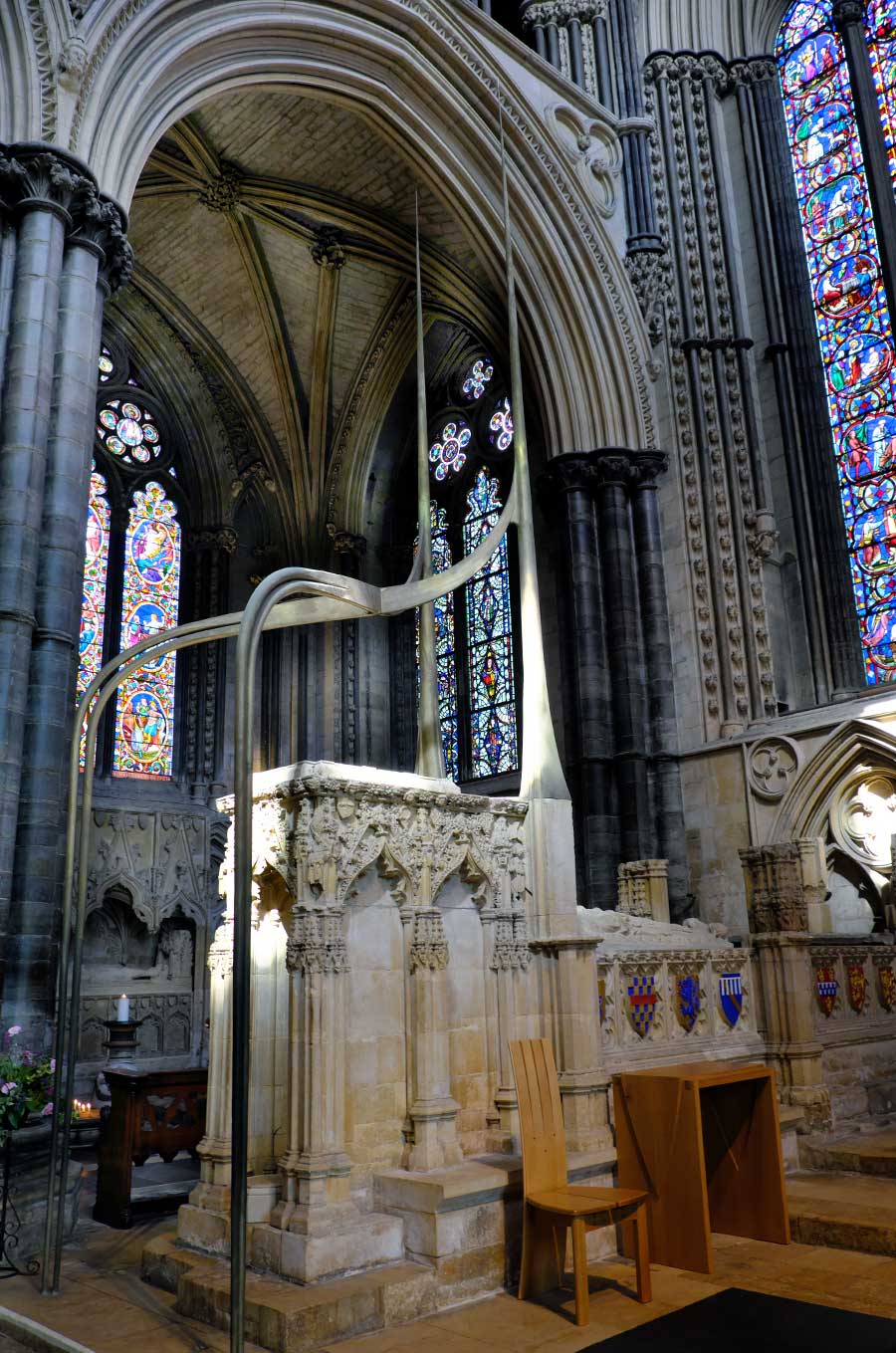
And for a bit extra you can take one of several specific tours which take you deeper, and sometimes higher, into the cathedral’s history.
We enjoyed the Symbolism Tour which highlighted the meanings and relevance to medieval churchgoers of all the carvings, windows and statues.
Even more fascinating was the Roof Tour.
Scheduled to take around 90 minutes, we were there for more than two hours with our enthusiastic, knowledgeable and entertaining guide.
The tour goes behind the scenes, to the remains of the old Norman cathedral, up tiny, twisting stairways to see its ancient defences.
Then out onto the roof for views across the countryside and the castle.
And finally, we travelled the whole length of the nave roof to see the ancient timbers and stonework that still stand after more than 800 years.
At this point, there’s a very narrow walkway that brings you out near the magnificent Dean’s Eye window. I admit that by now I was feeling a little wobbly, holding on to the railing, unable to look out and down into the service chapels below.
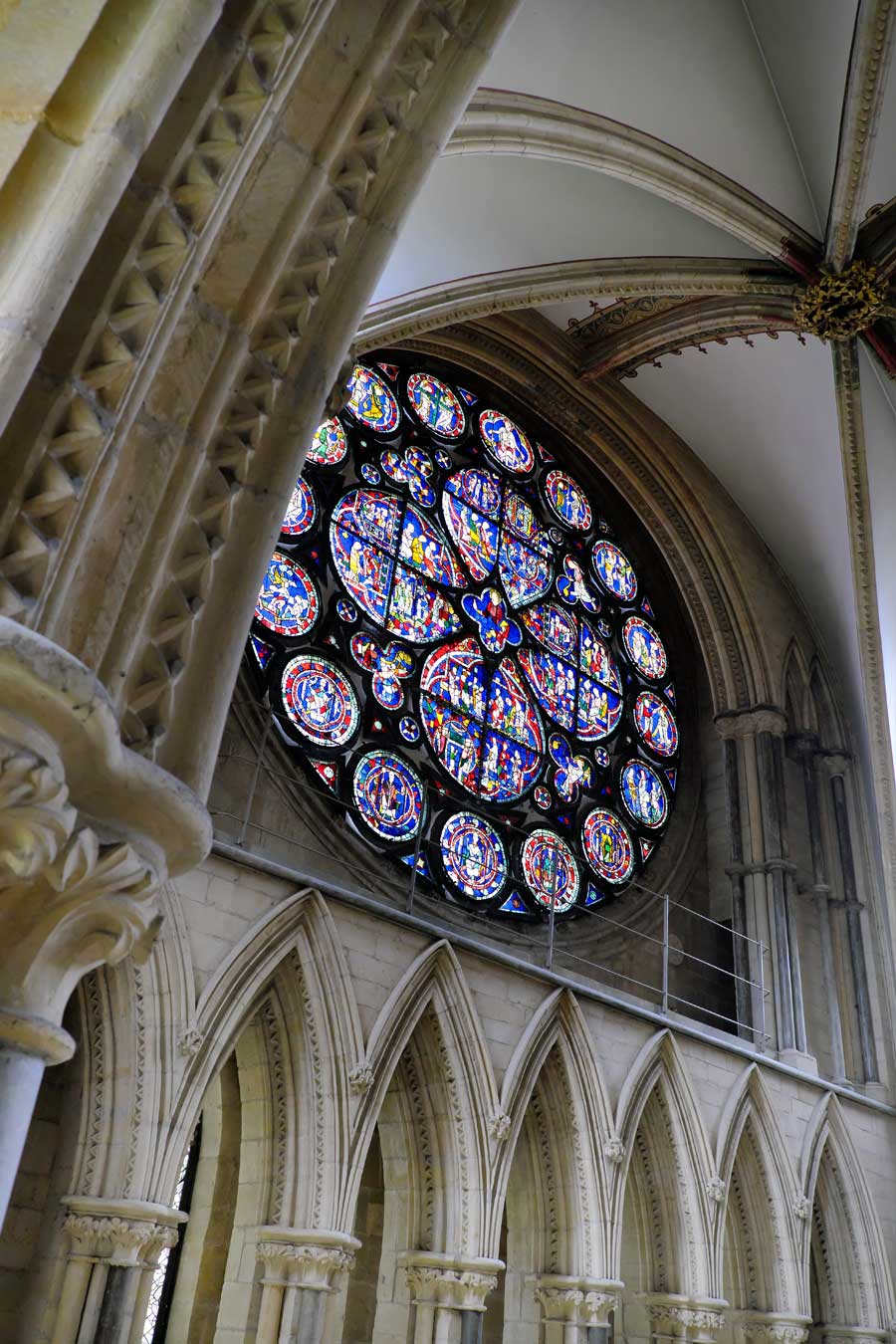
But Pork Belly was in his element, camera at the ready, thrilled to get a close-up view of the place.
This tour isn’t recommended if you have mobility or specific health problems, such as vertigo, but if you’re like me, just a little bit afraid of heights, it is perfectly do-able and so interesting you barely notice how high up you are!

For full details of the cathedral opening times, services and the tours, see Lincoln Cathedral’s website.
A 3rd century archway still in use
Lincoln has been settled since before Roman times, when it was known as Lindo, from the local word for pool or lake.
Then the Romans came, saw it was the perfect hilltop site for defence and built a fortress there, changing the name to Lindum. It grew in importance, became a ‘colonia’ – a place where old soldiers retired – and the name morphed into Lindum Colonia, then Lincoln.
The town slowly spread down the side of the hill and traces of Roman roads, walls and market places can still be found.
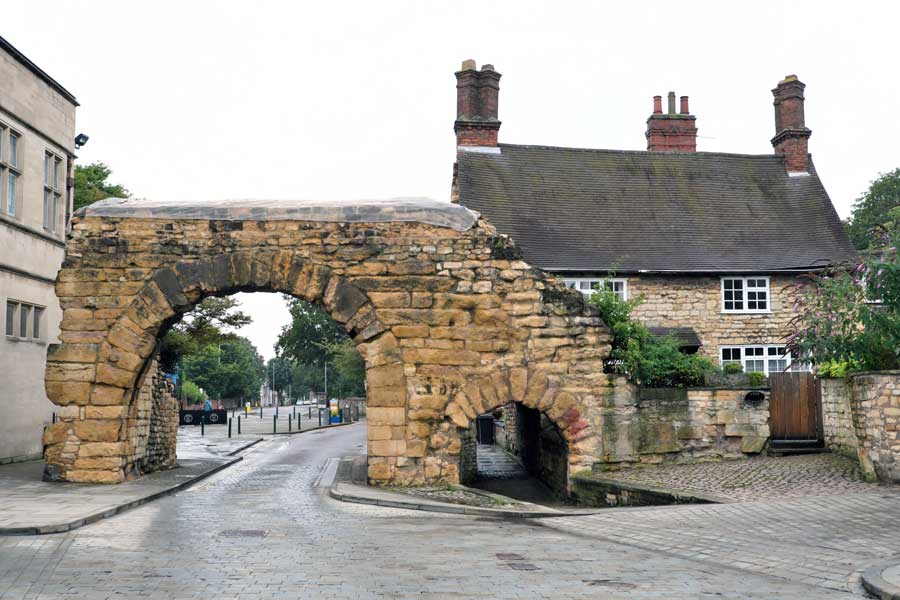
Newport Arch is the best preserved remnant of Roman times, a gateway at the northern end of the old city, and one which local traffic still uses.
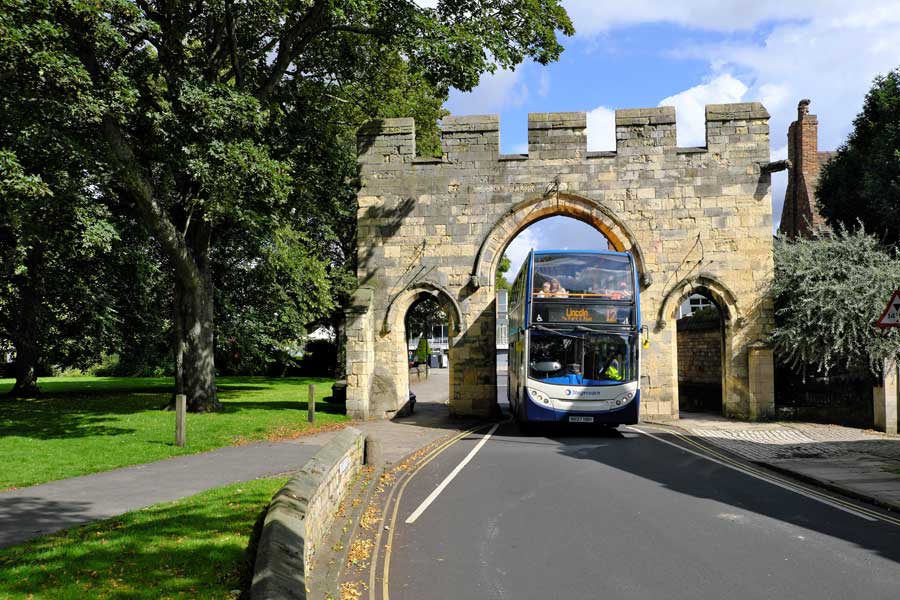
There’s also a 19th century reconstruction of the medieval Priory Arch, marking the entrance to the cathedral quarter, which double-decker buses can just squeeze through, and the 13th century Pottergate Arch still stands.
Lincoln Castle, Magna Carta and more
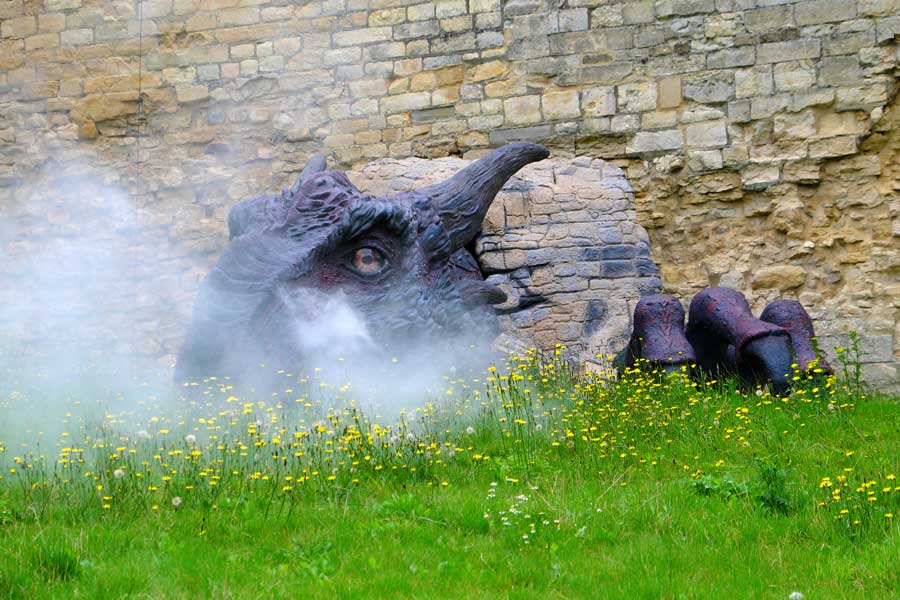
Lincoln Castle is a popular spot for locals and visitors alike. The grounds can be visited for free and are perfect for family picnics, rolling down steep hills and dragon-spotting.
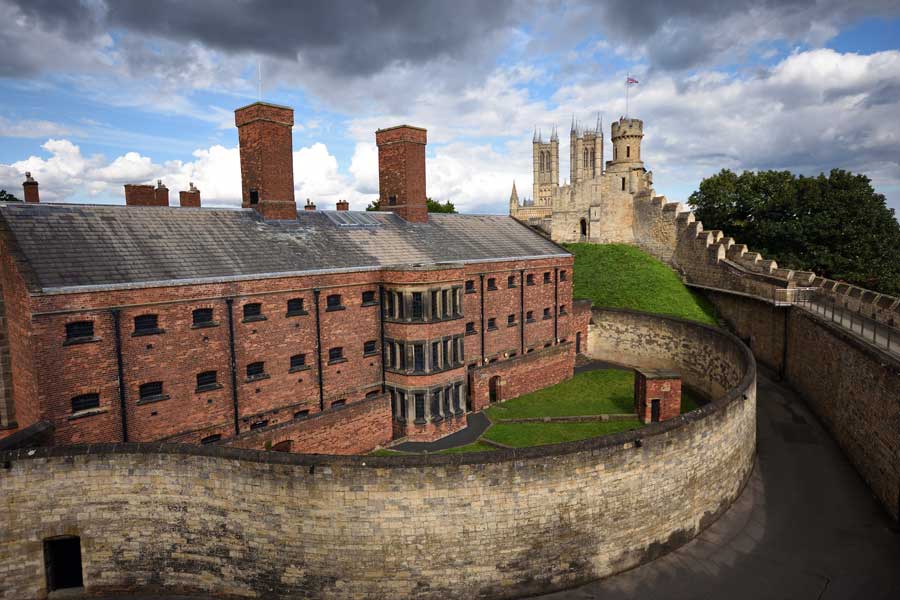
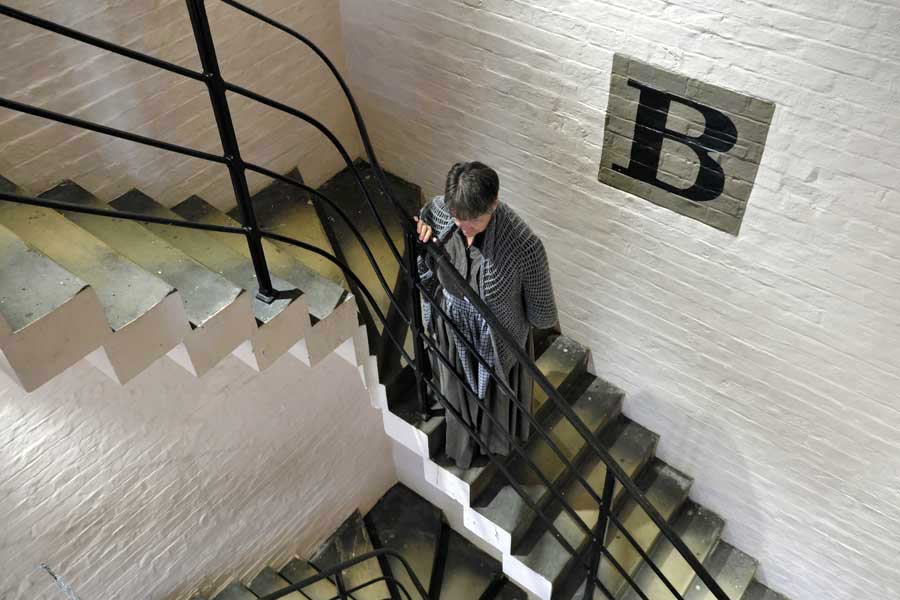
But pay the admission charge you get a guided tour of the exterior, an audio-walk around the castle walls (packed with fascinating stories of the people who lived in and near the castle over the centuries) and entrance to the Victorian prison with its sad tales of human suffering.
It also gets you a glimpse, in its protective vault, of one of the four remaining original Magna Carta documents, dating from 1215, and an even rarer Charter of the Forest from 1217, which gave more rights to the common man, not just the barons!
Court hearings have taken place inside the walls of Lincoln Castle since it was built in the 11th century, but did you know legal proceedings are still held there today? The current Crown Court building dates back to 1823 and serious cases are heard there regularly, although thankfully public hangings are definitely in the past!
We were guests of Visit Lincoln, and thanks to Lincoln Castle’s Merryweather Promise, even torrential rain couldn’t dampen our enthusiasm. We simply went back the next day because our first wall walk was a wash-out!
Hopefully that won’t happen to you, but if it does, check their website for details.
Steep Hill is not the only steep hill in Lincoln
It’s the most popular way to reach the oldest part of the city and yes it is steep, and populated with some lovely cafés, antique shops and independent emporia selling everything from cheese to jewellery. It’s also home to some of the city’s oldest remaining houses, like the Jews House (now a restaurant).
But it’s not the original approach to the cathedral and castle.
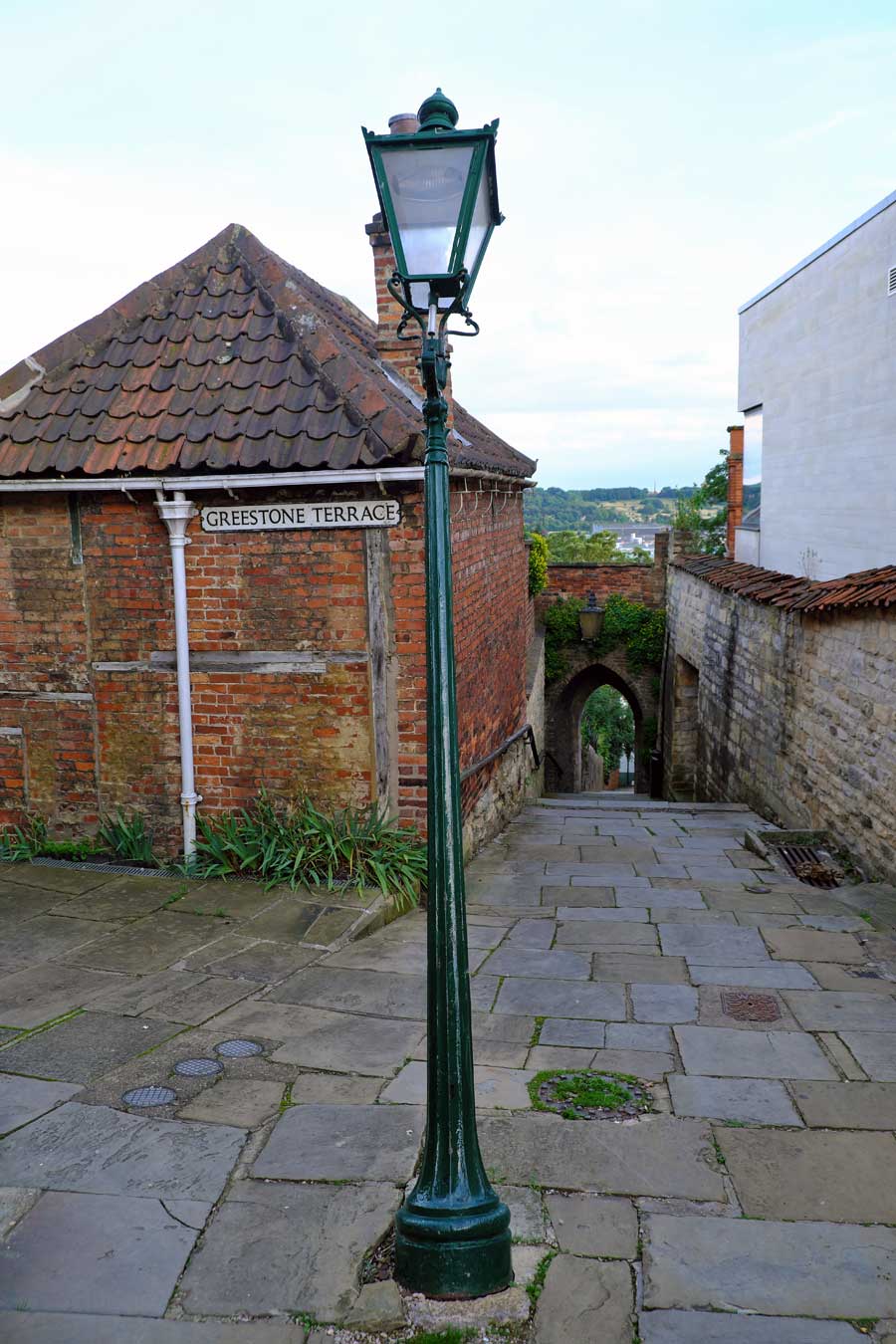
The old Roman way was via Greestone stairs and, according to the entertaining guide of the Original Lincoln Ghost Walk, you can still hear the soldiers marching up there at dead of night. If you like your history peppered with tall tales of spooky goings-on, we highly recommend taking this hour-long stroll.
Another stiff climb is up Motherby Hill, an ancient pathway, now modernised, that follows the line of what was once the west wall of the lower Roman town.
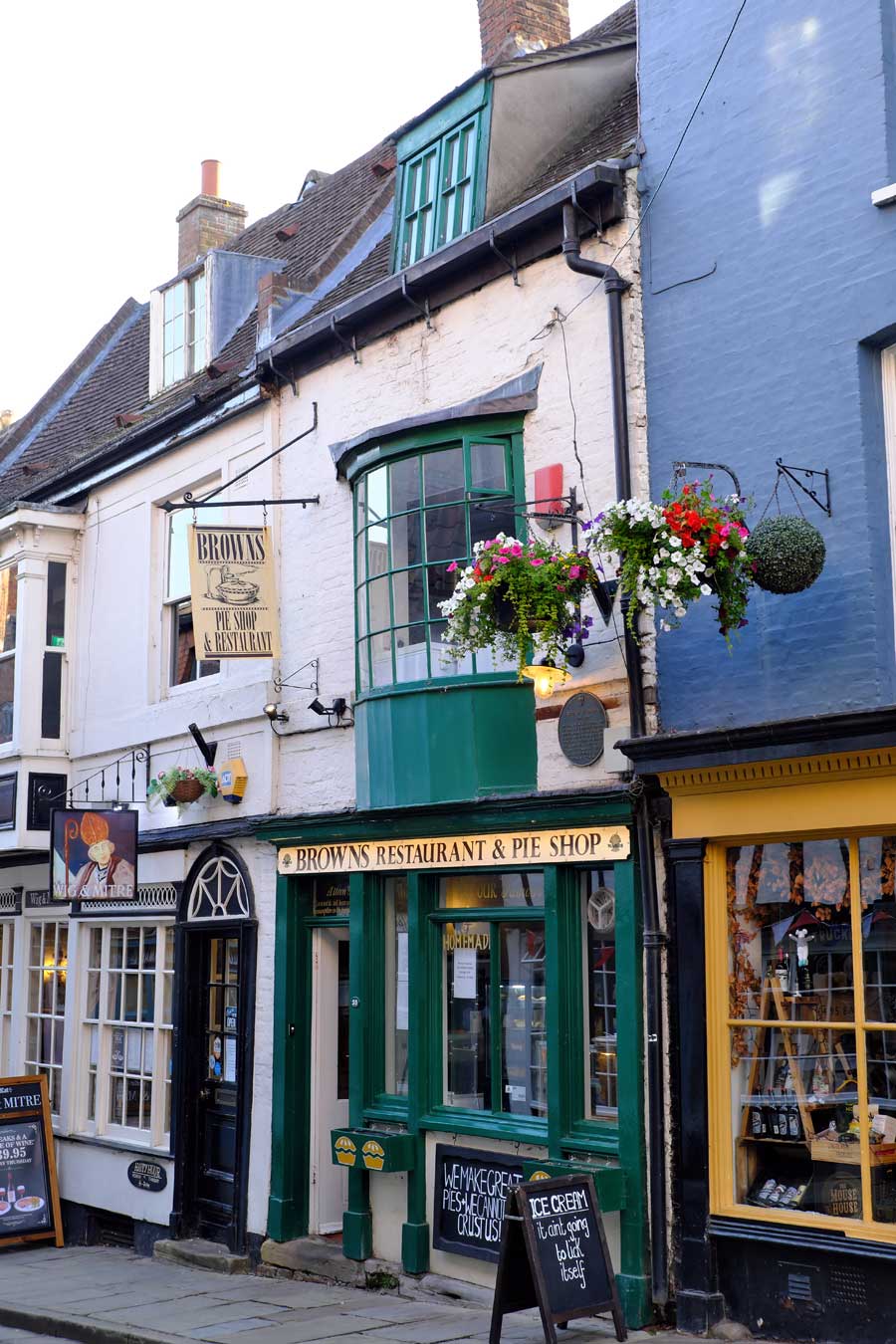
And there’s a little secret on Steep Hill itself you might miss. Look up as you grab a delicious snack from Brown’s Pie Shop, and you’ll discover that T. E Lawrence – the famous Lawrence of Arabia – lived there in 1925, while serving at nearby RAF Cranwell.
Don’t like hills?
There is a walk-and-ride shuttle bus that takes in the main points of interest, or you can use the hop-on, hop-off Lincoln bus tour.
Medieval Bishop’s Palace
Again, not exactly a secret. It was closed for several years for a £2.5 million renovation and scientific conservation project, but is once again open for business.
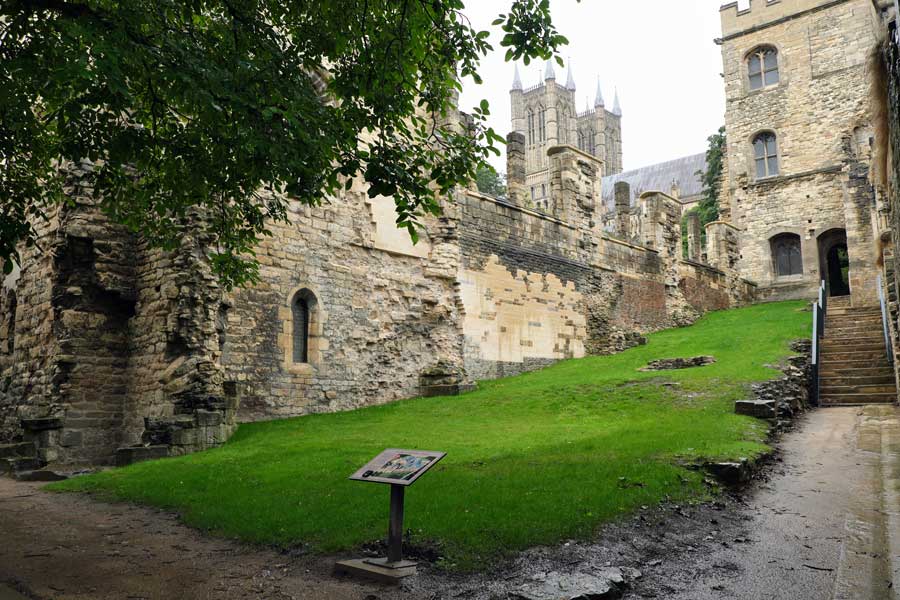
Run by English Heritage, significant amounts of the building remain intact and with information sheets and audio guides, it’s easy to see how impressive it would have been in its heyday, when Bishops held a lot of power.
Its most famous resident was Bishop Hugh of Avalon, later St Hugh, who worked tirelessly (even carrying the brick hods himself if the stories are true) to rebuild the cathedral after the original Norman building was severely damaged in an earthquake.
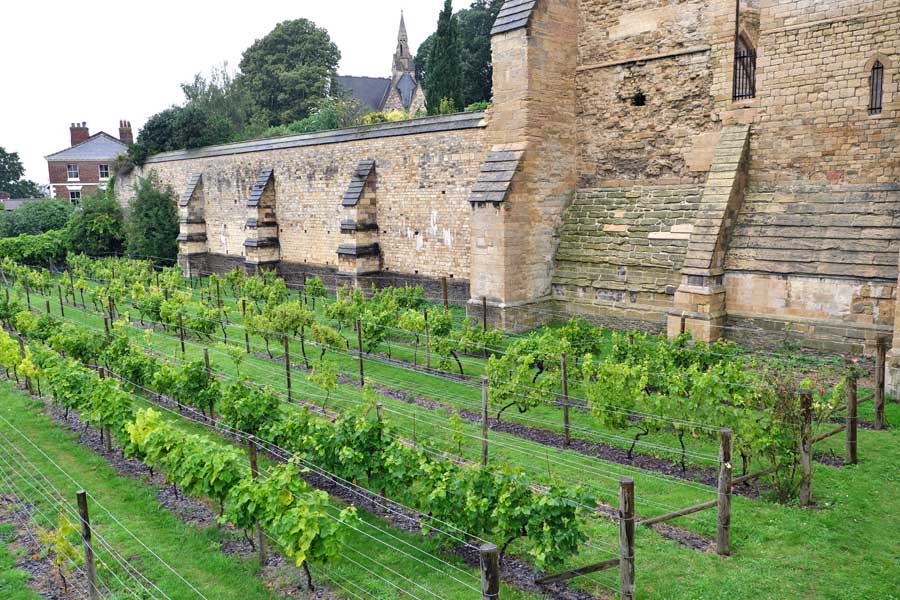
The old chapel, Hugh’s rooms and oratory and the undercroft still remain, plus the additional towers and halls constructed by Bishop William Alnwick, who put his stamp on the premises when he modernised it during the 1430s.
If the weather is fine, you can enjoy sweeping views of the countryside from its terraces and check out the vineyard that’s been replanted on its south-facing slopes.
Lincoln Medieval Bishops’ Palace is also the proud owner of a Silver Green Impact Award. Entry is free, but access is currently restricted to specific open days, so do check their website for details before you go.
Meet me at the Stonebow
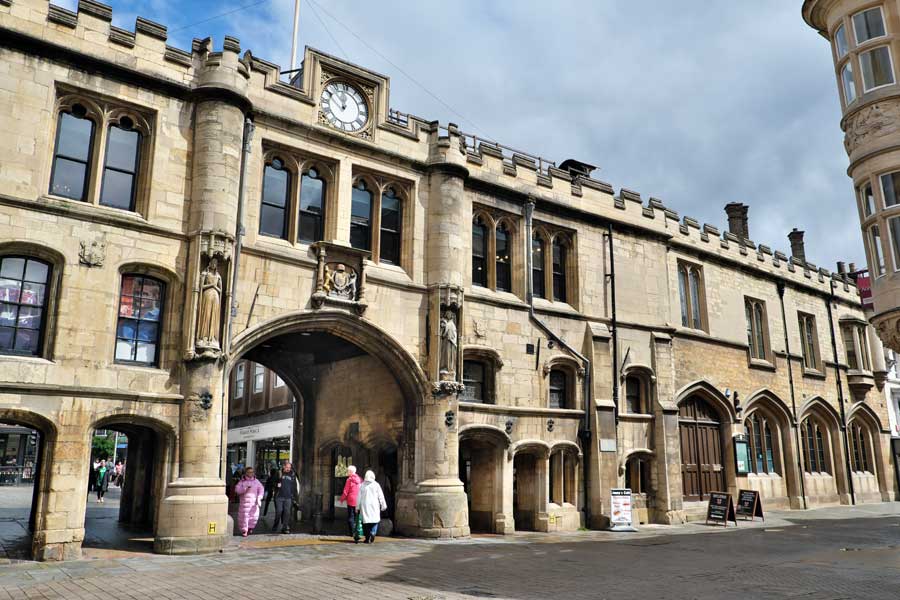
You might hear these words from Lincoln locals, but look at a map, and you’ll be a little confused.
Stonebow is the name for the archway under the Guildhall, which derives from the ancient Norse word ‘stennibogi’ which means stone arch. The current arch dates from the 16th century, but there’s been a way into Lincoln there for centuries.
Interesting side note for those who love the English language, the numerous roads in Lincoln that end in ‘-gate’ owe their names to the Vikings. It doesn’t mean there was ever a gate there, ‘gata’ is simply the old Norse word for street.
Try to time your visit to The Stonebow for one of the free guided tours of The Guildhall. It’s a working building, home to the local council, so check Visit Lincoln website for the days and times.
There were just three of us when we dropped in, but the guide gave us the full works; a potted history of Lincoln life through the ages, the story of the building itself and a glimpse of some of the amazing treasures the council holds, including The Rights of Men, a charter from King Edward I, dated 1301.
The birthplace of computer science
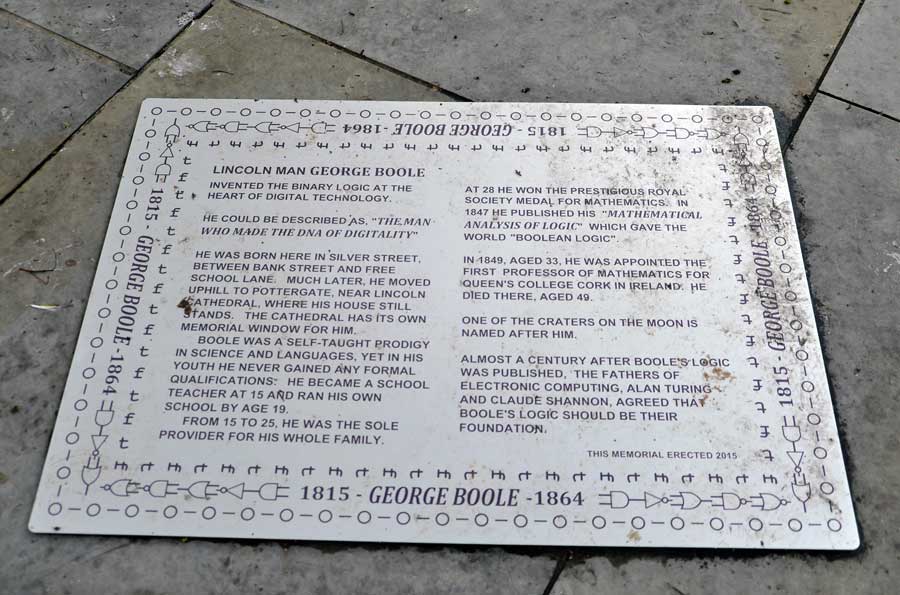
Heard of Boolean algebra?
It’s the system of mathematical logic and probability that underpins all modern technology.
George Boole was a Lincoln man who, in 1847, formulated these rules and continued to refine them throughout his life. His legacy is everywhere, in computers, information technology, electronic circuits and a whole raft of 21st century communications.
We walked past Boole’s former home in Pottergate. There’s a plaque on the wall of what is now a private house. So we paid our respects, with our mobile phones, and moved on.
There’s a rather more fitting tribute to him too, a bronze statue outside Lincoln railway station, showing Boole at a blackboard mid-lesson, chalk in hand, teaching a boy and a girl who look suitably studious.
It went up in 2022, and there’s a nice bit of symmetry to where they put it: the station opened in 1848, a year after Boole published his first work on the mathematics of logic, so he’d very likely have walked past that exact spot himself.
Lincoln – birthplace of the tank
Now, this really did come as a surprise to us – although had we approached the city from the south, we’d have spotted the tank memorial on the Tritton Road roundabout and started asking questions!
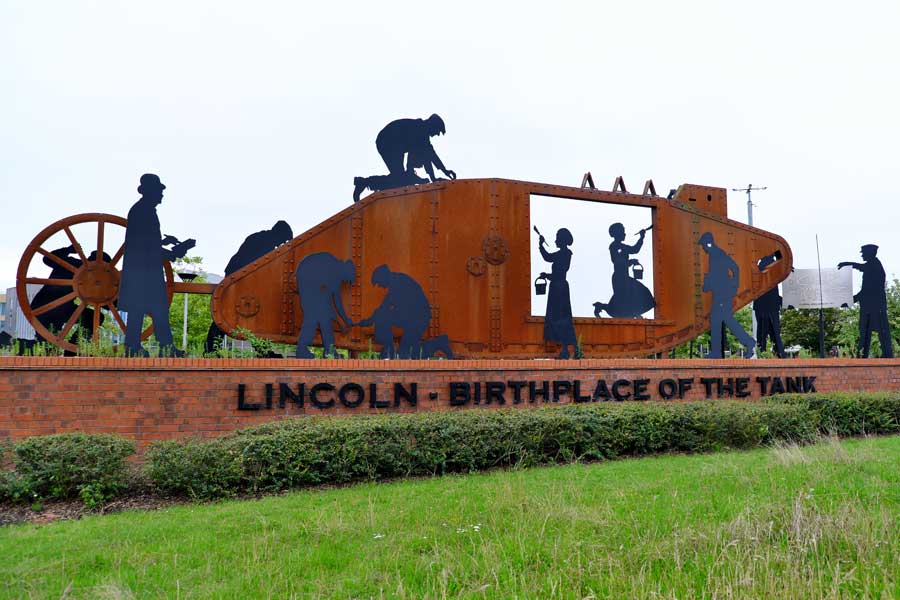
Lincoln’s aviation and engineering contributions to both World Wars is well documented, but the fact the place once earned the nickname Tank Town is less well known.
In 1915, with trench warfare at a stalemate, the British government sent out an appeal for a solution. William Foster and Co, already renowned for their farm machinery, went all out and in a few months presented their prototype ‘Little Willie’ for approval.
It was kept secret, although test runs did take place openly on nearby land, onlookers being told they were trialling a new form of water tank for desert operations. That may even be how the name came about, the engineers simply talked about working on ‘the tanks’.
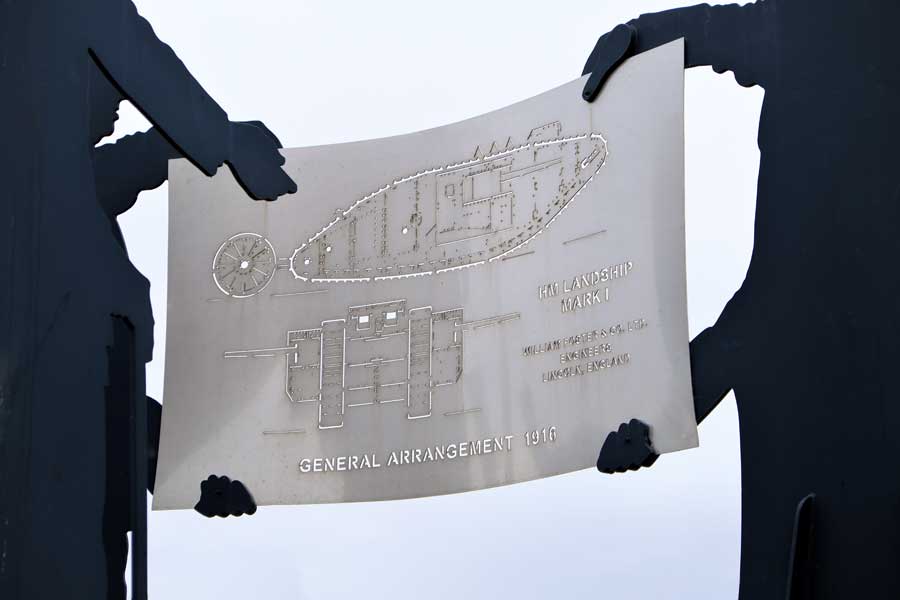
The machines were quickly refined and improved and by September 1916 they were ready for action in the first ever tank battle.
The Lincoln designed tanks were so successful that they were produced by factories across Great Britain and historians agree that without them the stalemate of the Great War would have carried on, and thousands more lives would have been lost.
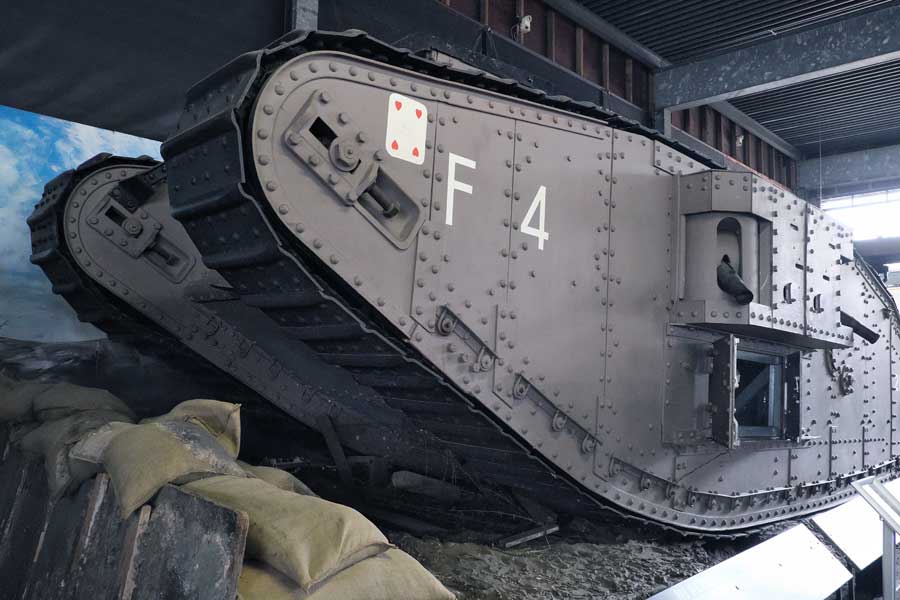
You can see the full story at the fascinating, and free, Museum of Lincolshire Life, along with displays and artefacts of Lincoln life throughout the ages.
International Bomber Command Centre
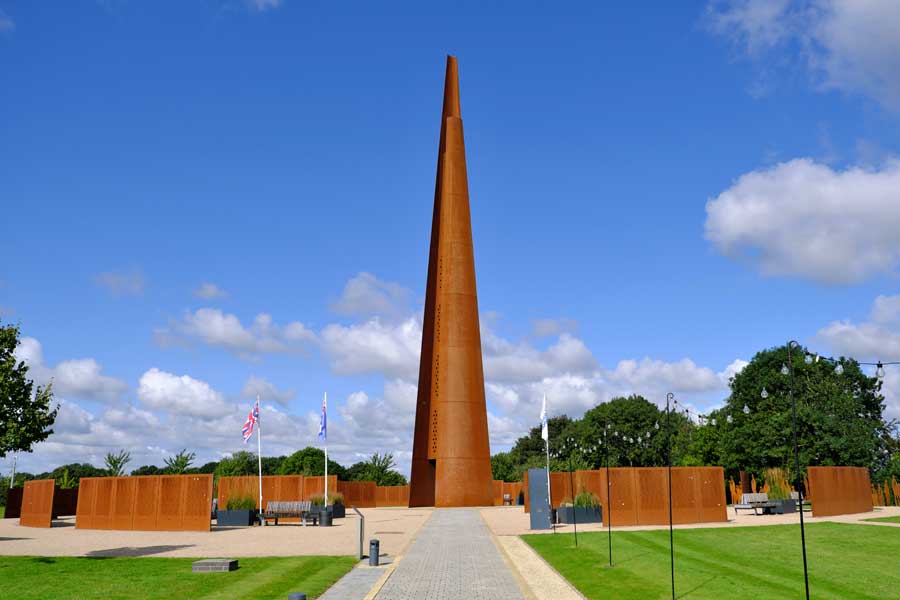
With a memorial spire soaring 102 feet into the air just a short way south of the city, it’s remarkable that this remains such a secret.
Opened in 2018, the IBCC brings recognition and remembrance for the 57,861 men and women of different nationalities, who served and supported Bomber Command during World War II.
Bomber crews, like those who carried out the famous Dambusters raid, were once hailed heroes. But later, after the destruction of cities like Dresden, public opinion turned against them. Even Churchill, in his list of thank-yous at the end of hostilities, failed to mention them.
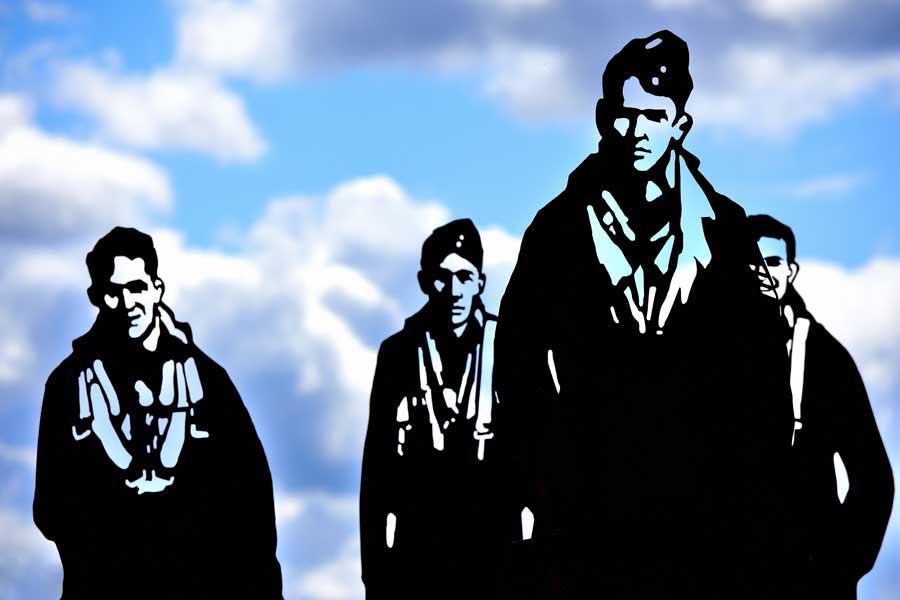
The IBCC aims to redress that imbalance, providing context for today’s visitors.
A visit to any war memorial or museum always leaves Pork Belly and I feeling ambivalent, partly because of his part-German heritage and partly because we both simply hate the idea of war.
But the International Bomber Command Centre, perched on a hill with wonderful views of Lincoln, is peaceful and strikes the balance between commemoration and reconciliation.
You can visit the memorial itself for free (with a small car parking charge), stroll the Peace Gardens, take a guided tour, and read the Walls of Names.
But for the full experience, pay for admission to the exhibition with interactive displays and short films that tell the story of Bomber Command, through the eyes of those who witnessed events first-hand. There are interviews with Air and Ground Crew veterans and support staff, along with personal accounts from those most affected by the bombing raids.
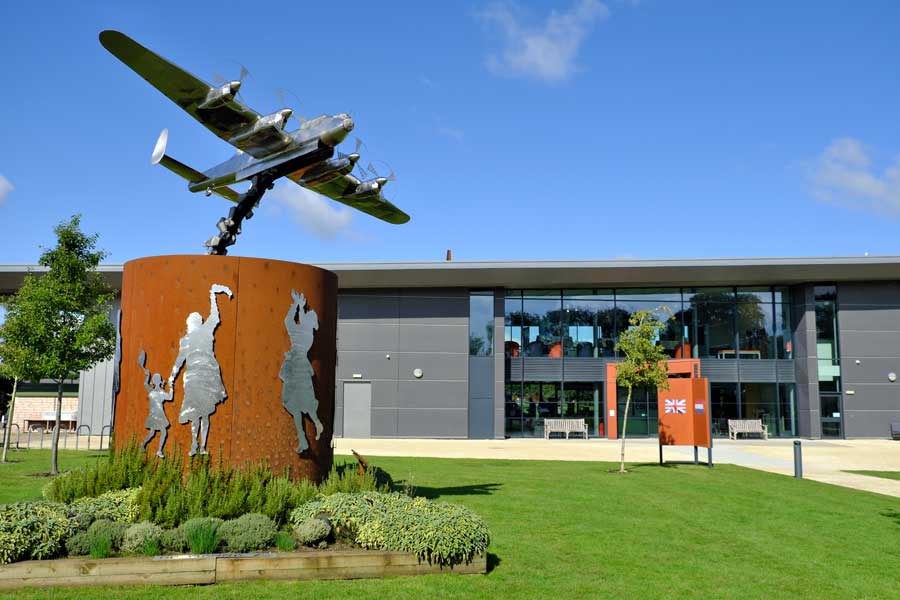
Memorials such as this make it possible to remember the bravery of those who served, while recognising the horror of war.
For full details of costs and opening times see the IBCC website.
Lincoln’s Park and Ride
And finally – we think, all joking apart, this is Lincoln’s best kept secret!
We love park and rides and use them a lot when we travel. Usually they’re well advertised with big signs on outer ring roads pointing out the way.
Not so in Lincoln.
The city’s park and ride is at the back of the Waitrose car park just off the A46/A15 ring road and not well signed at all. Even with Google maps we nearly missed it!
After we left the car and crossed the busy road to the bus stop, we found a queue of equally puzzled visitors trying to work out which bus to take and how much it cost.
We can confirm it’s the numbers 10 or 12, parking at Waitrose is free between 7am and 7pm, and an adult day return currently costs £3.50. (free if you have an older person’s bus pass issued by your local authority).
It is very convenient, and we used it a few times. BUT – and it’s a big BUT – the last bus back from the city bus station leaves at 6.20pm. Not so good if you’re planning a night out or, like Pork Belly, a bit of twilight photography.
Some days we drove in and parked in one of the many city centre car parks, just a short way from the main shopping centre and waterside areas, and a bit of a climb to the cathedral and castle quarter. Prices compared to our home city of Brighton were reasonable.
Getting to Lincoln
There are three regional airports nearby, Humberside, East Midlands and Robin Hood in Doncaster.
Rail services run from London, Sheffield, Derby, Leeds and Hull.
There’s a good motorway and A road network, although do pay attention to the speed limits. Many of Lincolnshire’s roads follow the old Roman routes and are deceptively straight until you come to a sudden bend or a hidden dip. And don’t rely on what your SatNav says, many places have lower, local speed limits, for safety reasons.
Where to stay in Lincoln
We went self-catering, as we almost always do, and stayed in a barn conversion cottage just outside the city in a pretty village called Welton. Very peaceful and not too far away.
There are plenty of hotels in the cathedral quarter to choose from. The White Hart, one of the city’s most historic (and possibly haunted) hotels, has since been beautifully restored under new ownership as part of The Loxley Collection, with a spa now open and a new pool, gym and sauna under construction for late 2026 or early 2027.
Lower cost options include a Premier Inn and Holiday Inn, and there are dozens of small B&Bs or rentals.
A good starting point is the Visit Lincoln website.
Snack attack – where the locals go
The oldest part of the city is packed with tearooms and small restaurants, and the waterside area boasts all the usual chain eateries.
We enjoyed Bell’s Tea Room on Steep Hill – friendly service, plenty of veggie options and some delicious cakes (including vegan ones).
Stokes is the local coffee company and is served in most places, including its own historic and much photographed café that spans the old High Street Bridge.
But we took advice from the team at Visit Lincoln and tried out Ole Ole! Tapas Bar near the Castle and The Duke William by the Newport Roman arch.
Both excellent meals, reasonably priced and with a great atmosphere.
So the next time someone tells you they’re off to Lincoln for a holiday, replace that blank stare with ‘Oh yes, lots to see and do there!’

Travelling soon? Things to do and attractions not to miss with Get Your Guide …
If you’ve enjoyed browsing our website, learned something new, or just had a smile because of what we do – we’d love your support to keep the good stuff brewing!
Where to next?
• A day out at Michelham Priory
• Explore the hidden canals of Antwerp
• Weird and wonderful things to see in France