
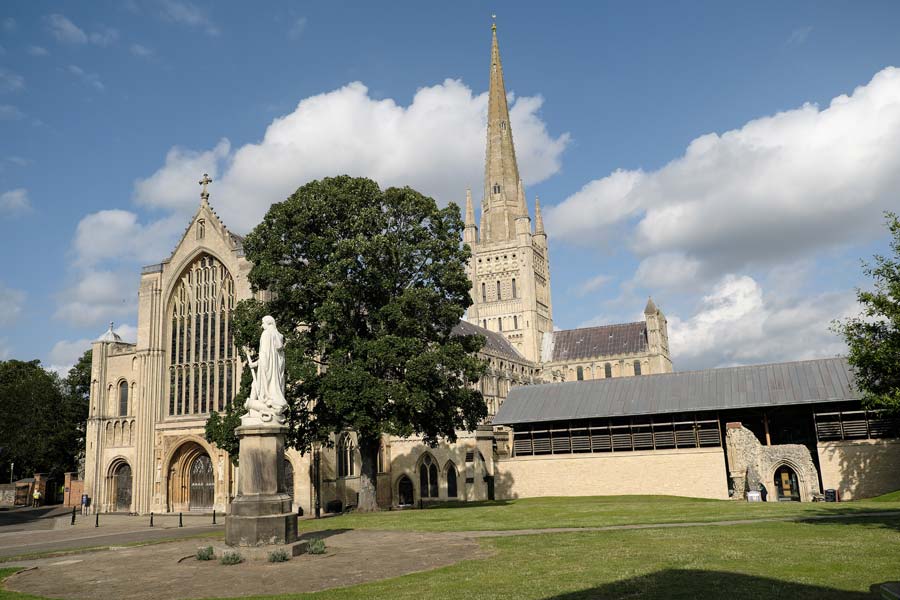
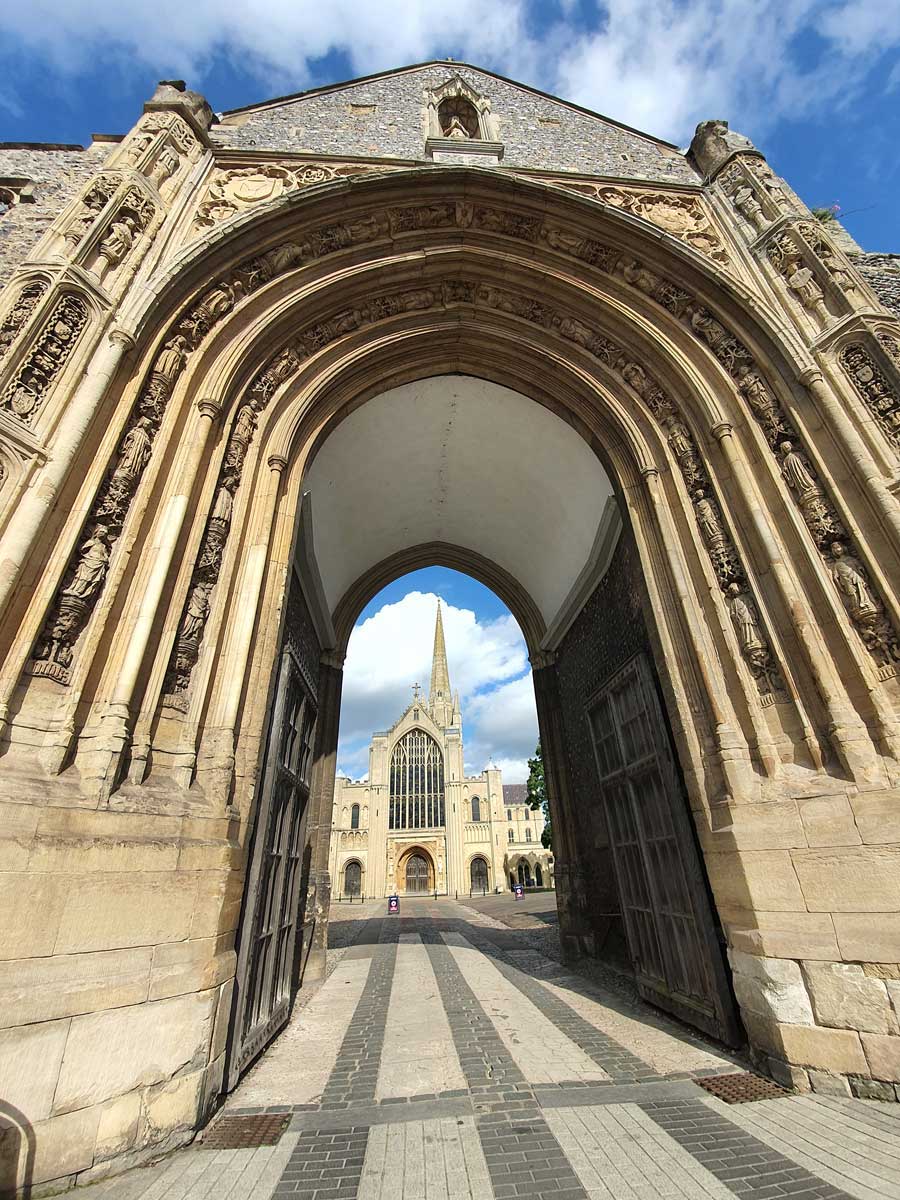
Birds call and wheel around the towering white stone spire of Norwich Cathedral, and the golden weathervane gleams in the sun.
This magnificent Romanesque cathedral has stood for more than 900 years, dominating Norwich city’s skyline, and surviving war, plagues, riots and fire.
Set within the largest Cathedral Close in Britain and a few paces away from the peaceful River Wensum, it’s a fascinating place to stop and stare.
But you must step inside to find its ancient treasures and learn the stories of its past.
Come with us and discover …
10 fascinating and historic things to see inside Norwich Cathedral
Vaulted ceilings

The first thing that strikes you as you enter the cathedral is the sheer height and scale of the vaulted ceiling.
Building began in 1096, using Caen stone imported from France, but the cathedral was almost continually being improved and added to for the next 300 years.
The Gothic arches and high ceilings in the nave were a later addition and are breathtakingly beautiful. They also feature some extraordinary carvings, called bosses, where the arches meet.
Ceiling bosses

Unlike the ones in the cathedral cloister, which are mainly based on characters from life and folk tales, the ones in the cathedral nave tell the story of the Bible from Creation to Judgement Day.
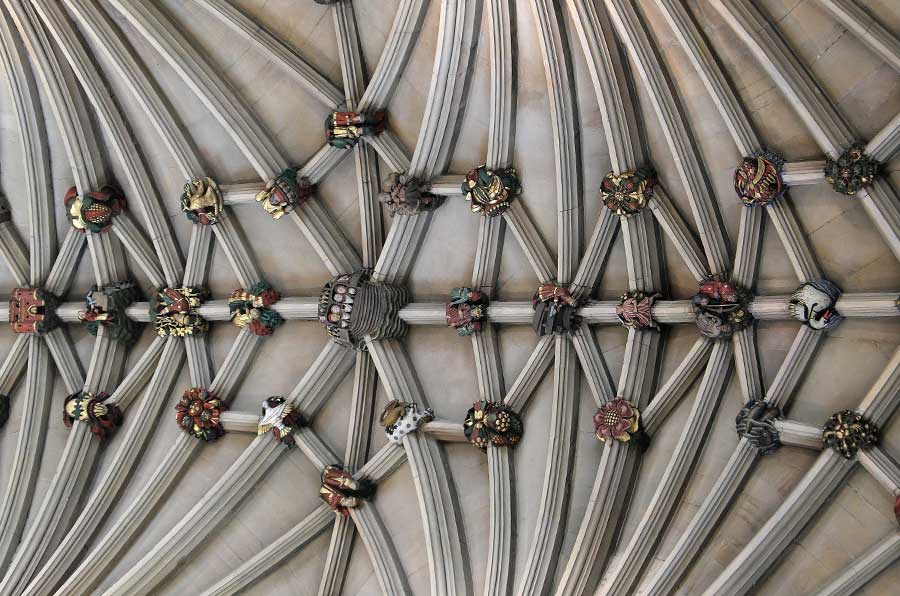
There are more than 1,000 of them throughout the whole building, and each marks the intersection where the roof ribs meet.
Noah’s ark is depicted with human and animal faces peeping out through the windows – there’s even a unicorn if you look closely. The story of Christ is told in detail, as are the terrors of the Apocalypse.
The Despenser Reredos
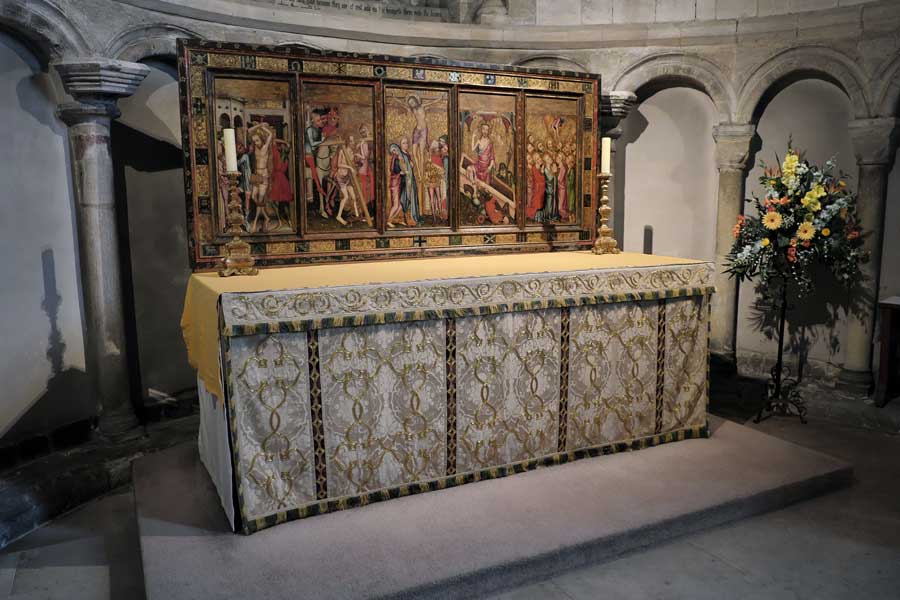
More ancient art – this time a painting that lay hidden for centuries.
A reredos is an ornamental screen which covers the wall behind the altar. This one was commissioned by Bishop Henry Despenser in 1382 who earned the nickname The Fighting Bishop after taking an active role in putting down the peasant’s revolt at the Battle of North Walsham.
The scene of Christ accepting his fate is said to be a reminder that the poor should know their place!
During the English Civil war many religious works of art were kept secret to save them from the Puritan armies and the reredos was removed, turned upside down and used as a table-top.
Legend says it was rediscovered by accident in 1847 when someone dropped something which rolled underneath.
Some of the scenes were missing and legs had been added, but it was rescued and in 1958 fully restored.
Today, its still-vibrant colours depict the trial and crucifixion of Christ as it stands behind the altar in St Luke’s side chapel.
The Chrismatory lantern
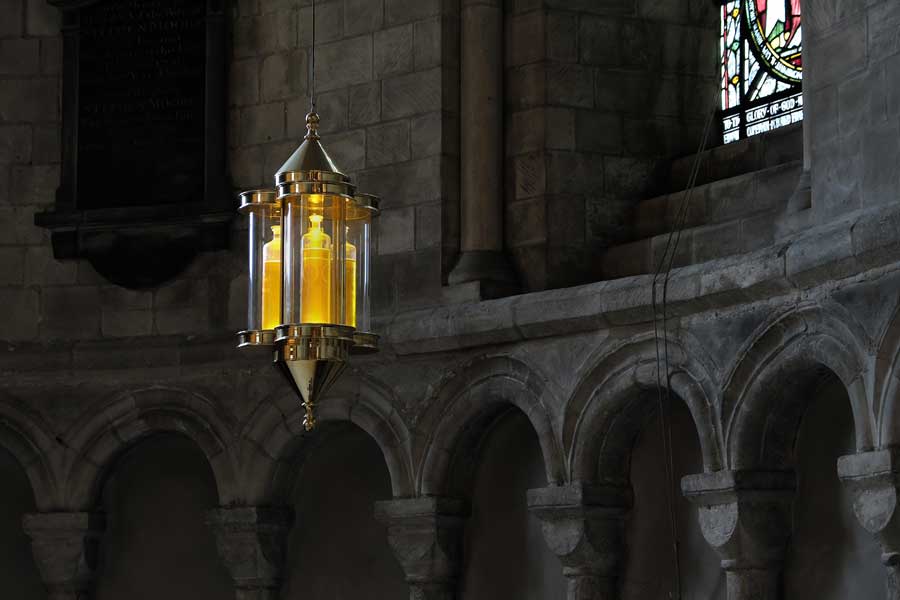
Also in the tiny side chapel dedicated to St Luke, patron saint of physicians, are the holy oils used in baptisms, anointings and the last rites.
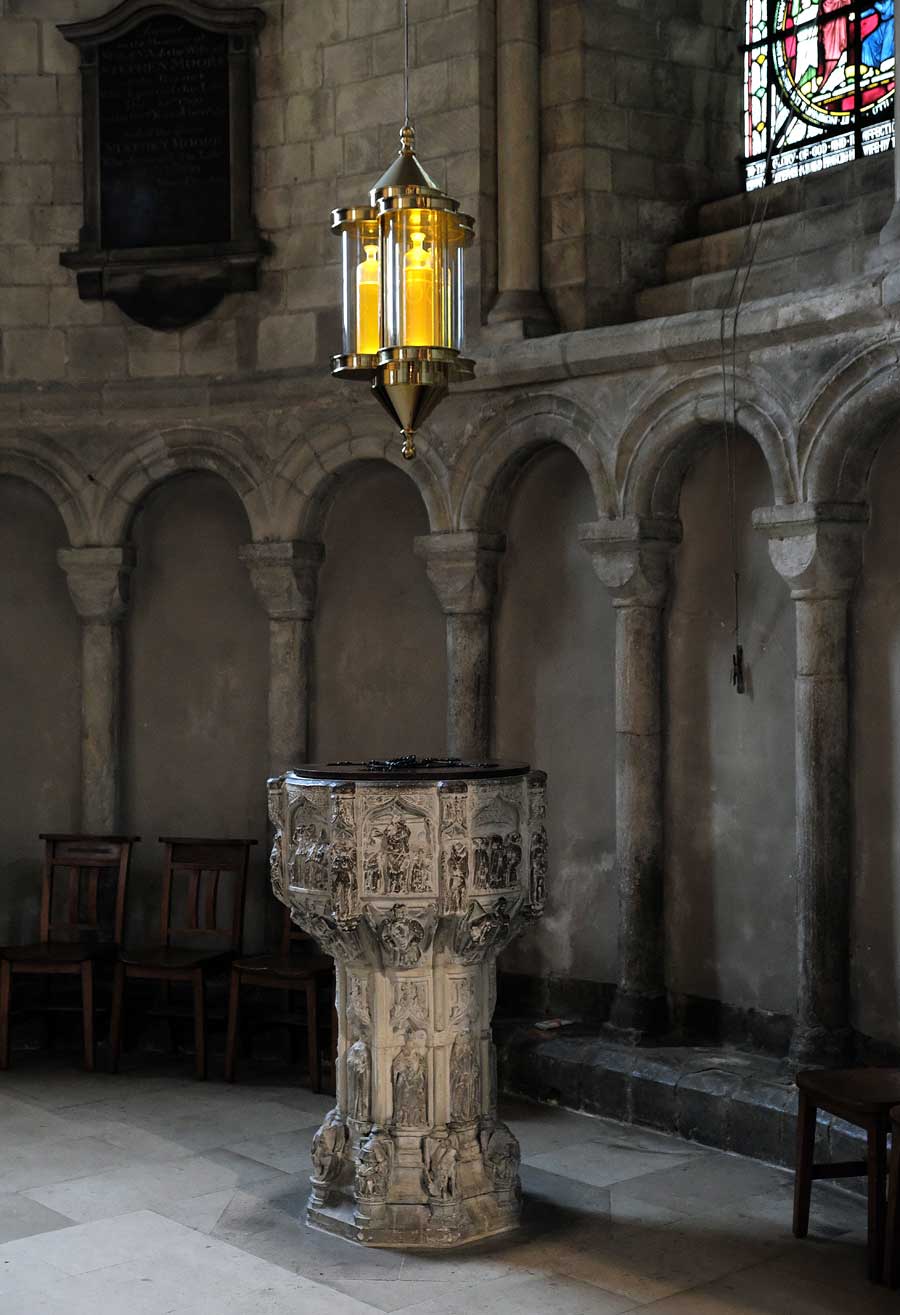
Usually they’re hidden from view in a private part of a church. But here in Norwich Cathedral, the Chrismatory, designed and made by Henry Freeland and Rupert Harris, is a beautiful lantern, all silver gilt and glass, suspending the holy oils above a small font.
Effigy of St Felix
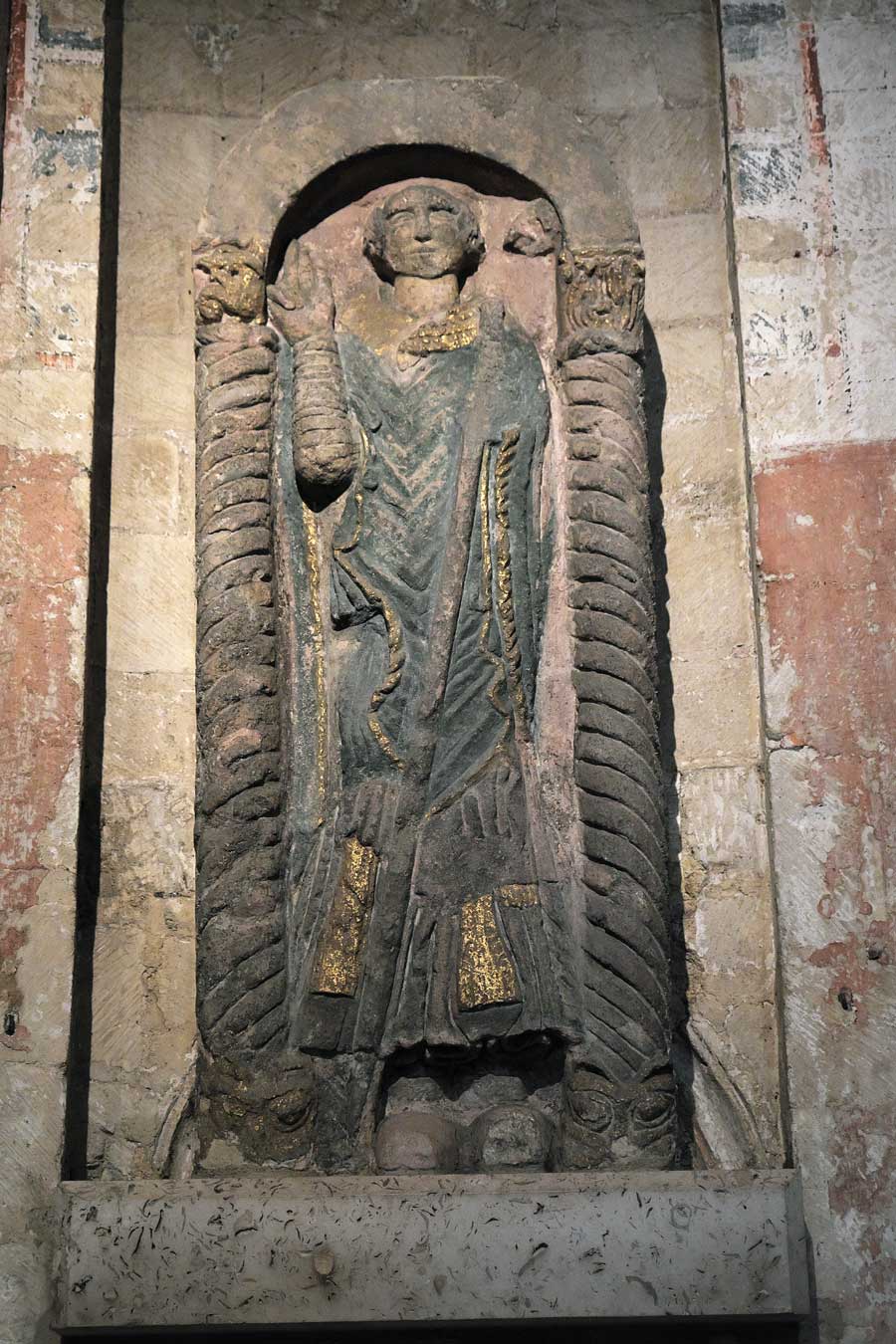
On the wall just outside St Luke’s Chapel is another piece of history – an effigy in stone.
Originally it was thought to be that of Bishop Herbert de Lonsinga, the founder of the cathedral.
But now experts suggest it was commissioned by the Bishop but actually represents St Felix, who was said to have brought Christianity to East Anglia.
Behind the Bishop’s Throne

A stroll around the ambulatory brings you to the back of that most important of seats, the Bishop’s Throne.
Here there’s a small apse, set into the stone, where relics would be placed when the Bishop was officiating in the belief their holiness would rise and imbue the cleric with additional spiritual powers.
High altar
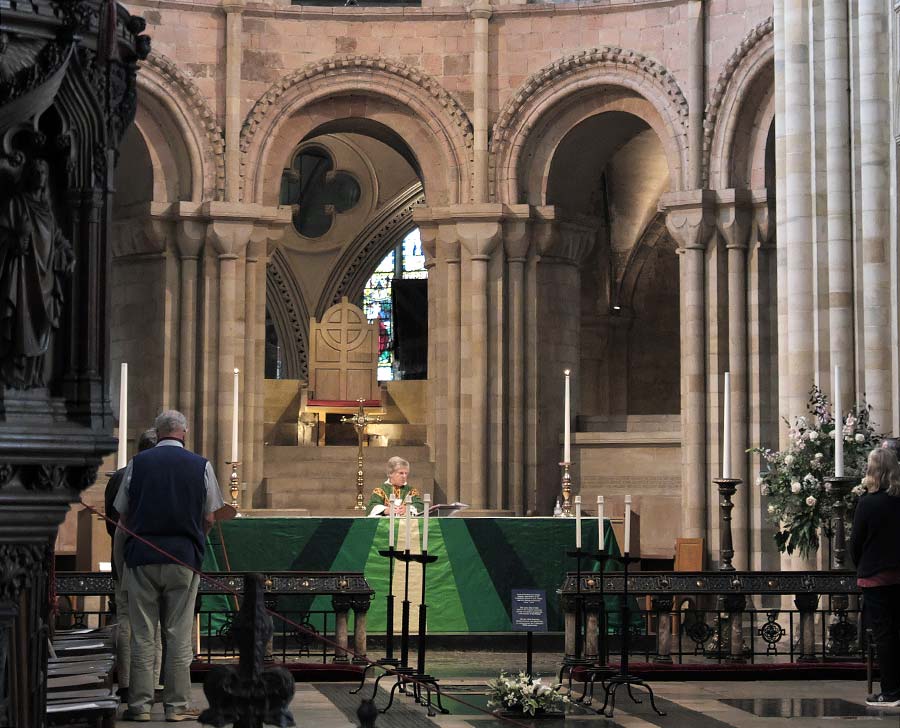
The throne is the only one in Northern Europe still situated in its original position, behind the High Altar facing the congregation.
The chair itself is a modern addition, but rests on two stones which date back to the 8th century.
The pale pink stone in the arch above the throne is thought to be the result of a fire that broke out during riots in 1272.
Today, the ceremonial throne is only used on very special occasions.
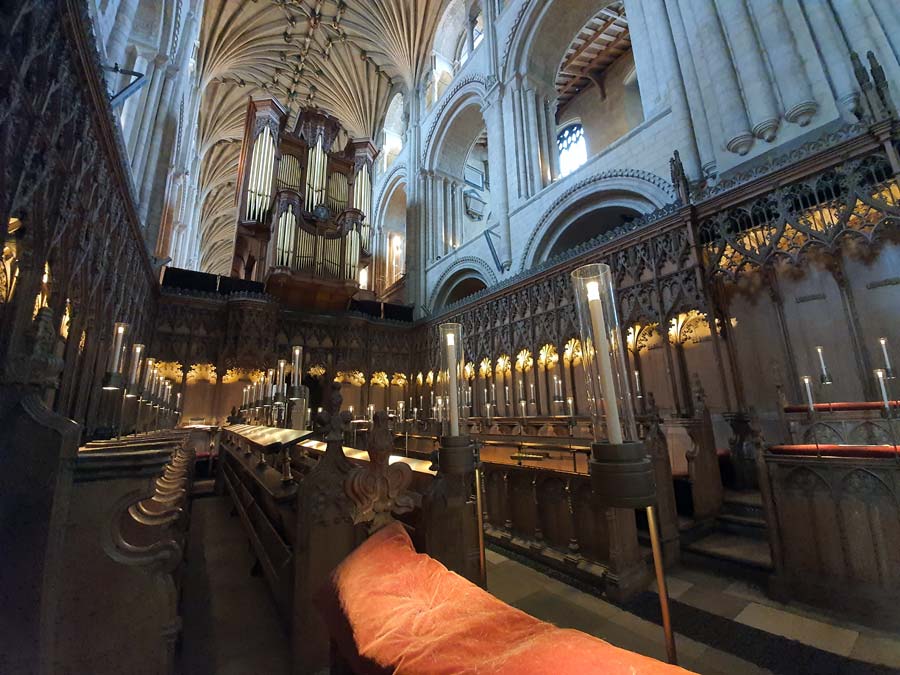
The Choir
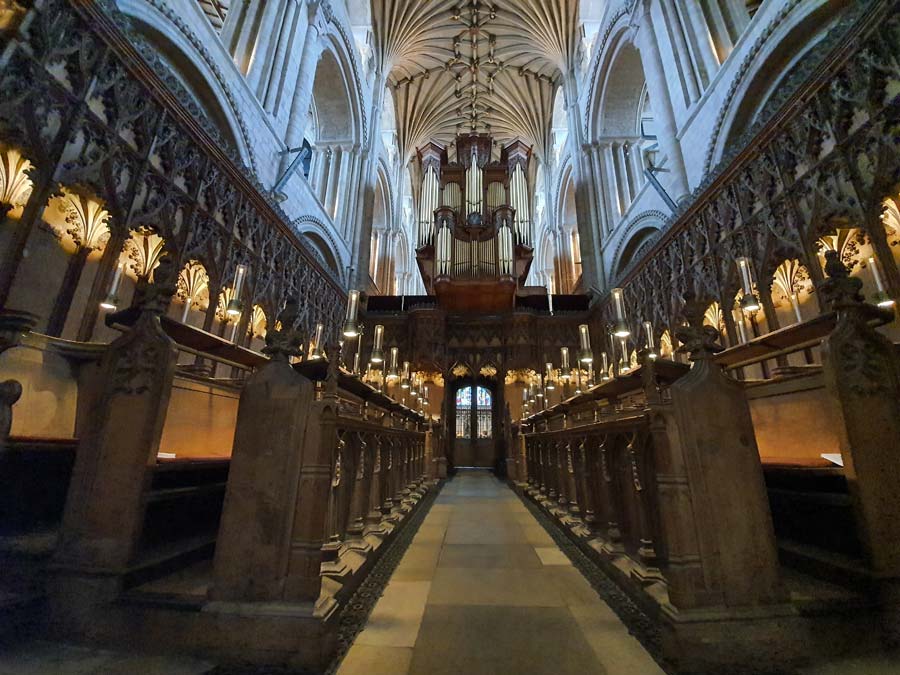
The heart of the cathedral where songs of praise have been sung for hundreds of years.
The stalls contain wooden misericords, leaning seats which would have given the monks support during the long hours of worship.
The carved scenes show ordinary lives and activities, as a reminder that work was as much part of a monk’s life as prayer, and some of them are very down-to-earth. See if you can find the chaos in the kitchen carving, or the one where a small boy is being beaten by his teacher!
The Pelican
A magnificent and mythical beast – a lectern carved in the shape of a bird, which is supposed to be a pelican. But the 14th century sculptor had never seen the real thing, so it looks far more mysterious.
In legend, the pelican pecks her own breast to feed her young with her blood, so is seen as a symbol of sacrifice. And far more interesting than the more usual eagle shape found in most churches.
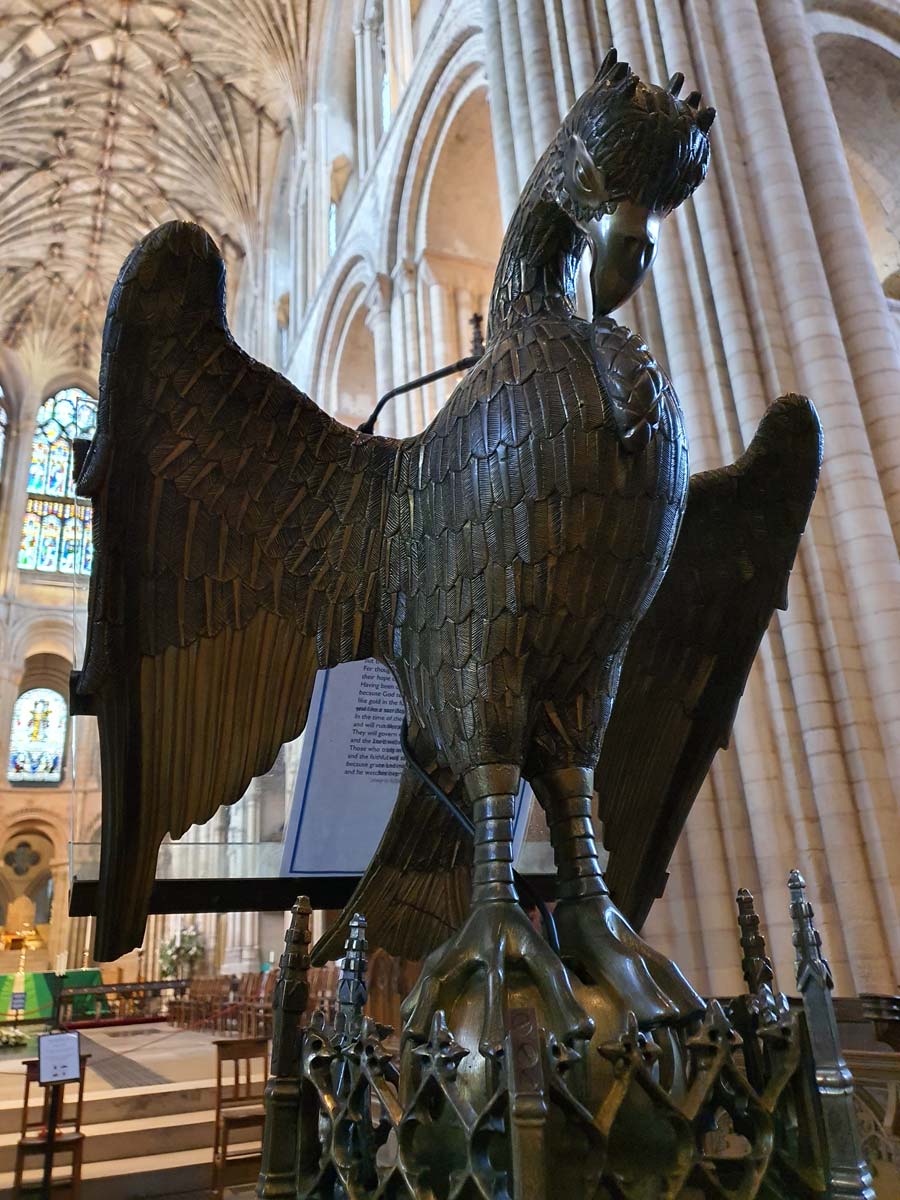
Another survivor of the Civil War, Madam Pelican, was buried in the nearby garden to keep her safe. Sadly, when she was dug up, the little chicks that used to adorn the lectern at her feet had disappeared. Somebody clearly knew their value and took advantage of the dark days of confusion!
Upper galleries
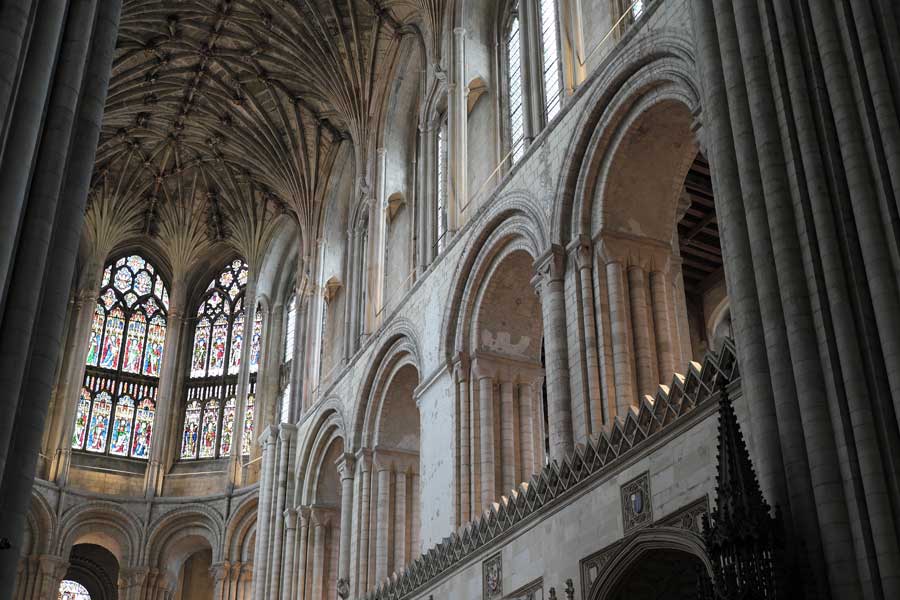
And finally, the place I long to visit, but they’re reserved only for the annual fire inspections and other health and safety visitors.
The two upper galleries that run the length of the nave would be the perfect vantage point to examine those ceiling bosses in more detail and look down on the splendour that is Norwich cathedral
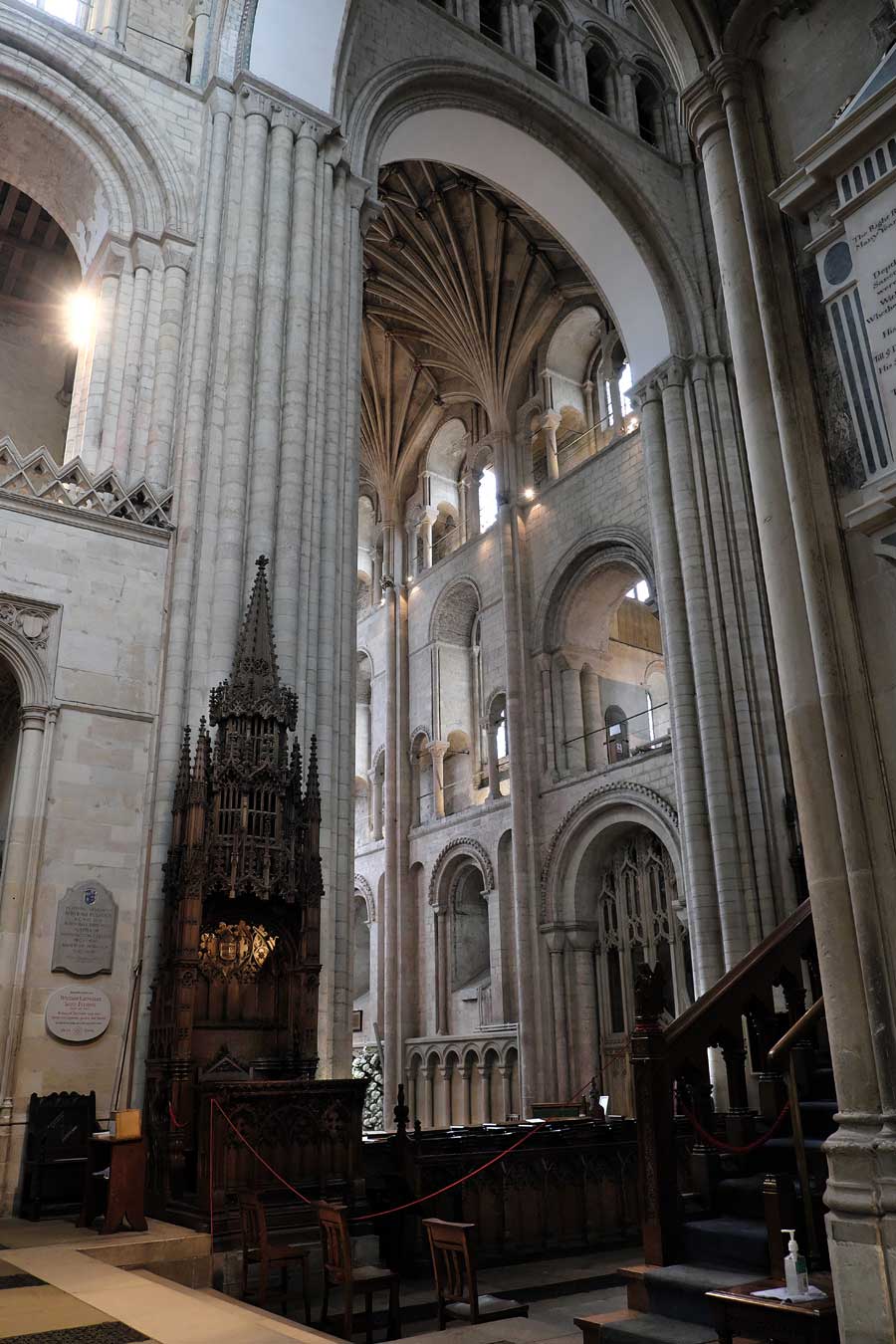
More information about Norwich cathedral
These are just a few of the highlights we found on our last visit. When you go, take your time and see what secrets you discover.
The cathedral is open almost every day but is an active place of worship, so some areas may be closed for services.
The volunteer guides are informative and enthusiastic, so don’t be afraid to ask questions – you may find out something we didn’t!
For the latest news, check out the cathedral website.
And they have a great café, with good coffee, delicious looking cakes and hearty portions.
All photographs copyright © John Heinrich/rosemaryandporkbelly
Where to next?
• Norwich Riverside Walk
• Nelson’s Norfolk
• Richard III – the lost king