
The Isle of Man is known as the gem of the Irish Sea.
And with its rolling hills, wild beauty and a sense of time passing slowly it’s no wonder.
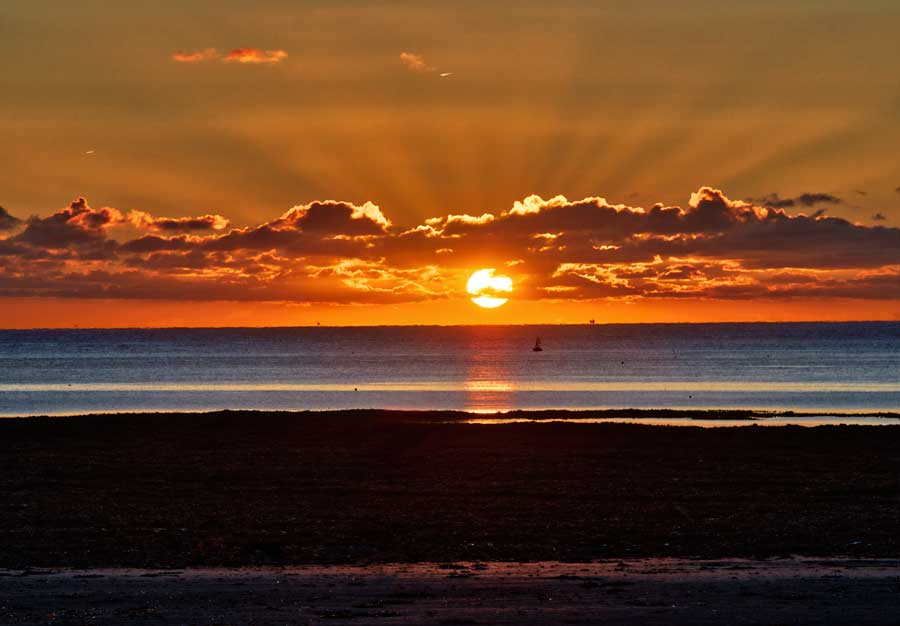
Situated halfway between the coast of Northern Ireland and the North West of England, its shores are protected by stormy seas and the occasional thick fog, known locally as Manannan’s Cloak, adding to its mystery.
The UK is peppered with these island anomalies, independent yet inextricably linked by people, trade and history.
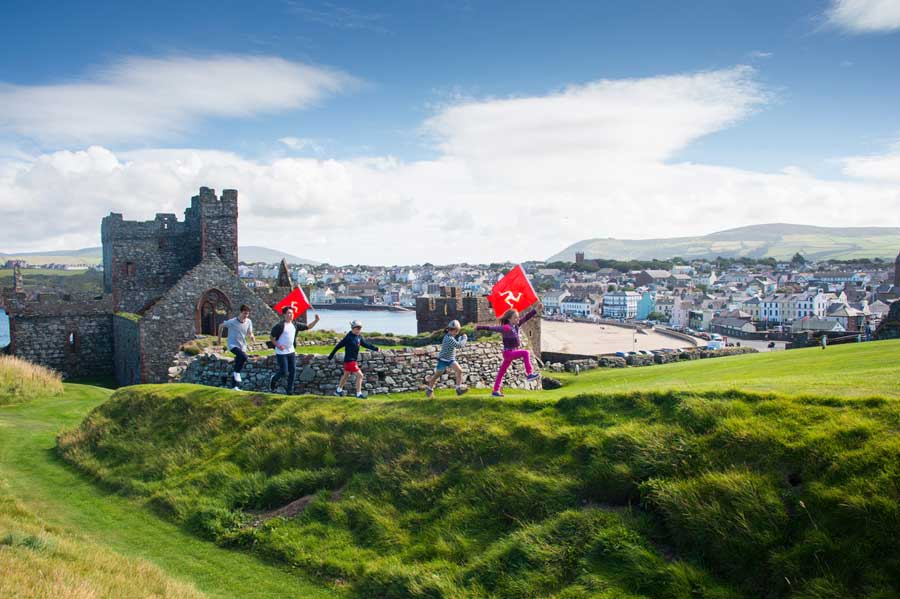
The Isle of Man, also known as Mann, Ellan Vannin or Mannin in the Manx language, is a self-governing British Crown dependency and one of Britain’s five UNESCO World Biosphere Reserves.
The UK government is responsible for its defence, the Queen holds the title of Lord of Mann and has a representative but the island makes its own laws.
Manx independence is hard won – people have lived on the island since before 6500 BCE but have been ruled over the centuries by Northumbrians, Vikings, Norwegians, Scots and the English.
In the 18th century the Isle of Man resisted attempts to make it part of the newly-formed kingdom of Great Britain and it’s held the right to self-govern ever since.
With its own language, currency and stamps it feels like a foreign country.
Distinctly different, separate and set apart.
What to see on the Isle of Man
The main thing is not to rush.
The Manx Gaelic expression ‘Traa Dy Liooar’, which means ‘time enough’, perfectly sums up the best approach to a break on the Isle of Man.
Just 33 miles long by 13 miles wide, its natural beauties are well within reach and with 2021’s emphasis on staying outdoors as much as possible, it’s the perfect island getaway.
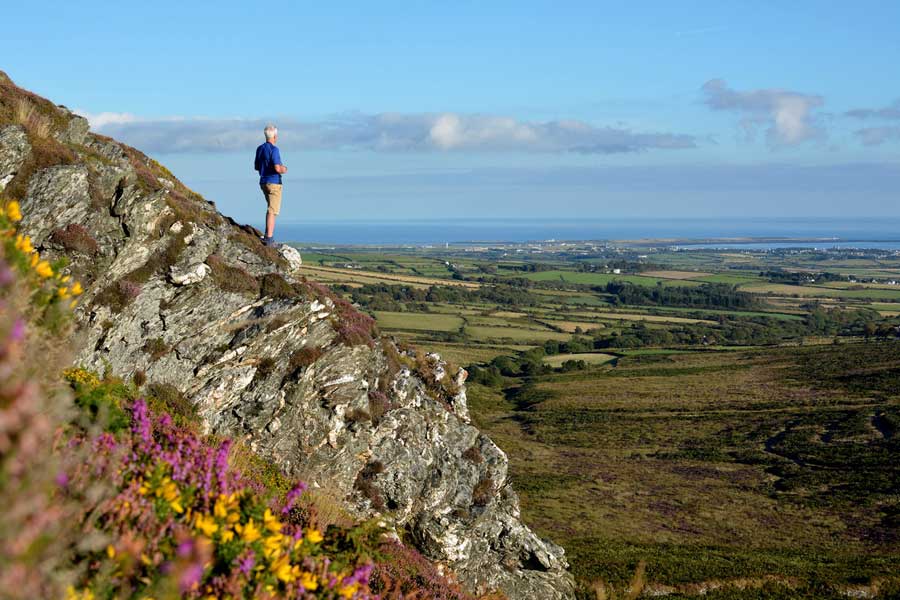
Explore the Great Outdoors
You can pack an awful lot of adventure into 227 square miles.
The island is an idyllic adventure playground for people of all fitness levels – so no need to hike for days to find spectacular scenery and wildlife havens.
For those with more energy there are mountainous trails, long distance footpaths and an extensive coastline to wander.
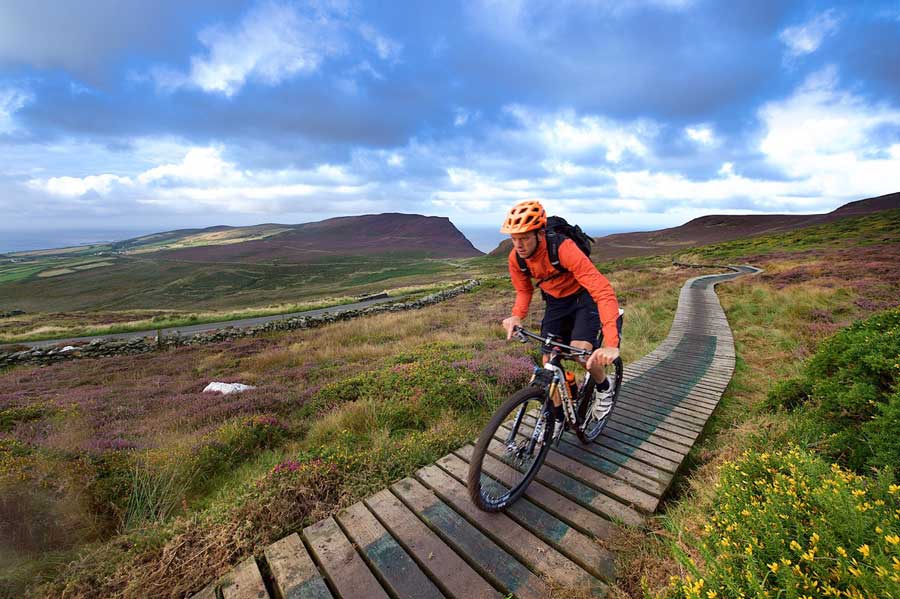
There are adventure sports for everyone from absolute beginner to expert – rock climbing, abseiling, hill navigation, bushcraft and ‘survival’ courses.
Try sea kayaking to discover impressive cliffs and caves and get up close to amazing marine life such as seals and possibly even basking sharks.
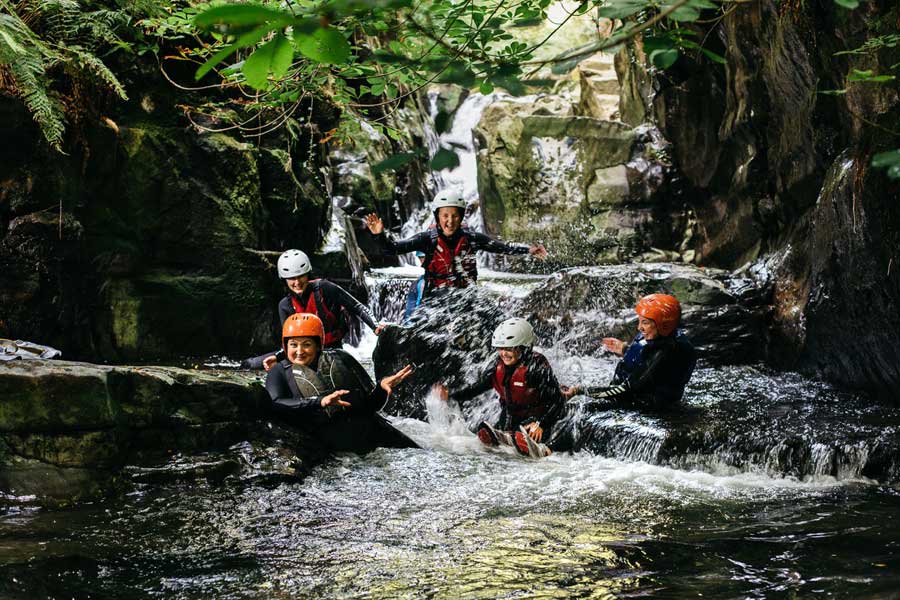
Or there’s gorge scrambling , an exhilarating but very wet challenge of natural water slides, slippery rock climbs and freshwater swimming.
Discover its capital
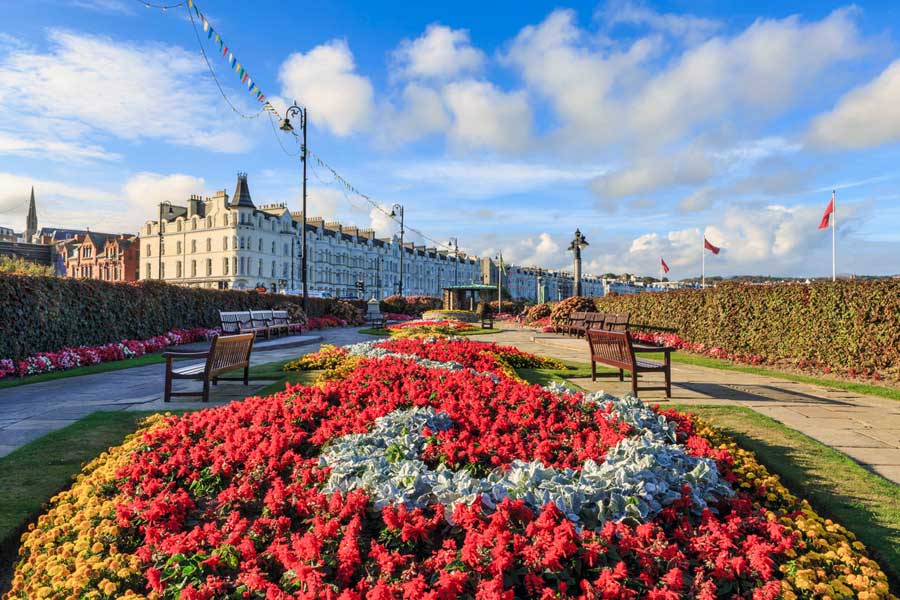
Douglas is a pretty little town, spreading along the shoreline.
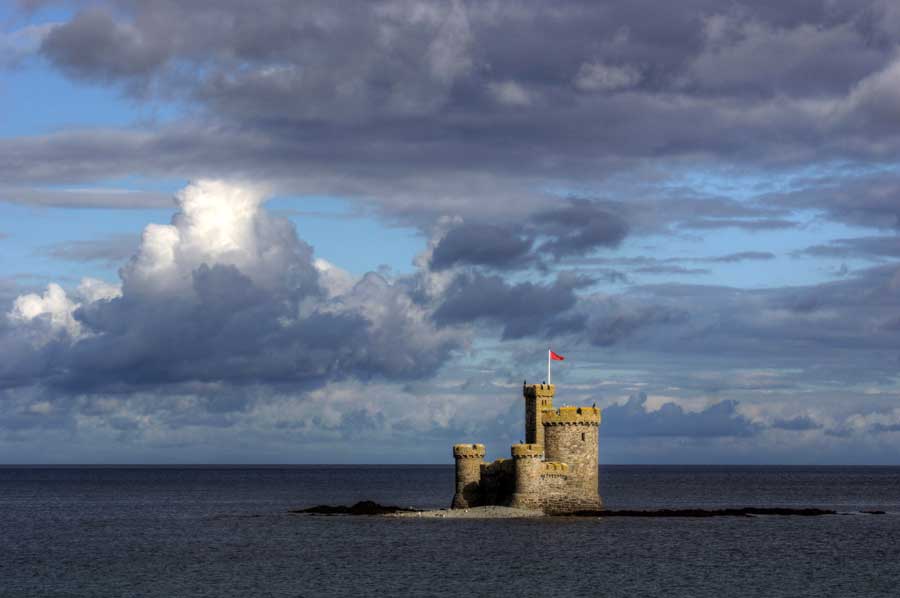
A two mile promenade gives excellent views across the harbour to the Tower of Refuge – a small castle-like structure built in the 1830s to house sailors shipwrecked in the treacherous waters.
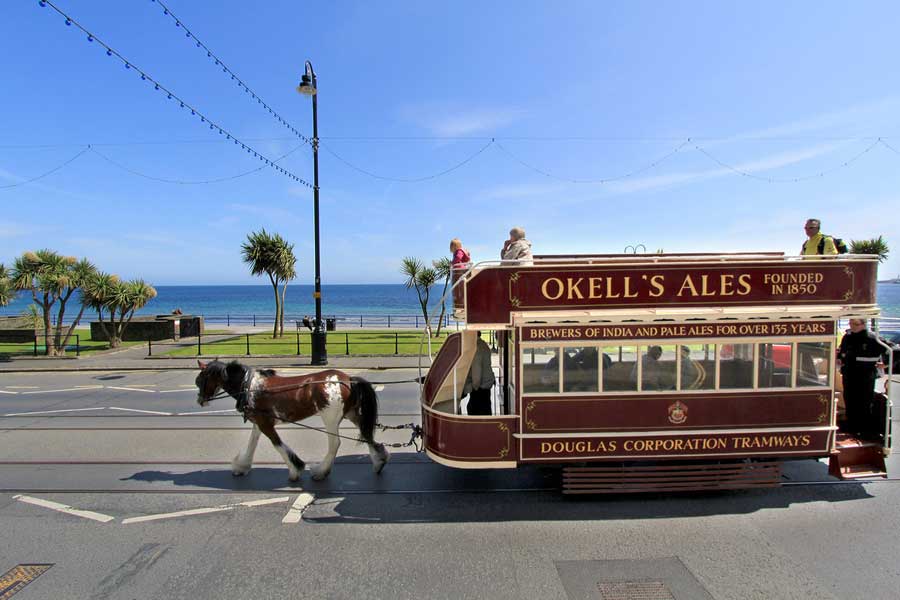
Douglas is the perfect base for a round-the-island cruise, a stroll to take in its historic buildings or a ride on a horse-drawn tram.
A 20 minute walk from the town centre leads to Douglas Head, a rocky outcrop over-looking the harbour.
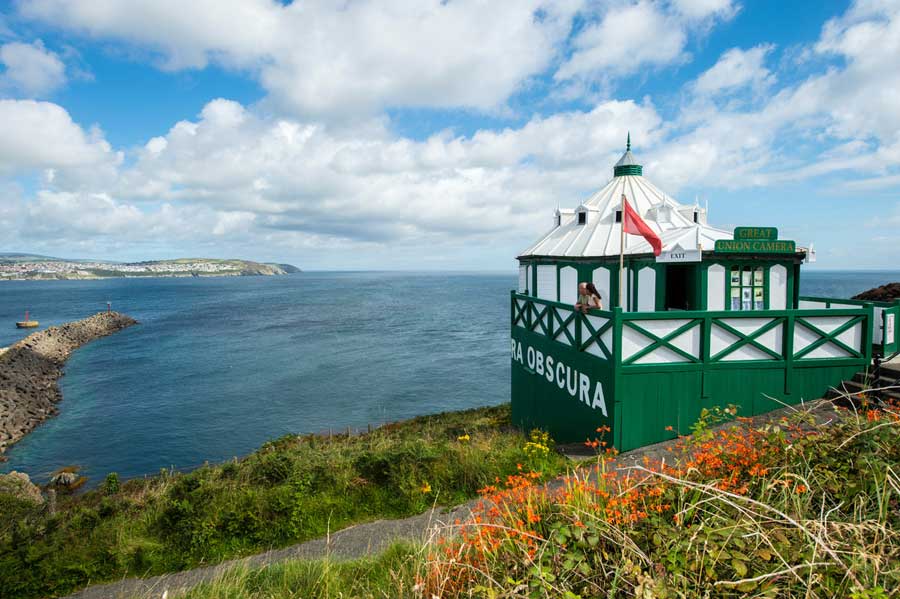
Walk on and admire the ornate 1891 entrance gate to Marine Drive before heading back to the Victorian Great Union Camera Obscura with its eleven lenses and the lighthouse.
Viking roots at Castle Rushen
Castletown, or Balley Cashtal in Manx, was the capital before Douglas and the ruined Castle Rushen stands on the site of an earlier 13th-century Viking stronghold. It’s one of the best examples of a medieval castle in Europe.
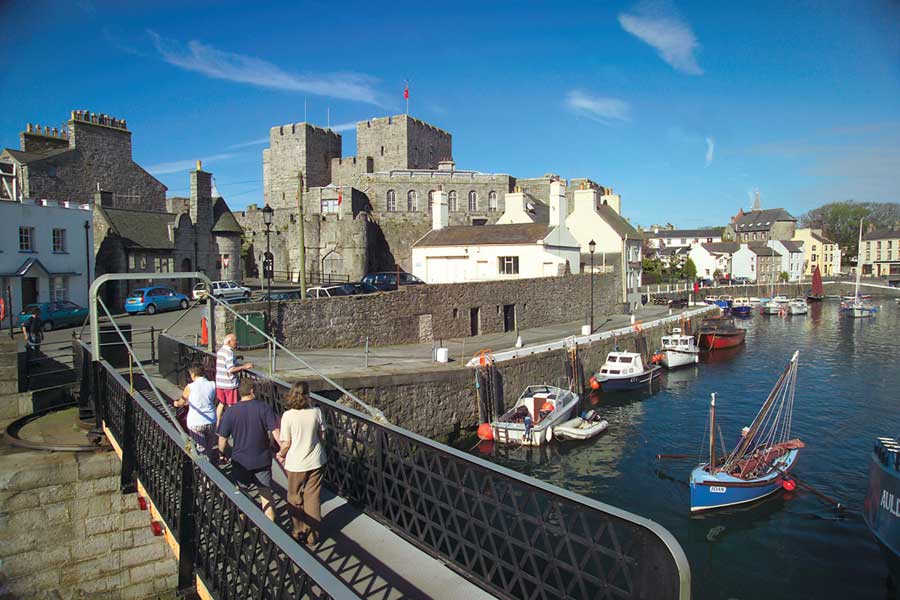
Amongst its treasures are a host of royal relics including a clock presented by Elizabeth I in 1597, a unique sundial with 13 dials and a Celtic crucifix brought from the little offshore islet, the Calf of Man.
Isles within isles
Like many island communities, the Isle of Man is dotted with smaller islets that come under its remit. Some inhabited, some a wildlife paradise with just a couple of humans.
Many are linked via narrow causeways, making the island shoreline fascinating.
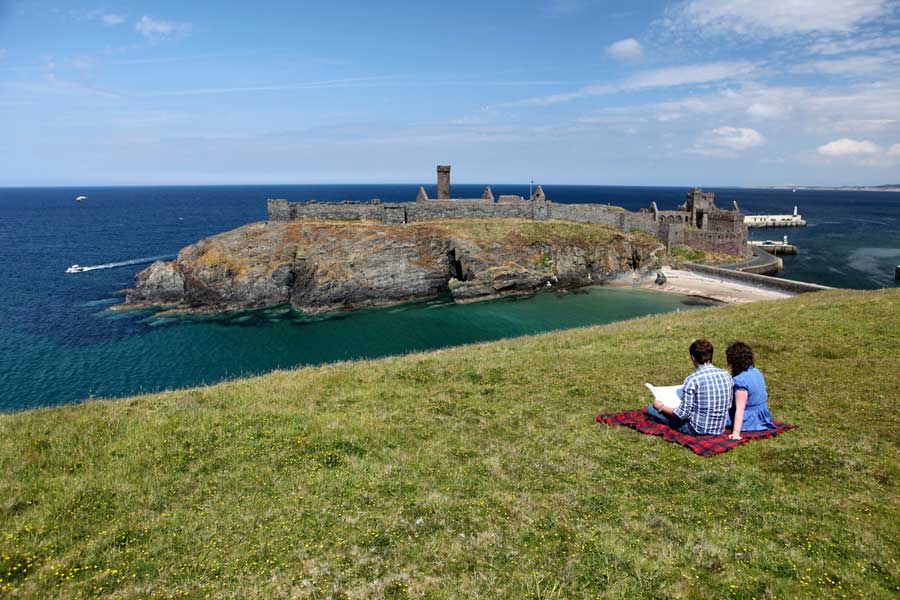
St Patrick’s Isle is a rocky outcrop just off the north west coast, and is home to Peel Castle. Once the fort of Magnus Barefoot, the 11th-century Viking King of Mann, it still has a church and tower from Magnus’ time.
Even further back in time Peel has the remains of the cathedral of St Germanus built in the 9th century. Just make sure when you visit you don’t upset the Moddey Dhoo, a phantom black dog who’s said to haunt the ruins.
Steam around the countryside
Well it would be foolish not to board a train given that the Thomas the Tank Engine stories were based on the imaginary Island of Sodor, which lies somewhere between the Isle of Man and the English mainland.
Thomas’ creator the Reverend Awdry chose the name when he discovered that the Isle of Man’s bishop is officially known as Bishop of Sodor and Man – Sodor being the ancient name for the Hebrides, which were historically linked with Man. From that chance discovery a children’s classic grew.
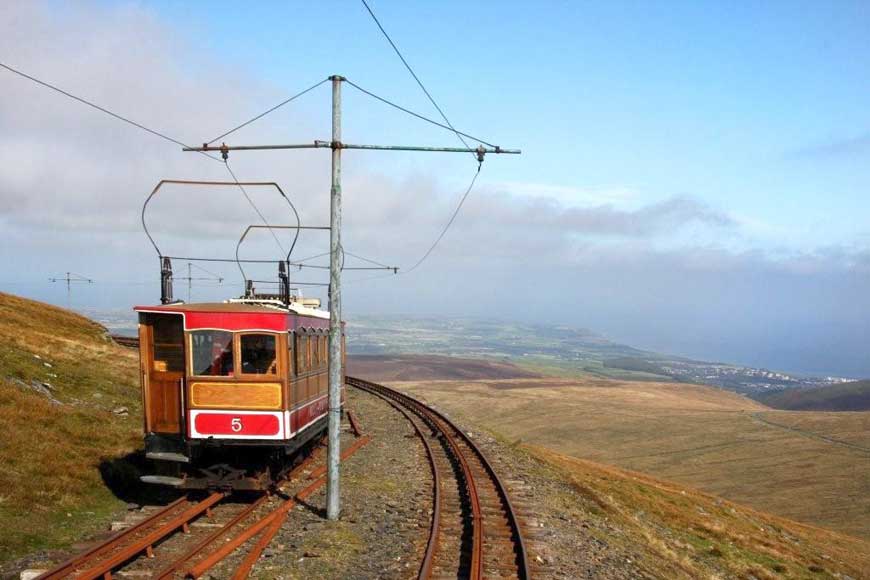
Trains feature a lot on The Isle of Man. Along with the three heritage railways – the Manx Electric Railway, Snaefell Mountain Railway and the Isle of Man Steam Railway – there’s also the Great Laxey Mine miniature railway, the Groudle Glen Railway and the Douglas Bay Horse Tramway.
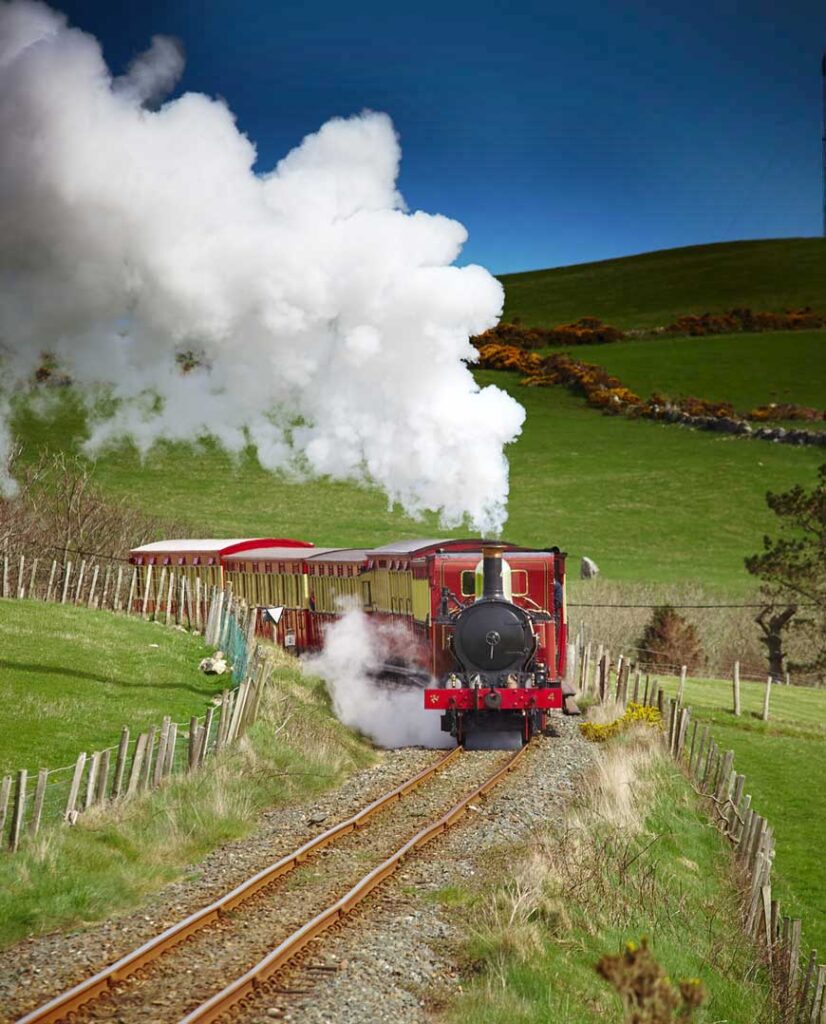
The Isle of Man Steam Railway runs for 15 miles from Port Erin to Ramsey, the longest narrow gauge steam line in Britain that still uses its original locomotives and carriages.
That means many of the island’s heritage attractions are located near a station, the most popular being Port Erin, the perfect starting point for a hike around the island. From here you can walk to Bradda Head and find Milner’s Tower. On a clear day you can see across to Northern Ireland and the Mountains of Mourne.
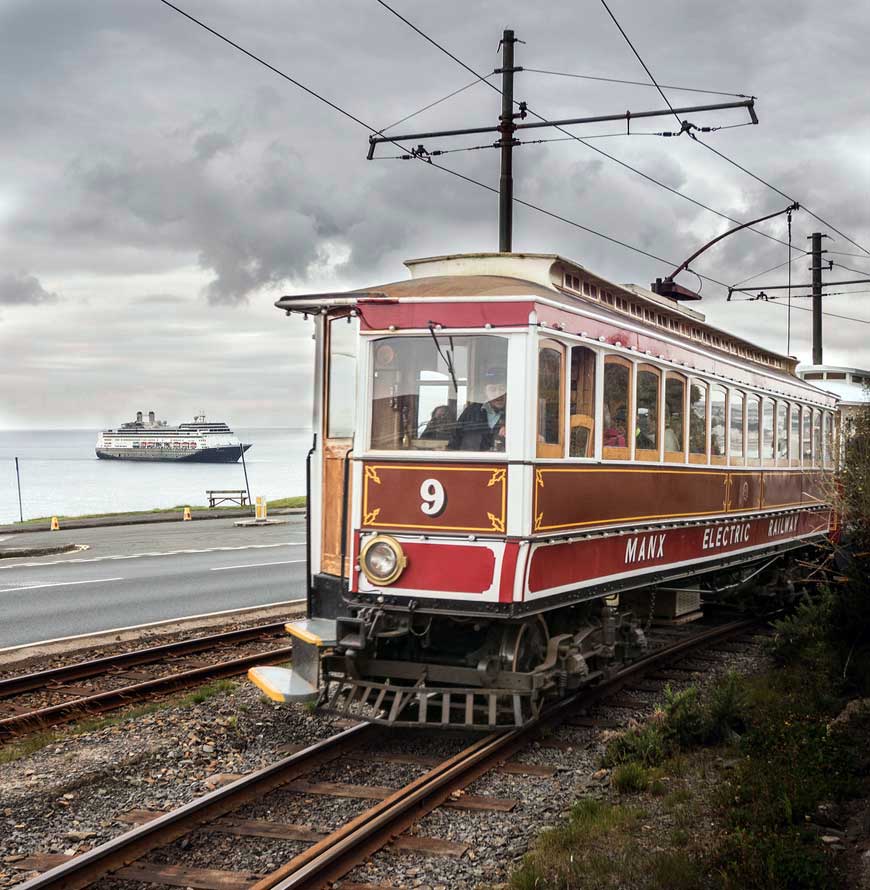
The Manx Electric Railway takes lovers of old time transport on a trip between Ramsey and Douglas.
Introduce yourself to Lady Isabella
In the north-east of the island lies the largest surviving working water wheel in the world, The Great Laxey Wheel, colloquially known as Lady Isabella. Gleaming white-and-red she dominates the skyline, a shining example of Victorian engineering.
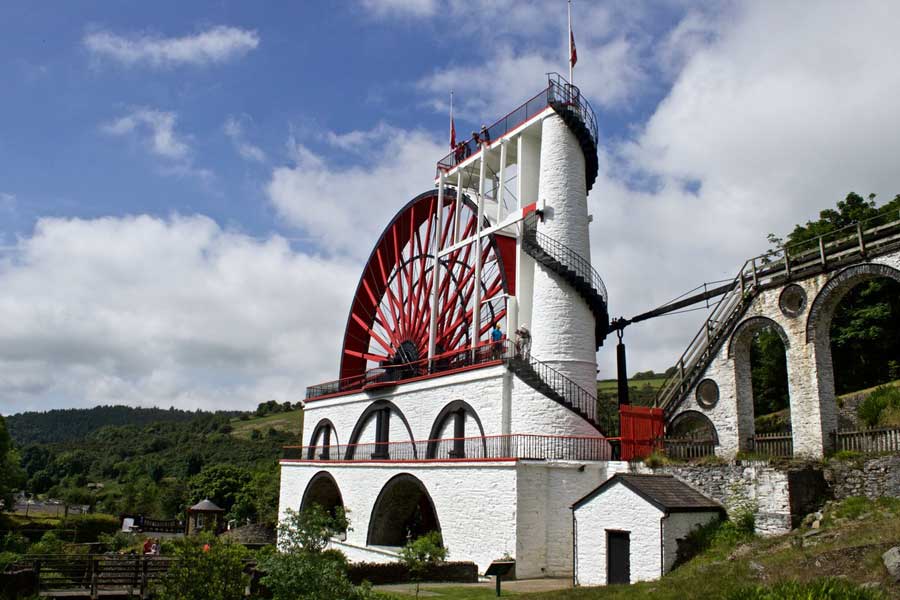
You can climb to the top to see the wheel in action, whilst absorbing the spectacular views across Laxey and Glen Mooar Valley.
Cregneash Folk Village
On the most southerly part of the island you’ll find Mull Hill and its group of six chamber tombs known as the Mull, or Meayll, Circle. Nearby is Cregneash village, a living museum that preserves the traditional Manx way of life.
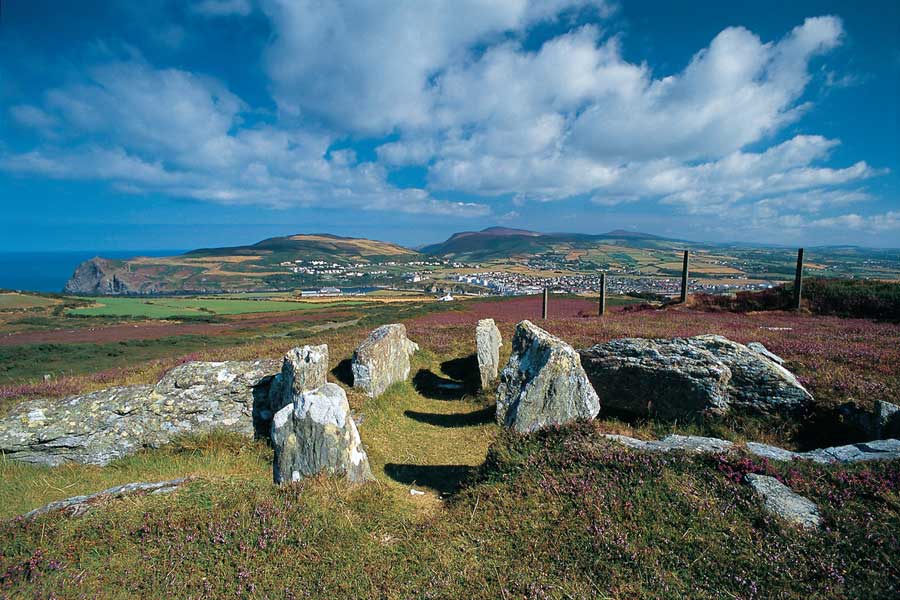
Step inside the Manx cottages to see how crofters lived, enjoy the natural surroundings and keep an eye out for the famous tail-less Manx cats and the local four-horned sheep.

The village is also a registered Dark Sky Discovery site, so perfect for a spot of star-gazing.
Away with the fairies
‘Up the airy mountain, down the rushy glen…’ if you don’t believe in fairies you probably will after a trip to Glen Helen. Little waterfalls, a muddy path beside the river and a viewing platform makes this perfect outdoor fun for the whole family.
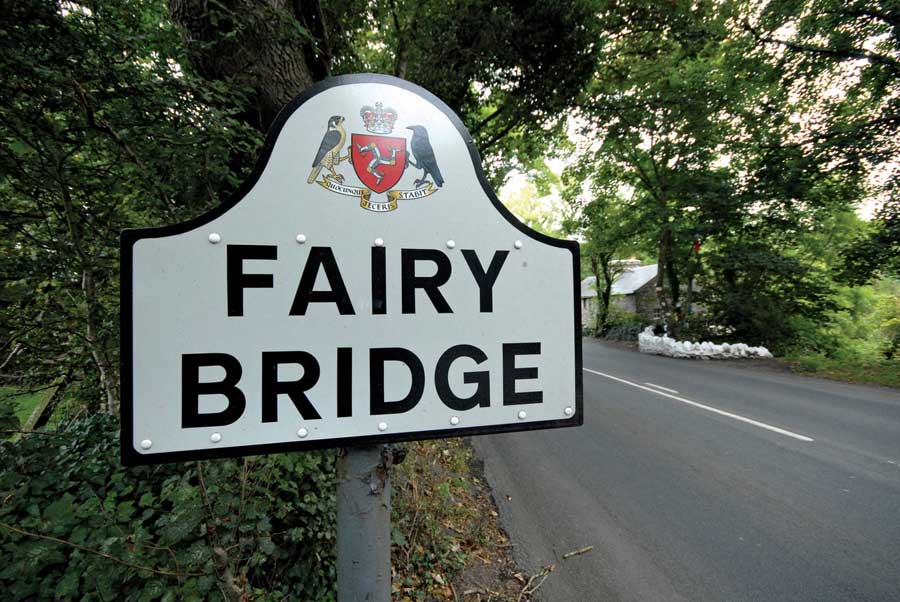
If on the way there you use the Fairy Bridge to cross Santon Burn, don’t forget to yell ‘Hello fairies’ as you cross; the Mooinjer Veggey (Manx for Little Folk) are not as sweet and good-natured as the English type, so don’t offend them!
Even the buses on that route have an automatic announcement urging passengers to preserve the tradition.
Isle of Man TT races
If the slower pace of life on the Isle of Man gets to you, there’s always the open road.
The famous TT Races attracts thousands of visitors (in non-pandemic times) to see this exhilarating road race.
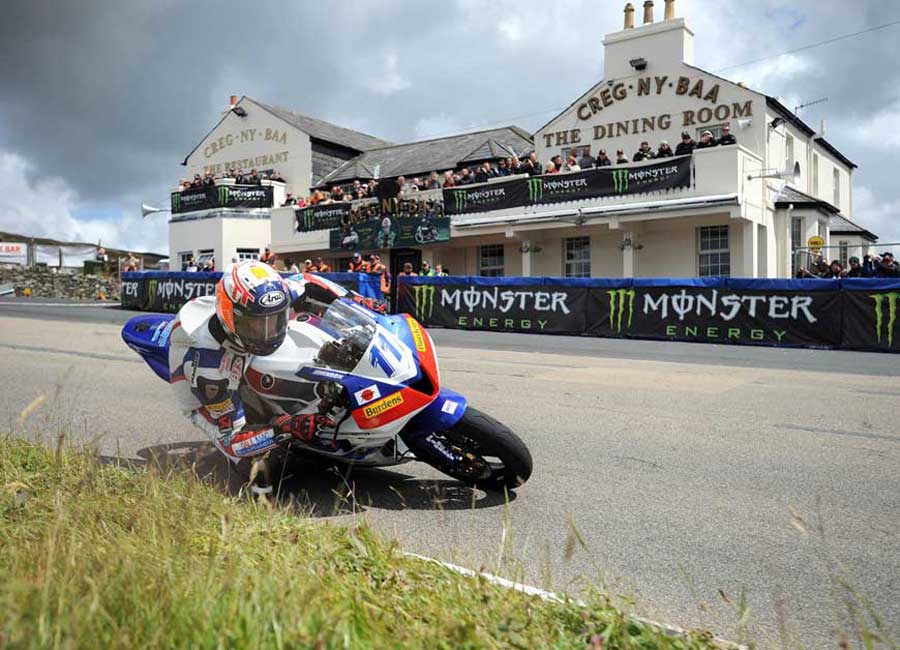
Equally hair-raising for motorsport enthusiasts is the Manx Grand Prix, where you’ll catch a glimpse of the TT stars of tomorrow.
The Manx Grand Prix 2021 is scheduled to run from the 22nd of August to the 3rd of September.
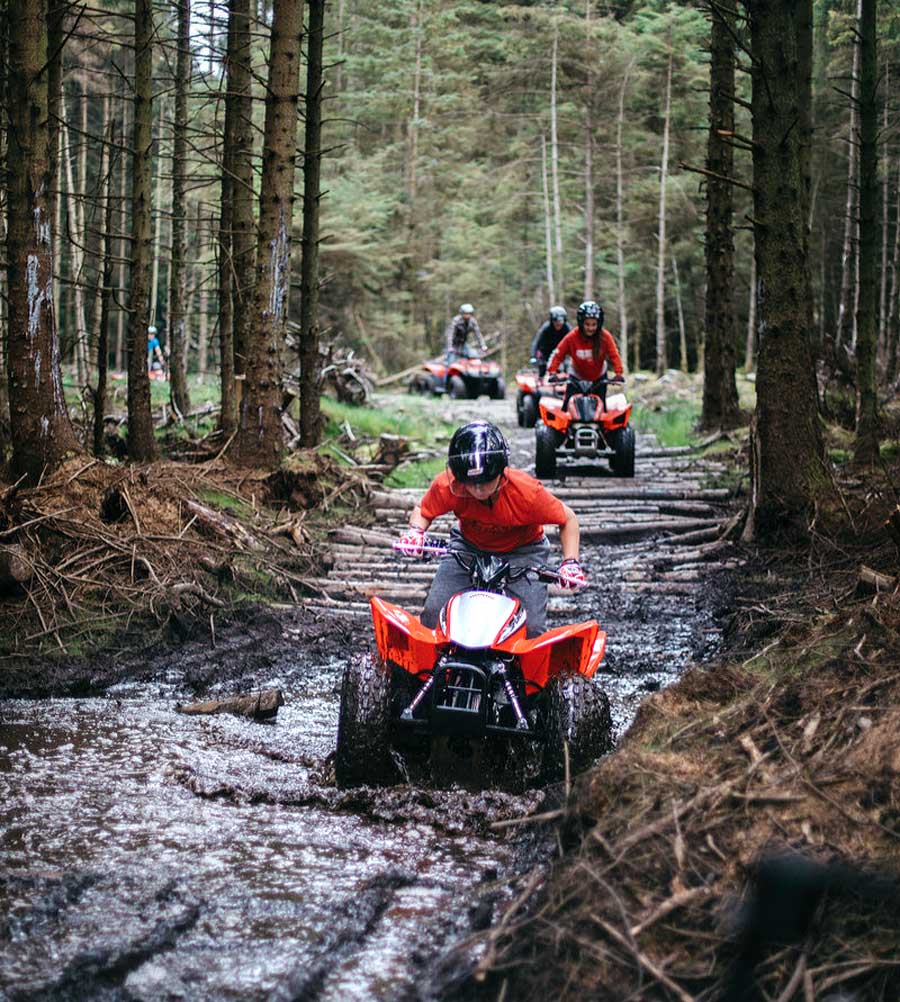
Prefer to be in the driving seat? Check out the quad bike tours and driving experiences.
Getting to the Isle of Man
By air – it’s well connected with many major airports in the UK, Channel Islands and Ireland. Flight time from London Gatwick is around 1 hour 20 minutes. The Isle of Man’s only airport – Ronaldsway – is located in the south of the Island in Ballasalla, near Castletown.
By sea – you have the choice of fast catamaran or traditional ferry from Heysham, Liverpool, Birkenhead, Dublin, and Belfast for most of the year, although the catamaran won’t run in the winter months or when the sea is very rough. Cruise ships also call in at the island.
Where to stay – From campsites to hilltop farm houses, fisherman’s cottages to 4 star hotels there’s a place to stay for everyone. Start your search here.
The only thing that might delay your journey is Manannan’s Cloak, the fog named after the Sea God, Manannán mac Lir, who swathed his kingdom in mist to protect it from unwanted visitors.
This mega sea fret can get in the way of welcoming travellers, particularly in the early summer months. But it usually lifts quickly.
And so Mannin has preserved its unique identity through the centuries, with the aid of a little wayward weather.
More about the Isle of Man
Need more information to plan your trip? Go to Visit Isle of Man.
Featured image © Isle of Man Department for Enterprise
Some images reproduced under Creative Commons Licence
Where to next?
• Beautiful bus rides of Britain
• Richard of York gave battle in vain
• Shakespeare in the snow