
It is a truth universally acknowledged that any self-respecting fan of Jane Austen must embark on at least one pilgrimage in their life.
And what better year to do it than 2025 – Jane Austen’s 250th Anniversary.
But should that journey be to her grave in Winchester, her picnic-and-party places in Bath or to a tiny, Hampshire village?
The right answer is, of course, all three.
But to really get into the mind and under the skin of one of England’s finest novelists, my first choice is Jane Austen’s House at Chawton.

Our first visit was on a hot and sunny September day, just after the start of the autumn term, it offered what Jane herself craved after years of living with other people – peace and quiet.
Without this gift of a home, where she spent the last 8 years of her life, readers might never have got the chance to swoon over Mr Darcy. And ITV wouldn’t have Sanditon’s superb sumptuousness to display.
‘Our Chawton home — how much we find
Already in it, to our mind,
And how convinced that when complete,
It will all other Houses beat.’ Jane Austen, in a letter to her brother Frank, 26 July 1809
What’s new for the 250th Anniversary?
In 2025, Jane Austen’s House is the centrepiece of celebrations marking 250 years since her birth.
The museum has unveiled special exhibitions, including rare manuscripts, personal artefacts, and letters loaned from private collections.
Events include guided literary tours, Regency-era craft workshops, and Austenmania! – a special exibition looking back on 1995, an iconic year for Austen adaptations on film and TV, including the memorable Colin-Firth-wet-shirt moment!
There are festivals based on four of her most popular books – Pride and Prejudice in January, Sense and Sensibility in May, Emma in July and Persuasion in September.
The year of special events culminates in December with Christmas-themed events and the celebration of Jane Austen’s 250th anniversary on her actual birthday, 16 December.
And if you can’t make it in person, Jane Austen’s House has a series of virtual visits as well.
What’s so special about Jane Austen’s house at Chawton?
At first glance, not much.
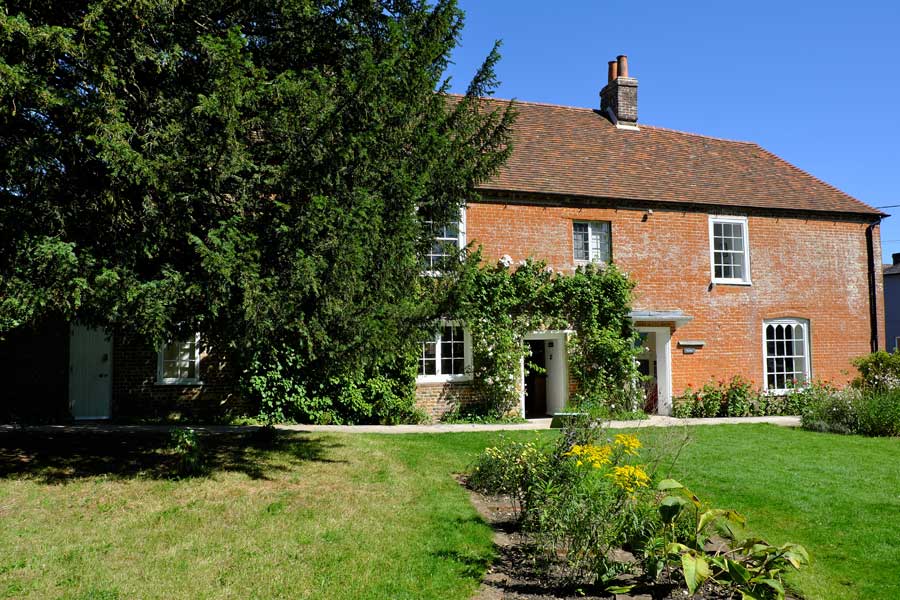
It’s a pleasant but unassuming brick farmhouse, set on the sweep of a bend in the road, and surrounded by a small garden.
The bakehouse and kitchen have been restored and there’s a small courtyard.
Nothing grand.
Nothing ornate.
But, after years of living with a large family or as a guest in someone else’s house, after penning hundreds of letters, journals and plays destined only for her relatives and friends, Jane finally had time to write for herself.
‘Ah! There is nothing like staying at home, for real comfort.’ Emma, 1815
And write she did.
First, she revised and published two novels – Sense and Sensibility in 1810 and Pride and Prejudice in 1813.
In 1814, she wrote and published Mansfield Park and began work on Emma, which saw the light of day in 1815.
That same year she wrote The Elliots, later published as Persuasion, and in 1817 began her final novel The Brothers – published later as Sanditon.
Northanger Abbey, which she’d sold years previously but which had never been published, came out posthumously.
What lay behind this incredible output? Did she know her time was short?
Jane Austen was ill for a long time before her death, but her increasing sickness didn’t stem the flow of words.
And here at Chawton she finally became an author, reading aloud to friends in the little drawing room, noting their reactions to the characters she had brought to life.
It’s a small museum, but one that’s packed with information and a collection of Austen treasures.
If you’re the sort of visitor who wants a quick tour and then away, you’ll do it in about an hour, which might not seem good value.
But take your time, follow Jane’s footsteps as you wander through the rooms, read about the whole family and the impact they had on Jane, then you will be rewarded.
An old donkey carriage is on display – possibly one of the oldest in the country.
It was used by the Austen women to get to nearby Alton or to visit friends in bad weather.
‘I wish we had a donkey. In a country life I conceive it to be a sort of necessary; for, let a woman have ever so many resources, it is not possible for her to be always shut up at home.’ Emma, 1815
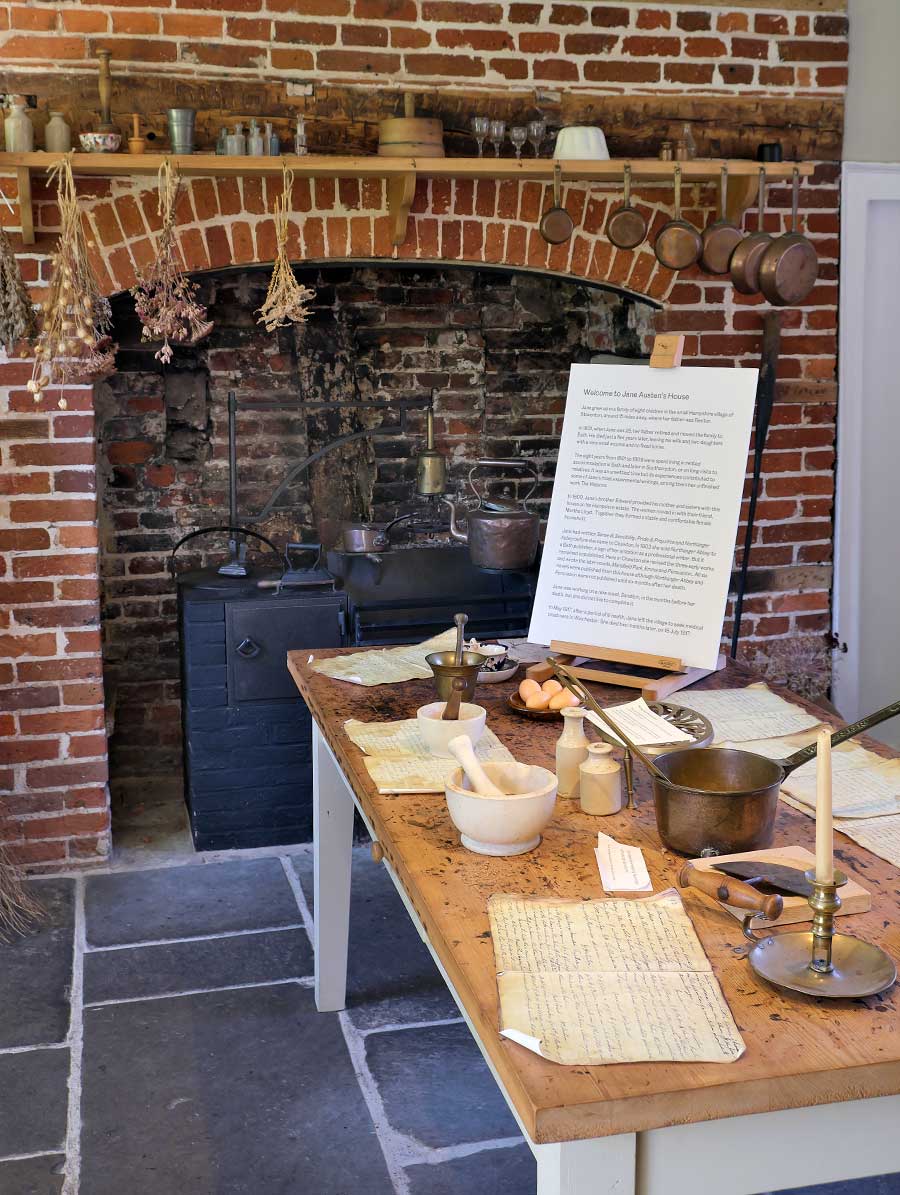
A short audio talk in the kitchen explains how the Austens came to Chawton and its influence on Jane’s literary life.
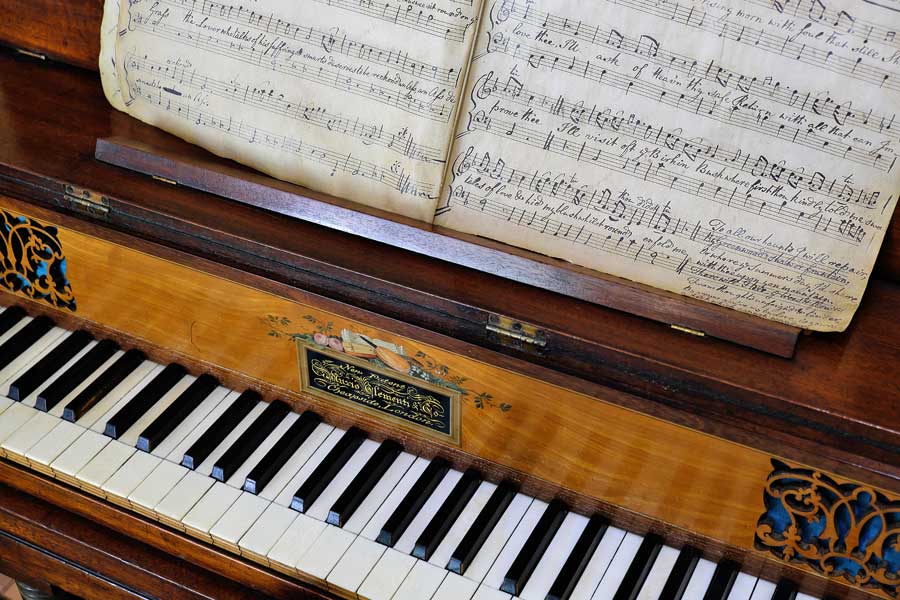
In the drawing room there’s a Clementi piano like the one Jane loved to play and Reverend Austen’s own bookcase.
Newspapers are scattered around, revealing the current affairs that were shaping the wider world, while noting, in one small column, the publication of another novel by the writer of Sense and Sensibility.
In the parlour, you can stand at the same window where Jane had the perfect view of the comings and goings of the village.

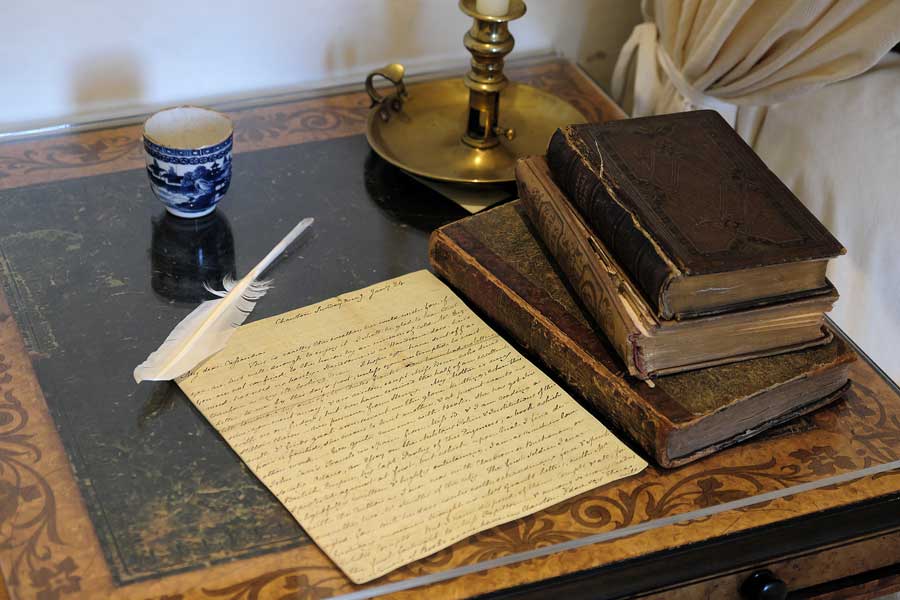
Sitting at that tiny table in the corner, Jane recorded small details of domestic life in numerous letters and neat, witty and sometimes sharp, pen portraits.
‘I do not want people to be very agreeable, as it saves me the trouble of liking them a great deal.’ Jane Austen, Letters
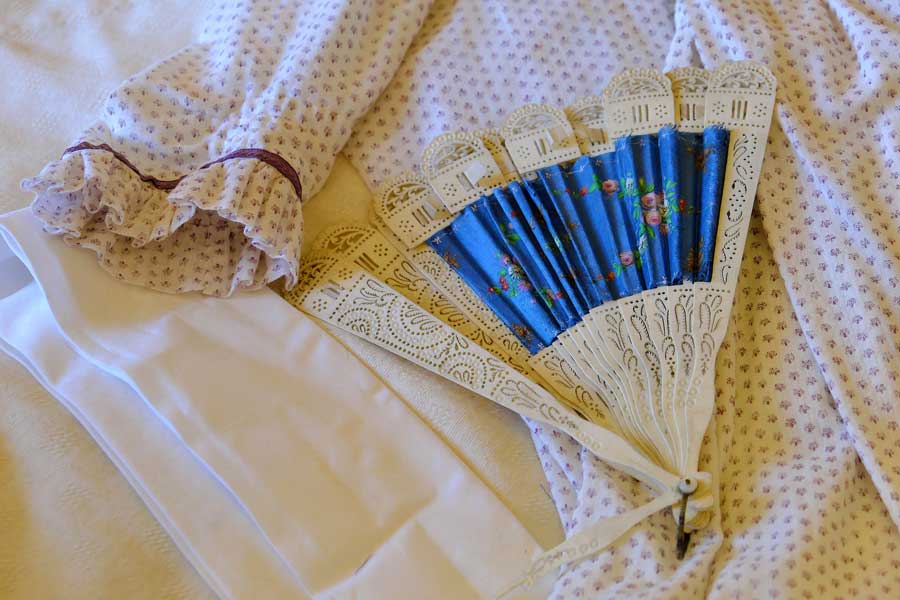
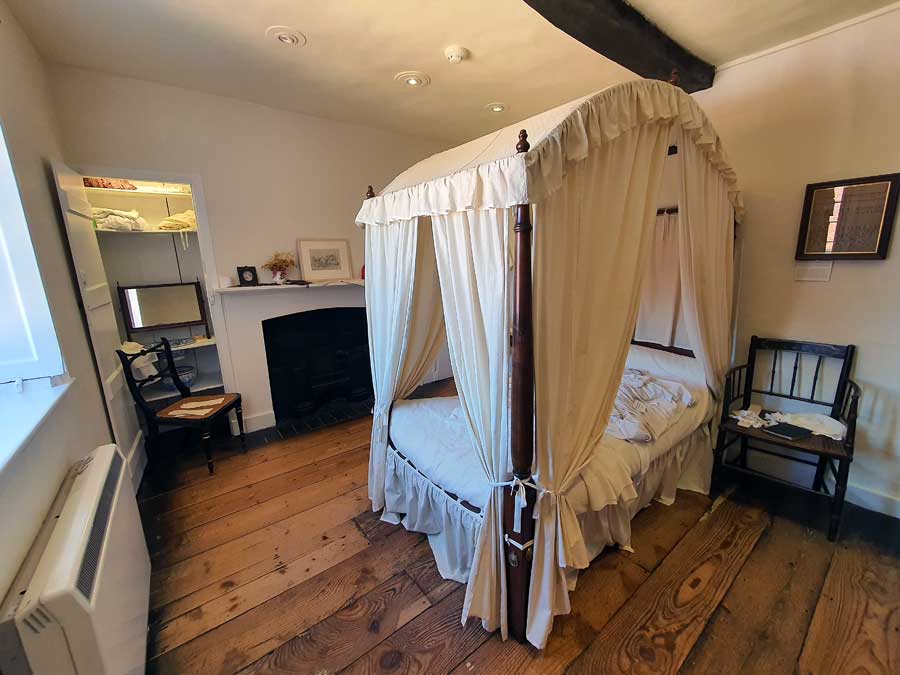
Upstairs there are more treasures – books, manuscripts, family portraits and dozens of items from Jane’s life, including some of her jewellery.
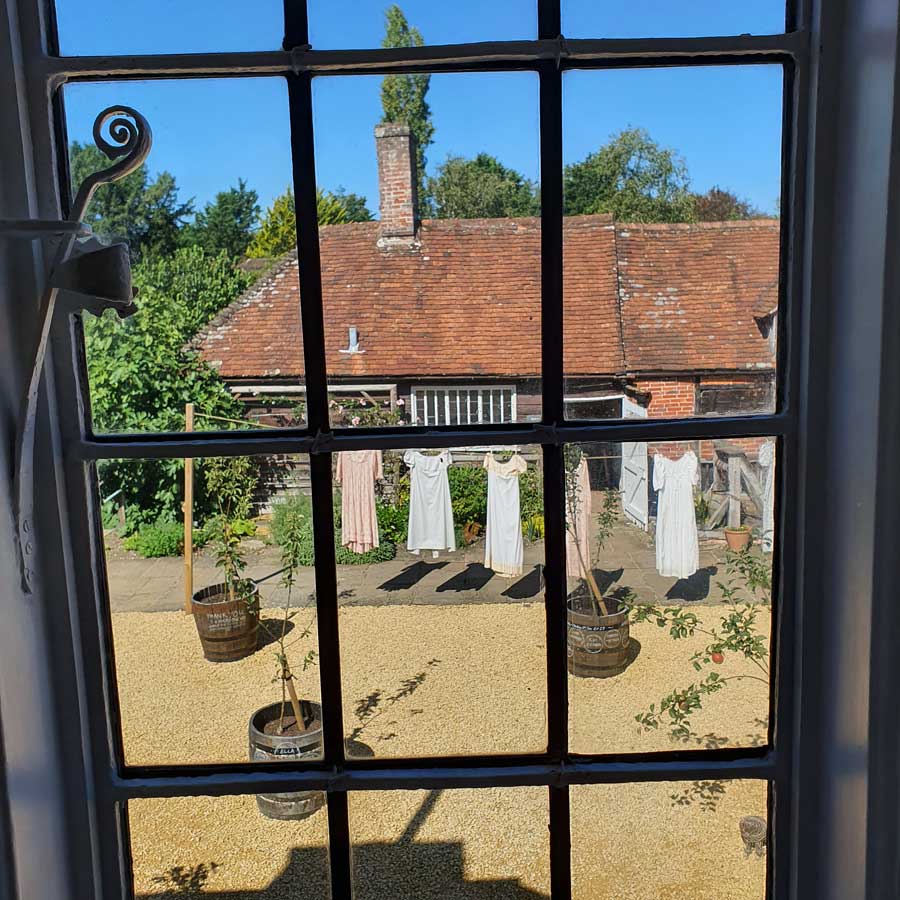
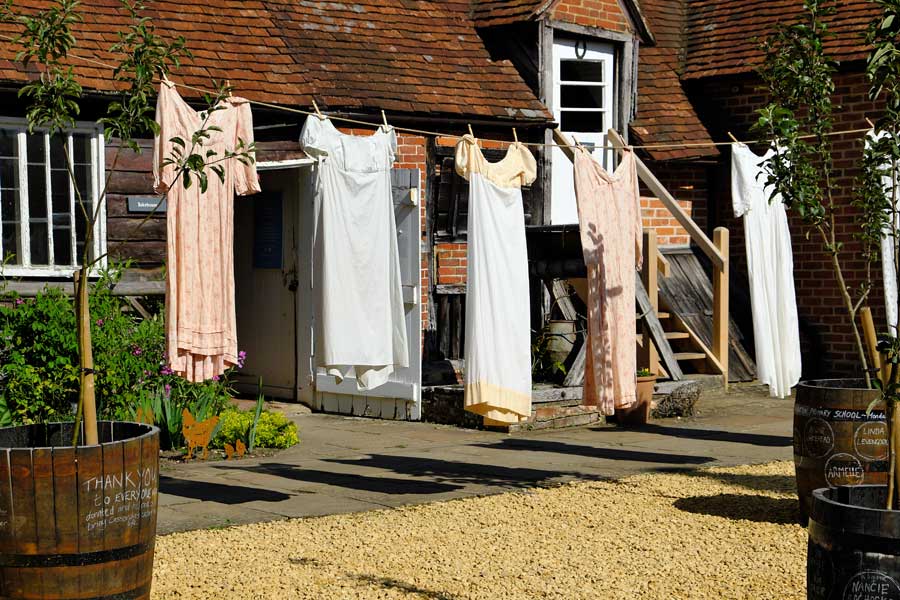
The garden is small, but very pretty. Regency style dresses, pegged on the washing line strung across the courtyard, flap gently in the breeze. A view Jane would have seen from her bedroom window every washday.
For children, and adult devotees, there are replica outfits, complete with gloves and bonnets, so you can tour the house dressed as a lady visitor. Hats and waistcoats are also available for gentlemen callers!
Who were the Austens?
The Austens were a large, lively and loving family of six boys and two girls, all of whom had a way with words and loved play-acting.
The brothers, except for George who had some form of mental disability, built their own careers and raised families. Cassandra and Jane, both unlucky in love in their younger days, became beloved aunts and took a real interest in them all.
In return, the Austen men admired and appreciated both their sisters and were proud of Jane’s writing. Though her books were published anonymously, it’s clear Jane’s identity was an open secret amongst their circle of friends.
The house at Chawton was a gift from Jane’s brother, Edward, who’d inherited nearby Chawton House and estate from the Knight family. It’s a sign of how close the Austen family were that Edward immediately made the house available to his mother, sisters and their friend Martha Lloyd.
There the women formed a close and comfortable household, dividing up the chores and making sure Jane had plenty of time to write.

‘Life seems but a quick succession of busy nothings.’ Mansfield Park, 1814
Jane was a prolific writer throughout all her life, starting with her own journals at the age of 11, inspired by the books she read in her father’s library at the rectory in Steventon.
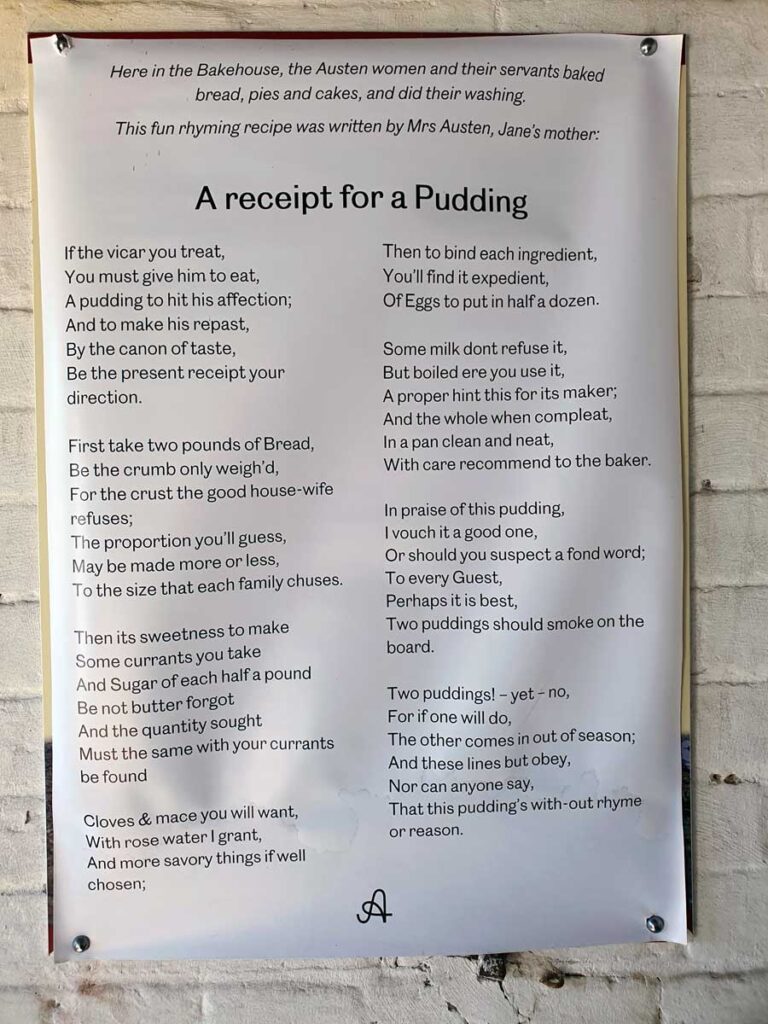
Her mother Cassandra had her own wit and talent too, an example of which can be seen in the bakehouse at Chawton. A rhyming recipe for an excellent pudding she wrote for her daughters.
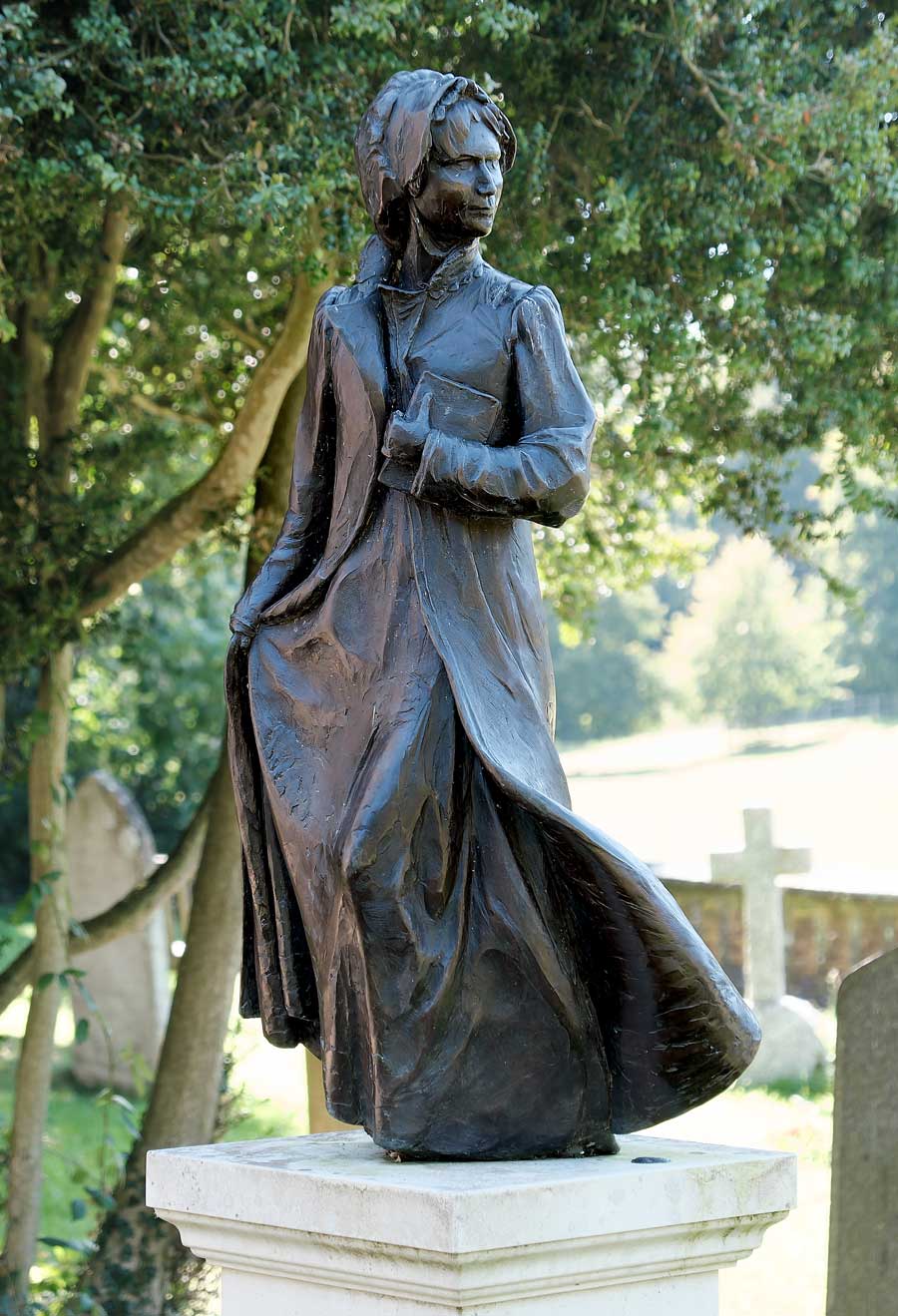
Jane’s older sister, also called Cassandra, is present too. Not just through her letters (she and Jane were copious correspondents) but in the sharing of their daily joys and sorrows.
The sisters clearly had a special bond, and Cassandra’s words on Jane’s death are heartbreaking.
‘The sun of my life, the gilder of every pleasure, the soother of every sorrow.’
Is Jane Austen’s House worth visiting?
Any self-respecting Austen fan will answer with a resounding – YES!
Not a devotee of this great English novelist? Well, there’s still plenty to enjoy here – a snapshot of Regency life among the not-so-well-to-do gentry, where family connections kept you afloat but not always in comfort.
And the museum is constantly updating its displays and putting on themed exhibitions, guided walks around the village and special events.
Tickets are valid for a whole year, so you can return again and again.
Continuing the pilgrimage
Chawton is just a half hour drive away from Winchester, so a visit to Jane’s grave in the cathedral isn’t out of the question.
As part of the anniversary, Winchester is hosting exhibitions on Regency fashion and the Austen family’s connections to the city.
Visitors can also explore Bath, where events include Regency balls, promenade tours, and theatrical adaptations of her novels.
But we chose to stay in the village itself.
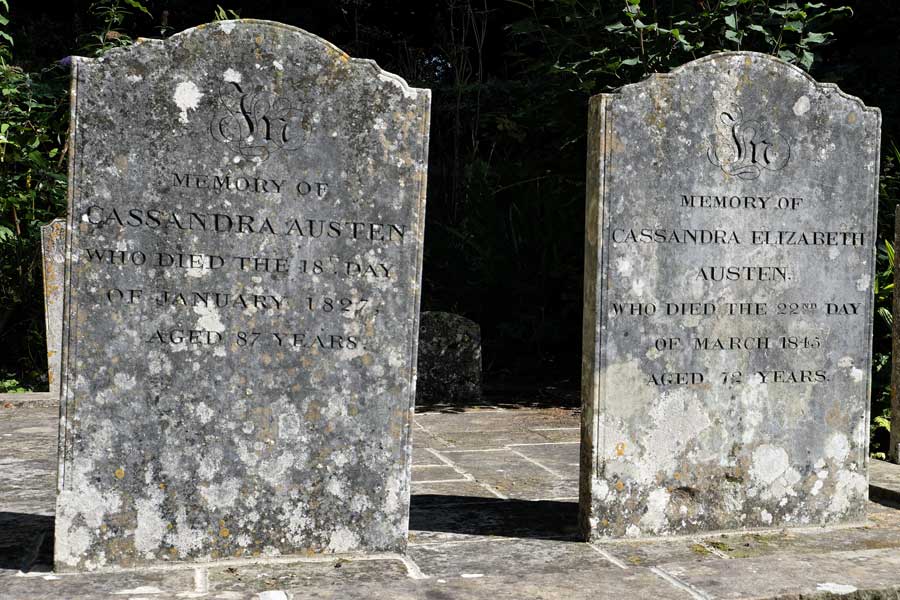
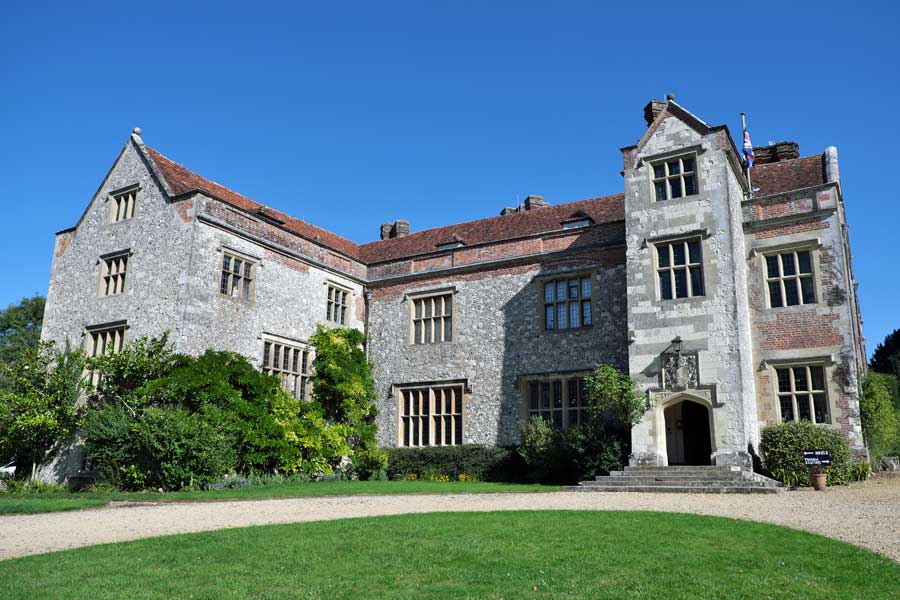
A short walk from the house brings you to St Nicholas Church, where Jane worshipped regularly and where her mother and sister are buried. It’s set in the grounds of Chawton House, the estate Jane’s brother inherited, but is free to enter.
You can also walk through the parkland, all the way to Farringdon and back, if you have the time. There are lovely views of the house through the trees, but if you want to see the gardens and inside Chawton House, you will have to pay for entry. Tickets in 2025 are £12.50 for adults and the house is open daily.
There’s not much more to Chawton village, it’s essentially the same as it was in Jane’s time.
Pretty thatched cottages along a ribbon of street, a tiny stream, all surrounded by woodland – that thankfully blocks out most of the traffic noise from the nearby A31!
Coaches no longer rattle around the corner, but if Jane were at her table today, peeking out of that window, I’d like to think she’d find something amusing in the devotees who, like me, come on a pilgrimage to Chawton.
And maybe even poke fun at us in a novel.
‘For what do we live, but to make sport for our neighbours and laugh at them in our turn?’ Pride and Prejudice, 1813
Snackattack
No need to be ashamed of the need for coffee and cake, after all Jane herself once wrote, ‘You know how interesting the purchase of a sponge-cake is to me.’
Cassandra’s Cup just opposite Jane Austen’s House serves great coffee and cake, so we went back and had lunch there too!
Small menu but plenty of dietary options and everything is freshly cooked.
Dog-friendly too, at tables on the tiny terrace.
Getting to Jane Austen’s House at Chawton
South Western trains run services from London Waterloo to Alton, which is just two miles from Chawton.
Stagecoach run bus routes to the village, but they aren’t very frequent.
By car, Chawton is just off the A31 at the A31/A32 roundabout.
There’s a car park in the village and some free on-street parking, but avoid the residents only sections of the High Street.
Tickets in 2025 are £14 for adults, with some concessions, and are valid for a year if you wish to make the pilgrimage again.
Jane Austen House is open daily from 10am to 5pm, but they operate a timed entry system as the house is small.
For details check their website, and discover their 250th anniversary events here.
Where to next?
• The Real Green Knowe – Hemingford Manor
• Stage and Screen History of Brighton
• Beautiful Bath