
I felt a little apprehensive approaching The Manor, Hemingford Grey.
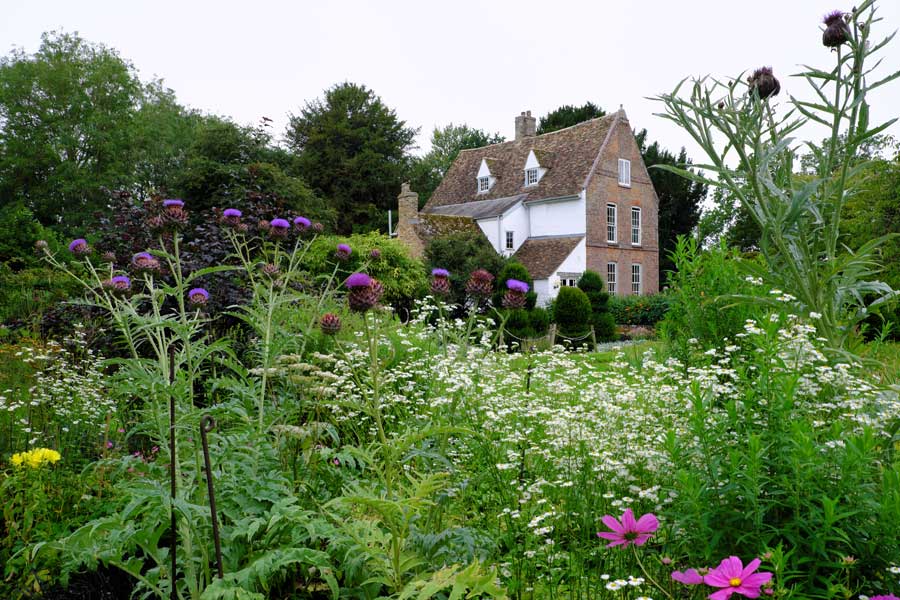
I’m a big fan of spotting film and book locations on my travels. It’s fun to stand quietly, looking at ‘the real thing’ and trying to work out what their creator actually saw and what was pure imagination.

But this old house, located on a bend in the Great Ouse river, is the setting for one of the most magical books from my childhood.
My concern is that this visit will somehow tame, perhaps even destroy, the wild sense of wonder The Children of Green Knowe inspired in me the day I first read it.
I needn’t have worried.
The place is as mysterious, magical, timeless and hauntingly beautiful as I’d imagined.
That’s because of the legacy of the woman who lived there for more than fifty years, author Lucy M. Boston.
If you haven’t read the books, there’s still plenty to amaze and amuse and The Manor, but if you are a fan you will be enchanted.
The real Green Knowe
It was too dark to see what kind of a house it was, only that it was high and narrow like a tower
My first glimpse, like Tolly’s, was of the three-storey house after sunset (although fortunately not surrounded by flood water).
It glowed palely through the dusk, bounded by smudged topiary bushes and blooming borders, as bats flitted across the riverside path.

The garden is open daily, but tours of the house are by appointment only.
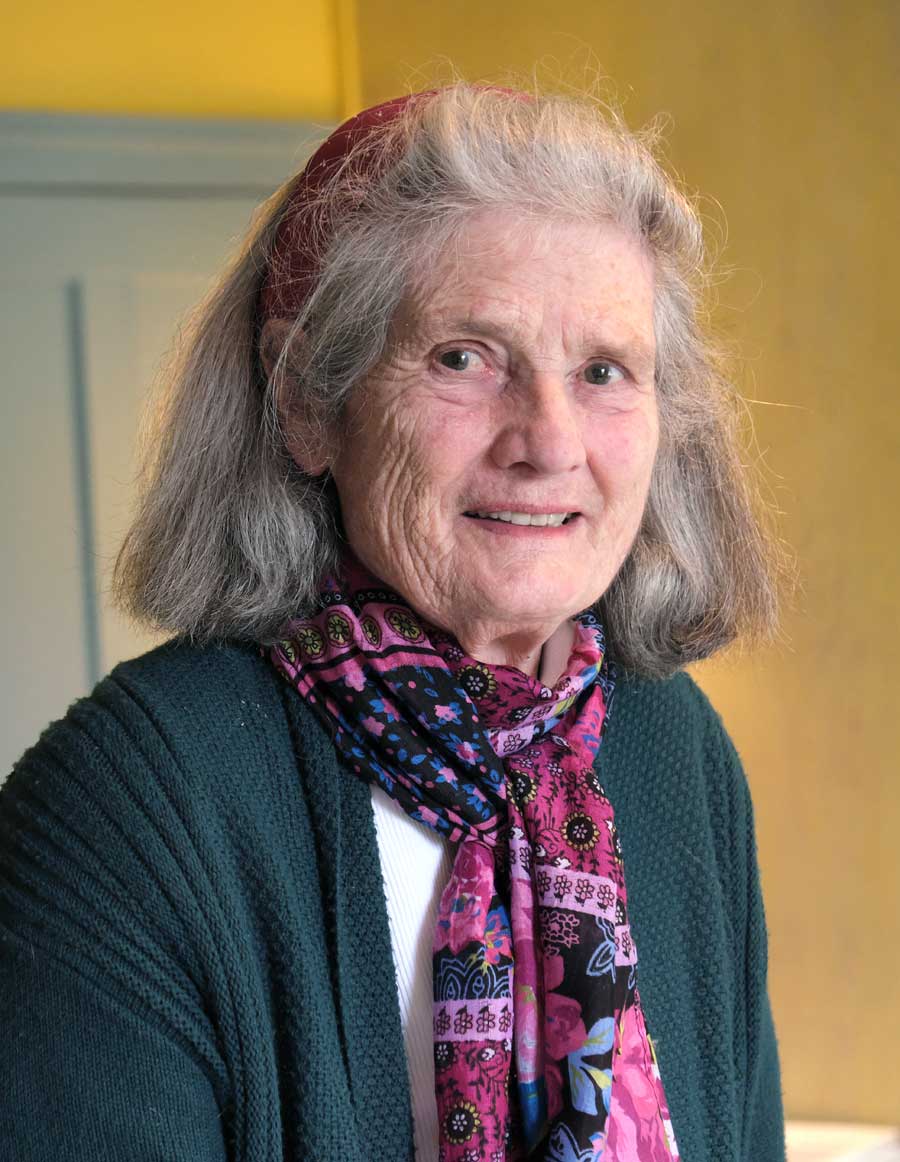
If you’re lucky, you will be welcomed by Diana Boston, the Manor’s current chatelaine and Lucy’s own daughter-in-law.
“People come here for many different reasons. Some out of simple curiosity to see a place that’s been lived in continuously for all of its nearly 900-year history.”
“Garden lovers are keen to see the collection of over 200 old roses and our award-winning irises. Artists come to admire the paintings and the original drawings for the books.”
The quilts of Lucy Boston

And then there are the patchwork enthusiasts who want to view the extraordinarily detailed designs Lucy created.
She spent her summers in the garden and her winters sewing and writing.

A tour of The Manor, Hemingford Grey
Diana’s personal touch makes the visit pure joy – with a lifetime of knowledge to draw on, she tailors her talks to the interests of the visitors and never seems at a loss.
Wherever there was a beam, or an odd corner or a doorpost there were children, carved in dark oak, leaning out
I’m amazed and delighted that so much of The House at Green Knowe still exists – lived in, cared for and loved.

The wooden angel figures in the hallway, complete with straggly twigs.
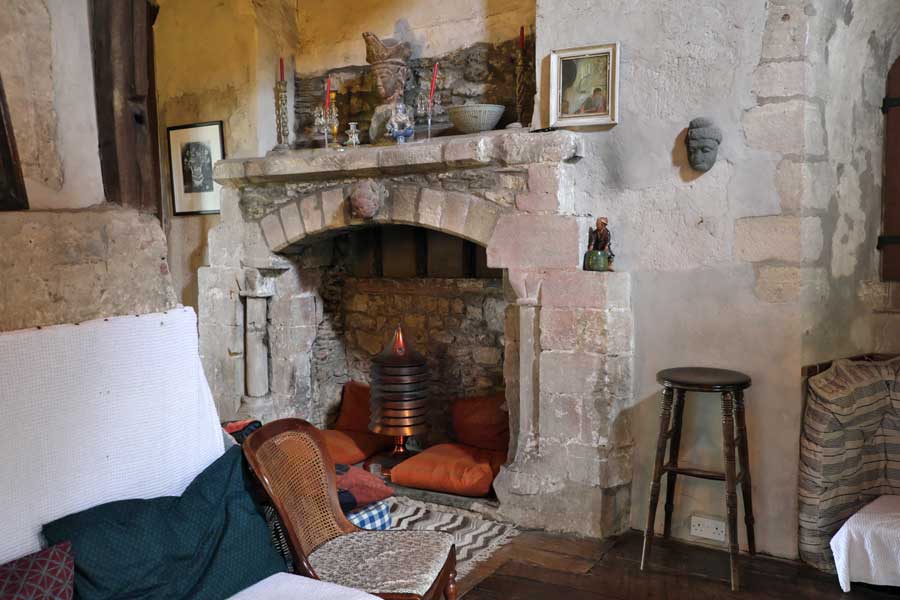
The old fireplace in the dining room where Granny Oldknow sat, stitched and told her stories.
Feste’s name-board from his stall (actually created by Lucy’s son Peter especially for the story).

And for me the real highlight – Diana very carefully shows us the original manuscript, in Lucy’s own handwriting.
She lays it gently on the table where the author sat and wrote through the long winter months.

The history of Hemingford Manor
The house itself has an extraordinary, real-life story.
Built in the 1100s, it was a tall and narrow stone house, moated and fortified, accessible only by boat. Generations of families lived there, adding, amending and updating as fashion dictated.
In the 1700s a whole new frontage was built, completely swallowing up the original home which stayed safe behind the new walls.
The famously beautiful-but-poor Gunning sisters, who took the Regency world by storm, lived here before their debut. An occasion for which they had to hire theatrical costumes, being too strapped for cash to have ball gowns made for them!

Gutted by fire in 1798 (the inspiration for the second book, The Chimneys of Green Knowe) the old stone house was the only part to survive. Traces of the blaze can still be seen in the smoke-blackened walls.
When Lucy bought the Manor in 1939 she was determined to preserve it and its history, and she lived there, a self-contained, creative and highly individual woman, until her death in 1990.
Diana knew her well, but even so she’s still learning things about her mother-in-law, snippets and stories from locals and visitors alike.

“When Lucy first came here, the villagers were a little suspicious. She had lived in Vienna, spoke fluent German, and wore an old dirndl skirt to do the gardening.”
“In wartime everyone was worried about spies and that, coupled with the fact that many locals referred to The Manor as the poltergeist house and wouldn’t walk past it after dark, gave rise to some strange rumours.”
“She kept forgetting to put out the attic light and the warden had to have stern words with her, amid fears she was signalling the enemy.”
Music at The Manor

But nothing could have been further from the truth.
Lucy even offered her comfortable home to airmen from the nearby RAF base for rest and recuperation.
She also held musical recital evenings on the spectacular gramophone installed in the first floor room. Stuffing the old stone embrasures with cushions, old car seats and improvised covers, she made them all welcome.

Lucy Boston was also passionate about restoring the house as far as possible.
She was thrilled when she found in the garden, all overgrown with ivy, the stones from the original Norman fireplace which the Tudors had chucked out when carrying out their renovations.
Painstakingly, over a period of two years, she cleaned and rebuilt a fireplace in the original Norman style.
Lucy showed the same attention to detail in her writing – drawing again and again on the imagined stories from the house where she lived. She was adamant that the books should also be beautifully illustrated.
Illustrations from The Green Knowe books
Diana’s husband, Lucy’s son Peter, was called on to share his skills as an architect. That’s why the original illustrations – scraper-board, reversals and pen-and-ink drawings – were meticulously executed.


Diana particularly loves to show the place to children who have read the book.
As they climb slowly through the house together she senses their mounting excitement and when, as we did, they reach the very top room, Tolly’s bedroom, Diana introduces them bit by bit to the key parts of the story.
The Children of Green Knowe


There is the window, left just a little ajar for the birds to come and nest in the rafters.
Here’s the rocking horse that Tolly hears going creak-creak when there’s no one around.
Tolly’s mouse that he takes to bed with him is sitting on the chest of drawers.
A little felt chaffinch is perched in a wicker cage and, most exciting of all, is the toy box that Tolly and Granny Oldknow get to open once the cheeky chaffinch finds the missing key.

Inside, as in the story, are Toby’s sword, Alexander’s flute, Linnet’s Russian doll and her favourite book, Aesop’s Fables.
The stories of Green Knowe
The Green Knowe series of stories are classics from a time when writing for children was just beginning to be valued.
As with all good tales, they can be read by children on one level and by adults on another.
It’s almost impossible to categorise them, but they are, in a very subtle way, ghost stories.

The ghosts of The Manor, Hemingford Grey
Nobody’s claiming that The Manor itself is haunted, but it definitely has an atmosphere, and anyone with an imagination can’t help but breathe it in.
“I show about three thousand people a year around the house, and in all the time I’ve been doing it there have been a handful who’ve reacted strongly, saying they can feel something, a presence. Some have been quite disturbed by it.”
And did the mouse squeak under your pillow, and did the china dogs bark?
Has Diana herself ever heard anything, as Tolly did?
“Well, I have heard a flute playing a couple of times. Once I knew it was someone from a group of Japanese visitors, but the other time….?” Diana’s voice trails off as she pats the stone walls.
“Who knows what we could hear if these stones could only talk?”
Nearly 900 years of family life and conversation.
The legacy of Lucy M. Boston is in safe hands.
This was my second visit to The Manor, Hemingford Grey, and the mystery and magic of Green Knowe is still as strong.
More about the Manor, Hemingford Grey
For the latest information, read more on their website
Tours of the house can be arranged by prior appointment. Prices in 2023 are £10 for adults, children £3. The gardens are open from 11am to 5pm each day (dusk in winter) Adults £6, children free.
Pay by cash or scan a QR code to pay by card when you visit.
How to get there
Hemingford Grey is 4 miles south-east of Huntingdon just off the A14 and you can park for free in the village.
The nearest bus service stops at St Ives and from there take a 2 mile walk across Hemingford Grey Meadow or take a taxi.
Disclaimer: We were the personal guests of Diana but left a donation for the preservation of this beautiful and iconic family home.
If you’ve enjoyed browsing our website, learned something new, or just had a smile because of what we do – we’d love your support to keep the good stuff brewing!
Where to next?
• 8 reasons to visit Whitstable
• 5 things we love about Philadelphia
• Walking with Grace
As a young Australian mother in the 1970s, I came across Lucy Boston’s books, and fell in love with them, as did my elder daughter. In 1978 we came to England for my husband’s sabbatical, and settled down for a year in Wendlebury, a small Oxfordshire village. A whole year, in the English countryside, in an old house in an acre of English garden. I was indescribably happy.
One day, taking my courage in both hands, I wrote to Lucy Boston, saying how much we loved the books, that I had just bought and read “Memory in a House”, and asking if we might visit her at the manor. Looking back, I wonder how I dared. I received a charming reply. A date was agreed, and we set forth. We arrived at Hemingford Grey without getting lost, but I couldn’t quite see which way to turn. I had just parked outside a little village shop, intending to ask for directions, when an elderly lady emerged. I asked her, and she replied: “May I ask who you are?” It began to dawn upon me that this was probably Mrs. Boston herself. I owned up to being the Australian colonial who had been so bold as to ask to be received there. “I forgot”, she said, but I was very welcome; so, without more ado, I cleared away some child-detritus from the front seat, and away we went, up the road to the house and garden of my dreams.
My daughter is almost fifty. She has precious memories of Tilly’s bedroom; of riding Feste; of playing dominoes (the pieces were of ebony with ivory dots); of the inscribed bat, of the flute, and of the climactic moment when Mrs.Boston said, “If you open that drawer, you will find Toby’s sword. Take it out, and try it.” She spoke of her window into the eleventh century. I felt that that century had come through that window into the house, and, in her great kindness, Mrs. Boston allowed me, an amateur, to sing into that century. It was an unforgettable privilege.
The following year I bought a rocking horse for the two children. Of course, we called it Feste! The two smallest of our grandchildren are about to be introduced to the “The Castle of Yew” and “The Sea Egg.” Feste lives on, a little moth-eaten as to his coat, his mane and tail (real horse-hair) rather tangled, but his saddle and reins still gloriously red. He us much loved by us all.
Thank you, Lucy Boston, for the joy you have given to three generations of the Fox family.
Wow! What an amazing story, thank you so much for sharing.
The house is still full of atmosphere and Diana Boston keeps it just as Lucy did and, like you, I found it absolutely magical.
Love the fact that you have a Feste!
I still have a full set of Green Knowe books and re-read them often.