
Lost luggage – it’s the most frustrating thing.

You’ve successfully negotiated the rules and entry regulations, got all your paperwork in order, are through security and on the plane. All you want to do is relax and begin your holiday, but there’s that little, niggling question.
Will my luggage make it to the same destination?
Well, the good news is yes. Probably.
Even with post pandemic pressures – and 30% more travellers have reported lost baggage this year than in 2019 – most luggage does get to its destination safely.
If you like statistics and probabilities, Money Supermarket’s round up of the best and worst airports in the UK and abroad for lost luggage is a fascinating read!
We’ve been racking our brains, and in all our years of travelling we can only remember one lost bag, on a return from the South of France. We were reunited with our belongings just a few days later.
But on the rare occasions when things go wrong, it can seriously mess up your travel plans.

Diary of a travelling suitcase
So, what actually happens after you check in your bags?
Different airports have different systems, but every bag will make a similar journey.
- Sorted
First your precious possessions are sent on a conveyor belt to a sorting area.
Here, either robots with scanners, or people with eyes, will check the destination and flight number.
Bags are then either sped straight on their way to where the plane is waiting or held in a storage area, if the flight is later. - Screened
Along the way your bags will be security checked.
This is usually by X-Ray or CT scanner, like the ones used for hand luggage.
Any bag that looks or feels hinky will be pulled out for a manual inspection. - Ramped up
Airports have staff known as ‘ramp agents’ whose job it is to control the flow of baggage through the airport and send your bags on their way to the correct aircraft. - Get carted
The final stage before your bags are airborne involves luggage being put onto carts and taken to the plane for manual or assisted loading. - A peaceful flight
No snacks or inflight movies, but your bags will be snug and safe in the hold. - Touch down
Before you’ve stood up to stretch your legs and grab your hand luggage from the overhead lockers, your bags are already being unloaded and are on their way to the terminal. - On a carousel
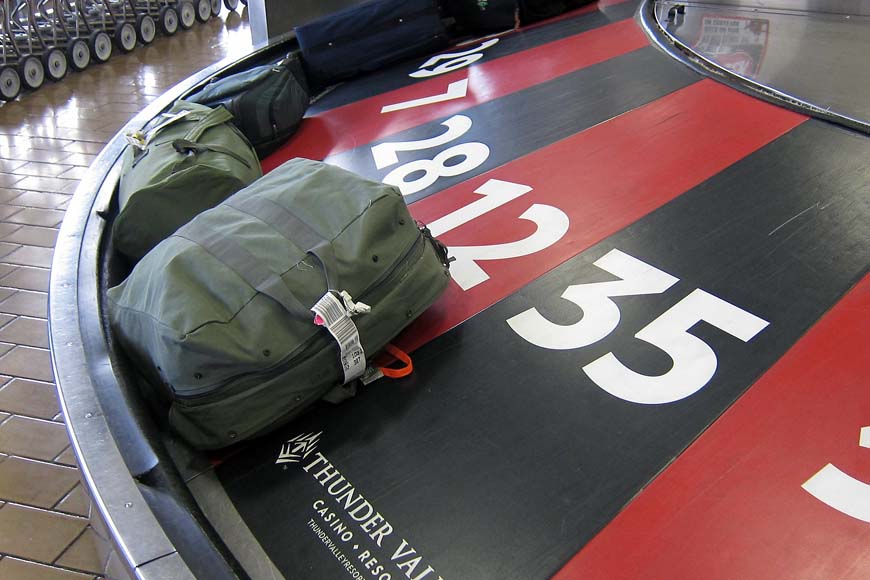
If all goes smoothly, by the time you’re through border control your bags will be circling on the closed loop of the baggage reclaim conveyor belt.
With so much happening on the way, it’s no wonder things do sometimes go wrong. And if your jpourney involves stop overs and changes, that increases the risk of your bags heading off on their own adventure!
Here are 9 ways you can protect yourself from lost luggage.
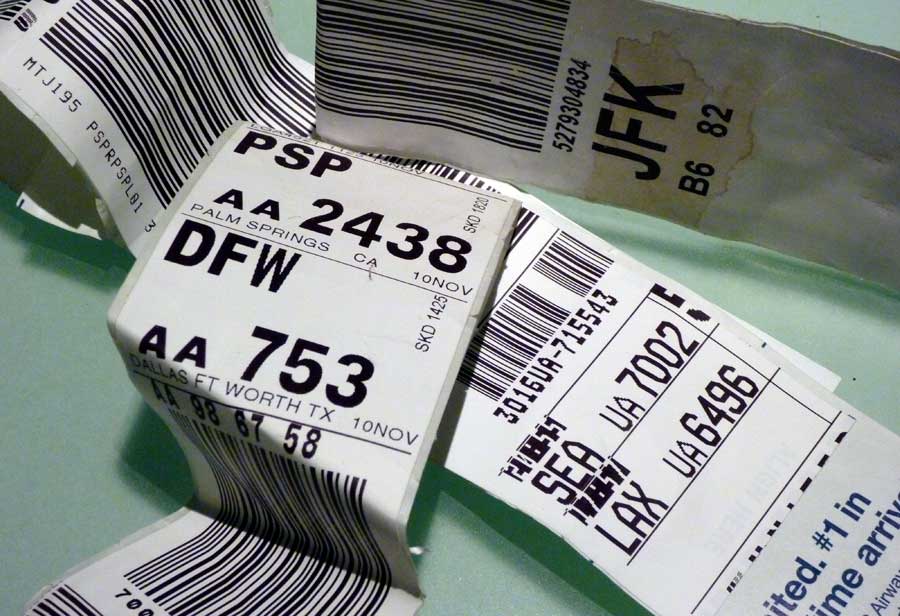
Remove old luggage tags
I know memories of your trip to Borneo and Paris are precious, but they can get in the way of your case having a smooth transit through the system, so find another way to record your travels rather than luggage tags.
A quick tidy up means only relevant information for that journey will be on your luggage, reducing the chance of a mistake.
That applies when you’re coming back too!
Split your luggage between suitcases
Unless you’re travelling alone, it’s always best to share.
Separate clothes, toiletries and essentials and spread them across more than one case. If one bag goes astray, you’ll at least have something when you reach your destination and won’t have to dash out to the shops the moment you arrive.
Check in early
We give ourselves plenty of time before our flight leaves. It takes the stress out of it all and there’s always something to do in an airport, from having a meal to people watching!
More importantly, your luggage is much more likely to get to the right plane – leave it to the last minute and there’s an increased risk your bags might be overlooked.
Make your bags distinctive
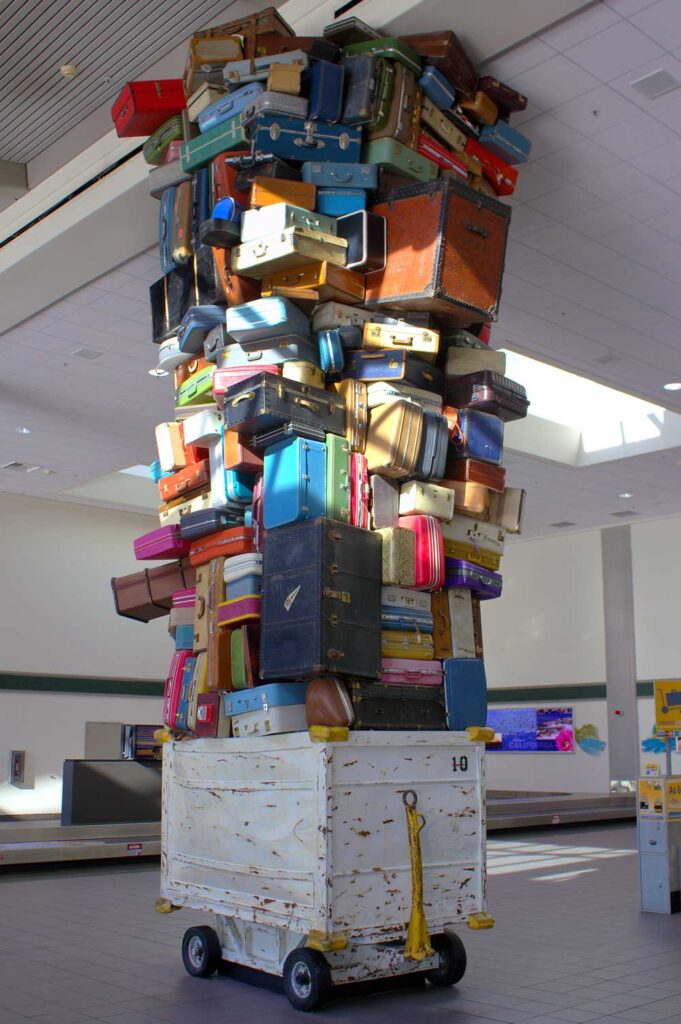
We’ve all done it after a long flight – stood at the carousel watching an endless stream of uniformly black or blue cases go by. Is that mine? Have I just grabbed someone else’s bag?
If you don’t want to invest in some psychedelic pink-and-purple cases, customise yours with stickers, labels or a brightly coloured strap.
Oh, and don’t delay on your way to the carousel. Many airports, especially very busy ones, have a policy of clearing carousels 30 to 60 minutes after arrival, so your bags may be deemed ‘unclaimed’ after that time and spirited away!
Don’t lose your luggage receipt
Obvious but essential. When you’re given a receipt at Bag Drop, put it somewhere safe and hang on to it.
Even better, take a quick photo of it on your phone, just in case.
Hopefully your bag won’t get lost, but if it does, these two things will help staff identify your bags in a sea of others and reunite you and your clothing much more quickly.
Consider hi-tech trackers
It’s not something we’ve ever done, but more and more travellers are investing in tech to keep their belongings safe.
There are loads of smart luggage trackers available now, using Bluetooth, GPS, mobile or Wi-Fi options. They have a small upfront cost and an ongoing subscription, but might be worth it for peace of mind.

Make the most of carry on
This doesn’t mean stuffing your bag to the point of making fellow passengers uncomfortable, but packing one spare change of clothing and some essentials like a toothbrush in your hand luggage is wise.
If you’re travelling for work, keep hold of those important documents too!
Hang on to your medicines
Anything essential for your health and well-being needs to travel with you.
If it’s anything unusual like syringes, liquid medication and inhalers, you will need supporting documentation to allow you to take it on board, but airport staff are trained to know what’s acceptable and will help if you ask.
Check your insurance
You should have no problem claiming for any financial loss incurred through bags going astray, but always check the small print on your policy to make sure you know exactly what’s covered.
Might be worth spending just that little bit more for peace of mind. Some cover is much better than others.
How to make a lost luggage claim
Hopefully you’ll never have to, but if you do, here are a few things to smooth the way.
• First port of call is the airline. You have the legal right to compensation if your checked-in luggage is delayed, lost or damaged, but you can only claim for cabin luggage if they are at fault.
• Report the problem straight away. Check the small print on your ticket, some airlines have a cut-off point for reporting lost bags, usually around 7 days, so don’t leave it too long.
• The airline has 21 days to find your bags and get them to you. If you get your luggage back within 21 days, you can still claim compensation for delayed luggage. If you don’t get them back, your claim is for lost luggage.
• Once you’ve reported it, you still need to make a claim, either by letter to the airline or via their own claim form.
• Check what documents the airline expects you to provide. These are usually your boarding card, labels with a bar code, proof you reported it at the time, receipts for anything you had to buy and/or photo evidence of damage to the bags (if they arrive in bad shape).
• What you get from the airline is usually limited to money for the bare essentials like toiletries and underwear and part of the cost of replacing or repairing the bags themselves. This will be like-for-like compensation, not the cost of a new set of cases.
• If you have travel insurance or home contents insurance that covers luggage, you’ll be better off making an insurance claim instead. It’s usually easier and may get you more. But they’ll still want all the above documentation, so keep that paperwork! Citizens Advice has a very helpful section on their website
Happy and trouble-free travelling!
Do you have any tips for keeping your luggage safe when you travel?
Any stories of lost and found disasters and triumphs?

Where to next?
• Hand luggage only
• Travel planning tips
• Avoid car rental mistakes