

When it comes to traditional English villages, Rottingdean on the south coast of England just a little way east of Brighton, ticks all the boxes.
Village Green ✔
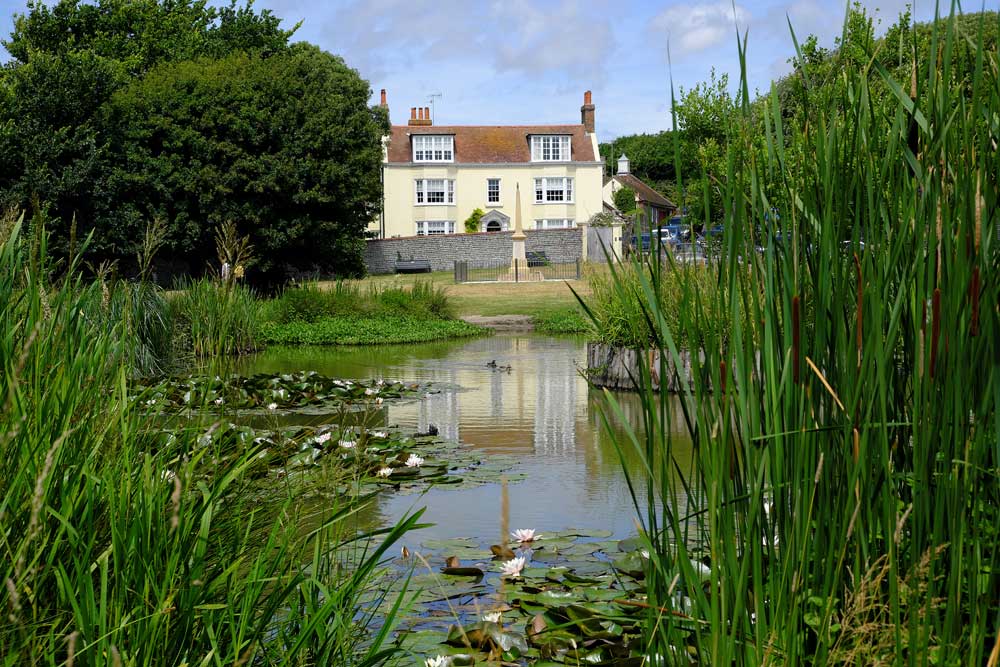
Pond, with ducks ✔
Church dating back to Saxon times ✔
Tudor houses ✔
Numerous pubs ✔
Locals whose families go back generations ✔
But dig a little deeper, and you’ll discover there’s more to Rottingdean than meets the eye. As we explored its history, we found the sleepy Sussex village began to look a little bit Midsomer Murders or an episode of Ghost Hunters!
Here are 6 surprises we found on our day trip to Rottingdean.
6. Wishing stone at Kipling’s house

Bateman’s in Burwash, 30 miles inland, is Kipling’s most famous home, but did you know the writer lived in Rottingdean for a while? He penned the Just So Stories while living at the Elms, a beautiful house that overlooks the village green.

The house is now privately owned, but Rottingdean Heritage bought the gardens to save them from development, and they’re open all day every day for locals and visitors alike to stroll round.
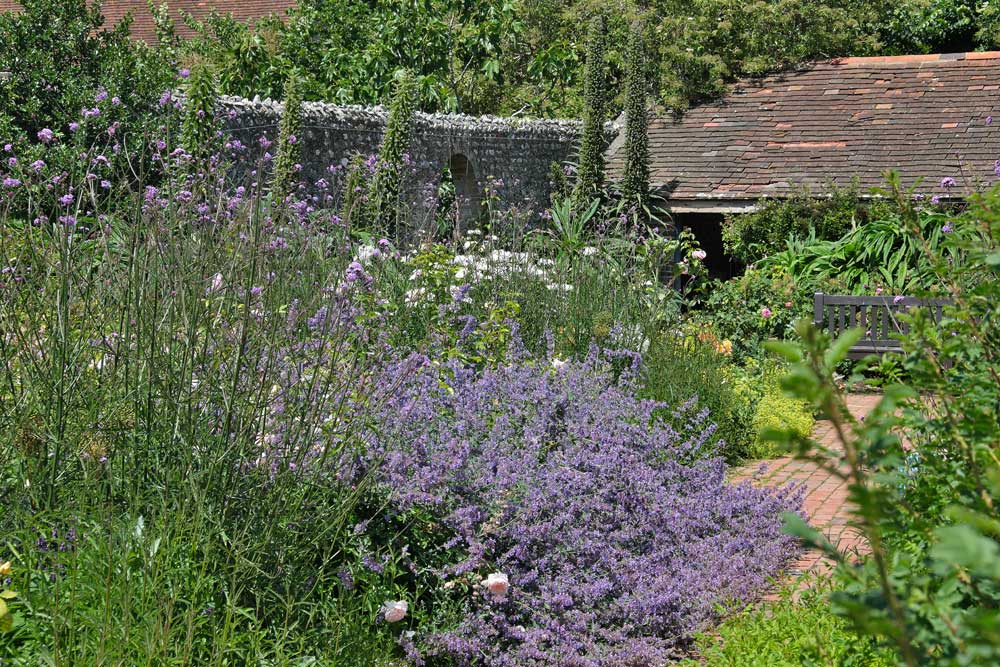
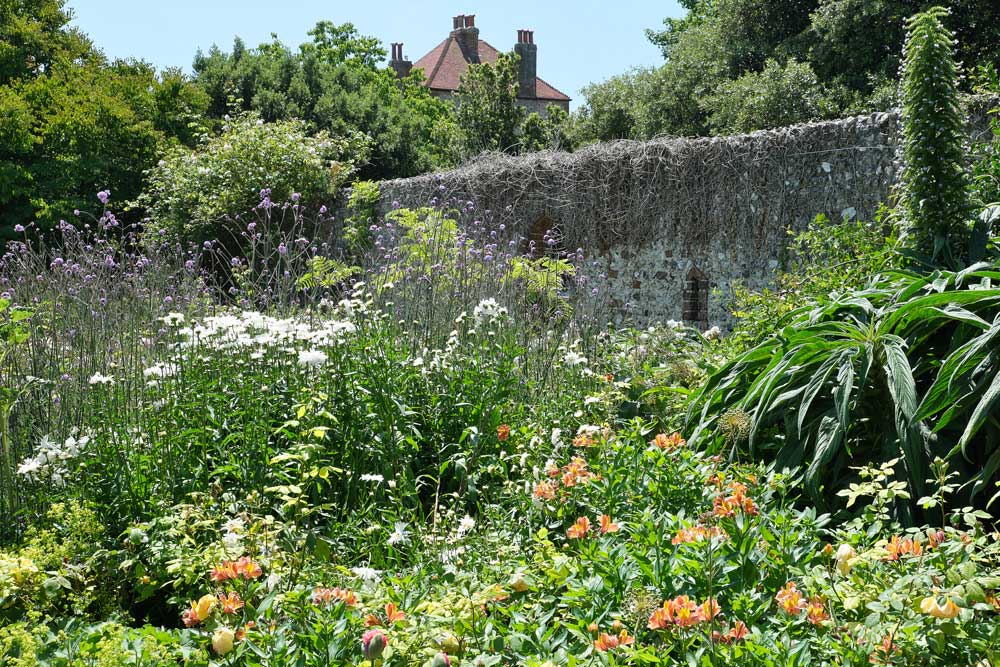
It has a woodland garden spectacular in spring, a scented rose garden for summer blooms, a year round herb garden and a chalk area packed with local species.
You can picnic, just sit and stare, or join the local club for a game of croquet on the only official lawn within the boundaries of Brighton and Hove.
But don’t miss the little oddity, set in the wall of The Elms, facing St Margaret’s Church.
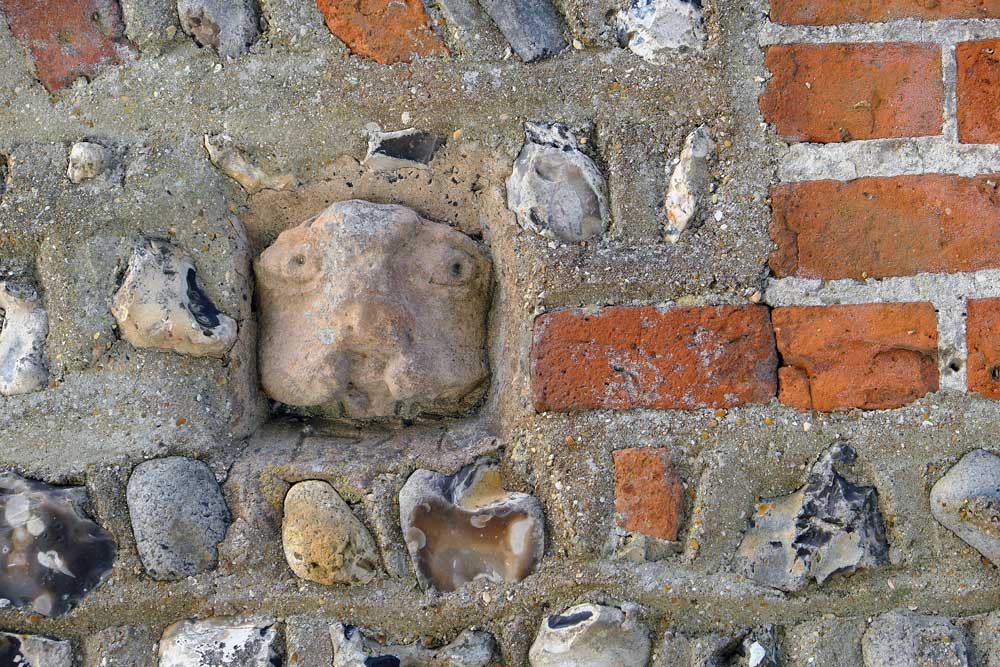
It’s a wishing stone and legend says if you touch it with your right finger and turn around three times, your wish will come true.
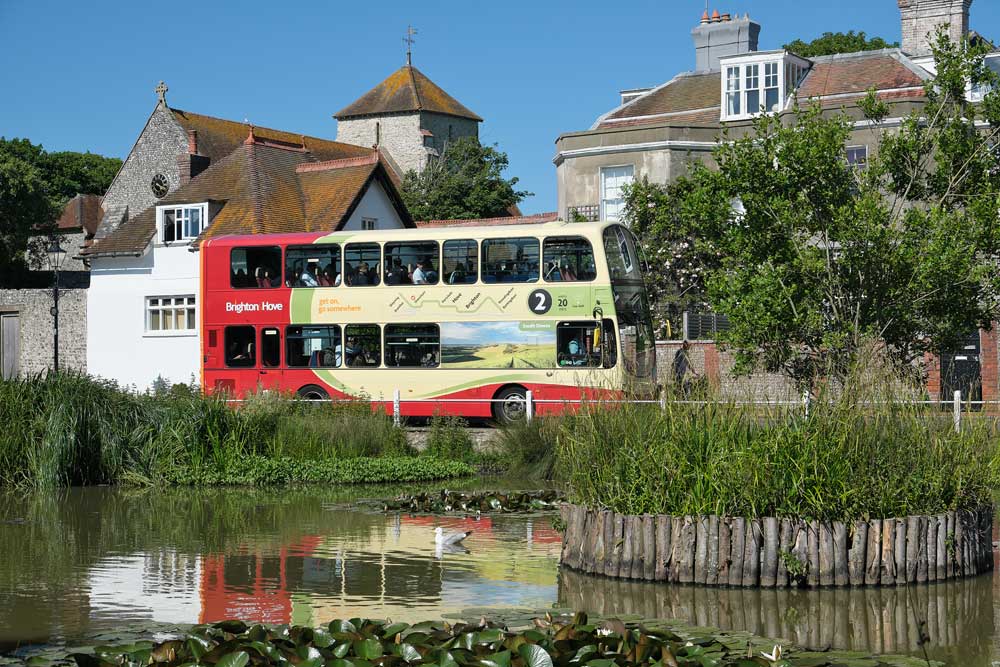
But be careful – the main road runs right past the wall, and you may have an unwished-for encounter with the Number 2 bus!
5. A secret beach
Not exactly hidden but often overlooked, Rottingdean beach is a little gem.
It’s just as stoney as its big sister Brighton, but much quieter. Swimming at high tide is excellent, and at low tide there’s a mass of rock pools.

When the tide is a really long way out you can still see remains of the concrete bases that once supported Magnus Volk’s extraordinary Daddy-Long-Legs tramway which ran along stilts over the water in the late 1890s.

There’s entertainment on The Rottingdean Terraces Stage throughout the summer with free Sunday afternoon concerts of jazz, swing, brass and Beatles tribute acts.
Best of all, you can walk, cycle or roller-skate for miles in either direction on the undercliff path that runs all the way from Brighton’s Palace Pier to Saltdean.
4. Smuggler’s tales
No village on the British coast is without a treasure trove of smuggling stories, no matter how unlikely.

Despite its coastal location, Rottingdean was never a fishing village. Its roots are in farming and walk up to Beacon Hill and the windmill, and you’ll find the land barely changed since the days of Rota, the Saxon leader who gave the place its name.
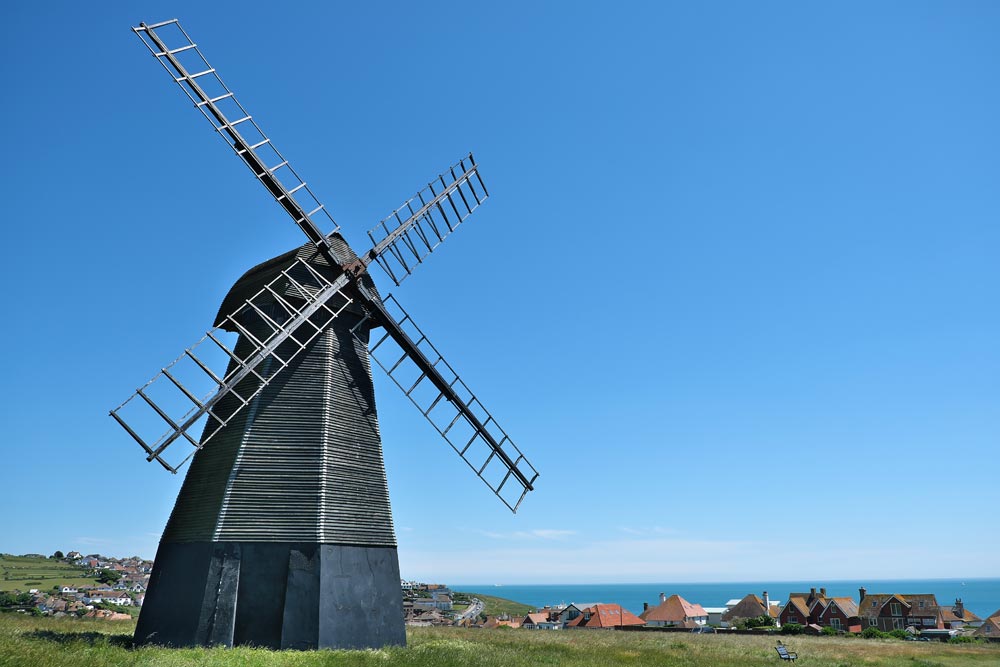
The windmill itself has a little mystery. While it was being built in 1802, workmen are said to have uncovered the remains of an ancient warrior and a sword. They took a break and when they returned, both had vanished!
But with the sea just a stone’s throw away, it’s no surprise that smuggling was once a major part of Rottingdean’s economy. Not much evidence remains, but hidden tunnels are rumoured to stretch from the chalk cliffs all the way up the High Street.
Kipling no doubt drew on these stories for his Smuggler’s Song, which was published in 1906, a few years after his stay in the village.
Five and twenty ponies,
Trotting through the dark –
Brandy for the Parson, ‘Baccy for the Clerk.
Laces for a lady; letters for a spy,
Watch the wall my darling while the Gentlemen go by!
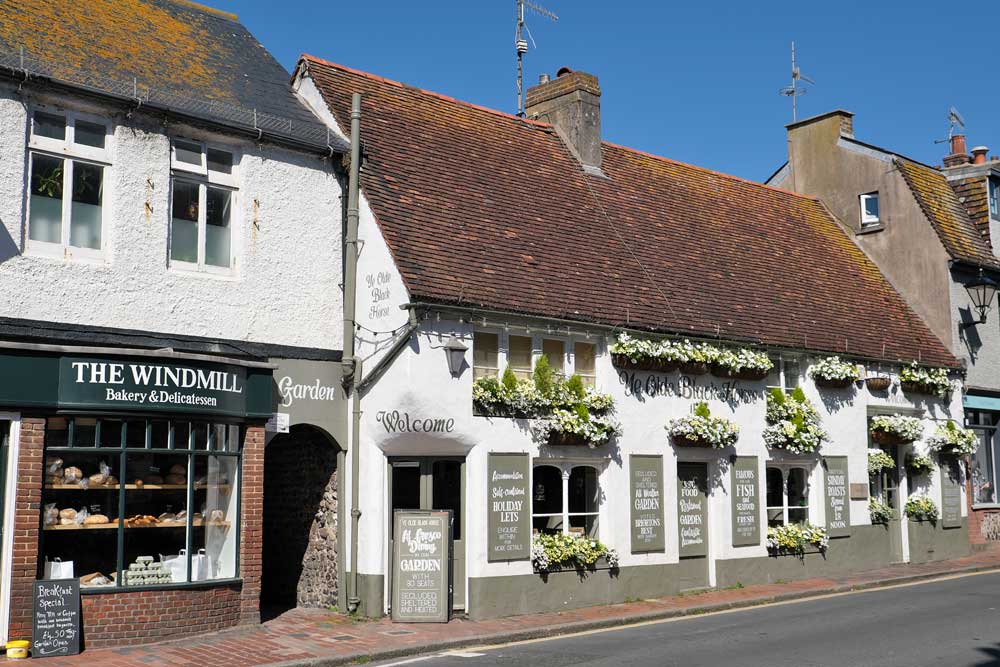
Rottingdean’s oldest pub, The Black Horse, which dates back to 1513, has a Smuggler’s Bar, although its better documented claim to fame is that it used to be called the Black Hole, because it was once the village forge.
But it’s true that many Rottingdean inns and houses in the 18th and 19th century had cellars where smuggled goods could be stashed.
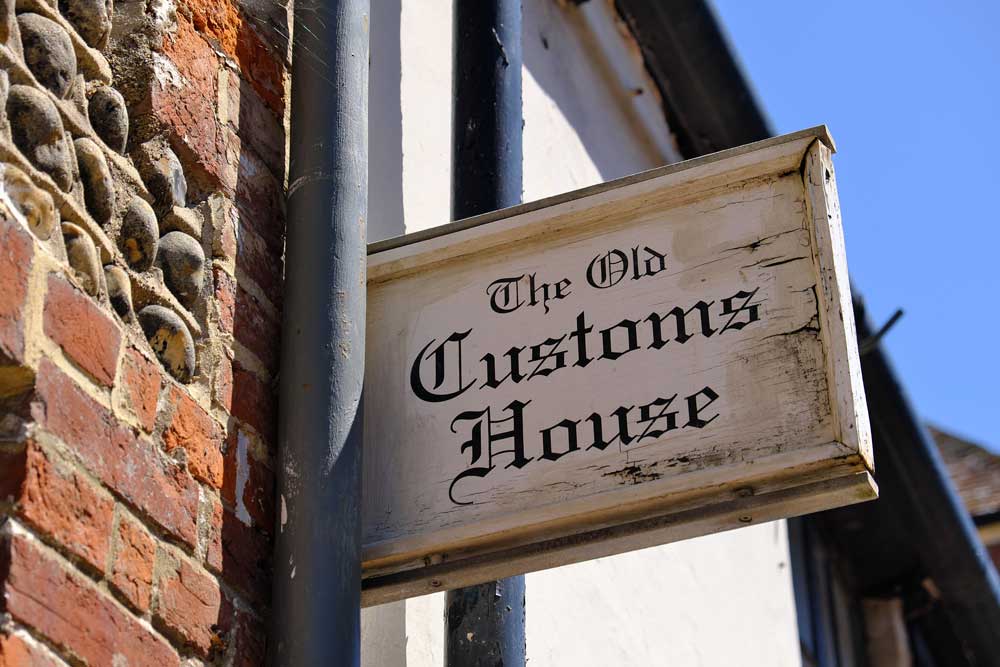
Even the local vicar, the Revered Dr Hooker, turned a blind eye and Tallboys, the Customs House itself, provided storage for contraband.
3. Musical graveyard
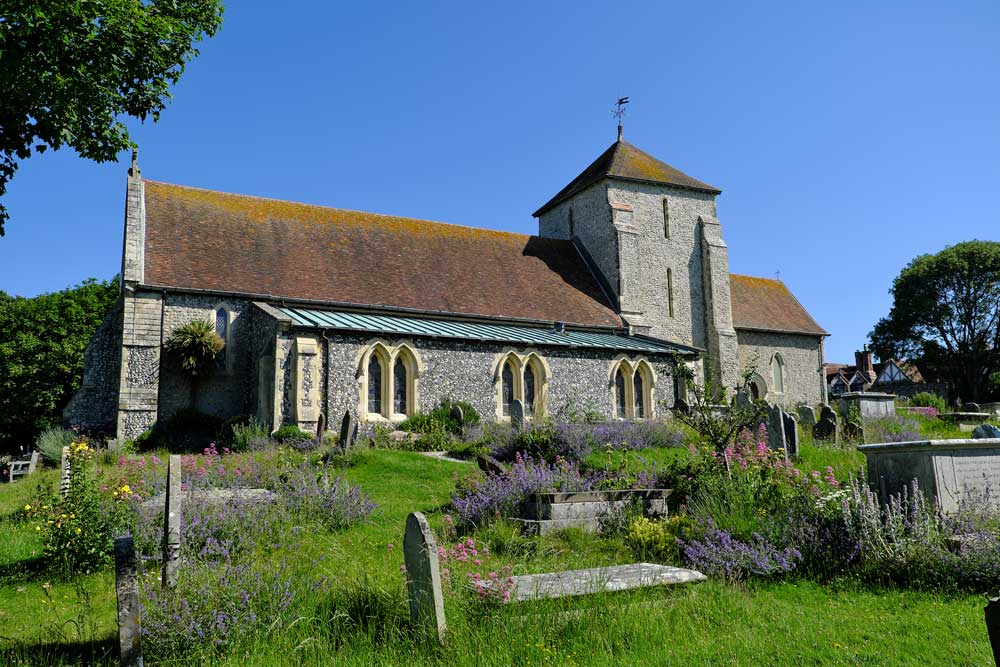
St Margaret’s Church dates back to Saxon times and the graveyard is one of the best kept we’ve seen on our travels.
Among the headstones for wealthy families and local dignitaries, you’ll find the final resting places of some surprising musicians.
Farmers and folk-singers, the Copper Family have lived and performed in Rottingdean since the mid 1800s and continue to keep their musical folk traditions alive today.
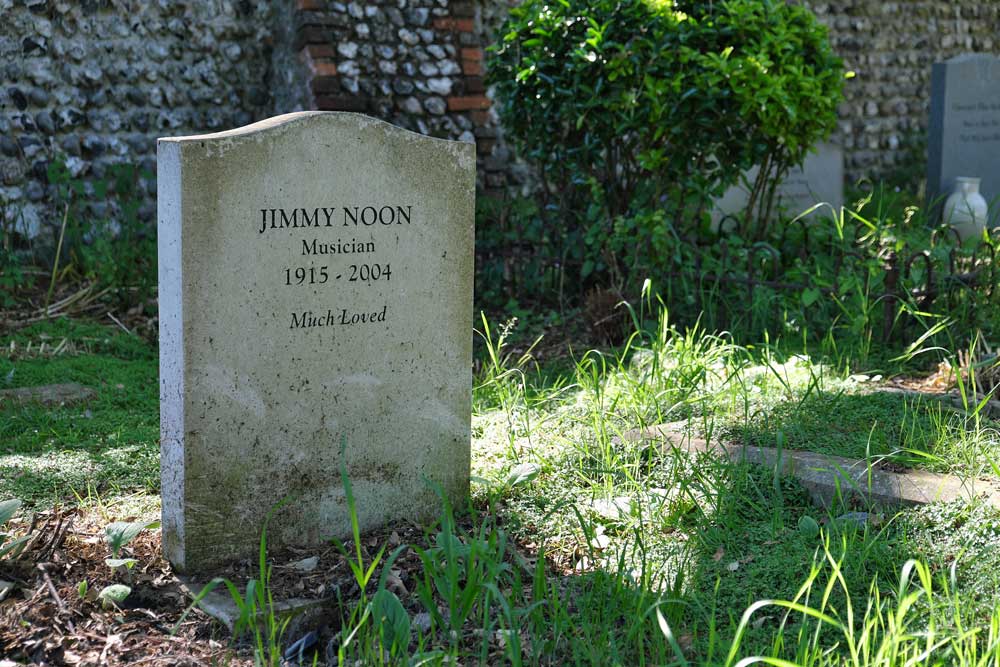
Towards the back of the cemetery, you’ll find Jimmy Noon, who entertained thousands of holidaymakers during his time at Butlins Ocean Hotel in nearby Saltdean. His EP ‘Your Singalong Favourites’ featured songs like I’m Forever Blowing Bubbles, Moonlight and Roses and Side by Side and can still be found on vinyl today. They don’t make ’em like that anymore!
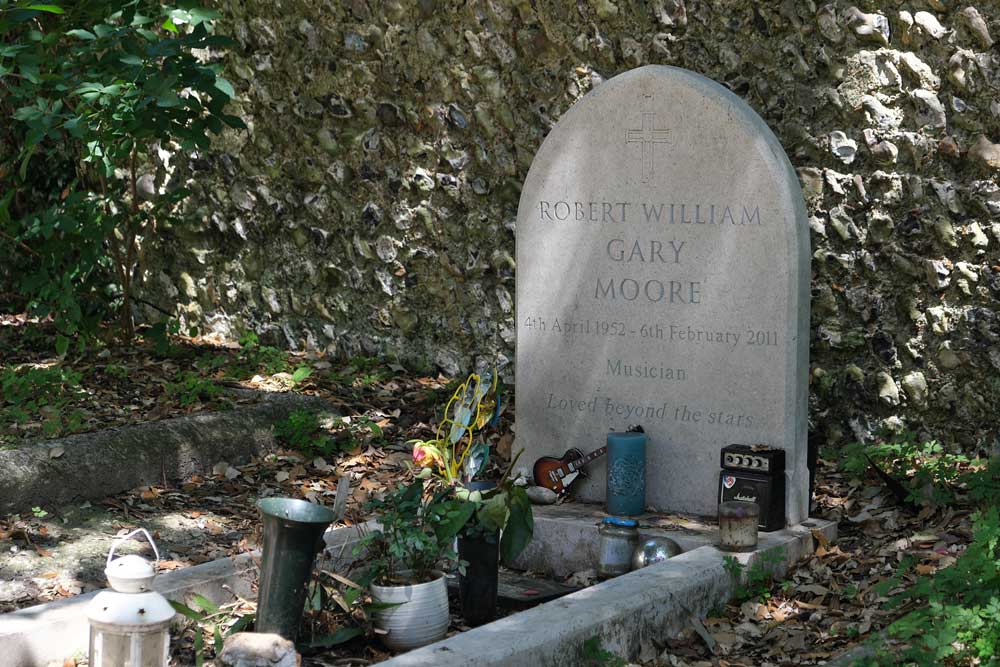
Much more up to date is the grave of rock and blues guitarist Gary Moore, famous for his riffs with Skid Row and Thin Lizzy and his haunting signature song, Parisienne Walkways. He died in Spain in 2011, but he was brought home to this quiet cemetery to be near his family.
2. The ghost of Cary Grant
For a brief spell in the 1930s and 40s, Rottingdean was the go-to place for Hollywood’s finest, and actor Cary Grant loved the village. He stayed there whenever he was filming in the UK, often at the Rottingdean Club, which he enjoyed so much he tried to buy it.
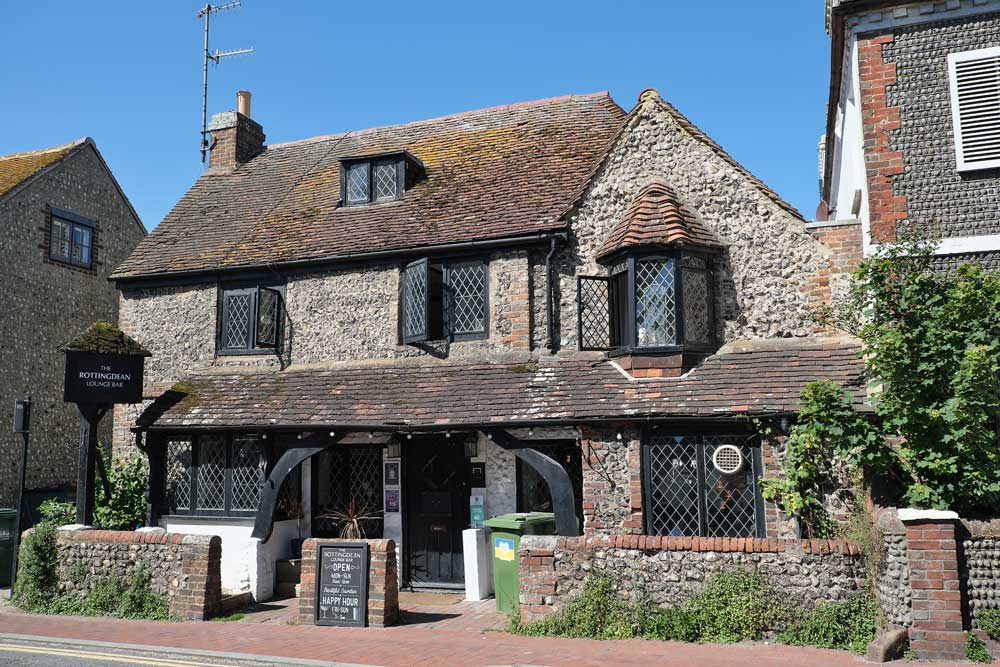
Just after his death in 1986, people in the old inn began to feel his presence, and even caught glimpses of him, wearing a raincoat for some reason, checking out the cellars.
Now a public bar, with friendly staff and a pretty beer garden, the ghost of Cary Grant hasn’t been seen lately in the Rottingdean Lounge, so maybe opening it up to the rest of us has chased him away!
And finally our favourite surprise of all …
1. Rottingdean is the home of Cluedo
In the local museum at The Grange, there’s a copy of the original version of this classic board game, with an introduction that states there’s been a murder at Tudor Close.
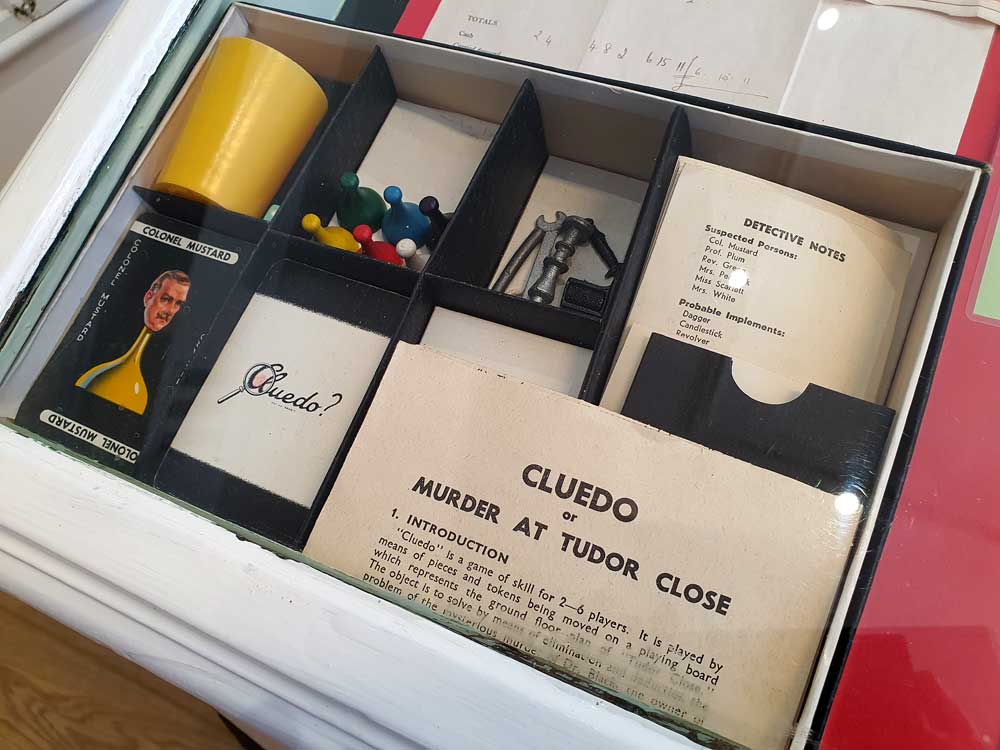
Rottingdean is the home of the real Tudor Close – a group of mock Tudor houses, now all privately owned, but once part of the Tudor Close Hotel.

Here, theatrical couple Anthony and Elva Pratt hosted murder mystery parties. These events were so successful the couple took the idea to Waddington’s who bought the concept and produced Cluedo in 1949, using the layout of Tudor Close as the inspiration for its fancy ballroom, billiard room and library.
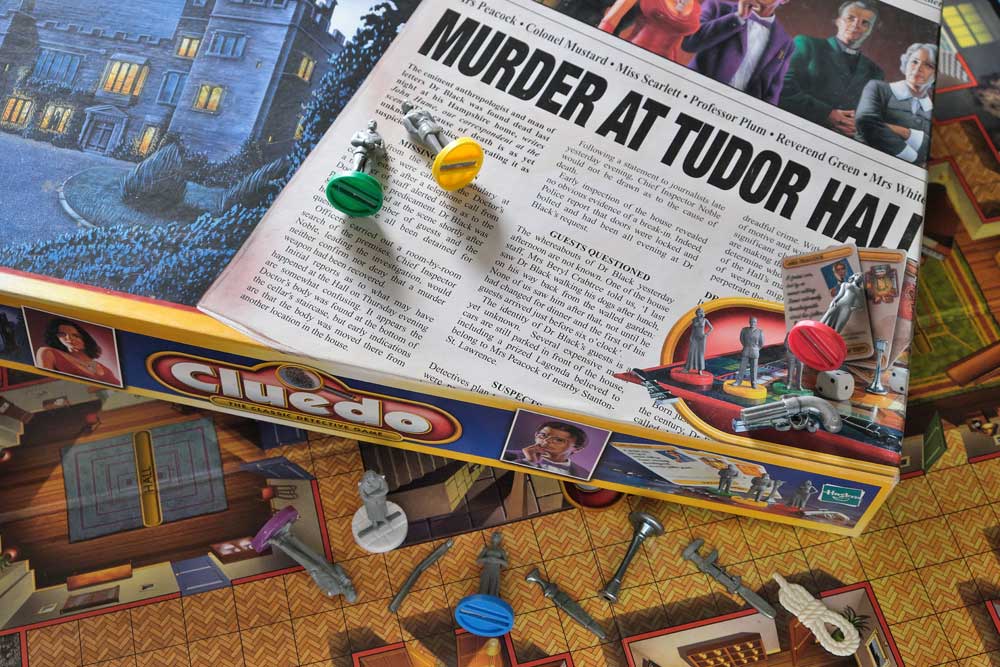
I wonder which former guest was the inspiration for Miss Scarlett who, as we know, always moves first.
Getting to Rottingdean
Rottingdean is six miles east along the coast from Brighton, which is the nearest mainline rail station.
If you like walking, the undercliff route takes you all the way from the Palace Pier to Rottingdean, and it’s well worth the effort, although you can cheat a little and ride the historic Volks Railway as far as Black Rock near Brighton Marina.
The village is well-served by the coast road bus routes that run between Brighton and Eastbourne.
Driving is the easiest way (although the congestion at Rottingdean crossroads at peak times is an issue).
There are two pay and display car parks and free on-street parking, with some time restrictions, on many of the side streets.
For more information about Rottingdean’s history and its most famous residents, take a look at the Rottingdean Heritage website
Staying in Rottingdean
Rottingdean is mainly a day trip destination, but most of the pubs have rooms, there are plenty of self-catering flats and cottages, and camping and glamping sites nearby.
Where to next?
• Marvellous Mills
• Kings, plagues and punishments in Odiham
• Haunted Hotels in Sussex