
Originally published 2021, updated October 2026.
These people really held a grudge and their grumpiness has left a lasting impression.
While some might annoy their neighbours temporarily with towering hedges or eye-watering paintwork, these folk took their feuds so seriously, they actually built Spite Houses!
Modern planning rules mean new spite houses are unlikely, though Britain has had its moments. Robert Fidler built a mock Tudor castle on his Surrey farm and hid it behind straw bales for four years. The council was not amused, and it was finally demolished in 2016.
But the human capacity for bearing a grudge has left its mark on the world.
Here are 11 places built to annoy someone. Ten are still standing as far as we can tell, and one was flattened in 2025. A fair warning too: spite house stories improve with every retelling, so legend and paperwork often disagree!
Hollensbury Spite House, Alexandria, Virginia
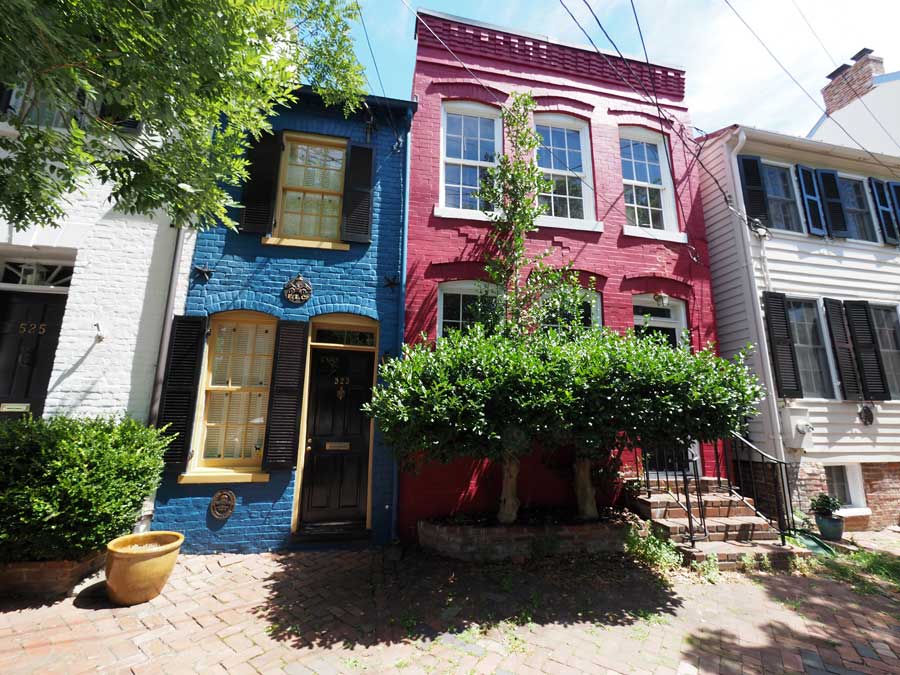
The city is so proud of this bright blue house in Queen Street it even features on Christmas decorations.
At 523 Queen Street in Old Town stands a house about 7 feet wide and 25 feet deep. It’s billed as the skinniest historic house in America (modern tiny homes may well be skinnier, but this one has the backstory).
The man behind it was John Hollensbury, a brickmaker who lived next door at 525 Queen Street. He was fed up with carriages and loiterers using the alley beside his house, so in 1830 he filled the gap. Job done.
Somebody lives there, so you can’t go in, but you can do what everyone else does and stand outside with your arms stretched out for a photo. Old Town has several other alley houses, though none has quite the same fame.
O’Reilly Spite House, Cambridge, Massachusetts
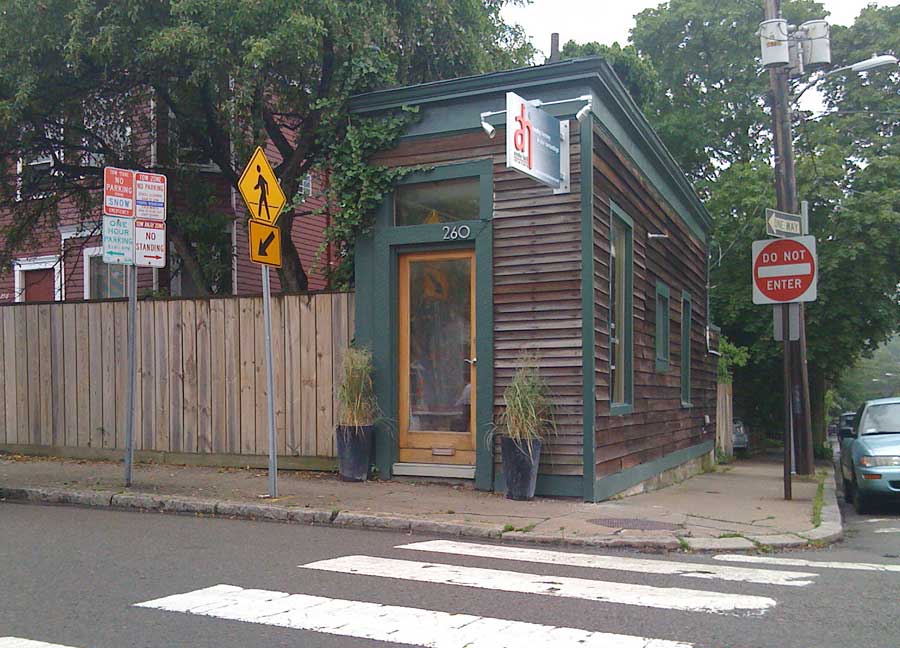
Francis O’Reilly liked to get his own way. In 1908, he owned a small investment plot in West Cambridge and offered it to the neighbour, who said no thanks. So O’Reilly built on it instead: a house 8 feet wide and 37 feet long, with just 308 square feet inside, at 260 Concord Avenue.
It’s still there and has been home to an interior design business in recent years. Presumably they are ace with small spaces!
Skinny House, Boston
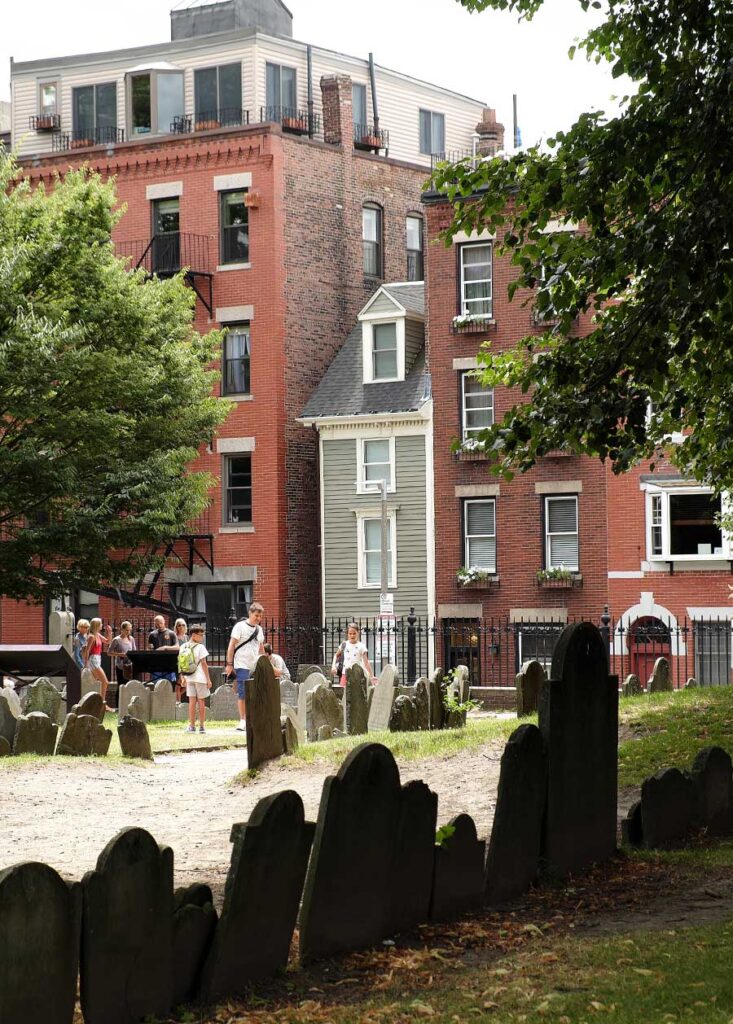
Four storeys high, about 10 feet wide at its widest and roughly 1,165 square feet in total, the Skinny House at 44 Hull Street sits in the North End, opposite Copp’s Hill Burying Ground and a short walk from the Freedom Trail.
The legend goes like this. Two brothers inherited land from their father. While one was away serving in the Civil War, the other built a big house on most of it. The soldier came home, built the Skinny House on the scrap that was left and blocked his brother’s sunlight and view. A plaque on the front dates the house to 1862 and calls it the Spite House, in brackets.
It’s a cracking story. Unfortunately, the archives aren’t convinced. Records suggest it’s what survives of a larger building from around 1857 that was split up in 1884, and when the house sold in 2021 several local outlets pointed out that the spite story doesn’t hold up well. That sale, in September 2021, was for $1.25 million, up from around $900,000 in 2017.
We saw it for ourselves when we visited Boston, standing in Copp’s Hill Burying Ground across the road and taking a photo. We only viewed it from the outside, so the inside remains a mystery.
Al Ba’sa (The Grudge), Beirut
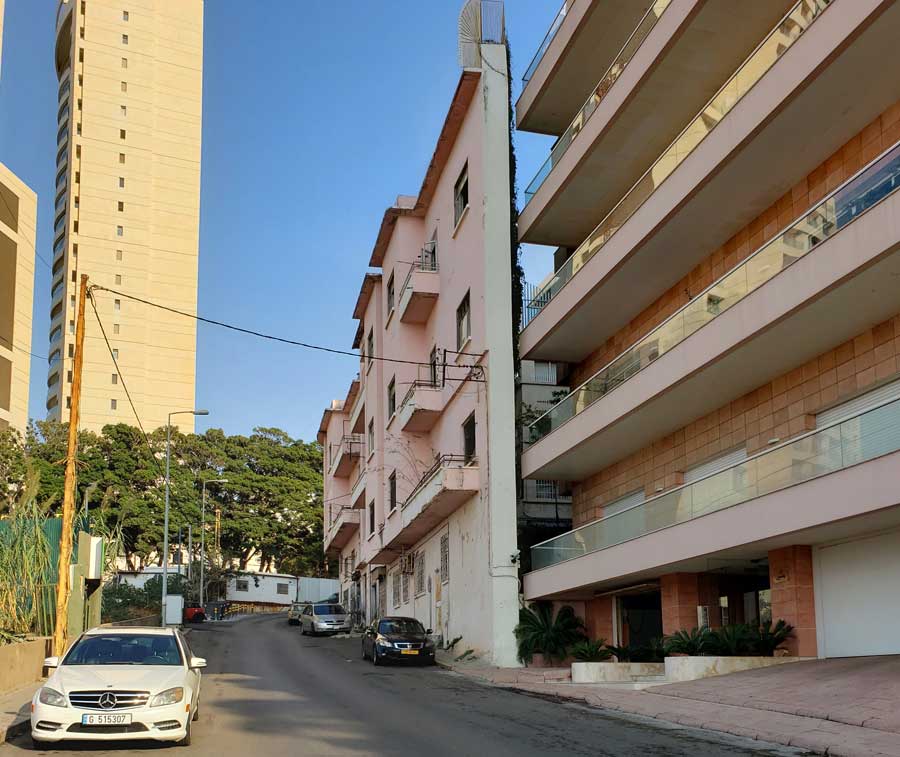
Another brotherly row, this time in Beirut’s Manara district, near the old lighthouse. Al Ba’sa means “the grudge”. It’s a little over 13 feet wide at its widest and around 2 feet at its thinnest, so from the side it looks more like a wall than a home.
Locals say it went up in 1954. The story is that two brothers inherited neighbouring plots and the one with the worse deal built this to block his brother’s sea view. Fittingly, it was designed by another pair of brothers, the architects Salah and Fawzi Itani. The architect Sandra Rishani, who wrote about the building, was told the tale as an urban myth, so treat it as one.
Under current zoning the plot is too small to redevelop, so knocking it down would leave nothing to build in its place.
Adamsville Spite Tower, Little Compton, Rhode Island
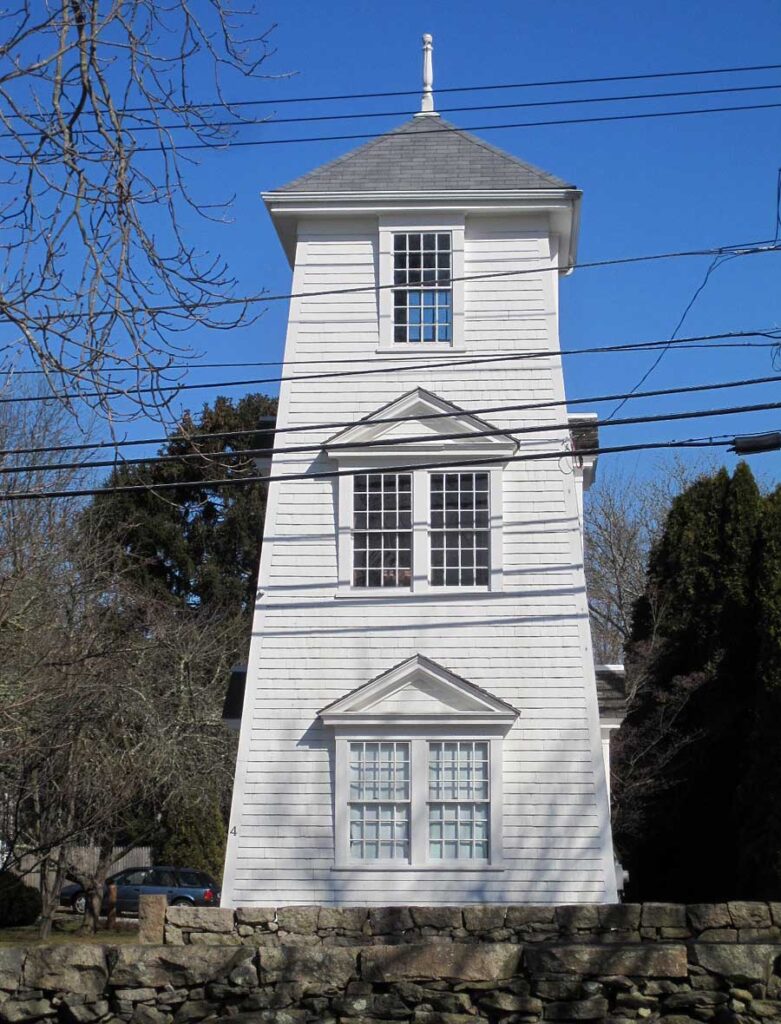
This three-storey tower in the village of Adamsville was built around 1905 by Dr John Hathaway and his second wife, Claudia Church. The tale says Hathaway put it squarely between the shop and the home of his former friend Abraham Manchester, so Manchester could no longer see the signal that his dinner was ready. Other versions blame a row over money or an unhappy love affair.
The local historical society’s version is duller. It’s a water tower built over a well, with the pump on the ground floor, the tank at the top and the chauffeur’s quarters in the middle. It’s private property, but you can see it from the road. The name stuck anyway, which is a decent argument for never letting the facts spoil a good story.
Alameda Spite House, California
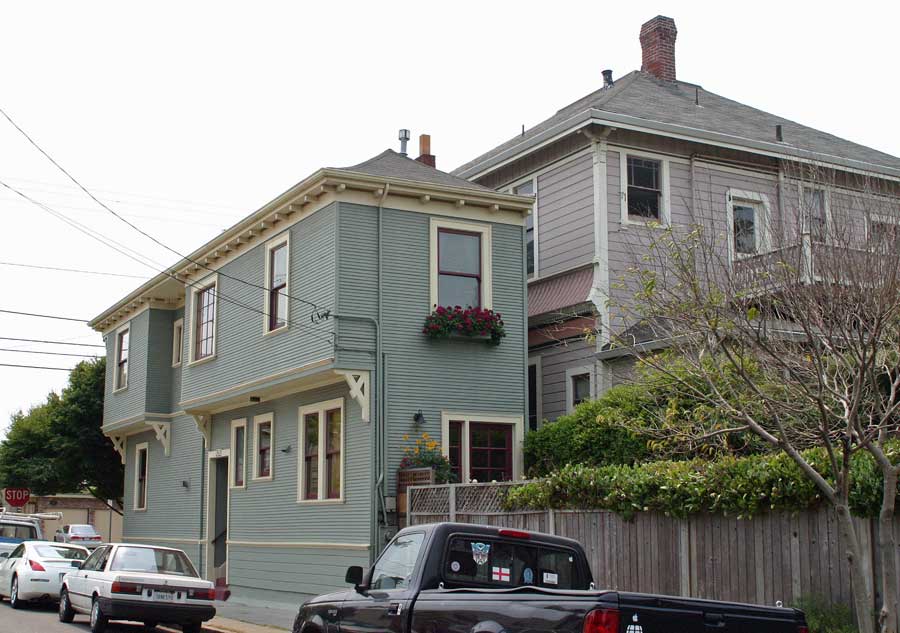
Charles Froling inherited land near San Francisco Bay and planned to build his dream house. In the usual version, the city of Alameda took most of the plot to create Crist Street, with the backing of an unsympathetic neighbour.
Froling built anyway in 1908, on what was left: a house 10 feet wide, 54 feet long and 20 feet high, on the corner of Crist Street and Broadway. It blocked the neighbour’s view, which was rather the point.
The current owner disputes the street story, saying Crist Street was already there, and there’s a rival theory involving a sibling quarrel. Whatever the cause, it’s still lived in, and a stained-glass window announces “Spite House” to anyone passing.
The Pink House, Plum Island, Massachusetts
Sadly, this is no more. The Pink House once stood at the edge of a salt marsh at 60 Plum Island Turnpike in Newbury. Built in 1925, it was a magnet for photographers, painters and anyone with a soft spot for love lives gone wrong.
Local legend says it was built during a messy divorce. The wife wanted an exact replica of the family home, the husband agreed, and then put it in the most isolated spot he could find, with saltwater in the pipes.
The US Fish and Wildlife Service bought the site in 2011 for $375,000 as part of the Parker River National Wildlife Refuge. A volunteer group spent years fighting to save the house, but it was in poor condition. It went to auction in July 2024 with no bids and was demolished on 11 March 2025. A commemorative sign has since been given to the town, and the agency says the site will be restored for wildlife.
Freeport Spite House (the Miracle House), New York
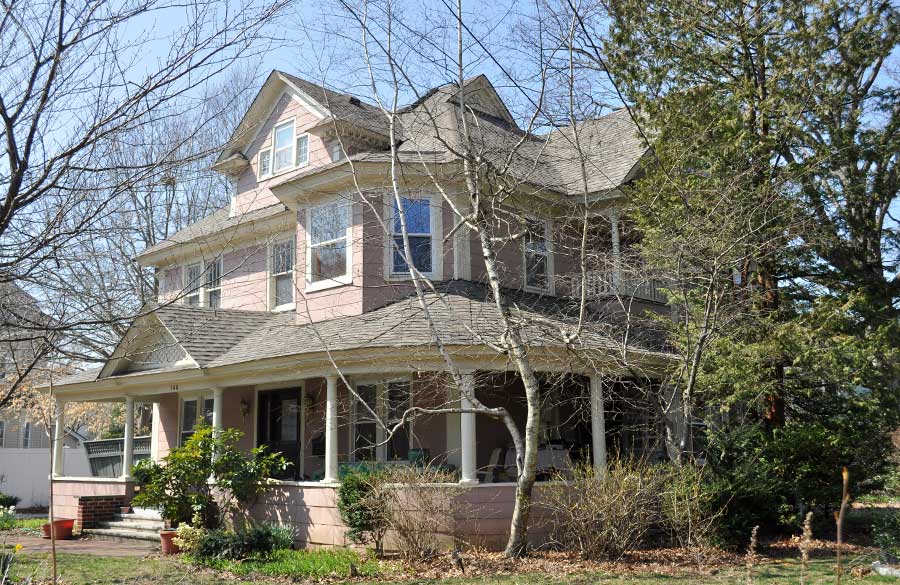
John Randall was a Long Island developer with strong feelings about straight lines. A rival’s plan to extend Lena Avenue in a neat line would, he said, have made his frontage worthless. So Randall put up a Victorian house on a triangular plot at the corner of Lena Avenue and Wilson Place in a single day.
The plan had to change, and Wilson Place appeared on the map. Locals call it the Miracle House, and a plaque marks it as built in 1906, although some accounts put it at 1902. It’s still standing and still lived in.
Sam Kee building, Vancouver
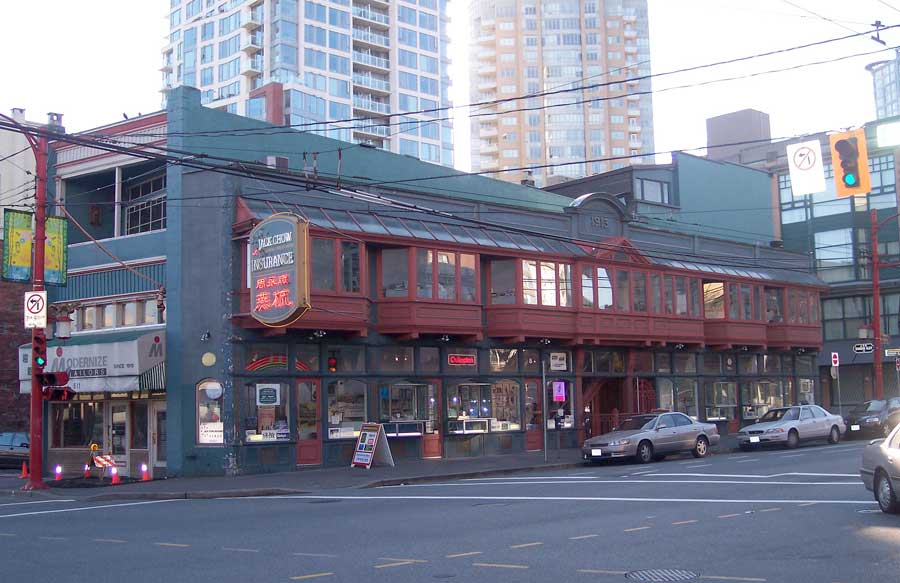
The Sam Kee Building at 8 West Pender Street, at the edge of Chinatown, is listed by Guinness World Records as the shallowest commercial building in the world, at about 6 feet deep.
Chang Toy, known to the wider city as Sam Kee, bought a standard lot in the early 1900s. In 1912 Pender Street was widened, and the city took 24 feet of it, leaving a strip about 6 feet wide. Neighbours reportedly offered to buy what was left. He built on it instead, in 1913.
The result is steel-framed and 4 feet 11 inches wide at street level, with bay windows that stretch it to about 6 feet upstairs. A basement runs under the pavement, and in its early days that held public baths. One legend says it started with a bet that he couldn’t do anything useful with the land. Challenge accepted.
Today it’s the Jack Chow Insurance building and a protected heritage site.
Hendel building, aka Skinny Building, Pittsburgh
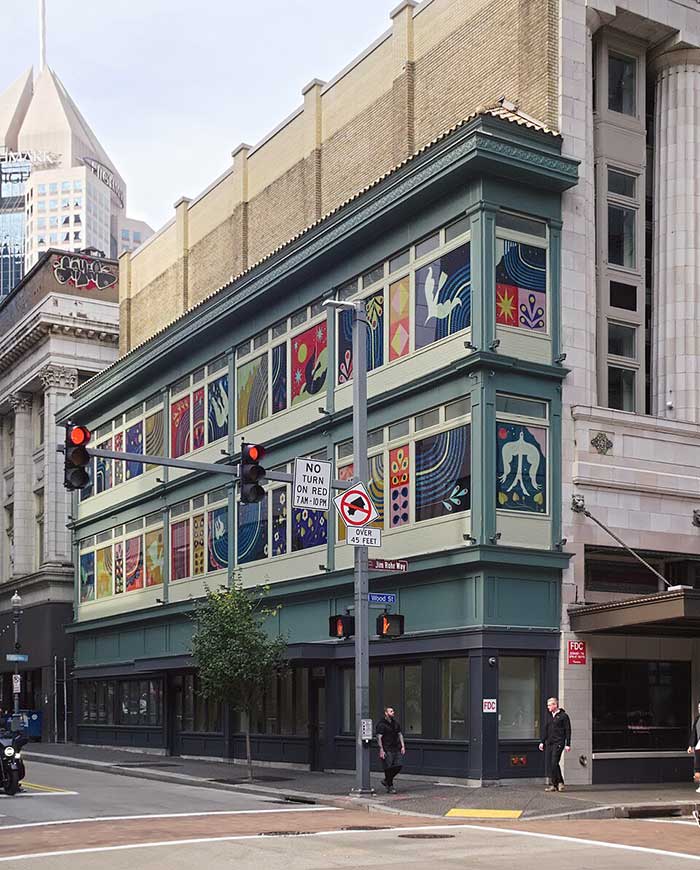
The Hendel Building at 241 Forbes Avenue is 5 feet 2 inches wide, 80 feet long and three storeys high, and it stays that width all the way up. That’s why Pittsburgh likes to say it’s skinnier than the Sam Kee Building, which widens upstairs. Guinness hasn’t backed the claim, so call it the unofficial challenger.
The sliver of land was left when Diamond Street, now Forbes Avenue, was widened in 1903. Louis Hendel sold fruit from the pavement, and neighbours had complained about him blocking it. The city tried to stop him building on the strip, but he got his permit and put up the building in 1926. A newspaper of the day announced that the fruit man planned to outwit the city.
Pittsburgh Magazine also notes that Hendel was a friend to the city’s Black community, and that for a time, the building housed Downtown’s only desegregated sit-down restaurant.
These days PNC Bank owns it, has restored it and uses the upper windows to show art.
The Dove, Hammersmith, London
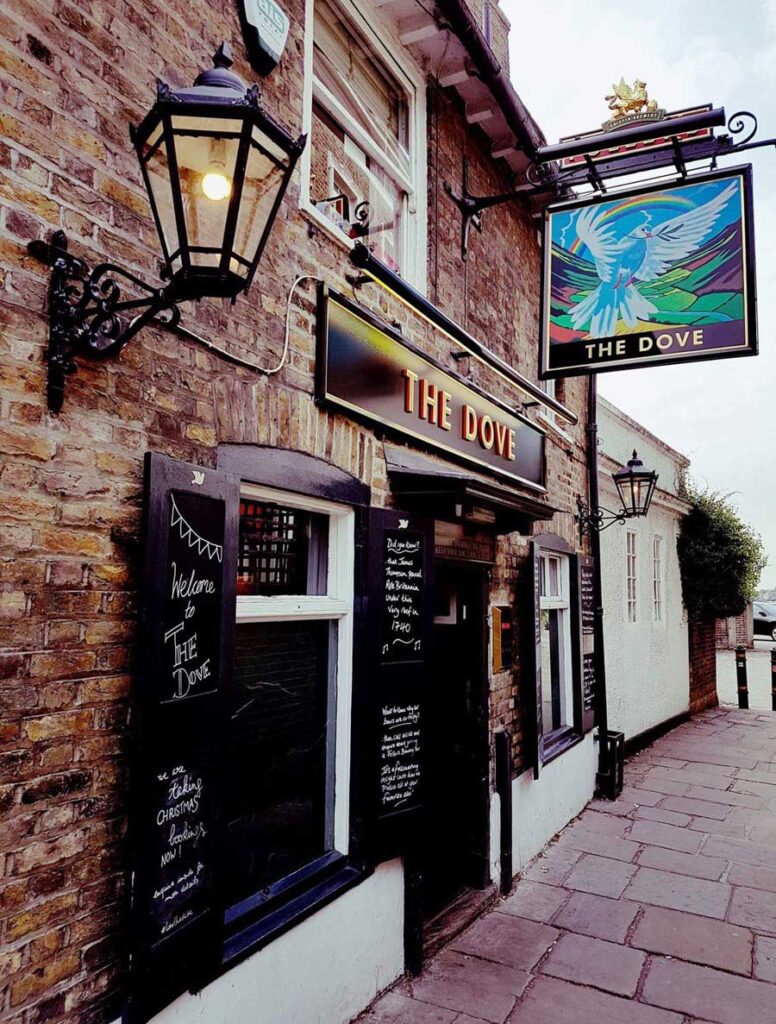
The world of printing and bookbinding seems an unlikely breeding ground for spite, but this riverside pub on Upper Mall has the evidence. The Dove is Grade II listed and run by Fuller’s. The building dates from the early 1700s, though the pub says there’s been a pub on the site since the 1600s.
Legend has it that Charles II romanced Nell Gwyn here, and the poet James Thomson is said to have written Rule, Britannia! upstairs in 1740. A. P. Herbert put the pub in his 1930 novel The Water Gipsies, thinly disguised as The Pigeons. Its tiny front bar has been listed by Guinness as the smallest in Britain, at 4 feet 2 inches by 7 feet 10 inches.
The spite came from next door. T. J. Cobden-Sanderson and Emery Walker set up the Doves Press in 1900 and named it after the pub. Their typeface was beautiful and the Doves Bible is now regarded as a masterpiece. Then the partnership collapsed, and Cobden-Sanderson decided Walker would never get his hands on the type. From 1916 he walked to Hammersmith Bridge and dropped it into the Thames bit by bit. In 1917, he announced it had been “bequeathed” to the river.
In 2014 designer Robert Green went looking on the foreshore, got the Port of London Authority on side and (along with divers and subsequent mudlarks) searched the foreshore and recovered around 150 pieces. His digital version of the typeface is now used by designers around the world.
The pub is still pulling pints.
Would you build a house or destroy your life’s work to spite someone?
If you’ve enjoyed browsing our website, learned something new, or just had a smile because of what we do – we’d love your support to keep the good stuff brewing!
Travelling soon? Things to do and attractions not to miss with Get Your Guide …
Where to next?
• Postcard from Cornwall
• Les Machines de L’ile, Nantes
• Global Convoy – on the road to adventure