
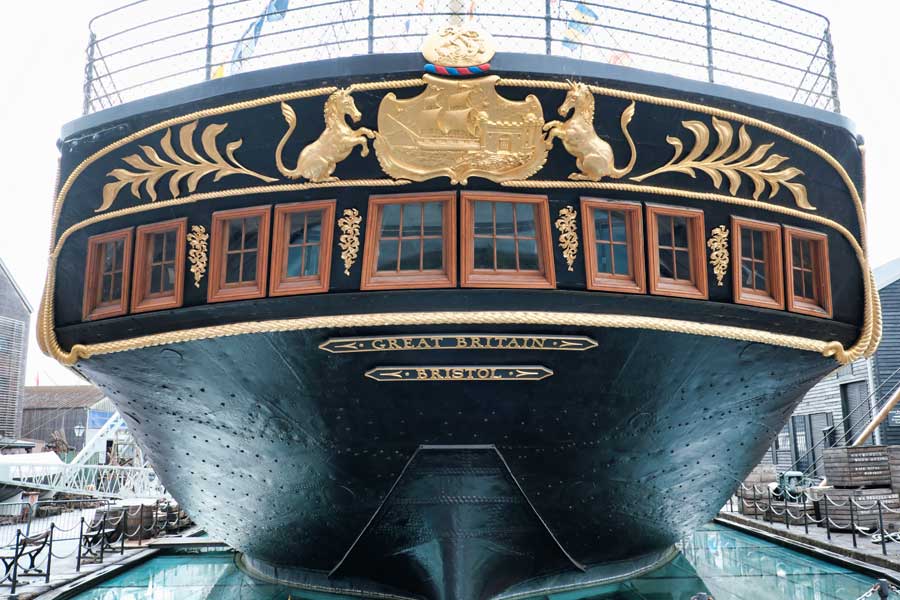
We were on the trail of the few remaining Banksys-in-the-wild and our wanderings brought us down to Bristol’s historic harbour. Paying the ferryman’s small fee, we crossed the narrow stretch of water and disembarked at the gates of the SS Great Britain and dockyard museum.
We hadn’t intended to go in. I mean, the admission price was a bit steep (£18 per person in 2021) and it was all about sailing – not my favourite form of transport.
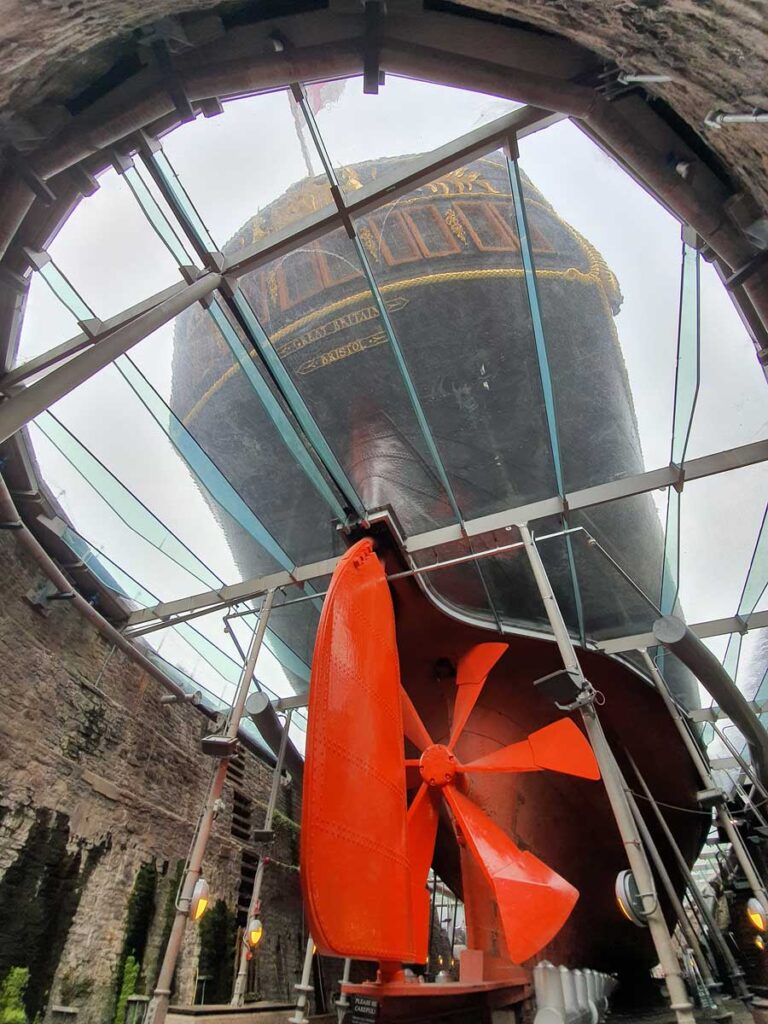
But after chatting to a volunteer guide, her infectious enthusiasm changed our minds. And moments later I’m standing in a deep, dry dock, stunned into silence.
Oh my, it’s just so … so … massive!
Above me is the illusion of rippling water as huge raindrops splash into a shallow pool.
All is quiet, dank and musty.
The rusting iron sides of the vast vessel tower overhead.
I’m dwarfed by a huge propeller that once powered a mighty ship around the globe.
This is the SS Great Britain – the world’s first great ocean liner.
History of the SS Great Britain
Built and launched in Bristol in July 1843, Isambard Kingdom Brunel’s SS Great Britain was the most powerful ship ever designed and the largest afloat at that time.
Her size is astonishing.
322 feet long, 32 and a half feet high.
Four decks and room for 120 crew and 360 passengers.
She weighed 1,960 tonnes, unladen.
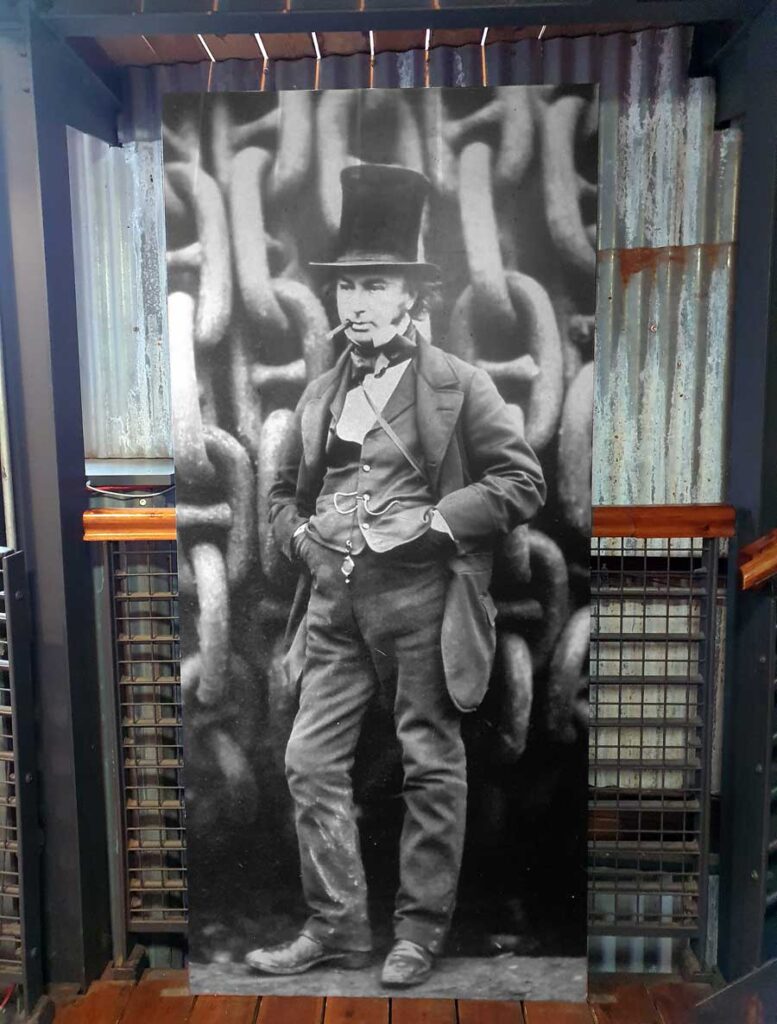
Engineering genius Brunel had worked for years on innovative technology that many believed would never work. The SS Great Britain was a mix of sail and steam and incorporated a revolutionary propeller design based on the Archimedes Screw.
There had been other ships made of iron. Others that had used the screw propeller to replace the more traditional paddlewheel. But never had both been combined in an ocean-going ship of such proportions.
And it cost him dear, taking six years and almost bankrupting the Great Western Steamship Company that commissioned it.
But despite accidents, incidents and eventual abandonment, the SS Great Britain continued to circle the globe. First as a passenger liner, then carrying emigrants to a new life in Australia, and finally as a hard-working cargo ship.
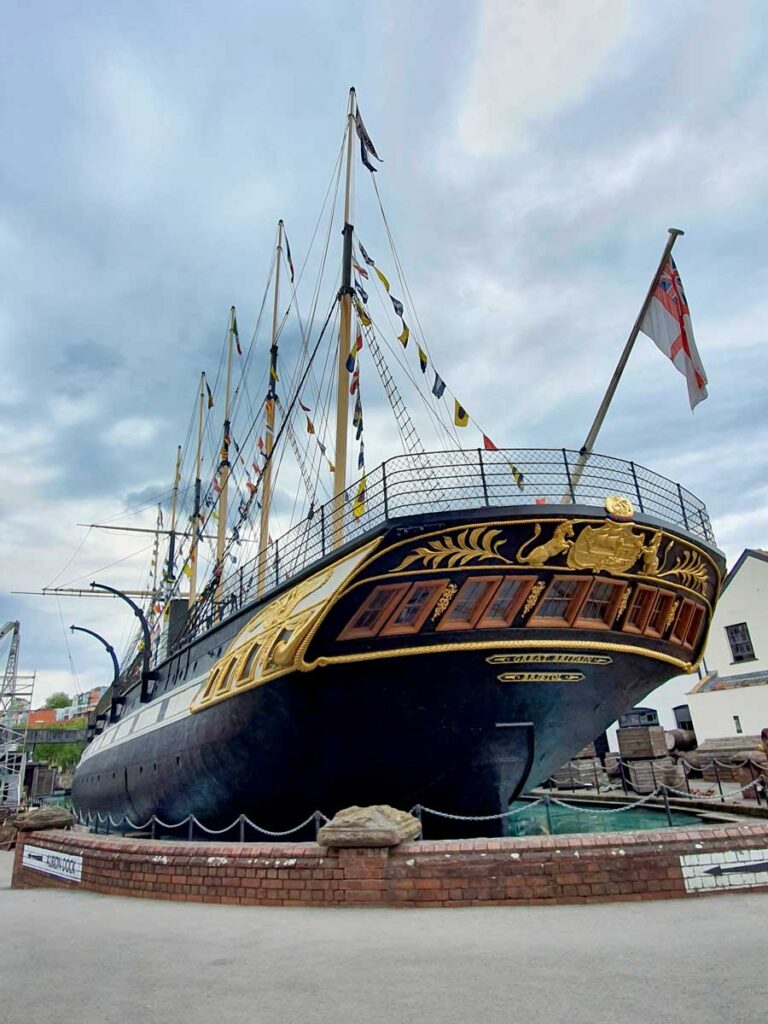
Visit SS Great Britain
In 1970, after being abandoned in the Falkland Islands for 33 years, benefactor Sir Jack Arnold Hayward paid for the SS Great Britain to be repaired and towed back to the same Bristol dry dock where she had been built 127 years earlier.
Then followed years of painstaking restoration work. Today the ship, historic dockyard and museum offer a fascinating insight into what life would have been like for her Victorian passengers.
What to see on the SS Great Britain
The ship is full of contradictions.
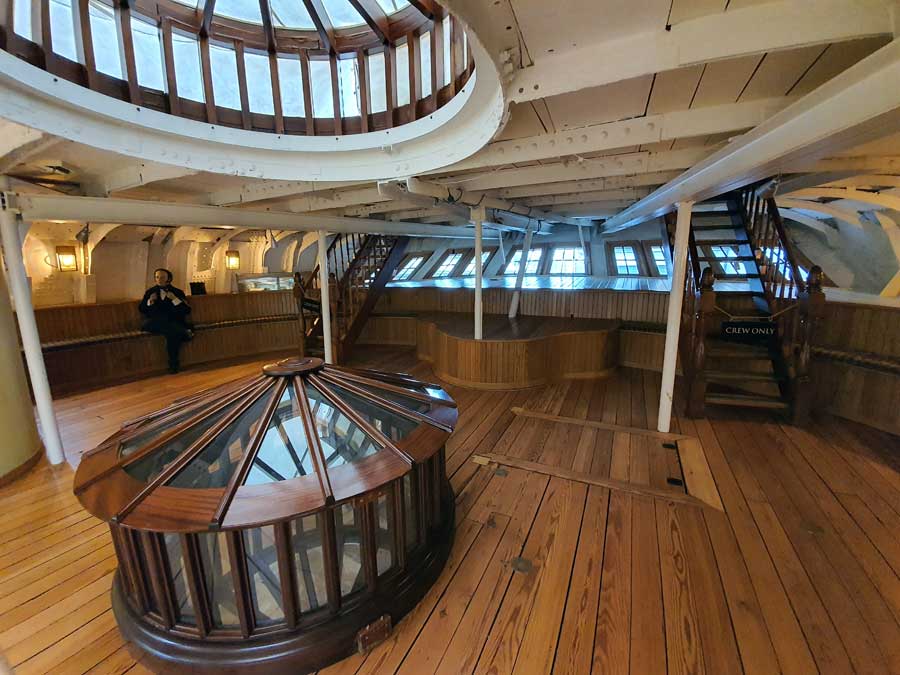
Compare the decadence of the first class panelled dining room with the cramped confines of second class steerage where passengers ate, slept and exercised in communal areas.
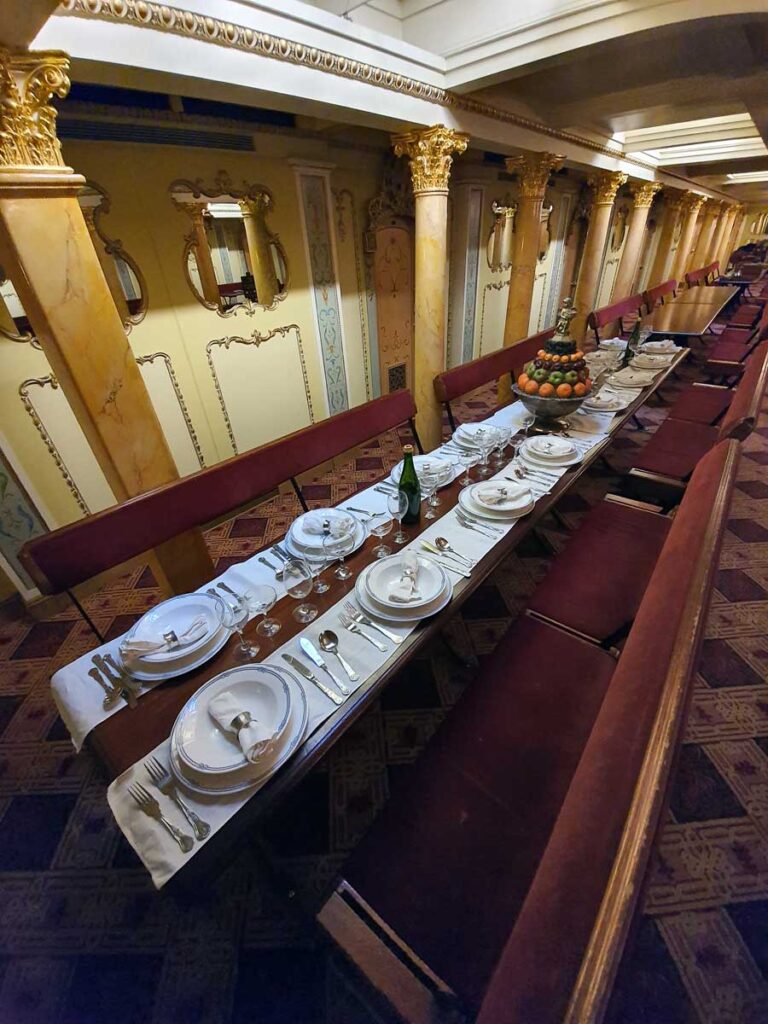
On deck the lines were equally finely drawn – quite literally with a line – separating the area set aside for the wealthy to stroll and take in the fresh sea air from the second class section, cluttered with pens for the animals which supplied food for the long sea voyage.
It’s thought the origin of the phrase ‘to cross the line’ came from this deck setting, where only first class voyagers could cross into the more spacious area.
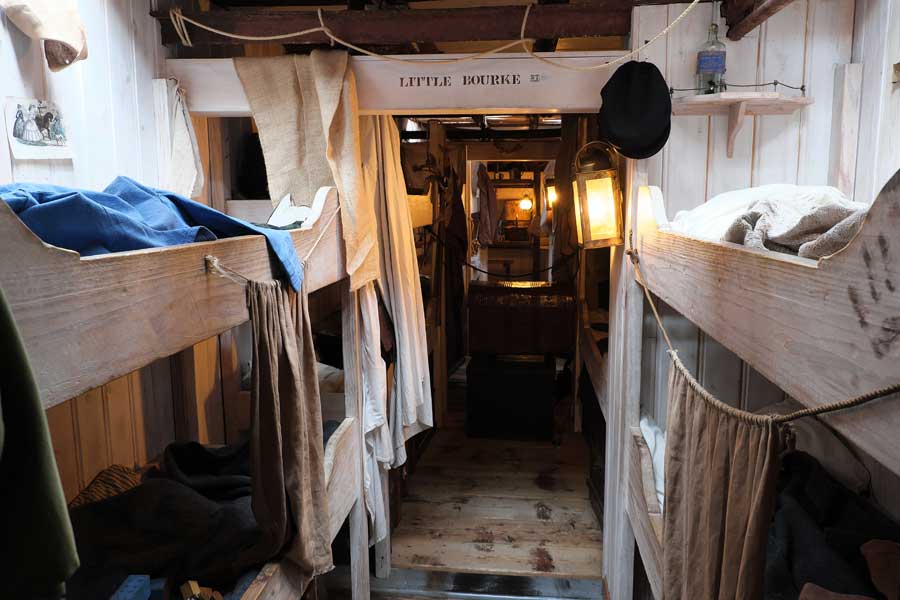
Below decks, it’s a maze of passageways and cabins.
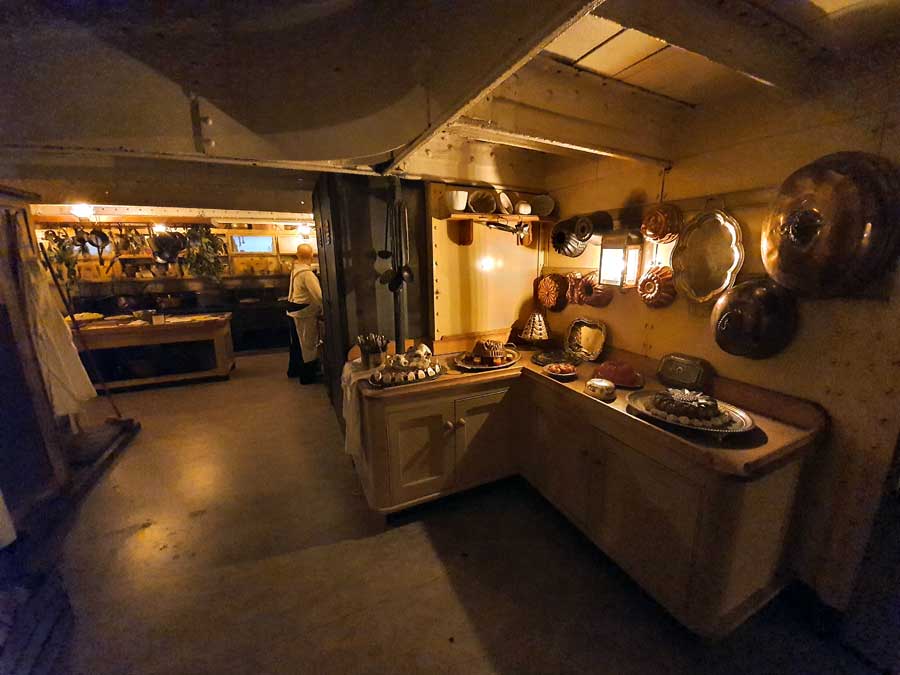
The kitchens are realistically portrayed, with a special area set up for butchery-at-sea.
The bathrooms and toilets are tiny (watch out for the sounds of those overcome by seasickness if you’re of a queasy disposition!) and the smells of onboard life add to the authenticity.
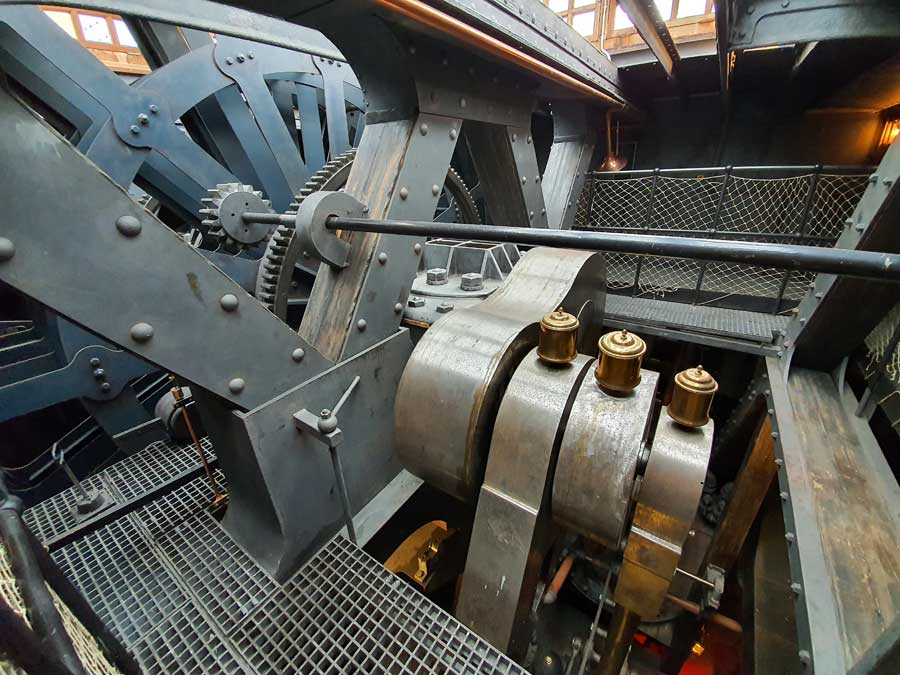
Those with a fascination for things mechanical will love the engine room with its huge, steam-driven wheel.
The Captain’s quarters may be sumptuous, but the cabins, even for those travelling first class, were cramped and frankly claustrophobic.
Yet people took long and often dangerous voyages for pleasure, work or the hope of a better future.
Where did the SS Great Britain sail?
Transatlantic travel is what the Great Britain was designed for – running a 15-day route from British ports to New York.
But the service was dogged with mechanical issues and a fair number of accidents, including running aground off the coast of Massachusetts.
The gold rush in Australia in the 1850s gave her a new lease of life, with a refit and increased passenger numbers. She ran that route for almost 30 years, interrupted only to become a troopship during the Crimean War and the Indian Mutiny.
The SS Great Britain became known as the most reliable of the emigrant ships and took the first English cricket team on their tour to Australia in 1861.
Then tragedy struck.
In 1872 her popular and very successful captain John Gray died under mysterious circumstances, going missing overnight during a return voyage from Melbourne.
Not long after that, she collided with another vessel, and her time as a passenger ship was over.
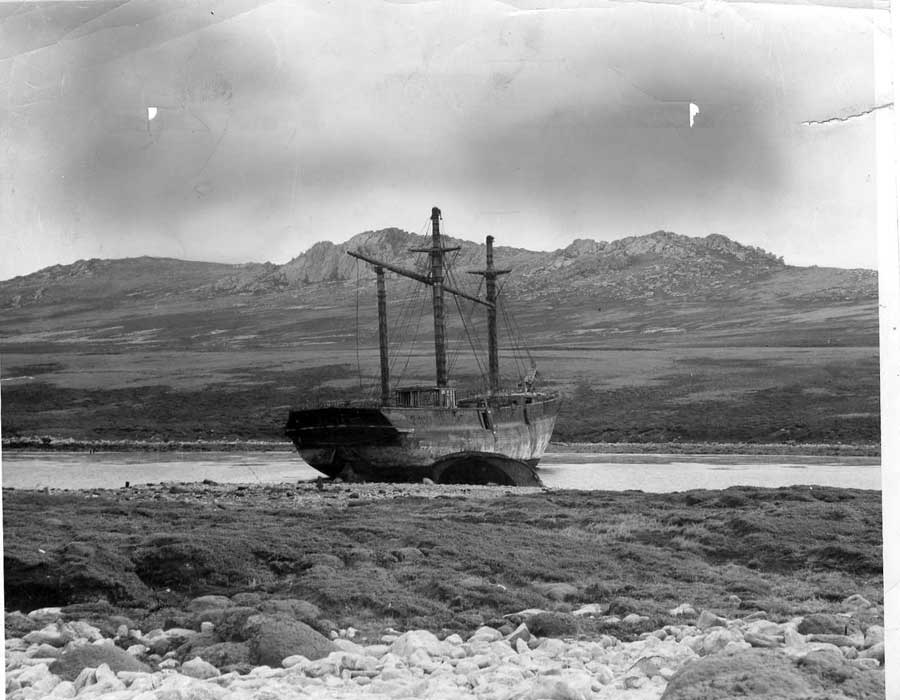
Limping on for a few more years, carrying coal, she arrived at Port Stanley in the Falkland Islands after a fire on board and was scuttled and abandoned.
Until the amazing rescue mission that brought her back home to Bristol.
The SS Great Britain today
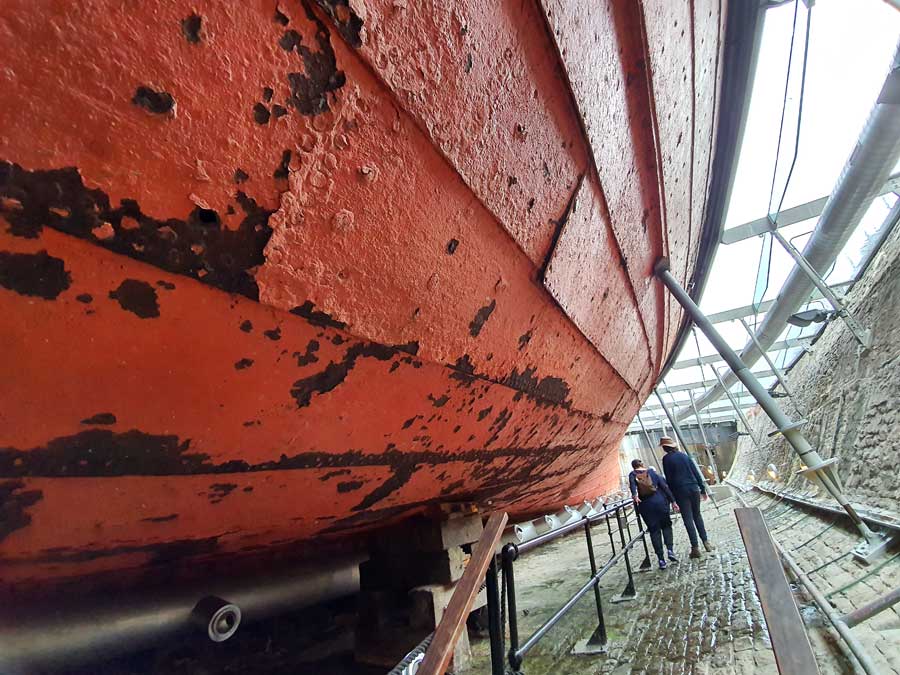
Now protected in a dry dock, but cleverly presented as though she still rides the waves, the SS Great Britain is on show.
Alongside the ship are two separate museums – one telling the story of the ship and those who sailed in her, the other celebrating the life and struggles of Brunel. he was an engineering genius, but not always universally acclaimed.
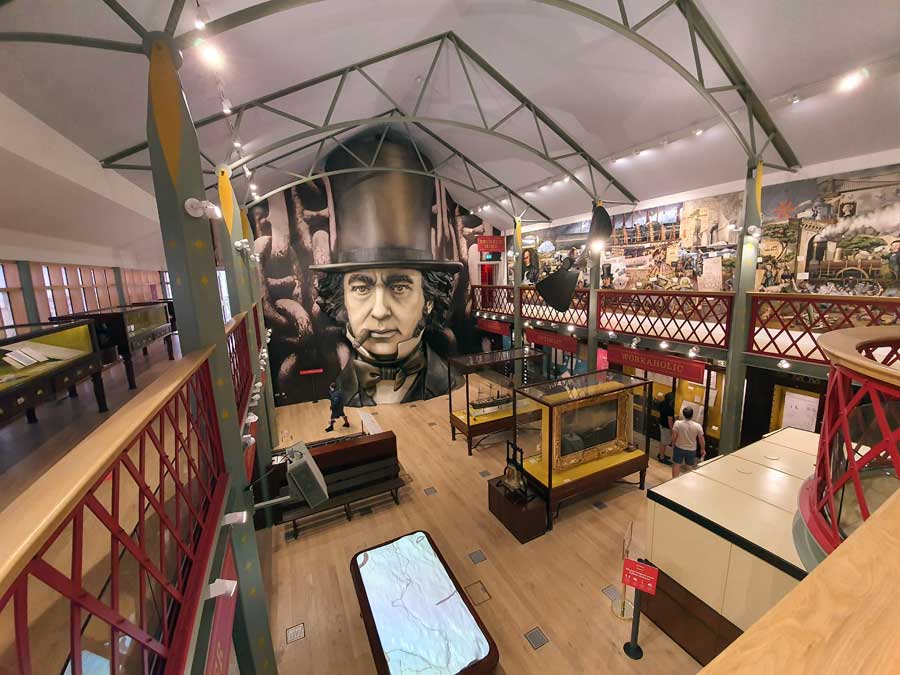
There are plenty of hands-on activities for youngsters and friendly and informative guides to answer any questions.
It’s an extraordinarily realistic display of life on board the world’s first great ocean liner.
So realistic I admit, with my aversion to sea travel, that I had to skip some of it to head back outside.
Pork Belly stayed below for ages!
For the latest information and entry prices, visit the SS Great Britain website
If you’ve enjoyed browsing our website, learned something new, or just had a smile because of what we do – we’d love your support to keep the good stuff brewing!
Travelling soon? Things to do and attractions not to miss with Get Your Guide …
Where to next?
• Haunted Bristol
• Wheal Martyn Museum, Cornwall
• Eastern State Penitentiary – if walls could talk