
You can’t judge a book by its cover, but can you judge a generation by their recipe books?

For most of human history, recipes were never written down, just passed on by word of mouth and shared within families.
The first written recipes were hints and tips from matriarchs and housekeepers, a form of recipe book still going strong today.
Pork Belly has an old blue exercise book packed with recipes from his grandma and mum.
I have little handwritten notes from my own grandma with her succinct advice on sweet-making for special occasions.
Trial and error produces disasters and success in equal measure and if a happy accident leads to something wonderful, like the Bakewell Pudding, then the recipe becomes a jealously guarded secret, shared only with the favoured few.

Once books began to be published, with the intention of wider circulation than hearth and home, well that’s when it gets interesting.
Today, cookbooks still regularly top the bestseller lists.
But do they really reflect the eating habits and diets of the people of their time?
Or were they, even from their very earliest days, simply marketing tools, designed to attract those with a bit of cash to spare but in reality left to gather dust on the shelves?
A brief history of recipe books
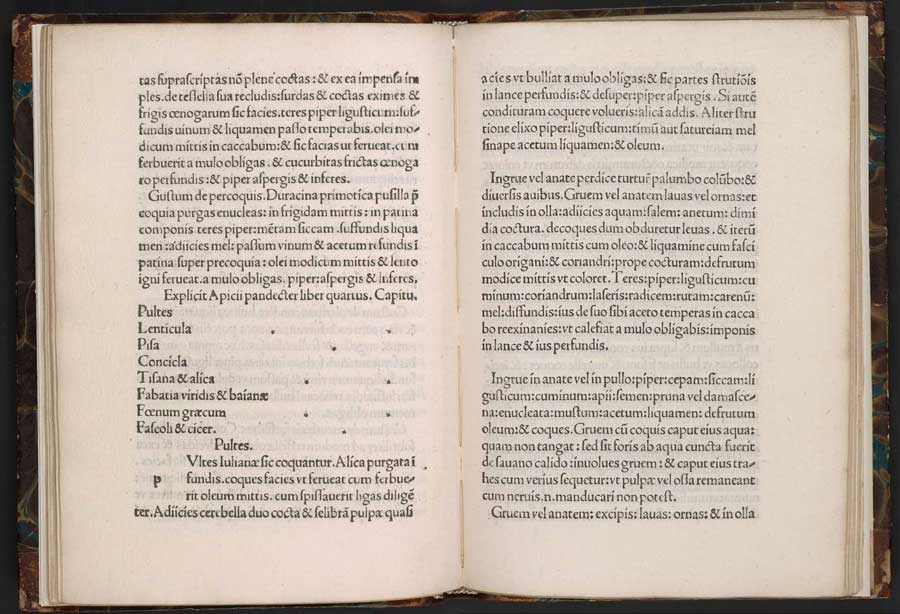
The first recorded recipe book that is still in print today is Of Culinary Matters – or De Re Coquinaria in the original Latin.
It’s a collection of more than 500 dishes from fourth century Rome, compiled by Apicius. He really loved his banquets, but when his money ran out he hosted one last feast at which he poisoned himself.
Not exactly the best recommendation.
New ingredients, new cookbooks
Often the reason for writing down a recipe – or receipt, as it used to be known – was to familiarise cooks with new spices and ingredients as they were discovered.
There was no need to record everyday dishes as they were prepared with local and seasonal ingredients.
But if you wanted to impress?
That was quite a different story.
In Britain from the 12th century onwards there were a host of cookbooks covering everything from healthy eating and medicines, through preserves and the curing of meat to advice on how to set the table for guests.
In the 14th century, The Forme of Cury (an old English word meaning cooking) was created by the chefs preparing food for King Richard II. It has 196 recipes, including how to cook a whale!

Household cookery books
Advice from courtly cooks was all well and good but it wasn’t until The Art of Cookery, Made Plain and Easy by Hannah Glasse, first published in 1747, that home cooks began to get real guidance.
Her recipes contain recipes from everything from simple roasts and stews, brewing, distilling, dishes for the sick and of course puddings.
It became so popular in the English-speaking world that it ran to more than 40 editions and was much copied.
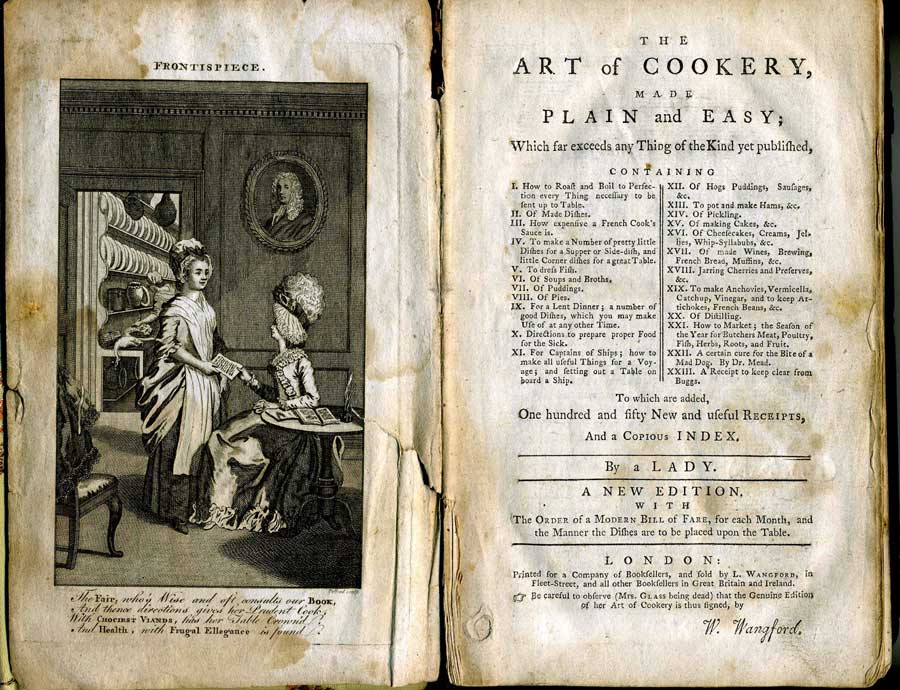
Sadly, Hannah wasn’t much of a businesswoman and was declared bankrupt in May 1754 owing more than £10,000. She sold the rights to her book to cover the debt, but still wound up in a debtor’s prison.
Eliza Acton’s Modern Cookery for Private Families, published in 1845, was equally successful, and she was, like Hannah, a victim of plagiarism. But she went on to produce several more books aimed at the ordinary household.
Both Hannah and Eliza’s recipes have stood the test of time.
If you want to see how they work out today, take a look at The Regency Cook who spends a lot of time in an 1830s kitchen in Brighton, recreating them and many more dishes from Regency times.
The voracious Victorians
Where would we be without Mrs Beeton, a source of culinary inspiration and the arbiter of the Victorians’ ethos that a woman’s place was in the home?
Middle class households snapped up tips from The Book of Household Management, which first hit the shelves in 1861.
More than just recipes, it aimed to help with ‘all things connected with Home Life and Comfort.’
A pretty tall order and surprisingly authoritative for someone in their mid-twenties and only newly married herself.
But she swiftly became a household name and one that people still recognise today.
And then there was Agnes Marshall – arguably more innovative and creative than Mrs Beeton but less well known, probably because her recipes were sold after her death to the same publisher. They had little interest in promoting a rival to the successful Beeton empire.
Agnes was the Queen of the Victorian ice-cream scene, inventing a patent freezer for home use and experimenting with ‘liquid air’ to freeze desserts at the table.
Her Book of Ices is still in print today and perfect for anyone with an ice-cream maker in the kitchen!

Wartime cookbooks
Hardship and shortages gave rise to a completely different form of cookery book – one that few of us would want on our shelves today.
May Byron, a well known poet and writer, turned her attention to helping Brits survive when they were being almost starved into submission. The Great War Cookbook: From Trench Pudding to Carrot Marmalade told cooks, ‘If you cannot have the best, make the best of what you have.’
And in World War 2 it was all about propaganda. Giving blitz-torn Britain hope and some measure of control. Rations, which carried on until well after the war ended, ensured a basic nutrition but unless you used the black market anything fancy was out of the question.
The recipe books were little more than pamphlets with some rather unappetising ideas.
Did anyone actually eat Woolton Pie?
The rise of the TV chef
And finally we enter the modern era when TV came into our drab, post-war lives.
Philip Harben was the first celebrity TV chef, creating dishes to inspire home cooks whilst rations were still around. His Cookery Encyclopaedia is still on our shelves and frequently consulted.
Harben’s contemporary, and sometimes co-presenter (although she scorned the idea of ‘celebrity’) was Marguerite Patten. Ironically, Pork Belly’s much thumbed Cookery in Colour has lost its cover and most of the images inside are black and white!

Soon after came flamboyant Fanny Cradock, The Galloping Gourmet, Keith Floyd and others to entertain and inform.
And the slow and steady rise of Mary Berry from demonstrator to celebrity began.
The sickly sweet seventies
Dinner parties became part of the suburban social scene, and instant deserts and frozen foods were the epitome of chic.
Arctic roll anyone? Actually invented in the 1950s, its popularity peaked in the seventies and by the eighties more than 25 miles of Birds Eye Arctic Roll were sold each month.
So women were trying to be liberated from the kitchen with labour-saving options, yet thousands still signed up for Cordon Bleu home cookery courses.
Not so much a recipe book but a ring binder of cards building ‘in easy instalments’ into a complete library.
And, when you’d worked your way through them all, you got a special certificate and could call yourself a Cordon Bleu home cook.
If you want to experience the best (and worst) of seventies fine dining, take a look at Keep Calm and Fanny On, a wry expedition through Fanny’s didactic and often infamous recipe programmes.
The naughty nineties
Fast food and takeaways came to the fore, microwave and quick ‘n’ easy meal planning was all the rage.
It was about saving time, serving it up and clearing it away.
Delia Smith tried to keep us on track. Her Winter Collection sold 2 million copies in the UK, becoming the fifth biggest-selling hardback of the 1990s.
But it was the sensuous style of Nigella Lawson, encouraging us to become domestic goddesses and gods, that brought us back to the kitchen.
Today’s cookery books
TV shows still dominate – Bake Off spawns a new raft of books every year – but there’s more of a swing towards nutrition and healthy eating.
Backed by science (and some scary pseudo-science) we’re beginning to eat to save the planet. Recipes to tackle obesity, diabetes, and the benefits of a plant-based diet are high on the list.
In 2019 Pinch of Nom, the healthy eating cookbook from British bloggers Kay Featherstone and Kate Allinson, sold 210,000 copies in three days, becoming the fastest selling non-fiction book since records began.
Are real cookbooks worth it, or should we all go digital?
Of course, you can get recipes from anywhere in the world at the click of a mouse. Download to your phone or tablet and away you go.
And yet still we buy ’em in the thousands.
In 2021 the Amazon best-selling cookery books in the UK were collections from Nigel Slater, Gordon Ramsay and Stanley Tucci.
Mary Berry, Rick Stein and Jamie Oliver are rarely out of the top twenty.
But browse any bookshop that sells remainders, or the shelves of your local charity shop, and you’ll find stacks of them, going cheap.
Pork Belly still buys a few. But time and time again he returns to his old, blue exercise book with its handwritten notes.
So what are your favourite recipe books?
Are they glossy hardbacks, or the stained and sticky ones that show how you really eat?
And will you keep buying more, while the rest gather dust on the shelf?
We’d love to know …

Where to next?
• Dine Like a servant
• Afternoon tea – a vistor’s guide
• Eliza Acton’s superlative mincemeat