
Most of us have done it at one time or another – slipped an extra tin or packet into the charity collection trolley at the supermarket checkout. A quick moment of generosity that costs a few pence, a little thought and no effort.
And in the run-up to Christmas, maybe you’re planning a Reverse Advent Calendar, where, instead of counting down to Christmas by opening up a little paper window and getting a sweet treat for yourself, you put an item of non-perishable food into a box, one per day, and then give it away.
It requires a little more money and a bit of time, but it’s fun and rather satisfying to watch the pile of goodies grow.
But have you ever wondered what happens to all those goodies? At a time when food banks are in more need than ever, we take a look behind the scenes at FareShare, a national charity who take donations all year round to fight hunger and food waste.

FareShare history
FareShare was established nationally in 1994 with the aim of redistributing any available surplus from the food industry that would otherwise go to waste.
It currently has 34 sites across the UK, with thousands of volunteers supporting 8,500 charities.
The Surrey and Sussex branch opened in 2002 and helps 150 charities and community groups deliver meals to those in need.
Reducing food waste
So how does it work?
The bulk of the fresh food comes from growers in the UK who give fruit and vegetables.
Supermarkets and manufacturers also donate goods that are well in date but have been over-ordered, have undersold or might have errors on their packaging. Sometimes a supplier changes their branding, and wants the old stock cleared out.
In a perfect world, there wouldn’t be any waste at all. But while it exists, FareShare will make sure as much as possible doesn’t end up as landfill.
So what happens to food donations?
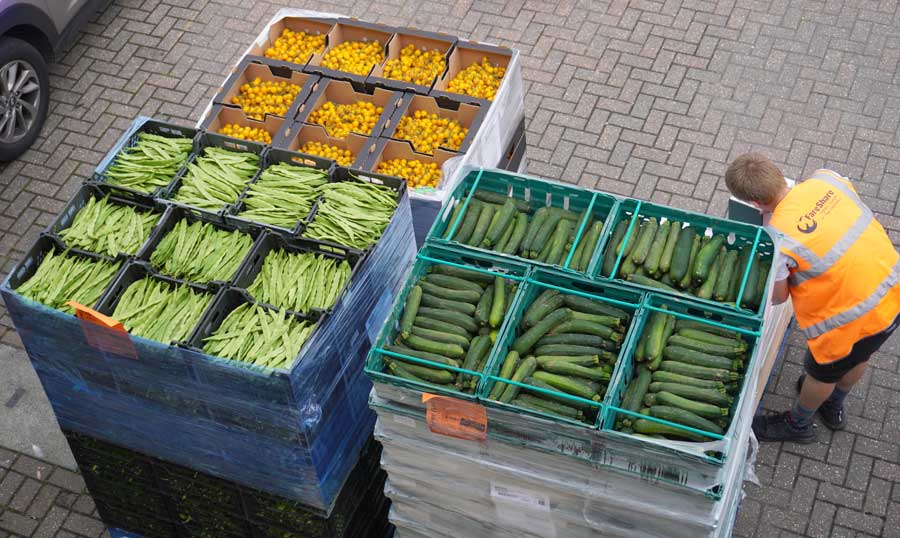
Sorting food donations
First both fresh and dry goods are received at the warehouse where they are sorted, refrigerated if necessary, and logged.
Everything needs to get to the right place at the right time.
Cost-effective routes for the delivery vans have to be devised, with set dates, ensuring each customer gets what they need when they need it.
Each delivery has a balance of fresh and long-life and that, for example, a lunch club is given enough ingredients to make a full and appetising meal.
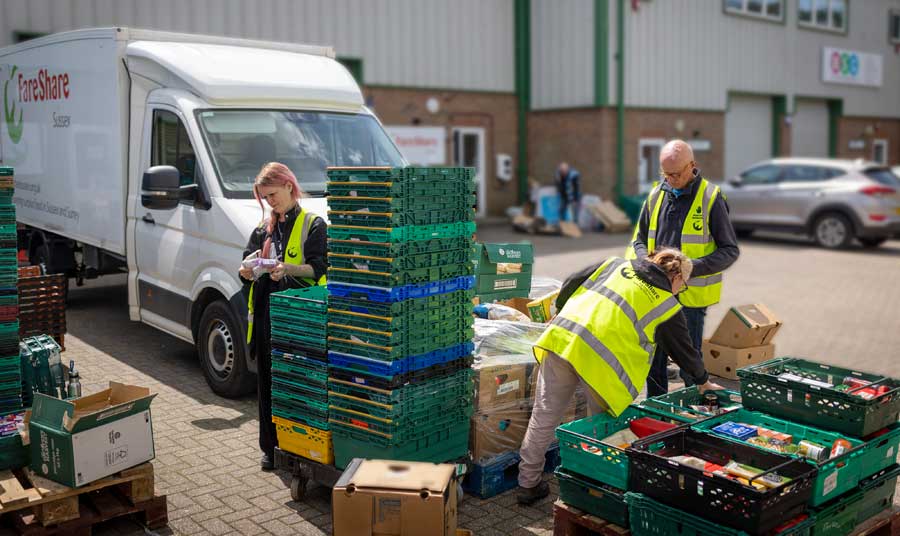
FareShare Sussex & Surrey has few paid employees, instead relying on a team of around 150 volunteers, most of whom work in the warehouse checking and sorting.
It’s vital work, because sometimes donations are out of date, don’t have the ingredients clearly marked or are in a different language. Homemade food has to be put aside because they can’t guarantee what’s in them.
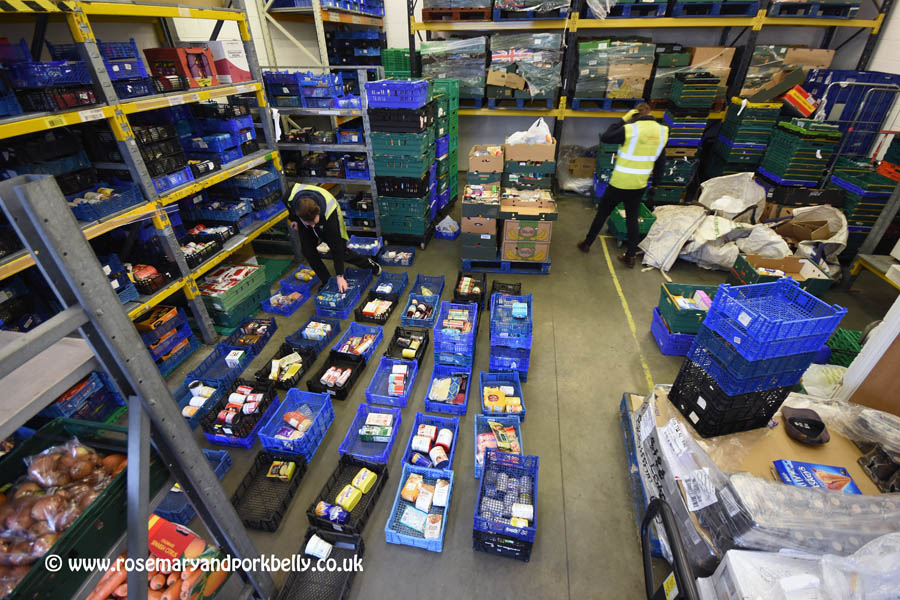
Many organisations and community groups have special requirements, needing vegan, gluten-free, halal or meat-free options.
Everything has to be taken into account, noted and logged.
It’s a logistical challenge!
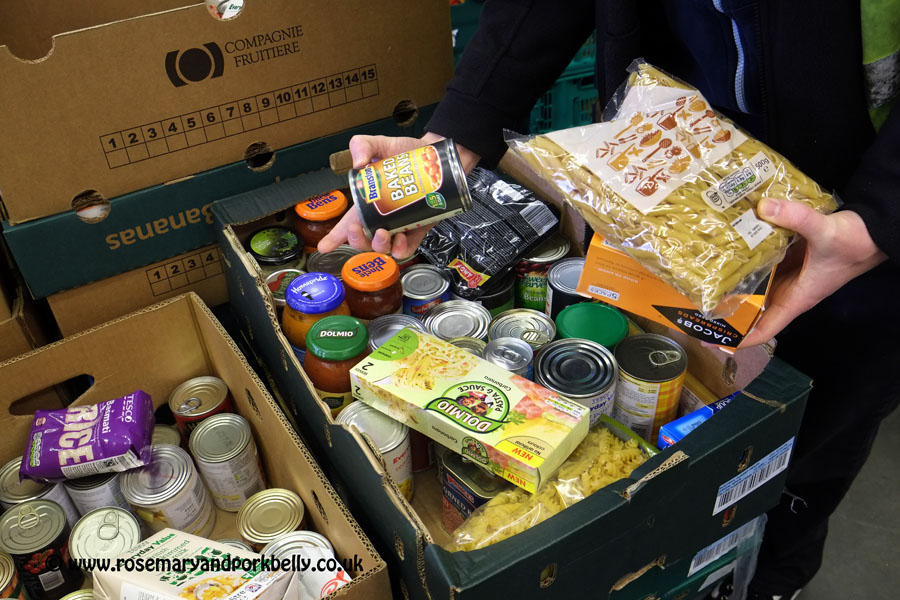
Food delivery lifeline
It’s impossible to say just how many people benefit from the work of charities like FareShare Sussex & Surrey, but it is in the thousands each week, fifty-one weeks of the year.
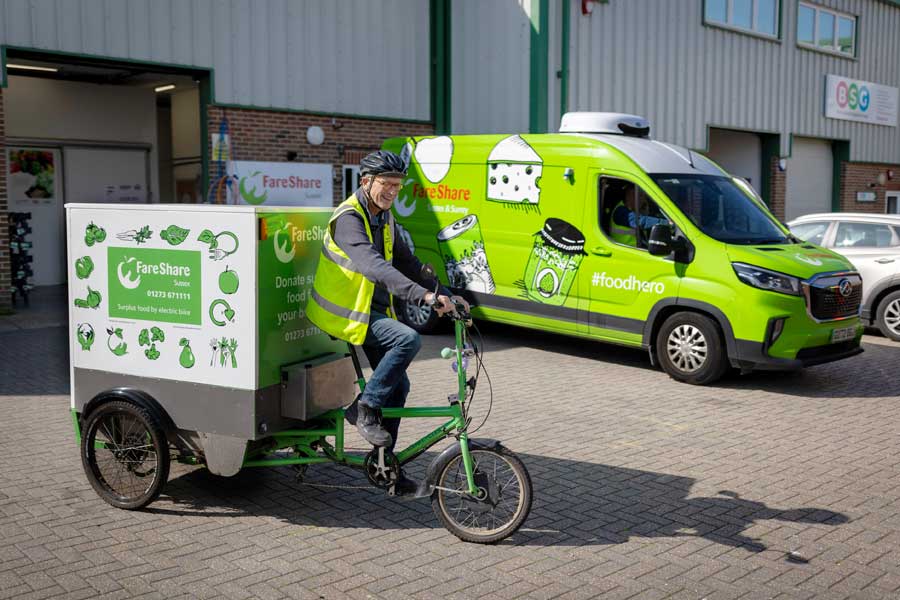
They fight hunger and food waste by supporting organisations like community fridges, residential settings, food banks and community meal providers.
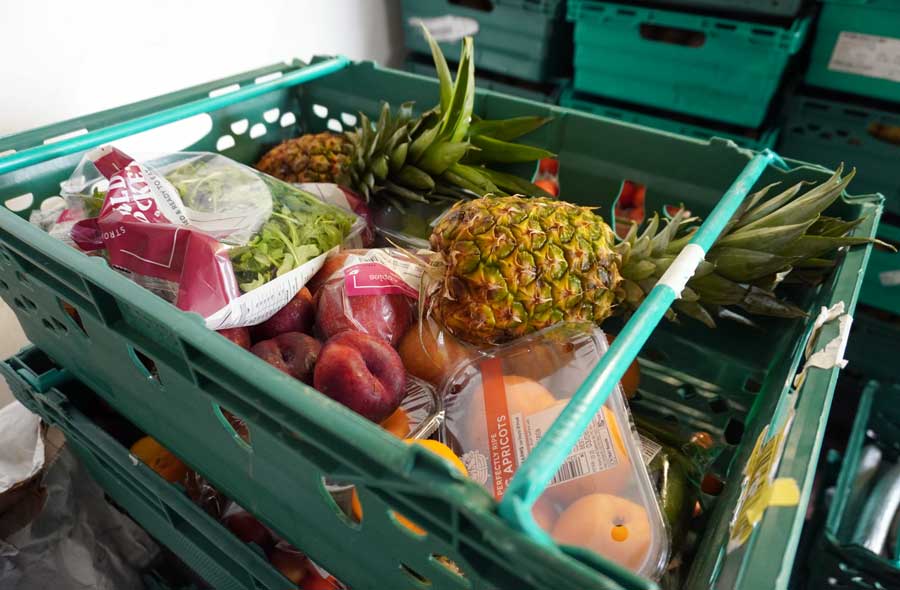
Sadly, it seems that FareShare, and similar charities, will be needed for many years to come.
More information about FareShare
Keep an eye out for their collection boxes in your local shop or supermarket
If you have a lot of goodies to deliver, you can contact your local branch.
See their website to find the one nearest you.
The charity doesn’t just need food – it needs money to keep its vans on the road.
If you wish to donate, you can do so here.
Don’t have a FareShare near you?
There are many other food bank charities in the UK. The Trussell Trust has a Food Bank Finder on their website, and the independent Food Aid Network is a helpful resource.
Where to next?
• Ripley Farmers’ Market, Surrey
• Tudors, manners, mead and stew
• Tell it to the bees