
A sudden torrential downpour turned the fertile soil to pale beige mud and the green grass alleyways were treacherous.
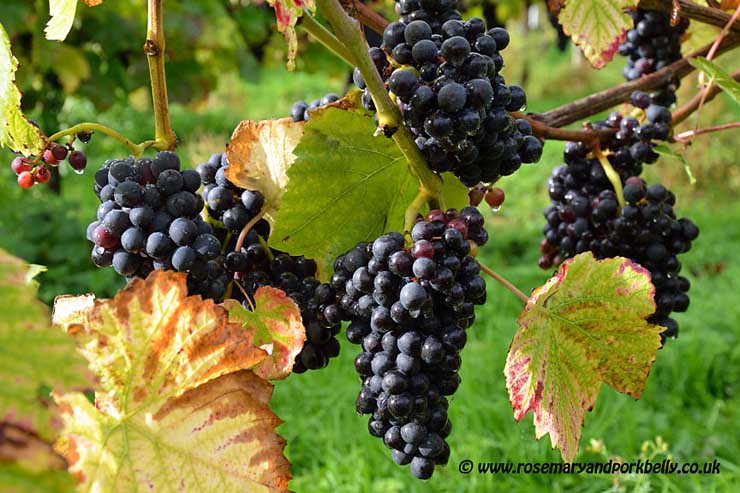
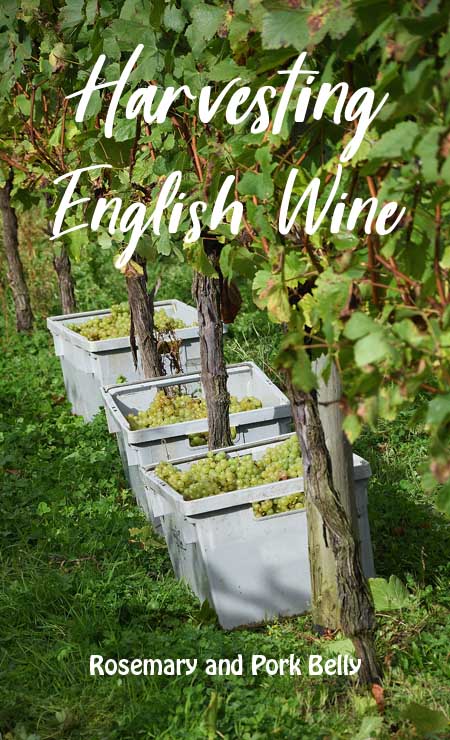
But as we took our places in pairs along the rows of vines the sun burst from behind the clouds and set the raindrops sparkling on the heavily-laden bunches, polishing the dark pinot noir to a glorious deep purple and lending lustre to the opalescent, luminous chardonnay grapes.
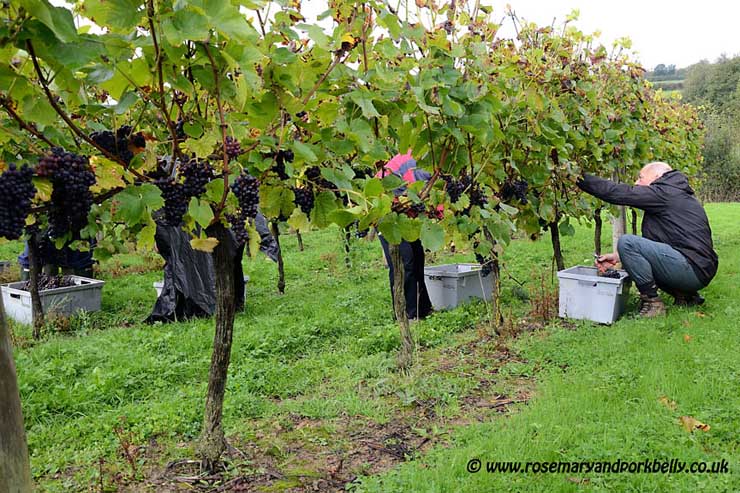
Pork Belly and I have often watched the harvest from afar on golden September days in France but it’s only recently that we’ve taken the plunge here at home and actually had a go ourselves.
September and October are the traditional harvest months for English wine and whilst many of the major vineyards use professional grape-pickers, some of the smaller ones draft in an army of volunteers drawn from friends, family and wine enthusiasts.
Others offer the full grape-picking experience as another strand of wine tourism and we were delighted when Bluebell Vineyard in Sussex invited us to join their harvest open day.
The huge marquee overlooking the sweeping vines, just in earshot of the historic Bluebell Railway engines chuffing their way across the Sussex weald, was the perfect place to gather.
There we met fellow English wine enthusiasts and received instruction from wine-maker Kevin Sutherland.
How to harvest grapes
“All our grapes are picked by hand and you have to be very careful as you handle them. All the fruit will be on the shoots, quite low down. Hold the bottom of the bunch gently in your hand, put the clippers above them and snip. Catch the bunch, again gently, and lower it into the tray in front of you – no lobbing! The grapes need to go to the press sound, with no broken skin and no leakage, we don’t want them to start fermenting on the bunch.”
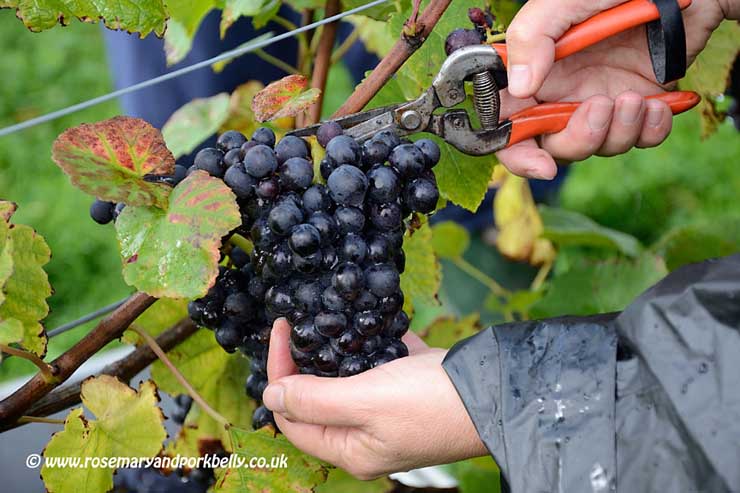
Kevin grins widely, “Oh and watch out, the clippers are very sharp, so don’t cut yourself or your partner’s fingers – I don’t want blood in my wine thank you very much!”
Kevin goes on to show us how to cut out any botrytis – the grey mould that can attack grapes – and how to judge when to leave a bunch on the vine for further ripening.
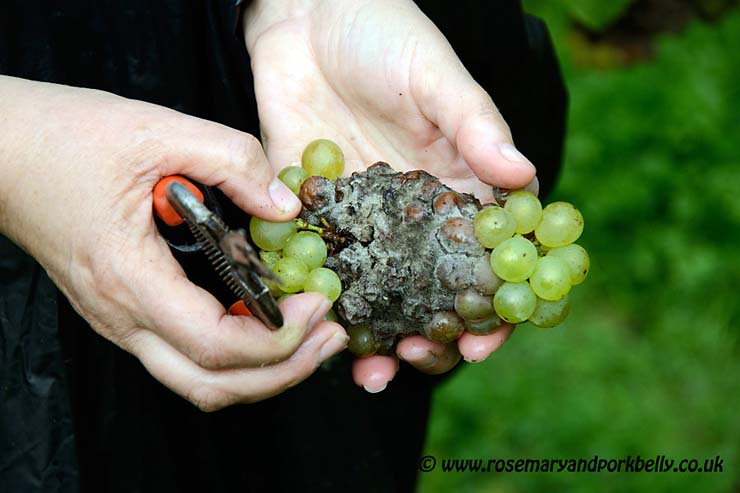
Novice grape-pickers
“We don’t usually pick in the rain because the extra water collected in the trays reduces the sugar content of the juice, but today’s an exception, as you are all so willing to volunteer.”
The majority of us were novices, with just a few experts in the mix, so I’m sure I wasn’t the only one who started my grape-harvest experience with a little bit of trepidation.
But we quickly got into a rhythm with experts on hand to offer advice and guidance as we snipped, caught and gently laid the precious grapes into the trays.
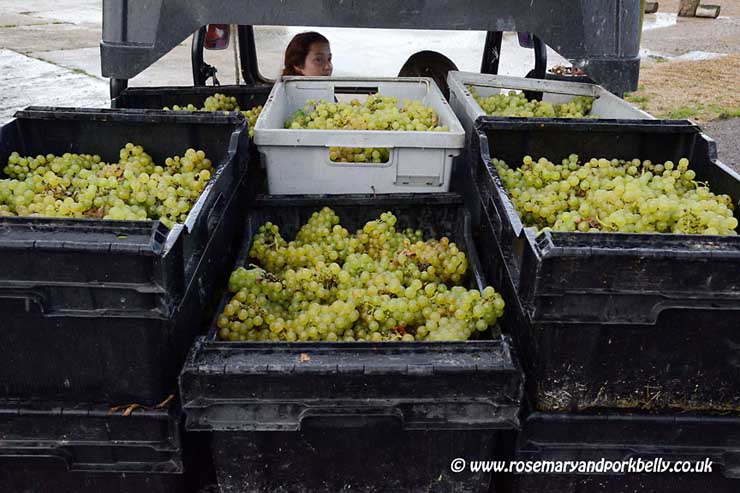
It was a delightful way to spend the morning, chatting away as we worked and sneaking the occasional grape, bursting fresh and sweet on the tongue, as a reward for our labours.
With 25 hectares producing around 40,000 bottles a year I am certain the professional harvesters work twice as hard as we did and am filled with admiration for them as it is pretty back-breaking work.
After a couple of hours I was glad to stop and return to the marquee for a delicious lunch and a tutored wine-tasting session.
Wine-tasting at Bluebell Vineyard
Here Kevin was in his element, encouraging us to smell, sip and savour three different sparkling wines and trying some of the freshly pressed chardonnay and pinot noir juice from the grapes already harvested this year.
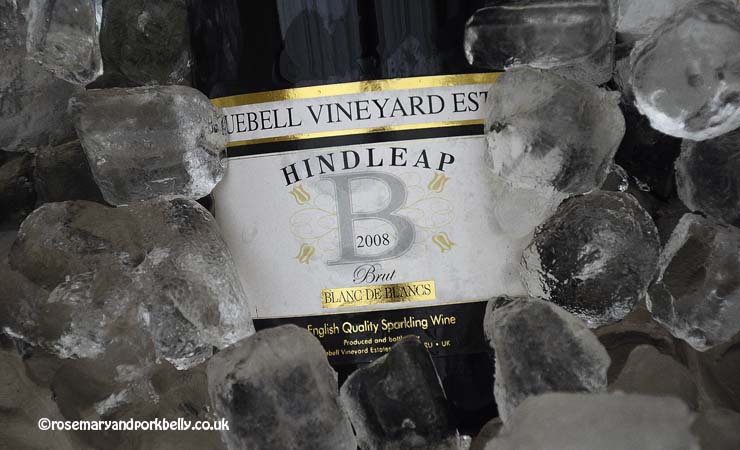
There’s no wine snobbery at Bluebell Vineyard, and everyone was soon calling out what they felt the wines reminded them of, with no fear that someone would think the description of “almonds” silly or any less valid than those who detected “apricots” or “wild strawberries”.
On our table there was a fifty-fifty split between those who liked the light, fruity Blanc de Blanc and those who preferred the deeper golden and more earthy Classic.
Around the tent the buzz of conversation grew louder as everyone compared notes, discussed preferences and swapped wine tales.
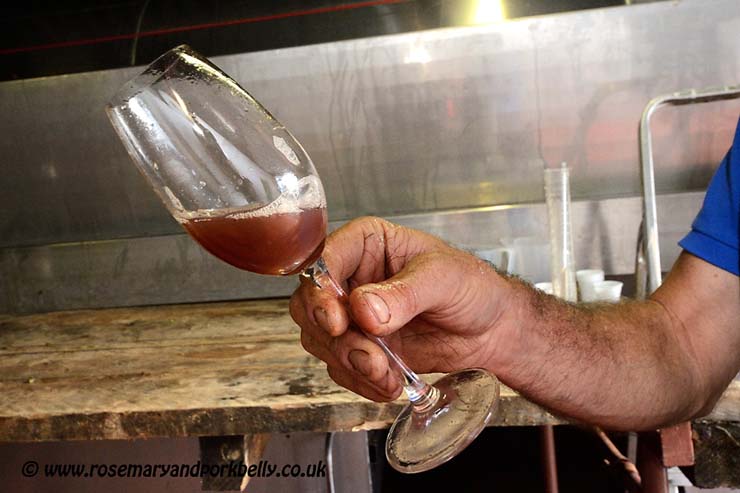
Finally we all made our way to the press where the grapes we had picked that morning were being squeezed and the precious juice caught, tested for sugar content, tasted (sharp, clean and slightly sweet) before being passed into the tanks to begin the long, slow process of fermentation and constant testing and re-balancing that goes into the production of a high quality, sparkling wine.
Sparkling wine takes around 18 months to 2 years until it’s ready for bottling so it’s hard to be sure when I can look at a bottle of Bluebell Vineyard wine and say with pride, “I helped make that”.
More about English wine
English wine is worth celebrating all year round, not just in English Wine Week in May. To find an English vineyard near you which is open to the public, or hosts special grape-picking days, check out Wine Cellar Door.
Where to next?
• Helping with the grape harvest in Kent
• Harvest time for English wine
• Wine tasting in France
This is super interesting and provides great insight into a process that I really knew very little about! I’ve never thought of going to a vineyard in England before, but you’ve changed my mind 🙂
Glad to hear that Emma. Helping with the harvest is a great day out and you can always reward yourself with a sip or two of wine 🙂