
A word of advice. If you’re planning to visit East Ruston Gardens in the company of friends and family, make sure you arrange a time and place to rendezvous.
As one young visitor remarked as we passed each other for the third time, looking for stray members of our respective parties, “This garden doesn’t need a maze. It IS a maze!”
And he’s right.

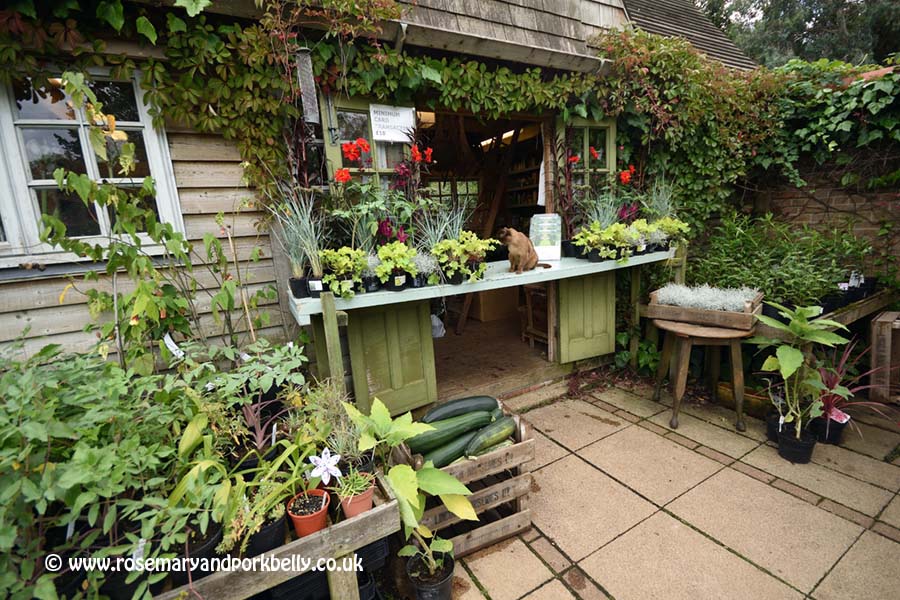
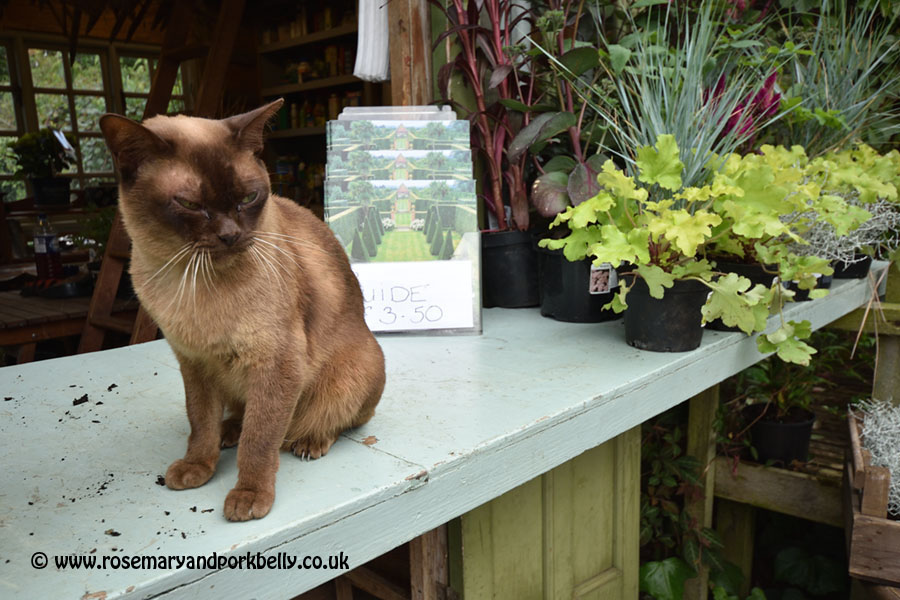
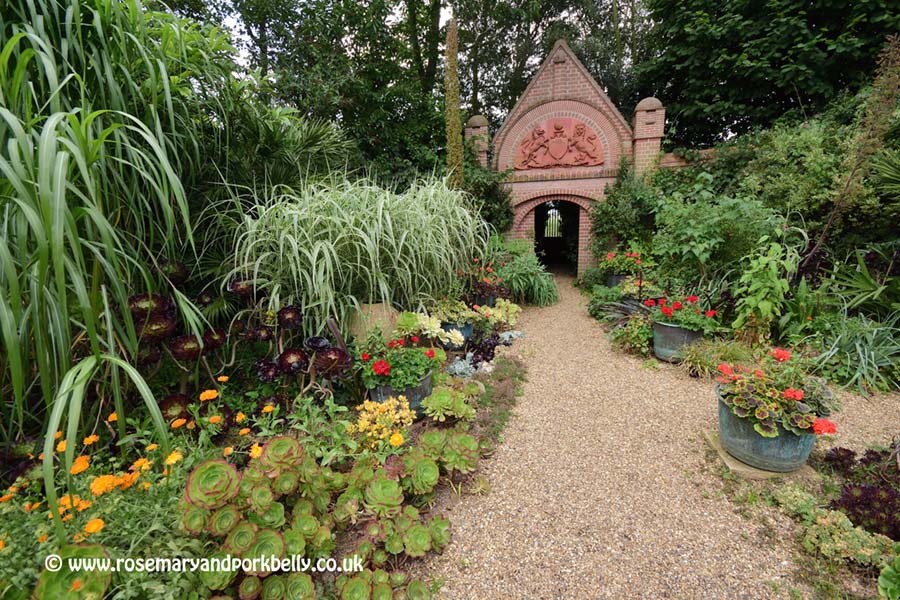
Entering along a winding path through shrubbery, you pass the plant shop (stopping to say hello to one of the resident cats of course) and on into a courtyard with a huge brick gateway.
Above this entrance, apparently used only by the postman, sits a coat of arms with the motto Consilio et Labore.
Roughly translated this means “through discussion and hard work” – not a bad choice for these gardens, which are entirely the work of Alan Gray and Graham Robeson.
They took on the Old Vicarage and its barren garden more than thirty years ago and have transformed it.
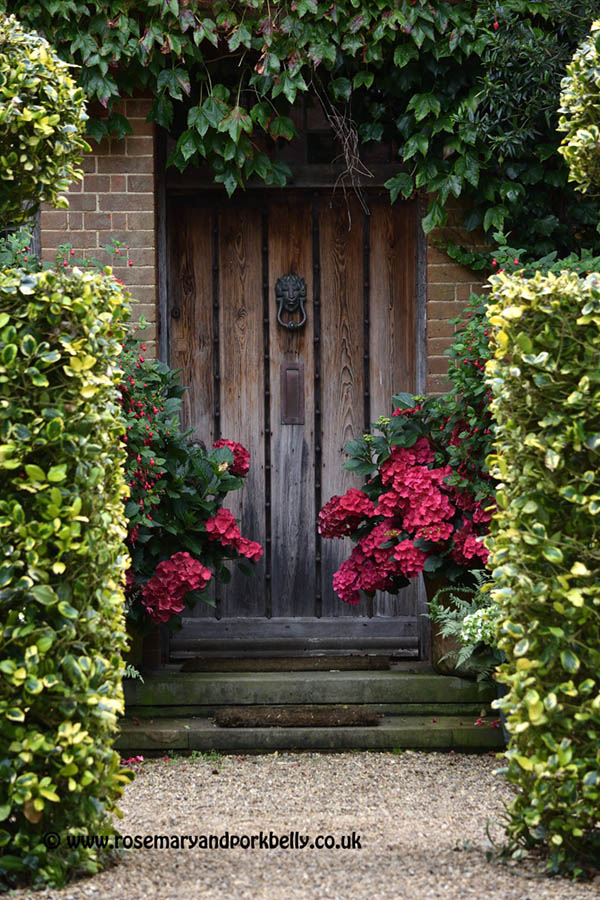
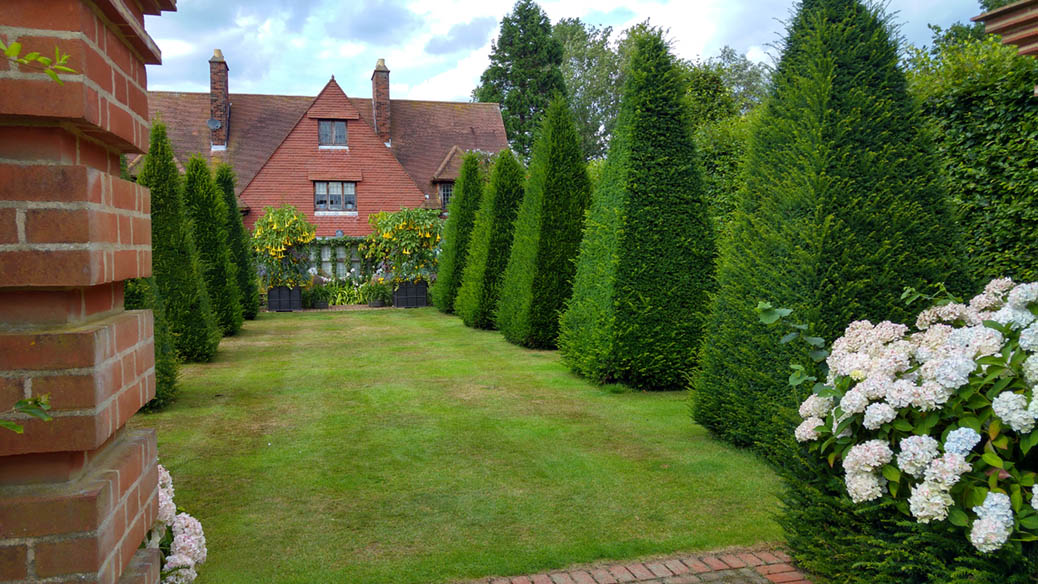
Delving deeper through tree-lined paths and borders full of hydrangeas the choices, and the vistas, open up before you.
Will you visit the “Paper Lady” her outstretched hand beckoning you to join her in her tree-lined bower?
Or will you take the Kings Walk with its ten tree sentinels guarding your route?
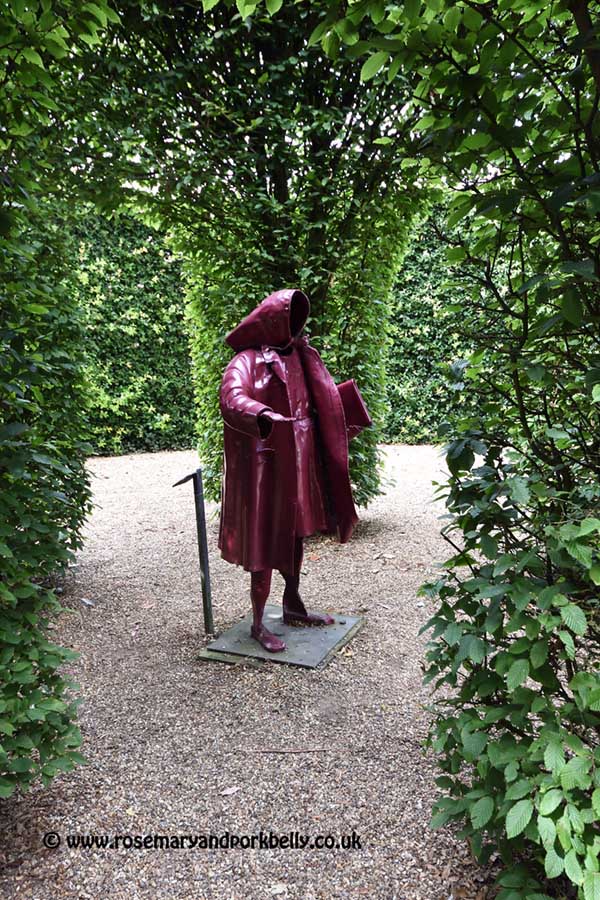
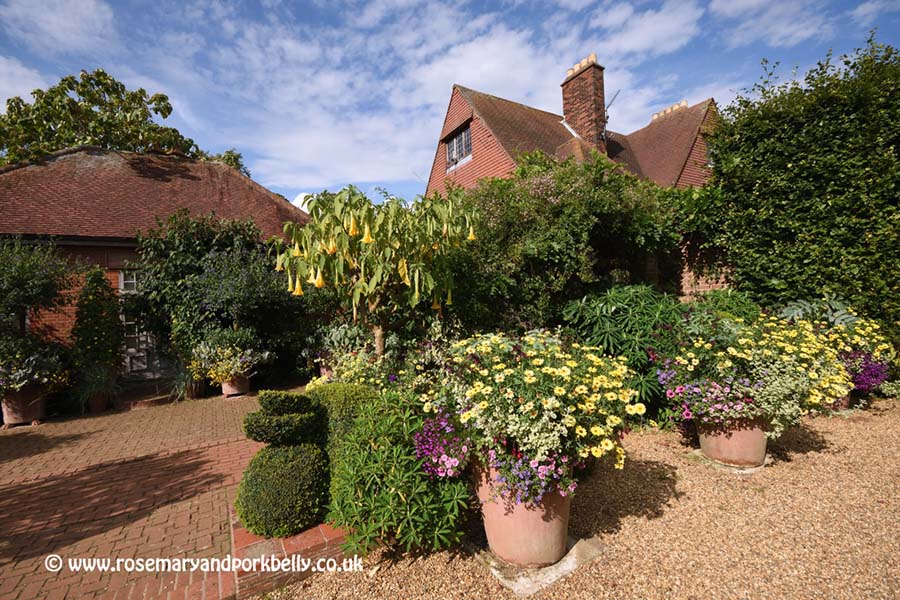
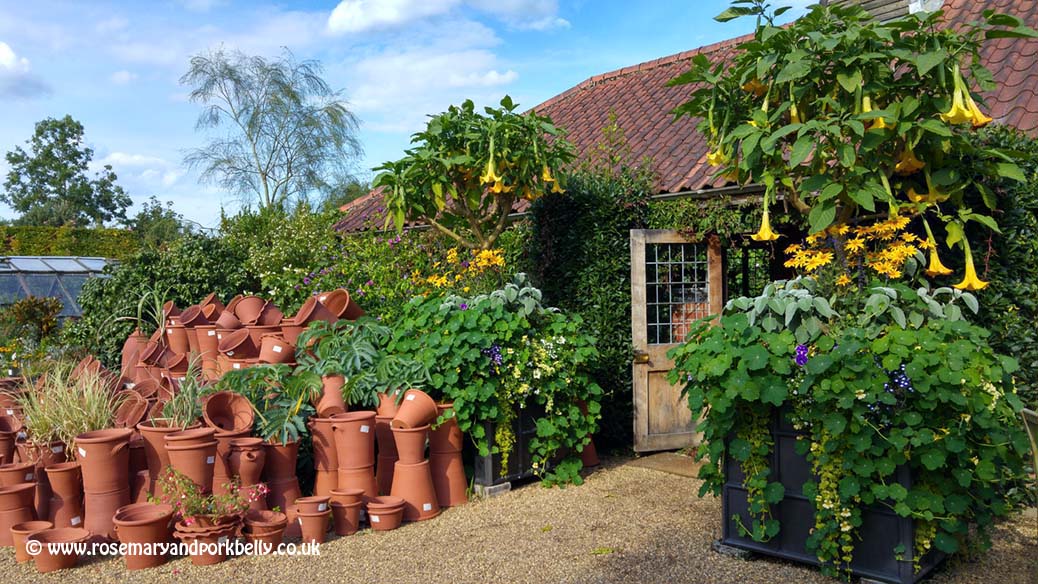
You might linger by the house to explore the Dutch Garden with its box-edged borders and giant terracotta pots.
Or perhaps you’ll choose to stroll through the sun-drenched Mediterranean Garden.
Pause at the pavilion to view the photos that show how the site has grown from its initial two acres to its current 32.
Unique garden
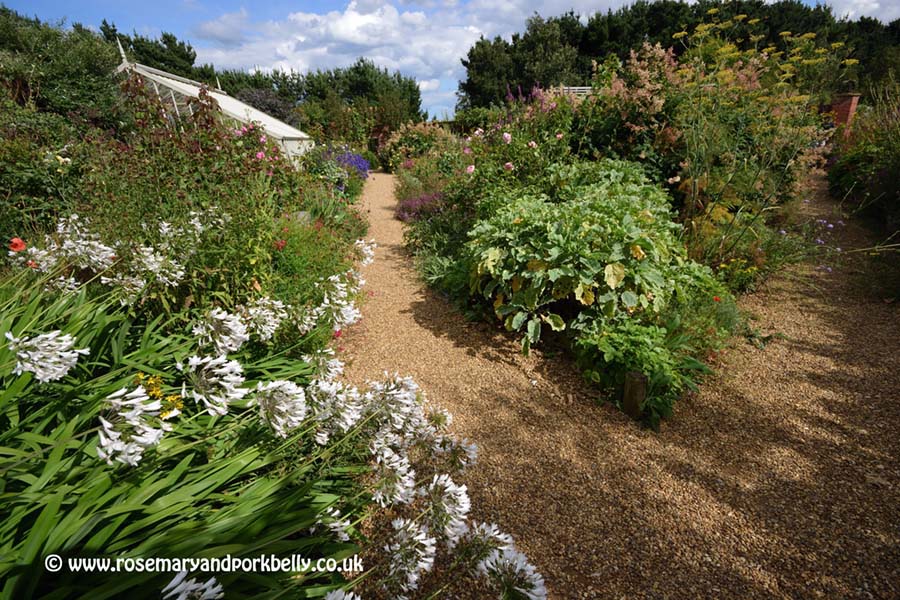
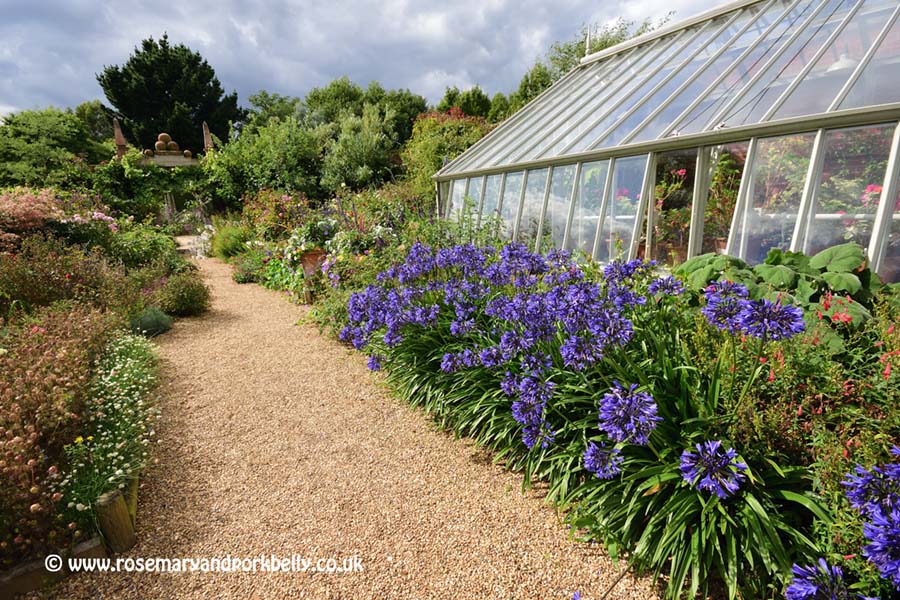
The further in you go, the more choice you have.
At every junction you’ll be presented with not one, not two, but up to five directions to take. It’s this fluidity – no set path, no theme, no trail to follow.
That makes every visit to East Ruston Gardens unique.
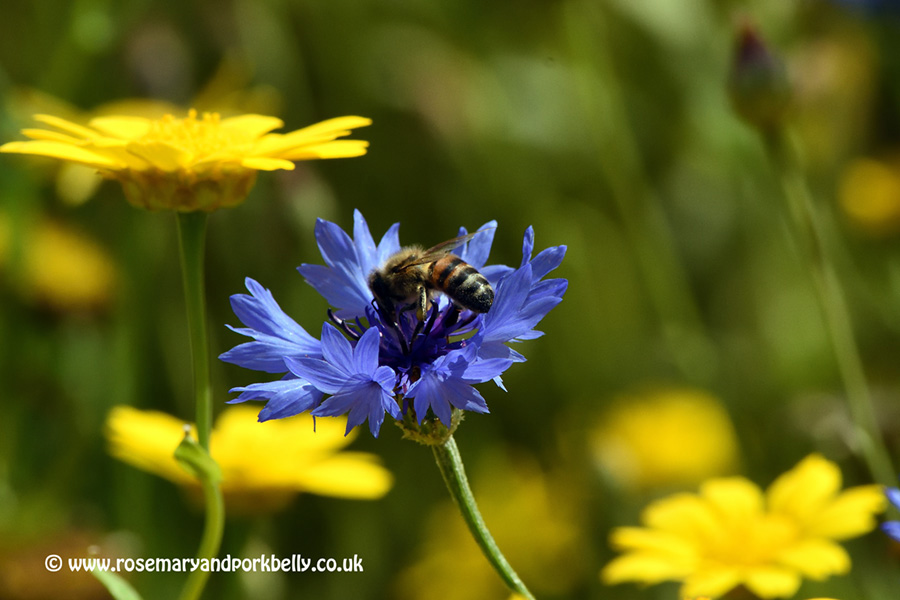
In high summer, wild flowers carpet the field beside the old churchyard and giant dragonflies dip and dive through yew-lined avenues.
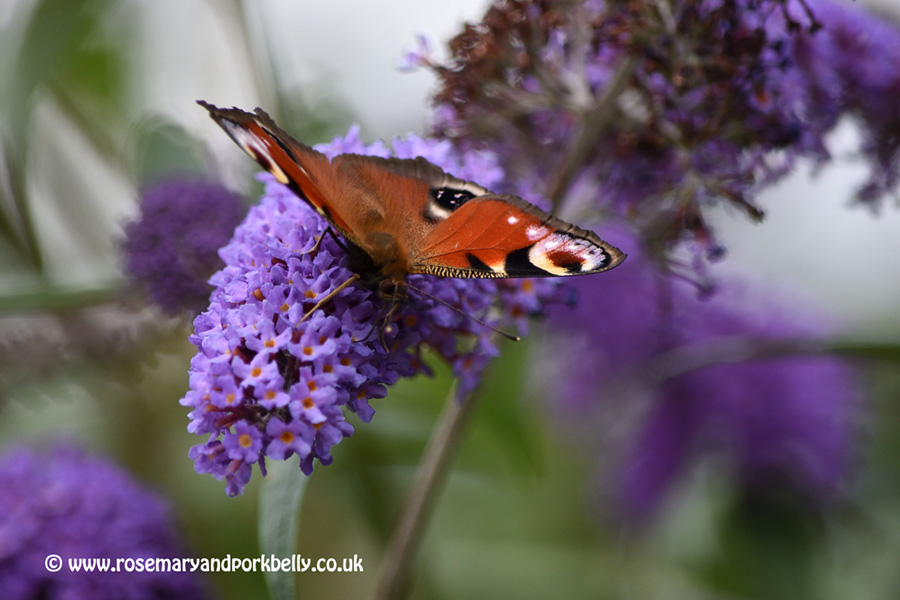
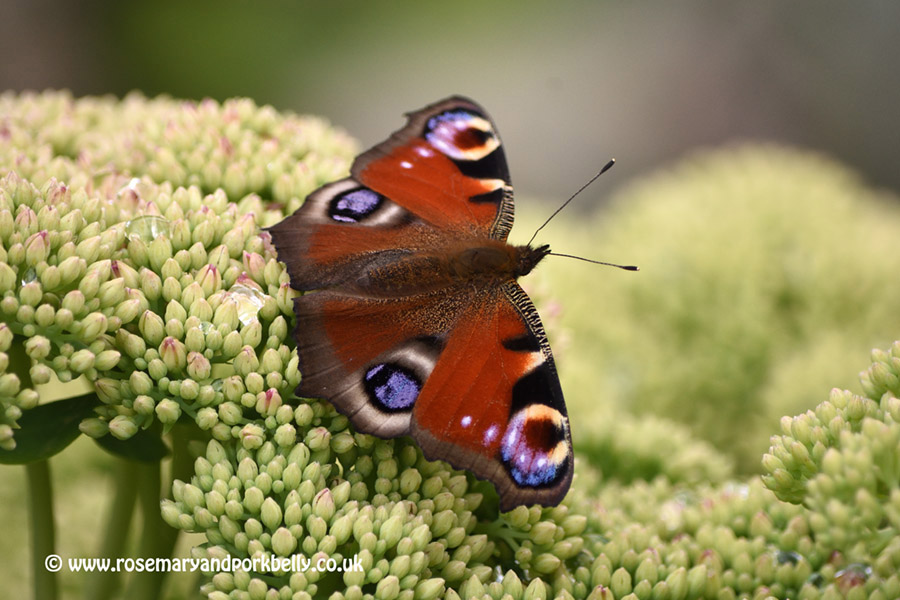
The buddleia is abuzz with bees and butterflies – red admirals, peacocks and tortoiseshells.
In the secret garden amid towering grasses and purple-headed verbena bonariensis there are wooden seats close together, perfect for the sharing of whispered confidences.
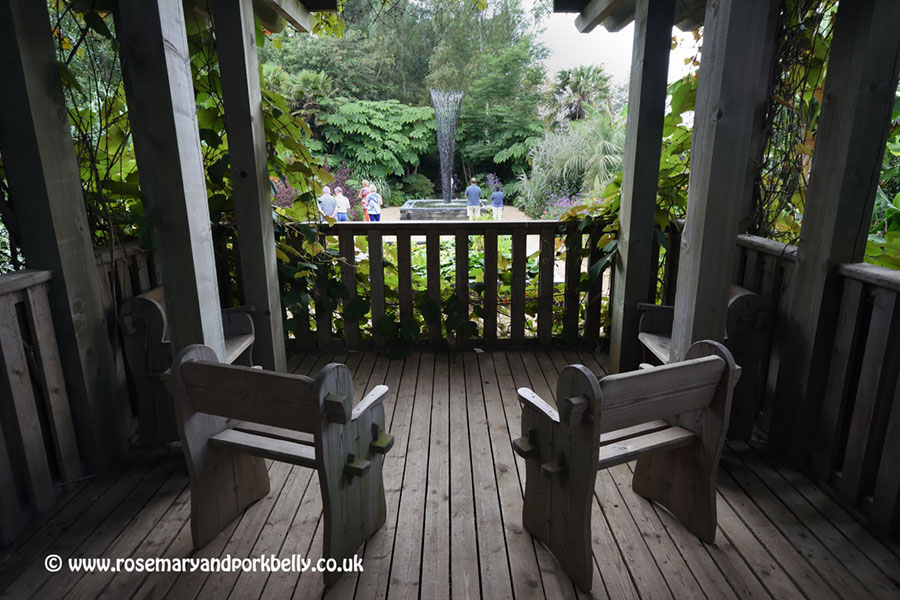
Or you might rest awhile in the summer house, conservatory or on one of the many benches invitingly tucked away in shade or sun.
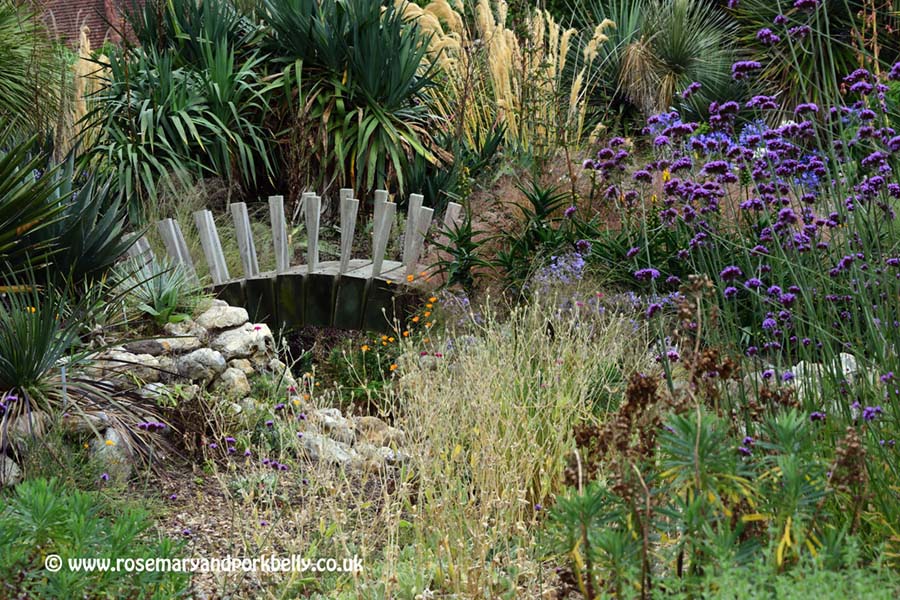
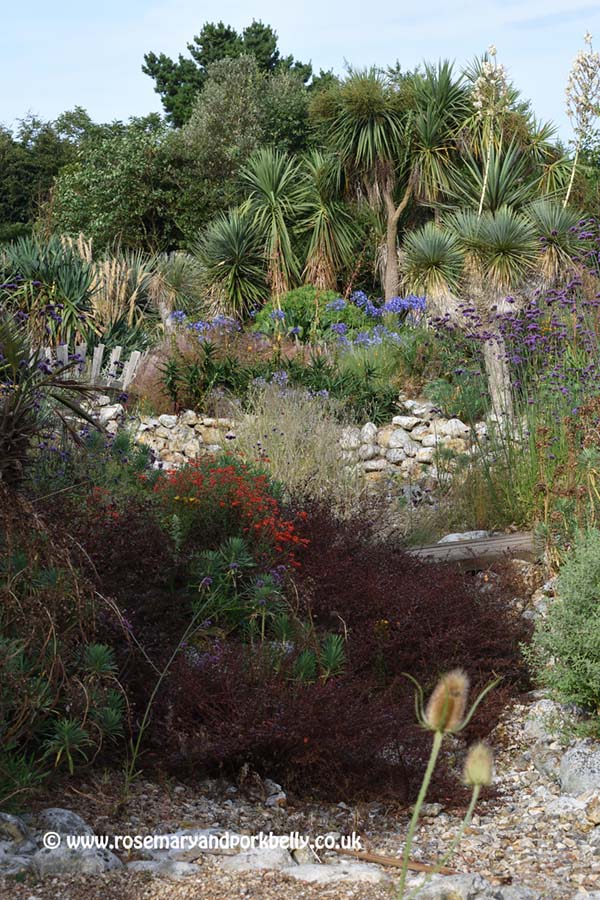
The Desert Wash planted with drought-inured succulents has become wildly overgrown, demonstrating just how hardy aloes, agaves and cacti can be in the harshest of terrains.
The stony paths and wooden bridges are now almost completely covered.
The house is tucked away discreetly amongst a riot of climbing plants, greenhouses and gigantic ornamental pots.
Alan and Graham can frequently be seen tending their own plants or chatting happily to visitors.
“One of our great joys is to see the pleasure the garden brings to visitors, everybody seems to find some part of it that is special to them.”
Conservation through cultivation
Their whole ethos is ‘conservation through cultivation’ and if you are a plant buff you’ll find many rare and interesting varieties, propagated in the gardens and available to buy.
We’ve visited many times over the years, and one of the joys is that the garden never stands still. There’s always something new to discover and as the plants thrive and grow, even familiar favourite paths can surprise.
This time, on a typically English August day, with blazing sun and heavy storm clouds warring for dominance, some of the borders were looking a little unkempt, signifying the constant battle of gardeners versus the elements.
The Rose Garden was past its best, but the heady smell of the last of the blooms still perfumed the air.
Microclimate

The gardens have been carefully planned and landscaped to create different growing conditions, with large hedges strategically planted to protect against the brisk and often bitter winds that blow in from the nearby North Sea.
This has created a microclimate in each section, encouraging greater diversity and allowing even sensitive plants to thrive.
Alan and Graham are constantly reviewing and updating the plants, so what was a cottage border on your last visit may well be a tropical paradise the next time you go.
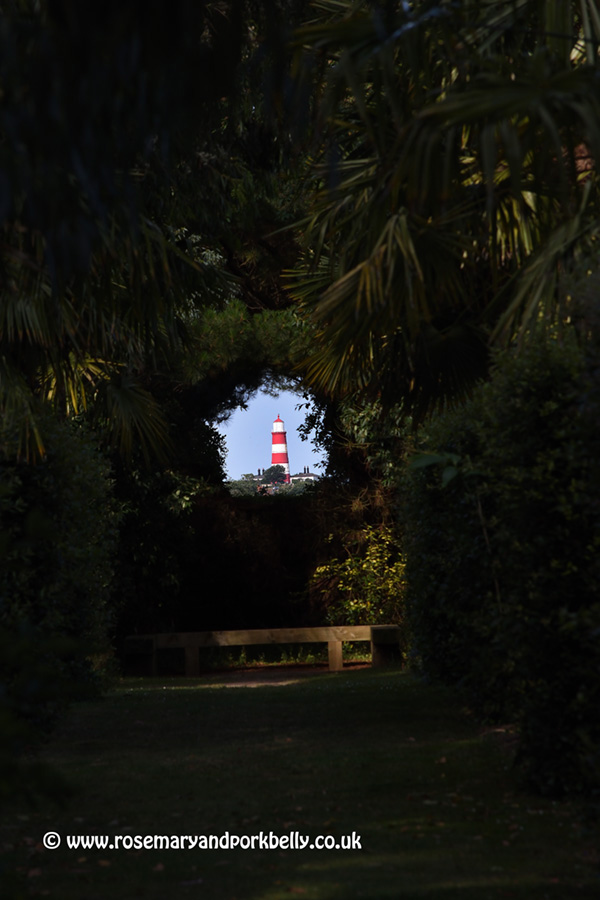
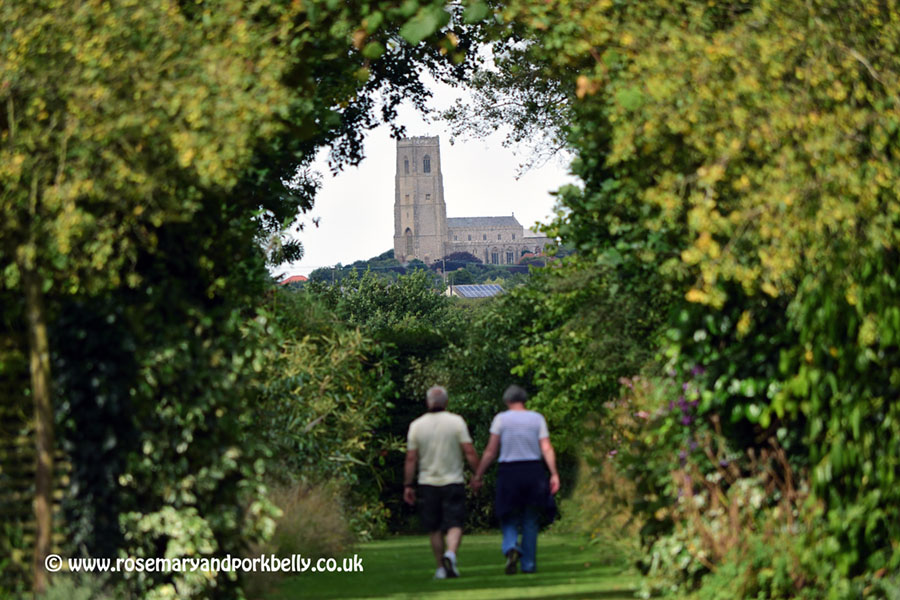
One thing we hope never changes are the two “spy holes” that offer stunning naturally framed views of Happisburgh lighthouse and church – prompting delighted gasps from many first time visitors.
Having lost Pork Belly amongst the shrubbery (forgetting my own advice to arrange a meeting place) I retraced my steps.
I followed the tinkling of teacups until I found myself near the tea-room.
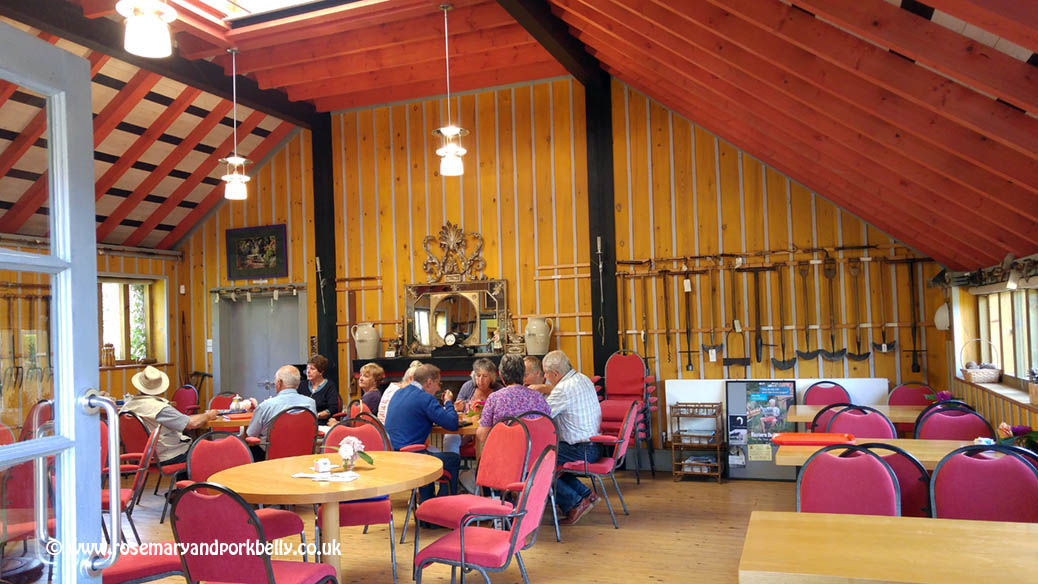
Not surprisingly, this is where I encountered Pork Belly again, so we stopped for a little light refreshment.
The lunchtime menu is limited and there’s not a huge choice of cold drinks but they serve some delectable cakes (including one dairy-free option for me) and good, strong coffee.
More information about East Ruston Gardens
East Ruston Gardens are open March to October from 1 to 5.30 pm Wednesday to Sunday and Bank Holidays.
Prices in 2024 are £14.50 for an adult, but just £2 for children aged 3 to 14 (babies and toddlers are free).
For families, don’t expect play areas and child-friendly exhibits, but if your youngsters love to explore and are fascinated by dirt, trees, grass, bees and buttercups this is a great day out.
If you’re local, a season ticket is great value and if you really know your plants and want to find out more, Alan gives illustrated talks a few times a year, including a Winter Walk just before the garden opens up each season.
For more information, see East Ruston Vicarage Gardens website
Where to next?
• English gardens
• Secret gardens of London
• A day out in Rye