
They say the past is another country.
Languedoc is another country with a past.
Nowadays, it’s better known as a sun-soaked travel spot in central southern France, spreading from the Rhone valley in the east to the Spanish border in the west.
But it was once an independent province, free from the shackles of the northern kings, proudly speaking its own language, the Langue d’Oc, and determined to go its own way.
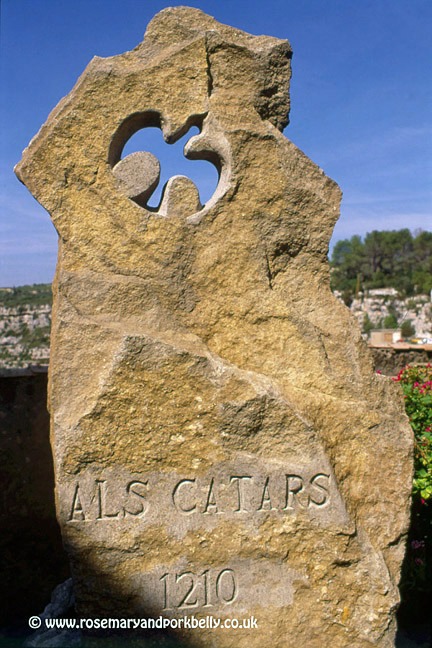
Centuries later, the region’s identity remains so powerful that the government has redrawn the regional map and is considering renaming the area “Occitanie” to acknowledge its history.
And so the Languedoc legend lives on; history and mystery making the region so much more than the usual sun-sea-sand tourist destination.
From the steep wooded valleys and mountains of the Cevennes to the miles of sandy beaches, marinas and ports of the Mediterranean, there’s something for everyone.
Waterways of Languedoc
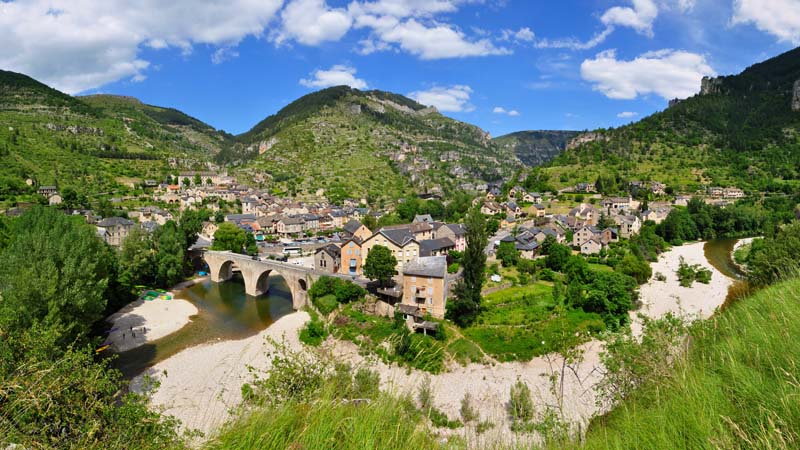
The spectacular Gorges du Tarn, where the river has gouged its way deep into the limestone rock, is glorious – walkers stumble across sleepy villages and adrenaline junkies love the kayaking experience.
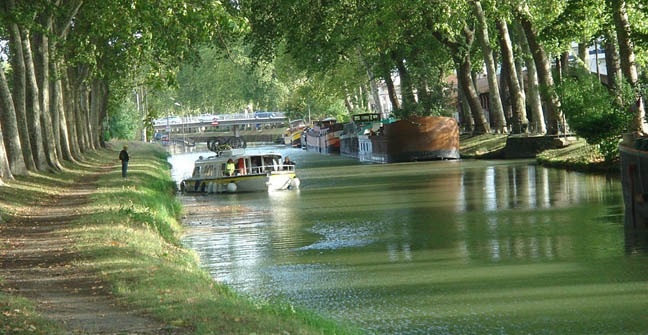
For those who prefer more placid waters, the Canal du Midi, winding a leisurely way from Agde through Carcassonne to the Atlantic coast, is the oldest commercial canal and a UNESCO World Heritage Site. Nowadays, it’s mostly used for boating or cycling holidays.
But our favourite part of the Languedoc, and one we’ve returned to many times, is the Aude, stretching from the Mediterranean coast to the foothills of the Pyrenees.
Cathar Country
The Cathars were followers of a renegade church that flourished in the early medieval period.
It was a sort of protest group that turned its back on the conspicuous wealth of the established church and preached simplicity, equality and kindliness.
That made them pretty unpopular at the time and the Albigensian Crusade, led by Simon de Montfort among others, was launched.
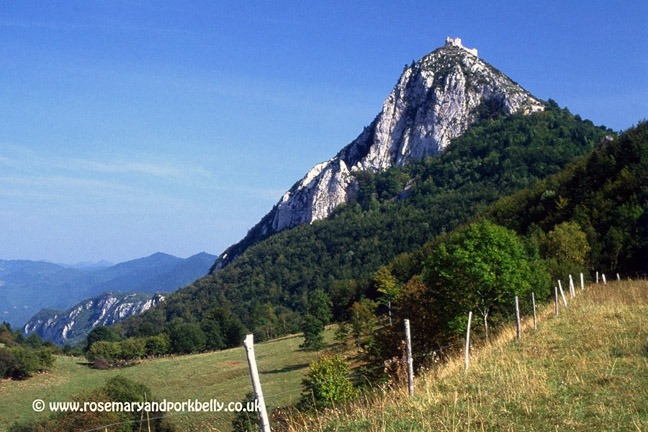
The Cathars took to the hills and fought a doomed campaign. The castle at Montségur remained a Cathar stronghold until 1244, when it was finally taken and 200 Cathar prisoners burned alive.
The last Cathar stronghold, the Chateau de Peyrepertuse, fell in 1255.
The victors took over and rebuilt the walled cities like Carcassonne and Narbonne that still stand today.
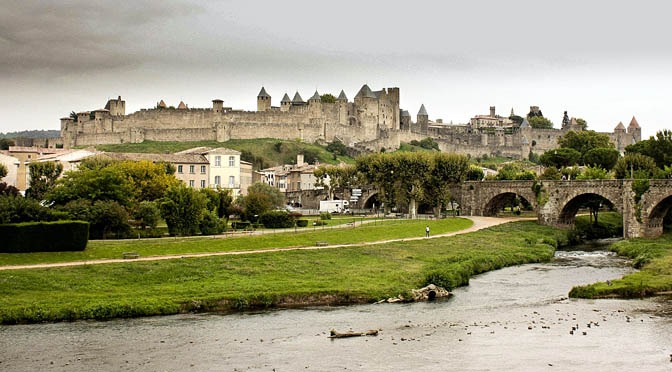
But what was it that the Cathars fought so hard to keep? Historians say it was the desire for independence but there are many legends that have grown up suggesting that the Cathars were guardians of some treasure or earth-shattering secret.
Fact, fiction and fantasy have combined over the years. Were they holders of the Holy Grail? Did they have evidence that Jesus’ bloodline still existed in the kings of France? Did the last Cathars at Montségur smuggle out evidence of some spiritual secret?
History and mystery at Rennes-le-Château
Nowhere do these legends come more to mind than the weirdly wonderful hilltop church of Rennes-le- Château.
When we first visited here in the 1980s, it was a small, sleepy village, where only a few who’d read the block-busting “Holy Blood and the Holy Grail” book were making pilgrimages.
Nowadays, with interest revitalised by Dan Brown’s Da Vinci Code, there’s a museum and guided tours, but it is still worth visiting this oddest of buildings.
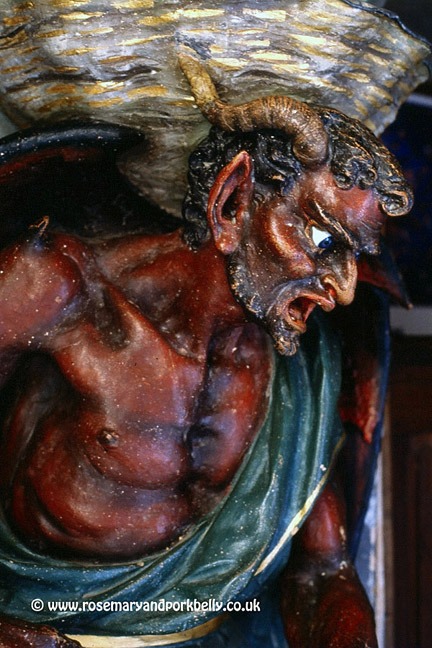
It’s gaudy and highly coloured and all just a little bit strange.
Above the door is carved in Latin words that state:
This place is terrible
And there stands the figure of a devil bearing the holy water dish.
The stained-glass windows are deeply coloured and full of odd characters and mini-scenes that give a different perspective to the more usual stations of the cross.
At the heart of its mystery is the story of the priest, Bérenger Saunière, who suddenly became very rich during the 1880s and rumours abound as to how he did it.
Grave-robber? Blackmailer? Holder of some dark secret that scared the established church into buying his silence? In league with aliens?
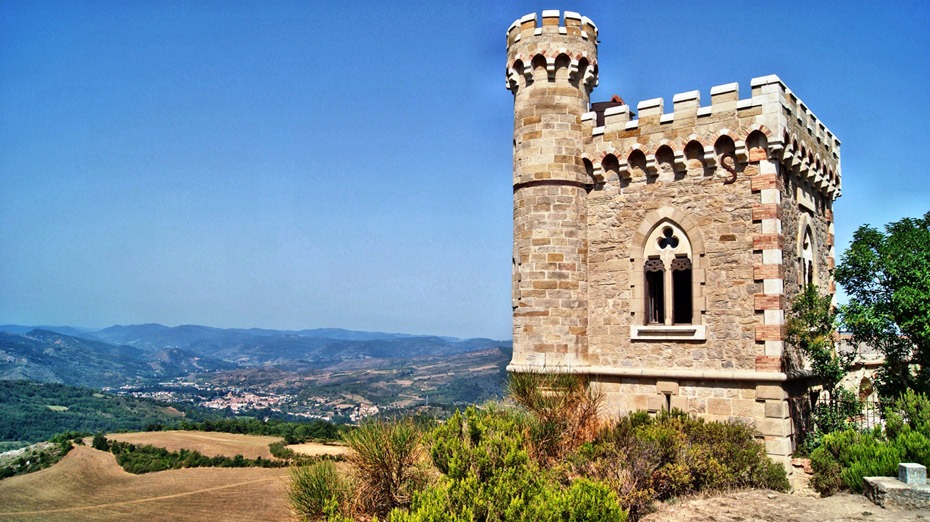
Even if you’re not interested in conspiracy theories, a trip up the Tour Magdala gives wonderful views of the surrounding countryside.
The night they invented champagne
No visit to any region of France is complete without a little wine-tasting and in the Languedoc, one of the country’s largest wine-producing regions, you get another tasty legend.
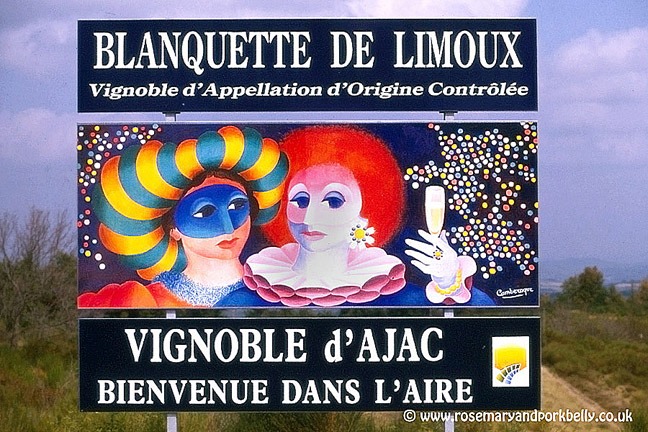
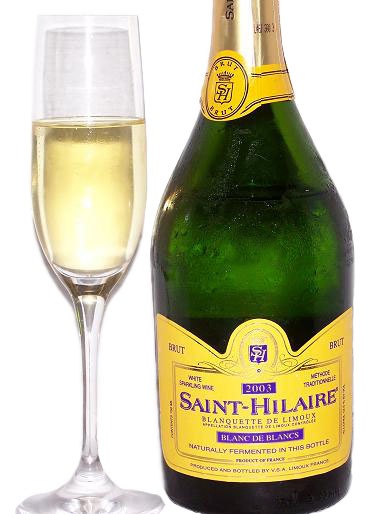
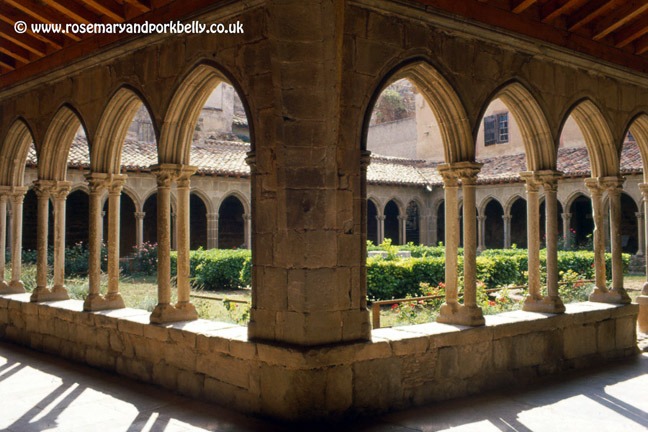
Stop off in the tiny town of St Hilaire to sample Blanquette de Limoux at any vineyard or shop, and you’ll hear how the monks at the Benedictine Abbey produced white wine in a glass flask with a cork top instead of the more traditional oak barrels, so giving their local brew a bit of sparkle.
Legend has it that one Dom Pérignon stopped by the abbey on his way from Spain, stole their idea and passed it off as his own when he reached the northern nobles of Champagne.
The story’s probably rubbish, but the wine is great and compares very well price-wise with the more traditional French bubbly.
Carnival and harvest-time
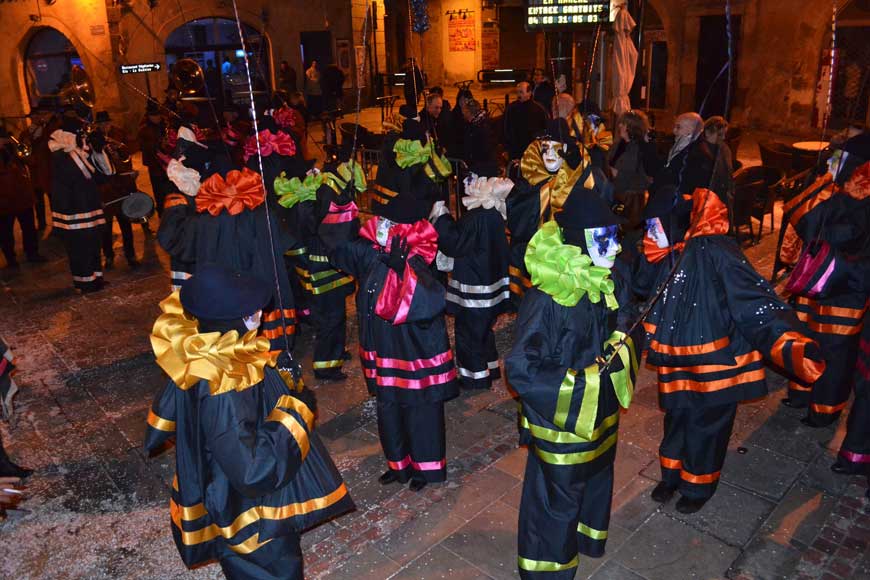
A few miles south west in the town of Limoux a carnival takes place every weekend between January and March with parades of bands and traditionally dressed pierrots.
All things Occitaine are celebrated, and the old language is heard on the streets again.
But our favourite time to visit is September as the grape-harvest begins, and every small vineyard sends tractor loads of grapes to the local cave-cooperative for processing.
The tang of crushed fruit lingers in the air while you sit out on a warm autumn evening, sipping last year’s vintage, bought for a few Euros at the local shop.
It may not rival the complexity of the top producers’ labels, but it’s a very satisfying end to the day.
More information about Languedoc
Check out the official tourism website for the Languedoc region
Additional photographs are copyright to their respective owners and reproduced here under Creative Commons Licence.
Where to next?
• Veneto, Italy – 7 things to do that don’t include Venice
• 7 reasons to visit Crete
• Island Life – Isle of Man